标签: Grenada

格林纳达

  • Minister Andrews tours major infrastructure projects across Carriacou

    Minister Andrews tours major infrastructure projects across Carriacou

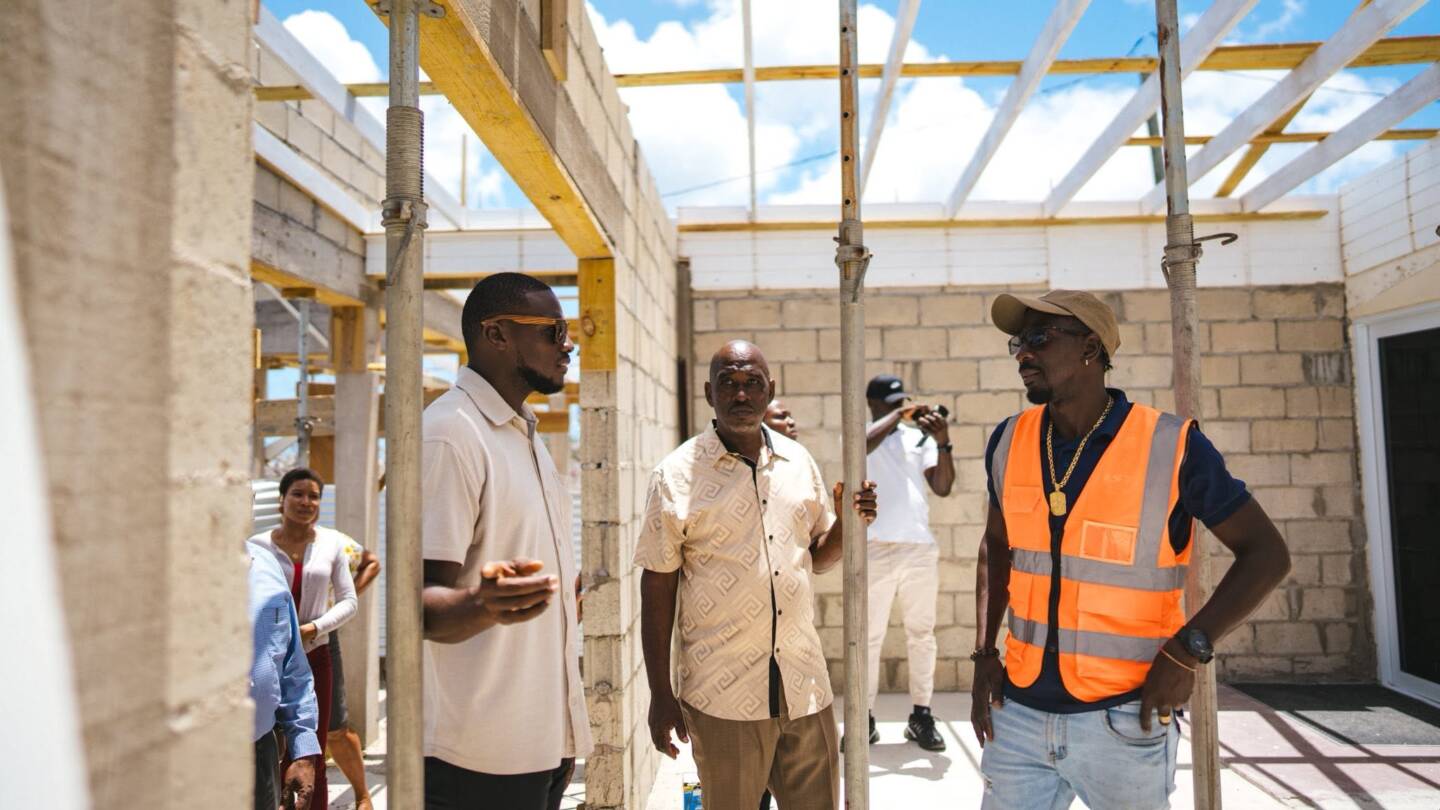
    Grenada’s Minister for Carriacou and Petite Martinique Affairs and Local Government, Hon. Tevin Andrews, has recently wrapped up a thorough on-site assessment of multiple large-scale infrastructure developments across Carriacou, verifying that key projects spanning aviation, maritime transport, and road connectivity are on track to meet their completion timelines. The inspection tour comes in the wake of widespread destruction caused by Hurricane Beryl, and serves as a clear demonstration of the national government’s determined pledge to “build back better” — upgrading regional connectivity, strengthening socio-economic opportunity, and delivering infrastructure built to withstand future climate shocks.

    Among the most transformative projects underway is the Lauriston Airport Expansion and Night Landing Project. The initiative, which will eventually be renamed the Herbert Blaize Airport upon completion, is moving into its final construction phases. Terminal expansions, redesigned passenger check-in areas, and upgraded public seating are nearly finished, while installation of the long-awaited airfield lighting system for night landings continues to progress on schedule. The full project is set to wrap up and enter official operation in late August 2026.

    Work is also advancing steadily on the Windward Jetty Redevelopment, a climate-resilient overhaul of the critical maritime facility. After specialized heavy construction equipment was deployed to the site, building work on the redesigned structure has moved forward without major delays. Once completed between late July and early August 2026, the new jetty will restore and streamline local trade, commercial fishing operations, and passenger transit connections between Carriacou and neighboring Petite Martinique.

    Multiple road improvement projects are also actively underway across the island to address long-standing mobility challenges. On Bogles Road, crews are currently installing extensive new concrete pavement and upgraded structural drainage systems, upgrades that will cut down on commuting times, improve safety for school bus routes, and open up more reliable access for local agricultural producers. Two critical connecting corridors — the Mt Pleasant–Point Road link and the Beausejour–Cart Road link — are also undergoing full structural overhauls. Decades-old degraded roadways are being replaced with durable concrete pavements engineered to withstand the extreme weather patterns that increasingly impact the region, delivering long-lasting infrastructure for local residents.

    Minister Andrews praised the engineering teams and local contractors leading the work for their consistent professionalism and fast, efficient execution throughout the assessment. He noted that the simultaneous delivery of these transformative projects represents a historic, unprecedented investment in the future of the people of Carriacou. While acknowledging that temporary construction disruptions may inconvenience local residents, and asking the public for continued patience during this period of development, Andrews emphasized that these upgrades will deliver widespread long-term benefits: new local job opportunities, a major boost to the island’s critical tourism sector, and a durable foundational infrastructure that will support broad-based economic prosperity for years to come.
  • GNSA and GSWMA celebrate Blaze the Track — Smash the Trash Competition winners

    GNSA and GSWMA celebrate Blaze the Track — Smash the Trash Competition winners

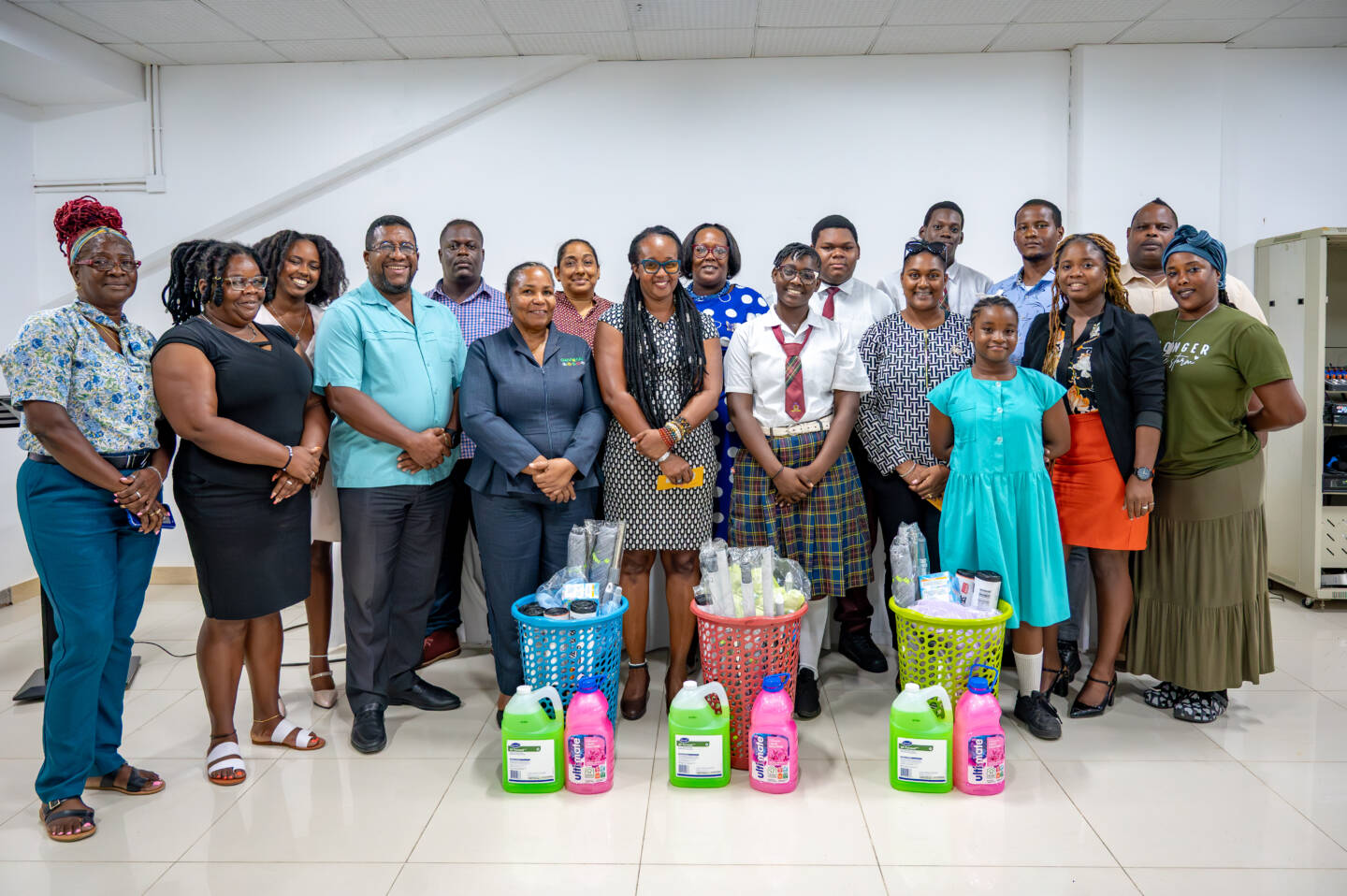
    On June 2, 2026, two leading Grenadian public agencies joined forces to celebrate environmental leadership among the nation’s student communities, hosting an awards ceremony at the iconic Kirani James Athletic Stadium to honor schools that excelled in maintaining clean spaces and responsible waste practices during their annual school sports events. The ceremony capped off the relaunch of the “Blaze the Track — Smash the Trash Competition”, a community-focused initiative built to embed environmental accountability among students, school staff, and sports spectators alike.

    The decision to revive the decade-old program comes after growing concerns over post-event waste accumulation and damage to Grenada’s premier sporting infrastructure. First launched more than 10 years ago, the original initiative eventually faded without sustained institutional support. When recurring complaints about discarded litter left behind after school sports meets and other large-scale gatherings gained renewed attention, the Grenada National Stadium Authority (GNSA) moved to partner with the Grenada Solid Waste Management Authority (GSWMA) to bring the program back, with a shared goal of encouraging greater personal responsibility and proper waste disposal habits across all attendees of sporting events.

    At the awards ceremony, Randall Robinson, Deputy Chairman of GNSA, opened official remarks by praising the proactive effort and commitment shown by every school that took part in the 2026 competition. “The success of this competition is a direct reflection of the commitment and leadership of our schools,” Robinson noted. “When principals, teachers, students, and supporters all work toward a shared goal, they don’t just create a cleaner, more positive environment for sports — they help instill lasting values of responsibility and respect for our national facilities that will deliver benefits to generations of Grenadians to come.”

    Myrna Julien, Communications Manager at GSWMA, expanded on the far-reaching goals of the revived program, emphasizing that its impact extends far beyond keeping event venues tidy. “Blaze the Track — Smash the Trash is about more than just cleaning up after an event,” Julien explained. “It is about encouraging young people to build lifelong habits that support environmental responsibility, and helping them understand that every small action they take adds up to build a cleaner, healthier Grenada for everyone.”

    Organizers noted that two local schools were unable to join the 2026 competition, as their annual sports events had already concluded before the revived initiative was officially announced. Despite this small setback, both GNSA and GSWMA expressed strong optimism that the number of participating schools will grow in future iterations of the competition, as more institutions have time to plan for participation.

    Looking forward, the two agencies are already exploring opportunities to expand the collaborative model to other large-scale national events across Grenada, including the country’s world-famous Carnival celebrations, as part of broader island-wide efforts to embed environmental sustainability and proper waste management into all major public gatherings.

    After rigorous evaluation by an independent judging panel, the top performing schools of the 2026 competition were officially announced: J W Fletcher Catholic Secondary School took home first place, with the award presented by GNSA Deputy Chairman Randall Robinson. Second place was awarded to Westmorland School, with the prize presented by GSWMA Communications Manager Myrna Julien, while third place went to Alpha Junior School, with GSWMA Education Officer Simone Doughlin-Welsh presenting the award.

    In delivering the vote of thanks at the close of the ceremony, Doughlin-Welsh framed the revived competition as a meaningful and long-overdue update to a critical community initiative. She congratulated all participating schools for their widespread enthusiasm and dedication to the program’s goals, and extended gratitude to judges, event organizers, educators, students, and community stakeholders whose collaborative work made the 2026 launch a success.

    “We are delighted to see the return of this initiative and the incredible enthusiasm shown by the participating schools,” Doughlin-Welsh said. “This competition proves just how much we can achieve when we empower students to take ownership of their public spaces, and we cannot wait to see even greater participation and broader impact in the years ahead.”

    GNSA has reaffirmed its ongoing commitment to advancing responsible facility use, environmental sustainability, and community engagement across Grenada, through programs that strengthen the country’s beloved sporting culture while protecting its national infrastructure for future generations.

  • Blue Economy value chain groups invited to virtual information sessions

    Blue Economy value chain groups invited to virtual information sessions

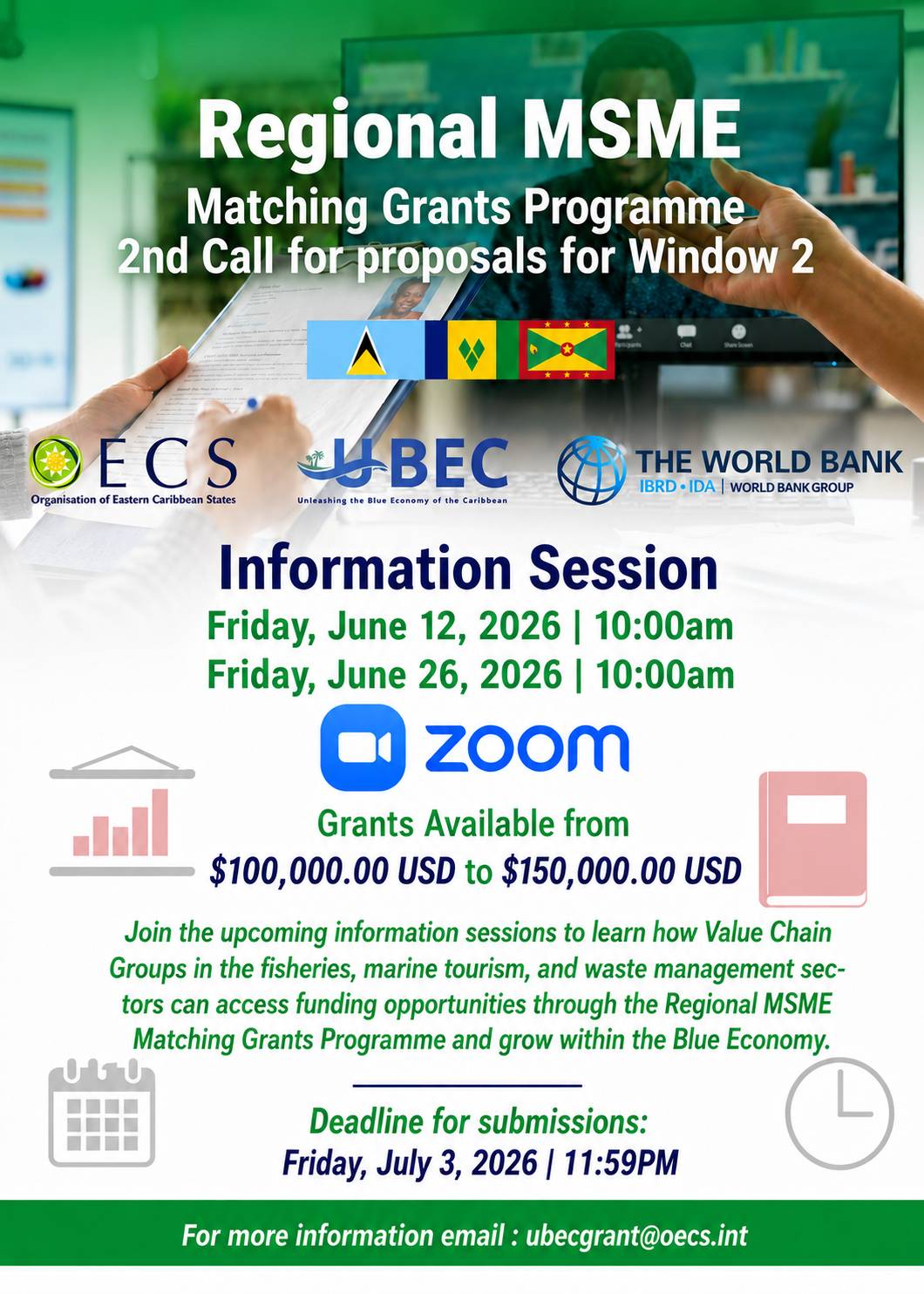
    The Organisation of Eastern Caribbean States (OECS) Commission has opened a new call for grant proposals focused on supporting micro, small, and medium-sized enterprises (MSMEs) in the Caribbean blue economy, and is inviting eligible entities to join two upcoming virtual information sessions to walk applicants through the program’s details.

    As part of the Regional MSME Matching Grants Programme — the funding arm of the larger World Bank-backed Unleashing the Blue Economy of the Caribbean (UBEC) Project — this second call for proposals operates under the initiative’s Window 2, specifically targeting collaborative value chain groups operating across three Eastern Caribbean nations: Grenada, St Lucia, and St Vincent and the Grenadines.

    The scheduled virtual information sessions are designed to give prospective applicants clear, actionable insight into the program’s objectives, eligibility criteria, application submission steps, and the tangible ways this grant funding can boost the growth and market competitiveness of participating blue economy value chain groups. The first session will be held from 10 a.m. to 12 p.m. local time on Friday, 12 June 2026, with registration available at https://bit.ly/49Io3NK. A second identical session will follow two weeks later, running during the same time slot on Friday, 26 June 2026; interested participants can register for this session at https://bit.ly/4uLlCT1. Eligible stakeholders are free to register for whichever session fits their schedule, and program organizers strongly encourage all interested groups to attend at one session to get guidance for building a competitive application.

    The core mission of the Regional MSME Matching Grants Programme is to expand and strengthen inclusive economic opportunities within the Caribbean blue economy. It specifically prioritizes MSMEs operating in three high-impact blue economy sectors: commercial fisheries, marine tourism, and marine waste management. For this current call, approved collaborative value chain groups can receive matching grants ranging from $100,000 to $150,000 USD.

    To qualify as a value chain group under the program, entities must form a collaborative partnership of at least three registered MSMEs that work in sequence to add incremental value to a shared product or service. Common examples of eligible structures include a group comprising a small-scale fisher, a regional seafood processor, and a local restaurant partnering to streamline access to local premium seafood markets; a marine tour operator, a local accommodation provider, and a coastal transportation company collaborating to deliver enhanced visitor experiences; or a waste collection firm, a regional recycling facility, and a local manufacturer working together to upcycle marine plastic and other waste into new marketable goods.

    By supporting these collaborative cross-MSME partnerships, the program targets four key outcomes: raising overall sector productivity, strengthening domestic and regional market connections, boosting climate and economic resilience for small enterprises, and creating long-term sustainable economic opportunities across the blue economy. To be eligible, all participating MSMEs must be legally registered entities operating within the borders of Grenada, St Lucia, or St Vincent and the Grenadines, and the full group must meet all additional eligibility requirements laid out in the official call for proposals documentation.

    Application forms and full program documentation are available for download at https://bit.ly/4dh0ZX9. Completed applications must be submitted via email to [email protected], and prospective applicants can direct additional questions to the program’s support inbox at [email protected].

    The entire UBEC initiative, which the matching grant program falls under, is financed by the World Bank and implemented on the ground by the OECS Commission. Its overarching goal is to drive sustainable economic growth, encourage innovation, and build long-term resilience across blue economy sectors in the three participating Eastern Caribbean nations.

  • Grenada government pursuing legal action following importation of horses

    Grenada government pursuing legal action following importation of horses

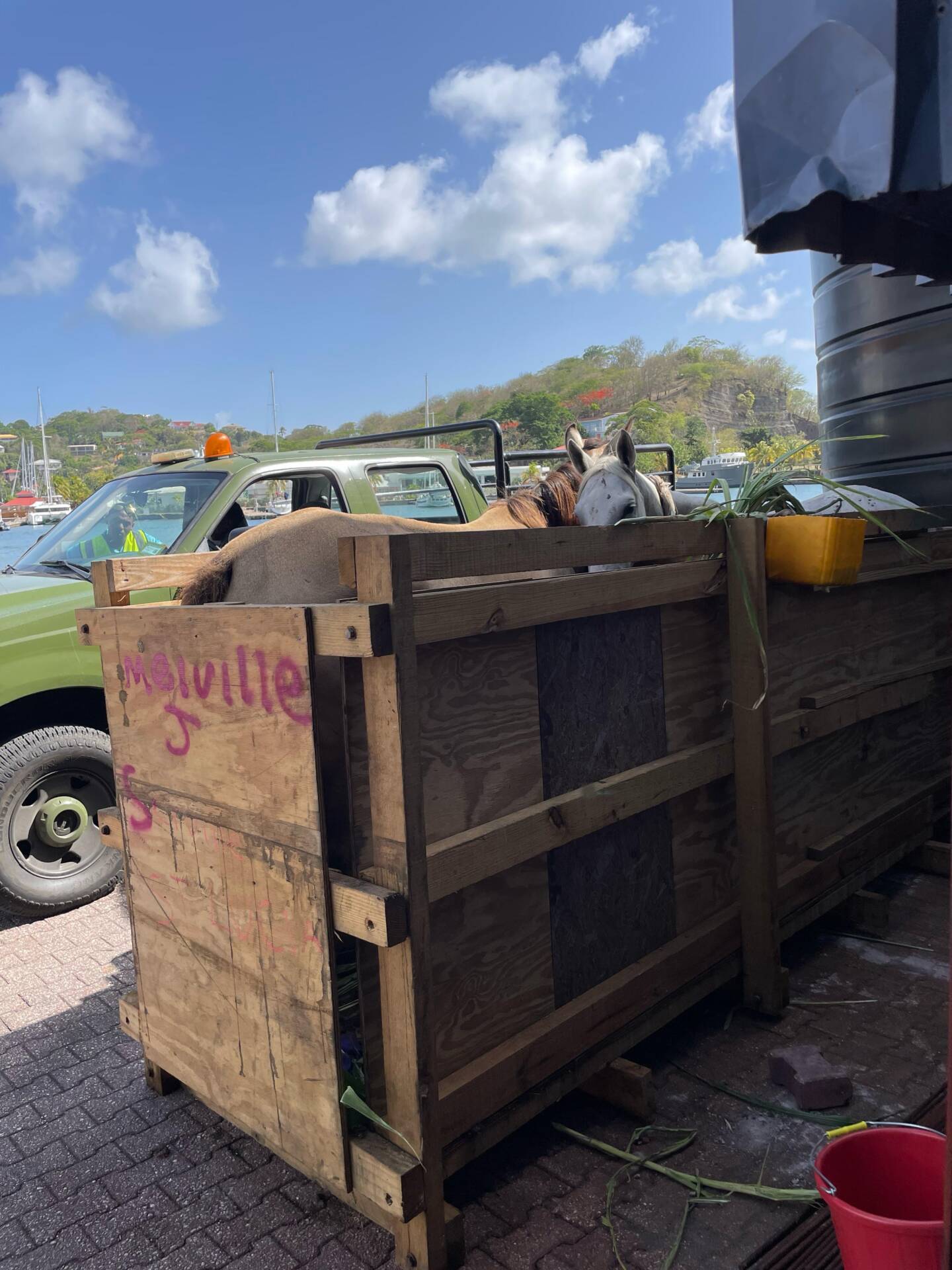
    Grenadian authorities have launched formal legal proceedings and announced sweeping new biosecurity measures following a high-stakes incident that resulted in the euthanasia of two horses illegally imported from St. Lucia that tested positive for a tick-borne disease not currently found in the country.

    Javan Williams, Permanent Secretary of Grenada’s Ministry of Agriculture, outlined the government’s full response during a post-cabinet media briefing on Wednesday, stressing that the illegal import incident will be prosecuted to the full extent of national animal health law to uphold regulatory standards.

    “This matter will not be treated lightly,” Williams told reporters. “The ministry will take all actions outlined in our legislation to establish the clear standard that the law intends to enforce.”

    The two horses were brought into Grenada without the mandatory import permit required under the country’s Animal Disease and Importation Act. Official veterinary testing from St. Lucia confirmed both animals were infected with Babesia, the parasite that causes equine babesiosis – a dangerous disease that targets horses and other equines. Unlike St. Lucia, which maintains established treatment protocols for the infection, Grenada lacks the specialized infrastructure, quarantine facilities, medication stockpiles, and clinical protocols to safely manage infected animals, and has long maintained a disease-free status for equine babesiosis.

    After entry was denied and options to return the horses to St. Lucia were ruled unfeasible, veterinary authorities ordered the humane euthanasia and incineration of the animals under official supervision. Ministry officials confirmed the decision aligned with domestic legal obligations and guidance from the Caribbean Animal Health and Food Safety Agency (CAHFSA), which sets regional standards for animal health and biosecurity.

    Williams explained that while the individual attempting to import the horses had held preliminary discussions with veterinary authorities about a permit, submitting an application does not guarantee approval – all regulatory requirements must be met before a permit can be issued. The final decision to block the imports was made jointly by veterinary officials from both Grenada and St. Lucia, he added.

    To prevent similar illegal import incidents in the future, the Ministry of Agriculture has finalized two key new initiatives. First, a comprehensive summary of official import standard operating procedures will be distributed to all ports of entry across the country, including every commercial airport and seaport, to ensure all border stakeholders understand and follow legal requirements for animal and animal product imports. Second, a nationwide public education campaign will be rolled out to raise awareness among the general public of import rules and procedures for live animals.

    On the criminal enforcement front, Williams confirmed the full case file has already been submitted to the Commissioner of Police and the Criminal Investigations Department (CID). Authorities are currently reviewing evidence to determine if criminal charges will be filed under Section 20 of the Animal Disease and Importation Act, and the individual responsible for the illegal import has already been formally notified of the government’s intent to pursue legal action.

    Chief Veterinary Officer Dr. Daniel Johnson emphasized that the action taken was a critical biosecurity safeguard, noting that allowing equine babesiosis to enter Grenada could have triggered widespread infection of the local horse population, led to the permanent establishment of the disease in the country, driven up veterinary costs for livestock owners, and resulted in harmful trade restrictions for Grenada’s animal exports on regional and global markets.

    Officials stressed the incident is a purely technical animal health matter, not a political issue, and that all actions taken were exclusively to protect Grenada’s disease-free status and preserve the long-term economic viability of the country’s livestock sector.

  • Public statement: Chief Veterinary Officer on unathorised importation of horses

    Public statement: Chief Veterinary Officer on unathorised importation of horses

    Grenada’s Ministry of Agriculture, Lands and Forestry has issued an official public announcement detailing a high-stakes biosecurity incident that unfolded after an attempt to smuggle two horses into the country from St. Lucia without required legal authorization. Under Grenada’s Animal Disease and Importation Act (Cap. 15), the Veterinary and Livestock Division holds exclusive authority as the competent body for issuing animal import permits, and no approval was granted for this shipment, making the attempted cross-border movement a direct violation of national law.

    Following interception of the unauthorized shipment, official health verification from St. Lucia’s Chief Veterinary Officer confirmed a devastating finding: both horses tested positive for *Babesia spp.*, the parasite that causes equine babesiosis, a life-threatening tick-borne disease that is currently not present in Grenada. National biosecurity policy explicitly bars entry to any animal testing positive for the pathogen, as an outbreak would pose an immediate, severe threat to the country’s existing equine population.

    A full technical assessment confirmed that Grenada lacked the infrastructure and resources to safely manage the infected animals. The country has no operational quarantine facilities designed to house and isolate high-risk *Babesia*-positive animals, no specialized medications or equipment to treat the infection, and no external domestic partners able to step in to provide these critical resources. With no feasible, legally compliant pathway to admit, isolate or treat the horses on Grenadian soil, and with returning the animals to St. Lucia deemed unworkable, officials moved forward with mandated protective measures aligned with international standards.

    In line with national legislation, international biosecurity protocols, and formal recommendations from the Caribbean Animal Health and Food Safety Agency (CAHFSA), the two horses were humanely euthanized following accepted veterinary welfare standards, and their remains were immediately incinerated under full official supervision to eliminate all risk of infectious material spreading. The Ministry emphasized that these actions are not punitive or extraordinary: they represent standard sanitary procedure used globally to block the introduction of destructive transboundary animal diseases.

    Under Grenada’s existing legislation, the Chief Veterinary Officer is legally required to prioritize preventing the entry of foreign animal diseases, reject high-risk shipments, and order necessary measures to protect the health of the national herd, as well as broader public and economic health. Officials outlined the severe potential consequences of allowing the infected horses to enter the country: given the widespread presence of tick vectors across Grenada and the lack of mitigation infrastructure, the disease would almost certainly become established and endemic. This would lead to chronic infection and death among local equines, skyrocketing veterinary and disease control costs, and potential trade restrictions on Grenadian animal and animal product exports that would harm the national agricultural economy.

    The Ministry stressed that the decision to euthanize the horses was made exclusively on technical and legal grounds, not political considerations. The action complies fully with national law, adheres to globally recognized animal health and biosecurity best practices, and aligns with expert guidance from regional animal health authorities at CAHFSA. Moving forward, the Ministry reaffirmed its commitment to fair and consistent enforcement of animal import regulations, ongoing protection of Grenada’s disease-free animal population status, and transparent public communication about matters impacting national biosecurity. Members of the public with additional technical questions are directed to contact the Office of the Chief Veterinary Officer within the Veterinary and Livestock Division.

  • Tropical Weather Outlook:  Wednesday, 10 June 2026 (8 am)

    Tropical Weather Outlook: Wednesday, 10 June 2026 (8 am)

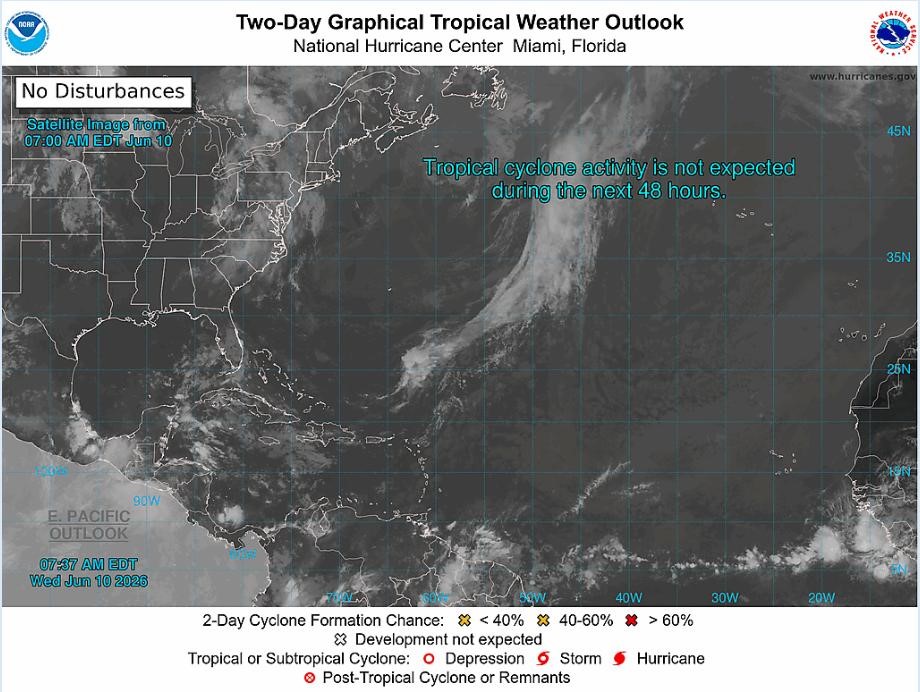
    Meteorological officials from the Meteorological Services of MBIA and the Grenada Airports Authority (GAA) have released an updated advisory tracking three active tropical waves moving westward across the eastern Tropical North Atlantic, within the key monitoring zone stretching from 10° to 20° North latitude and 40° to 65° West longitude that covers the region off the coast of Grenada.

    The westernmost of the three disturbances, Tropical Wave 1, has its central axis positioned just east of Grenada near 61° West, south of 18° North. Currently moving west at a steady clip of 10 to 15 knots, the system is not producing significant organized convective activity, but it is projected to pass over the island of Grenada later today.

    Further east across the Atlantic basin, Tropical Wave 2 sits with its axis near 53° West, south of 15° North, roughly 511 nautical miles east of Grenada. This system is progressing westward slightly faster at approximately 15 knots. Based on its current forward speed and trajectory, forecasters project the wave will move across the southern Windward Islands in the early hours of Thursday morning. The passage of the system will bring increased cloud cover to the region along with scattered showers through the period.

    The farthest system from the Caribbean, Tropical Wave 3, is centered near 41° West, south of 14° North, approximately 1215 nautical miles east of Grenada. It maintains a westward movement between 10 and 15 knots, consistent with the broader trade wind pattern across this stretch of the Atlantic.

    In their latest outlook, meteorologists confirmed that no tropical cyclone formation is expected over the monitored area within the next 48 hours, giving no immediate cause for heightened alert for Caribbean island nations in the region. The next official advisory update is scheduled to be released at 2 pm local time.

    This advisory was distributed in partnership between the Meteorological Services, MBIA, and the Grenada Airports Authority. NOW Grenada, the platform publishing this advisory, notes that it is not liable for opinions, statements, or third-party contributed content shared on its site, and provides a reporting channel for any content that violates community standards.

  • Seeing China, sharing civilisations: A competition bridges cultures

    Seeing China, sharing civilisations: A competition bridges cultures

    Against the backdrop of a global landscape defined by rapid transformation and growing geopolitical turbulence, the Chinese Embassy in Grenada kicked off a groundbreaking cross-cultural initiative on June 5, 2026. Held during celebrations for the second United Nations International Day for Dialogue Among Civilisations, the event formally launched the ‘China In My Eyes’ Short Video and Article Competition, a project designed to connect people across two distinct cultural contexts through personal storytelling and creative expression.

    The International Day for Dialogue Among Civilisations, observed globally every June 10, is itself a product of Chinese diplomatic leadership. First proposed by China during the 78th session of the UN General Assembly, the initiative was formally adopted and established as an annual UN observance in 2024. At a moment when clashes over cultural identity have become an increasingly pressing global challenge, the day carries a clear core message: open dialogue remains the only sustainable bridge to lasting peace, and mutual learning between different cultures acts as the guiding compass for shared human progress.

    The launch event in Grenada centered on the vision laid out in the Global Civilisation Initiative, introduced by Chinese President Xi Jinping in March 2023, which is built around four foundational calls to action. The first core principle is respect for the inherent diversity of global civilisations. As a nation with an unbroken 5,000-year cultural heritage that has nurtured centuries of philosophy, art, and social thought, China values its own unique cultural legacy while rejecting the harmful idea that any single civilisation can claim a monopoly on wisdom or inherent superiority over others. Every cultural tradition, the initiative argues, carries irreplaceable unique value and makes distinct contributions to the broader tapestry of human experience.

    This principle of diverse coexistence finds tangible expression in the cultural landscape of Grenada, where vibrant traditions such as soca rhythms during the annual Spicemas festival and the iconic Jab Jab ritual – where participants coat themselves in oil and black paint to symbolize centuries of resilience, resistance, and renewal – thrive as living expressions of local identity. A traditional Chinese dragon dance and a Grenadian Jab Jab performance may differ sharply in form and history, but both respond to the same fundamental human needs: creative self-expression and collective belonging.

    The second core call of the Global Civilisation Initiative is to advance and protect the common values shared by all humanity. Beneath the surface of differing customs, languages, and traditions, people across every culture hold the same universal aspirations: peace, sustainable development, equity, justice, democracy, and freedom. These values are not the exclusive property of any single civilisation; they are the shared birthright of every person on Earth. A soca artist writing lyrics about overcoming intergenerational hardship and a classical Chinese poet penning verses about social harmony may use different languages, rhythms, and literary devices, but their words resonate with the same core human experiences. A young Grenadian student dreaming of a better future and a young Chinese scholar pursuing advanced research are far more alike than they are different; their native languages may set them apart, but their shared hopes for tomorrow are nearly identical. The International Day for Dialogue Among Civilisations makes clear that embracing these shared values does not require abandoning unique cultural identities. When people recognize that all humans share the same desire for peace and progress, they stop seeing cultural difference as a threat – and start seeing others as reflections of themselves.

    The initiative’s third core principle is a call to prioritize both the inheritance of cultural heritage and the innovation of cultural expression. As President Xi Jinping has emphasized, communities must protect tangible cultural heritage – from historic villages to distinctive architectural landmarks that give a place its unique identity – while also safeguarding intangible cultural traditions passed down through generations. At the same time, communities must pursue creative transformation and innovative development to keep these traditions alive for new generations. China has put this principle into practice in recent years: for example, the hit action role-playing game *Black Myth: Wukong* has reintroduced the centuries-old legend of the Monkey King to global audiences through cutting-edge digital game design, bridging ancient myth and modern technology. In Grenada, similarly, beloved traditions like Spicemas and Jab Jab remain vital cultural touchstones because they have adapted to incorporate new musical styles and resonate with younger generations while remaining rooted in their historical origins. The shared lesson for both nations is clear: communities can honor the lessons and heritage of the past without being chained by it, and remember their origins while continuing to imagine new paths forward.

    The fourth and final core call of the Global Civilisation Initiative is for expanded, people-centered international exchanges and cross-cultural cooperation. 2026 marks a meaningful milestone for China-Grenada relations: it is the 21st anniversary of the resumption of diplomatic ties between the two countries. Over the past two decades, people-to-people connections have grown steadily: more than 3,200 Grenadians have traveled to China to participate in professional and educational training programs, and 251 Grenadian students have received full Chinese government scholarships to pursue higher education in China. At the T.A. Marryshow Community College (TAMCC), the local Confucius Institute continues to offer access to Chinese language learning and cultural programming for local residents, building people-level connections year-round. Just last year, Grenada’s Chief Cultural Officer Kelvin Jacob was invited to participate in the Liangzhu Forum in China, one of the world’s leading international gatherings focused on cross-civilisation dialogue.

    To build on this decades-long foundation of exchange, the Chinese Embassy launched the ‘China In My Eyes’ competition. The initiative invites all Grenadians – with a particular focus on students, working journalists, and independent content creators – to share their personal perspectives on China through original short videos and written articles. Participants are free to explore any topic that resonates with them, from the ancient grandeur of the Great Wall to the dynamic energy of Shanghai’s city streets, from the bold flavors of Sichuan cuisine to the lasting impact of a Chinese teacher who changed their life. While the competition offers generous cash and material prizes to honor outstanding creative work, organizers emphasize that the core goal is not to reward winning entries, but to foster open dialogue. Every submission, regardless of its topic, represents a small but powerful act of cross-cultural connection. Through the personal perspectives of Grenadian participants, China shifts from an abstract, distant concept on the other side of the world to a living, human story. And through these shared stories, the geographic and cultural distance between the two peoples continues to shrink. Participants are not just entering a competition – they act as grassroots cultural ambassadors, shaping how their generation in Grenada sees China, and how Chinese people see Grenada.

    As the event made clear, the Global Civilisation Initiative provides a clear global roadmap for cross-cultural coexistence, the UN International Day for Dialogue Among Civilisations serves as an annual reminder of the urgent need for this work, and the ‘China In My Eyes’ competition turns this vision into a tangible, local platform for action. Ultimately, however, meaningful cross-cultural connection depends not on institutions or governments alone, but on individual people. Through this competition, every Grenadian has the opportunity to help build a bridge of creativity and mutual understanding, turning the ideal of inter-civilisation dialogue into concrete action, and celebrating the decades-long friendship and shared future between the people of China and the people of Grenada.

  • Grenadian creatives to attend 2026 Annecy International Animation Film Festival

    Grenadian creatives to attend 2026 Annecy International Animation Film Festival

    The Caribbean island nation of Grenada is poised to step onto the global animation stage for the first time, with three of its homegrown creative talents set to showcase original, culture-driven projects at the Annecy International Animation Festival and MIFA Market — the world’s most prestigious gathering for animation professionals and storytellers.

    The trio of artists — Jassim Thomas, Robert Finlay, and Alleyne Gulston — are all graduates of the Grenada Office of Creative Affairs (GOCA)’s first-ever Animation Accelerator programme, an initiative developed in partnership with local animation studio AnimaxFYB Studios to nurture emerging creative talent and connect it to international opportunities.

    For Francis Y Brown, founder and creative director of AnimaxFYB Studios, the moment marks far more than a simple milestone for the tiny island nation. Rather, it is a tangible demonstration of Grenada’s long-term commitment to building a sustainable creative economy. “This isn’t just a one-off appearance; it’s intentional investment made visible,” Brown explained. He pointed out that the depth and originality of the projects selected for the accelerator, all rooted in Grenada’s unique cultural heritage and local imagination, prove that a strong creative foundation already exists on the island. GOCA’s accelerator programme fills a critical gap, he added, by building the forward-thinking infrastructure that bridges local talent to global markets, speeds up skills development, and integrates local storytellers into the international animation ecosystem. “This is how enduring creative industries are built: through intentional investment, global exposure, and the courage to share our culture beyond national borders,” Brown said.

    Orlando Romain, advisor overseeing Grenada’s creative economy portfolio, echoed that sentiment, emphasizing that the strength and diversity of submissions GOCA received for the inaugural accelerator programme highlight the untapped potential of the country’s creative sector. “This is why we remain committed to making strategic investments in our creatives and the broader creative ecosystem that supports them,” Romain said. “These investments open doors for our artists to access international markets and take their careers to the next level.” He extended congratulations to all participants of the first accelerator cohort, and offered special well wishes to Thomas, Finlay, and Gulston as they prepare to represent Grenada in France.

    Each of the three selected animators is bringing a project that draws deeply from Grenadian and Caribbean cultural roots to share with the global audience at Annecy.

    Thomas, whose project *Isle of Tales* will bring centuries of Grenadian and Caribbean oral storytelling traditions to animated life, said the opportunity carries profound personal and professional meaning. “As a Grenadian creative, this opportunity allows me to share stories inspired by our culture, folklore, and traditions with an international audience,” he explained. Thomas said he is eager to learn from top industry professionals, build connections with creators from across the globe, and highlight the unique richness of Caribbean storytelling through animation.

    Finlay, the creator of *The Golden Nutmeg*, said his project began as a passion project driven by a desire to create something that captures the unique richness, mystery, and storytelling spirit of the Caribbean region. “To now have that vision acknowledged on an international platform is something I am extremely grateful for,” Finlay said. What excites him most, he added, is the chance to immerse himself in one of the world’s most respected animation industry gatherings, connect with inspiring creators from all corners of the globe, and continue pushing the boundaries of what Caribbean animation can achieve as a Grenadian artist.

    Gulston, whose character-driven project *Macee, Wha Go?* has been years in the making, called his selection both a tremendous honor and a defining milestone in his creative career. A graphic designer, visual artist, and illustrator by trade, Gulston noted that visual storytelling has always been the core of his work. “Having the opportunity to showcase a character concept I’ve carried with me for many years on such a prestigious international stage is incredibly rewarding,” he said.

    Gulston specifically credited GOCA and AnimaxFYB Studios for their investment in local talent through targeted training initiatives, including the Toon Boom 2D Animation training that gave him the skills to move his concept from an early idea to a showcase-ready project. Beyond professional growth, he said the trip to Annecy is an opportunity to stand alongside his fellow Grenadian creatives to share the island’s unique stories and perspectives with the world.

    “Grenada may be a small island, but we have powerful stories to tell, unique perspectives to offer, and a rich creative spirit that deserves to be seen and celebrated,” Gulston said. He expressed hope that the trio’s appearance at Annecy will not only position Grenada as a emerging hub of creative storytelling but also open new professional doors for future generations of Grenadian artists, inspiring young creators to pursue their dreams and share their work with global audiences.

    The Annecy International Animation Festival and MIFA Market is scheduled to bring thousands of animation professionals, studio executives, and independent creators from more than 100 countries together this year, offering emerging talent unmatched access to industry networks, distribution opportunities, and skill-building workshops.

  • GWP-C and SGU educate students on Water Quality Assessment

    GWP-C and SGU educate students on Water Quality Assessment

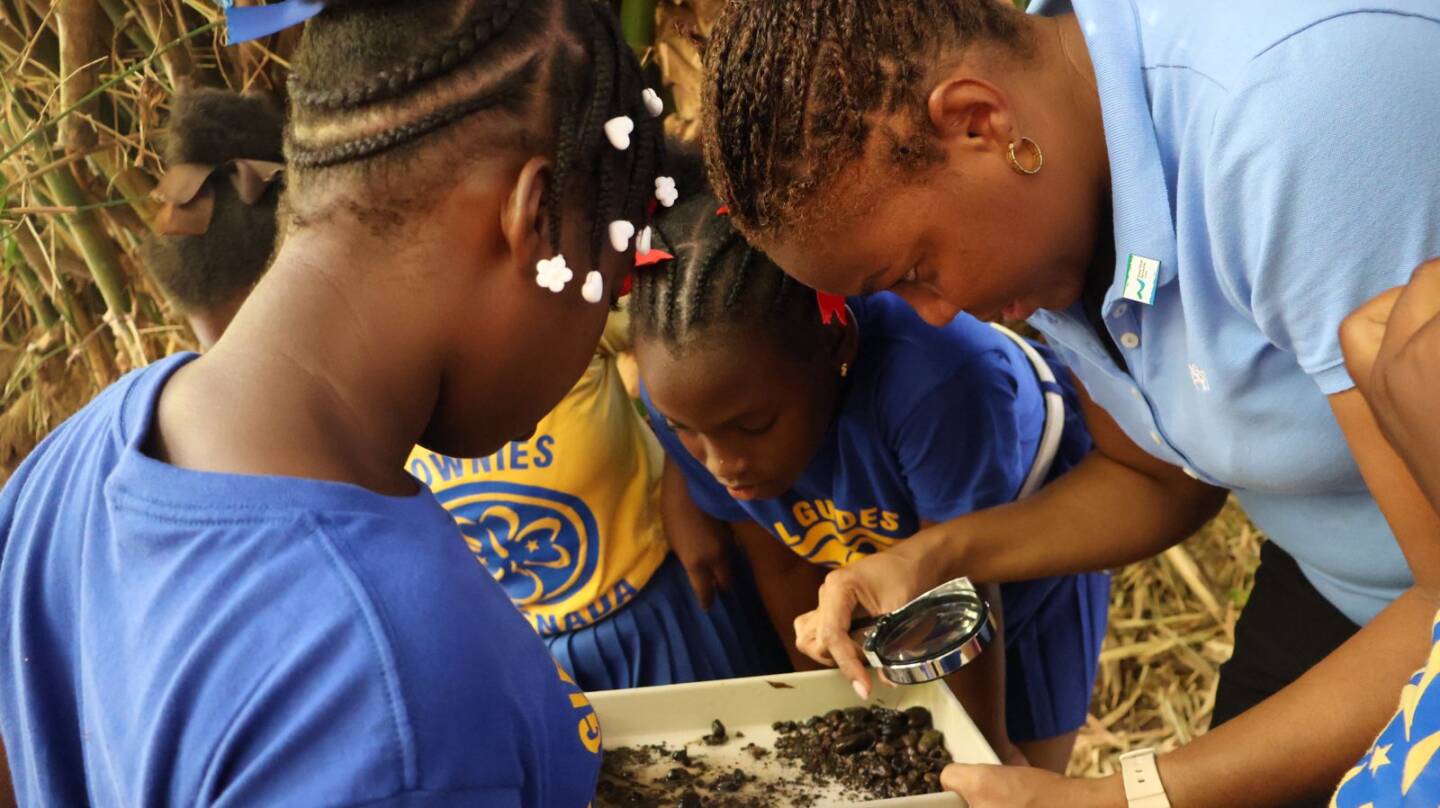
    To mark World Environment Day 2026, three regional and local organizations have partnered to deliver a immersive, hands-on environmental education experience for young people in Grenada, turning classroom lessons about ecosystem conservation into tangible outdoor exploration. On Friday, June 5, 2026, Global Water Partnership-Caribbean (GWP-C), joined by the Girl Guides Association of Grenada and the Department of Biology, Ecology, and Conservation (BEC) at St George’s University (SGU), organized the field activity at a river site in St David Parish. The gathering drew roughly 15 participants, ranging from young Brownies and senior Girl Guides from St Martin de Porres Catholic School to adult chaperones and GWP-C program team members. Aligned with 2026’s global World Environment Day theme, *Inspired by Nature. For Climate. For Our Future*, the initiative was designed to spark early curiosity and build foundational understanding of the natural world among young attendees. Dr. Roxanne Graham-Victor, GWP-C’s Regional Coordinator, led the day’s scientific activities, walking participants through a accessible method of evaluating river ecosystem health: surveying macroinvertebrate populations. “This is a simple but powerful approach to checking the condition of a river,” Dr. Graham-Victor explained of the method. She added that the event yielded a particularly encouraging finding: even with regular human activity in the area, the tested stretch of river remains in relatively good ecological health. Under Dr. Graham-Victor’s guidance, young participants used standard Surber samplers to collect aquatic organism samples directly from the riverbed. After collection, they examined their findings through magnifying glasses in sorting trays, learning how different species act as bioindicators of water quality. During the exploration, students identified multiple healthy aquatic species, including small fish, crayfish, and freshwater snails with right-opening shells – a group widely linked to unpolluted, well-functioning aquatic ecosystems. Beyond the official scientific results, organizers noted the event’s greatest success was the visible excitement and curiosity the young participants brought to their first field research experience. The day covered far more than just sample collection: attendees also learned core concepts about freshwater food webs, the function of watersheds, and why protecting these critical freshwater resources matters for both communities and ecosystems. For the young Brownies and Girl Guides taking part, the event offered a one-of-a-kind chance to see environmental science practiced in the field, rather than just read about it in textbooks. More broadly, the initiative worked to foster long-term environmental awareness, build a sense of stewardship for natural resources, and deepen young Grenadians’ appreciation for the island nation’s unique freshwater ecosystems. This article was published via NOW Grenada, which notes that it does not take responsibility for opinions or statements shared by contributing authors or partner organizations.

  • Mental health and the suicide crisis

    Mental health and the suicide crisis

    Against the backdrop of Men’s Mental Health Awareness Month, a devastating tragedy has unfolded in the small Caribbean nation of Grenada: three local men died by suicide within a single seven-day window. Unlike accidental deaths or deaths from chronic illnesses that communities spend decades mobilizing to fight, these deaths came after each man reached a breaking point, where the emotional and psychological weight they carried became too much to bear, and they made a final, irreversible choice to end their suffering.

    This painful event comes at a time when global conversations around mental health have never been more common — yet this very familiarity has ironically drained much of the urgency from the issue, particularly across Grenada and the broader Caribbean. Here, a sharp gap persists between mainstream discourse about mental wellness and the on-the-ground reality for people struggling with their psychological well-being.

    Many in the region still misframe mental health as an abstract, niche branch of medicine, disconnected from daily life. In truth, mental health shapes every moment of human experience: it colors our everyday moods, anchors our sense of safety, and quietly signals whether we are thriving or falling apart. It is the invisible canvas on which every life is painted, moment by moment, day by day. Precisely because it operates out of sight, it is rarely valued until it is lost beyond recovery. For far too many men across Grenada, this breaking point arrives far sooner than anyone expects.

    For generations, cultural norms across much of the world — and particularly in Grenada — have socialized boys from childhood to embody a rigid version of strength: do not cry, do not show weakness, provide for your family, protect others, and never lose composure. Under these unwritten rules, emotion is framed as a liability, and vulnerability is seen as proof of weakness. From a young age, boys learn to bury their unhappiness, their fear, and their exhaustion deep beneath a confident, unshakable public facade. Over time, that mask becomes the person the world knows — and eventually, the person even the man himself believes he is.

    By the time a man realizes he is drowning in psychological distress, he has spent decades performing unbroken composure. He has no language to name his pain, has never given himself permission to admit he needs help, and often has no idea where to turn for support. Even if he can bring himself to consider therapy, questions pile up rapidly: Where would I find a provider? Can I afford this? What will my friends and family say if I seek help? Isn’t this kind of care for women and children, not men? These doubts pile up, folding the growing crisis into a cycle of unspoken, unaddressed despair that festers until it reaches a catastrophic breaking point. Three deaths in one week is what that catastrophic outcome looks like.

    Global data underscores the scope of this crisis. The World Health Organization estimates that one person dies by suicide every 40 seconds worldwide, with men dying by suicide at nearly double the rate of women. In Grenada, the roots of this disparity grow from two overlapping failures: a deep-seated cultural norm that teaches men they need no help, and a grossly under-resourced support system that offers almost no help when men finally work up the courage to ask.

    Currently, Grenada has no dedicated national suicide prevention hotline. Public concern about suicide rarely lasts longer than the 24-hour news cycle. Trained mental health therapists are expensive, scarce, and notoriously difficult to book an appointment with. Psychiatric services are concentrated in limited central locations, overstretched, and surrounded by deep social stigma. Whether a man is just beginning to struggle or has already recognized his need for support, he hits the same insurmountable wall: systemic barriers to care, and a cultural script that tells him seeking help is shameful.

    This is not a failure of individual men. It is a failure of the systems designed to serve communities, and a failure of Grenadian society as a whole. It is a shared failure that touches every person who makes up the nation of Grenada.

    That said, systems are built by people, which means they can be changed by people. There are small signs of progress: recently, Grenada Broadcasting Network announced that the national government plans to launch a long-awaited national suicide hotline by the end of June. This is a welcome step in the right direction, one that deserves public recognition. But a policy announcement is not a working lifeline. The three men who lost their lives this week could not wait for the launch date. A promise only becomes a lifeline when it is a working phone number, staffed by trained, compassionate providers ready to answer calls. Until that promise is fulfilled, the gap in care remains — and three suicides in one week is a brutal reminder of how urgent that gap is.

    Beyond systemic change, there are small, critical actions every person can take right now. When was the last time you asked the men in your life how they are really doing? Not the passing, reflexive question we exchange as we walk past each other, not the polite exchange that ends with a automatic “fine, thanks” before we move on. When was the last time you sat down with your brother, your father, your friend, and asked them honestly, earnestly, how they are actually holding up? And when they give the expected answer “I’m okay,” when do you push past that politely and let them know it is safe to say otherwise? It is safe to be vulnerable, it is safe to need help.

    Suicidal despair is not strength. It has never been strength. We need our men here, alive and present with us, so we can work through struggles together. Death may feel like the only escape from unending pain, but a better future is possible — a future where men can access the help they need long before they reach an irreversible breaking point. We can no longer afford to keep burying our men in a silence that we have the power to break.