标签: Dominican Republic

多米尼加共和国

  • Survivor Greece contestant seriously injured in boat accident in the Dominican Republic

    Survivor Greece contestant seriously injured in boat accident in the Dominican Republic

    A devastating boating accident off the coast of the Dominican Republic has left a young Greek reality TV contestant with life-altering injuries, prompting local authorities to move forward with formal criminal charges against the vessel’s captain. The incident unfolded earlier this month near Saona Island, when 22-year-old Stavros Floros, a current competitor on the popular series *Survivor Greece*, was struck by the tourist boat’s propellers during an off-filming spearfishing excursion.

    Local judicial officials confirmed that the case has been formally opened under Article 309 of the Dominican Penal Code, which covers offenses resulting in grievous bodily harm. As of this report, the captain remains in official custody, with a closed-door evidentiary hearing scheduled Friday in the capital city of Santo Domingo. At the hearing, judges will rule on whether the operator will continue to be held in pre-trial detention, or be released under bail or house arrest for the duration of the ongoing investigation.

    Medical reports confirm Floros suffered a partial amputation of his lower left leg and severe soft-tissue and bone trauma to his right leg after the collision. AcunMedya, the Istanbul-based production company behind *Survivor Greece*, released a statement shortly after the accident confirming that the incident occurred outside of scheduled competition filming during a scheduled break. As of the latest update, Floros remains hospitalized in the Dominican Republic, where his condition is listed as serious but stable, and he is no longer considered in immediate critical danger.

    In interviews with Greek media outlets, Floros’ family shared new details about the chaotic aftermath of the crash, and offered an update on the young contestant’s remarkable mindset. His mother told reporters that despite the severity of his injuries, Floros remains unwaveringly optimistic, saying he told her, “Mom, why should I be sad? I’m alive.” She also confirmed that a team of divers accompanying the group had placed standard surface marker buoys in the water to mark the location of the spearfishing group before the collision. Floros’ father added that the trip to the nearest hospital took approximately 40 minutes, during which his son suffered extensive life-threatening blood loss.

    In the wake of the accident, both AcunMedya and Greek national broadcaster SKAI TV announced an immediate temporary suspension of *Survivor Greece* production and on-air broadcasts to honor Floros and allow for the investigation to proceed. SKAI TV has also committed to covering all costs associated with Floros’ ongoing medical treatment and future rehabilitation, as Dominican investigators work to piece together the full sequence of events that led to the crash.

    Original reporting for this story was provided by Greek newspaper Tovima.

  • 149 foreign nationals officially become Dominican citizens

    149 foreign nationals officially become Dominican citizens

    SANTO DOMINGO – A landmark citizenship naturalization ceremony held at the Higher Institute for Police Studies (IPES) here this week welcomed 149 people from more than 30 nations as official Dominican citizens, in an event led by Dominican Interior and Police Minister Faride Raful.

    The group of new citizens brings together a broad cross-section of global backgrounds, with the largest cohorts hailing from regional and international partners. Venezuela accounts for 39 of the newly naturalized Dominicans, followed by Cuba with 18, Colombia with 14, Italy with 12, and both Spain and Russia contributing 10 new citizens each. Beyond these largest groups, the ceremony also included applicants from Belarus, Pakistan, China, South Africa, Belgium, Germany, Lebanon and a range of other countries, highlighting the growing global draw of the Dominican Republic as a place to build a permanent life.

    Addressing the assembled new citizens and event attendees, Minister Raful emphasized the core responsibilities that come with Dominican nationality. She urged all recipients of citizenship to respect the country’s Constitution, abide by its legal framework, and uphold the democratic values that anchor Dominican national identity. Beyond rights and protections, Raful framed naturalization as a mutual commitment: gaining Dominican citizenship means joining the nation’s ongoing development project, and committing to full, active participation across the country’s social, economic and cultural spheres.

    The ceremony marks one of the country’s larger recent collective naturalization events, reflecting consistent migration flows into the Dominican Republic from across the Caribbean, Latin America, Europe and other world regions. For the new citizens, the swearing-in ceremony formalizes their transition to permanent membership in Dominican society, opening full access to civic rights and opportunities across the island nation.

  • Dominican Government raises fuel prices by up to RD$8.00 amid global oil surge

    Dominican Government raises fuel prices by up to RD$8.00 amid global oil surge

    SANTO DOMINGO — Amid ongoing volatility in global energy markets, the Dominican Republic’s Ministry of Industry, Commerce and Micro, Small and Medium Enterprises (MICM) has announced a major government subsidy package totaling RD$1.435 billion to stabilize critical fuel prices for consumers between May 16 and 22.

    The subsidy initiative is designed to keep retail prices of liquefied petroleum gas (LPG) fully frozen, while partially offsetting upward price adjustments for gasoline and diesel that have become unavoidable due to rising global crude costs. Officials explained that West Texas Intermediate (WTI) crude, the key benchmark against which Dominican fuel prices are set, has climbed by roughly $4 per barrel in its most recent trading session, pushing the global benchmark close to the $105 per barrel mark. This jump represents a 3.86% increase in WTI prices, extending a period of persistent elevated international energy costs that has put upward pressure on retail fuel prices across the country.

    Against this market backdrop, official price adjustments will go into effect for four widely consumed transportation fuels: premium grade gasoline, regular grade gasoline, regular diesel, and premium diesel. All four product categories will see measurable increases to their per-gallon retail prices for the week.

    In a rare offsetting trend, a handful of specialized fuel products primarily used by commercial and industrial sectors will see slight price reductions over the same seven-day window. These include aviation turbine fuel (Avtur), kerosene, Fuel Oil #1, and Fuel Oil #6. The mixed price movement across different fuel categories underscores the uneven impact of current global crude market shifts across segments of the Dominican energy economy.

  • Abinader arrives in Guyana to sign new cooperation agreements with President Ali

    Abinader arrives in Guyana to sign new cooperation agreements with President Ali

    GEORGETOWN, GUYANA – Dominican Republic President Luis Abinader touched down in Georgetown Wednesday evening to launch his fourth official working visit to the South American nation, a trip aimed at reinforcing long-standing bilateral ties and expanding collaborative frameworks between the two countries through new agreements with Guyanese President Mohamed Irfaan Ali.

    Upon his arrival at Cheddi Jagan International Airport, Abinader received an official welcome from a senior Guyanese delegation led by Prime Minister Mark Anthony Phillips, Foreign Minister Hugh Todd, alongside Ernesto Torres, the Dominican Republic’s resident ambassador to Guyana. After participating in formal military honors to mark the official nature of his visit, the Dominican leader joined Guyanese government officials for a welcoming reception hosted at Government House.

    A full day of diplomatic engagement is scheduled for Thursday, starting with a closed-door bilateral meeting between Abinader and Ali to discuss shared priorities and ongoing collaborative projects. Following their talks, the two heads of state will oversee the signing of a new bilateral cooperation agreement that expands on existing partnerships.

    This current visit builds directly on progress achieved in 2023, when the two governments signed six memorandums of understanding targeting key sectors of mutual interest: sustainable energy development, national food security, and cross-border trade expansion. Abinader is traveling with a senior cabinet and delegation, including Joel Santos, the Dominican Minister of Energy and Mines, Samuel Pereyra, chairman of the Dominican Petroleum Refinery (Refidomsa), and Tulio Rodríguez, the government’s special coordinator for Guyana affairs. The Dominican president is scheduled to complete his diplomatic engagements and depart for the Dominican Republic by the end of Thursday.

  • Foreign Minister Álvarez defends U.S. agreement, says there is “nothing to hide”

    Foreign Minister Álvarez defends U.S. agreement, says there is “nothing to hide”

    In the capital city of Santo Domingo, top Dominican diplomatic official Roberto Álvarez has moved to quell growing public controversy over a recently struck bilateral agreement between the Dominican Republic and the United States, pushing back firmly against claims of lack of transparency and hidden provisions.

    Addressing reporters during an official press briefing held at the Dominican Ministry of Foreign Affairs headquarters, Álvarez outlined key details of the memorandum of understanding (MOU) that have sparked fierce debate among political circles in recent days. The foreign minister stressed repeatedly that the agreement is an open document with no confidential clauses, maintaining that the Dominican government has absolutely nothing to conceal from the public or legislative bodies.

    Alvarez clarified a critical procedural point that has been at the center of opposition demands: the MOU is not classified as a formal international treaty under Dominican law. This classification means the agreement does not require formal ratification votes from the country’s National Congress, nor does it need a constitutional compatibility review from the Constitutional Court, he explained.

    Expanding on the nature of such agreements, Álvarez noted that the vast majority of bilateral memorandums of understanding crafted between sovereign states are non-binding instruments. They are designed simply to lay out a framework for future collaborative work, rather than imposing rigid, enforceable legal obligations on either signatory nation. The minister added that the MOU can be terminated unilaterally by the Dominican government at any point, and that the commitments outlined in the text are not substantial enough to justify the full legislative review process that applies to formal treaties.

    Álvarez’s public defense comes in direct response to mounting criticism from opposition lawmakers and opposition political leaders, who have spent days calling for the full release of the agreement and demanding clearer answers about its contents. Much of the opposition’s scrutiny has centered on unconfirmed speculation that the MOU includes provisions for the Dominican Republic to accept migrants deported from U.S. territory, a politically sensitive issue in the country.

    In response to these calls for more information, the foreign minister affirmed that the Dominican government has already published the full text of the agreement in a timely manner, fulfilling all public transparency requirements. He added that he stands ready to appear in person before the National Congress to answer additional questions and provide further context for the agreement if legislative leaders formally request his attendance.

  • Gold Museum in Cotuí advances with US$1.3 million investment from Barrick Pueblo Viejo

    Gold Museum in Cotuí advances with US$1.3 million investment from Barrick Pueblo Viejo

    In the Dominican province of Sánchez Ramírez, a landmark cultural initiative is taking shape: the construction of the Cotuí Gold Museum, a joint project between mining giant Barrick Pueblo Viejo and the Dominican national government, is progressing steadily on schedule. Backed by a total investment of $1.3 million, the project was conceived to fill a long-standing gap in preserving the region’s deep-rooted mining heritage while creating a dynamic educational and cultural hub for both locals and visitors.

    Once completed, the museum will tell the comprehensive story of gold mining in Cotuí, spanning from early extraction practices to modern commercial operations. Exhibits will highlight the region’s extraordinary geological mineral wealth, trace the evolution of mining technology, and examine how mining activity has shaped the social structure and economic trajectory of the province for generations. The initiative aligns with a national strategy to strengthen local cultural identity and expand cultural tourism offerings across the country, and has received formal backing from three key government bodies: the Ministry of Industry, Commerce and MSMEs, the General Directorate of Mining, and the Ministry of Culture.

    Last week, a delegation of senior government officials and Barrick Pueblo Viejo executives conducted an on-site inspection of the construction progress. Both parties commended the construction team for adhering to high quality standards and keeping the project aligned with its original timeline. Project stakeholders project that the museum will become a magnet for cultural tourism, draw visitors from across the Dominican Republic and beyond, serve as a hands-on educational resource for local schools, and drive inclusive, long-term economic growth for the entire Sánchez Ramírez province. According to the current construction schedule, the museum is on track to be finished between mid-December and late December of this year, opening its doors to the public just before the holiday season.

  • Dominican Republic to receive 30 U.S.-deported migrants per month

    Dominican Republic to receive 30 U.S.-deported migrants per month

    In a formal announcement made this Wednesday, Dominican Republic Foreign Minister Roberto Álvarez confirmed that the Caribbean nation has entered into a 12-month memorandum of understanding with the United States that will see the country accept roughly 30 deported third-country migrants from U.S. territory each month.

    Under the terms of the agreement, the incoming migrant group will not include Haitian citizens or unaccompanied minor migrants, Álvarez clarified. During their stay in the Dominican Republic, which is projected to last between one and two weeks, local authorities will coordinate logistics for the migrants’ eventual repatriation to their countries of birth or origin.

    Crucially, all costs tied to the transit and repatriation process will be fully covered by the U.S. government, while the International Organization for Migration will provide operational support to Dominican agencies tasked with overseeing the program. At the time of the announcement, Dominican officials had not yet finalized a location to house the incoming deportees, but confirmed that all migrants will be kept under consistent supervision throughout their stay in the country.

    Addressing growing public and political scrutiny of the deal, Álvarez pushed back against claims that the Dominican government was pressured into signing the agreement by U.S. officials. He emphasized that the memorandum is a non-binding arrangement that in no way undermines the Dominican Republic’s national sovereignty.

    The foreign minister also noted that the country is far from alone in adopting this policy framework, pointing to existing similar agreements already in place between Washington and other Latin American nations including Costa Rica, Ecuador, Honduras, and Paraguay. Álvarez repeatedly stressed that the arrangement is designed solely as a temporary transit mechanism, and it will not result in permanent resettlement of these migrants in the Dominican Republic, nor does it open any pathways for formal permanent immigration status for the group under Dominican law.

  • Geopolitics Congress in Santo Domingo examines impact of global conflicts on the region

    Geopolitics Congress in Santo Domingo examines impact of global conflicts on the region

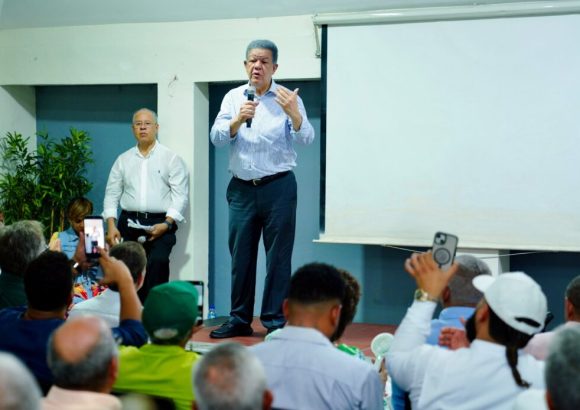
    SANTO DOMINGO – Speaking at the closing ceremony of the inaugural 1st International Geopolitics Congress Dominican Republic 2026, former Dominican Republic president Leonel Fernández has delivered a stark analysis of how ongoing global conflicts are rippling through Latin American economies. Fernández highlighted that the twin conflicts in Ukraine and the Middle East have upended long-stable global supply chains for critical commodities including oil, natural gas, aluminum, and grains, creating a deeply divided economic landscape across the Latin American and Caribbean region.

    According to Fernández, the economic fallout of these disruptions has been anything but uniform across the region. Fuel-exporting economies, including major players such as Brazil, Colombia, and Mexico, have seen unexpected gains from elevated commodity prices, while net energy importing nations – the Dominican Republic, Chile, and Peru among them – have been forced to grapple with skyrocketing energy costs, persistent broad-based inflation, and a marked slowdown in economic growth.

    In his address, Fernández also addressed the policy responses from regional monetary authorities, noting that central banks across Latin America have moved aggressively to curb rising prices by hiking interest rates. He stressed that protecting the institutional autonomy of these central banks is non-negotiable for maintaining long-term economic stability, calling on regional leaders to safeguard this independence from political interference.

    Closing his remarks, Fernández laid out a vision for a reimagined 21st-century global order rooted in four core pillars: lasting peace, broad inclusion, global equity, and long-term environmental sustainability. He argued that such a framework is the only way to insulate developing economies from the volatile spillover effects of distant geopolitical conflicts.

    The landmark congress, organized by the Dominican Center for Strategic Thought (CEPED), gathered a diverse cross-section of global stakeholders, including sitting political leaders, leading academic researchers, senior diplomats, and top business representatives. The overarching goal of the gathering was to unpack the shifting dynamics of the global order and unpack what these changes mean for Latin America’s future.

    Other prominent speakers at the event included noted Spanish geopolitical analyst Pedro Baños, who drew a clear connection between a nation’s economic resilience and its standing in global power dynamics. Additional expert contributions came from leading scholars Ana Esther Ceceña, Alfredo Jalife, and Iván Gatón. José Ignacio Paliza, the Dominican Minister of the Presidency, used his address to emphasize that energy security has emerged as a make-or-break factor for national economic competitiveness in the new geopolitical landscape.

  • Senator Cholitín warns La Altagracia is being “punished by success”

    Senator Cholitín warns La Altagracia is being “punished by success”

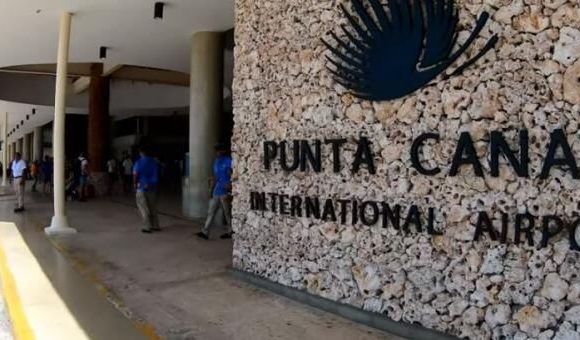
    In a stark address delivered before the Dominican Republic’s Senate, senior lawmaker Rafael Barón Duluc — widely known by his nickname Cholitín — has sounded the alarm over unregulated, uneven expansion in the province of La Altagracia, home to the Caribbean’s iconic tourist hubs Punta Cana and Bávaro. While the region has cemented its reputation as one of the top travel destinations in the Americas, drawing millions of visitors and generating billions in annual revenue, its rapid growth has come at a steep cost, Duluc argued.

    Duluc framed La Altagracia’s current crisis as a case of “being punished by success”: the province’s booming tourism economy has failed to deliver broad-based improvements to quality of life for local residents, leaving critical public sectors starved for targeted investment and basic infrastructure outdated and overstretched. One of the most glaring gaps in data is also the root of many of the region’s challenges, he claimed: official population counts drastically undercount the actual number of people who call La Altagracia home, with Duluc putting the current population at over 1 million, far higher than government estimates.

    To address this data deficit, Duluc is backing a Senate resolution that calls on President Luis Abinader to direct the National Statistics Office (ONE) to carry out a one-time, specialized census focused exclusively on La Altagracia. Without an accurate count of residents, the senator explained, local and national leaders cannot allocate sufficient funding or resources to fix widespread shortages that have plagued daily life in the province. These shortages range from K-12 classroom space and accessible public transportation to core utility services, while unmanaged population growth has also turned chronic traffic congestion into a daily crisis in both Punta Cana and the nearby town of Verón.

    Duluc’s warning carries added weight, as it aligns with recent comments from Frank Rainieri, the pioneering tourism developer who helped transform Punta Cana from a remote coastal stretch into a global travel destination. Rainieri recently echoed the same concern, describing the region’s current pattern of unregulated growth as fundamentally unsustainable long-term. For Duluc, the specialized census is not just a bureaucratic exercise — it is the most critical first step to lay the groundwork for informed strategic planning, targeted public investment, and inclusive growth that can benefit both the tourism industry and the local community that calls La Altagracia home.

  • ONDA reports record surge in copyright registrations in the Dominican Republic

    ONDA reports record surge in copyright registrations in the Dominican Republic

    In a significant milestone for the Dominican Republic’s creative and entrepreneurial ecosystems, the country’s National Copyright Office (ONDA) has announced a dramatic surge in copyright registrations by local creators, a shift that points to rapidly expanding public awareness around the value of intellectual property protection.

    ONDA Director General José Ruben Gonell Cosme shared that the agency has undergone a remarkable transformation in processing volumes over recent years. Where it once handled roughly 1,400 work registrations annually, it closed 2025 with nearly 34,000 copyrighted works formally registered and protected. This explosive growth has carried into 2026, with a single month in April recording more than 19,000 new registrations alone.

    Beyond the raw volume increase, Gonell noted that the scope of copyright protection has also expanded dramatically beyond the traditional categories most creators associate with copyright law. Today, the office recognizes protection for more than 60 distinct types of creative and commercial work, ranging from long-protected categories such as music and literary publications to modern assets like software, video game content, original culinary recipes, and architectural blueprints. For independent creators and small business owners across the country, this formal legal protection has emerged as a valuable economic asset that can be leveraged for revenue generation, investment, and long-term business growth.

    Gonell also emphasized that the country’s progress in intellectual property regulation earned international recognition when the Dominican Republic was removed from the United States’ Special 301 Watch List, a development that has significantly boosted legal certainty for both domestic and foreign investors looking to engage with the country’s creative and tech sectors. Even as the agency celebrates this milestone of growing registration volumes, however, Gonell acknowledged that gaps remain in intellectual property awareness. Key sectors including independent publishing and traditional crafts still see large shares of creators failing to formalize protection for their work, leaving their creative assets vulnerable to exploitation.

    Looking ahead, ONDA will continue prioritizing outreach and educational programs to expand awareness of intellectual property rights across under-served sectors. It also maintains an active focus on mediation services to reduce piracy of copyrighted material, while proactively preparing regulatory frameworks to address emerging challenges tied to artificial intelligence development and the evolving impact of major digital content platforms.