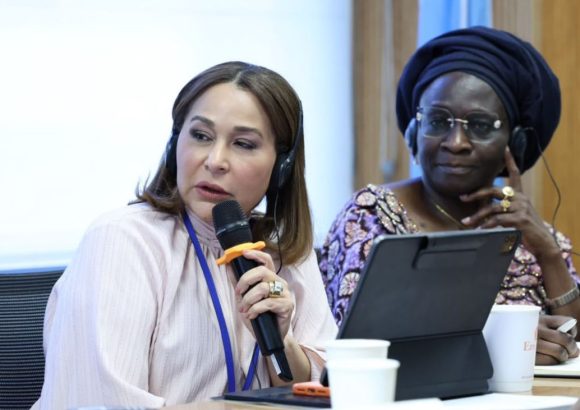
At the United Nations High-Level Political Forum on Sustainable Development hosted by the UN Economic and Social Council in New York, Mayra Jiménez, director general of the Dominican Republic’s Social Development Directorate Supérate, took the global stage to outline the Caribbean nation’s significant strides in building inclusive, impact-driven social protection systems.
In her address to forum attendees, Jiménez emphasized that targeted social protection has emerged as one of the most effective tools for lifting vulnerable households out of intergenerational poverty. By connecting marginalized communities to direct financial support, market-aligned employment opportunities, and life-sustaining essential public services, these policies create tangible, long-term change rather than temporary relief, she explained.
Under the administration of President Luis Abinader, the Supérate program has scaled its reach dramatically, Jiménez reported. Currently, the initiative provides steady support to more than 1.4 million Dominican households through a combination of direct social subsidies and skills-based employment programs. Beyond direct financial aid, the government has also made major progress advancing the country’s national care strategy, expanding accessible home care services for citizens in need across the nation.
A core marker of the policy’s success, Jiménez noted, is the country’s sharp reduction in national poverty rates. Between 2020 and 2025, the overall poverty rate fell from 25% to 17%, a drop Jiménez attributes to coordinated, cross-sector public policies centered on expanding social protection access and accelerating inclusive job creation across all economic sectors.
During a dedicated panel discussion focused on global energy vulnerability and a just energy transition, Jiménez also detailed two targeted energy subsidy programs that have eased financial strain for low-income households: the Bono Gas and Bono Luz initiatives. These programs currently provide monthly energy-related subsidies to 1.2 million households and 620,000 households respectively, helping vulnerable families offset rising energy costs while the country advances its broader transition goals.
The 2025 forum also featured a high-level strategic dialogue co-chaired by UN Deputy Secretary-General Amina Mohammed and UNDP Administrator Alexander De Croo, where attendees centered discussions on how robust social protection frameworks can help at-risk populations build resilience to the growing impacts of climate change and ongoing global economic and social crises.
For additional coverage of local developments from the Dominican Republic, readers can visit the dedicated Dominican Republic news portal.