标签: Dominican Republic

多米尼加共和国

  • Indomet warns of intensifying showers and rough seas

    Indomet warns of intensifying showers and rough seas

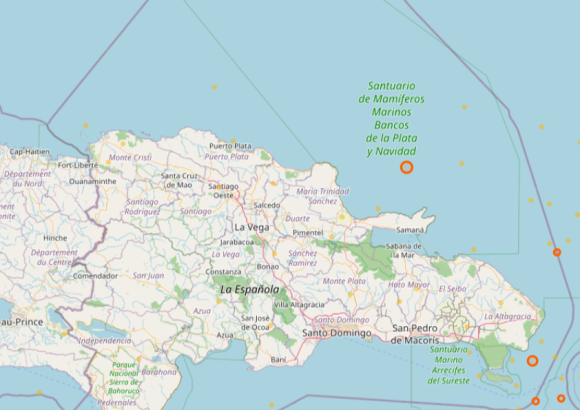
    Meteorological authorities in the Dominican Republic have issued significant weather advisories as a complex atmospheric system approaches the Caribbean nation. The Dominican Institute of Meteorology (Indomet) has identified a developing trough system that will interact with prevailing east-northeast winds and local topography to generate substantial precipitation across multiple regions.

    According to senior meteorologist Heriberto Fabián, the precipitation pattern will commence with scattered morning showers primarily affecting Atlantic coastal areas. Meteorological models indicate a substantial intensification of rainfall activity following midday, potentially evolving into sustained periods of moderate to heavy downpours. The forecast includes probable thunderstorm development and isolated wind gusts that may exceed seasonal averages.

    The extensive list of provinces anticipated to experience these conditions encompasses La Altagracia, Samaná, María Trinidad Sánchez, San Pedro de Macorís, Hato Mayor, Monte Plata, La Vega, San Cristóbal, Santiago, Puerto Plata, Espaillat, La Romana, El Seibo, and the Greater Santo Domingo metropolitan area.

    Concurrent with terrestrial weather developments, maritime conditions are expected to deteriorate significantly along both Atlantic and Caribbean coastlines. Naval authorities have issued explicit recommendations for operators of small, fragile, and medium-sized vessels to remain in port due to anticipated strong winds and dangerously rough sea conditions. The public has been strongly urged to consult with official maritime agencies before initiating any water-based activities, with particular emphasis on recreational boaters and fishing enterprises.

  • FARD deploys first 10 Dominican-assembled TP-75 Dulus planes

    FARD deploys first 10 Dominican-assembled TP-75 Dulus planes

    The Dominican Republic has officially operationalized its inaugural fleet of ten TP-75 Dulus military aircraft, assembled domestically through a strategic collaboration with Italian aerospace company Fly Legend. This achievement represents a significant advancement in the nation’s capabilities in aerial patrol and pilot training, operating from the San Isidro Air Base under the Dominican Air Force (FARD).

    President Luis Abinader, who championed this initiative from its conceptual stage, presided over the ceremonial first flight on December 12, 2023. The program was established under the Public Trust for the Development of the National Aeronautical and Space Industry, demonstrating the government’s commitment to technological sovereignty. Since becoming operational, the aircraft have accumulated 1,769 flight hours in training exercises and surveillance missions, resulting in approximately RD$208.3 million in state savings. With remarkably efficient operating costs of just $60 per flight hour, the program has substantially optimized national expenditures on air defense and territorial monitoring.

    The TP-75 Dulus fleet is currently deployed in critical border security operations along the Haitian frontier and conducts surveillance over protected environmental zones to detect potential ecological threats. Mission coordination is managed through the Southern Command at Barahona Air Base, providing comprehensive coverage across border provinces including Montecristi, Dajabón, Elías Piña, Independencia, and Pedernales.

    This successful domestic aviation project has attracted international attention, with multiple nations including Guyana, Honduras, Guatemala, Paraguay, Costa Rica, Nicaragua, Panama, Uruguay, and Peru evaluating potential acquisitions of the TP-75 Dulus aircraft for their own defense needs.

  • AIRD urges strict enforcement of labeling and health registration rules

    AIRD urges strict enforcement of labeling and health registration rules

    SANTO DOMINGO – The Association of Industries of the Dominican Republic (AIRD) has issued a firm declaration calling for the rigorous and uniform application of national labeling and sanitary registration standards for every product entering the Dominican market. This mandate applies universally, with no exceptions for goods based on their country of origin or distribution model.

    Central to the AIRD’s position is the strict adherence to existing regulations that compel all products to feature labeling in the Spanish language and display a valid health registration certificate issued by the competent national authority. The industry group characterizes these requirements as fundamental pillars for maintaining market transparency, protecting consumer rights, and upholding public health standards.

    Emphasizing the comprehensive scope of these rules, the AIRD clarified that compliance is obligatory for all entities within the supply chain. This includes domestic producers, international importers, and retail distributors, encompassing products marketed under private labels or as generic white-label brands. The association asserts that consistent enforcement is critical to maintaining a level competitive landscape.

    Mario Pujols, Executive Vice President of the AIRD, elaborated on the rationale behind this reinforced stance. He stated that vigilant regulatory observance serves a dual purpose: it empowers consumers with accurate and accessible product information, and it fosters equitable business practices by preventing companies from gaining an unfair market advantage through non-compliance.

    The AIRD has publicly reiterated its commitment to collaborative engagement, expressing readiness to partner with government authorities and commercial stakeholders alike. The ultimate objective of this cooperative effort is to bolster enforcement mechanisms and cultivate a commercial environment that prioritizes fairness, safety, and unequivocal transparency for all participants.

  • Attorney General calls for economic approach to fighting crime

    Attorney General calls for economic approach to fighting crime

    SANTO DOMINGO – In a significant policy address, Attorney General Yeni Berenice Reynoso has advocated for a fundamental strategic shift in combating organized crime, proposing that law enforcement agencies analyze criminal operations through the framework of market economics rather than pursuing individual cases in isolation.

    Speaking at the First International Symposium on Criminal Investigation—a cornerstone event within the nation’s comprehensive Police Reform initiative—Reynoso articulated her vision before an audience including President Luis Abinader, Interior and Police Minister Faride Raful, and National Police Director Andrés Modesto Cruz Cruz.

    The Attorney General criticized the conventional investigative approach prevalent in many jurisdictions, where crimes are addressed singularly without examining the broader ecosystem they inhabit. She contended that this fragmented methodology persistently fails to dismantle criminal infrastructures effectively. Instead, Reynoso championed the concept of conducting holistic ‘criminal market analyses’ to develop more impactful and sustainable security outcomes.

    Elaborating on her thesis, Reynoso delineated how illicit activities operate within a sophisticated ‘criminal economy’ that mirrors the principles of its legal counterpart, particularly the fundamental law of supply and demand. Criminal enterprises, she explained, dynamically calibrate their operations according to market fluctuations: escalating production to meet rising demand, reducing prices in response to oversupply, and capitalizing on scarcity to inflate costs.

    Reynoso identified a critical vulnerability in contemporary security strategy: the widespread failure of investigative bodies to comprehend the functional mechanics of specific illicit markets. This analytical gap, she asserted, fundamentally undermines the efficacy of efforts to disrupt and permanently eradicate organized crime networks, necessitating a paradigm shift towards economic behavior analysis in criminal investigations.

  • Haiti unveils new transitional government

    Haiti unveils new transitional government

    Haitian Prime Minister Alix Didier Fils-Aimé has established a new transitional administration charged with addressing the nation’s severe security challenges, economic revitalization, and conducting general elections scheduled for August 30. This governmental restructuring emerges amid Haiti’s prolonged political and institutional crisis, occurring approximately one month after Fils-Aimé assumed singular executive authority following the February 7 expiration of the Transitional Presidential Council’s mandate.

    During a nationally televised address, the Prime Minister outlined three fundamental priorities for his administration: security reinforcement, socioeconomic recovery, and the organization of credible democratic elections. Haiti has experienced an electoral vacuum since the 2015-2016 cycle that brought Jovenel Moïse to power in 2017. Moïse’s assassination in 2021 precipitated the nation’s current extended period of instability.

    The reconfigured cabinet composition features eleven newly appointed ministers alongside six retained from the previous government. Notable appointments include Serge Gabriel Collin as Minister of Economy, Sandra Paulémon leading Planning, and Raina Forbin assuming Foreign Affairs responsibilities. Former National Police Director Mario Andrésol now commands the Defense portfolio, while Marcelin Aubourg oversees Agricultural development.

    Continuing ministers comprise Paul Antoine Bien-Aimé (Interior), Patrick Pelissier (Justice), Bertrand Sinal (Health), Pédrica Saint Jean (Women’s Affairs), James Monazard (Commerce), and Kathia Verdier (Haitians Residing Abroad). The administration further appointed Sharina Lochard as Secretary of State for Territorial Collectivities and Jean Willio Patrick Chrispin as Communication Secretary.

    Fils-Aimé demanded rigorous governance standards from his team, emphasizing that “the time for pretty speeches is over” and advocating for implementation of sound management protocols. He highlighted the necessity of developing concrete economic measures through coordinated efforts with private sector stakeholders, financial partners, and agricultural producers. The Prime Minister acknowledged outgoing officials for their service during crisis conditions and expressed conviction that the new government would guide Haiti toward stability and democratic restoration.

  • Health Ministry inspects Dr. Fadul’s clinic in Santiago

    Health Ministry inspects Dr. Fadul’s clinic in Santiago

    Health officials in the Dominican Republic have initiated a comprehensive technical review of the ‘Transforming Autism’ clinic in Santiago province following recent media attention. The Ministry of Public Health, acting through its Directorate of Authorization of Health Services and Establishments, conducted an unannounced supervisory visit to the facility operated by Dr. José Ernesto Fadul.

    While no formal patient complaints have been registered against the establishment, the health ministry activated its standard oversight protocol in response to emerging media coverage. A multidisciplinary team of inspectors performed an exhaustive evaluation of multiple operational aspects including physical infrastructure, medical equipment, staff qualifications, documentation practices, treatment procedures, and overall hygiene and safety conditions.

    The comprehensive assessment, currently under technical review, will culminate in an official report prepared in strict accordance with national health regulations. Ministry representatives emphasized their commitment to procedural transparency, noting that finalized findings will be publicly disclosed upon completion of the analytical process.

    Health authorities simultaneously reminded healthcare providers about the mandatory national protocol for treating children and adolescents with autism spectrum disorder. This established framework, developed under the General Health Law and supplementary regulations, requires uniform compliance across all healthcare facilities operating within the Dominican Republic.

  • BlackRock-led consortium to acquire AES, key player in Dominican energy sector

    BlackRock-led consortium to acquire AES, key player in Dominican energy sector

    In a landmark transaction reshaping the global energy landscape, a consortium of institutional investors led by BlackRock’s Global Infrastructure Partners has reached a definitive agreement to acquire Virginia-based AES Corporation. The equity valuation of $10.7 billion represents a substantial 40.3% premium over recent trading prices, with the total enterprise value reaching approximately $33.4 billion when accounting for outstanding debt.

    The investor group, which includes Swedish private equity firm EQT alongside other major financial institutions, will pay $15 per share in a deal structured to conclude between late 2026 and early 2027, pending customary regulatory approvals. This acquisition occurs against the backdrop of surging electricity demand across the United States, particularly driven by the exponential growth of data centers requiring massive power resources.

    AES brings substantial assets to the transaction, boasting a global generation portfolio of 32.1 gigawatts—with renewables constituting 64% of this capacity. The company reported $12.3 billion in revenue for 2024, demonstrating its robust market position. Corporate leadership indicated that transitioning to private ownership would provide enhanced financial flexibility to address capital requirements and accelerate expansion initiatives within power generation and utility operations.

    The transaction carries particular significance for the Dominican Republic, where AES maintains considerable presence through its local subsidiary AES Dominicana. The company operates critical energy infrastructure including the AES Andrés power plant—a cornerstone natural gas facility—and the strategically vital LNG terminal at Boca Chica. Additional involvement includes participation in the Eastern gas pipeline consortium and operations at Los Mina and Itabo power plants, the latter managed jointly with Dominican state entities.

    AES Dominicana’s current portfolio encompasses 392.5 megawatts of solar generation, 52.5 megawatts of wind capacity, 11 megawatts of storage systems, and 319 megawatts of natural gas-fired generation. The company is further developing an additional 572 megawatts of renewable projects alongside a 138.1 megawatt battery energy storage system, positioning it as a pivotal contributor to the nation’s energy diversification objectives.

    While immediate operational changes appear unlikely, the infusion of capital from financially substantial global investors may potentially influence future energy infrastructure development in the Dominican Republic. This occurs as the country experiences continued electricity demand growth and pursues aggressive renewable energy expansion as a national priority.

  • Abinader opens international symposium on criminal investigation reform

    Abinader opens international symposium on criminal investigation reform

    SANTO DOMINGO – In a landmark initiative to transform law enforcement methodologies, Dominican President Luis Abinader inaugurated the First International Symposium on Criminal Investigation, Science and Innovation against Crime. The event, attended by over 400 national and international delegates, signals a paradigm shift toward evidence-based prosecution integrating advanced technology, intelligence gathering, and scientific rigor.

    President Abinader emphasized that sustainable public security hinges on closing impunity gaps through technical evidence and systematic investigative reforms. The symposium constitutes a critical component of the modernization agenda for the Central Directorate of Criminal Investigation (DICRIM), transitioning from traditional reactive policing to a proactive model built on data analytics, institutional interoperability, and operational transparency.

    Beyond superficial changes in equipment or uniforms, Abinader framed the reform as a profound institutional overhaul grounded in scientific principles and strategic management. A key outcome will be the adoption of a ten-point code of conduct for police investigations, to be formally endorsed by senior law enforcement leadership to guarantee nationwide compliance.

    Interior and Police Minister Faride Raful outlined priority challenges including organized crime, ethical artificial intelligence applications, and secure inter-agency data exchange. She highlighted existing successes through joint task forces, which have already contributed to reduced homicide rates and disruption of criminal networks.

    National Police Director Andres Modesto Cruz Cruz addressed the evolving nature of crime, noting its increasingly technological and cross-border characteristics. He advocated for a response strategy combining rigorous methodology with unwavering respect for human rights. This symposium forms part of the comprehensive reform of the National Police, aiming to establish an internationally aligned, professional, and scientifically-driven investigative culture focused on impunity reduction.

  • CAMAARD promotes “Barahona cradle of Larimar” campaign

    CAMAARD promotes “Barahona cradle of Larimar” campaign

    BARAHONA, Dominican Republic – A strategic rebranding initiative is underway in the southern Dominican province of Barahona, where business leaders and artisans are mobilizing to redefine the region’s global identity. The Chamber of Commerce and Handicraft Production Foundation (CAMAARD) is spearheading the “Barahona Cradle of Larimar” campaign, advocating for official recognition of the province’s exclusive claim to the rare blue pectolite gemstone.

    The movement, championed by master goldsmith Julio Humberto Fricá and formally endorsed by CAMAARD, proposes replacing the current regional slogan “Barahona, the Pearl of the South” with terminology that emphasizes the area’s unique geological heritage. Larimar, found exclusively in this Caribbean region, represents both a cultural treasure and economic asset that proponents believe deserves center stage in the province’s identity.

    CAMAARD President Valentín Guerrero confirmed the organization’s full institutional support, noting that formal proposals are being prepared for legislative consideration. “This strategic repositioning will enhance tourism appeal, strengthen cultural identity, and elevate larimar’s commercial status as a national symbol,” Guerrero stated.

    The campaign gains significant momentum following the World Intellectual Property Organization’s 2025 certification of “Of Barahona Origin” for larimar, which received international recognition across 18 countries. This designation provides legal protection and marketing advantages that advocates plan to leverage in building the country’s brand equity.

    Organizers are currently forming a specialized commission through CAMAARD and the SELECTA-RD exhibition platform, with Fricá playing a central role. The committee will engage government officials and legislators while circulating public registration forms to gather institutional and individual support for the landmark initiative.

  • Avancemos urges contingency plan amid Middle East war impact

    Avancemos urges contingency plan amid Middle East war impact

    SANTO DOMINGO – The Dominican political organization Avancemos has issued a stark warning regarding the economic implications of the escalating Middle East conflict, calling for immediate government action to shield the nation’s economy and vulnerable populations.

    Carlos Amarante Baret, the group’s leader, highlighted alarming market shifts directly linked to the geopolitical tensions. Global oil prices have surged by over 8%, while natural gas costs have skyrocketed by nearly 20%. This volatility has triggered substantial losses across major international stock indices, including the Dow Jones Industrial Average. Amarante Baret emphasized that these international financial tremors will inevitably translate into domestic economic pressure, specifically driving up the national inflation rate and destabilizing the Dominican peso’s exchange rate.

    The political leader raised critical questions about the government’s preparedness, querying whether authorities have conducted a comprehensive assessment of the potential fallout. Key concerns include a ballooning national oil import bill, increased electricity tariffs, heightened agricultural production costs, and subsequent price hikes for essential goods like food and medicine. Stressing that effective governance necessitates proactive anticipation of crises, Amarante Baret advocated for the implementation of a robust contingency strategy. Such a plan would be designed to protect the economic stability of middle-class families and the most vulnerable socioeconomic segments, whose household budgets are most susceptible to external economic shocks.

    Avancemos contends that the uncertainty emanating from the military engagement involving the United States and Israel against Iran mandates decisive and swift intervention from Dominican policymakers. The organization urges the administration to move beyond mere observation and formulate concrete measures to mitigate the anticipated adverse economic and social consequences within the Dominican Republic.