In a groundbreaking development, the Dominican Republic has secured a seat on the United Nations International Civil Service Commission (ICSC) for the first time since the body’s inception. This historic achievement highlights the nation’s growing influence in global diplomacy. José A. Blanco Conde, the Dominican ambassador to Canada and former Permanent Representative to the UN, will represent the country on this prestigious commission. Established by the UN General Assembly in 1974, the ICSC is an independent expert body tasked with setting global standards for efficiency, fairness, and professionalism within the international civil service. Its responsibilities include defining salary structures, cost-of-living adjustments, duty station allowances, and human resource policies across the UN system. The Dominican Republic’s election to the 15-member commission, which serves four-year terms, underscores its commitment to dialogue, cooperation, and democratic principles. This milestone reflects the nation’s enhanced credibility and leadership in multilateral forums, as well as its dedication to equitable geographic representation and transparent management within the UN framework.
标签: Dominican Republic
多米尼加共和国
-

Paliza backs salary indexation but warns it shouldn’t harm the poor
In a recent statement, José Ignacio Paliza, the Dominican Republic’s Minister of the Presidency, highlighted the potential benefits of salary indexation as a mechanism to enhance the purchasing power of workers, particularly the middle class. However, he stressed that such measures must not negatively impact the nation’s most vulnerable populations. Speaking after a meeting of the PRM Executive Directorate on Friday, Paliza underscored the importance of balancing economic reforms with social equity. The proposed salary indexation is part of a broader government reform initiative introduced last year to address persistent inflation and improve family incomes. Paliza acknowledged the challenge of compensating for potential revenue losses to the State but firmly rejected suggestions to fund the initiative by cutting subsidies or social programs. He pointed out that these programs support over 700,000 Dominicans and have been instrumental in reducing poverty to historic lows. Paliza’s remarks reflect the government’s commitment to fostering economic growth while safeguarding social welfare.
-

Leonel Fernández urges inflation adjustment to protect workers’ income
In a compelling statement on Thursday, Leonel Fernández, former President of the Dominican Republic and leader of the People’s Force, raised concerns over the detrimental effects of inflation on the nation’s workforce. Describing inflation as a “hidden tax,” Fernández emphasized the urgent need for policy adjustments to protect workers’ incomes and ensure tax equity.
-

Recreational club for senior citizens opens in Santo Domingo
Santo Domingo has welcomed a new haven for senior citizens with the inauguration of La Casa de Don Carlos, a recreational club designed to promote holistic well-being, socialization, and happiness among the elderly. The project, launched on Thursday, aims to honor the wisdom and contributions of older generations while providing them with a safe and enriching environment.
-

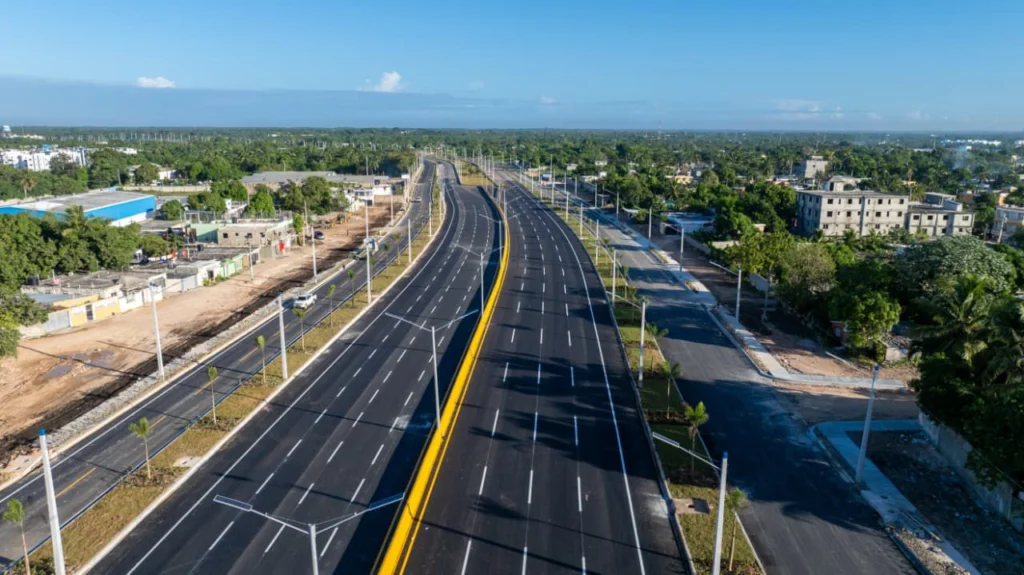
President Abinader inaugurates rehabilitated Sabana Toro–La Rosa Highway
San Cristóbal – In a significant move to enhance regional connectivity and economic integration, President Luis Abinader officially inaugurated the rehabilitated Sabana Toro–La Rosa highway on Thursday. This long-awaited project, executed by the Dominican Hydroelectric Generation Company (EGEHID) under its social responsibility program, represents a transformative step for one of the province’s most productive areas. With an investment of RD$200.9 million, the project was developed by Grupo Gil Calro SRL and spans five kilometers. It features upgraded infrastructure, including new sidewalks, curbs, asphalt paving, drainage systems, road signage, and the relocation of electrical poles. EGEHID’s General Manager, Rafael Salazar, emphasized that the project addresses a “historical debt” owed to communities such as Sabana Toro, La Rosa, Villegas, Telín, and El Pueblecito, which have long struggled with limited access to markets, schools, and essential services. The new highway will streamline travel between Cambita, Los Cacaos, and Villa Altagracia, bypassing San Cristóbal’s center and significantly reducing travel times and transportation costs. Local resident Asunción Brito, speaking on behalf of the community, expressed heartfelt gratitude, highlighting that the road “brings real development and new opportunities for the families who live and work here.”
-

Urban renewal works to begin November 11, affecting key intersections in Colonial City
Santo Domingo, November 7, 2025 – Residents and visitors in the Colonial City of Santo Domingo are advised to prepare for temporary disruptions due to construction work set to commence on Tuesday, November 11, 2025. The affected areas include the intersections of Espaillat and Arzobispo Nouel Streets, as well as Arzobispo Nouel and Hostos Streets. This initiative is part of a broader urban renewal and transformation project aimed at enhancing infrastructure and safeguarding the cultural heritage of Santo Domingo’s historic center. Local authorities have urged motorists and pedestrians to plan alternative routes and stay updated on detour maps and traffic guidance through the project’s official platforms. The construction is expected to improve the area’s accessibility and preserve its historical significance, though it may cause temporary inconveniences.
-

Abinader leads parade in San Cristóbal honoring 181 years of the Dominican Constitution
San Cristóbal, the historic birthplace of the Dominican Republic’s first Constitution, hosted a grand ceremony to mark the 181st anniversary of this pivotal document. President Luis Abinader presided over the event, which underscored the nation’s unwavering dedication to sovereignty, democracy, and institutional resilience. The celebration featured a vibrant civic–military–police parade and drew participation from hundreds of students representing over 90 local schools, symbolizing the unity and pride of the Dominican people.
Juan Pablo Uribe, head of the Permanent Commission of Patriotic Anniversaries (CPEP), delivered a poignant address, emphasizing the 1844 Constitution’s foundational role in securing Dominican independence. He traced the evolution of constitutional principles over the decades, affirming that the democratic values established nearly two centuries ago remain robust and relevant today.
The event also saw prominent local figures, including Governor Pura Casilla and Mayor Nelson de la Rosa, highlighting San Cristóbal’s unique historical significance. The gathering was further elevated by the presence of numerous ministers, military leaders, and senators, collectively paying homage to the nation’s enduring democratic heritage and fostering a sense of civic solidarity.
-

Dominican Republic launches first artificial intelligence laboratory
The Dominican Republic has embarked on a transformative journey with the establishment of the Dominican Artificial Intelligence Laboratory (LIAD), a groundbreaking initiative designed to position the nation as the Caribbean’s premier hub for artificial intelligence (AI) development. The official launch ceremony, held at the ChromoMED Institute Auditorium, was spearheaded by Dr. Gilberto Objío Subero, LIAD’s CEO, and Dr. Bary G. Bigay, its Scientific Director. This state-of-the-art facility is set to revolutionize AI research and application across key sectors including healthcare, education, public administration, justice, agriculture, and industry. During the event, Dr. Objío delivered a compelling keynote address titled ‘Artificial Intelligence Applied to Clinical Research,’ showcasing innovative projects such as Medical GPT—a cutting-edge tool engineered to enhance diagnostic precision, streamline medical data management, and automate scientific research processes. LIAD’s overarching mission is to cultivate ethical AI practices, foster innovation, and drive AI-powered solutions that bolster both public and private sector efficiency. By nurturing specialized talent and integrating emerging technologies into public policy frameworks, the Dominican Republic is poised to emerge as a regional leader in AI and innovation, paving the way for sustainable development and enhanced global competitiveness.
-

Public Health launches national rabies vaccination campaign for pets
The Dominican Republic’s Ministry of Public Health (MSP) has unveiled an ambitious nationwide rabies vaccination campaign targeting dogs and cats. Scheduled to run from Friday, November 7, to Sunday, November 9, the initiative is a critical step toward the country’s goal of eradicating dog-transmitted rabies by 2030. Rabies, a fatal viral disease affecting both animals and humans, is preventable through vaccination, and the MSP is offering free, safe vaccines across all provinces. Teams will visit neighborhoods, and fixed vaccination posts will operate daily from 8:00 a.m. to 4:00 p.m. The campaign’s official launch will occur at Plaza de la Cultura on Friday at 9:00 a.m., with vaccinations available until 2:30 p.m. Coordinated by the Center for Prevention and Control of Vector-Borne and Zoonotic Diseases (Cecovez), the effort will distribute over one million vaccine doses nationwide. The MSP has urged citizens to participate, emphasizing that vaccinating pets is an act of love, responsibility, and family protection. Detailed vaccination site information is available on the Ministry’s official social media channels.
-

Carolina Mejía and Jorge Macri sign cooperation agreement between Santo Domingo and Buenos Aires
In a significant move to bolster institutional collaboration and sustainable urban growth, the mayor of the National District, Carolina Mejía, and the head of government of Buenos Aires, Jorge Macri, inked a comprehensive cooperation agreement. The signing ceremony, held at the Government House in Buenos Aires, marked a renewed commitment to fostering friendship and shared progress between the two capitals, a relationship that dates back to their initial twinning agreement in 1991.
Mayor Mejía highlighted the transformative potential of this four-year pact, which aims to enhance urban safety, drive technological innovation, stimulate local economies, promote tourism, ensure environmental sustainability, and implement inclusive social policies. The agreement outlines a series of initiatives, including technical exchanges, training programs, workshops, and joint projects, alongside coordinated participation in international city forums.
The signing coincided with Mejía’s visit to Buenos Aires for the 21st General Assembly of the Union of Ibero-American Capital Cities (UCCI) and the 56th Executive Committee meeting. This collaboration underscores the importance of cross-border partnerships in addressing contemporary urban challenges and fostering mutual growth.