标签: Dominican Republic

多米尼加共和国

  • Senate approves first reading of missing persons alert system bill

    Senate approves first reading of missing persons alert system bill

    In a key legislative move aimed at addressing the critical issue of missing persons across the country, the Senate of the Dominican Republic has greenlit the first reading of a bill that would establish the National Alert System, known locally as ALERTARD. The proposed framework, which originated in the country’s Chamber of Deputies before moving to the upper legislative chamber, is built to create a unified, coordinated response mechanism that cuts through bureaucratic delays to accelerate search and rescue operations when someone goes missing.

    At its core, the legislation is designed to embed clear, standardized prevention and search protocols that guarantee equal treatment for every missing person, explicitly banning any discrimination based on nationality, racial identity, gender, age, religious belief, political affiliation, or socioeconomic status. A defining principle written into the bill mandates that all investigations into missing persons cases must begin with the working presumption that the individual is still alive, no matter the circumstances of their disappearance, how long they have been missing, or where they were last seen.

    Special emphasis is placed on protecting the country’s youngest populations: the bill carves out urgent priority status for missing children and adolescents, requiring law enforcement and government agencies to activate immediate, rapid action to locate and secure any missing or abducted minor. In cases where there is evidence of potential harm to the missing person, the Public Ministry and Dominican National Police are required to operate under the explicit assumption that the individual faces imminent risk, triggering even faster, more resource-intensive response efforts. Once fully enacted, supporters say ALERTARD will fill a longstanding gap in the country’s ability to respond to missing persons cases, ensuring consistent, equitable, and life-saving action across all regions of the Dominican Republic.

  • Red Cross deploys emergency teams and carries out evacuations

    Red Cross deploys emergency teams and carries out evacuations

    Heavy, sustained rainfall has triggered destructive flooding across low-lying, high-risk communities in multiple Dominican Republic provinces, prompting the Dominican Red Cross to roll out full-scale emergency response operations to protect vulnerable residents. The national humanitarian organization has mobilized a full contingent of rapid-response teams, trained volunteers, and technical specialists across the affected regions, with two core missions: delivering immediate support to households impacted by the floodwaters, and maintaining constant surveillance of areas at the highest risk of worsening disaster conditions.

    One of the hardest-hit areas so far is the municipality of Montellano, located in the northern coastal province of Puerto Plata. As the Camú River continues to swell beyond safe levels, response teams are executing organized preventive evacuations for residents in three high-risk sectors: Los Ciruelos, El Saman, and Villa Melesia. Alongside evacuation efforts, teams are distributing essential supplies and providing on-the-ground support to community members who have been displaced or affected by rising water. Local disaster authorities remain on high alert, as hydrological data shows the water flow in the river is continuing to climb, increasing the risk of more severe flooding in the coming hours.

    Beyond Puerto Plata, the Dominican Red Cross is sustaining coordinated emergency operations in five additional provinces: Santiago Rodríguez, Espaillat, María Trinidad Sánchez, Duarte, and El Seibo. All operations are carried out in close partnership with the country’s national Emergency Operations Center and other specialized disaster response agencies, to ensure efficient, coordinated delivery of aid across all affected regions. In a public advisory, the Dominican Red Cross has issued a clear warning to residents across at-risk areas: anyone living in proximity to rivers, streams, or zones with a history of repeated flooding is urged to strictly follow all official safety guidance, and to never attempt to cross flooded roadways or swollen waterways, which carry hidden risks of strong currents and structural collapse.

  • Dominican Republic secures EU support for drug prevention initiatives

    Dominican Republic secures EU support for drug prevention initiatives

    PUNTA CANA — The Dominican Republic’s National Drug Council (CND) has solidified a landmark inter-institutional cooperation agreement with the European Union through the COPOLAD III program, opening a new chapter of coordinated action to advance evidence-based drug policy across the Caribbean and Latin America. Backed by targeted European technical expertise and dedicated financial investment, the partnership is designed to strengthen regional and national capacity to address evolving drug-related challenges.

    The formal signing ceremony took place alongside the fourth annual gathering of the COPOLAD III initiative, a high-profile international forum that brought together more than 170 drug policy specialists and official delegates from over 60 nations spanning Latin America, the Caribbean and the European continent. The agreement was signed by two key leaders: Alejandro de Jesús Abreu, who serves both as president of the CND and co-president of the EU-CELAC Mechanism, and Olivier Luyckx, head of country programs for Latin America and the Caribbean at the European Commission’s Directorate-General for International Partnerships. A broad delegation of senior Dominican diplomatic and institutional officials also participated in the event, emphasizing that the collaboration marks a critical milestone for collective regional action on drug policy.

    Under the new framework, the partnership will roll out three high-priority initiatives tailored to meet the Dominican Republic’s specific needs while creating a replicable model for other regional nations. First, the alliance will conduct a nationwide, nationally representative survey of drug use among university students, generating actionable data to inform future policy design and ensure all regulatory and intervention efforts are rooted in real-world evidence. Second, the partnership will invest in expanding and strengthening the Dominican Republic’s Drug Policy Training School, which equips national and local decision-makers with the specialized skills and knowledge needed to implement effective drug policy. Third, the initiative will roll out an innovative social support program called the “Wings of Transformation” strategy, which focuses on providing critical resources and support to children whose parents are incarcerated on drug-related offenses. The program will launch as a pilot project at the Baní Women’s Penitentiary Center, with plans to scale the model across the entire country if the initial trial proves successful. Dominican officials noted that the partnership not only advances the country’s domestic drug policy goals but also reinforces its position as a regional leader in collaborative, holistic approaches to addressing drug challenges.

  • Dominican farmers call for limits on rice and chicken imports

    Dominican farmers call for limits on rice and chicken imports

    SANTO DOMINGO — The Dominican Republic’s leading agricultural industry body is sounding the alarm over potential expansions to agricultural imports, urging the national government to reject broader market access for foreign rice and chicken to protect decades of progress toward domestic food sovereignty.

    The National Confederation of Agricultural Producers (Confenagro), which represents thousands of farming and livestock operations across the country, issued the formal warning this week, outlining that a sudden expansion of imported rice and chicken would undercut local producers and erode hard-won gains in national food self-sufficiency. Even amid widespread global volatility that has pushed up input costs for agricultural sectors worldwide, the organization noted that Dominican domestic producers have managed to sustain consistent output levels — even as they grapple with steep price hikes for critical imported supplies such as chemical fertilizers.

    Confenagro emphasized that rice and poultry production are two of the Dominican Republic’s most strategic agricultural sectors. Over recent years, the country has built up robust domestic capacity that meets nearly all of national demand for these staple foods, a milestone that reduces reliance on volatile global commodity markets. The group cautioned that opening the border to large-scale additional imports during the current period of global economic uncertainty would deliver lasting harm to local smallholder and commercial farmers alike. Once damaged, the confederation added, domestic production capacity would be slow and difficult to rebuild, leaving the country more vulnerable to future global food shocks.

    The latest warning follows a controversial decision earlier this year, when Dominican authorities authorized new chicken imports to address temporary domestic shortages and cool soaring retail prices for the staple protein. That move already sparked sharp political pushback and widespread concern across the domestic agricultural community, with many producers warning that temporary market access could become permanent.

    To address the current challenges of high input costs and consumer price pressures without damaging local production, Confenagro has put forward a package of alternative policy proposals. Key among these is expanding incentives for increased adoption of organic fertilizer production and use across the sector, a shift that would cut Dominican agriculture’s dependence on costly imported chemical inputs and bring down overall production costs for local producers. The association confirmed that it remains in active, constructive dialogue with national government authorities, working to find coordinated policy solutions that safeguard both the livelihoods of domestic agricultural producers and the long-term food security of all Dominican consumers.

  • Small plane crashes at Air Force Base in Dajabón

    Small plane crashes at Air Force Base in Dajabón

    On Wednesday, a small civilian aircraft registered N577TU crashed at an Air Force base located in the Dominican Republic’s northern border province of Dajabón, launching an official safety investigation by the country’s top civil aviation and accident probe bodies.

    Initial accounts from on-scene authorities confirm that the crash unfolded as the plane was in the final stages of preparation for takeoff from the Dajabón airfield. Immediately after the incident, local aviation officials activated pre-planned aviation safety response protocols to coordinate emergency and investigative actions.

    First responder teams and security personnel were among the first to arrive at the crash site, working quickly to secure the perimeter and preserve physical evidence critical to the upcoming probe. The only person on board, the pilot, was evacuated from the site and transferred to a nearby private medical facility for urgent care. As of the latest update, Dominican aviation officials have not publicly disclosed any detailed information about the pilot’s current medical condition, leaving local communities waiting for further updates.

    Two lead Dominican agencies—the Aviation Accident Investigation Commission and the Dominican Institute of Civil Aviation—have confirmed that specialized technical evaluation teams were deployed to the crash site within hours of the incident. These teams are tasked with conducting on-site inspections, reviewing flight data, and interviewing first responders to pinpoint the root cause of the crash. Authorities have emphasized that the investigation is still in its early active phase, and no conclusive findings have been reached to date. A formal public announcement with full details of the probe’s results will be released once investigators have completed their comprehensive analysis.

  • Dominican Republic and Spain sign security treaty to combat organized crime

    Dominican Republic and Spain sign security treaty to combat organized crime

    In a formal ceremony held in Santo Domingo, the Dominican Republic and Spain have formalized a new bilateral agreement designed to ramp up collaborative action against organized criminal networks and elevate public safety standards across both countries. The landmark treaty was signed by two top interior officials: Faride Raful, Dominican Minister of Interior and Police, and Fernando Grande-Marlaska Gómez, Spain’s Minister of Interior, capping off months of diplomatic work focused on addressing the growing threat of cross-border criminal activity.

    Transnational crime has emerged as a shared challenge in recent years, with illicit networks exploiting gaps in international law enforcement coordination to move contraband, exploit vulnerable populations, and launder illegal profits across borders. This new agreement directly addresses that gap by outlining a comprehensive framework for cooperation across a wide range of high-priority criminal areas. Beyond common illicit trafficking threats including drug smuggling, illegal arms trade, and human trafficking, the treaty also covers modern criminal challenges such as cybercrime and financial fraud, alongside longstanding public safety concerns like motor vehicle theft, forged official documentation, and gender-based and domestic violence.

    To turn these cooperative goals into actionable practice, the agreement establishes formal, structured mechanisms for core law enforcement collaboration. These include standardized protocols for real-time information sharing between agencies, frameworks for launching joint cross-border investigations, pathways for direct operational support when needed, and shared processes for mapping and identifying transnational criminal networks and their suspects. In addition to operational cooperation, the treaty paves the way for long-term capacity building: officials from both nations will exchange cutting-edge law enforcement technology, share proven investigative strategies, and deliver specialized training programs to upskill personnel on both sides.

    Speaking after the signing ceremony, official delegations from both countries emphasized that the agreement is rooted in principles of reciprocity and mutual assistance, creating a balanced framework that strengthens security for all citizens. By aligning their law enforcement efforts, the two nations aim to disrupt criminal operations that have impacted communities in both the Dominican Republic and Spain, turning shared commitment to public safety into tangible progress for residents on both sides of the Atlantic.

  • Eleven provinces under Yellow Alert due to rain and flood risk

    Eleven provinces under Yellow Alert due to rain and flood risk

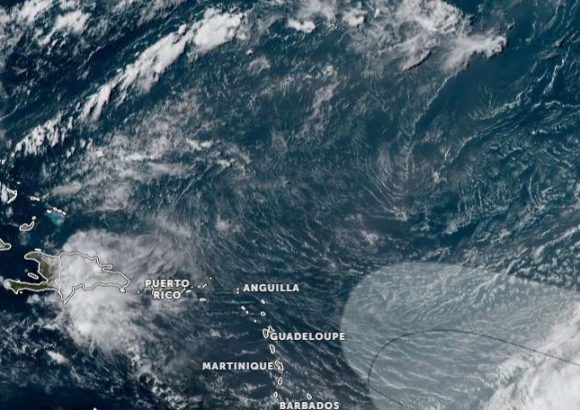
    On Wednesday, the Dominican Republic’s Emergency Operations Center (COE) announced a widespread expansion of national weather warnings, ramping up precautionary measures as an unstable atmospheric pattern continues to bring hazardous conditions across the Caribbean nation. Under the updated alert framework, 11 provinces have been placed under yellow alert – the second-highest level of warning – while 12 additional provinces and the National District remain under lower-level green alert.

    The 11 provinces now under elevated yellow warning status are María Trinidad Sánchez, Santiago, Duarte, Puerto Plata, Hermanas Mirabal, Hato Mayor, Monseñor Nouel, La Vega, Sánchez Ramírez, Espaillat, and Samaná. Areas retaining green alert include the major population centers of Santo Domingo, San Pedro de Macorís, La Altagracia, San Cristóbal, La Romana, Monte Plata, and the National District, the country’s capital administrative zone.

    Meteorological officials from the Dominican Institute of Meteorology (Indomet) confirmed that a persistent low-pressure trough system hovering over the region will continue to drive unstable weather through the afternoon. Forecasters say the system is spurring rapid cloud development that will bring heavy downpours, severe thunderstorms, and even a chance of small hail across much of the affected areas.

    The risk of extreme weather events is amplified by days of prior precipitation that have left soil across the country completely saturated. Emergency authorities have issued urgent warnings about the growing likelihood of river overflow, sudden flash floods, and widespread urban flooding in low-lying and high-risk communities.

    As of Wednesday, the impact of the persistent rain has already disrupted critical public services. The National Institute of Drinking Water and Sewerage (Inapa) confirmed that 12 regional aqueducts have been taken out of service by flood damage or operational disruptions, cutting off water access to more than 205,000 residential and commercial users across the affected regions.

    In a public advisory, the COE has urged all residents in at-risk zones to strictly follow official safety guidance. The agency specifically warned communities against attempting to cross swollen rivers or flooded streams, and reminded people living in flood-prone areas to remain ready to evacuate if conditions worsen.

  • U.S. Ambassador meets with Carolina Mejía to discuss shared development agenda

    U.S. Ambassador meets with Carolina Mejía to discuss shared development agenda

    Diplomatic engagement between the United States and the Dominican Republic has taken a step forward with a high-profile working meeting between U.S. Ambassador to the Caribbean nation Leah Francis Campos and Santo Domingo Mayor Carolina Mejía. The gathering, centered on deepening collaborative ties between the U.S. Embassy and the Dominican capital’s municipal government, was hosted at the Santo Domingo City Hall located in the city’s historic Colonial City district, where Mayor Mejía and her senior municipal staff formally welcomed Ambassador Campos.

    Beyond routine diplomatic courtesy, the discussion covered a wide range of topics that align with the mutual priorities of both parties. The two senior officials walked through a range of untapped collaboration opportunities, while also openly exchanging perspectives on shared challenges that continue to shape local economic and social development across Santo Domingo. A core focus of the talks was mapping out potential forms of support that the U.S. Embassy can extend to the city administration, with particular emphasis placed on two key areas: governance transparency and inclusive community development projects that directly benefit local residents.

    By the close of the meeting, both sides reaffirmed their shared commitment to advancing an expanded bilateral working agenda rooted in tangible, results-driven cooperation. In addition to the priority areas of transparency and community progress, the talks also touched on other critical domains set to feature in future joint work, including public security frameworks, foreign investment attraction, and long-term institutional capacity building for the municipal government.

  • Abinader reopens National Museum of History and Geography after renovation

    Abinader reopens National Museum of History and Geography after renovation

    Santo Domingo, Dominican Republic – A landmark moment for the country’s cultural heritage sector unfolded this week, as President Luis Abinader presided over the official reopening of the Emilio Cordero Michel National Museum of History and Geography. The venue, located at the iconic Juan Pablo Duarte Cultural Plaza, underwent a months-long comprehensive renovation project that upgraded its infrastructure and reimagined its public exhibition spaces, designed to better protect and showcase the Dominican Republic’s centuries of shared history. The opening ceremony drew a cross-section of prominent attendees, including senior national cultural authorities, directors of leading regional museums, high-ranking government officials, and special guests from academic and heritage organizations across the country.

    The renovation initiative addressed both interior and exterior upgrades to the museum’s aging facilities, with key focus areas including expanded accessibility for visitors with disabilities, improved climate and storage conditions to preserve fragile historical artifacts, and a complete overhaul of the visitor journey to create a more engaging, educational experience for guests of all ages. As part of the project, seven fully renovated galleries were unveiled to the public, each curated to highlight pivotal periods and transformative figures that shaped modern Dominican identity. Curated exhibitions cover a range of critical historical topics, from the 1965 April War and the legacies of key national leaders to the decades of the Trujillo dictatorship and the enduring impact of Francisco Caamaño.

    Speaking at the reopening ceremony, President Abinader emphasized that investing in robust cultural institutions is foundational to protecting national collective identity and providing high-quality historical education for coming generations of Dominicans. Roberto Ángel Salcedo, the country’s Minister of Culture, framed the renovated museum as a major milestone for advancing national historical reflection and formal civic education across the country. Museum leadership further noted that the updated institution is positioned to better serve its core audience of school groups, academic researchers, and domestic and international tourists eager to learn more about Dominican history.

    Originally founded in 1981, the museum was formally renamed to honor prominent Dominican historian Emilio Cordero Michel in 2023. Today, it stands as one of the most important and comprehensive repositories of the Dominican Republic’s collective historical memory, a role that the renovation project has positioned it to fill for decades to come.

  • Abinader to represent Dominican Republic at Madrid Ibero-American Summit

    Abinader to represent Dominican Republic at Madrid Ibero-American Summit

    During an official diplomatic visit to the Dominican Republic’s capital of Santo Domingo, Spanish Foreign Minister José Manuel Albares has formally confirmed that Dominican President Luis Abinader will join the upcoming Ibero-American Summit, set to take place in Madrid on November 4 and 5. The confirmation was delivered following a closed working meeting between Albares and his Dominican counterpart, Roberto Álvarez, where the two top diplomats also walked through detailed preparations for the high-profile regional gathering of leaders.

    Albares clarified that he carried the official invitation to the summit on behalf of the Spanish monarchy, and received direct confirmation from Dominican leadership that Abinader intends to participate in the two-day event. This year’s summit, which will draw heads of state and government from every corner of the Ibero-American community, centers on a unifying theme: “Ibero-America. Together we build our community. Together we project it toward the future and the world.”

    The stop in the Dominican Republic marks one segment of a broader Latin American diplomatic tour that Albares is undertaking, which also includes scheduled stops in Puerto Rico and Mexico. The core objectives of this tour are twofold: to strengthen long-standing bilateral diplomatic ties between Spain and its regional partners, and to secure broad participation from eligible nations for the Madrid-hosted summit. Albares emphasized that Spain is adhering to long-established diplomatic protocols as it extends formal invitations to all countries eligible to participate in the annual gathering.