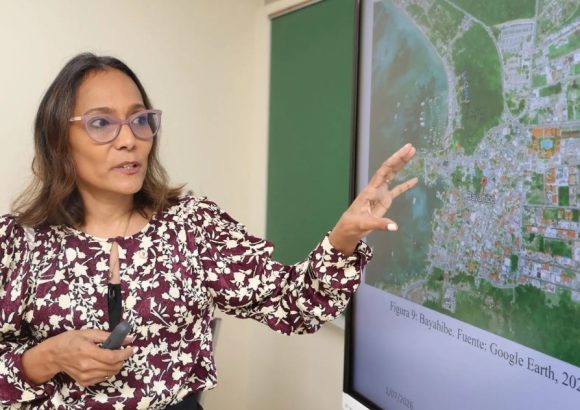
In the Dominican Republic coastal community of Bayahibe, a groundbreaking academic study from the Pontifical Catholic University Madre y Maestra (PUCMM) has uncovered clear causal connections between localized urban temperature fluctuations and three key urban design factors: construction materials, exterior building colors, and the density of green vegetation across the city. This investigation, which focuses on the well-documented Urban Heat Island (UHI) effect – a common environmental phenomenon where developed urban zones register consistently higher temperatures than their undeveloped rural peripheries – was formally unveiled to the global scientific community during the 21st International Congress of Scientific Research, hosted by the Dominican Republic’s Ministry of Higher Education, Science and Technology (MESCyT).
To reach their evidence-based conclusions, the PUCMM research team conducted on-the-ground temperature and infrastructure surveys across 24 distinct city blocks, collecting granular data from 355 individual buildings to map how different urban features shape local heat levels. Their analysis confirmed that urban districts dominated by heat-absorbent materials including asphalt, concrete, and zinc roofing, paired with sparse tree coverage, recorded the highest peak and average temperatures in the entire study area. By comparison, residential neighborhoods with extensive tree planting and large expanses of permeable, water-absorbent ground surfaces stayed significantly cooler throughout the study period, even during peak midday heat. The team also added nuanced findings about building design: light-colored exterior facades, most notably pure white coatings, reflect far more incoming solar radiation away from building structures, preventing excess heat from building up in urban surfaces and air. Darker facade pigments, by contrast, trap solar energy, driving up both surface and ambient air temperatures across surrounding blocks.
The study’s authors issued a urgent warning about the growing risks of the UHI effect for small coastal Caribbean cities like Bayahibe, which already face overlapping climate hazards including accelerating sea level rise, increasing ocean warming, and more frequent, more intense extreme heat events driven by global climate change. To mitigate these rising risks, the research team put forward a set of actionable, accessible policy and design recommendations: expanding the total area of urban green space and street tree planting city-wide, switching to high-reflectance construction materials for new development and retrofits, and investing in shaded public gathering spaces to protect vulnerable communities from extreme heat. These changes, the authors note, would not only improve public thermal comfort and reduce heat-related health risks but also cut overall city energy consumption for air conditioning, creating secondary environmental and economic benefits for local residents.