标签: Dominican Republic

多米尼加共和国

  • Dominican Government raises fuel prices by up to RD$8.00 amid global oil surge

    Dominican Government raises fuel prices by up to RD$8.00 amid global oil surge

    SANTO DOMINGO — Amid ongoing volatility in global energy markets, the Dominican Republic’s Ministry of Industry, Commerce and Micro, Small and Medium Enterprises (MICM) has announced a major government subsidy package totaling RD$1.435 billion to stabilize critical fuel prices for consumers between May 16 and 22.

    The subsidy initiative is designed to keep retail prices of liquefied petroleum gas (LPG) fully frozen, while partially offsetting upward price adjustments for gasoline and diesel that have become unavoidable due to rising global crude costs. Officials explained that West Texas Intermediate (WTI) crude, the key benchmark against which Dominican fuel prices are set, has climbed by roughly $4 per barrel in its most recent trading session, pushing the global benchmark close to the $105 per barrel mark. This jump represents a 3.86% increase in WTI prices, extending a period of persistent elevated international energy costs that has put upward pressure on retail fuel prices across the country.

    Against this market backdrop, official price adjustments will go into effect for four widely consumed transportation fuels: premium grade gasoline, regular grade gasoline, regular diesel, and premium diesel. All four product categories will see measurable increases to their per-gallon retail prices for the week.

    In a rare offsetting trend, a handful of specialized fuel products primarily used by commercial and industrial sectors will see slight price reductions over the same seven-day window. These include aviation turbine fuel (Avtur), kerosene, Fuel Oil #1, and Fuel Oil #6. The mixed price movement across different fuel categories underscores the uneven impact of current global crude market shifts across segments of the Dominican energy economy.

  • Dominican Republic celebrates Long Night of Museums 2026 with free cultural activities nationwide

    Dominican Republic celebrates Long Night of Museums 2026 with free cultural activities nationwide

    The Dominican Republic is gearing up to host its 2026 edition of the iconic Long Night of Museums, a sprawling three-day cultural celebration scheduled to run from May 15 to 17 this year. Organized under the umbrella of the country’s Ministry of Culture and executed by the General Directorate of Museums, the landmark initiative opens the doors of all state-run cultural institutions to the public completely free of charge, offering a packed schedule of engaging programming tailored to attendees of every generation.

    Beyond standard self-guided exploration, the event features a diverse lineup of supplementary activities, from expert-led walking tours and hands-on creative workshops to academic lectures and site-specific artistic performances. Staying true to the event’s namesake, most participating venues will extend their operating hours deep into the evening, with a number of locations welcoming guests right up until midnight.

    The official opening ceremony kicked off Thursday at the National Museum of History and Geography, housed within Santo Domingo’s centrally located Plaza de la Cultura Juan Pablo Duarte. Top cultural leaders led the opening proceedings, including Minister of Culture Roberto Ángel Salcedo, Vice Minister of Cultural Heritage Gamal Michelén, and Carlos Andújar, Director General of Museums.

    The bulk of participating institutions are concentrated in the Dominican capital of Santo Domingo, where culture lovers can explore the country’s most prominent cultural sites. Top attractions on the capital’s lineup include the Museum of Dominican Man, the Museum of Modern Art, the National Museum of Natural History, and the iconic Columbus Lighthouse Museum. Several historic sites within the city’s famous Colonial Zone are also taking part, such as the Museum of the Royal Shipyards, the Museum of the Dominican Family, and the Fortress of Santo Domingo Museum. The latter is set to draw crowds with a cutting-edge immersive nighttime experience that combines holographic projections and interactive narrative storytelling to bring local history to life.

    The celebration does not stop at the capital’s borders, however. Museums across the Dominican Republic have joined the initiative, giving regional and local audiences equal access to the cultural festivities. Standout participating institutions outside Santo Domingo include the San Felipe Fortress Museum, the Heroes of the Restoration Museum, the Horacio Vásquez Museum, the 26 de Julio Museum, and the Juan Ponce de León House Fort Museum. To expand the scope of the event even further, a number of private museums and independent cultural centers have also signed on to host special limited-time programming for attendees.

    The Long Night of Museums movement traces its origins back to a 1997 launch in Germany, before spreading across the globe. The Dominican Republic first adopted the annual celebration in 2008, and today the event is held in more than 130 countries worldwide, traditionally timed to align with International Museum Day, recognized annually on May 18.

  • Incabide raises RD$562.8 million in Dominican Republic’s first asset forfeiture auction

    Incabide raises RD$562.8 million in Dominican Republic’s first asset forfeiture auction

    In a landmark milestone for public institutional reform in the Dominican Republic, the National Institute for the Custody and Administration of Seized, Confiscated and Extinction of Ownership Assets (better known by its acronym Incabide) has successfully concluded its inaugural public auction, raising 562.8 million Dominican pesos through the sale of assets seized and confiscated under the nation’s Asset Forfeiture Law 60-23.

    The auction offered 143 disparate assets to prospective bidders, split between 52 real estate holdings and 48 movable items ranging from vehicles to equipment. Of the total inventory, 100 assets found buyers, marking a 68% overall sales success rate. The vast majority of revenue came from real estate transactions, which generated 550.17 million Dominican pesos, while movable assets contributed an additional 12.67 million Dominican pesos. Four properties received no acceptable bids and were declared unsold, and a further 43 unclaimed assets will be held for future auction rounds planned by the institute.

    Incabide officials noted that the event drew robust engagement from a diverse pool of participants, including both private individual bidders and domestic corporate entities. From the opening listing process to the final bid confirmation and transfer of ownership, the entire auction operation was carried out under strict standards of transparency, full legal compliance, and ongoing independent institutional oversight, the institute confirmed.

    This successful first auction, Incabide leadership emphasized, is more than a one-off financial event: it serves as concrete proof of the institution’s commitment to delivering efficient, accountable management of assets seized through the nation’s forfeiture legal framework. The proceeds from the sale will ultimately support public institutional strengthening across the Dominican Republic, advancing efforts to streamline state asset management and reinforce governance standards.

  • Dominican Republic and Canada hold third Political Consultations Meeting

    Dominican Republic and Canada hold third Political Consultations Meeting

    Diplomatic delegations from the Dominican Republic and Canada gathered in Santo Domingo on Thursday for their third bilateral Political Consultations Meeting, an event designed to reinforce structured cross-border dialogue and extend collaborative work across a slate of high-priority sectors. The talks covered a broad range of mutually beneficial partnership areas, spanning cross-border trade, direct foreign investment, international tourism, expanded air transportation links, and coordinated regional security efforts.

    Leading the two delegations were senior foreign policy officials from both governments: Francisco A. Caraballo, Vice Minister of Bilateral Foreign Policy for the Dominican Republic, and Glen Linder, Deputy Minister for the Americas at Global Affairs Canada. In addition to the core foreign affairs leadership, the Dominican delegation included senior representatives from multiple national government agencies, including the Ministry of Finance, the Ministry of Energy and Mines, and the Ministry of Industry, Commerce and Micro, Small and Medium Enterprises (MSMEs), reflecting the wide scope of cooperation on the meeting’s agenda.

    A key focal point of the discussions centered on the ongoing situation in neighboring Haiti, a topic of shared regional concern for both nations. Following the closed-door talks, both sides reaffirmed their shared commitment to moving forward with coordinated joint initiatives designed to deliver tangible, practical outcomes that benefit citizens of both the Dominican Republic and Canada. The meeting also served as an opportunity to reflect on the long-standing diplomatic relationship between the two countries, which this year marks the 72nd anniversary of formal ties, officially established on April 22, 1954. Officials from both delegations emphasized that bilateral relations remain robust and productive, laying a strong foundation for future collaboration across all priority areas.

  • President Abinader returns to Dominican Republic after official visits to Panama and Guyana

    President Abinader returns to Dominican Republic after official visits to Panama and Guyana

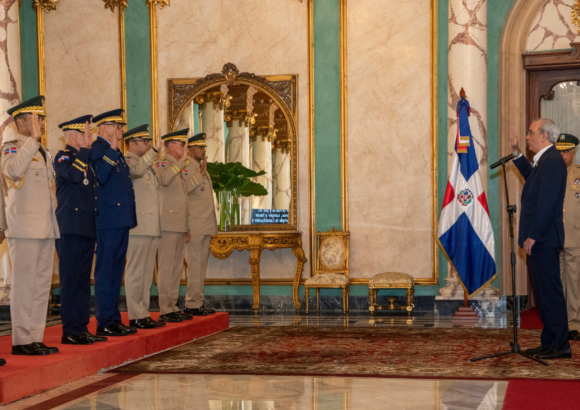
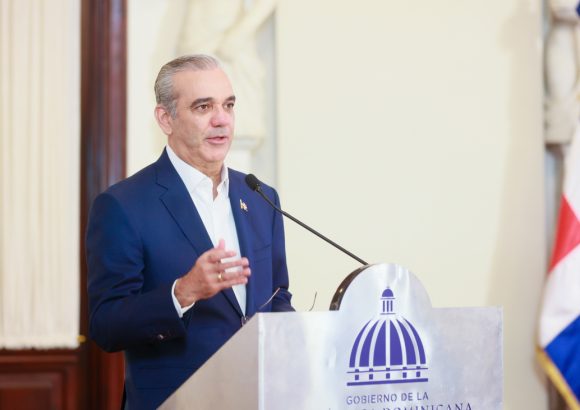
    Dominican Republic President Luis Abinader touched back down in the nation’s capital of Santo Domingo on Thursday, wrapping up a two-stop official diplomatic tour that took him first to Panama and then to Guyana. The trip centered on two core goals: drawing new foreign direct investment to the Caribbean nation and expanding bilateral cooperation across key economic and energy sectors, yielding a landmark agreement for joint oil exploration by the end of his travels.

    Abinader kicked off his international itinerary in Panama, where he took the stage as the keynote speaker for the World Free Zones Congress. During his address, he laid out a compelling case for global businesses to choose the Dominican Republic as their next investment hub, spotlighting the country’s unique competitive advantages in both advanced manufacturing and high-technology sectors. Beyond his conference appearance, the president held one-on-one bilateral talks with Panamanian President José Raúl Mulino, and also convened a series of roundtable discussions with leading private sector executives from both nations. These conversations focused on breaking down trade barriers and expanding two-way export volumes to strengthen economic ties between the two countries.

    From Panama, Abinader traveled onward to Georgetown, the capital of Guyana, where he was formally greeted by Guyana’s Prime Minister Mark Phillips and Foreign Minister Hugh Todd ahead of a high-level meeting with Guyanese President Mohamed Irfaan Ali. The working visit concluded with a formal signing ceremony for a new bilateral cooperation agreement, crafted specifically to advance joint exploration activities in the oil and gas sector.

    Immediately after his arrival back in Santo Domingo, Abinader traveled directly to the National Palace to resume his daily presidential duties. Officials close to the president noted that the tour reflects the Dominican government’s sustained, strategic push to expand global partnerships, attract much-needed foreign capital, and unlock new growth opportunities across the energy, trade, and broader economic development sectors.

  • Attorney General orders investigation into killing of Esmeralda Moronta

    Attorney General orders investigation into killing of Esmeralda Moronta

    A shocking act of gender-based violence has cut short the life of a rising small business owner in the Dominican Republic’s capital, leaving the nation grappling with renewed questions over systemic protection for at-risk women.

    Thirty-three-year-old Esmeralda Moronta de los Santos, a beloved local baker and mother of two, was gunned down in a public neighborhood grocery store by her ex-partner Omar Tejeda Guzmán on Wednesday afternoon in the Alma Rosa district of Santo Domingo Este, according to official law enforcement accounts.

    What makes the tragedy particularly devastating for Dominican communities is the timeline: before the fatal attack, Moronta had already reached out to state authorities to report repeated harassment, stalking and surveillance at the hands of Tejeda Guzmán. She filed her official complaint earlier the same day at the Comprehensive Unit for Attention to Gender Violence, Domestic Violence and Sexual Crimes, the government’s designated body for supporting survivors of abuse.

    National Police spokesperson Diego Pesqueira confirmed the attack unfolded around 4:00 p.m. After being chased by her former partner through the neighborhood, Moronta fled into a local corner store seeking safety. Tejeda Guzmán followed her inside and fired multiple shots, killing her at the scene.

    Beyond her role as a victim of abuse, Moronta was a celebrated emerging entrepreneur who had built a thriving small business from scratch over the past two years. As the founder of Estilo Pastelero, a home-based bakery specializing in custom cakes, dessert tables, cupcakes, cheesecakes, and traditional Dominican treats, she had cultivated a large, loyal customer base across eastern Santo Domingo. Her most popular creations included Dominican-style sponge cake and her signature dulce de leche volcano cake, and she was just weeks away from opening her first permanent brick-and-mortar storefront, a milestone she had worked years to achieve. She leaves behind two young children, aged 10 and 3, who will now grow up without their mother.

    Yeni Berenice Reynoso, the Dominican Attorney General, has publicly expressed profound grief over Moronta’s killing and ordered an urgent, full-scale investigation into the incident. The probe will not only uncover the full circumstances of the fatal shooting but also examine whether prosecutors and agency staff followed all required safety protocols designed to protect gender-based violence survivors who file official complaints.

    Reynoso affirmed that the case would receive the full investigative rigor it demands, and extended her official condolences to Moronta’s grieving family, emphasizing the particular heartbreak faced by her two orphaned children.

    Moronta’s death has reignited widespread national conversation and concern over the persistent crisis of gender-based violence in the Dominican Republic, especially for women who follow official channels to report threats and abuse, only to still be killed by their abusers.

  • Infotep to transform former Legislators’ Club into hospitality and tourism training center

    Infotep to transform former Legislators’ Club into hospitality and tourism training center

    In a formal ceremony held in Santo Domingo, Dominican Republic, a landmark transition for public education and tourism development has been completed: the National Institute of Technical and Professional Training (Infotep) has formally taken ownership of the former Legislators’ Club, a property that will be redeveloped into a cutting-edge vocational training center focused exclusively on the hospitality and tourism sectors.

    The handover ceremony was co-led by two key Dominican government bodies: the General Directorate of National Assets and the Chamber of Deputies. Rafael Burgos Gómez, head of the National Assets Directorate, officially handed over the property deed to Luis Manuel Rodríguez, Infotep’s Deputy Director General, who attended the event on behalf of Infotep Director General Maira Morla Pineda.

    This property transfer is not an ad-hoc arrangement; it is rooted in formal legal authorization. The move was greenlit by Resolution No. 670, which was passed by relevant authorities in July 2024, alongside two existing executive orders: Decrees 235-01 and 664-23. All three legal documents explicitly approve the repurposing of the site for public use and specialized technical-professional training.

    Alfredo Pacheco, president of the Chamber of Deputies, emphasized the strategic significance of the project during the ceremony. He noted that the initiative reimagines an underused recreational space as an educational institution that will upskill thousands of young Dominican workers, while also reinforcing the competitiveness of one of the country’s most vital economic pillars: tourism.

    Government officials outlined that the new training center will address a gap in accessible technical education in the Santo Domingo Este region, expanding local learning opportunities for residents seeking careers in hospitality and tourism. By cultivating a skilled local workforce, the center is expected to support the sustained long-term growth of the Dominican Republic’s tourism industry, which is a major driver of employment and national GDP.

    Several other senior stakeholders were in attendance at the handover, including Rafael Santos Badía, multiple sitting legislators, and senior representatives from both Infotep and the General Directorate of National Assets.

  • Dominican Republic to preside over World Health Assembly for the first time

    Dominican Republic to preside over World Health Assembly for the first time

    In a historic first for the Caribbean nation, the Dominican Republic’s Minister of Health, Víctor Atallah, is set to depart for Geneva this month to assume the presidency of the 79th World Health Assembly (WHA), the top decision-making body of the World Health Organization (WHO). Scheduled to run from May 18 to 26 at the iconic Palais des Nations, this year’s assembly will gather health delegates from over 190 WHO member states to tackle the most pressing challenges facing global public health.

    As the newly appointed president of the assembly, Atallah will steer critical cross-country discussions and facilitate consensus-building across a broad agenda of core global health priorities. Key topics on the table include expanding access to robust primary health care, reinforcing national health systems to withstand future shocks, closing persistent gaps in global health equity, boosting cross-border emergency preparedness for outbreaks and public health crises, expanding access to mental health services, and accelerating progress against persistent communicable diseases. A central featured debate will focus on integrated, equitable strategies for the prevention and control of obesity within national health frameworks, aligning with the assembly’s targeted focus on growing noncommunicable disease burdens.

    International health observers note that the Dominican Republic’s selection to lead the WHA marks a landmark milestone for the country, reflecting the growing international confidence in the nation’s public health leadership and its expanding role in global health cooperation. Atallah emphasized that the presidency places the Dominican Republic at the heart of global decision-making, directly shaping the binding policy commitments and strategic directions that will guide global public health action for the coming year.

    After concluding his duties at the Geneva assembly, Atallah will embark on a second high-profile diplomatic health mission to Rome, where he will join delegates from across the globe for Nutrition Week 2026. Hosted at the headquarters of the United Nations Food and Agriculture Organization (FAO) from May 25 to 28, the event will center on advancing evidence-based food policy, strengthening global nutrition security, advancing the adoption of sustainable dietary patterns, and refining cross-sector strategies to bolster public health systems through improved nutrition outcomes.

  • Dominican Republic to receive 30 U.S.-deported migrants per month

    Dominican Republic to receive 30 U.S.-deported migrants per month

    In a formal announcement made this Wednesday, Dominican Republic Foreign Minister Roberto Álvarez confirmed that the Caribbean nation has entered into a 12-month memorandum of understanding with the United States that will see the country accept roughly 30 deported third-country migrants from U.S. territory each month.

    Under the terms of the agreement, the incoming migrant group will not include Haitian citizens or unaccompanied minor migrants, Álvarez clarified. During their stay in the Dominican Republic, which is projected to last between one and two weeks, local authorities will coordinate logistics for the migrants’ eventual repatriation to their countries of birth or origin.

    Crucially, all costs tied to the transit and repatriation process will be fully covered by the U.S. government, while the International Organization for Migration will provide operational support to Dominican agencies tasked with overseeing the program. At the time of the announcement, Dominican officials had not yet finalized a location to house the incoming deportees, but confirmed that all migrants will be kept under consistent supervision throughout their stay in the country.

    Addressing growing public and political scrutiny of the deal, Álvarez pushed back against claims that the Dominican government was pressured into signing the agreement by U.S. officials. He emphasized that the memorandum is a non-binding arrangement that in no way undermines the Dominican Republic’s national sovereignty.

    The foreign minister also noted that the country is far from alone in adopting this policy framework, pointing to existing similar agreements already in place between Washington and other Latin American nations including Costa Rica, Ecuador, Honduras, and Paraguay. Álvarez repeatedly stressed that the arrangement is designed solely as a temporary transit mechanism, and it will not result in permanent resettlement of these migrants in the Dominican Republic, nor does it open any pathways for formal permanent immigration status for the group under Dominican law.

  • Geopolitics Congress in Santo Domingo examines impact of global conflicts on the region

    Geopolitics Congress in Santo Domingo examines impact of global conflicts on the region

    SANTO DOMINGO – Speaking at the closing ceremony of the inaugural 1st International Geopolitics Congress Dominican Republic 2026, former Dominican Republic president Leonel Fernández has delivered a stark analysis of how ongoing global conflicts are rippling through Latin American economies. Fernández highlighted that the twin conflicts in Ukraine and the Middle East have upended long-stable global supply chains for critical commodities including oil, natural gas, aluminum, and grains, creating a deeply divided economic landscape across the Latin American and Caribbean region.

    According to Fernández, the economic fallout of these disruptions has been anything but uniform across the region. Fuel-exporting economies, including major players such as Brazil, Colombia, and Mexico, have seen unexpected gains from elevated commodity prices, while net energy importing nations – the Dominican Republic, Chile, and Peru among them – have been forced to grapple with skyrocketing energy costs, persistent broad-based inflation, and a marked slowdown in economic growth.

    In his address, Fernández also addressed the policy responses from regional monetary authorities, noting that central banks across Latin America have moved aggressively to curb rising prices by hiking interest rates. He stressed that protecting the institutional autonomy of these central banks is non-negotiable for maintaining long-term economic stability, calling on regional leaders to safeguard this independence from political interference.

    Closing his remarks, Fernández laid out a vision for a reimagined 21st-century global order rooted in four core pillars: lasting peace, broad inclusion, global equity, and long-term environmental sustainability. He argued that such a framework is the only way to insulate developing economies from the volatile spillover effects of distant geopolitical conflicts.

    The landmark congress, organized by the Dominican Center for Strategic Thought (CEPED), gathered a diverse cross-section of global stakeholders, including sitting political leaders, leading academic researchers, senior diplomats, and top business representatives. The overarching goal of the gathering was to unpack the shifting dynamics of the global order and unpack what these changes mean for Latin America’s future.

    Other prominent speakers at the event included noted Spanish geopolitical analyst Pedro Baños, who drew a clear connection between a nation’s economic resilience and its standing in global power dynamics. Additional expert contributions came from leading scholars Ana Esther Ceceña, Alfredo Jalife, and Iván Gatón. José Ignacio Paliza, the Dominican Minister of the Presidency, used his address to emphasize that energy security has emerged as a make-or-break factor for national economic competitiveness in the new geopolitical landscape.