标签: Dominican Republic

多米尼加共和国

  • Santo Domingo Este expands with major housing project

    Santo Domingo Este expands with major housing project

    Santo Domingo witnessed a significant milestone in urban development as Grupo GHR inaugurated its Brisas de las Colinas 6 residential complex during a ceremonial groundbreaking event attended by President Luis Abinader. The ambitious project, representing a substantial investment exceeding RD$5.5 billion, is poised to catalyze urban transformation and economic advancement in Santo Domingo Este—one of the nation’s most rapidly expanding regions.

    Comprising 806 contemporary apartments distributed across 11 residential towers, the development addresses the growing need for secure, modern, and practical housing solutions. Its strategic positioning along Avenida Ecológica highlights the area’s emergence as a focal point for structured and sustainable urban growth. Beyond housing, the initiative is anticipated to create more than 1,600 employment opportunities, both directly and indirectly, thereby injecting vitality into the local economy.

    The project distinguishes itself with over 7,000 square meters dedicated to communal and leisure facilities, featuring sports courts, a fully-equipped gymnasium, an Olympic-sized pool, a water park, event venues, and scenic walking paths. In a innovative approach to market diversification, one tower is specifically designed for short-term rental investments, catering to both local entrepreneurs and members of the Dominican diaspora interested in the Airbnb market. Future plans include the establishment of a Sirena Market, augmenting the zone’s commercial appeal and residential convenience.

    Grupo GHR emphasized that Brisas de las Colinas 6 embodies the company’s enduring dedication to sustainable development, improved housing accessibility, and the enhancement of social welfare throughout the Dominican Republic.

  • U.S. grants presidential permit for Puerto Rico–Dominican Republic submarine power cable

    U.S. grants presidential permit for Puerto Rico–Dominican Republic submarine power cable

    The Trump administration has granted crucial authorization for a landmark energy project that will establish the Caribbean’s first submarine power interconnection between Puerto Rico and the Dominican Republic. This presidential permit approval represents a significant milestone for one of the region’s most ambitious infrastructure initiatives.

    While the U.S. Department of Energy has yet to issue formal notification, the Caribbean Transmission Development Company (CTDC) has confirmed receiving essential ‘no objection’ clearances from both the State and Defense Departments. An official public announcement is scheduled for February 17 in the Dominican Republic, with anticipated attendance from Dominican President Luis Abinader, Puerto Rico Governor Jenniffer González, and U.S. government representatives.

    The proposed submarine cable will enable bidirectional electricity transmission of up to 700 megawatts, substantially enhancing energy security for both territories. In the Dominican Republic, the connection will integrate with a newly developed natural gas power plant specifically designed for this project, while in Puerto Rico, it will interface with the electrical grid via the Mayagüez substation.

    Despite the regulatory progress, CTDC faces several implementation challenges including finalizing power purchase agreements with the Puerto Rico Electric Power Authority, securing fuel supply contracts, obtaining environmental approvals in both jurisdictions, and raising approximately US$2.5 billion in project financing.

    The company targets January 2031 for operational status. Initially, the interconnection will address Puerto Rico’s energy demands, with long-term potential to facilitate solar energy exports from Puerto Rico to the Dominican Republic. Upon completion, this project will join over 160 similar cross-border power connections currently operating between the United States, Canada, and Mexico, marking a transformative development in Caribbean energy infrastructure.

  • INFOTEP and PROCIGAR inaugurate tobacco training school in Tamboril

    INFOTEP and PROCIGAR inaugurate tobacco training school in Tamboril

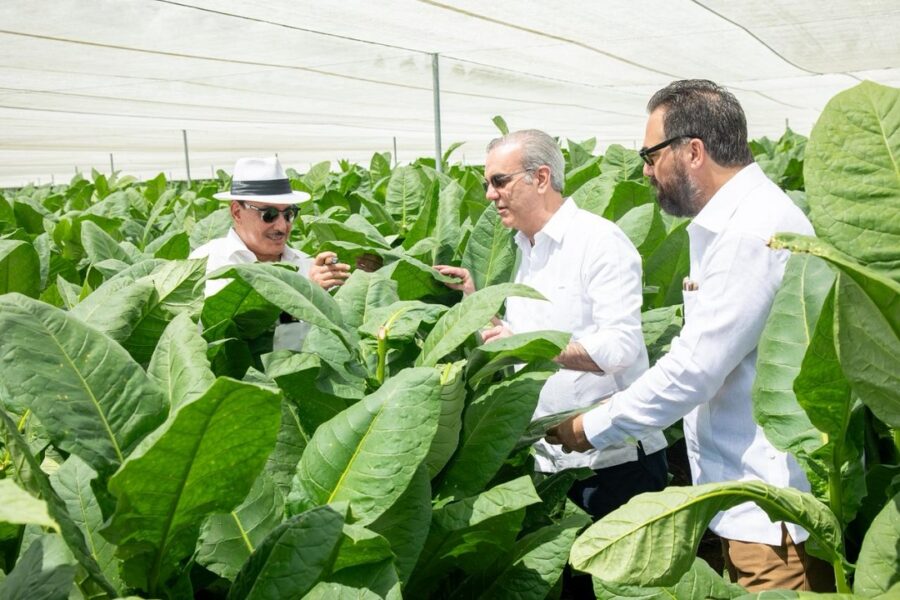
    SANTO DOMINGO – In a landmark public-private collaboration, the Dominican Republic has established a specialized educational institution dedicated to preserving and advancing the art of cigar production. The National Institute of Technical and Professional Training (INFOTEP) and the Association of Cigar Producers (PROCIGAR) have jointly inaugurated the PROCIGAR–INFOTEP School of Tobacco Growers in Tamboril.

    This pioneering initiative addresses the growing need for skilled artisans in one of the nation’s most historically significant economic sectors. The school commenced operations with four dedicated training groups involving 88 participants who will undergo an intensive 135-hour practical curriculum. The comprehensive program encompasses the entire cigar manufacturing process, including tobacco leaf selection, processing, expert rolling techniques, final finishing, and rigorous quality control standards.

    The inauguration ceremony featured prominent figures including INFOTEP Deputy Director Maira Morla, Tamboril Mayor Anyolino Germosén, PROCIGAR President Litto Gómez, and Johannes Marinus Kelner, Vice Minister of the Ministry of Industry, Commerce, and MSMEs.

    Industry leaders emphasized the institution’s critical role in developing specialized human capital to maintain the Dominican tobacco sector’s competitive edge in global markets. The school represents a strategic investment in workforce development that will enable immediate employment opportunities for graduates while enhancing productivity benchmarks. Beyond economic impacts, the initiative aims to generate sustainable livelihoods for local families and solidify Tamboril’s international reputation as a hub of premium cigar craftsmanship through this synergistic alliance between educational and industry stakeholders.

  • Mitur receives U.S. students to promote tourism education

    Mitur receives U.S. students to promote tourism education

    The Dominican Republic’s Ministry of Tourism (Mitur) recently welcomed a delegation of twelve students from Elon University in North Carolina, marking a significant step in international academic collaboration within the tourism sector. The visit, organized through ongoing educational and cultural exchange initiatives, provided the students with immersive insights into the country’s tourism promotion strategies.

    The delegation received a traditional Dominican welcome featuring a vibrant merengue performance by the Ministry’s folk ballet, followed by an extensive tour of Mitur’s facilities. The educational component included a specialized presentation on Adventure Tourism opportunities across the Dominican Republic, delivered by Ángel Pichardo, Deputy Director of Domestic Tourism, who detailed the diverse offerings and strategic development in this sector.

    Accompanied by three faculty members and a representative from the CIEE (Council on International Educational Exchange) program, the students engaged in activities coordinated by Mitur’s Directorate of Training and Community Extension. This initiative underscores the Ministry’s dedication to fostering global partnerships, advancing tourism education, and promoting cross-cultural understanding through structured academic exchanges.

  • U.S. Ambassador and Vice President visit Mayor of Santiago de los Caballeros

    U.S. Ambassador and Vice President visit Mayor of Santiago de los Caballeros

    SANTIAGO DE LOS CABALLEROS – A high-level strategic dialogue unfolded in Santiago as Mayor Ulises Rodríguez hosted a pivotal meeting with U.S. Ambassador to the Dominican Republic, Leah Francis Campos, and Dominican Vice President Raquel Peña. The trilateral discussion centered on positioning Santiago as the paramount economic and institutional nucleus of the Cibao region.

    Mayor Rodríguez articulated a comprehensive vision for the city’s accelerated development, underscoring its emergent role as a strategic epicenter for multifaceted growth. The dialogue produced a reinforced consensus on amplifying cooperative efforts between municipal authorities, the national government, and international stakeholders. This collaborative framework is deemed essential for catalyzing sustainable development initiatives and enhancing regional competitiveness.

    Critical to the agenda was the examination of nascent opportunities arising from Santiago’s ongoing urban consolidation. All parties acknowledged the city’s profound dynamism and its increasing significance as a primary engine of national progress. The meeting concluded with a mutual pledge to sustain this high-level dialogue, ensuring Santiago remains a cornerstone of the nation’s public policy agenda and a model of effective international partnership.

  • Protest in Santiago rejects mining in the Cordillera Septentrional

    Protest in Santiago rejects mining in the Cordillera Septentrional

    SANTIAGO, DOMINICAN REPUBLIC – A significant grassroots mobilization dubbed ‘United We Are More’ culminated in a massive protest march through Santiago on Wednesday, demonstrating widespread community resistance against purported mining initiatives in the ecologically sensitive Northern Mountain Range (Cordillera Septentrional). The demonstration united residents from multiple municipal districts including Río Grande, San Francisco de Jacagua, Pedro García, and Yásica Arriba, alongside religious authorities and civil society representatives.

    The protest, organized as a vehicular caravan, commenced in Canabacoa and proceeded along segments of the Duarte Highway before concluding at the Monument to the Heroes of Restoration. Father Nino Ramos, addressing participants, issued a stark warning regarding mining’s potential consequences, highlighting risks to rural livelihoods through environmental degradation, water contamination, widespread deforestation, and forced community displacement. He emphasized the demonstration symbolized resolute opposition to extractive industries in the region.

    This civic action garnered support from clergy members, environmental coalitions, neighborhood associations, and agricultural collectives. The protest also expressed solidarity with communities in San Juan de la Maguana and Restauración facing analogous concerns about mining expansion.

    Despite protesters’ assertions that mining operations pose existential threats to local ecosystems and communities, President Luis Abinader has publicly denied the existence of any mining contracts or development plans for the Northern Mountain Range. Echoing this position, Energy and Mines Minister Joel Santos clarified that activities conducted in the region have been exclusively exploratory, emphasizing no exploitation plans exist and that all operations occur under state oversight with strict adherence to environmental protocols and legal frameworks.

  • PyT Infraestructura asks RD Vial for extension in Amber Highway bidding process

    PyT Infraestructura asks RD Vial for extension in Amber Highway bidding process

    A significant infrastructure development in the Dominican Republic has encountered procedural hurdles as engineering firm PyT Infraestructura formally requested a deadline extension from national road agency RD Vial. The extension pertains to the submission of terms of reference for the ambitious highway project connecting the Santiago Northern Ring Road with the Puerto Plata–Sosúa Amber Highway.

    Amín Ricardo García Acuña, General Manager of PyT Infraestructura, clarified that the current bidding framework presents an unusual challenge. Contractors are being asked to propose highway designs without a predetermined ‘zero line’ or established route alignment. This omission necessitates comprehensive preliminary technical studies, which the firm argues should be completed before establishing the definitive road axis.

    García Acuña highlighted substantial financial and intellectual considerations, noting that industry standards indicate developing a preliminary design with reliable construction budgeting requires an investment between US$2 million and US$3 million. He further pointed out that the current bidding documentation lacks clear provisions addressing the intellectual property rights associated with such preliminary designs.

    The engineering executive proposed an alternative approach, suggesting that if RD Vial, the Ministry of Public Works, or another government entity possesses relevant technical studies from previous initiatives—particularly the complete design developed under the public-private partnership (APP) framework—these documents should be made publicly available. This transparency would enable all bidders to work from a common baseline and submit genuinely comparable technical proposals.

    García Acuña emphasized that standard international practice in public works contracting typically involves the contracting authority providing a base design, allowing competing firms to submit enhancements or alternative proposals rather than creating entirely original designs from undefined parameters.

  • Environment Ministry reports deadly collapse at El Cangrejo Mine in Puerto Plata

    Environment Ministry reports deadly collapse at El Cangrejo Mine in Puerto Plata

    A devastating mine collapse in the María La O sector of Sosúa, Puerto Plata, has claimed the lives of a father and son while leaving a third individual injured. The tragedy occurred at the El Cangrejo materials mine, where the victims were reportedly conducting maintenance and testing on heavy machinery rather than active extraction, according to an official investigation led by the Ministry of Environment and Natural Resources.

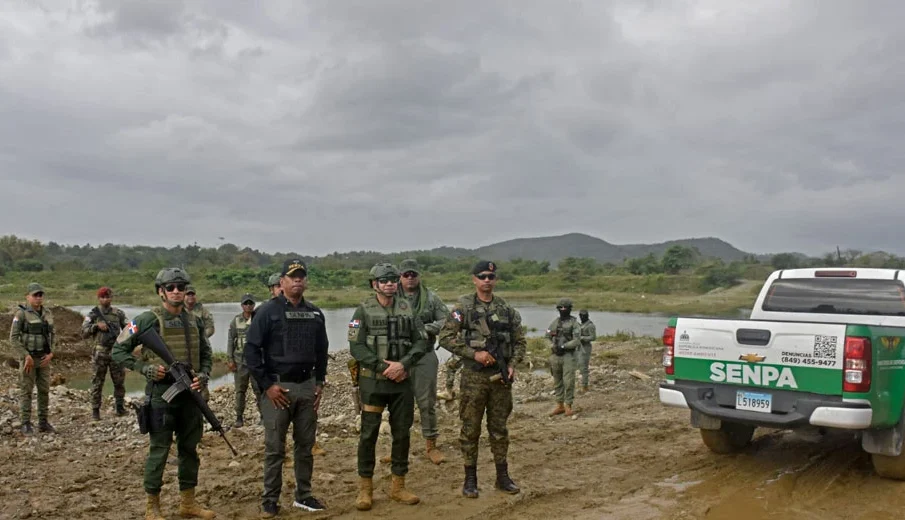
    In the aftermath, a specialized technical commission from the Vice Ministry of Soils and Water, alongside the Provincial Directorate of Environment and Senpa officials, conducted an urgent site inspection. Their preliminary findings revealed a critical lack of compliance: the mining operation was being conducted without valid environmental permits for either extraction or transportation activities.

    The Ministry’s subsequent statement highlighted a pattern of negligence, disclosing that prior technical assessments had explicitly warned of significant soil instability risks at the location. These reports had recommended specific remediation measures to mitigate the very dangers that ultimately led to the fatal incident. The institution extended its deepest condolences to the bereaved families while issuing a stern reaffirmation of its zero-tolerance policy toward illegal mining operations. Officials urgently called for nationwide strict adherence to environmental and technical safety regulations governing all extractive industries to prevent future catastrophes.

  • ONESVIE calls for stronger earthquake-resistant construction laws in the Dominican Republic

    ONESVIE calls for stronger earthquake-resistant construction laws in the Dominican Republic

    SANTO DOMINGO – In a critical move to address seismic vulnerability, the Dominican Republic’s National Office for Seismic Evaluation and Vulnerability of Infrastructure and Buildings (ONESVIE) is advocating for comprehensive legislative reforms to modernize the nation’s earthquake-resistant construction standards. The proposed measures aim to replace technical regulations that have remained unchanged since 1978, which officials deem dangerously obsolete given contemporary urban development challenges.

    Leonardo de Jesús Reyes Madera, Director General of ONESVIE, issued a stark warning regarding widespread non-compliance in the construction sector. He revealed that numerous structures have been erected without proper permits or adherence to existing standards, creating substantial public safety hazards. Reyes Madera emphasized that mandatory compliance is essential for both private developers and government-contracted projects, calling for intensified oversight by the Ministry of Housing and Construction.

    The director further criticized certain construction professionals for neglecting their ethical responsibilities, often bypassing even minimum seismic provisions. He argued that the current enforcement framework, based merely on a presidential decree, lacks the necessary legal authority for effective implementation. During an appearance on the AcentoTV program “¿Y tú… qué dices?”, Reyes Madera highlighted ONESVIE’s technical advisory role in assessing structural vulnerability while advocating for a strengthened culture of prevention, regulatory adherence, and professional accountability to safeguard communities in seismically active regions.

  • Company and owner receive RD$60 million penalty for environmental damage in Loma Redonda

    Company and owner receive RD$60 million penalty for environmental damage in Loma Redonda

    In a landmark environmental ruling, the Collegiate Court of San José de Ocoa has imposed substantial penalties against Agroforestal MACAPI, S.A. and its proprietor, agribusiness executive Manuel Castillo Pimentel, for severe ecological damage inflicted in the Loma Redonda region. The judicial decision mandates combined fines and compensation reaching 60 million Dominican pesos (approximately $1 million USD), alongside a two-year suspended prison term for Castillo Pimentel.

    Presiding Judge Alfis Brandeli Castillo Castillo delivered the verdict, which was formally communicated to the Public Ministry in December 2025 via the Specialized Prosecutor’s Office for Environmental and Natural Resources Defense (Proedemaren). The court found conclusive evidence of systematic violations of national environmental and forestry regulations, resulting in a 50 million peso fine payable to the Dominican State and an additional 10 million pesos allocated as civil compensation for moral damages. The suspended incarceration sentence operates under provisions outlined in the Criminal Procedure Code.

    Beyond financial penalties, the judicial order requires comprehensive ecological restoration of approximately 100 tareas (15.7 acres) of degraded land through a scientifically-grounded reforestation initiative using indigenous species. This rehabilitation effort will be conducted under strict supervision by the Ministry of Environment to ensure compliance. Prosecutorial evidence demonstrated that the defendants engaged in extensive deforestation activities, caused significant biodiversity loss, damaged critical water resources, and erected illegal infrastructure without authorization. This case establishes a powerful precedent for environmental accountability, highlighting the Dominican government’s strengthened resolve to prosecute ecological crimes with maximum judicial rigor.