标签: Dominican Republic

多米尼加共和国

  • Mónika Infante to lead Manzanillo Gas & Power: a new chapter for Dominican energy infrastructure

    Mónika Infante to lead Manzanillo Gas & Power: a new chapter for Dominican energy infrastructure

    In a move that signals more than just routine leadership change, the appointment of Mónika Infante Henríquez as General Manager of Manzanillo Gas & Power has launched a new strategic chapter for the Dominican Republic’s evolving energy sector. This hire is far from a standard administrative reshuffle: it brings a decorated, high-stakes executive to a critical project at the exact moment it shifts from years of preliminary planning to the high-pressure work of scaling large-scale energy operations.

    Infante’s arrival aligns perfectly with a defining turning point in the Dominican Republic’s efforts to diversify its national energy matrix. The sprawling Manzanillo energy complex, which integrates a new natural gas import terminal and a state-of-the-art combined-cycle power plant, was developed to deliver long-term reliability and stability to the country’s national power grid. For a major infrastructure project of this scope, Infante’s unique combination of legal expertise and decades of experience delivering public-private partnership projects positions her uniquely to navigate the tangled regulatory and technical challenges that are common across the global energy industry.

    A Career Built on Delivering Large-Scale Infrastructure Success
    Before stepping into this new energy leadership role, Infante spent years leading Aeropuertos Dominicanos Siglo XXI, better known as AERODOM, a subsidiary of VINCI Airports. Her tenure at the helm of the Dominican airport operator was marked by a string of transformative achievements: she successfully negotiated extended infrastructure concessions, structured complex, bankable financial frameworks to fund nationwide airport modernization, and delivered upgraded public assets that drove tourism and economic growth across the country. This proven track record of managing critical public infrastructure through a model that combines public accountability with private sector efficiency is exactly what the Manzanillo Gas & Power consortium aims to replicate with the energy project.

    Beyond the immediate impact on the Manzanillo complex, Infante’s appointment highlights a growing, encouraging trend across the Latin American and Caribbean region: the increasing advancement of women into top leadership roles in heavy industrial sectors that have long been male-dominated. By tapping a professional with Infante’s established reputation for results, Manzanillo Gas & Power has gained a leader with a proven ability to build alignment and consensus across a diverse range of stakeholders, from government regulators to private investors and local community groups. Her management approach, which centers on radical transparency and continuous process optimization, is widely expected to establish a new benchmark for corporate governance across the Dominican energy sector.

    The strategic value of this appointment stems from Infante’s proven ability to deliver projects on strict technical timelines without sacrificing fiscal responsibility or operational integrity. Her deep mastery of large-scale logistics and complex contract management gives the Manzanillo consortium an immediate competitive advantage as it moves into operations. The end goal of the project is clear: to turn the Manzanillo complex into a regional benchmark for responsible energy infrastructure development that will drive inclusive economic growth across the entire northwestern region of the Dominican Republic.

    Ultimately, placing a seasoned, results-driven executive at the head of such a critical national energy hub reflects the growing institutional maturity of the Dominican Republic’s energy sector. As Manzanillo Gas & Power enters its full operational phase, market analysts and industry stakeholders broadly view Infante’s leadership as a strong guarantee of long-term project stability. Her career track record makes clear that the Manzanillo complex will benefit from the same analytical precision, uncompromising professional rigor and commitment to delivery that have defined Infante’s decades-long career in infrastructure leadership.


  • Swiss man, French woman arrested with cocaine at AILA

    Swiss man, French woman arrested with cocaine at AILA

    Authorities at the Dominican Republic’s Las Américas International Airport have foiled an attempted international drug smuggling operation, taking a 61-year-old Swiss man and a 19-year-old French woman into custody, officials from the country’s National Drug Control Directorate confirmed this week. The pair was preparing to board an outbound flight bound for Frankfurt, Germany when security screeners detected the contraband during routine safety checks. The incident marks one of the recent high-profile drug interdictions at the Caribbean nation’s busiest international air hub, which serves as a key transit point for travel between the Americas and Europe.

  • Metro Line 2C extends hours during free trial phase

    Metro Line 2C extends hours during free trial phase

    Authorities at Santo Domingo’s Empresa Metropolitana de Transporte have announced a key adjustment to the newly launched Line 2C metro route, which connects the capital to the neighboring municipality of Los Alcarrizos: an expansion of daily operating hours, implemented as part of the line’s ongoing public free trial period.

    The decision to extend service times was crafted to address growing commuter demand and elevate urban mobility across the greater Santo Domingo area. By expanding the window of available service, officials aim to deliver a more flexible and efficient transit option for residents traveling between the city center and Los Alcarrizos. Throughout the trial phase, all rides on Line 2C remain completely free of charge, and passengers also retain access to the metro system’s integrated transfer network, enabling faster, smoother connections to other existing lines across the city’s transit infrastructure.

    Under the updated schedule that went into effect with the announcement, Line 2C trains will run from 6:00 a.m. to 8:00 p.m. every Monday through Saturday. On Sundays and all officially recognized public holidays, service will start two hours later at 8:00 a.m., retaining the same 8:00 p.m. end time.

    Transit officials are urging all regular and new commuters who use Line 2C to follow the Santo Domingo Metro’s official social media channels and website to receive real-time updates on any further service adjustments, as well as announcements regarding the full, permanent implementation of the Line 2C extension once the free trial period concludes.

  • Abinader orders stronger border measures over Haiti unrest

    Abinader orders stronger border measures over Haiti unrest

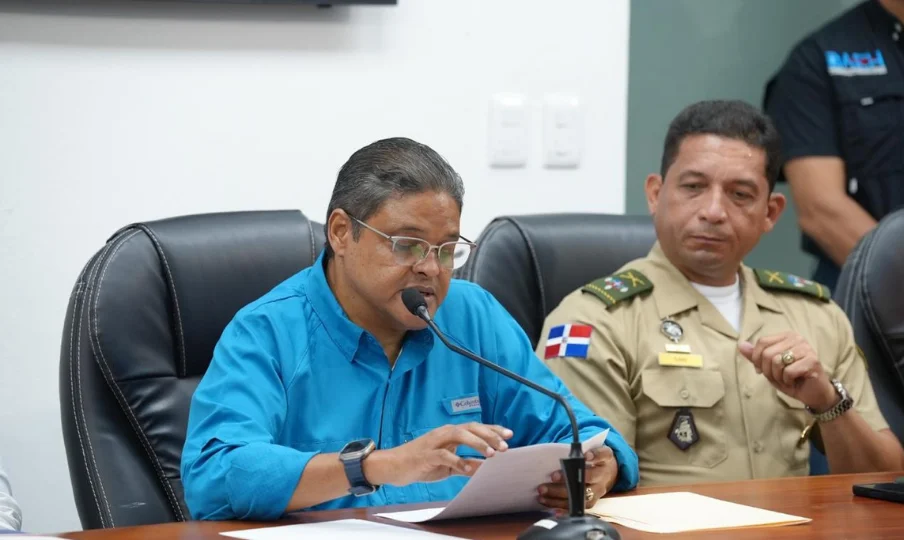
    Escalating gang violence and spreading political instability in neighboring Haiti have prompted the Dominican Republic to implement strict new surveillance measures along their shared border, a response directly triggered by Haiti’s recent declaration of a maximum national alert and the deployment of a UN-supported Gang Suppression Force.

    Following a high-stakes emergency meeting of the Dominican Republic’s National Security and Defense Council, held to evaluate the rapidly deteriorating security situation across the border, President Luis Abinader reaffirmed the country’s unwavering commitment to protecting its sovereignty. In a public statement, Abinader stressed that defending national territory, preserving community safety and upholding public order are “non-negotiable priorities,” confirming that all units of the Dominican Armed Forces are fully deployed and on standby to address any unexpected contingency that may arise.

    On the Haitian side of the border, security officials have enacted their own sweeping emergency measures. The Armed Forces of Haiti issued an order requiring all military personnel to immediately report to their assigned barracks, canceled all ongoing leave, and placed the entire force on highest alert. This order comes in the wake of surging gang-related attacks, including deadly armed clashes and a recent large-scale massacre in Haiti’s Artibonite region that has been linked to the notorious armed faction Grand Grif.

    Haiti’s ongoing security collapse stretches back to 2018, when political fragmentation and institutional weakening allowed armed gangs to seize control of large swathes of territory, including most of the capital Port-au-Prince and its surrounding suburbs. New data from the United Nations Integrated Office in Haiti underscores the severity of the crisis: in 2025 alone, gang violence and counter-violence security operations left at least 5,915 people dead and another 2,708 injured across the country.

    The unfolding chaos has sent ripples of concern across the Caribbean region, with policymakers warning of risks to cross-border security, unregulated migration flows, and broader regional stability. For the Dominican Republic, which shares the entire island of Hispaniola with Haiti, the enhanced border deployment represents a critical proactive step to shield its national security and maintain firm territorial control as the Haitian crisis continues to unfold.

  • Prosecutors file charges in Jet Set collapse case

    Prosecutors file charges in Jet Set collapse case

    Just two months after the deadliest structural disaster in recent Dominican Republic history, the country’s Public Prosecutor’s Office has brought formal criminal charges against the siblings who own the collapsed Jet Set nightclub. The April 8, 2025 tragedy left 231 people dead and more than 80 others injured, when the venue’s roof collapsed amid unchecked structural degradation.

  • Arajet adds 14th aircraft named “Salto de Jimenoa”

    Arajet adds 14th aircraft named “Salto de Jimenoa”

    Leading low-cost Dominican airline Arajet has marked a key milestone in its rapid expansion trajectory with the introduction of its 14th aircraft, a Boeing 737 MAX 8 branded “Salto de Jimenoa”. The new jet touched down at Santo Domingo’s Las Américas International Airport this week, boosting the carrier’s growing fleet capacity and expanding its ability to connect the Dominican Republic to global markets.

    What sets this new delivery apart is more than just its addition to operational capacity: the aircraft’s name was chosen to honor one of the Dominican Republic’s most beloved natural treasures, Jimenoa Waterfall, a top ecotourism destination nestled in the mountain highlands of Jarabacoa. This naming convention is part of a deliberate, long-term strategy from Arajet: the airline has committed to naming each plane after a significant natural site across the country, turning every aircraft in its fleet into a flying ambassador for the Dominican Republic’s rich biodiversity and protected natural areas.

    In comments on the delivery, Arajet CEO Victor Pacheco highlighted the dual purpose of the fleet expansion. Beyond increasing the airline’s route network and flight frequency to meet rising travel demand, Pacheco emphasized that the move aligns with the company’s core commitment to advancing sustainable tourism and inclusive economic growth across the Dominican Republic. Every flight operated by the named aircraft helps introduce international travelers to the country’s natural heritage, encouraging more responsible travel practices and supporting the growth of ecotourism economies in regional communities. Industry analysts note that the expansion positions Arajet to capture a growing share of the Caribbean travel market, while its focus on natural heritage promotion sets a new example for how airlines can tie corporate growth to destination sustainability.

  • COE reports 27 deaths during Holy Week 2026 operation

    COE reports 27 deaths during Holy Week 2026 operation

    SANTO DOMINGO — The annual Holy Week holiday travel period in the Dominican Republic wrapped up with dozens of preventable deaths recorded across the country, per final statistics released by the nation’s Emergency Operations Center (COE, by its Spanish acronym) following the conclusion of the “Awareness for Life, Holy Week 2026” public safety operation.

    In its official closing bulletin, COE confirmed that 27 people lost their lives in holiday-related incidents between the operation’s start and end, with 22 of those fatalities tied to traffic collisions and the remaining five stemming from drowning accidents. The report breaks down that motorcycles were implicated in the overwhelming majority of road crashes, making up 173 of the 203 total traffic accidents registered nationwide. In terms of location, 112 crashes took place within densely populated urban zones, while another 91 occurred on intercity highways and rural public roads. Of all people killed during the holiday, 18 were motorcycle riders, with other fatalities attributed to pedestrian hit-and-run incidents and additional water-related accidents.

    Despite the grim final toll, authorities noted a notable improvement from last year’s event: overall fatalities dropped by 15.63% compared to the 2025 Holy Week operation. COE representatives credited this decline to expanded preventive public outreach campaigns and stepped up law enforcement surveillance across high-traffic and high-risk areas throughout the country. The operation’s data also mapped out which regions faced the highest volume of incidents, with the most cases recorded in the provinces of Santo Domingo, Puerto Plata, San Pedro de Macorís, La Altagracia, San Cristóbal, and the National District.

    Beyond traffic and drowning incidents, the COE bulletin documented hundreds of non-fatal medical emergencies tied to the holiday. Responders recorded 506 confirmed cases of alcohol poisoning across the country, 28 of which involved underage individuals, alongside 207 cases of food poisoning linked to unregulated street vendors and poorly stored celebratory meals. Emergency teams also carried out 22 separate sea rescues for distressed recreational swimmers and boaters, safely reunited 24 separated minor children with their guardian families, and delivered more than 30,700 total assistance services, ranging from on-site medical care to emergency roadside support for stranded motorists.

    Over 7.3 million Dominican residents and tourists traveled across the nation during the annual Holy Week holiday, one of the busiest travel periods on the country’s calendar. The multi-day national safety operation required coordinated deployment across dozens of public institutions, including the Dominican Armed Forces, national and regional health authorities, tourism regulatory bodies, and specialized local and national rescue agencies. As the operation drew to a close, COE leadership renewed its longstanding call for all travelers and holiday-goers to practice responsible behavior, emphasizing consistent helmet use for motorcycle riders and strict adherence to national traffic regulations as simple, critical steps to cut down on preventable holiday tragedies in future years.

  • Court orders new expert report in Jet Set Nightclub tragedy case

    Court orders new expert report in Jet Set Nightclub tragedy case

    Three months after the catastrophic collapse of the Jet Set nightclub in Santo Domingo that claimed 236 lives and left over 80 people injured, a Dominican judicial official has greenlit a fresh round of specialized technical analysis as the legal process moves forward.

    Raymundo Mejía, a judge sitting with the First Court of Instruction of the National District, issued the order for the new expert report under official order number 057-2026. The ruling partially grants a motion filed by the legal defense team representing Antonio Espaillat and Maribel Espaillat, who are facing proceedings related to the disaster during the case’s preliminary phase. In justifying the decision, the court emphasized that authorizing independent specialized studies is a critical step to uphold due process and guarantee equal legal standing for all parties involved in the case.

    The scope of the new technical evaluation is broad, covering multiple layers of engineering and geological analysis to pinpoint what caused the structure to fail. Analysts will conduct material and structural examinations, including compressive strength testing of the building’s concrete, petrographic analysis to assess the mineral composition and quality of construction materials, corrosion testing and chemical evaluations of the site’s embedded reinforcing steel, and full geotechnical investigations to rule out or confirm underlying foundation failures. A specialized team of independent engineers has been appointed to complete the report, with a strict 30-business-day deadline to deliver their findings. The judge rejected the defense’s request for a longer timeline, citing the need to keep the proceedings moving forward in a timely manner for victims and their families.

    Alongside the structural investigation, the court issued a second order requiring the full extraction of all digital data from a mobile phone owned by Carmen Burgos, who works as an assistant to Antonio Espaillat. The process will be carried out by the Dominican National Institute of Forensic Sciences, and must be conducted under the supervision of independent court-appointed experts. The judge did, however, reject one additional request from the defense: a motion to order new extraction of security camera footage from the area surrounding the nightclub. The request was ruled inadmissible on the grounds that prosecuting authorities had already fully processed and cataloged that evidence for the case, making additional extraction unnecessary.

  • Dominican Republic sees 14.8% increase in tourist arrivals during Holy Week

    Dominican Republic sees 14.8% increase in tourist arrivals during Holy Week

    Santo Domingo — The Dominican Republic’s tourism sector has delivered a robust performance this year, with official data showing a double-digit rise in visitor arrivals during the key Holy Week holiday period. Tourism Minister David Collado announced that the country welcomed a total of 223,328 tourists over the observance, representing a 14.8% jump compared to visitor numbers from the same week in 2023.

    Breaking down the latest figures, Collado highlighted accelerating growth through the final stretch of the holiday: arrivals rose 18.7% across the last four days of the break, a trend that confirms the steady, ongoing expansion the country’s travel industry has seen in recent months.

    Sharing the milestone results on the social platform X, the minister framed the strong visitor numbers as a collective win for the entire Dominican tourism ecosystem. He emphasized that the outcome reinforces three core strengths of the country’s travel brand: its global reputation as a safe destination, its enduring appeal to international travelers, and its unmatched ability to create new jobs and drive broad economic activity across local communities.

    For the Dominican Republic, tourism has long stood as one of the foundational pillars of the national economy, and Holy Week ranks consistently among the busiest and most commercially important peak travel periods of the year. Every uptick in visitor arrivals translates directly to tangible gains across multiple linked industries, from rising hotel occupancy rates to increased spending at local retail outlets, restaurants, and hospitality services. This growth, in turn, supports continued investment and expansion across the full spectrum of the country’s tourism sector.

  • Abinader seeks national agreement to address global crisis

    Abinader seeks national agreement to address global crisis

    In the Dominican capital of Santo Domingo, President Luis Abinader has launched a broad national consultation push, tasking core government ministries with opening dialogues across the country’s productive, political, and civil society sectors. The goal of these talks is to hammer out a unified national agreement designed to buffer the nation from cascading global economic instability, particularly the ripple effects of heightened geopolitical tensions in the Middle East. The planned agreement will center on targeted policy measures that keep the Dominican economy on a trajectory of growth while shielding household finances from the worst impacts of international market and security shocks.

    The consultation mandate came directly out of a high-stakes gathering of the National Security and Defense Council, where top national officials mapped out the shifting global landscape and aligned on coordinated response strategies. One key measure that emerged from the meeting is a planned boost to border surveillance, a move that comes as a United Nations-endorsed Gang Suppression Force deploys to neighboring Haiti to help curb widespread gang violence and restore state authority. President Abinader made clear in remarks following the meeting that three core priorities remain non-negotiable for his administration: national defense, public safety, and territorial integrity. He confirmed that the Dominican Armed Forces are already on high alert to respond to any emerging threats along the shared border with Haiti.

    Beyond regional security and global economic challenges, the president also offered public praise for Dominican residents for their orderly behavior during the recent Holy Week holiday period. He highlighted that the season saw a record-breaking number of domestic trips across the country, and commended the coordinated work of the Emergency Operations Center alongside other rescue, law enforcement, and security agencies that kept holiday travel and gatherings safe. Wednesday’s high-level meeting, hosted at the Dominican Ministry of Defense, brought together the nation’s top military and police leadership to review current operational readiness across all security branches and assess the effectiveness of ongoing public safety initiatives.