标签: Dominican Republic

多米尼加共和国

  • Why Pre-Seed Venture Capital Fails Startups in the Dominican Republic—and Across LATAM

    Why Pre-Seed Venture Capital Fails Startups in the Dominican Republic—and Across LATAM

    For decades, entrepreneurs and analysts across Latin America and the Dominican Republic have repeated a familiar claim: local startups fail to scale simply because there is not enough venture capital available to fuel their growth. This narrative is convenient — it frames regional underperformance as a problem that can be solved with an injection of new funding, with no deeper structural changes required. But a closer look at investment data and ecosystem outcomes reveals a far more foundational issue: the problem is not a lack of capital, but a fundamental failure to price early-stage risk correctly.

    In recent years, Latin America has consistently drawn between $4 billion and $6 billion in annual venture investment, even amid global market downturns and tightening credit cycles. What is less widely reported is that only 10 to 15 percent of this capital actually reaches the pre-seed layer of the ecosystem, the stage where founders experiment, iterate on ideas, and discover product-market fit. This mismatch is not a capital shortage — it is a systemic breakdown in how investors approach uncertainty.

    ## The Misalignment of Pre-Seed Investment Practices

    In mature startup ecosystems like that of the United States, pre-seed investing is built on an explicit acceptance of uncertainty. Top-tier U.S. venture firms operate with a clear understanding that 70 to 80 percent of their early-stage bets will return little to no capital, and that entire funds are carried by a small subset of outsized, high-growth winners. This is not reckless investing — it is disciplined portfolio construction that embraces the inherent uncertainty of early-stage innovation.

    This model stands in stark contrast to common practices across the Dominican Republic and much of Latin America. Here, most pre-seed investors refuse to commit capital until a startup has already demonstrated traction, generated early revenue, or proven its business model through external validation. In effect, investors demand proof of concept before funding the very process that is designed to generate that proof. The result is a damaging distortion of the startup pipeline: capital arrives too late to shape the company’s early strategic direction, but too early to rely on the stable performance that investors demand.

    ## The Tangible Economic Cost of Mispriced Risk

    The impact of misaligned risk pricing is not just theoretical — it creates measurable drag on regional economic growth. A simple comparison of two startup pipeline models makes the gap clear. In the current, risk-averse system common across LATAM, roughly 10 out of 100 potential early-stage startups will receive funding. Of those 10, only one or two will survive, and rarely will any scale into a major regional or global player.

    In a system where risk is priced correctly, by contrast, the same pool of potential founders produces a dramatically different outcome. Forty or more startups can receive pre-seed funding, allowing for far more experimentation. While most will still fail, a larger subset will advance, and ultimately one or two will scale into major companies that drive regional economic growth. The difference between these two models is not marginal: it determines whether a region retains its most talented founders, or loses them to ecosystems that are structured to support their growth.

    For small and mid-sized economies like the Dominican Republic, a single high-growth scalable startup can generate tens or hundreds of millions of dollars in enterprise value, create hundreds of high-quality jobs, spawn a new cycle of reinvestment, and build global credibility for the local ecosystem. Too often, the absence of these outcomes is blamed on limited local market size or bad timing. In reality, it is most often a direct result of how early-stage risk is structured.

    This structural challenge has deep historical roots. Early-stage investing across much of Latin America inherited its core instincts from traditional finance sectors like commercial banking, private equity, and corporate finance — fields that are explicitly designed to minimize uncertainty and prioritize collateral, predictability, and downside protection. Startups, by their very nature, offer none of these attributes: they are inherently uncertain, asymmetric, and nonlinear in their growth. When forced into traditional financing frameworks, capital becomes defensive in a sector that demands calculated exposure to upside potential. Founders respond by over-engineering artificial stability and underinvesting in the discovery and experimentation needed to build a scalable business, leaving the entire ecosystem underperforming its potential.

    ## A Hidden Second Constraint: Lack of Structured Execution Support

    Even when capital is available to early-stage founders, a second, less visible constraint often holds back performance: the absence of a mature support layer for structured execution. Many early-stage LATAM startups are not held back solely by lack of funding — they are held back by lack of access to proven frameworks for revenue design, go-to-market strategy, and data-driven performance measurement. When these foundational systems are missing, additional capital does not accelerate growth — it only amplifies existing inefficiencies.

    In mature ecosystems, this support layer exists quietly, made up of experienced operators, embedded industry expertise, and repeatable frameworks that turn early-stage ambiguity into measurable progress. Across most of Latin America, this layer is still in the early stages of development, meaning even well-funded startups struggle to deliver consistent outcomes.

    ## Redesigning the System for Sustainable Growth

    If the core problem is mispriced risk, the solution is not simply to inject more capital into the existing broken system. It requires a full redesign of how risk is structured, deployed, and supported across the ecosystem. In well-functioning ecosystems, pre-seed capital is allocated across diversified portfolios, not bet on isolated individual startups. This framework allows failure to play its necessary role: contained, informative, and a required part of the innovation process. At the same time, early-stage founders are not left to navigate uncertainty alone: they receive structured support to build revenue models, enter new markets, and measure performance from day one.

    Local and regional institutions also have a critical role to play. Instead of acting as passive sponsors of innovation, they need to become active participants: providing access to data infrastructure, piloting new startup solutions, and most critically, serving as early customers for young companies. This transforms startups from speculative side projects into integrated components of the broader local economy. When all these elements align, risk does not disappear — it becomes legible, and once it is legible, it becomes investable.

    ## From Local Startups to Global Exportable Value

    The implications of fixing this system extend far beyond the venture capital sector. When early-stage innovation systems work correctly, they do not just produce a handful of local startups — they produce globally scalable companies and exportable intellectual property that can drive long-term economic growth. This distinction is particularly critical for economies like the Dominican Republic.

    Growth driven exclusively by local domestic consumption will always hit a structural ceiling limited by population and purchasing power. Growth driven by exportable innovation — including software, financial infrastructure, data platforms, and operational models — can scale far beyond geographic borders. The Dominican Republic has already built world-leading strengths in tourism, logistics, and services. The next phase of its economic evolution will not come from replicating these existing models, but from building entirely new sectors designed from inception to compete regionally and globally. That transformation begins at the pre-seed stage, not just with more capital, but with correctly structured risk and the support systems needed to turn that risk into tangible value.

    ## A Quiet Shift Toward Systemic Change

    Across Latin America and the Caribbean, a subtle but meaningful shift is already underway. A growing community of investors, operators, and institutional stakeholders are moving away from narrative-driven innovation hype — focused on visibility, headline events, and isolated success stories — toward a more deliberate approach focused on building repeatable, scalable, institutionalized innovation systems.

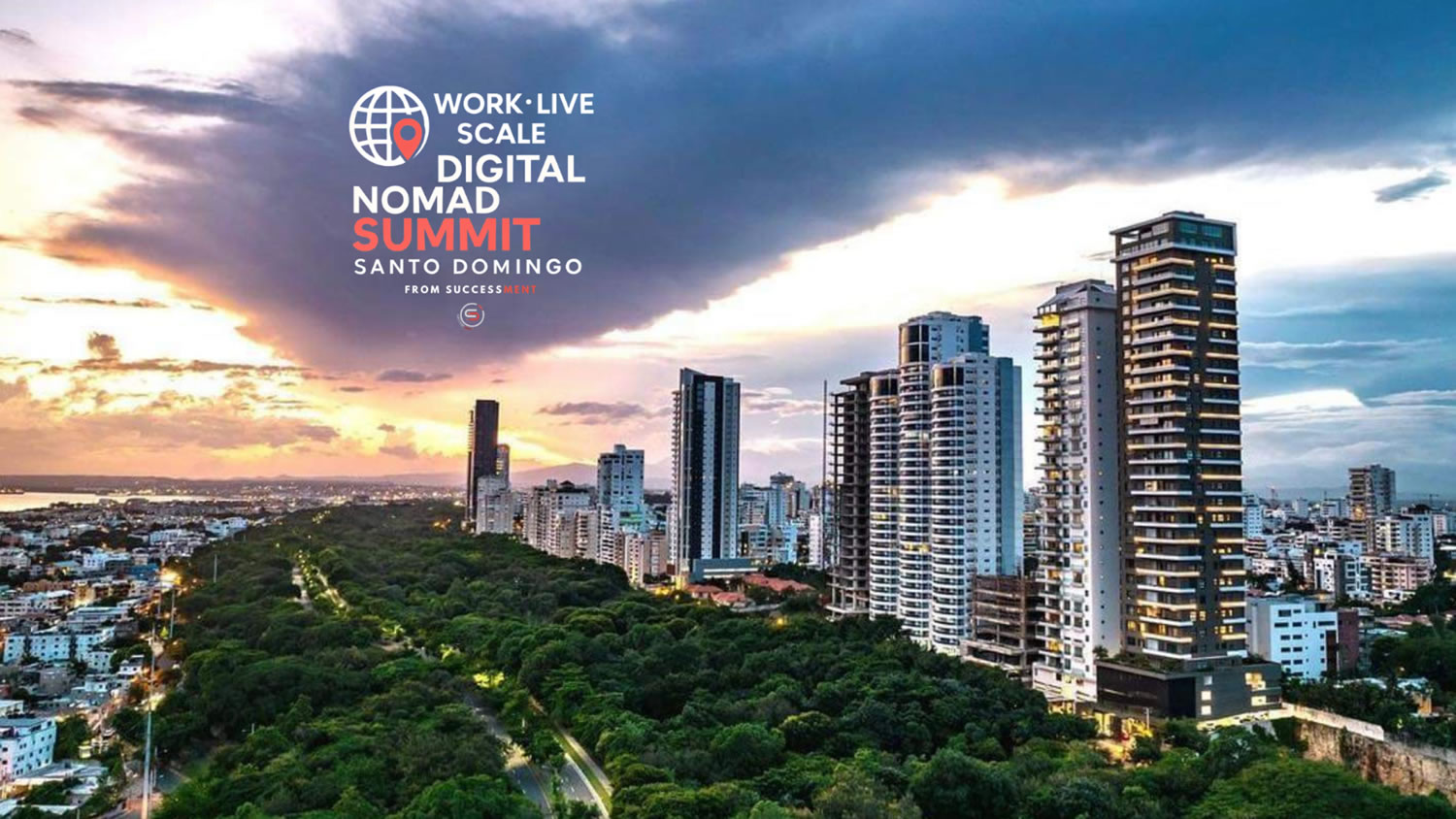
    These conversations are no longer confined to academic reports and policy panels. They are increasingly happening in practical, collaborative settings where capital, execution expertise, and institutional strategy intersect to solve real problems. Events like the Digital Nomad Summit in Santo Domingo have emerged as early convergence points, where stakeholders are not just discussing the underlying mechanics of risk, capital deployment, and scalable execution in the Caribbean — they are actively testing and refining these models with the actors building the next phase of the regional ecosystem.

    For investors and founders operating in or entering the Dominican market today, the signal is clear. The next era of regional innovation will not be defined by how much total capital is deployed. It will be defined by how precisely risk is understood, structured, and operationalized — and by the stakeholders that position themselves at the intersection of these critical decisions as the ecosystem aligns for growth.


  • Capital Without a System: How U.S. Angels and Diaspora Investors Should Approach the Dominican Republic

    Capital Without a System: How U.S. Angels and Diaspora Investors Should Approach the Dominican Republic

    A rising tide of U.S. angel investment and diaspora capital is flowing toward the Dominican Republic, drawn by four compelling advantages: geographic proximity to North American markets, deep cultural alignment, steadily improving macroeconomic indicators, and a visible surge in local entrepreneurial activity. What many of these new investors fail to grasp, however, is that this growing inflow is entering a market that still lacks a fully developed, mature venture capital ecosystem — a gap that changes every rule of early-stage investing.

    In established VC markets, investors can afford a degree of imprecision. The layered nature of the ecosystem, with established pathways for follow-on funding and sequential capital rounds, absorbs early misjudgments and lets mistakes correct themselves over time. In the Dominican Republic, that margin for error simply does not exist.

    ### The Dangerous Illusion of Entry Readiness
    A growing body of public guidance walks new investors through the practicalities of doing business in the Dominican Republic: how to structure legal entities, navigate local regulatory frameworks, and align with national operating norms. This guidance is not useless — it does cut down on transaction friction when investors first enter the market. But it also creates a harmful misconception: the idea that correct legal structuring equals correct investing.

    That is not the case. A solid legal structure cannot turn a fundamentally unviable business into a low-risk investment; it only formalizes a weak opportunity. In a market where early-stage funding is already scarce, the damage from this misunderstanding compounds far faster than it would in a mature ecosystem.

    ### The Overlooked Structural Gap in the Local Capital Stack
    The Dominican Republic shares a common challenge that defines much of Latin America: it boasts abundant entrepreneurial energy, but its capital stack remains incomplete. Across the region, early-stage venture capital has contracted rather than expanded in recent years. Data from regional VC firm Cuantico VC shows that pre-seed and seed funding has grown far more selective, with available capital concentrating in a small pool of already-validated companies.

    The result is a shift that redefines early-stage investing: instead of institutions funding experimental new startups, individual angels now carry most of that risk. In practical terms, that means three key departures from how mature markets work: there is no reliable, standardized pathway from angel investment to seed funding to Series A; follow-on capital is never a given, only an uncertainty; and valuations are driven more by persuasive founding narratives than anchored to established market norms.

    For investors, this rewrites the entire role: you are not joining an existing functional ecosystem — you are filling the gaps created by the absence of one.

    ### Common Analytical Biases That Derail New Investors
    Diaspora investors and first-time angels are often drawn to the Dominican Republic by a mix of personal connection and informed conviction. They understand local culture, spot unmet market needs, and often feel a personal responsibility to drive economic growth locally. This combination of motivation and insight is powerful, but it also opens the door to predictable cognitive biases that derail investments.

    The most common failures in the market are not legal or regulatory — they are analytical. Capital is often allocated based on personal connections rather than rigorous due diligence, on founding storytelling instead of actual revenue data, on estimated market size instead of verified consumer purchasing activity, and on early non-economic traction signals that do not translate to long-term viability.

    In dense, mature VC ecosystems, these mistakes are survivable: downstream funding can step in to correct early missteps. In the Dominican Republic, no such safety net exists. There is no secondary capital to fix the errors made by early investors.

    ### What Actually Reduces Investment Risk in a Constrained Market
    If legal structure is not the answer to de-risking, what is? In a capital-constrained startup ecosystem, the only reliable guardrail is verifiable evidence of a functioning revenue model — not hypothetical potential, not five-year projections, not user engagement metrics. Actual revenue.

    More specifically, three interconnected indicators signal that a business is a legitimate, investable opportunity:
    1. **Consistency**: Recurring revenue, even at a small scale, proves that the business solves a real customer problem, not a hypothetical one.
    2. **Intentional pricing**: Pricing built to deliver consistent margins, rather than pulled from thin air, demonstrates that a founder understands the full economics of their business, not just how to build a product.
    3. **Repeatable customer acquisition**: A clear, scalable process for consistently gaining new customers shows that growth is not a one-off stroke of luck.

    These indicators do not eliminate risk entirely, but they make risk measurable — and only measurable risk can be priced appropriately for early-stage investing.

    ### The Local Banking System: A Constraint That Acts as a Filter
    One of the most underdiscussed dynamics in the Dominican Republic’s ecosystem is the role of the existing domestic banking sector. The country’s banking industry is stable, well-capitalized, and inherently conservative: it is not built to underwrite the uncertainty of early-stage startups, prioritizing collateralized lending over investments based on potential. At the same time, integration with global financial infrastructure remains uneven, with cross-border payment delays and limited access to flexible credit instruments.

    To outside investors, these conditions look like unnecessary friction. To local market participants, they act as a natural filter. Any startup that can generate and sustain revenue while working within these constraints is already solving a real problem, regardless of external funding. In many VC-saturated ecosystems, startups can subsidize weak revenue with continuous capital injections. In the Dominican Republic, that is not possible.

    ### The Underexploited Opportunity for Institutional Investors
    The core challenge facing the Dominican Republic’s ecosystem is not a lack of capital — it is a lack of coordination between capital providers, underwriting standards, and startup operator performance. For institutional investors, this creates a narrow but actionable opening to add value and generate returns through four targeted strategies:
    1. **Underwrite based on revenue, not fixed collateral**: Early-stage credit and hybrid funding instruments can be tied to verified consistent revenue and cash flow patterns, rather than requiring traditional fixed asset collateral.
    2. **Bridge private capital, don’t replace it**: Institutional capital delivers the most value when it backs already-validated startup operators, rather than trying to lead on early-stage risk taking.
    3. **Standardize performance signals across the ecosystem**: Shared clear definitions of what counts as meaningful traction — including what qualifies as real revenue, repeatability, and healthy margins — cuts through market noise and improves capital allocation for every participant.
    4. **Remove friction for financial movement**: Cutting delays in cross-border payments and expanding access to affordable working capital directly helps scalable revenue systems grow.

    None of these steps require a fully mature venture capital market to work. They only require aligned agreement across market participants on what defines a legitimate, viable business.

    ### The Quiet Reorganization of the Local Ecosystem
    Structural gaps like these rarely get discussed openly in the Dominican Republic, because they sit at the intersection of capital allocation, on-the-ground startup operations, and institutional constraints. Most industry platforms only address one of these three areas, rarely bringing all three together. That gap is starting to close, however, not through top-down policy change, but through intentional convening of stakeholders.

    New collaborative spaces are emerging where investors can assess actual startup performance instead of just reviewing polished pitch decks, where founders have to defend their revenue logic instead of relying on storytelling, and where capital is evaluated against local market constraints instead of abstract VC best practice from mature markets. One example is the upcoming Digital Nomad Summit Santo Domingo 2026, which is shifting its focus from boosting market visibility to aligning capital providers around shared standards.

    The shift is subtle but transformative: moving from general market exposure to rigorous evaluation, from discussion panels to actionable pressure testing, from narrative building to third-party validation. In markets without a mature venture pipeline, these integrated collaborative spaces are not optional — they are how functional markets organize themselves from the ground up.

    ### Execution: The Missing Infrastructure Layer
    Alignment around standards alone is not enough to deliver results. The consistent gap holding back early-stage investments across Latin America is not a lack of capital — it is a lack of structured systems that turn capital investment into predictable, sustainable revenue.

    This creates a need for a new kind of local infrastructure focused on three core operational pillars: structured revenue architecture, scalable customer acquisition systems, and operational discipline directly tied to consistent monetization. Firms that operate in this space, bridging strategy, data, and on-the-ground execution, are becoming the linchpin for whether early-stage capital generates returns or gets wasted on endless unproductive iteration.

    In constrained ecosystems like the Dominican Republic, the core question is no longer whether a startup can raise funding. It is whether a startup can convert that capital into consistent, repeatable revenue fast enough to survive until it can scale.

    ### Final Thought
    In markets with mature venture ecosystems, capital organizes the ecosystem itself. In the Dominican Republic, the ecosystem is still in the process of organizing itself. That process is being driven not by the volume of capital coming in, but by the precision of how that capital is deployed, how operators are held accountable for results, and what systems turn entrepreneurial activity into actual economic output.

    Investors who grasp this fundamental shift will not just participate in the market’s growth — they will help shape what it becomes. Increasingly, they are doing this not through isolated individual transactions, but through new networks, collaborative platforms, and execution infrastructure that did not exist in the country before. That is where the real long-term leverage for returns and impact lies.

  • Dominican Republic launches Caribbean’s first AI travel planning platform

    Dominican Republic launches Caribbean’s first AI travel planning platform

    In a landmark move that blends tourism innovation with cutting-edge digital technology, the Dominican Republic has introduced the first artificial intelligence trip-planning platform exclusively built for personalized travel in the Caribbean, launching the tool during an event in Miami.

    This new AI travel assistant reimagines how travelers organize their getaways, building fully customized itineraries around each user’s unique hobbies, tastes, and financial parameters. It covers all of the country’s most sought-after tourist spots, from the iconic resort hub of Punta Cana and the lush coastal region of Samaná to the historic capital city of Santo Domingo, the adventure-focused spots of Puerto Plata, La Romana, Miches, and Cabarete. Across all these destinations, the tool delivers curated suggestions for every component of a trip: accommodations, local dining spots, scenic beaches, guided off-site excursions, evening entertainment, and recreational activities.

    What sets this launch apart is that it makes the Dominican Republic the first Caribbean travel destination to roll out an AI platform dedicated solely to simplifying and personalizing the entire vacation planning process. Speaking on the initiative, Dominican Republic Tourism Minister David Collado emphasized that the new platform is a core pillar of the nation’s long-term tourism innovation strategy. The overarching goal of the project, Collado explained, is to shift the focus of travel planning directly to the visitor, leveraging smart technology to put control and customization in travelers’ hands. Unlike generic travel planning tools that serve multiple regions, this platform is built exclusively around the Dominican Republic’s travel offerings, ensuring recommendations are rooted in deep local knowledge. The interface is designed to cut down on planning time, eliminate the hassle of sorting through hundreds of unfiltered options, and create a more engaging, interactive experience for anyone considering a trip to the island nation.

  • Dominican Republic moves toward mandatory Real Estate Agent Licensing

    Dominican Republic moves toward mandatory Real Estate Agent Licensing

    The Dominican Republic’s fast-expanding real estate industry, one of the Caribbean’s most dynamic investment hubs, is on the cusp of sweeping regulatory reform that could reshape its future. For decades, the country’s red-hot property market, fueled by record tourism inflows, rising foreign direct investment, and explosive residential development, has operated without a unified national regulatory framework for industry practitioners, leaving critical gaps in accountability and consumer protection. Now, a landmark piece of legislation working its way through the national legislature aims to fix these longstanding vulnerabilities.

    Over the past decade, the Dominican Republic has solidified its status as a top Caribbean real estate destination, drawing global property buyers and developers to popular hotspots including Punta Cana, the capital city of Santo Domingo, beachside Las Terrenas, historic Puerto Plata, and luxury-focused Cap Cana. But as the market has ballooned, systemic risks have grown alongside it. Without mandatory licensing or government oversight, virtually any individual can work as a real estate agent or broker without formal certification, creating fertile ground for a range of harmful practices: unvetted brokerage activity, misleading advertising for new development projects, unauthorized property listings, inconsistent professional standards, and a rising tide of fraud and transaction disputes that have eroded trust for both local homebuyers and international investors. Industry leaders have pushed for reform for years, warning that the status quo creates unnecessary risks that threaten long-term sector growth.

    In April 2026, the Dominican Senate took a key first step forward, approving the regulatory bill in its initial reading. The legislation targets two core problem areas: unregulated real estate intermediation and deceptive industry advertising. If enacted, it would introduce sweeping changes to how the sector operates, including mandatory national licensing for all real estate professionals, stronger legal safeguards for consumers and investors, standardized rules for property advertising, greater transparency across all property transactions, and clearly defined ethical and operational standards for all market participants. Oversight and enforcement of the new rules would fall to the country’s Ministry of Housing and Buildings (MIVHED), which would take charge of professional registration, licensing management, and ongoing compliance monitoring.

    Stakeholders across the industry broadly support the reform effort, framing it as a transformative milestone for the sector’s professionalization. Backers argue that formal regulation will deliver far-reaching benefits, from boosting confidence among international investors to cracking down on fraud and informal market activity, improving the Dominican Republic’s global reputation as a safe place to invest in property, and laying the groundwork for more stable, sustainable long-term growth. For overseas developers and investors that have driven much of the sector’s recent expansion, the new rules would create a more transparent, predictable business environment while raising the bar for operational practices across every segment of the market.

    While the bill has cleared its first major hurdle in the Senate, it still requires additional legislative approvals and further parliamentary debate before it can be signed into law. Even so, the progress of the reform signals a clear growing momentum toward building a more regulated, transparent, and institutionalized real estate market in the Dominican Republic — a shift that is widely seen as increasingly critical as the sector continues its rapid upward trajectory.

  • Digital Nomad Summit Santo Domingo strengthens Dominican Republic’s global profile with new speakers and cross-border innovation initiatives

    Digital Nomad Summit Santo Domingo strengthens Dominican Republic’s global profile with new speakers and cross-border innovation initiatives

    Santo Domingo, Dominican Republic – In a landmark announcement this April 2025, organizers of the Digital Nomad Summit Santo Domingo (DNS) have unveiled a suite of updated programming and strategic partnerships designed to accelerate the Dominican Republic’s transformation into a leading regional center for remote work, cross-border commerce and innovation-driven growth. Curated and produced by Successment, Latin America’s top-tier firm specializing in innovation strategy and revenue operations for emerging markets, the summit has emerged as a critical convening point connecting entrepreneurs, global investors, public policymakers and international talent to the fast-growing Caribbean-Latin American corridor.

    Organizers have confirmed three high-profile keynote speakers who represent the intersection of public sector ambition and private sector leadership shaping the country’s innovation trajectory. Arlette Palacio, who leads the Sustainability Committee at the American Chamber of Commerce in the Dominican Republic (AMCHAMDR) and serves as founder and CEO of educational innovation firm Educology, will deliver a keynote exploring how sustainability investment, intentional talent development and forward-thinking private sector collaboration lay the foundation for globally competitive innovation ecosystems. Armando J. Manzueta Peña, Vice Minister of Innovation & Technology at the country’s Ministry of Public Administration (MAP), will outline the Dominican government’s ongoing work to modernize public services, build out digital government infrastructure and develop a citizen-centric, productive digital economy. Rounding out the confirmed speaker lineup is Biviana Riveiro, Executive Director of ProDominicana, who will break down the national strategy to grow services exports, boost global market competitiveness and cement the country’s status as the go-to regional hub for cross-border innovation activity.

    Beyond keynote programming, the 2025 summit has rolled out several new initiatives designed to move beyond dialogue and drive tangible commercial connections. A dedicated startup track, anchored by a high-stakes pitch competition for emerging founders, is currently in development in partnership with local and regional institutional stakeholders, with final sponsorship confirmation from partners including Eurocámara RD expected shortly. This track is specifically designed to elevate underrepresented emerging founders from the Dominican Republic and the broader Caribbean-Latin American region, transforming the summit into a live, active deal-making environment rather than just a conference. Looking ahead to the 2026 edition, organizers plan to expand cross-border innovation programming even further, forging new connections between Dominican institutions and their global counterparts across real estate, tourism, technology, public policy, venture investment and diaspora capital channels.

    Strategic relationship-building is at the core of this year’s summit, with new partnerships confirmed across influencer engagement and media collaboration. A first-of-its-kind Digital Nomad Influencer Roundtable is now officially set, featuring prominent content creators Nicole Abreu (@itsnickiiabreu), Rosalyn Kinkead (@smartcaribbean), Julio & Anthony (@dominicanbridge) and Jay Abroad (@iamjayabroad). Collectively, these creators hold large, engaged audiences of digital nomads and remote professionals across the U.S. and the Dominican Republic, and they will help amplify the country’s unique value proposition to global mobile workers. Confirmed media partners for the event include leading local outlets Dominican Today and Periódico elDinero, while organizers are in late-stage discussions with a slate of high-profile potential sponsors spanning aviation, finance, technology, tourism and higher education, including Arajet, ProDominicana, Google, SoftBank, Mastercard, Visa, the Dominican Ministry of Tourism, ADOEXPO, BanReservas, Asociación Cibao, UNIBE and PUCMM. Organizers project total attendance will top 300 regional and global industry and government leaders.

    The summit will also play host to two exclusive global launches that deliver new data and tools to the region’s innovation ecosystem. First, the event will mark the worldwide release of the 2026 Dominican Innovation & Transnational Export Report (DITER 2026), a first-of-its-kind data initiative endorsed by leading Dominican institutions INTEC and Promipymes. The report will deliver granular, up-to-date insights into the current state of the Dominican Republic’s innovation economy and its global export competitiveness. Second, Successment will publicly introduce ZARI Mobility, the Dominican Republic’s first fintech platform focused on risk modeling for cross-border mobility. The platform is built to expand access to financial services for under-served groups and strengthen data-driven decision-making for businesses operating across emerging markets.

    In a statement accompanying the announcement, Jonathan Joel Mentor, Principal and CEO of Successment and founder of the Digital Nomad Summit Santo Domingo, framed the event as a turning point for the region’s innovation economy. “The Dominican Republic is no longer talking about innovation—we’re executing it,” Mentor said. “The Digital Nomad Summit is where global and local actors come together to build real commercial relationships across borders. Our goal is simple: create a deal-room environment where the Dominican Republic stands as the Japan of the Caribbean—disciplined, competitive, and open for global business. This Summit is an inflection point for the region’s innovation economy.”

    Now recognized as the leading global gathering in the Caribbean-LATAM corridor focused on the intersection of innovation, talent mobility, remote work and cross-border commerce, DNS brings together public sector leaders, venture investors, global digital talent and private sector innovators to reimagine what competitiveness looks like for 21st century emerging markets. More information about the event, registration and programming updates is available at the official DNS website: www.digitalnomadsummit.co.

  • How Dominican corporations and banks can turn innovation into a new economic export

    How Dominican corporations and banks can turn innovation into a new economic export

    Every nation has a buzzword that gets thrown around without meaningful action, and for the Dominican Republic, that term is innovation. It appears in executive conference keynotes, government policy speeches, and glossy institutional initiatives, but very little of what gets labeled innovation here actually lives up to the name. Most of what is marketed as transformative change is nothing more than incremental modernization, rebranded as a sweeping national strategy.

    Behind this empty rhetoric lies a critical gap: the core drivers of long-term wealth creation—robust intellectual property development, large-scale venture product development, cross-border digital services, and sustained corporate-funded research and development—remain almost entirely missing from the Dominican economy. This gap cannot be closed with catchy slogans, small government grants, or copying the surface-level aesthetic of Silicon Valley. It will only be fixed when the Dominican private sector steps into its role as the catalyst for change. In an economy where domestic corporations control the bulk of available capital, physical and digital infrastructure, and industry influence, innovation is no longer just a national aspiration—it is a non-negotiable corporate obligation.

    This reality lays bare what can be called the Dominican innovation paradox: the country draws millions of digital nomads, attracts top global industry operators, and produces world-class Dominican-born entrepreneurs, yet it chronically underinvests in the innovation capacity that would secure its position as a regional economic leader. The core of the paradox is straightforward and alarming: most groundbreaking innovation from Dominican founders and members of the Dominican diaspora happens abroad, because domestic corporations rarely prioritize innovation at home.

    Part of this issue is structural: most Dominican companies lack formal dedicated innovation budgets, internal frameworks to guide new development, and systems to measure return on innovation investment. But the deeper problem is cultural: innovation is treated as a niche experimental side project, not a core asset class that drives long-term growth. Leading countries that have turned innovation into an economic engine—from Finland and Singapore to Chile, South Korea, and the United Arab Emirates—treat innovation investment as critical national infrastructure. Dominican corporations do not need to wait for sweeping legislative reform to adopt this same approach; they can act now, but only if they first understand what real innovation programs are designed to achieve.

    At their core, legitimate innovation programs serve three clear purposes: they generate new revenue streams, strengthen a company’s long-term strategic position against competitors, and expand organizational capabilities through intellectual property, data assets, and new business models. Every other activity—hackathons, public idea contests, photo-op accelerator programs— is just performance art with no lasting economic impact. When the author, a long-time startup scaling expert, asks Dominican executives who claim to be investing in innovation what share of their annual revenue comes from products or initiatives launched in the last five years, most refuse to answer. That silence reveals the problem: innovation without measurable revenue impact is not innovation at all. Innovation that does not reduce long-term strategic risk is not innovation. Innovation that does not produce new intellectual property is not innovation. This basic clarity is what the Dominican economy lacks, and it is what corporate leaders must implement immediately.

    Across the globe, high-performing companies do not wait for a national innovation ecosystem to mature on its own—they build it themselves. The most effective tool for this is a purpose-built corporate accelerator, but it is critical to distinguish these strategic engines from empty public relations projects. A real corporate accelerator is far more than a branded startup incubator with a press release. It is a core strategic mechanism that allows established companies to test new markets, integrate cutting-edge external innovations, attract top specialized talent, develop proprietary technology, and deploy capital creatively, all without being forced to navigate outdated domestic venture capital regulations. It gives established corporations the speed and agility of startups without the high risk of fragility that plagues many early-stage companies.

    When designed correctly, a corporate accelerator acts as a bridge between large established Dominican corporations and the already talented pool of domestic startups, diaspora founders, and regional innovators who are currently building their groundbreaking work outside of the country. It also solves a pressing national challenge: the Dominican economy desperately needs formal institutional pathways that turn existing local talent into tangible economic output. Independent non-corporate accelerators do valuable community-level work, but they are not structured to carry the weight of national economic transformation. They cannot build exportable intellectual property at scale, they cannot deploy enough capital to move the needle, and they cannot shift the conservative risk culture of domestic banking. Corporate accelerators can do all of these things.

    Even among large corporations, banks have a unique and underdiscussed role to play in building the risk architecture innovation requires. Dominican banks are often characterized as conservative, but they are not unaware of shifting market dynamics. They understand that the region is moving toward credit models based on real-time behavioral data rather than traditional paper documentation, and they recognize that corporate-backed innovation carries far less risk than funding isolated early-stage startups. This is where the deepest national transformation can occur: large corporations and leading banks working together to co-design risk frameworks that support sustained innovation.

    In advanced innovation economies, this model already works effectively. A large domestic corporation first defines the sector it wants to innovate in—whether that is energy, mobility, retail, logistics, health, tourism, or finance. Local banks then provide working capital facilities tied directly to the performance of the accelerator’s startup portfolio. Regional banks across the Caribbean, Central America, and broader Latin America open cross-border liquidity windows to support expansion beyond Dominican borders. International financial institutions and multilateral development banks, such as the IDB, IFC, CAF, and EIB, co-finance the development of exportable technology, with risk mitigated by the domestic corporation’s existing industry expertise.

    This blended capital structure allows Dominican corporations to pursue innovation without putting their core business at unnecessary risk, and it gives banks a hedged, data-rich environment where innovation becomes a predictable, underwritable asset rather than a speculative gamble. This is how real economic modernization happens: not through endless industry conferences, but through intentional, functional capital structures that support risk-taking.

    If Dominican corporations move forward to build serious, outcome-focused corporate accelerators, three transformative outcomes will follow for the entire nation. First, domestic Dominican startups will finally gain the institutional pathways they need to scale at home, rather than being forced to move abroad to access capital and support. Second, Dominican corporate executives will transition from being simply operators of existing businesses to being architects of a regional innovation hub. Third, the country will stop exporting its most valuable innovation talent and intellectual property, and instead start compounding that value domestically.

    This shift would transform the Dominican Republic’s global reputation: moving from a country known primarily for its tourist beaches to a country recognized for world-changing technological and business breakthroughs. It is also the difference between an economy that retains and grows its own talent, and one that continuously leaks its most skilled innovators to foreign markets.

    As the author notes, emerging economies in the Global South deserve innovation institutions built for real impact, not just decorative rhetoric. The Dominican Republic, with its unique geographic position bridging North America, Latin America, and Europe, and its fast-growing digital nomad economy, cannot afford to treat innovation as an optional add-on. The corporations that move first to implement this model will define how high the country can rise in the global innovation economy. Every other company will be left reading about success from the outside, admiring LinkedIn posts from innovators who built their careers elsewhere.

    This conversation will continue at the 2026 Digital Nomad Summit in Santo Domingo, which will bring together Dominican private sector leaders, digital nomads, entrepreneurs, and global industry leaders to collaborate on turning this vision into action. Jonathan Joel Mentor, the author of this analysis, is CEO of Successment and architect of the Digital Nomad Summit™, a UN World Summit Award Nominee, and winner of the ADOEXPO National Excellence in Exportation Award.

  • Temporary Camú River passage reconnects Santiago and Puerto Plata amid bridge reconstruction

    Temporary Camú River passage reconnects Santiago and Puerto Plata amid bridge reconstruction

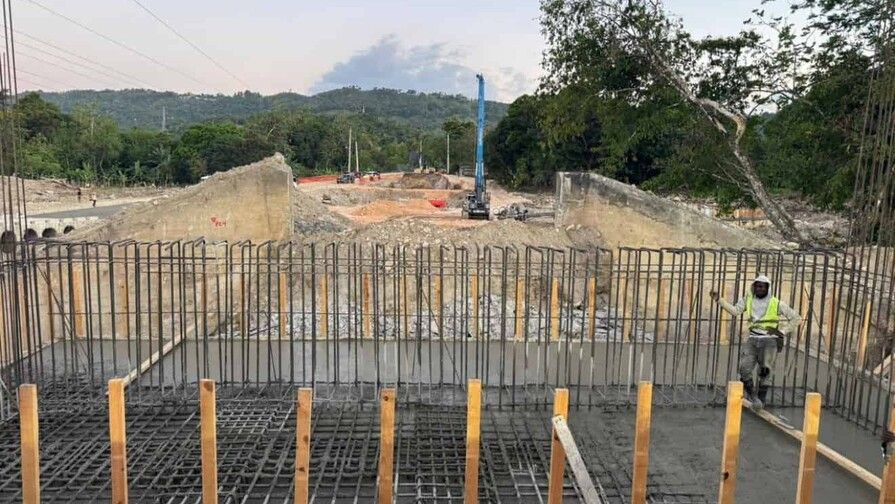
    Santo Domingo — After the original Camú River bridge on the Dominican Republic’s critical Tourist Highway collapsed earlier this year amid extreme weather, authorities have reopened connectivity between the major northern cities of Santiago and Puerto Plata via a newly completed temporary detour, as crews race to finish construction on a more resilient permanent replacement.

    The temporary two-lane concrete ford, which opened to traffic on Monday afternoon, runs parallel to the site of the new permanent bridge currently under development in Yásica. The detour project was fast-tracked to address crippling transportation disruptions that have plagued the Santiago-Puerto Plata corridor since the original structure failed in April. This highway is not only a popular scenic route for visitors but also a core artery for regional commerce, logistics, and daily travel for local residents, making the restoration of through traffic a top priority for national authorities.

    Construction teams are working around the clock, seven days a week, to cut down completion time for the permanent bridge, MOPC (Dominican Republic’s Ministry of Public Works and Communications) officials confirmed. As of the latest update, foundation work for the bridge’s abutments and support piers is fully finished, manufacturing of the structure’s key steel beams is more than 40% complete, and reinforcement framing and concrete pouring operations are progressing simultaneously across the entire job site.

    The original 135-meter crossing collapsed in April when heavy tropical rainfall and widespread flooding generated unusually powerful currents that eroded and overwhelmed the structure’s supports. In a precautionary move that avoided loss of life, public safety officials had already closed the bridge to all traffic before it gave way, meaning no injuries or fatalities were reported when the collapse occurred.

    In the months following the collapse, the disruption to regional movement was severe. Motorists and commercial cargo carriers were forced to divert onto much longer alternate routes through the town of Navarrete, leading to widespread congestion, sharply increased travel times, and higher operational costs for logistics companies. Local tourism businesses, which rely on easy access between Santiago’s inland hub and Puerto Plata’s coastal resort destinations, also reported significant impacts, alongside residential communities that depend on the corridor for access to work, education, and essential services.

    Within days of the collapse, the Dominican government ordered immediate demolition of the damaged structure and approved a contract for a fully new bridge, engineered to meet updated, more rigorous flood-resilience and safety standards. The new 135-meter span is designed as a long-term solution for this strategic transportation link, which supports billions of pesos in annual economic activity across the northern coast’s tourism and trade sectors.

    Parallel to construction efforts, the National Office of Seismic Evaluation and Vulnerability of Infrastructure and Buildings (ONESVIE) has launched a formal technical investigation to determine the root causes of the original bridge’s collapse. Public works leaders have repeatedly stressed that the replacement bridge project remains a top national infrastructure priority, given its outsized importance to the economic vitality of the Dominican Republic’s northern region.

  • Public Health confirms protocols were followed after cruise ship outbreak

    Public Health confirms protocols were followed after cruise ship outbreak

    On a recent voyage that ended with a docking in Puerto Plata, Dominican Republic, more than 100 passengers and crew members aboard the Caribbean Princess cruise ship were infected by a norovirus outbreak, prompting a rapid response from local public health officials. Dominican health minister Víctor Atallah has moved to reassure the Dominican public that there is no cause for widespread alarm, noting that all necessary protective measures have been fully implemented to contain the spread of the virus. When the Caribbean Princess arrived at the Puerto Plata port, Dominican health authorities immediately launched their pre-established outbreak response protocols, conducting thorough health screenings and vessel inspections to limit any potential risk to local communities. The cruise ship departed Dominican territorial waters at 5:00 p.m. local time on the Friday following its arrival, with just 37 affected passengers remaining in isolated on-board care and choosing not to disembark on the island. During the ship’s stopover, public health teams closely monitored the condition of all infected people on board, who were restricted to their individual cabins and provided with specialized medical attention and adjusted dietary plans to support their recovery. Atallah confirmed that the norovirus outbreak first emerged on April 28, weeks before the cruise’s arrival in Dominican territory. By the time the vessel docked in Puerto Plata, the vast majority of the more than 120 confirmed cases had already shown clear signs of improvement. The U.S. Centers for Disease Control and Prevention had previously verified the outbreak on board the Caribbean Princess. Norovirus is a highly contagious gastrointestinal pathogen best known for causing severe vomiting and diarrhea, and it spreads particularly rapidly in dense, enclosed shared environments — a risk profile that makes large passenger vessels like cruise ships especially vulnerable to widespread outbreaks.

  • Dominican Republic creates first safety inspection team for larimar mine

    Dominican Republic creates first safety inspection team for larimar mine

    In a landmark move to upgrade workplace protections across the nation’s artisanal mining industry, the Dominican Republic’s Ministry of Energy and Mines has launched the first government-authorized safety inspection unit dedicated exclusively to the country’s iconic larimar mine in Barahona.

    The newly credentialed team is made up of 18 specially trained brigade members, who have completed an intensive technical certification program covering core safety competencies. Trainees mastered a range of life-saving and risk-mitigation skills, including proactive accident prevention protocols, structured emergency response frameworks, geological hazard mapping, and comprehensive safety monitoring for both underground mining operations and above-ground work sites.

    Government stakeholders emphasize that this new initiative targets longstanding safety gaps in artisanal larimar mining, with clear core goals: cutting occupational hazard exposure, safeguarding the lives and health of mining workers, and bringing legacy mining operations in line with modern global safety standards. The training curriculum also delved into specialized support tactics for high-risk scenarios, systematic hazard detection workflows, recognition of geologically unstable terrain, and coordinated emergency response planning.

    Along with launching the dedicated inspection team, authorities have announced that stricter enforcement will be implemented going forward for any mining operations that fail to adhere to official national safety regulations. This move is part of a wider, ongoing national push to elevate occupational health and safety standards across the Dominican Republic’s entire mining sector, bringing much-needed oversight to an industry that has long operated with limited formal safety monitoring.

  • Nearly half of Dominican workers suffer stress and anxiety, experts warn

    Nearly half of Dominican workers suffer stress and anxiety, experts warn

    SANTO DOMINGO – A new assessment delivered at a major national occupational safety event has shone a stark spotlight on the mental health crisis facing Dominican Republic’s working population, with specialists confirming that close to 50 percent of the country’s workers grapple with chronic stress and anxiety rooted in harmful psychosocial working conditions. The findings were presented during the Third Occupational Safety and Health Forum, hosted by the Dominican Institute for Prevention and Protection of Occupational Risks (Idoppril), where industry leaders, researchers, and labor advocates gathered to unpack growing threats to employee well-being.

    Speaking at the event, specialists outlined the core drivers of this declining mental health: unmanageable workloads, ineffective and unsupportive management, disorganized workplace structures, and stagnant, insufficient wages. These overlapping factors are not only eroding workers’ psychological stability but also dragging down overall workplace productivity across multiple sectors of the Dominican economy.

    Social psychologist Telésforo González, one of the event’s leading presenters, explained that work-related mental health strains such as stress, anxiety, and depression rarely emerge as chronic conditions overnight. Instead, these issues develop and intensify over time when employers fail to implement safe, supportive working environments. Critically, Gonzalez emphasized that the harm of unaddressed workplace mental health issues extends far beyond office walls and factory floors: elevated stress levels increase an individual’s risk of traffic accidents and other preventable incidents outside of work, creating broader public safety risks for the entire country.

    González also called out longstanding systemic underinvestment in mental health infrastructure across the Dominican Republic, noting that less than one percent of the Ministry of Public Health’s annual budget is earmarked for mental health services. This severe underfunding, he argued, severely limits the nation’s capacity to respond to the growing crisis at both the population and individual level.

    Other labor leaders added further context to the crisis, highlighting additional unaddressed risk factors. Laura Peña Izquierdo, president of COPARDOM, drew attention to a sharp uptick in commuting accidents linked to worker fatigue, while Esperidón Villa, vice president of CASC, named systemic low wages and endemic workplace violence as key exacerbators of psychosocial harm. Though the Dominican Republic has formally advanced occupational health regulations on paper, experts across the forum agreed that consistent enforcement of these rules remains woefully inadequate. Many participants also called for updated national legislation that reflects the shifting realities of the modern Dominican labor market, which has changed dramatically since existing laws were drafted.

    Forum participants collectively concluded that targeted interventions – including expanded social support networks for workers, more consistent regulatory supervision, and equitable distribution of work tasks – are proven strategies to prevent worker burnout and reduce rates of work-related stress. Improving workplace mental health, they emphasized, is not just a matter of protecting individual well-being: it is a foundational requirement for boosting national productivity and supporting long-term, inclusive economic development across the country.