标签: Dominican Republic

多米尼加共和国

  • Ángel Martínez sentenced to suspended jail term

    Ángel Martínez sentenced to suspended jail term

    In a legal ruling handed down Tuesday in Santo Domingo, Dominican Republic, prominent local broadcaster Ángel Martínez has been convicted on charges of defamation and slander against sitting congressman Sergio Moya, widely known by the nickname “Gory” Moya. Presiding Judge Clara Luz Almonte delivered the verdict, which handed down a three-month suspended prison sentence to Martínez and ordered him to pay 2 million Dominican pesos in civil restitution to the legislator.

    The conviction was grounded in Articles 21 and 22 of Law 53-07, the country’s landmark legislation addressing high technology crimes and digital offenses. This regulatory framework specifically imposes criminal and civil penalties for the distribution of defamatory, insulting content through electronic channels and digital social platforms, reflecting the Dominican Republic’s legal efforts to address harmful speech spread through modern digital communication tools.

    Beyond the suspended prison term and monetary award, the court’s ruling formalized the requirement that Martínez compensate Moya for lasting harm done to the congressman’s public image and professional reputation. The legal case originated from a series of unsubstantiated accusations the broadcaster made against the legislator, which ultimately led to the defamation suit that concluded this week.

  • Santiago de los Caballeros launches plan to modernize tourist horse-drawn carriages

    Santiago de los Caballeros launches plan to modernize tourist horse-drawn carriages

    In the Dominican Republic’s northern city of Santiago de los Caballeros, local municipal authorities have launched a groundbreaking new initiative designed to protect one of the city’s most cherished cultural legacies while addressing longstanding concerns over animal care and worker livelihoods. Titled “Tourist Carriages: Tradition, Well-Being and Protection”, the project marks a balanced approach to preserving a centuries-old iconic attraction that draws cultural tourists to the city, while updating outdated operating practices to meet modern animal welfare standards and support the generations of coachmen who rely on the trade for income.

    The program was formally introduced by Iris Cepín de Rodríguez at a public launch event, where she framed the initiative as a necessary response to the dual nature of horse-drawn tourism in Santiago. “The horse-drawn carriages of Santiago are part of our cultural identity and history, but they also represent an important social and urban challenge,” Cepín de Rodríguez noted. To address these challenges, the project establishes a clear set of binding rules for all operators, including designated authorized routes, mandatory regular veterinary check-ins for all working horses, strictly regulated work hours, specialized training for carriage drivers, and enforceable penalties for any documented cases of animal abuse.

    Deputy Mayor Mariana Moreno outlined the key structural changes the program will roll out to reduce strain on working animals. A core adjustment is the implementation of shorter, more manageable routes and structured, limited operating hours that cut down on overwork. Looking ahead, the municipal government also plans to gradually introduce electric or motorized support systems to further reduce the physical burden on horses. Beyond animal welfare, the initiative includes a dedicated social assistance component designed to support coachmen and their families, many of whom have long struggled with economic instability and limited access to health resources.

    Veterinarian Horacio Ceballos reported that the first phase of animal care has already been completed in the Bella Vista neighborhood, where more than 20 working horses received essential preventive care including vitamin supplements and deworming treatments. Another key welfare adjustment being rolled out is a shift in working schedules that prohibits horses from operating during the hottest midday hours, when heat exposure poses a major health risk to the animals.

    The multi-stakeholder project has brought together a cross-disciplinary team of experts to ensure its success, including legal specialists to draft and enforce regulations, experienced veterinarians to lead animal care, urban planners to map safe, appropriate routes, and sustainability specialists to guide the transition to lower-impact operations. Local tourism bodies VISIT Santiago and the Santiago Tourism Cluster have also thrown their support behind the initiative. Municipal leaders emphasize that the program’s ultimate goal is to deliver shared benefits: safeguarding a beloved cultural tradition for future generations, ensuring humane living and working conditions for the horses at the heart of the attraction, and lifting economic outcomes for the coachmen who keep the tradition alive.

  • Dominican government prepares to tax Netflix, Airbnb and other digital platforms within 60 days

    Dominican government prepares to tax Netflix, Airbnb and other digital platforms within 60 days

    The Dominican Republic’s General Directorate of Internal Taxes (DGII) is moving forward with a long-discussed plan to level the playing field between international digital service providers and local businesses, announcing it will table a formal proposal to apply the country’s 18% Tax on the Transfer of Industrialized Goods and Services (ITBIS) to foreign platforms operating within its borders within the next two months.

    Major global services including streaming giant Netflix, short-term accommodation marketplace Airbnb, and social media leader Facebook are among the entities that would fall under the new tax rule, DGII Director Pedro Urrutia confirmed during a recent industry gathering hosted by the National Organization of Commercial Enterprises.

    Urrutia emphasized that the core goal of the initiative is to establish uniform tax obligations for all businesses offering services to consumers in the Dominican Republic, eliminating the current competitive advantage that un-taxed foreign digital operators hold over domestic enterprises. Crucially, he added that the affected multinational companies have already signaled they are prepared to comply with the new requirement once a clear legal framework is put in place.

    The proposed tax would apply to a wide range of online transactions carried out by these foreign firms, including paid user subscriptions, short-term rental bookings facilitated through digital platforms, and digital advertising services sold to local clients. Right now, DGII technical teams are conducting a thorough review of the country’s existing Tax Code to determine whether current legislation already grants the agency authority to implement the tax, or if new congressional legislation will be required to move forward.

    This effort marks the resurrection of a 2025 policy attempt that ultimately failed: the original regulation, laid out in Decree 30-25, was later repealed by the Dominican government. Despite that earlier setback, Urrutia made clear the agency remains committed to advancing the policy, noting that foreign digital companies have no logical claim to tax exemption in the country. The DGII intends to finalize formal collection agreements with affected platforms regardless of whether legislative amendments are required, he added.

    Beyond the new digital tax proposal, the DGII is also pursuing broader systemic reform to modernize and simplify the Dominican national tax system. A key focus of these ongoing reforms is an overhaul of the country’s Simplified Tax Regime (RST), with the dual goal of easing compliance burdens for small and medium taxpayers and strengthening the overall competitiveness of the domestic business environment without sacrificing government revenue.

  • Punta Cana to welcome LatinoSan 2026 for first Caribbean edition

    Punta Cana to welcome LatinoSan 2026 for first Caribbean edition

    The Caribbean nation of the Dominican Republic is set to enter the regional history books when it welcomes policymakers, experts and stakeholders from across the hemisphere to the VII Latin American Sanitation Conference, better known as LatinoSan 2026, scheduled to run from June 2 to 4, 2026 in the coastal resort hub of Punta Cana. This milestone marks the first time the conference has been hosted by a country from the Caribbean region, opening new opportunities to center the unique water, sanitation and hygiene challenges faced by small island and coastal developing nations of the area.

    First launched in 2007, the landmark triennial forum has grown into the region’s most prominent gathering focused on advancing universal access to clean water and functional sanitation. Every three years, it draws a diverse cross-section of attendees, including cabinet-level government ministers, senior public officials, leading academic researchers, representatives from multilateral international organizations, and civil society advocates working on the ground to expand access to basic services. The core mission of every LatinoSan gathering is to foster collaborative dialogue around cutting-edge, actionable solutions that can close persistent access gaps across Latin America and the Caribbean.

    For the 2026 iteration, event organizers are targeting tangible progress that will shape regional policy for years to come. They anticipate the conference will produce renewed political commitments from participating governments, drive meaningful regulatory reforms to strengthen sanitation systems, and unlock targeted investment plans designed to deliver on the global goal of universal, equitable access to safe sanitation services for all communities.

    Centered on the overarching theme “Innovation, Inclusion and Resilience: Sanitation that Drives Health, Equity and Sustainability in Latin America and the Caribbean,” the 2026 conference agenda will cover a broad range of pressing topics spanning the full sanitation ecosystem. Discussion tracks will address the divergent sanitation needs of urban centers and isolated rural communities, examine gaps and opportunities in governance and sustainable financing frameworks, explore strategies to build climate-resilient sanitation infrastructure, and unpack the interconnected relationships between sanitation systems, the Caribbean’s tourism sector, biodiversity conservation, and the fast-growing blue economy.

    The event will be hosted at the Convention Center of the Barceló Bávaro Palace in Punta Cana, with co-organizing leadership from the Dominican Republic’s Ministry of Public Health and the National Institute of Drinking Water and Sewerage (INAPA). The Inter-American Development Bank is providing key institutional and financial support for the conference. Confirmed senior leaders attending the opening and core sessions include Dominican Republic Health Minister Víctor Atallah and INAPA Executive Director Wellington Arnaud.


  • Japan donates equipment to help Dominican Republic combat sargassum

    Japan donates equipment to help Dominican Republic combat sargassum

    A new chapter of environmental cooperation between Japan and the Dominican Republic has officially begun, as Tokyo handed over a fleet of heavy machinery to help the Caribbean nation address the worsening sargassum crisis that has plagued its coastlines and critical tourism industry.

    The official handover ceremony took place at the Dominican Republic’s Ministry of Tourism, with top local government officials leading the event. Attendees included José Ignacio Paliza, Minister of the Presidency, and Carlos Peguero, Vice Minister of International Cooperation, who formally accepted the donation on behalf of the Dominican government.

    This support comes through Japan’s well-established Non-Reimbursable Financial Cooperation Program, an initiative that provides grant-based assistance to partner countries facing pressing social and environmental challenges. The donation package comprises 17 pieces of purpose-built heavy equipment: six heavy-duty dump trucks for transporting collected seaweed, five mechanical street sweepers to clear sargassum from coastal access areas and promenades, and five tractors to assist with large-scale containment and collection operations along the Dominican Republic’s extensive coastline.

    Dominican authorities have emphasized that the new equipment will fill critical gaps in the country’s current sargassum response capacity. For years, massive influxes of free-floating sargassum have washed up on Dominican beaches, decaying on shore and damaging fragile coastal habitats, driving away tourists, and cutting into revenue from the tourism sector – the single largest engine of economic growth and employment in the country.

    Tsuda Fumiyo, Japan’s Chargé d’Affaires in the Dominican Republic, used the occasion to underscore the strategic value of the collaboration. She noted that the partnership goes beyond just addressing an immediate environmental problem; it advances shared goals of long-term environmental sustainability and strengthens the institutional capacity of Dominican agencies tasked with coastal management. The handover marks another milestone in the deepening bilateral relationship between the two nations, centered on mutual support for sustainable development and economic resilience.

  • Dominican Republic to host Ibero-American road safety data summit

    Dominican Republic to host Ibero-American road safety data summit

    The Caribbean nation of the Dominican Republic is preparing to welcome delegates from 14 Ibero-American countries for the eighth iteration of the Ibero-American Meeting on Data and Road Safety, a landmark regional event organized by the country’s National Institute of Transit and Land Transportation (INTRANT). Scheduled to run from May 20 to 23 at the convention center of the Dominican Ministry of Foreign Affairs in the capital city of Santo Domingo, the gathering aims to strengthen cross-border data management practices and craft collaborative strategies to cut down on preventable traffic accidents across the region.

    Among the participating delegations are senior technical representatives from major Ibero-American states including Spain, Argentina, Chile, Colombia, Peru, and Uruguay. Over the four-day event, attendees will take part in a series of targeted technical sessions covering high-priority topics: enhancing the accuracy and completeness of road safety data, advancing robust statistical analysis methods, improving institutional interoperability across different national agencies, and supporting the development of road safety policies rooted in solid empirical evidence.

    INTRANT Executive Director Milton Morrison emphasized that access to consistent, reliable road safety data forms the non-negotiable foundation for designing policies that actually reduce road fatalities and keep vulnerable road users safe. Beyond knowledge sharing, organizers expect the meeting to deliver tangible outcomes: deepened long-term regional cooperation on road safety, the launch of new cross-national initiatives to upgrade national road safety information systems, and expanded coordinated support for safer, more sustainable mobility across every corner of Ibero-America.

  • Dominican Republic’s population is aging rapidly, ONE Director says

    Dominican Republic’s population is aging rapidly, ONE Director says

    The Dominican Republic is currently navigating a defining demographic shift characterized by rapidly aging population and plummeting birth rates, new data from the country’s National Statistics Office (ONE) confirms. ONE Director Mildred Martínez has projected that the Caribbean nation’s total population will stabilize at approximately 12 million people in the coming years, capping decades of gradual population growth that is now slowing due to changing reproductive patterns.

    During an appearance on the digital current affairs program *La Esquina*, Martínez broke down key demographic shifts captured in recent census data. She highlighted that the share of Dominican residents aged 60 and older has jumped considerably over the past 12 years, rising from just 9% of the total population counted in the 2010 national census to 13% in the 2022 enumeration. This sharp four-point increase, Martínez emphasized, offers clear evidence that the country’s population aging trend is advancing faster than many observers previously anticipated. She traced the core driver of this shift to a nationwide trend of smaller family sizes, with Dominican women having far fewer children on average than generations before.

    Beyond the overall aging trend, the ONE director also drew attention to a persistent gender gap in life expectancy across the country. Data shows that Dominican women outlive men by an average of six years, with the average female life expectancy reaching 79 years, compared to 73 years for men. This puts the national average life expectancy across all genders at 76 years. Martínez explained that the six-year longevity gap stems from two key factors: a significantly higher rate of violent fatalities among working-age and young men, and a systemic pattern of lower utilization of preventive healthcare services by men across all age groups.

  • Arajet expands in Argentina with new Mendoza–Punta Cana route

    Arajet expands in Argentina with new Mendoza–Punta Cana route

    Low-cost Caribbean carrier Arajet has marked another milestone in its Latin American expansion strategy with the launch of a new nonstop air route connecting Mendoza, Argentina’s popular western wine and tourism hub, to Punta Cana, the Dominican Republic’s top Caribbean leisure destination. The new connection marks the third Argentine destination added to Arajet’s growing route network, following existing services to the capital Buenos Aires and central city Córdoba.

    Under the announced schedule, the new Mendoza-Punta Cana service will operate three flights per week, bringing transformative travel options to passengers in the region. For travelers originating in Mendoza, the route eliminates the need for time-consuming connecting layovers in other hubs, granting direct access to Punta Cana. From the Caribbean hub, passengers can also connect seamlessly to more than a dozen key destinations across North, Central and South America, including Mexico’s Cancún, major U.S. cities Miami, Orlando and Chicago, Peru’s capital Lima, Mexican powerhouse Mexico City, Jamaica’s capital Kingston, and Puerto Rico’s San Juan.

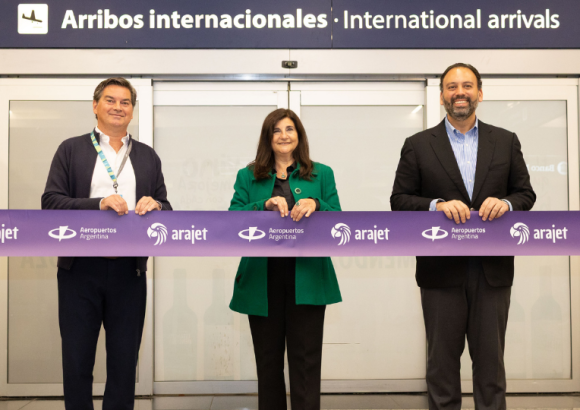
    The launch was celebrated with an official inaugural ceremony hosted at Mendoza’s El Plumerillo International Airport, where senior leaders from Arajet joined Argentine and Dominican tourism and aviation officials to mark the occasion. During the event, stakeholders emphasized the far-reaching benefits of the new connection, noting that it will unlock new opportunities for two-way tourism growth, expand bilateral trade links, and deepen people-to-people cultural exchange between Argentina and the Dominican Republic.

    For Arajet, the new route reinforces the airline’s aggressive expansion goals across the Western Hemisphere. Company representatives noted that the launch further cements Punta Cana’s status as a critical strategic transit hub for regional travel connecting South America to the Caribbean and North America, while also strengthening the carrier’s footprint in Argentina’s fast-growing aviation market.

  • Man dies after falling from Plaza Central parking structure in Santo Domingo

    Man dies after falling from Plaza Central parking structure in Santo Domingo

    On a Tuesday morning in Santo Domingo’s National District, a 49-year-old local business owner lost his life following a fall from the fourth floor of the parking garage at Plaza Central, a popular retail hub along 27 de Febrero Avenue. The Dominican National Police has confirmed the incident, which sent waves of alarm through the mall’s workers and visitors who were on site when it unfolded around 11 a.m.

    Authorities have formally identified the victim as Joselito del Rosario Paulino, the proprietor of Rapicell, a cell phone retail shop operating within the shopping complex. Known colloquially to many acquaintances by the nickname “El Siervo”, Paulino was remembered by fellow merchants in the mall as a soft-spoken individual deeply devoted to his Christian faith.

    First responders assigned to the 9-1-1 emergency system were dispatched immediately to the Plaza Central location after reports of the incident came in. Law enforcement teams have since launched a full inquiry to piece together exactly what led to Paulino’s death. According to police spokesperson Colonel Diego Pesqueira, investigative teams are currently working through two key lines of inquiry: analyzing security camera footage from the mall and parking structure, and collecting formal statements from witnesses who were in the area at the time of the fall.

    Early information from the investigation notes that a mall security guard told detectives he believes the fall may have been an intentional act by Paulino. However, law enforcement officials have stressed that no conclusions have been reached, and the case remains open and active as investigators work to confirm all circumstances surrounding the death.

  • Refidomsa chairman Samuel Pereyra sues Carlos Rubio in Florida

    Refidomsa chairman Samuel Pereyra sues Carlos Rubio in Florida

    SANTO DOMINGO — A high-profile Dominican energy industry leader has launched cross-border legal action against a man he accuses of orchestrating a reputation-smearing campaign that targeted his family, including underage children, after he rejected an unlawful demand for money.

    Samuel Pereyra Rojas, who currently chairs the board of directors at Dominican Petroleum Refinery (Refidomsa), confirmed he has filed a formal lawsuit in the U.S. state of Florida against Carlos Rubio, the individual he blames for the campaign of harassment. Pereyra is no stranger to Dominican public life, having previously held the top executive role at Banco de Reservas de la República Dominicana, one of the country’s largest and most influential state-owned financial institutions.

    In an official public statement released this week, Pereyra detailed that the dispute traces back to a request for what he calls “financial assistance” from Rubio — a demand he opted to refuse. In response to his rejection, Pereyra alleges Rubio launched a coordinated offensive across social media and other digital channels. The campaign was designed, he claims, to destroy his professional and personal reputation while inflicting pressure through targeted attacks on his close family members.

    Pereyra emphasized that he remains a steadfast supporter of the principle of free speech and welcomes legitimate, constructive criticism of his work as a public and business leader. However, he drew a clear line, arguing that defamation, extortion, and the deliberate targeting of minor children cross both fundamental legal lines and basic ethical boundaries.

    Beyond securing protection for his own family and clearing his name, Pereyra noted the lawsuit carries a broader purpose: to establish a legal precedent that counters the rising trend of extortion plots targeting senior public officials and prominent business leaders across the region. The legal filing in Florida marks an unusual cross-border step to address digital harassment that has impacted Pereyra and his family.