标签: Dominican Republic

多米尼加共和国

  • Christmas The Double Salary will be tax-free without a salary cap, according to Law 30-26

    Christmas The Double Salary will be tax-free without a salary cap, according to Law 30-26

    In a landmark legislative move that will deliver direct financial relief to working people across the country, the National Congress has formally passed Law 30-26, legislation that codifies permanent full tax exemption for the 13th-month salary, more commonly known as the annual Christmas bonus.

    Unlike prior regulatory frameworks that imposed partial taxation on bonuses exceeding five times the national minimum wage, the new law makes clear that every worker will receive their full bonus amount with zero tax deductions, no matter how large the bonus payment is. To embed this protection in existing labor regulation, Law 30-26 adds a clarifying paragraph to Article 222 of the national Labor Code, explicitly reaffirming that the Christmas bonus tax exemption applies regardless of any salary cap.

    Rogelio Hernández, a prominent labor law attorney, broke down the regulatory history that contextualizes this new legislation. He explained that before the passage of Law 204-97 in 1997, any portion of a Christmas bonus that surpassed five times the minimum wage was classified as a taxable supplementary benefit, requiring workers to pay income tax on that excess amount. While Law 204-97 first established full exemption for Christmas bonuses, the new Law 30-26 removes lingering regulatory ambiguity by formally reaffirming and entrenching this policy in binding statute.

    “Now, under Law 30-26, the entire Christmas bonus is exempt, regardless of the amount. Whether a worker earns RD$500,000 or RD$1,000,000, they will receive the full amount as a Christmas bonus,” Hernández confirmed.

    Beyond the Christmas bonus tax exemption, Law 30-26 includes a broad package of fiscal reforms designed to strengthen national fiscal discipline and buffer the domestic economy against ongoing global economic instability. Key additional provisions include flexible payment plans for taxpayers, generous discounts for early tax payments, a nationwide tax amnesty program running through December 2026, and updated adjusted tax brackets for both individual earners and legal business entities. Critics had previously warned that outdated indexing of income tax brackets would push more workers into higher tax brackets and force increased tax payments, a concern that the new legislation addresses through its updated rate structure.

    The elimination of any partial taxation on Christmas bonuses puts an end to the long-standing issue of double taxation on worker compensation, a reform that labor advocates have championed for years to ensure working people retain the full benefit of their annual holiday pay.

  • David Collado launches “Dive Into Happiness” campaign to strengthen the promotion of Cabarete

    David Collado launches “Dive Into Happiness” campaign to strengthen the promotion of Cabarete

    Dominican Republic’s Tourism Minister David Collado has unveiled a groundbreaking international marketing campaign titled “Dive Into Happiness” at a launch event hosted in Miami, marking a key step in cementing Cabarete’s reputation as one of the Caribbean’s premier destinations for surfing and wind-powered water sports.

    This latest initiative builds on a strategic tourism development framework rolled out several years ago, which branded Cabarete the official “Surf & Wind City” of the Caribbean. That earlier strategy was designed to put the Puerto Plata coastal town on both regional and global travel radars, positioning it as a top-tier hub for sports, adventure, and immersive experiential travel.

    The campaign’s launch event drew high-profile professional surfers from both the Dominican Republic and Mexico, a deliberate pairing that aligns with the tourism ministry’s broader goal of bridging Dominican tourism offerings with key international audiences, while showcasing the full breadth of the country’s diverse travel attractions beyond its most well-known spots.

    Through this new campaign, the Dominican Ministry of Tourism is doubling down on its effort to establish the country as the Caribbean’s leading multi-destination travel spot. Rather than only leaning into the nation’s iconic postcard-perfect beaches, the campaign shines a spotlight on niche, specialized destinations like Cabarete, which has already earned global acclaim for its unrivaled natural conditions ideal for surfing, kitesurfing, windsurfing, and a wide range of other adrenaline-fueled water activities.

    Industry analysts note the campaign delivers a much-needed economic boost to the Dominican Republic’s North Coast and the province of Puerto Plata as a whole. It also comes at a pivotal moment for national tourism leaders, who have made growing diversification of the country’s travel product and strengthening the unique identity of individual local destinations a core priority for long-term sector growth.

  • Collado’s titanic effort to maintain the cruise boom

    Collado’s titanic effort to maintain the cruise boom

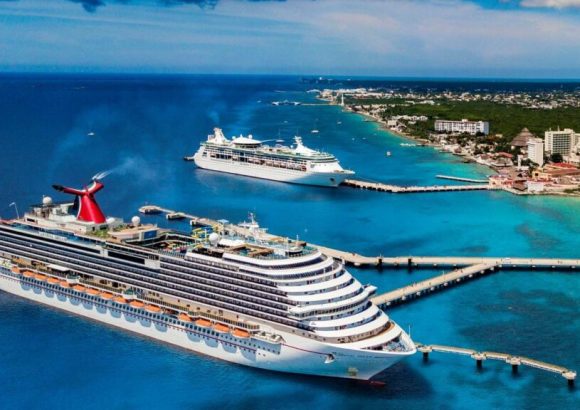
    The Dominican Republic’s tourism sector, long the nation’s economic cornerstone, has avoided a potentially damaging decline in cruise arrivals after proactive intervention from Tourism Minister David Collado, who moved swiftly to reverse operational cuts from major global cruise lines.

    Collado has made it clear from the start of his administration that his team’s priority is delivering tangible, on-the-ground projects that drive long-term, stable growth for the country’s $10 billion-plus tourism industry. Beyond infrastructure upgrades that include new public park development, beachside problem resolution, and critical seawall restoration, the ministry is focused on protecting visitor volumes to key destinations such as Puerto Plata, which is on track to welcome more than 2.6 million cruise passengers this year alone.

    When data from the peak travel months of May, June, and July raised red flags for the cruise segment—one of the highest contributors to tourism revenue in the Dominican Republic—Collado moved quickly to address the slowdown rather than waiting for the decline to deepen. “We were elected to govern, not just observe,” he noted, emphasizing that proactive problem-solving is a core responsibility of public leadership in the sector. “I cannot allow tourism to decline or for a false perception to arise that the sector is shrinking. A public administrator must prevent and act before problems occur.”

    Collado recently held direct, high-level talks with C-suite executives from three of the world’s largest cruise operators: MSC Cruises, Royal Caribbean, and Carnival Cruise Line. During those discussions, he flagged an alarming roughly 30% drop in scheduled operations at Dominican ports from some lines. Further analysis revealed a key driver of the shift: the opening of new port infrastructure in the Bahamas, which had siphoned off multiple itineraries originally planned for the Dominican Republic.

    Recognizing that tourism is the Dominican Republic’s most valuable economic asset, Collado’s team prioritized immediate negotiation to reverse the losses. In a rare win for the country—given that cruise itineraries are typically locked in up to two years in advance—Royal Caribbean agreed to adjust its scheduled routes to add 48,000 additional passenger arrivals to the Dominican Republic. Of that total, nearly 18,000 extra visitors will arrive in a month that was originally projected to post negative growth for cruise tourism.

    Collado has since publicly thanked Royal Caribbean for the adjustment via his social media channels, choosing to withhold granular details of the negotiations to preserve the collaborative, trust-based relationships his ministry has built with all private sector cruise partners.

    Looking ahead, the minister attributes emerging positive results in the Dominican tourism sector to consistent, coordinated planning between the Ministry of Tourism (Mitur) and private industry stakeholders, a partnership that works continuously to strengthen the country’s competitiveness as a top Caribbean destination.

    “Good news doesn’t happen by chance. It’s the result of taking action, working hard, seeking consensus, and overcoming obstacles every day so that Dominican tourism continues to grow,” Collado said.

  • Temperature Weekend weather forecast for the Dominican Republic

    Temperature Weekend weather forecast for the Dominican Republic

    The Dominican Republic’s national meteorological agency, the Instituto Nacional de Meteorología (INDOMET), has released a detailed two-day weather forecast outlining shifting atmospheric conditions across the country this weekend.

    On Saturday, forecasters say persistent eastward trade winds will carry moist air across the region, spurring developing cloud cover that will trigger scattered rain showers across multiple eastern and central provinces. The areas expected to see the highest chance of precipitation include La Altagracia, La Romana, San Pedro de Macorís, Hato Mayor, Samaná, María Trinidad Sánchez, and the wider Santo Domingo metropolitan area.

    Moving into Saturday afternoon, INDOMET notes that a combination of daily temperature cycles – which drive convection as land heats up – and lingering moisture from a weak upper-atmosphere trough will create favorable conditions for isolated local rain showers, with the potential for severe thunderstorm activity. This active weather is expected to persist from the afternoon through the early overnight hours, with the highest concentration impacting Monte Plata, Sánchez Ramírez, Elías Piña, and the northern border province of Dajabón. For all remaining regions of the Dominican Republic not mentioned, conditions will hold mostly sunny and unseasonably warm through the end of Saturday.

    Looking ahead to Sunday, the approaching weather systems will bring increased precipitation across wider swathes of the country. A new tropical wave moving toward the island, paired with an upper-level trough, will boost atmospheric moisture and cloud formation across the nation. Scattered showers and thunderstorms are expected to develop, becoming most widespread during the afternoon hours and continuing through the first part of Sunday night. The regions facing the greatest frequency of storm activity include southeastern provinces, the Central Mountain Range, and the country’s entire border region with neighboring Haiti.

  • Learn about the changes that will impact citizens and businesses with the new Law 30-26

    Learn about the changes that will impact citizens and businesses with the new Law 30-26

    On Thursday, Dominican Republic President Luis Abinader formally enacted the Law of Measures for Economic Growth and Mitigation of the International Crisis, just after the country’s National Congress gave the legislation its final approval.

    Drafted in response to widespread global economic uncertainty that has sent ripples through markets and national economies worldwide, the new law centers on multiple core policy goals designed to shore up the Dominican Republic’s economic resilience and advance long-term national progress. Its overarching objectives include fostering inclusive sustainable development, boosting broad public well-being, and reinforcing the underlying conditions that support steady national economic and social expansion.

    A key pillar of the legislation focuses on upgrading the country’s public financial governance. It mandates more responsible stewardship of public resources and strengthens frameworks for tax compliance, all anchored in the guiding principles of equity, progressive taxation, and alignment with individual and corporate ability to pay. The legislation also explicitly notes that maintaining consistent fiscal and economic stability is a non-negotiable foundation for retaining public and investor confidence in state institutions, as well as for sustained private-sector job creation across the country.

    Against a backdrop of persistent international economic and financial volatility that has left many nations struggling to adapt to shifting conditions, the law frames its policy adjustments as a necessary proactive step. Proponents argue that strengthening fiscal discipline, shoring up the long-term sustainability of public finances, and boosting predictability in economic policy management will directly expand the Dominican state’s capacity to respond quickly and effectively to ongoing changes and emerging challenges in both the domestic and global economic landscape.

  • Just hours after its approval, Abinader enacted the tax reform law.

    Just hours after its approval, Abinader enacted the tax reform law.

    In a remarkably accelerated legislative process spanning just six days, the Dominican Republic’s ruling government has enacted a sweeping new tax reform billed as a buffer against economic turbulence sparked by the Iran-U.S. conflict. The policy push began June 11, when Minister of Finance and Economy Magín Díaz first unveiled the administration’s anti-crisis plan, framing targeted tax adjustments as a critical defense against global market shocks triggered by the Middle Eastern tensions. Just one week after its initial public presentation, the legislation—officially titled the Law of Measures for economic growth, tax simplification, and mitigation of the international crisis, recorded as Law 30-26—secured approval from both chambers of the National Congress and was signed into law by President Luis Abinader.

    The legislative timeline moved at an unprecedented pace: the bill was formally introduced to the Senate the Friday after Díaz’s announcement, with Senate President Ricardo de los Santos quickly convening a 11-member bicameral steering committee led by Senator Pedro Catrain to advance the draft. Just five days later, senators passed the bill under an urgent expedited procedure, adopting minor modifications to three key articles that adjusted tax rules for lottery retailers and removed import tariffs on fire trucks and ambulances before sending the text to the Chamber of Deputies. Deputies followed suit the very next day, approving the bill through back-to-back readings under emergency procedures, clearing it for presidential signature. President Abinader formalized the law immediately after completing a public appearance opening a new waterfront park on Santo Domingo’s Malecón.

    In an official press release announcing the law’s enactment, the National Palace emphasized the urgent need for the reform amid a global landscape defined by economic and financial instability. The legislation, the statement argued, is designed to reinforce fiscal discipline, shore up the long-term sustainability of public finances, and improve the predictability of national economic management—all to boost the Dominican state’s ability to respond quickly and effectively to shifting domestic and global economic challenges. The core fiscal goal of the new law is to generate an additional RD$50 billion in revenue for the national General State Budget by raising tax burdens across multiple sectors of the economy, which administration officials have positioned as a necessary step to absorb the economic fallout of the Iran-U.S. conflict.

    However, the extraordinary speed of the bill’s passage has drawn sharp criticism from opposition lawmakers, who have also raised alarms over the distribution of the new tax burden. Ahead of the final vote in the Chamber of Deputies, Rafael Castillo, spokesperson for the opposition People’s Force (FP) party, publicly lamented the prioritization of this tax bill over long-delayed structural reforms, noting, “How great it would have been if the Social Security Law, which is 14 years overdue, had been approved in a (similar) period or if we had dealt with the Labor Code using this same process.”

    Opposition legislators put forward more than 10 amendments to the draft bill during the Senate debate, but ruling party lawmakers from the Modern Revolutionary Party (PRM) ultimately rejected all changes, explaining that approving opposition amendments would send the bill back to the Senate and delay its enactment. Opposition representatives have highlighted specific provisions that they argue will raise costs for ordinary working Dominican families. FP Representative Carlos de Pérez argued that the new law imposes higher taxes on the annual Christmas bonus, commonly referred to as the 13th salary, and adds a 2-peso per gallon increase to domestic fuel prices on top of existing taxes and tariffs. “If we look at it closely, this reform will end up affecting the table and the pockets of every Dominican because it taxes fuel, which makes everything more expensive,” de Pérez explained.

    He added that the law also raises the tax on liquefied petroleum gas (LPG)—the primary cooking fuel for most Dominican households—by 174 pesos per metric ton, meaning “turning on the stove at home to cook and eat will cost a little more.” De Pérez also questioned why the administration and ruling legislators rejected calls to exempt basic staple goods including rice, beans, eggs, and chicken from the existing Transfer Tax and Industrial Goods (ITBIS), a value-added tax, arguing, “that is the flag of the Dominicans” that should be protected from additional price pressures. The FP caucus also reiterated its longstanding demand, led by Senator Omar Fernández, for a full, rather than partial, adjustment of the Income Tax (ISR) bracket to match the country’s current annual inflation rate. While the reform does raise the lower income tax threshold from 34,000 to 39,000 pesos annually, de Pérez noted that this adjustment falls far short of matching inflation, adding: “If the cause the Government announced was the war in the Middle East and that disappeared, the most decent thing would have been for the project to have disappeared as well.”

    Not all opposition figures rejected the entire reform, however. Some members of the center-left Dominican Liberation Party (PLD) acknowledged that the legislation includes several positive, targeted provisions that will benefit vulnerable groups and small businesses. Representative Ydenia Doñé highlighted the full elimination of advance tax payments for micro-enterprises, a 3% reduction in inheritance tax for transfers between parents and children, and a new special tax deduction for educational expenses for families caring for members with disabilities as welcome changes included in the new law.


  • More taxes What the new ISC indexation means for consumers and businesses

    More taxes What the new ISC indexation means for consumers and businesses

    The General Directorate of Internal Taxes (DGII) has formally announced a scheduled update to the specific Selective Consumption Tax (ISC) rates levied on alcoholic beverages, beer, cigarettes and a range of other regulated products, with the new tax framework set to enter into force on July 1, 2026, and remain active through September 30 of that year.

    Outlined in official Resolution No. DDG-ARI-2026-00004, the revised ISC for a broad category of alcoholic products including malt beer, still and sparkling wines, aromatized wine-based drinks like vermouth, fermented fruit ciders, and all distilled spirits has been set at 764.29 Dominican pesos (RD$) per standard tariff unit. This adjustment aligns strictly with the tax adjustment guidelines laid out in Article 375 of the Dominican Tax Code, confirming the change adheres to existing legal frameworks.

    For tobacco products, the tax authority has set differentiated specific rates based on pack size. A standard 20-unit pack of cigarettes, whether produced from dark (black) or light (blond) tobacco, will carry an ISC of RD$64.65, while smaller 10-unit packs will be taxed at half that rate, RD$32.33. The uniform rate across both tobacco varieties eliminates any classification-based discrepancies in tax liability for manufacturers and importers.

    In a statement accompanying the resolution, DGII officials elaborated on the dual objectives behind the scheduled tax update. First, the adjustment is designed to maintain consistent tax pressure on product categories long classified as harmful to public health, a policy lever that discourages excessive consumption of alcohol and tobacco. Second, the updated rates will boost cumulative state tax revenue, supporting broader government fiscal efforts to maintain long-term fiscal sustainability for the country.

  • Puerto Plata, world epicenter of cruises with the Pamac Cruise Summit

    Puerto Plata, world epicenter of cruises with the Pamac Cruise Summit

    The Dominican Republic’s northern coastal province of Puerto Plata has secured the right to host the 2026 Pamac Cruise Summit, one of the most influential annual gatherings for the worldwide cruise sector, organized by the Florida-Caribbean Cruise Association (FCCA). Scheduled to run from June 22 to 26, 2026, the summit is set to draw a high-profile crowd including C-suite executives from leading global cruise lines, destination management representatives from across the Americas, infrastructure investors, and other key strategic stakeholders across the cruise value chain.

    For more than 10 years, the Pamac Cruise Summit has held the status of the flagship annual conference for FCCA Platinum members. Over that time, it has evolved into a vital industry platform that facilitates knowledge sharing, partnership building, and collaborative growth between major cruise operators and coastal and island destinations across the Caribbean and Latin America. It is widely regarded as a key space for aligning industry priorities, addressing common challenges, and unlocking new opportunities for regional tourism development.

    Puerto Plata’s selection as the 2026 host comes on the back of its already strong performance as a leading cruise destination in the Dominican Republic. Official data from May of this year shows that the province’s two major cruise ports handled 86% of all cruise passenger arrivals to the entire country. Of that total, Amber Cove accounted for 49% of the national volume, welcoming 18,802 passengers, while Taino Bay took a 37% share with 51,233 cruise visitors docking at its terminal.

    Regional Tourism Director Carlos Atahualpa Paulino emphasized that the FCCA’s decision to award the summit to Puerto Plata is far more than just an event win: it represents a major vote of confidence in both the province and the Dominican Republic as a whole. “This selection will put our destination front and center in the conversations of the entire international cruise industry,” Paulino noted. He also credited the successful bid to the targeted efforts led by Dominican Minister of Tourism David Collado, as well as the long-standing cooperation agreement between the Dominican national government, led by President Luis Abinader, and the FCCA.

    Local and national tourism authorities project that the 2026 summit will deliver a substantial, multi-sector economic boost to Puerto Plata long before the first attendees arrive. The event is expected to drive significant increases in hotel occupancy throughout the hosting period, while also injecting new revenue into local transportation providers, family-owned restaurants and gastronomy businesses, retail outlets, and other auxiliary tourism services that rely on visitor spending.

    Beyond immediate economic gains, industry leaders and government officials believe the summit will create long-term value for the Dominican Republic. It is expected to amplify the destination’s global brand exposure, draw new foreign and domestic investment into cruise infrastructure and tourism services, and cement the position of both Puerto Plata and the Dominican Republic as leading, reliable benchmarks for cruise and leisure tourism across the entire Caribbean region.

  • The La Romana Golf Tournament paid tribute to Deyanira Pappaterra of Banreservas

    The La Romana Golf Tournament paid tribute to Deyanira Pappaterra of Banreservas

    The Dominican Republic’s top hospitality industry gathering for golf, the 13th edition of the La Romana Golf Tournament, recently wrapped up at one of the Caribbean’s most acclaimed golf venues, bringing together industry leaders, amateur athletes, and tourism stakeholders for a day of competition and recognition.

    Organized by the La Romana Bayahibe Hotel Association (AHRB), this annual tournament has grown into a beloved tradition that connects the region’s booming tourism sector with the global golf community. This year’s event carried special meaning, as organizers used the occasion to pay tribute to Deyanira Pappaterra, Vice President of Tourism Business at Banreservas, for her decades-long career and transformative contributions to strengthening the Dominican Republic’s position as a top global travel destination.

    In opening remarks at the tournament, AHRB president Andrés Fernández emphasized the outsized impact Pappaterra has had on the Dominican tourism industry. Speaking to attendees gathered at the course, Fernández noted that the 2026 recognition honors a professional whose work has been pivotal at a defining moment for the sector. “She turns ambitious visions into viable projects, and those viable projects into tangible development that benefits communities across our country,” Fernández said. “Today, we are proud to recognize Deyanira Pappaterra for all that she has done.”

    The competitive rounds of the tournament unfolded on the prestigious Links course at Casa de Campo Resort & Villas, a world-famous property that has hosted international golf competitions for decades. Organizers structured the event as a pairs-based Scramble format, a popular format that encourages collaboration and accessibility for amateur players of varying skill levels.

    After a full day of competitive play, Rafael Berrido and Óscar Rodríguez claimed the top honor for Best Gross Score across all participants. In division play, Carlos Medrano and Harold Cuellar took first place in Category A, while Silvio del Rosario and Duilio Gustavo Gimondo secured the top spot in Category B. For the women’s division, Josefina Pichardo and Elizabeth Pérez earned the championship title.

    The 13th edition of the tournament would not have been possible without broad cross-sector support from leading tourism, finance, and infrastructure organizations across the Dominican Republic. Along with AHRB, the Dominican Ministry of Tourism (Mitur) served as co-organizer of the event. Other major supporting partners included Casa de Campo Resort & Villas, Air Europa, Arajet, Banreservas, Central Romana Corporation, Consorcio Eléctrico Punta Cana Macao, Golf Dominicano, Dominican Golfers, and a wide range of top regional hotel properties including Catalonia Bayahibe & Royal La Romana, Dreams Dominicus La Romana, Dreams & Secrets La Romana, HM Alma de Bayahibe, Iberostar Hacienda Dominicus, Sunscape Dominicus La Romana, Viva Resorts by Wyndham, Hilton Garden Inn La Romana, Grand Palladium Punta Cana Resort & Spa, and Meliá Hotels International.

  • Sweltering heat will continue to affect the country this Saturday

    Sweltering heat will continue to affect the country this Saturday

    SANTO DOMINGO — The Dominican Institute of Meteorology has released an updated weekend weather forecast warning residents that sweltering, Saharan dust-fueled heat will persist across most of the Dominican Republic through Saturday, before an approaching tropical wave brings scattered showers and isolated thunderstorms starting Sunday.

    The combination of a persistent high-pressure system and incoming Saharan dust has locked in low atmospheric moisture across the vast majority of the country, conditions that will keep conditions mostly dry and partly cloudy through Saturday with barely any measurable rainfall. While most regions will stay dry, a small number of isolated morning showers are still expected to impact eastern coastal communities in the provinces of La Altagracia, La Romana, San Pedro de Macorís, and El Seibo.

    By Saturday afternoon, convective activity is forecast to shift to the country’s western and northwestern border regions, with scattered showers and occasional isolated thunderstorms possible across San Juan, Santiago Rodríguez, Elías Piña, and Dajabón. Meteorological officials emphasized that temperatures will remain unusually high this weekend, driven both by the seasonal timing of mid-year and the insulating effect of airborne Saharan dust, which traps heat near the surface. To help residents cope with the dangerous heat, authorities have issued public health guidance: locals are urged to maintain steady hydration, wear loose, light-colored clothing that reflects sunlight, and avoid any extended time spent outdoors between 11 a.m. and 4 p.m., when ultraviolet radiation and heat intensity peak.

    For the Greater Santo Domingo metropolitan area — which includes the National District, and the northern, eastern, and western municipalities of Santo Domingo province — Saturday will bring consistent scattered cloud cover with no widespread rain. Overnight low temperatures will settle between 23°C and 25°C, while daytime highs will climb to between 31°C and 33°C.

    The pattern is set to shift sharply starting Sunday, when a tropical wave moving into the region will introduce rising moisture and increased atmospheric instability. By midday Sunday, the wave will drive a sharp increase in cloud cover across affected areas, bringing scattered showers, isolated thunderstorms, and occasional gusty winds. The heaviest precipitation on Sunday is expected to be concentrated in 10 provinces: La Altagracia, El Seibo, Hato Mayor, La Romana, San Pedro de Macorís, San Cristóbal, San José de Ocoa, Monte Plata, Barahona, and the entire Greater Santo Domingo metropolitan region. For the national capital and its surrounding suburbs, cloud cover will build throughout Sunday afternoon and evening, with scattered showers and isolated thunderstorms forecast through the end of the day.