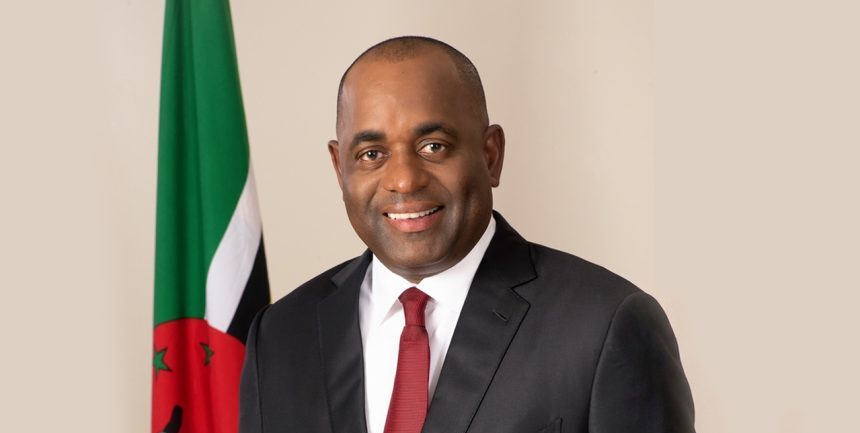
Nine years ago, on September 18, 2017, the small Caribbean island nation of Dominica faced one of the most catastrophic natural disasters in modern Caribbean history. Category 5 Hurricane Maria, packing sustained winds exceeding 160 miles per hour, made a direct landfall, unleashing unrelenting destruction for seven and a half hours that spared no segment of Dominican society. In an address to the nation’s parliament, Prime Minister Roosevelt Skerrit marked the somber anniversary by reflecting on the devastation, honoring those lost, and outlining the extraordinary progress the country has made in its recovery.
The toll of Hurricane Maria remains etched deeply into the national memory of Dominica. The storm claimed 31 lives, left 34 people unaccounted for, and left behind immeasurable grief for families who never received the closure of burying their loved ones. Skerrit called on parliament to hold a minute of silence to honor those who perished that night. Beyond the human cost, the destruction of infrastructure and livelihoods was unprecedented: 90% of all residential structures were damaged, leaving more than 80% of the population homeless overnight. For months, families huddled under tarpaulins, crowded into community centers, or shared single homes with multiple other displaced households, losing not just buildings, but the privacy, dignity, and security that a home provides.
Every sector of the Dominican economy was wiped out entirely. One hundred percent of the country’s agriculture was destroyed – banana plantations, dasheen farms, citrus groves, and bay leaf trees were all flattened. The island’s lush forests, for which Dominica earned its nickname the “Nature Isle,” were stripped bare. All livestock were killed, fishermen lost their vessels, tourism accommodation was reduced to rubble, and indigenous Kalinago artisans lost their entire stock of handcrafted goods. Overnight, 80% of farmers and fisherfolk lost their only source of income. A nation that had long fed itself with homegrown produce was suddenly dependent on food aid shipments arriving by sea, with residents lining up for basic food packages.
The World Bank and United Nations calculated total damage and economic losses at 226% of Dominica’s annual GDP – meaning the storm wiped out more than two full years of the nation’s entire economic output in a single night. Critical public infrastructure collapsed across the country: the Dominica China Friendship Hospital flooded, local health centers lost their roofs, and doctors were forced to perform emergency procedures by flashlight. 95% of the nation’s schools were damaged, leaving 10,000 children without classrooms for months. Entire communication networks failed, leaving families isolated and unable to confirm the safety of loved ones even across just a few miles of the island. Even years later, the psychological scars remain: Skerrit noted that many Dominicans still struggle to sleep during heavy rain, teenagers who were five years old at the time of the storm still panic at the sound of strong wind, and many farmers developed chronic depression and anxiety following their losses.
In the immediate aftermath of the disaster, many observers both around the world and within Dominica believed the small island nation would never fully recover. Critics argued Dominica was too small, too poor, and too deeply broken to rebound from such a catastrophic blow. But those skeptics underestimated the collective resilience of the Dominican people. From the first days after the storm passed, the government adopted an ambitious, forward-looking vision: rather than simply rebuilding what was lost, the nation would “build back better,” with the goal of becoming the world’s first fully climate-resilient nation. Nine years on, Skerrit affirmed the government has remained steadfast in that commitment, rebuilding stronger infrastructure, reorienting national investment toward resilience, and embedding climate adaptation at the center of all national development work. While the journey is not yet complete, Skerrit emphasized that the progress made to date is tangible, visible, and already transforming the lives of Dominican citizens.
To turn that vision into reality, the government has advanced six core priorities for recovery and resilience. First, it has restored dignity through climate-resilient housing. Through the national Housing Revolution, supported by the country’s Citizenship by Investment Programme, the government has constructed more than 3,000 new reinforced concrete homes designed to withstand Category 5 hurricanes, complete with hurricane straps, storm shutters, and secured concrete roofs and foundations. It has also repaired more than 7,000 damaged roofs, with work continuing, and provides families with full property titles along with their keys, to build intergenerational security for all Dominican households.
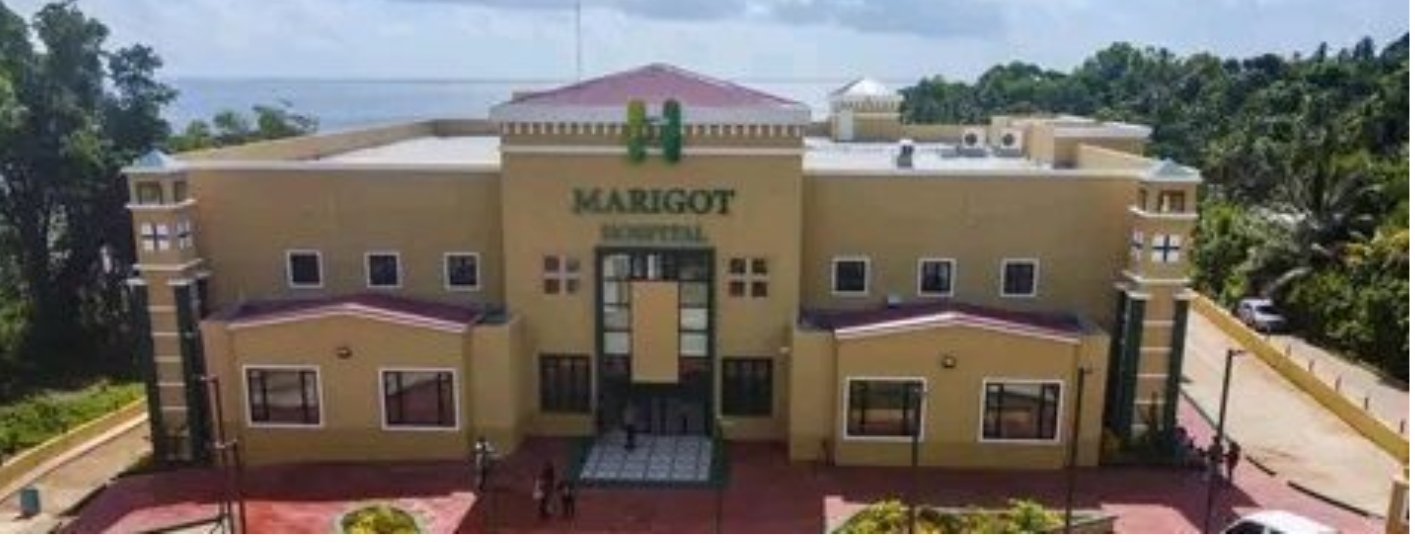
Second, the government has restored core public services including health, education, and infrastructure safety. It has rebuilt and upgraded 35 local health centers, constructed the new climate-resilient Marigot Hospital, and rebuilt all primary and secondary schools to stronger standards, with many now fitted with solar power and designated as official emergency shelters. All major roads, bridges, and water systems have been restored, and critical power lines have been buried underground to prevent future outages during storms, ensuring no child will ever again have to attend class under a leaking roof.
Third, the government has worked to restore the nation’s ability to feed itself. It has distributed seeds, tools, fertilizer, livestock, and cash grants to more than 5,000 affected farmers, invested in new greenhouses and irrigation systems, built new farm access roads, renovated the Roseau Fisheries Complex, and replaced lost boats and engines for fishermen. Today, Dominican agriculture and fishing have rebounded, and local markets are once again stocked full of homegrown produce.
Fourth, the government has invested in long-term measures to lower the cost of living for all citizens. Recognizing that high electricity prices place a heavy burden on working families, the government completed a geothermal energy plant in the Roseau Valley that now delivers cheaper, clean, locally produced energy to the national grid, cutting utility bills for single parents, small business owners, and hotels alike – a direct lesson from the storm that the nation must achieve energy independence to protect its people.
Fifth, the government is investing in permanent climate security and youth job creation through construction of a new international airport. Skerrit emphasized that when Hurricane Maria hit, the island’s existing air infrastructure was too damaged to allow emergency aid to land, leaving the nation cut off and unable to evacuate those in need. The new airport will ensure this isolation never happens again, and currently provides jobs for more than 300 Dominican workers, who are gaining new skills in heavy equipment operation to support their families.
Sixth, the government has prioritized care for the invisible psychological wounds left by the storm. It has expanded free counseling services, community mental health support, and youth programs to address widespread trauma, and trained local community emergency response teams in every village, recognizing that resilience depends as much on prepared communities as it does on strong buildings.
Skerrit acknowledged that the work is not yet finished. Building a fully climate-resilient nation is an ongoing, long-term national commitment, not a one-time goal. There are still families waiting for their new resilient homes, river floodwalls to complete, vulnerable communities to strengthen, critical infrastructure to protect, and farmers who need additional support. But looking back nine years after the storm, the progress is undeniable: from temporary tarpaulin shelters to permanent concrete homes, from widespread darkness to affordable clean geothermal energy, from crippling isolation to a new international airport that will connect the nation to the world, from dependence on foreign food aid to full food self-sufficiency.
Today, Dominica is stronger, better prepared, and more determined than ever to continue its journey toward full climate resilience. That progress, Skerrit stressed, is not just the work of government – it is rooted in the extraordinary collective spirit of the Dominican people: the woman who shared her limited food with neighbors, the young people who cleared blocked roads to reach vulnerable communities, the nurses who never abandoned their posts at the hospital, the Dominican diaspora that sent aid barrels to family back home, and the churches, NGOs, and partner nations that stood with Dominica in its darkest hour.
To every Dominican who lost a loved one, a home, or hope in the storm, Skerrit affirmed that the government and parliament have not forgotten their suffering. The nation honors the 31 lives lost by building a new Dominica that will never again be broken by a hurricane the way it was in 2017. Hurricane Maria took much from the people of Dominica, but it could not take their national spirit, it could not break their unity, and it could not erase their love for the Nature Isle. In closing, Skerrit offered a blessing for all who endured the storm, for those the nation lost, and for the ongoing future of the Commonwealth of Dominica.