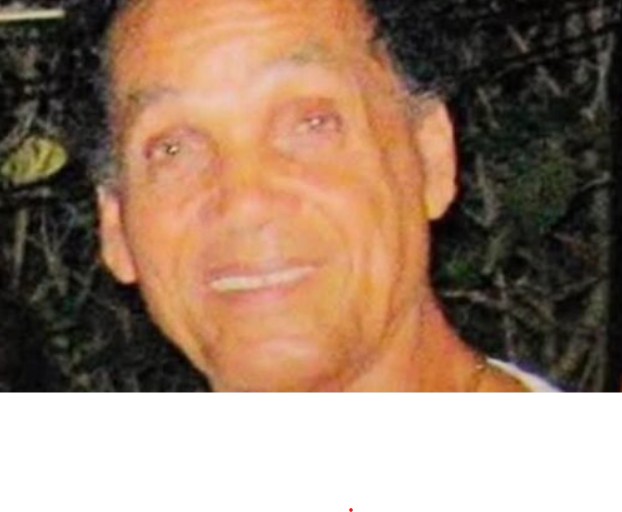
Multiple independent online sources have confirmed the passing of Valentine Poponne, a Dominican businessman and the father of Melissa Poponne-Skerrit, who serves as the Member of Parliament for Roseau Central and is married to Prime Minister Roosevelt Skerrit. As of the time of this publication, no further official details surrounding his death – including the cause, date of passing, or funeral arrangements – have been released to the public. Local news outlet Dominica News Online has stated that it will issue a full follow-up report to the public as soon as additional verified information becomes available. The news of his passing has prompted an outpouring of tributes and condolences across social media and local communities, with many remembering his contributions to business and public life in Dominica.
标签: Dominica
多米尼克
-

Jasmine Schofield sets new national record for Dominica and new personal best at Commonwealth Games
At the 2014 Commonwealth Games hosted in Glasgow, Scotland, Dominican competitive swimmer Jasmine Schofield has etched her name into the nation’s sports history books by clocking a new national record time of 2 minutes and 19.16 seconds in the women’s 200m freestyle event. This milestone performance also marks a new personal best for the athlete, edging out her own previous top time of 2:19.66 by half a second. A proven competitor with Olympic experience under her belt, Schofield is not resting on her new achievement. She has already turned her focus to upcoming races, preparing to compete in the 100m freestyle the very next day, followed by the 50m freestyle event scheduled several days later. The Commonwealth Games, a pinnacle multi-sport event held once every four years, brings together the world’s top elite athletes from all Commonwealth member nations across the globe to compete for regional and national glory. Schofield carries on a proud legacy of Dominican athletic excellence: she comes from a family with deep roots in international competitive swimming, as her mother Francilia Agar Schofield also represented Dominica at the global stage, competing at the 2000 Sydney Olympic Games. For Dominica, Schofield’s new record stands as a bright highlight of the nation’s performance at the 2014 Commonwealth Games, demonstrating the growing strength of the country’s swimming program and the hard work of its top athletes.
-
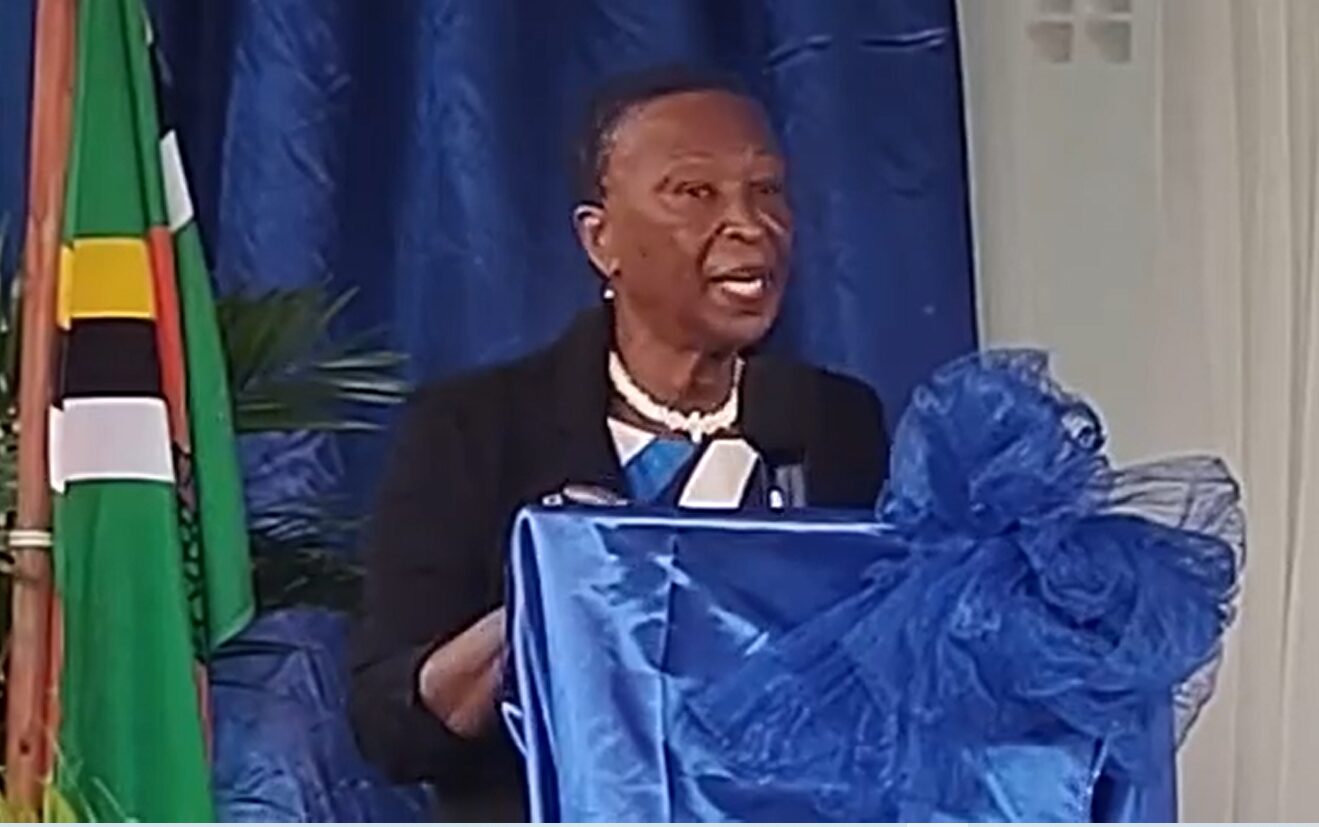
UWP candidate for Castle Bruce Ernie Jno Finn – participate in democracy or risk being governed by your inferiors
At a recent United Workers Party (UWP) press conference, Ernie Jno Finn, the party’s official candidate for the Castle Bruce Constituency, framed her selection as a public recognition of her long-held dedication to advancing community progress, upholding unwavering integrity, and delivering genuine public service.
Opening her remarks with a memorable, crowd-pleasing quote from ancient philosopher Plato — “One of the penalties for refusing to participate in politics is that you end up being governed by your inferiors” — Jno Finn set a reflective yet determined tone for her announcement. She opened up about her rocky 2019 campaign experience, recalling a bittersweet moment when she claimed an overnight election lead that ultimately evaporated the next day. “That victory was stolen from me,” she shared, “but the challenging journey taught me invaluable lessons that will form the foundation of this new campaign chapter.”
Jno Finn expressed clear excitement to return to the electoral race, reaffirming her commitment to serving Castle Bruce constituents with honesty, dedication, and a laser focus on the local issues that impact daily life. She laid out three core pillars for her upcoming campaign: full transparency with voters, inclusive outreach across all community segments, and empowering local residents to shape their own collective future. Central to her policy agenda is rebuilding open lines of communication between constituents and their representative, upgrading local healthcare access, advancing proactive environmental protection, and centering the unmet needs of community members in all decision-making.
The candidate stressed that the Castle Bruce Constituency is grappling with a backlog of critical, long-unresolved issues that demand immediate action. One high-priority project she highlighted is the expansion of Castle Bruce Secondary School, where construction on needed additional classroom space began years ago but has been stalled repeatedly. If elected, Jno Finn pledged to see the long-delayed project through to completion to give students the learning space they desperately need.
She also called out unkept promises from incumbent officials for residents of Petite Soufriere and Good Hope, who were forced to evacuate and promised relocation after damage from a weather trough system. “A sitting minister publicly announced construction would start this past September — that was back in 2025,” Jno Finn pointed out. “To this day, not a single stone has been laid.” She made a firm commitment that if given the opportunity, she will deliver on that relocation promise for the affected families. Jno Finn added that addressing the widespread issue of inadequate housing across the constituency is another non-negotiable priority, noting that all residents deserve safe, stable housing regardless of their political leaning. “A government is elected to serve all people, not just those who supported it,” she emphasized.
-

OP-ED: ‘Let’s be objective’ – The most misunderstood phrase in public debate
In the heat of countless public debates, there is a phrase that has become a near-universal conversation ender: “Let’s be objective.” The moment those words leave a speaker’s mouth, a subtle but profound shift occurs. The speaker often straightens their posture, implicitly positioning themselves on higher moral and intellectual ground. Any continued pushback suddenly risks being framed as emotional, ideological, or even anti-scientific. The unspoken message is clear: pure objectivity has arrived, and the argument is effectively over.
But what exactly does this invocation of objectivity actually bring to the table? The term “objective” stands as one of the most rhetorically powerful tools in modern public discourse. It inherently signals neutrality, and promises distance from personal bias, partisan politics, and individual experience. To claim objectivity is to claim that one’s stance reflects unvarnished reality itself, not just one limited perspective on it.
Look closer, however, and a curious contradiction emerges. What most people label objectivity often looks far too similar to unshakable confidence in one’s own personal experiences and unexamined assumptions. This question was first explored decades ago by philosopher and psychologist William James, who probed whether a person can feel fully convinced that an idea aligns perfectly with all their existing knowledge, and still be wrong about its objective truth. It is an uncomfortable inquiry, one that forces us to confront a simple, disquieting fact: the feeling of certainty is not the same as the existence of truth.
This distinction carries particular weight in evidence-reliant fields such as epidemiology, medicine, and public health. These disciplines rightfully center data, statistical inference, and rigorous methodological standards. Their public credibility is built on the promise that knowledge is generated through systematic inquiry, not arbitrary personal opinion.
Yet knowledge never emerges fully formed from laboratories, untouched by human decision-making. Scientists themselves choose which research questions are worth exploring. Funding institutions decide which projects get the resources to move forward. Researchers interpret results through existing theoretical frameworks that shape how evidence is understood and categorized. Even the selection of a specific statistical model rests on underlying assumptions about how the world works.
None of this undermines the reliability of science. In fact, it strengthens it. Science functions precisely because it acknowledges the constant possibility of error. It progresses through criticism, replication of results, and ongoing revision. Every scientific finding is inherently provisional, and every conclusion is open to challenge by newer, better evidence. Put another way, science is powerful not because it promises unwavering certainty, but because it has institutionalized the practice of doubt.
The trouble starts when the language of objectivity is used not as an aspirational methodological goal, but as a tool to shut down intellectual inquiry entirely. This dynamic played out prominently during the global COVID-19 pandemic. Public health communications repeatedly leaned on appeals to “the science,” treating scientific knowledge as a static, finished product rather than an evolving body of work. As new data about the novel virus accumulated, public health guidance shifted and evolved – exactly what should happen when responding to an emerging pathogen.
For many members of the public, however, these shifting recommendations sparked widespread confusion. Policies that had once been presented as unquestionable, objective fact were suddenly updated. What was actually the normal, healthy process of scientific learning appeared to outsiders as inconsistency. The earlier framing of objectivity as absolute certainty turned this necessary evolution into a perceived contradiction that eroded public trust.
The real problem was never that science changed – science always changes, and that is by design. The problem was the misleading narrative we had built around what objectivity actually is. When objectivity is framed as a final destination rather than an ongoing process of inquiry, any revision of conclusions looks like a failure instead of the progress it actually is.
Yet the most robust knowledge systems in human history – from modern scientific inquiry to democratic governance – are built on the core recognition that no single perspective is ever complete. They depend on open disagreement, rigorous public scrutiny, and the constant testing of existing ideas to grow stronger.
True objectivity, it turns out, may not be found in the bold, confident declaration that one holds exclusive claim to the truth. Instead, it lives in the willingness to continually ask whether we might be wrong. This posture is quieter, less dramatic, and far less satisfying in the heat of a heated argument. But it is also the closest we can ever realistically get to the ideal of objectivity we so often invoke.
So the next time someone throws out “let’s be objective” to end a debate, the most honest response is neither to concede the point nor dig in for a fight. It is to ask a better question: are we here searching for truth, or just trying to shut down the conversation?
-

Exchange and Engage with Rootz Herbal
When submitting news content for professional processing and analysis, only social media sharing buttons and an image link were provided, with no actual core news text, context, or event details included. Without the full, substantive content of the original news report, it is impossible to conduct an in-depth review of the event, verify key claims, reconstruct a coherent narrative, or deliver accurate analysis aligned with the required processing standards. This incomplete submission prevents any meaningful journalistic processing or classification of the intended news content. To receive a full, compliant analysis and rewrite, submitters must provide the complete text of the original news article alongside any supplementary materials.
-

UWP candidate for Wesley calls on Dominicans to ‘stand up so we can save this blessed land’
At a candidate nomination rally hosted at the Alliance Française this Thursday, Jean Francois, the United Workers Party (UWP) nominee for Dominica’s Wesley Constituency, delivered a impassioned call to action for all Dominican citizens, urging collective action to protect what he described as the nation’s “blessed land.”
Centering his address on the responsibility of everyday citizens to drive national progress, Francois emphasized that a country’s greatest asset is its population. Without collective, proactive action from the public, he argued, no nation can move forward. Currently, he claimed, Dominica has stalled under the incumbent Dominican Labour Party, which he said has failed to deliver for the Dominican people. “We are stuck under this party. The Dominican Labour Party has failed us,” Francois told the gathering. “It is our responsibility as citizens to stand up. I rise not for my own sake, not for UWP’s sake, but for the sake of all Dominica. That is why every single one of us must mobilize to preserve our nation.”
Francois acknowledged that pushing for meaningful change would not be a quick or easy process, but maintained that clear priorities and aligned collective effort would yield positive results. He pointed to Dominica’s abundant natural advantages — vast fertile soil, abundant freshwater reserves, and inherent agricultural potential — to criticize the incumbent government’s neglect of the agricultural sector, calling the abandonment of core agricultural development “a shame.”
“Unless we return our focus to the soil, our country will never make meaningful progress,” Francois stressed, adding that reviving the agricultural sector is the clearest path forward for sustainable national growth. He framed it as the opposition UWP’s core responsibility to demonstrate the economic and social benefits of agriculture, particularly to younger generations of Dominicans, who will shape the nation’s future.
If given the opportunity to represent the Wesley Constituency, Francois pledged that supporting smallholder and independent farmers would be his top policy priority. “I will prioritize ensuring that farmers have all the resources and support they need to operate independently,” he said. “We want the Dominican people to be self-sufficient. We will build an enabling environment where you can work, grow your own livelihoods, and keep the earnings you deserve in your pocket.”
-

WEATHER (6:00 AM, July 25): Weak unstable conditions are affecting the area
Residents across the Lesser Antilles region are bracing for a day of mixed, unpredictable weather on Friday, driven by multiple overlapping atmospheric systems that have prompted official caution for vulnerable communities and outdoor operators. This morning’s forecast calls for widespread cloud cover interspersed with scattered showers, which may ramp up to moderate or heavy intensity in localized areas, with a chance of isolated thunderstorms popping up across the territory.
As the day transitions into afternoon and overnight, the conditions will shift only slightly. Most areas will stay mostly cloudy with a light haze, holding just a handful of scattered showers through the evening. After midnight, storm activity will pick up again, bringing back scattered showers and the continued threat of isolated thunderstorms.
Meteorologists trace the day’s unsettled weather to a mid- to upper-level atmospheric trough carrying excess moisture and atmospheric instability, which is the primary driver of today’s cloudy, showery conditions. The bigger shift on the horizon is an approaching tropical wave, which is expected to bring widespread cloud cover, showers and thunderstorms starting across the southern Lesser Antilles this afternoon. Those stormy conditions are projected to track northward overnight, continuing through Sunday across the northern parts of the region.
In light of this forecast, authorities are urging residents living in low-lying areas, steep hillsides, and other zones that are historically prone to flooding, landslides and falling rock debris to stay vigilant and take proactive steps to protect property and personal safety.
A secondary atmospheric hazard is also building through the day: Saharan dust concentrations, which are low across the region this morning, are expected to climb steadily starting this afternoon. People living with pre-existing respiratory conditions, including asthma, chronic allergies and other breathing impairments, are advised to closely monitor changing air quality conditions and follow recommended precautions such as limiting prolonged outdoor exposure to reduce health risks.
For marine and coastal activities, conditions across the next 24 hours remain mostly favorable, with sea states ranging from slight to moderate. Along the territory’s west coast, wave heights are expected to hover around 3 feet, while the more exposed east coast will see larger swells reaching near 7 feet. While general marine activities can proceed safely, small craft operators are reminded to maintain extra caution, especially when operating in open offshore waters where conditions can change quickly.
-
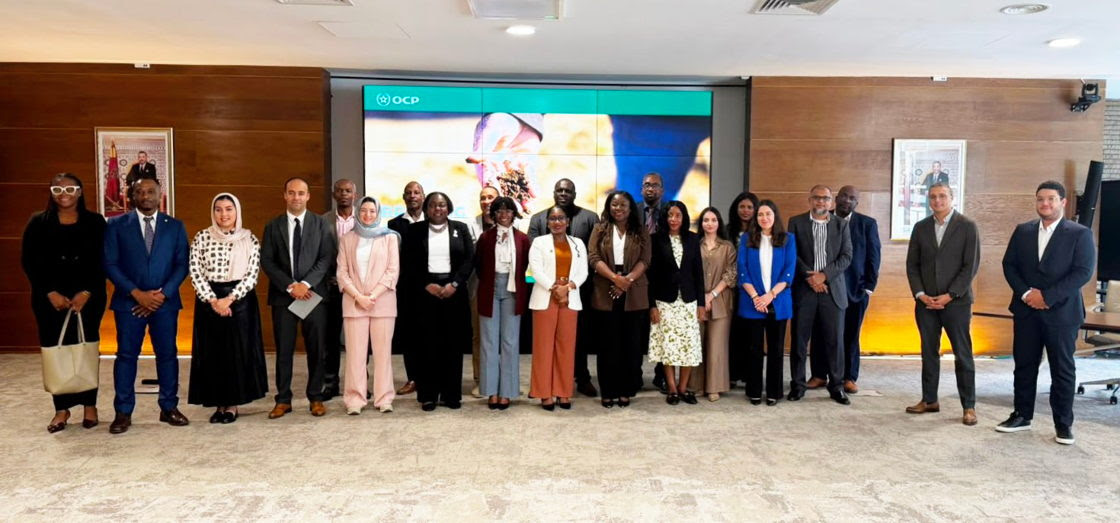
OECS and Morocco explore new opportunities for trade, investment and economic cooperation
In a major step forward for South-South cooperation, representatives from the Organisation of Eastern Caribbean States (OECS) and the Kingdom of Morocco have concluded a week of targeted economic discussions, paving the way for strengthened bilateral trade, investment, and cross-sector collaboration across two geographically distinct regions.
Held from June 22 to 26, 2026, the OECS-Morocco Economic Promotion Week was hosted and organized by Morocco’s Moroccan Agency for International Cooperation (AMCI), with institutional support from the OECS Commission. The initiative was designed to unlock untapped collaborative opportunities between Morocco and the 11-member OECS bloc, aligning with regional development priorities and advancing projects that promise tangible social and economic benefits for communities across the Eastern Caribbean. Six OECS member states took part in the talks: the Commonwealth of Dominica, Antigua and Barbuda, Grenada, Saint Kitts and Nevis, Saint Lucia, and Saint Vincent and the Grenadines.
The delegations brought together a broad cross-section of stakeholders, spanning government economic and trade ministries, national investment promotion agencies, national chambers of commerce, and private sector industry groups. Participating institutions included the Invest Dominica Authority, the Antigua and Barbuda Investment Authority, Grenada Investment Development Corporation, Nevis Investment Promotion Agency, Invest Saint Lucia, Invest SVG, Saint Kitts and Nevis’ Ministry of International Trade and Ministry of Economic Development and Investment, the Private Sector Unit of Saint Vincent and the Grenadines, the Grenada Chamber of Industry and Commerce, and the Saint Lucia Chamber of Commerce. The delegation also included senior representatives from the OECS Commission, the OECS Business Council, and officials from the Eastern Caribbean States Embassies based in Morocco.
His Excellency Ian Queeley, Ambassador and Head of Mission of the Eastern Caribbean States Embassies to Morocco, emphasized that the week-long engagement reinforced the deep alignment between both regions on goals for shared, sustainable development. “This Economic Promotion Week has reaffirmed that the relationship between the Organisation of Eastern Caribbean States and the Kingdom of Morocco is one built not only on friendship, but on shared aspirations for sustainable economic growth, innovation, investment, and South-South cooperation,” Queeley said. “Through productive dialogue and meaningful exchanges, we have showcased the immense opportunities that exist between our regions and laid the foundation for stronger commercial partnerships.”
Queeley added that the OECS remains dedicated to advancing deepened economic diplomacy, linking business owners, investors, and public institutions from the Eastern Caribbean with strategic Moroccan partners. “We look forward to translating the momentum generated this week into tangible outcomes that create jobs, expand trade, and promote inclusive prosperity for the peoples of both the Eastern Caribbean and Morocco,” he said.
During the week of engagement, participating delegates held closed-door and open discussions with Moroccan public and private sector leaders across 12 high-priority sectors, including agriculture, agro-processing, food security, renewable energy, fisheries, the blue economy, financial services, port infrastructure development, maritime trade, air transport connectivity, and tourism. Talks also centered on collaborative solutions to shared challenges, including building greater agricultural resilience to climate shocks, expanding development of geothermal and solar energy projects, strengthening bilateral tourism links, and deepening broader economic integration between the Caribbean and African continents.
Delegates also explored a range of structural collaborative frameworks, including closer correspondent banking relationships, expanded direct business-to-business networking and partnerships, the potential establishment of a permanent OECS–Morocco Business Council, and the benefits of Moroccan investment access through Casablanca Finance City, one of Africa’s leading financial hubs. Opportunities for Moroccan direct investment in key OECS priority development sectors were also a key topic of conversation.
Over the course of the event, delegates held formal meetings with more than a dozen leading Moroccan institutions, including AMCI, the National Office of Hydrocarbons and Mines, the Moroccan Agency for Sustainable Energy, the Ministry of Industry and Trade, the Moroccan Agency for the Development of Investments and Exports, Casablanca Finance City, the Professional Group of Banks of Morocco, OCP Africa, the General Confederation of Moroccan Enterprises, the Regional Council of Dakhla-Oued Ed-Dahab, the Regional Investment Centre, and the Port of Dakhla.
A scheduled site visit to Dakhla allowed delegates to see first-hand Morocco’s ambitious southern regional development strategy, and examine the growing role of the Dakhla Atlantic Port in boosting transatlantic trade between Africa, the Americas, and Europe. The visit also identified new opportunities for collaboration on maritime infrastructure development and ocean economy cooperation between Morocco and OECS member states.
Following the conclusion of Economic Promotion Week, the Eastern Caribbean States Embassies in Morocco issued a statement praising the high level of engagement from both Moroccan institutional stakeholders and OECS delegations. The statement noted that the productive talks have generated significant positive momentum that will now be carried forward into targeted follow-up initiatives and formal collaborative projects in the coming months.
-
Trinidad and Tobago signs regional cybersecurity partnership
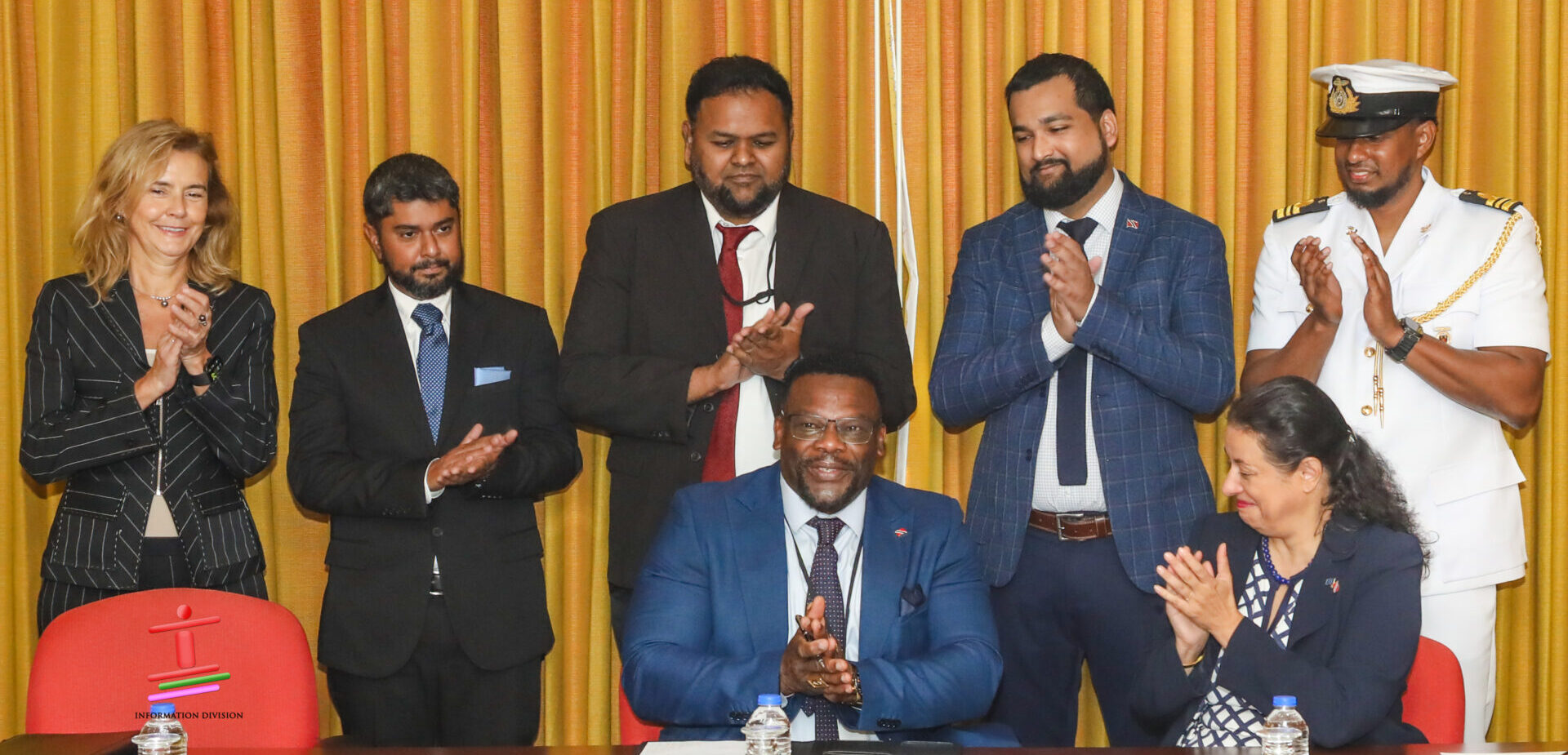
On July 24, 2026, the government of Trinidad and Tobago formalized a landmark strategic agreement at the Ministry of Homeland Security’s headquarters in Port of Spain, signing a Letter of Intent with the Latin America and Caribbean Cyber Competence Centre (LAC4) to elevate the nation’s cybersecurity capabilities against growing global digital threats.
LAC4 is a regional cybersecurity initiative backed by the European Union, designed to unify cyber defense efforts across Latin America and the Caribbean. The body delivers targeted technical support, industry-leading specialized training, structured policy dialogue platforms, and cross-border knowledge-sharing opportunities to help member states shore up their digital vulnerabilities.
The signing ceremony brought together senior officials from both Trinidad and Tobago and the European Union, including Trinidad and Tobago’s Minister of Homeland Security Roger Alexander, Spanish Ambassador to Trinidad and Tobago Cristina Pérez Gutiérrez, EU Ambassador to the Republic of Trinidad and Tobago Cécile Tassin, senior Ministry of Homeland Security permanent secretaries Videsh Maharaj and Dr. Wilson Henderson Jr., TT-CSIRT Manager Anish Bachu, and representatives from the Trinidad and Tobago Defence Force.
In remarks following the signing, Minister Alexander framed the new partnership as a defining turning point for the nation’s digital security. He emphasized that the agreement stands as “an important milestone” that advances both national cyber resilience and deeper collaborative security across the Caribbean region.
Anish Bachu, manager of Trinidad and Tobago’s national Computer Security Incident Response Team (TT-CSIRT), expanded on the practical benefits of the partnership. Beyond core governance and capacity building, he noted that the agreement opens new opportunities for Trinidad and Tobago to take part in large-scale regional cyber defense exercises, which will refine the nation’s ability to detect, respond to, and recover from large cyber attacks.
EU Ambassador Cécile Tassin welcomed Trinidad and Tobago’s commitment to the partnership, noting that the decision to join the LAC4 network signals that the Caribbean nation recognizes cybersecurity as far more than a technical concern—it is “a strategic investment in the country’s digital future.”
Moving forward, Trinidad and Tobago’s Ministry of Homeland Security will coordinate with LAC4 and regional stakeholder partners to roll out targeted capacity-building programs, update and strengthen the country’s National Cybersecurity Strategy, and harden the overall resilience of critical national digital infrastructure against evolving cyber threats.
-

UWI Press publication honoring Caribbean historian wins international book award
An edited academic volume honoring the life and groundbreaking career of one of the Caribbean’s most acclaimed historians, Bridget Brereton, has earned international acclaim, taking home a Silver Award in the Adult Nonfiction History category at the 28th annual Foreword INDIES Book of the Year Awards.
Published by The University of the West Indies (UWI) Press, the winning work, *History Matters: Reassembling the Fragments of a Contested Past – In Honour of Bridget Brereton*, was recognized by award judges for its exceptional contribution to global historical scholarship. The collection is curated by three UWI-based academics: Dr. Heather Cateau, Dr. Rita Pemberton, and Dr. Ronald Noel, who brought together leading voices in Caribbean studies to craft the tribute.
As outlined by UWI, the volume is structured both to celebrate Brereton’s decades-long transformative impact on Caribbean historical research and to advance the field she helped build. It features a curated selection of peer-reviewed essays that probe multilayered dimensions of regional development, spanning economic systems, social movements, political evolution, and cultural identity formation across the Caribbean. UWI Press notes that the volume mirrors Brereton’s own core scholarly commitment: delivering nuanced, balanced narratives of the past that do not shy away from acknowledging historical complexity and contested memory.
The 2025 Foreword INDIES award winners were unveiled earlier this month by Foreword Reviews, an industry-leading publication focused exclusively on reviewing books from independent publishing houses. The annual INDIES awards were created to spotlight exceptional works released each year by small independent presses, university publishers, and niche independent authors, filling a gap in recognition for non-mainstream literary and academic work.
In responding to the award announcement, Christine Randle, Managing Director of UWI Press, emphasized that the honor carries unique weight because of its connection to Brereton’s legacy. “This honour carries special significance, as *History Matters* pays tribute to the remarkable life and legacy of Bridget Brereton, one of the Caribbean’s most distinguished historians,” Randle said. “We are delighted that the book has received international recognition from Foreword Reviews and extend heartfelt congratulations to the editors and contributors. This achievement highlights the global importance of Caribbean scholarship and reinforces the value of safeguarding and exploring our collective past.”
Michelle Schingler, Editor-in-Chief of Foreword Reviews, noted that the 2025 judging process was one of the most challenging in the award’s history, as growth in independent publishing has led to a steady increase in both the number and thematic diversity of submissions. “Each year, as our number of entrants increases and diversifies, the task of narrowing each genre category to a select few finalists gets harder. But that also makes the judges’ ultimate selections all the more exciting. We so look forward to their final choices, and we are proud to celebrate this year’s exemplary slate of winners,” Schingler said.