标签: Dominica

多米尼克

  • Caribbean strategic advisors and PROVEN Wealth Barbados form regional investment partnership

    Caribbean strategic advisors and PROVEN Wealth Barbados form regional investment partnership

    Two leading Caribbean financial players have joined forces to unlock new investment pathways and expand capital access for growing businesses and development initiatives across Barbados and the broader Caribbean region. Caribbean Strategic Advisors Inc. (CSA) and PROVEN Wealth (Barbados) Limited (PWB) announced their new strategic partnership in a joint press release, outlining a shared vision to address the region’s existing gap between available capital and unmet financing demand.

    The collaboration merges the unique strengths of both organizations to create a comprehensive, end-to-end investment platform. CSA brings deep expertise in transaction sourcing, strategic business consulting, and custom capital structuring, while PWB contributes fully regulated investment services spanning securities trading, brokerage, personalized investment advising, and professional wealth management. This complementary skill set is designed to address every stage of the investment process, from initial project identification to final capital deployment.

    Through the new alliance, the two firms aim to build a unified regional investment platform that channels both individual and institutional capital into high-impact sectors. Key focus areas will include infrastructure development, the global energy transition, private sector expansion, and other industries that drive sustainable long-term economic growth across the Caribbean.

    Industry observers note that the timing of the partnership responds to a unique market dynamic in the region: Barbados and many neighboring Caribbean nations hold substantial levels of domestic savings and institutional liquidity, yet local businesses and large-scale infrastructure projects continue to face challenges accessing the growth capital they need to scale. The alliance is structured to complement existing funding sources by proactively identifying, structuring, and facilitating investment opportunities that appeal to both domestic and cross-regional investors.

    Oliver Jordan, Co-Founder and Managing Director of CSA, emphasized that the partnership fills a critical gap in the regional investment ecosystem. “Mobilising capital at scale requires three capabilities working in concert: disciplined transaction origination, sound structuring, and regulated distribution. The CSA–PROVEN alliance brings those elements together within a single platform — positioning us to deliver institutional-grade opportunities to Barbadian and Caribbean investors, and meaningful long-term capital to Caribbean enterprises,” Jordan explained.

    Garfield Sinclair, Chairman of PWB, echoed this sentiment, noting that the combined expertise and resources of the two firms will strengthen the region’s entire investment landscape. “We believe there is a significant opportunity to strengthen the regional investment ecosystem by combining origination capability, regulated market access, and execution capacity within a coordinated platform. The alliance reflects a shared commitment to expanding investment participation and supporting long-term economic growth across the Caribbean,” Sinclair said.

    Beyond immediate investment activity, the partnership is aligned with Barbados’ broader national goal of solidifying its status as a leading regional hub for investment structuring, large-scale institutional capital mobilization, and financing for the economy’s productive sectors. Across the wider Caribbean, the initiative is expected to support inclusive economic development by deepening regional capital markets and expanding access to high-quality investment opportunities for both investors and enterprises.

    The announcement of the alliance comes as Barbados’ domestic capital markets are experiencing a notable uptick in activity. It follows CSA’s recent role as sole financial advisor for the public share offering of Roberts Manufacturing Company Limited, a landmark deal that marked the first domestic public equity offering launched in Barbados in several years.

  • DOMLEC restores power to most of Dominica following island-wide outage

    DOMLEC restores power to most of Dominica following island-wide outage

    A widespread national power outage that disrupted service across Dominica shortly before noon on Wednesday has been resolved for nearly all customers, according to Dominica Electricity Services Ltd. (DOMLEC). Utility officials have confirmed the failure originated from an unexpected trip at the island’s still-in-development Geothermal Power Plant, which triggered a full collapse of the entire national electricity grid. In the immediate aftermath of the system-wide shutdown, restoration teams sprung into action without delay. DOMLEC quickly activated standby generation units at the Fond Cole Power Station to begin rebuilding grid capacity and re-energizing communities that had been left without power. The utility rolled out restoration work in a carefully managed, phased sequence, drawing power from both the Fond Cole and Sugar Loaf Power Stations to gradually bring sections of the island back online as grid conditions stabilized. As of the company’s latest update, power access has been returned to every region of Dominica except for a single corridor running from Picard to Ti-Bay. DOMLEC projected that service for customers in that remaining stretch would be fully restored no later than 6:00 PM on the day of the announcement. The utility issued a formal apology to all residents and businesses affected by the unexpected disruption, and extended gratitude to customers for their patience while crews worked to resolve the issue. DOMLEC also highlighted the extraordinary efforts of its in-house operational teams, including system controllers, civil engineers, field line crews, and back-office support staff, who prioritized both speed and safety throughout the recovery process. Additional recognition was given to on-site personnel at the Geothermal Power Plant, who collaborated closely with DOMLEC teams to coordinate the safe restart of the national grid. In a statement released by company management, officials reaffirmed that the geothermal energy project remains a landmark strategic initiative for Dominica. They noted that unforeseen challenges are a normal part of bringing a new major energy facility through its final development and testing phases. To reduce the risk of repeat incidents, DOMLEC confirmed that it is already integrating lessons learned from this outage into updated operational protocols and implementing targeted preventive improvements. The geothermal facility is currently in the last stage of commissioning, with DOMLEC on track to launch continuous commercial power generation from the plant sometime this month as preparations wrap up for full-scale operations.

  • Basketball standout earns ESPN Top 25 national ranking in Dominican-run program

    Basketball standout earns ESPN Top 25 national ranking in Dominican-run program

    One of the most promising young basketball talents in the United States, Michael “MJ” Postell, has earned a major national career milestone, securing the 18th position on ESPN SportsCenter Next’s highly anticipated Top 25 rankings for the Class of 2029.

    The rising shooting guard already holds the title of top-ranked player at his position in New Jersey’s 2029 recruiting class from Prep Hoops, and the new national ranking from ESPN — one of the most influential sports media brands in the country — cements his status as one of the most watched young prospects in the game. Postell currently competes with Pro Dev Unlimited, a prominent grassroots basketball program based in New Jersey founded by Khalil Brown, a former international pro player born to Dominican immigrant parents.

    Postell is not the only standout talent from the program to draw national acclaim in recent months. Pro Dev Unlimited has built a growing pipeline of top young players across multiple age groups, with several athletes earning regional and national recognition. Among them is Dominic Mauro, a Top 10-ranked freshman across the country per MaxPreps; Rian Bennett Jr., the top-ranked player in New Jersey’s 2030 class; Jackson Boyd, who holds the 8th spot in the same 2030 in-state rankings; Jackson Davis, ranked 5th among New Jersey freshmen by NJHoopsHub and 10th by Prep Hoops; and Jayden Stenvil, named New Jersey’s Sophomore of the Year by NJ.com. Both Bennett Jr. and Boyd have also received coveted invitations to attend the Nike Jr. EYBL Top 100 Camp, a prestigious development event for the nation’s top young talent.

    In a statement following the release of ESPN’s rankings, Brown celebrated Postell’s achievement, crediting the young guard’s relentless work ethic as well as the steady support from his family for the milestone. “Seeing MJ Postell earn ESPN Top 25 recognition makes me incredibly proud. This honour reflects the work, dedication, and sacrifice he has put into his game. Just as importantly, MJ has a terrific, consistent, and loyal family behind him. His parents, Genise Postell and Michael Postell Sr., have paved the way for his success and have been outstanding supporters throughout his journey. It has been a pleasure having them as part of the Pro Dev family. While this is a tremendous accomplishment, I truly believe it’s just the beginning for MJ, and his best basketball is still ahead of him,” Brown said.

    Pro Dev Unlimited has carved out a reputation for pushing its athletes to grow by pitting them against elite competition, often scheduling matchups against older teams and nationally recognized programs. To date, the program’s squads have notched wins against top clubs affiliated with major basketball circuits including Nike EYBL, Adidas 3SSB, Puma Pro16 and Under Armour Rise. In 2026 alone, Pro Dev Excel has remained undefeated, with signature wins over Adidas 3SSB’s Wiz Kids, Under Armour’s HC United and MADE Hoops’ Metro All Stars.

    Since its founding, the grassroots program has amassed more than 1,000 total game wins, claimed nearly 100 tournament championships, and finished more than 50 entire tournaments undefeated. Beyond on-court success, Pro Dev Unlimited has also prioritized helping its athletes secure educational opportunities through athletics, facilitating more than $2 million in total college scholarship offers for its program alumni — a track record that demonstrates the organization’s dual commitment to athletic excellence and academic advancement.

  • Virgin Islands launches CXC customer service programme to strengthen public service delivery

    Virgin Islands launches CXC customer service programme to strengthen public service delivery

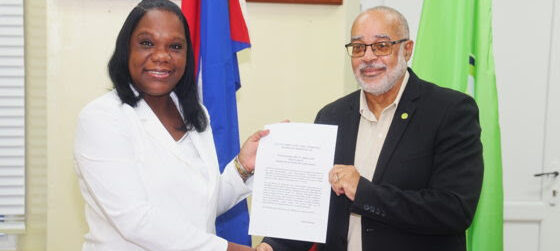
    On June 3, a landmark collaboration between the Government of the Virgin Islands and the Caribbean Examinations Council (CXC®) reached a major milestone, with the official launch of the regionally adaptable *Excellence in Customer Service CXC®* programme, an initiative crafted to uplift service standards across the territory’s public sector. The launch ceremony, hosted at the Virgin Islands Public Service Learning Institute (VIPSLI), drew a roster of key stakeholders including Deputy Governor David D. Archer Jr., senior public sector leaders, and CXC representatives, according to an official press statement from the partners.

    Two years in the making, the programme traces its origins back to a 2023 concept developed by CXC’s Research and Educational Development Division. What began as an idea to address public service skill gaps evolved into a full partnership bringing together CXC’s Professional Learning Institute, CXC’s Business Development Office, and VIPSLI, with specialized training delivery support from Customer 1st Caribbean Ltd., a Trinidad and Tobago-based industry leader in professional skills development. The initiative has been framed as a forward-thinking strategic investment in regional human capital, with a scalable framework that can be adopted by public sector entities across the entire Caribbean.

    Unlike ad-hoc training workshops, the *Excellence in Customer Service CXC®* programme uses a structured, multi-tiered curriculum tailored directly to the unique operational realities of the Virgin Islands Public Service. Built around real-world case studies of service challenges encountered by local public officers, the inaugural course covered core competencies ranging from professional ethics, core values, and interpersonal communication to accountability, operational efficiency, and proactive service recovery for customer complaints. Its scope spans all levels of the public service, targeting everyone from entry-level frontline staff to C-suite senior managers, with the overarching goal of systemic transformation of how government services are delivered to residents.

    Early signs of the programme’s impact have already emerged, even before the official launch. VIPSLI confirmed that participants began rolling out process improvements to their respective departments mid-course, revising outdated operational procedures and piloting new customer-centric approaches to streamline service delivery. During the launch event, 14 founding participants who completed the pilot course received formal certificates recognizing their achievement, marking the first cohort of certified customer service excellence trainers for the territory’s public service.

    In remarks at the certificate presentation and launch, Dr. Eduardo Ali, Pro-Registrar and Deputy Chief Executive Officer of CXC®, emphasized that the initiative extends far beyond basic skills training. “This programme was designed not only to put in place new systems and processes that drive greater efficiency and excellence in public service, but also to empower individual public officers to grow as better citizens and agents of meaningful change within their institutions,” Ali explained. “This landmark collaboration demonstrates that CXC® stands ready to provide robust technical expertise to regional governments and organizations working to transform their education and public service systems.”

    Dr. Connie E. George, Director of VIPSLI, shared that the institute partnered with CXC specifically to leverage the organization’s decades-long reputation as the Caribbean’s leading credentialing authority. “We identified a critical gap for a formal, accredited professional development programme that would help the government reach its goal of building a world-class public service,” George explained. “We turned to CXC® because when they back a programme, it carries the weight of regional recognition, academic rigor, and institutional integrity that we could not develop independently locally.”

    Looking ahead, the partners have laid out plans to expand the programme across every department of the Virgin Islands public service. The 14 inaugural graduates will undergo additional train-the-trainer instruction to enable them to lead future cohorts of public officers, creating a self-sustaining model for continuous upskilling. “Our goal is to make excellence in customer service more than just a one-off initiative,” George noted. “It should become a standard, expected part of every public officer’s professional development journey across the Virgin Islands.”

  • Mona retains UWI Games title as regional competition makes successful return

    Mona retains UWI Games title as regional competition makes successful return

    After eight days of thrilling inter-campus competition across 10 sporting disciplines, the 2026 edition of the University of the West Indies (UWI) Games officially came to a close on May 29 at the St. Augustine Campus’ Sport and Physical Education Centre (SPEC). Marking a triumphant return of the beloved regional sporting gathering under the theme “Reunited, Reignited, Ready,” this year’s event blended fierce on-field rivalry with heartfelt celebration and cross-regional camaraderie that anchored the core mission of the games.

    Five campuses across the UWI system fielded talented student-athletes, with the Mona Campus delivering a standout performance to successfully defend its overall championship title. The defending champions topped the final standings with a total of 136 points, clinching seven gold, five silver, and two bronze medals across the competition. Mona’s athletic dominance was on full display in cricket, table tennis, tennis, and track and field, and the campus also secured top gold finishes in women’s football, women’s basketball, and men’s volleyball.

    Host campus St. Augustine claimed the second spot on the overall podium with 114 total points, rounding out its performance with four gold, four silver, and five bronze medals. The home team claimed gold in four key disciplines: swimming, men’s basketball, men’s football, and hockey. The Cave Hill Campus followed closely behind to secure third place with 108 points, earning three gold, five silver, and four bronze medals; Cave Hill’s female athletes led the charge with gold wins in netball, hockey, and women’s volleyball.

    The 2026 games marked a historic milestone for the Five Islands Campus, which made its debut appearance at the event and finished fourth with 44 points, taking home bronze medals in men’s basketball, men’s football, and women’s volleyball. Rounding out the overall standings, the UWI Global Campus finished fifth with 22 points, fielding its largest delegation in the history of the games. One of the Global Campus’ standout competitors, Imani Edwards Taylor, earned the tournament’s Most Valuable Player award for her performance in table tennis.

    The closing ceremony brought together top university leadership, government officials, athletes, and coaching staff for an evening of celebration that honored the achievements of all participants. The event opened with a highlight reel of the tournament’s most iconic moments and a celebratory athletes’ procession, followed by a formal prize-giving ceremony to recognize outstanding competitors, coaches, and teams. The festive atmosphere was amplified by a lineup of culturally rooted entertainment, including performances by the UWI Games Flag Dancers, award-winning Trinidad and Tobago singer-songwriter and cultural ambassador Neval Chatelal, and the Trinidad and Tobago Police Service Band, with a soundtrack blending classic soca and contemporary Caribbean music that reflected the region’s vibrant cultural identity.

    Addressing the assembled crowd, Pro Vice-Chancellor and St. Augustine Campus Principal Professor Rose-Marie Belle Antoine emphasized that the games extend far beyond on-field competition, teaching lifelong values that translate to all areas of life. She highlighted the core principles of “honour, courage, fairness, reliability and discipline,” urging athletes to carry these values into every aspect of their lives. Professor Antoine famously encouraged competitors to “play sports, not games,” stressing that success in sport, as in life, comes only from genuine effort, hard work, and discipline, rather than shortcuts or advantage.

    Professor Antoine also underlined the unique role the UWI Games play in strengthening regional unity across the Caribbean. Noting that participants hail from different territories, campuses, and cultural backgrounds across the region, she reminded attendees that “we are part of one extraordinary region,” calling for continued collaboration and connection across borders, and urging the university to continue creating spaces for students to “get to know and value each other.” She closed her remarks by thanking all participating campuses, partner organizations, and volunteers for their financial support and collaborative work that made the 2026 games a resounding success.

    Pro Vice-Chancellor and Mona Campus Principal Professor Densil Williams, speaking on behalf of UWI Vice-Chancellor Professor Sir Hilary Beckles, praised host St. Augustine for crafting an experience that celebrated the region’s shared identity, calling the 2026 games a showcase of “Caribbean hospitality at its best.” He noted that the tournament provided a critical opportunity for cultural exchange and student integration across the diverse UWI system, bringing together young people from across the Caribbean with varying backgrounds and experiences. Williams also highlighted two special additions to this year’s event: the Caribbean Night celebration that showcased regional music, cuisine, art, and cultural traditions, and an outreach initiative with St. Mary’s Home for Children that helped students deepen their understanding of social responsibility, aligned with the UWI’s mission to graduate well-rounded, community-focused leaders.

    Minister of Tertiary Education and Skills Training, Senator the Honourable Emeritus Professor Prakash Persad, echoed these reflections, drawing on his own experience as a former school cricketer and martial arts practitioner. Persad framed the games as a space for “growth, connection, and the pursuit of excellence,” noting that the event builds character by teaching athletes to accept both defeat and victory with grace. “It is not only useful to produce graduates who are good academically but graduates who are physically strong, mentally resilient, emotionally balanced and socially aware,” he said. The minister also called for martial arts to be added to the roster of competition in future UWI Games, encouraging all students to prioritize sport as a core part of their personal and academic development.

    As the 2026 games came to a close, attention quickly shifted to the next edition of the historic event. In an official handover ceremony during the closing proceedings, the Cave Hill Campus was formally announced as the host of the 2028 UWI Games. Cave Hill Deputy Campus Principal Professor Winston Moore accepted the ceremonial games baton from St. Augustine Deputy Principal and 2026 UWI Games Organising Committee Chair Professor Derek Chadee, marking the official transition of hosting responsibilities.

    After the formal closing ceremony, celebrations continued with an outdoor fete-style reception headlined by a live performance from popular soca artist Yung Bredda, bringing an end to an event organizers described as a distinctly Caribbean celebration of the “One-UWI” spirit that unites the entire university system across the region.

  • Dominica launches US$26 million climate resilience initiative for vulnerable communities

    Dominica launches US$26 million climate resilience initiative for vulnerable communities

    Against a backdrop of rising global climate uncertainty and growing storm-related risks across small island developing states, the Government of Dominica has teamed up with the Caribbean Community Climate Change Centre (CCCCC) to launch an ambitious $26 million initiative targeting climate adaptation and inclusive sustainable growth for at-risk local populations.

    Named the Dominica Community Resilience Enhancement Project (DOMCREP), the five-year undertaking draws most of its financing from the Green Climate Fund (GCF), with complementary contributions from the Dominican government. It marks a major milestone in Dominica’s long-standing national pledge to become the world’s first fully climate-resilient nation, a goal set years ago as the island grapples with intensifying hurricanes, coastal flooding and erratic weather patterns that threaten livelihoods and national development.

    Officially announced this Wednesday via an official statement from the CCCCC, the project will center on four core priority areas: shoring up national food security, upgrading disaster preparedness frameworks, expanding early warning system coverage, and building community-level skills and resource access to address accelerating climate impacts. Eight communities across Dominica, all ranked at extremely high risk of climate disasters including hurricanes, flash flooding and storm surge, have been selected as direct beneficiaries: Bagatelle, Campbell, Colihaut, Coulibistrie, Good Hope, Petite Soufriere, Pichelin, and San Sauveur.

    Speaking at the project’s launch ceremony, Prime Minister Roosevelt Skerrit emphasized that the initiative is designed to deliver direct, tangible benefits to grassroots residents. He noted the investment totals roughly EC$70 million, all of which will flow directly to participating communities, with more than half of the total budget earmarked for agriculture, agro-processing, and expanding economic access specifically for women. “It is important for us in the communities to prepare ourselves for these investments,” Skerrit stated.

    A large share of the funding will be dedicated to scaling climate-smart agriculture across the target communities, where smallholder farming forms a core part of local livelihoods. Participating farmers will receive access to upgraded climate-resilient technologies, training in sustainable low-emission production methods, and support to adapt to shifting growing conditions. The end goal of this focus is to boost crop yields, cut climate-related production losses, and strengthen the country’s overall food security, reducing dependence on costly imported food supplies.

    Beyond agricultural support, DOMCREP will also finance critical upgrades to national disaster management infrastructure, including the retrofitting and construction of emergency shelters and associated response facilities. The upgrades are designed to ensure these critical hubs can withstand severe weather events, offering more reliable protection for residents when disasters strike.

    Dr. Colin Young, Executive Director of the CCCCC, framed the project as a far-reaching investment in shared social and economic prosperity, rather than just environmental adaptation. “When we invest in a farmer’s ability to adapt, we invest in a family’s food security and a community’s economic future,” he explained.

    In addition to infrastructure and agricultural improvements, the project will upgrade Dominica’s national multi-hazard early warning systems, boosting the country’s ability to detect and respond to a wide range of impending climate threats. Extensive skills training programs and public education campaigns will also be rolled out to increase community climate awareness and build long-term local capacity to address evolving climate challenges.

    A defining feature of DOMCREP is its intentional focus on inclusive development. Women, young people, and other marginalized vulnerable groups are positioned as core participants and beneficiaries of the initiative, which aims to create sustainable, long-term economic opportunities while strengthening overall community resilience.

    Dr. Young stressed that the success of the project will not be measured by spending or completed construction alone, but by the measurable improvement it brings to the daily lives of participating residents. “Ultimately, the success of this project will be measured not by budgets or outputs, but by the difference it makes in people’s lives,” he said. “By investing in women and youth, we are investing in the longterm resilience, prosperity, and sustainability of communities across this country. As the CARICOM institution with responsibility for coordinating the region’s response to climate change, the CCCCC remains committed to supporting Dominica and our Member States in accessing climate finance and transforming those investments into meaningful results for people and communities.”

    The CCCCC, an intergovernmental body established by CARICOM Heads of Government to coordinate regional climate action, serves multiple key roles across the Caribbean: it acts as a leading implementing partner for international climate finance, maintains a regional repository of climate data and research, and provides policy guidance and technical support to all CARICOM member states as they work to address climate change.

    Over the five-year implementation period, DOMCREP is expected to deliver lasting progress toward Dominica’s national climate resilience agenda, while advancing the country’s commitments to broader global sustainable development goals.

  • DOMLEC announces Island-Wide power outage

    DOMLEC announces Island-Wide power outage

    The submitted news material only contains social media sharing prompts and two image links, with no complete, legible news text content provided for processing. Without the core narrative and factual information of the original news, it is impossible to carry out in-depth analysis, structural reconstruction, or content rewriting. Users are requested to provide the complete text content of the target news to receive professional rewriting, classification, and sentiment analysis services in line with the specified requirements.

  • THE KWAK: Women feel attacked by higher male suicide rates, ask for more attention to female issues

    THE KWAK: Women feel attacked by higher male suicide rates, ask for more attention to female issues

    In a provocative satirical piece published by Dominican outlet THE Kwak, a tongue-in-cheek commentary on gendered discourse around suicide has sparked conversation while ultimately underscoring the universal need for accessible mental healthcare. The article opens with a playful skewering of the polarizing rhetoric that often plagues discussions of public health disparities, leaning into absurdity to call out competitive framing of mental health suffering between genders. The satire opens by leaning into a caricature of gender activists, framing an absurd hypothetical where women push back against the public focus on male suicide — noting that global data has long recorded male suicide death rates three times higher than female rates globally, while women report more non-fatal suicide attempts. TikTok-based feminist commentators are parodied as arguing that female mental health struggles deserve greater attention, with one non-feminist Dominican woman given a satirical, over-the-top quote: “Bon dye! You already take so much from us and now you want to take your own lives too? When will your discrimination against us end?” The piece then turns its mockery to men’s rights groups, quipping that journalists found nothing of value to include from standard men’s rights takes even after the group submitted an unsolicited statement, before leaning into a farcical reveal from a splinter Red Pill faction calling itself “Bros Are Better In Every Situation” (BABIES). In the article’s most absurd narrative beat, BABES claims to have built a time machine powered by “noticing” and the “collective female ego” to alter historical records and inflate male suicide rates just to undermine women’s issues, ending with their tongue-in-cheek line: “It’s not a competition and we’re still winning.” At the close of the satirical piece, the publication steps back to clarify its intent and ground the conversation in a serious, evidence-based message: mental health is never a competition between genders. The article notes that people of all genders face unmet mental health needs, with many living with suicidal ideation that goes unrecognized by loved ones and broader society. Systemic barriers including persistent stigma, dismissive attitudes toward mental distress, systemic marginalization, and widespread misinformation all contribute to underreporting of struggles and gaps in access to life-saving care. To turn this conversation into actionable support, the piece closes with a link to an updated, child-friendly directory of mental health resources available to all residents of Dominica hosted by Healthy Caribbean. A full disclaimer at the end of the piece confirms that THE Kwak’s content is intentionally satirical, designed to poke gentle fun at divisive cultural discourse while raising awareness of ongoing, serious public health challenges. The views expressed in the piece are also noted as solely those of the author, and do not represent the official stances of Duravision Inc., Dominica News Online, or any of its affiliated brands.

  • CRFM ministers adopt 19 resolutions, approve new aquaculture plan at 20th council meeting

    CRFM ministers adopt 19 resolutions, approve new aquaculture plan at 20th council meeting

    Caribbean fisheries, aquaculture, and blue economy ministers recently convened virtually for the 20th Regular Meeting of the Ministerial Council of the Caribbean Regional Fisheries Mechanism (CRFM), the CARICOM body dedicated to advancing coordinated regional action on fisheries management. The teleconference gathering brought together decision-makers from across the bloc to align on shared priorities and address pressing challenges facing the region’s marine sectors.

    During the meeting, delegates turned their attention to a slate of high-stakes topics central to Caribbean maritime development. Discussions spanned expanding commercial aquaculture output, updating regional frameworks to strengthen collective food security, designing climate and disaster risk mitigation strategies centered on insurance solutions, and sustaining momentum in the global fight against illegal, unreported, and unregulated (IUU) fishing.

    A core order of business for the gathering was the election of a new Chair to lead the Ministerial Council for the 2026–2027 term. Ministers voted unanimously to appoint Hon. Randy Baltimore, Antigua and Barbuda’s Minister of State in the Ministry of Agriculture, Lands, Fisheries and the Blue Economy, to the top role. Baltimore succeeds Hon. Kyle Hodge, Anguilla’s Minister of Economic Development, Industry, Commerce, Lands, Planning, Water and Natural Resources, who oversaw the Council’s work over the past 12-month term. Notably, Baltimore only recently assumed oversight of the fisheries portfolio following Antigua and Barbuda’s recent national elections.

    In remarks following his appointment, Baltimore outlined his administration’s priorities for the term. “The Government of Antigua and Barbuda looks forward to working closely with CRFM Member States and regional partners to further the sustainable development of the Caribbean’s fisheries and blue economy sectors during its tenure as Chair,” he said. Antigua and Barbuda also reaffirmed its longstanding commitment to deepening regional collaboration for responsible fisheries management and sustainable marine resource use, with a core focus on improving the economic livelihoods of small-scale fisherfolk and driving innovative solutions to industry threats including climate change, IUU fishing, and fragmented ocean governance.

    With support from Ian Horsford, Chair of the Caribbean Fisheries Forum and Chief Fisheries Officer of Antigua and Barbuda, ministers worked through a packed agenda of sector-wide issues. By the close of deliberations, the Council had approved 19 binding resolutions designed to accelerate progress on sustainable fisheries and aquaculture development across the entire Caribbean region. Key decisions included the adoption of a landmark five-year strategic action plan for aquaculture expansion, as well as formal endorsement of the CRFM’s work programme and operating budget for the 2026–2027 cycle.

    Delegates also received detailed progress updates on three large-scale regional initiatives being rolled out by the CRFM in partnership with member states and global development partners. These projects include the Canadian-funded Sustainable Technologies for Adaptation and Resilience in Fisheries (STAR-fish) Project, the IICA/EDF-EU Food Security Project, and the GEF/FAO/CAF/CRFM BE-CLME+ Project, which supports national blue economy planning through cross-regional marine spatial planning across the Caribbean Large Marine Ecosystem Plus.

    In closing remarks, CRFM Executive Director Dr. Marc Williams emphasized that the Caribbean has reached a critical turning point for ocean governance, stressing that long-term prosperity depends on integrating sustainable fisheries management, aquaculture growth, climate resilience, and coordinated ocean stewardship. “The Caribbean stands at a pivotal moment when sustainable fisheries, aquaculture, the Blue Economy, climate resilience, and ocean governance must be integrated to secure prosperity for present and future generations,” Dr. Williams said. “I encourage all Member States to maintain their strong engagement in implementing today’s resolutions and to continue supporting the CRFM as a premier regional institution for fisheries and ocean governance.”

    Reflecting on the meeting’s collective outcomes, Dr. Williams noted that the Council’s decisions on strategic priorities, budget, financial management, and staffing create a robust foundation for the CRFM to deliver tangible, lasting benefits to the millions of Caribbean residents who depend on healthy marine resources for livelihoods and food security. The Ministerial Council is scheduled to reconvene later this year at the 20th Caribbean Week of Agriculture, which will be hosted in Jamaica.

  • COMMENTARY: Cycling for a greener future

    COMMENTARY: Cycling for a greener future

    For centuries, the bicycle has quietly reshaped human society, yet its transformative legacy often flies under the radar of popular history. Dubbed the “people’s nag” — a reference to the expensive, elite horses 19th century working classes could not access — the bicycle democratized personal travel more than 200 years ago, giving ordinary people an affordable, self-reliant way to move freely across their communities. Many observers now draw parallels between the disruptive, world-altering impact of the bicycle’s invention and the rise of artificial intelligence in the 21st century, framing the two as equally revolutionary shifts in how people live and work.

    The modern bicycle as we know it traces its origins to 1885, when 30-year-old English inventor John Kemp Starley began testing new designs in his Coventry workshop. After iterating through multiple prototypes, he unveiled the Rover Safety Bicycle: a 45-pound chain-driven model with two equally sized wheels, a design that remains the baseline for bicycles produced today. From its earliest days, the bicycle rippled through every corner of culture, leaving lasting marks on art, music, literature, and fashion that endure to this day.

    In recognition of the bicycle’s centuries-long contributions to global progress, the United Nations established World Bicycle Day in 2018, observed annually on June 3. The 2026 iteration of the event centers on two interconnected themes: “Cycling for a Greener Future” and “Advancing Sustainable Mobility and Inclusive Transport.” Both campaigns position the simple two-wheeled vehicle as a practical, low-cost solution to two of the world’s most pressing challenges: accelerating climate change and overcrowded, inequitable urban transport systems.

    Beyond its environmental benefits, global health bodies have long emphasized cycling’s far-reaching positive impacts on public health. The United Nations notes that regular moderate physical activity — including cycling — delivers extensive health benefits for people of all age groups, and even small amounts of activity offer greater gains than no activity at all. The World Health Organization (WHO) adds that building safe infrastructure for walking and cycling is also a critical pathway to advancing health equity. For low-income urban communities that cannot afford private motor vehicles, active transport like cycling cuts the risk of heart disease, stroke, several types of cancer, and diabetes, all while providing accessible mobility for work, school, and daily needs. This makes expanded cycling infrastructure both a cost-effective and equitable investment for communities worldwide.

    The bicycle’s history of advancing social progress stretches back to the 19th century, when it became a core tool for women’s liberation, granting women unprecedented mobility and personal autonomy at a time when strict social norms restricted their movement. Today, that legacy of inclusion continues through adaptive bicycle designs that make cycling accessible to people of all physical abilities. The bicycle also helps expand access to critical public services: by offering low-cost transport, it makes education, healthcare, and economic opportunity more reachable for marginalized and vulnerable populations across the globe.

    The shift toward prioritizing cycling in public policy gained new momentum after the COVID-19 pandemic, which reshaped global transport needs and prompted many cities to reimagine their mobility systems as part of “build back better” recovery efforts. In March 2022, the UN General Assembly codified this momentum with a resolution calling for the integration of bicycling into mainstream public transport systems to advance sustainable development. The resolution reaffirms the bicycle’s role as a tool of sustainable transport that encourages sustainable consumption and production, and delivers tangible benefits for climate action. It also commits national governments to promote cycling for all segments of society — across ages, rural and urban communities — and foster a widespread culture of bicycling worldwide.

    As communities around the globe observe World Bicycle Day 2026, organizers call on people everywhere to take actionable steps to support the day’s goals: opt for cycling over motorized transport when possible to cut carbon emissions and boost personal health, and advocate for protected, safe cycling infrastructure in local communities. Far more than just a machine for getting from point A to point B, the bicycle stands as a unifying symbol that connects people, communities, the health of the planet, and shared global progress. In the words of former U.S. President John F. Kennedy, “Nothing compares to the simple pleasure of riding a bicycle.”

    This commentary was written by Wayne Campbell, an educator and social commentator focused on how development policy intersects with culture and gender issues. All views expressed in this piece are the author’s alone and have not been independently verified.