标签: Dominica

多米尼克

  • Landslide near Three Rivers on road to Rosalie

    Landslide near Three Rivers on road to Rosalie

    A significant landslide has severed a crucial transportation artery in the vicinity of Three Rivers, leading to the community of Rosalie. The geological event transpired in the pre-dawn hours, according to initial reports, sending substantial volumes of earth and debris cascading across the roadway.

    Visual evidence, including photographs and video footage from the scene, depicts a severe obstruction completely blocking the passage. The incident has resulted in the complete stranding of westbound commuters attempting to depart the area. Early indications suggest that vehicular traffic has been brought to a standstill, with no immediate timeline for clearance established.

    The landslide’s impact extends beyond mere inconvenience, effectively isolating residents and disrupting local economic and social activities that depend on the route. Emergency response teams and infrastructure crews are presumed to be mobilizing to assess the stability of the hillside and initiate a complex debris removal operation. The priority remains ensuring the safety of both the stranded motorists and the workers tasked with reopening the vital corridor. Further assessments are required to determine the exact cause of the slope failure, which could be attributed to recent weather patterns or underlying soil conditions.

  • The Repair Campaign reveals widespread Caribbean support for long-term investments from former colonial powers

    The Repair Campaign reveals widespread Caribbean support for long-term investments from former colonial powers

    A groundbreaking survey by The Repair Campaign reveals an unprecedented consensus across the Caribbean regarding colonial reparations and historical education. The 2025 study demonstrates that 83% of Jamaicans and Barbadians specifically advocate for sustained financial commitments from former colonial powers including Britain, France, and the Netherlands, citing centuries of resource extraction during colonial rule.

    The research, marking the organization’s third anniversary coinciding with the UN’s International Day for the Abolition of Slavery, exposes critical educational gaps concerning colonial history. Merely 41% of Caribbean respondents received education about chattel slavery in primary schools, with only 35% encountering this history during secondary education. This knowledge deficit extends to European nations, where 85% of UK participants were unaware that over three million Africans were forcibly transported to the Caribbean during the transatlantic slave trade.

    An extraordinary 89% of Caribbean respondents emphasized the necessity of incorporating comprehensive colonial history into local educational curricula. The Repair Campaign, operating under CARICOM’s 10-Point Plan for Reparatory Justice, has significantly advanced this movement through extensive outreach. Their efforts include approximately 280 engagements with civil society and governmental entities across Caribbean and European regions, plus over 100 high-level political meetings spanning 20 nations.

    The campaign’s digital strategy has reached over five million individuals through social media platforms, while gathering more than 20,000 signatures petitioning the UK government for formal apologies and reparative justice. Founder Denis O’Brien contextualized these efforts, stating: ‘The legacy of transatlantic enslavement, colonialism, and Indigenous genocide continues to profoundly shape the social, economic, and political realities of the Caribbean today. Historical injustices persist through structural inequalities, economic vulnerabilities, and social disparities.’

    Campaign Manager Brian Royes announced forthcoming initiatives: ‘In 2026, we will place renewed focus on energizing Caribbean governments to formally demand apologies from UK and European governments for their role in chattel slavery. This constitutes a critical first step toward achieving deep, long-lasting improvement for millions across the Caribbean.’

    The movement frames these financial investments and educational reforms as essential components for achieving reparatory justice and sustainable development throughout the region.

  • Water outages in Wallhouse under investigation by DOWASCO

    Water outages in Wallhouse under investigation by DOWASCO

    The Dominica Water and Sewerage Company Limited (DOWASCO) has issued a formal apology to residents of Wallhouse following a series of frequent and prolonged water service interruptions. The utility company has launched a comprehensive investigation to diagnose the root cause of the persistent supply issues.

    Kimani St Jean, Public Relations Officer for DOWASCO, confirmed that technical teams are conducting extensive assessments across the water distribution network. “We are actively investigating the underlying cause of these interruptions,” St Jean stated. “Our teams have performed multiple system evaluations and will continue technical monitoring until we identify and resolve the core problem.”

    The investigation includes detailed monitoring of the supply network leading to storage tanks and thorough examinations of the distribution infrastructure. DOWASCO has committed to maintaining transparent communication with the affected community throughout the diagnostic process, promising to share updates as new information becomes available.

    St Jean expressed gratitude to Wallhouse residents for their patience during the service disruptions, acknowledging the inconvenience caused by the unreliable water supply. The company has assured consumers that restoring consistent and reliable water service remains their highest priority as they work to implement permanent solutions to the infrastructure challenges.

  • Voice of Life hosts annual ‘Share-a-thon’ this week

    Voice of Life hosts annual ‘Share-a-thon’ this week

    The Voice of Life Radio has officially announced its upcoming annual Share-a-thon, scheduled to take place from December 3-6, 2025. This four-day event promises to be a vibrant celebration blending faith, community spirit, and inspirational music, according to the station’s recent press release.

    Operating under the thematic banner ‘Your station for faith and fellowship; partnering to lift hearts and change lives,’ the Share-a-thon represents a crucial fundraising initiative. The station is calling upon its dedicated listeners, philanthropic donors, and the broader public to provide financial contributions that will sustain its ongoing broadcasting operations and community services.

    Since its establishment in 1976, The Voice of Life Radio has maintained continuous 24-hour broadcasting as a listener-supported gospel station. While originally serving Dominica and the surrounding Caribbean region, the station has expanded its reach globally through digital streaming via the internet, creating an international faith-based community.

    The station has provided multiple channels for those interested in supporting their mission. Potential donors and community partners can visit the official website at voiceofliferadio.dm or initiate contact by calling 317-5598 for additional information regarding contribution methods and participation opportunities.

  • Removal of derelict vehicles resumes in Goodwill and Fond Cole areas

    Removal of derelict vehicles resumes in Goodwill and Fond Cole areas

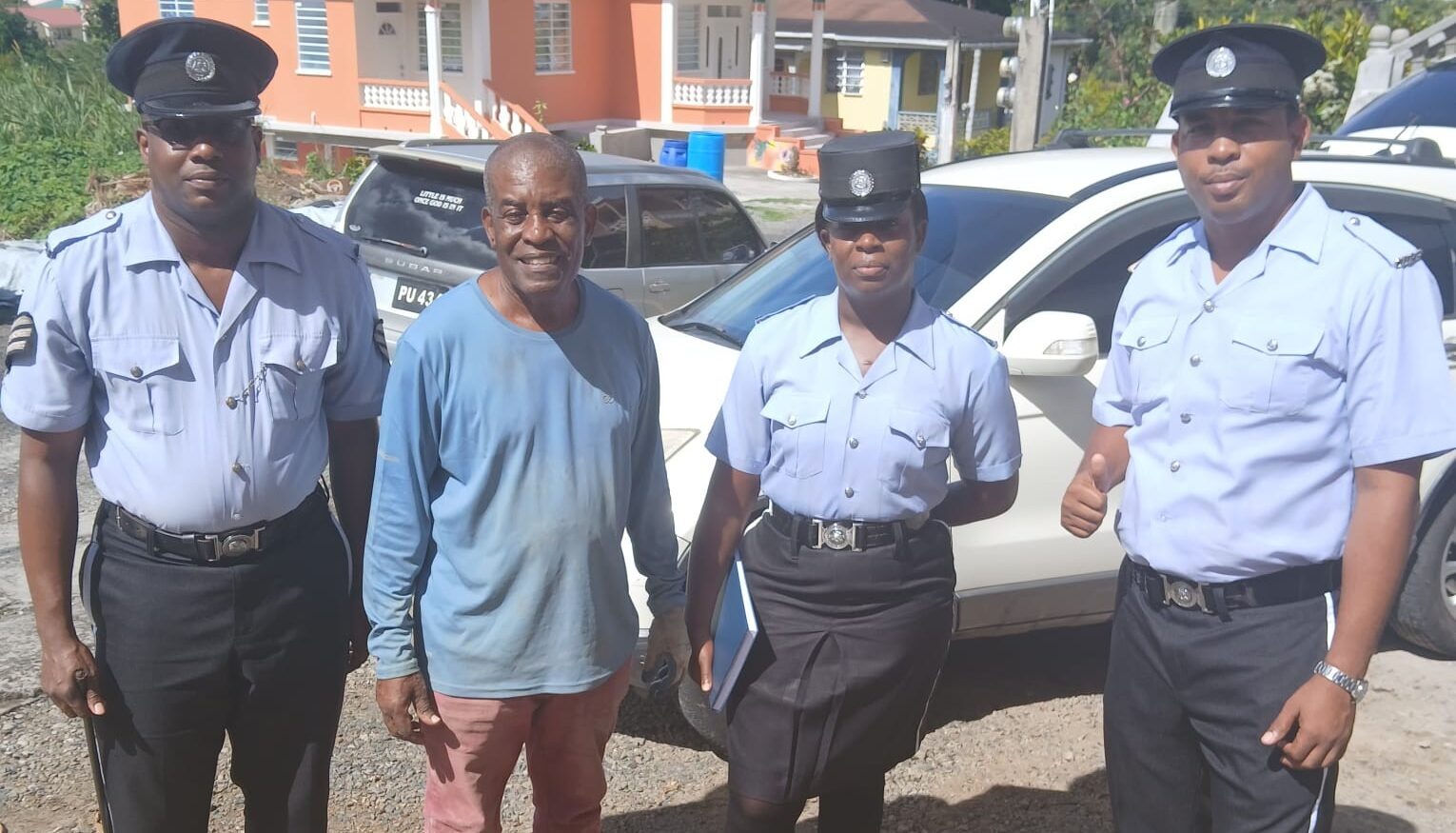
    Authorities in Dominica have launched a renewed offensive against derelict vehicles, targeting neighborhoods in Goodwill and Fond Cole as part of a comprehensive public safety initiative. The joint operation, spearheaded by the Commonwealth of Dominica Police Force (CDPF) and the Dominica Solid Waste Management Corporation (DSWMC), aims to address multiple urban hazards associated with abandoned automobiles.

    Official communications from the CDPF emphasize that this campaign extends beyond mere aesthetic improvement, targeting critical public health and security concerns. These neglected vehicles have been identified as potential havens for criminal activities, breeding grounds for disease-carrying rodents, and unnecessary obstructions in public areas. The initiative represents a proactive measure to mitigate these risks and uphold community standards.

    Law enforcement officials have issued a firm directive to vehicle owners, urging immediate removal of any unlicensed or abandoned automobiles. The appeal underscores the importance of civic responsibility in maintaining communal spaces. “Let us continue working together to keep our communities clean, safe, and orderly,” stated the official release, highlighting that citizen cooperation remains fundamental to the program’s success.

    The current operation builds upon previous cleanup efforts, demonstrating the government’s sustained commitment to urban renewal and crime prevention through environmental design. This systematic approach to removing derelict vehicles reflects broader strategies being implemented across Caribbean nations to enhance quality of life in residential areas.

  • Dominican President Sylvanie Burton joins OECS peers in Morocco at MEDays Forum 2025

    Dominican President Sylvanie Burton joins OECS peers in Morocco at MEDays Forum 2025

    Under the High Patronage of His Majesty King Mohammed VI, Morocco hosted the 17th MEDays Forum from November 26-29, 2025, convening global leaders during a period of significant geopolitical fragmentation. The summit, themed ‘Fractures and Polarization: Reinventing the Global Equation,’ featured substantial participation from the Organization of Eastern Caribbean States (OECS), including Dominica President Sylvanie Burton, Antigua and Barbuda Prime Minister Gaston Browne, and Grenada Prime Minister Dickon Mitchell.

    The Caribbean delegation’s involvement, facilitated through Eastern Caribbean Embassies in Morocco, signaled deepening commitments to African-Caribbean partnerships. President Burton drew upon Dominica’s Kalinago heritage to emphasize indigenous knowledge systems as crucial frameworks for addressing contemporary challenges. She advocated for enhanced mutual respect, cultural understanding, and improved financial accessibility for vulnerable nations.

    Prime Minister Mitchell highlighted the acute realities of climate change and international instability affecting small island developing states, proposing a reimagining of historical Africa-Atlantic-Caribbean trade routes as modern corridors for collaboration and mutual growth. Meanwhile, Prime Minister Browne addressed compounding poly-crises by calling for urgent financial reforms, vulnerability-specific assessment metrics, and substantive inclusion of small states in global decision-making processes.

    Ambassador Ian M. Queeley, OECS Representative in Rabat, expressed satisfaction with the region’s strong representation, noting that high-level participation demonstrates Africa’s recognition as a strategic partner. The forum enabled substantive dialogues with Moroccan officials regarding future cooperation avenues.

    The collective interventions articulated a distinctly Caribbean perspective advocating global solidarity, equity, and institutional responsiveness. As Morocco advances initiatives like the Atlantic Partnership and continental development programs, the MEDays Summit emerges as a critical platform for shaping international strategies that incorporate the voices of vulnerable nations seeking a more inclusive global order.

  • Caribbean Development Bank official highlights link between justice and economic progress at CCJ law event

    Caribbean Development Bank official highlights link between justice and economic progress at CCJ law event

    At the 8th Biennial Law Conference hosted by the Caribbean Court of Justice (CCJ) Academy for Law, Dr. Isaac Solomon, Vice President of Operations at the Caribbean Development Bank (CDB), delivered a powerful address connecting judicial integrity to sustainable development. The event, marking the CCJ’s 20th anniversary under the theme “The CCJ at 20: Reflections on Caribbean Jurisprudence,” served as a platform for Dr. Solomon to articulate the indispensable role of justice in economic advancement.

    Dr. Solomon emphasized the CDB’s decade-long partnership with the CCJ, noting that equitable justice systems form the foundation for inclusive economic growth and poverty reduction. “Justice is the invisible engine that powers economic and social progress,” he declared. “When justice is reliable, investors feel confident. When rights are protected, communities become resilient. When systems are transparent, inequality declines.”

    The address highlighted how robust legal frameworks create conducive environments for investment, build trust in public institutions, and ensure fair treatment for marginalized groups. The CDB’s support has focused on governance improvements and institutional strengthening through multiple initiatives, including previous conferences addressing criminal justice reform and transnational legal cooperation.

    Looking toward the future, Dr. Solomon called for enhanced national justice systems and deeper regional integration. He advocated for “a justice ecosystem that is more deeply integrated, technologically-enabled, people-centered, and capable of supporting the ambitious development agenda of a dynamic Caribbean Community.”

    The conference itself represented a significant milestone, bringing together legal practitioners, policymakers, academics, and development partners to celebrate two decades of Caribbean jurisprudence and strategize on future justice initiatives. Dr. Solomon reaffirmed CDB’s commitment to ensuring legal frameworks adapt to evolving regional needs, ultimately working toward a more just, equitable, and resilient Caribbean.

  • Skerrit congratulates St. Lucia’s Phillip J. Pierre on second consecutive election victory

    Skerrit congratulates St. Lucia’s Phillip J. Pierre on second consecutive election victory

    In a significant display of regional political solidarity, Dominica’s Prime Minister Roosevelt Skerrit has extended heartfelt congratulations to St. Lucia’s Prime Minister-elect Phillip J. Pierre following his party’s decisive electoral victory. The St. Lucia Labour Party secured an overwhelming mandate, capturing 14 of the 17 parliamentary seats in what analysts are calling a remarkable affirmation of public trust.

    The electoral outcome represents a substantial political triumph for Pierre, who has maintained continuous parliamentary representation since 1997. His principal opponent, United Workers Party leader Allen Chastanet, managed to retain only his personal constituency seat, while independent candidates secured the remaining two positions in the legislative assembly.

    Prime Minister Skerrit characterized the victory as “massive” in scale and significance, attributing the success to Pierre’s unwavering commitment to accessible governance. “When leadership remains proximate to the citizens and acknowledges that ultimate authority resides with the populace, they willingly entrust you with their power,” Skerrit observed in his post-election analysis.

    The Dominican leader elaborated on the philosophical underpinnings of effective political leadership, emphasizing that longevity in public service derives not from temporal endurance but from sustained emotional connection with constituents. “The critical factor isn’t material provision or rhetorical eloquence,” Skerrit noted, “but rather the capacity to make citizens feel understood, valued, and represented in their aspirations and challenges.”

    Drawing historical parallels, Skerrit referenced veteran politician Stephenson King’s enduring parliamentary presence since the late 1980s as exemplary of this people-centered approach. The commentary suggests a emerging regional governance model where political success correlates directly with leaders’ demonstrated empathy and relational consistency with their electorate.

    This electoral endorsement, according to Skerrit’s assessment, validates the principle that governmental legitimacy and effectiveness emerge from continuous engagement with citizen needs rather than ideological positioning or policy promises alone. The victory stands as testament to the enduring relevance of empathetic leadership in contemporary Caribbean politics.

  • COMMENTARY: A note on the electoral defeat of Ralph Gonsalves, the decline of the 1970s Caribbean left, and lessons earned across a lifetime

    COMMENTARY: A note on the electoral defeat of Ralph Gonsalves, the decline of the 1970s Caribbean left, and lessons earned across a lifetime

    The recent electoral defeat of Dr. Ralph Gonsalves in St. Vincent & the Grenadines represents far more than the conclusion of a lengthy political career. This watershed moment signifies the ultimate collapse of a progressive tradition that once dominated Caribbean political thought during the 1970s—a movement that inspired generations but ultimately failed to develop into a sustainable, democratic force capable of institution-building.

    The historical context traces back to the Black Power Revolution of 1970, when the Trinidad Regiment mutinied under Geddes Granger’s leadership. This anti-colonial uprising inspired young Sandhurst graduates like Rafiq Shah and Rex LaSalle to challenge established structures. Across Dominica and other islands, educational institutions such as St. Mary’s Academy became hotbeds of revolutionary thinking, with students including the late Dr. Wellsworth Christian embracing calls for Black dignity and regional sovereignty.

    While the socialist ideals of that era provided a necessary antidote to colonial oppression, retrospective analysis reveals critical shortcomings. The movement fundamentally misunderstood democratic principles, undervalued the rule of law, and dismissed the importance of private enterprise in economic development. Ironically, certain colonial-era institutions—independent judiciary systems, competent healthcare frameworks, and professional civil services—proved more effective than their replacements despite their problematic origins.

    The progressive generation that produced leaders like Gonsalves ultimately succumbed to power’s corrupting influence. Rather than building sustainable institutions, they created political machines prioritizing spectacle over substance. The region now faces multiple crises: collapsing scientific innovation, epidemic crime rates, and systemic corruption that has transformed civil services into extensions of political parties.

    This analysis identifies deeper philosophical failures—the abandonment of fundamental values like nonpartisan service and moral integrity that were once taught in Caribbean households. True development requires rebuilding institutional frameworks based on humility, restraint, and genuine public service rather than dynastic ambition and power consolidation.

    The Caribbean’s future stability depends on cultivating sober thinking, disciplined citizenship, and robust institutions that can withstand political turbulence. This necessitates honest historical reckoning and courageous breaks from the intoxication of power that has characterized regional politics for decades.

  • St. Lucia Labour Party on course to secure commanding win in St. Lucia election

    St. Lucia Labour Party on course to secure commanding win in St. Lucia election

    Early election returns from Saint Lucia indicate a substantial victory for the Saint Lucia Labour Party (SLP) under the leadership of Philip J. Pierre. Preliminary constituency declarations reveal the SLP has captured a commanding majority of seats, positioning the party to form the next government.

    With nine constituencies officially confirming SLP victories at the time of reporting, the incumbent United Workers Party (UWP) has managed to secure just a single seat. Independent candidates have emerged as significant factors in this election, with projections suggesting they may claim two additional seats in the House of Assembly.

    Political analysts examining the electoral landscape are projecting a definitive final distribution of seats: 14 for the SLP, one for the UWP, and two for independents. This outcome would provide the Labour Party with a robust parliamentary majority, facilitating their legislative agenda and marking their return to governance.

    While these results remain preliminary pending official certification, the emerging pattern demonstrates a clear electoral mandate for the SLP. The final declarations, expected imminently, will formally establish the political framework for Saint Lucia’s next governing term under Prime Minister-designate Pierre’s administration.