标签: Dominica

多米尼克

  • Antigua and Barbuda launches OECS’ first youth mental health chatline

    Antigua and Barbuda launches OECS’ first youth mental health chatline

    A landmark new mental health support platform tailored for children and young people has officially launched in Antigua and Barbuda, marking a historic first for mental health access across the Organisation of Eastern Caribbean States (OECS). Named the Young Caribbean Minds (YCM) Chatline, this service is the region’s first free, anonymous text-based platform that integrates both mental health support and child protection resources.

    The initiative is the product of a cross-sector collaborative partnership between the Government of Antigua and Barbuda, UNICEF, the University of the West Indies (UWI), the OECS Commission, and the Zenith Centre. Its dual mission is to deliver confidential psychosocial support to young people while creating a clear pathway to connect vulnerable children to formal child protection services when risk is identified.

    The development of both the chatline and Antigua and Barbuda’s upcoming Mental Health Care Bill 2026 was directly informed by the largest youth mental health consultation ever held in the Eastern Caribbean. Over 1,000 children and young people contributed their perspectives through surveys, focus groups, and national dialogues, making this the first documented effort in the Caribbean to center youth input directly in shaping national mental health legislation.

    The consultation’s findings are published in the *Youth Voices: Mental Health Care Bill Survey Report*, which captures feedback from respondents aged 10 to 19. Key results revealed that stigma remains the single largest barrier to youth accessing mental health care: 34.2% of respondents reported fear of judgment stopped them from seeking help. More than half of participants called for stronger safeguarding provisions in the new legislation, while nearly 90% expressed support for the bill’s rights-centered framework. Privacy was ranked the top factor for building trust in mental health services, and text-based online chat was identified as the second most preferred method of accessing support.

    UNICEF confirmed that these insights directly shaped the design of the YCM Chatline. The platform operates through real-time text support delivered by trained UWI volunteers, who work under the continuous supervision of licensed professional psychologists. A core feature of the service is full anonymity: users can access support without sharing any personal identifiable information, while an integrated referral system automatically connects children flagged as at-risk to appropriate child protection authorities.

    At the launch ceremony, Antigua and Barbuda Prime Minister Gaston Browne framed access to mental health care as a fundamental human right, drawing on personal experience to explain his long-standing advocacy for expanded mental health services across the country and the broader Caribbean region.

    “I have been an advocate of mental health care for everyone as a fundamental right,” Browne stated. “I’ve advocated here in Antigua and Barbuda, within the region, the OECS and the United Nations, and I’m very happy to be participating in this programme, which has mental health at its epicentre.”

    Addressing the persistent stigma surrounding mental illness, Browne shared, “Unfortunately, the issue of mental health has been stigmatized globally. The reason why I’m so committed to this issue is personal. Many of you may not be aware that I grew up in a single-parent home with a mentally ill mother… many times there was a crisis that could not be addressed, which made it very difficult for me and my siblings.”

    Maryam Abdu, Acting UNICEF Representative for the Eastern Caribbean Area Office, called the launch a transformative milestone in expanding safe, confidential youth mental health access across the region.

    “Today we reaffirm our commitment to every young person in the Caribbean: your voice matters, your feelings matter, and help is available,” Abdu said. “The Young Caribbean Minds Chatline provides a free, confidential, and accessible space so no child has to struggle alone.”

    Abdu emphasized that the project reflects the Caribbean region’s commitment to centering youth needs in policy and service design: “Our region has shown the courage to listen—now we are responding. By expanding this Chatline across Eastern Caribbean member states and offering bilingual support, we are ensuring that support is truly inclusive and reaches the young people who need it most.”

    She added that the initiative goes far beyond adding a new support service: “Young Caribbean Minds is more than a service—it is a promise. Built with young people’s voices and guided by local partnerships, this initiative strengthens resilience, protects children and gives families and communities the tools to help every child thrive.”

    Dr. Camille Samuel, Registrar at UWI’s Five Islands Campus, highlighted the university’s role in training the chatline’s volunteer support team. “Seeing our Five Islands students step forward as volunteer chat supporters fills me with pride,” she said. “Their year-long training will build a community of empathetic, skilled peers who can change lives.”

    The full public launch follows a successful five-month pilot program that delivered more than 1,000 support sessions, with 88% of pilot users reporting they would use the service again. The initiative has already earned international acclaim: it was recognized as a global best practice at the Global Conference on Child and Adolescent Mental Health in South Africa, and placed as a top three finalist in the UNICEF Global INSPIRE Awards out of more than 300 global submissions.

    The official launch ceremony brought together a broad coalition of stakeholders, including Prime Minister Browne, Minister of Health, Wellness, the Environment and Civil Service Affairs Michael Joseph, Minister of Social Transformation Kiz Johnson, senior government leaders, development partners, civil society representatives, and youth delegates. Representatives from Antigua and Barbuda’s National Student Council and National Youth Parliament Association also addressed the gathering, praising the government’s commitment to expanded mental health services and calling for sustained youth inclusion in future policymaking.

    The YCM Chatline received formal endorsement from OECS Health Ministers during the OECS Health Policy Forum in April 2025, and is being developed as a regional resource for all nine OECS member states. After this initial soft launch in Antigua and Barbuda, volunteer training and platform refinement will continue ahead of a phased rollout across the country and the broader Eastern Caribbean. The expansion of the initiative is set to be a key topic of discussion at the Second OECS Council of Ministers on Youth and Sports, which will be hosted by Antigua and Barbuda on August 12 and 13, 2026.

  • Joann Green’s candidacy in Roseau North by-election in doubt, says UPP leader

    Joann Green’s candidacy in Roseau North by-election in doubt, says UPP leader

    As the Caribbean region awaits an upcoming by-election for the Roseau North Constituency, the United Progressive Party (UPP) remains non-committal on whether community leader Joann Green will stand as the party’s official candidate, according to UPP Political Leader and Attorney Joshua Francis.

    Francis shared that Green has wasted no time building connections with local voters since taking on the role of the constituency’s caretaker for the UPP. Over recent weeks, she has maintained a consistent presence on the ground, holding one-on-one meetings with constituents, attending local neighborhood gatherings, and taking part in a range of community-led initiatives across Roseau North. Her on-the-ground engagement has already laid preliminary groundwork for a potential campaign, but no final approval has been given by party leadership.

    The path to a final decision is tied to a number of moving political variables, Francis emphasized. One of the most critical outstanding pieces of information is the official timeline for the contest: the UPP is still waiting for a formal announcement from the sitting Prime Minister confirming the exact date the by-election will be held. Without this key detail locked in, the party cannot move forward with cementing its candidate plans.

    Beyond the election timeline, Francis also disclosed that the UPP has been holding ongoing strategic discussions with other opposition political parties across the nation. These talks are focused on coordinating opposition strategy for the by-election, and the final outcome of these negotiations will heavily influence whether Green officially appears on the ballot as the UPP’s representative. For now, the party is keeping all options open as it navigates these pre-election political negotiations.

  • Grenada Diaspora Homecoming 2026 kicks off with warm welcome for returning nationals

    Grenada Diaspora Homecoming 2026 kicks off with warm welcome for returning nationals

    Thousands of Grenadians who have built lives across the globe are now heading back to their Caribbean home, kicking off the highly anticipated Grenada Diaspora Homecoming 2026 – a two-week national event designed to celebrate shared identity, foster cross-border collaboration, and drive forward the island nation’s ongoing development. The official opening ceremony took the form of a warm Welcome Reception hosted at the iconic, history-rich Belmont Estate, where Foreign Affairs, Trade and Export Development Minister Joseph Andall personally greeted returning diaspora members and invited stakeholders.

    Unlike a simple family or community reunion, this year’s Homecoming initiative is built on a deliberate, purpose-driven framework that goes far beyond nostalgic celebration. The multi-day agenda weaves together cultural immersion activities, community service projects, targeted investment roundtables, professional networking sessions, and structured opportunities for diaspora contributions to local growth. Held within the sprawling, culturally significant grounds of Belmont Estate, the opening reception brought together a diverse cross-section of attendees: returning Grenadians from every corner of the world, sitting government officials, local community leaders, domestic business partners, and other key stakeholders. The evening was rooted in core themes of reconnection and collective national pride, setting a collaborative tone for the weeks ahead.

    In his opening address to attendees, Minister Andall underlined the critical, long-standing role that overseas Grenadians play in the country’s social and economic progress. “Grenada’s diaspora has never been an afterthought – it has always been a core chapter of our national story,” he told the crowd. “This Homecoming is about extending a warm welcome that is rooted in purpose. It gives us space to deepen the bonds between Grenadians at home and abroad, reinforce shared ties of identity and belonging, and explore how our collective connection can drive meaningful, lasting development across the country.”

    Terrance Forrester, Ambassador for Diaspora Affairs, expanded on the initiative’s long-term goals, noting that the program was intentionally structured to build durable partnerships that deliver sustained benefits to Grenada. “Grenada Diaspora Homecoming is about far more than just coming back to visit,” Forrester explained. “It is about intentional reconnection. Our diaspora represents an incredible, untapped network of talent, global influence, specialized expertise, and untold possibility. When we create intentional spaces for Grenadians at home and abroad to meet, exchange ideas, and experience our country side by side, we unlock new doors for collaboration, foreign direct investment, global advocacy, and long-term national value that will benefit generations.”

    Opening night guests got an early taste of Grenadian hospitality, traditional cultural practices, and the tight-knit community spirit that organizers have centered as a core pillar of the entire Homecoming experience. The opening reception also served as a launchpad for the full lineup of events scheduled across the two-week program, which will be hosted across Grenada and its sister islands of Carriacou and Petite Martinique. Key activities on the agenda include immersive cultural heritage experiences, grassroots community outreach projects, guided island tours highlighting ecological and historical sites, the high-profile Diaspora Forum and Marketplace, the National Spice Replanting Day environmental initiative, and dozens of smaller community-focused events.

    Running from June 21 through July 5, 2026, the initiative is organized around five core pillars: reconnection, national celebration, cross-sector collaboration, business development, and national pride. Event organizers and government officials share the long-term vision of continuing to strengthen people-to-people and institutional ties between local and overseas Grenadians, while unlocking new opportunities for cross-border investment, knowledge sharing, and inclusive, sustainable national growth for the entire country.

  • CDB economists warn Caribbean faces mounting global pressures amid structural vulnerabilities

    CDB economists warn Caribbean faces mounting global pressures amid structural vulnerabilities

    Against a backdrop of rising geopolitical friction, economic volatility, accelerating climate change and rapidly evolving global alliances, the Caribbean region faces a growing web of interconnected threats. But according to leading economists at the Caribbean Development Bank (CDB), the most critical barrier to long-term stability is not new global shocks — it is decades-old structural flaws that have left the bloc uniquely sensitive to outside disruptions.

    This finding served as the core takeaway from a special policy session titled “Shockwaves: How Global Crises Are Hitting the Caribbean,” held as part of CDB’s EDGE X: Analytics Unlocked series during the Bank’s 56th Annual Meeting in Nassau, The Bahamas. The event brought together lead researchers Dr. Oronde Small and Xavier Ajani Malcolm to unpack the cascading impacts of overlapping global crises on Caribbean economies and outline actionable policy strategies to boost regional resilience.

    During the presentation, Malcolm emphasized that Caribbean nations are not confronting one isolated crisis, but a perfect storm of simultaneous challenges originating both at home and abroad. On the external front, the region grapples with climate-fueled natural disasters, protectionist “America-first” trade frameworks, growing fragmentation in global multilateral institutions, the ongoing conflict in Iran, heightened U.S. military engagement in the broader Caribbean and Venezuelan region, and the long-running humanitarian crisis in Cuba.

    These external pressures are amplified by deep-seated domestic weaknesses that have persisted for generations, CDB’s official press release confirms. Key structural vulnerabilities include limited economic diversification across most Caribbean states, extreme reliance on just a handful of export markets, heavy dependence on imported essential goods, chronically low productivity levels, and a large, unregulated informal economic sector that undermines government revenue and policy stability.

    Trade policy uncertainty emerged as another top risk highlighted during the session. Recent shifts in global trade rules, particularly the expansion of U.S. tariffs and persistent ambiguity around future tariff adjustments, threaten to dampen cross-border investment, raise financing costs for regional governments and businesses, and slow intra-regional trade. Economists stressed that tourism-reliant economies, which form the backbone of most Caribbean national incomes, face the greatest exposure to these trade disruptions.

    The region’s heavy dependence on imported food and fossil fuels creates additional volatility, leaving national budgets and consumer prices hostage to unpredictable swings in global commodity markets. This dependency makes it far more difficult for central banks and governments to control inflation and maintain steady economic growth, CDB researchers noted.

    Another worrying trend raised at the meeting is the steady decline in international development assistance. Global net official development assistance dropped by more than 8% in 2024, and multiple Caribbean nations saw deep cuts to U.S. development financing in 2025. This pullback comes at a critical moment, when Caribbean countries need massive capital investment for infrastructure upgrades, development projects and climate adaptation measures. Reduced aid will likely limit access to low-interest concessional financing, putting these critical goals out of reach for many nations.

    Climate change remains the single most pressing long-term threat to the region, Malcolm confirmed. Caribbean small island developing states already experience far higher levels of damage from climate-fueled natural hazards than most other small states globally. Rising sea levels, increasing average temperatures, more intense and frequent hurricanes, and regular climate-related disruptions continue to erode progress on economic growth and sustainable development.

    Malcolm also pointed out that climate shocks do not need to hit the Caribbean directly to impact regional economies. Climate disasters hitting major trading partners and key source markets for tourism can cut visitor arrivals, depress consumer spending in source countries and reduce foreign direct investment, creating indirect but severe economic headwinds for the region.

    Dr. Small added that recent rapid shifts in global geopolitics have added a new layer of uncertainty for a region that has always been heavily dependent on global economic and political conditions.

    “It’s becoming increasingly clear that these are not episodic events. They are structural features of the global space and have potentially significant implications for [the Bank’s] Borrowing Member Countries,” he told session attendees.

    Despite the long list of daunting challenges, both researchers stressed that the Caribbean has clear, actionable pathways to build greater resilience. The core policy recommendations from CDB include expanding economic diversification to broaden both export products and trading partners, accelerating the transition from imported fossil fuels to domestic renewable energy, strengthening national food security, boosting productivity through targeted investment in innovation, upgrading climate adaptation and disaster preparedness infrastructure, improving public financial management to reduce fiscal vulnerability, and deepening cross-border regional cooperation to share resources and reduce individual country risk.

    In their closing remarks, the economists concluded that Caribbean countries with strong, accountable public institutions — particularly robust, transparent fiscal frameworks — will be far better positioned to weather current and future external shocks. Building long-term resilience will require proactive, forward-thinking policy choices and sustained collaborative action across the region, they emphasized, to help Caribbean economies navigate an increasingly uncertain global landscape.

  • Venezuela declares state of emergency after deadly twin earthquakes

    Venezuela declares state of emergency after deadly twin earthquakes

    On a Wednesday evening, Venezuela was struck by an extremely rare and devastating seismic event that has quickly escalated into one of the worst humanitarian crises the South American nation has faced in decades. Two massive earthquakes, registering magnitudes 7.2 and 7.5 respectively, hit just 39 seconds apart near the coastal town of Morón, located roughly 170 kilometers west of the capital Caracas. The U.S. Geological Survey (USGS) has classified the event as an unusual seismic doublet, marking the 7.5-magnitude tremor as the most powerful earthquake to hit Venezuela since 1900. Compounding the destruction, both quakes originated at a shallow depth of just 13 kilometers, which greatly amplified shaking and structural damage across a wide swathe of the country.

    The capital Caracas bore the brunt of the destruction, with dozens of buildings reduced to rubble, including multiple high-rise residential towers in the heavily populated Baruta and Chacao districts. Critical transportation infrastructure was knocked offline: Simón Bolívar International Airport, the country’s main international gateway, was forced to completely suspend operations after suffering what officials described as severe structural damage. All metro and intercity rail services were also immediately halted, and viral social media footage captured terrified passengers running for cover as falling debris crashed through terminal walkways.

    In the wake of the initial quakes, authorities recorded at least 30 aftershocks overnight, leaving communities and first responders on edge over the risk of additional building collapses. As of the latest updates, the confirmed death toll stands at 164, with nearly 1,000 people injured. Acting President Delcy Rodríguez has warned that the casualty count is expected to rise sharply as rescue teams work to reach cut-off and devastated areas, with multiple people still reported trapped under collapsed structures in Altamira district, a neighborhood that hosts multiple foreign embassies.

    Local hospitals across Caracas are already overwhelmed by the influx of injured patients, prompting officials to convert unused school buildings into emergency shelters to house thousands of displaced residents. In a televised address to the nation, Rodríguez extended heartfelt condolences to families who lost loved ones, urging all citizens to evacuate any structurally damaged buildings and remain calm amid ongoing response efforts. Venezuela’s Interior Minister Diosdado Cabello further cautioned that lingering aftershocks could continue to weaken already compromised structures, raising the risk of additional collapses in the coming days.

    Tremors from the quakes were felt as far away as Brazil’s Amazon basin, and regional emergency management officials issued temporary tsunami warnings for Puerto Rico and the U.S. Virgin Islands as a precaution. In the hours following the disaster, offers of urgent humanitarian assistance began pouring in from across the globe. The United States announced it would deploy specialized search and rescue teams, ship critical medical supplies, and provide full logistical support for relief operations. Former U.S. President Donald Trump stated that Washington was “ready, willing and able to help,” while then-Secretary of State Marco Rubio confirmed the deployment of American relief personnel. Spain has committed 54 specialized army rescuers to the effort, and France is preparing to deploy 85 emergency response workers. Pope Francis pledged 100,000 euros in immediate aid, and United Nations officials have called on Venezuelan authorities to maintain open communication channels, emphasizing that timely public access to information is a “life-and-death matter” during ongoing rescue operations.

    With thousands of residents displaced, key national infrastructure destroyed, and rescue operations still in their early stages, Venezuela now confronts one of the gravest humanitarian challenges it has faced in modern history.

  • DLP to launch Roseau North campaign this Sunday with new candidate Ashma McDougall

    DLP to launch Roseau North campaign this Sunday with new candidate Ashma McDougall

    A new chapter of political competition is set to open in Dominica’s Roseau North constituency this weekend, as the ruling Dominica Labour Party prepares to officially launch its by-election campaign at Lindo Park on Sunday, June 28, kicking off at 6:00 PM. The launch event will be headlined by the party’s confirmed candidate Ashma McDougall, and will also be attended by Prime Minister Roosevelt Skerrit alongside multiple high-ranking members of the party.

    Organizing the upcoming launch are co-chairs Hon. Darron Lloyd and Ms. Lynsia Frank, while a packed lineup of speakers has been announced, including senior party figures Hon. Denise Charles of Soufriere, Hon. Melissa Poponne-Skerrit of Roseau Central, Hon. Gretta Roberts of Morne Jaune/Riviere Cyrique, Cuban Ambassador H.E. Ian Douglas, and Hon. Roland Royer of Cottage.

    McDougall’s path to the candidacy came after former Roseau North MP Miriam Blanchard stepped down from her position recently for pressing health reasons, prompting a by-election for the vacant seat. Following Blanchard’s resignation, the Dominica Labour Party formally ratified McDougall as their nominee to contest the upcoming vote.

    A lifelong Dominican with roots in Bath Estate and current residence in Goodwill, McDougall brings a diverse professional background to her political run: she is a trained economist, successful entrepreneur, and experienced educator. Prior to entering electoral politics, she held leadership roles including President of the National Youth Council of Dominica and Executive Director of the Dominica Association of Industry and Commerce. Her platform centers on three core priorities: expanding youth empowerment, supporting small and local business owners through entrepreneurship promotion, and driving inclusive, sustainable economic development across the constituency. A key personal pledge from McDougall is that she will maintain consistent, open communication and active engagement with all constituents even after the by-election concludes, a break from the common practice of limited candidate contact outside of campaign seasons.

    Top party leaders have framed McDougall’s nomination as a deliberate step toward refreshing the party’s ranks and investing in new leadership. Prime Minister Skerrit emphasized that her selection aligns with the Labour Party’s long-standing commitment to bringing capable, forward-looking new voices into governance. Roseau Central MP Melissa Poponne-Skerrit noted McDougall represents a rising generation of Dominican leadership ready to address the evolving needs of constituents. Deputy Party Leader Dr. Irving McIntyre added that her candidacy serves as clear proof of the party’s institutional ability to renew itself from within and nurture emerging political talent.

    The upcoming Roseau North by-election has already emerged as a closely watched political contest, and the Labour Party has confirmed it enters the campaign period with strong grassroots momentum. Sunday’s official launch marks the public start of what is widely expected to be a competitive campaign season across the constituency. Political observers note that McDougall’s candidacy strikes a balance for the Labour Party: it maintains continuity with the party’s governing legacy while ushering in a younger, professionally diverse new leader for the constituency.

    The main opposition United Workers Party has already named its own challenger for the seat: Danny Lugay, a former parliamentary representative for Roseau North, who has received the party’s official endorsement to contest the June by-election.

  • St Lucian student earns medical degree in Morocco, highlighting success of OECS-Morocco scholarship partnership

    St Lucian student earns medical degree in Morocco, highlighting success of OECS-Morocco scholarship partnership

    A young medical scholar from the small Caribbean island of St. Lucia has reached a remarkable academic pinnacle, becoming the latest success story of the decades-long educational collaboration between the Organisation of Eastern Caribbean States (OECS) and the Kingdom of Morocco.

    Camille Andrew successfully passed her rigorous doctoral thesis defense on May 12, 2026, capping off seven years of intensive academic coursework and hands-on clinical training. In a testament to the exceptional quality of her work, the examining jury awarded her an MD degree with the highest possible honors, according to an official press release from the OECS.

    Andrew’s groundbreaking research, centered on a pressing pediatric health challenge, focused on the management of pediatric inflammatory bowel disease (IBD)—a chronic group of conditions that includes Crohn’s disease and ulcerative colitis. Titled *Management of Pediatric Inflammatory Bowel Disease: Experience of the Pediatric Department of Mohammed V Military Training Hospital*, her thesis analyzed real-world diagnostic protocols, evidence-based treatment approaches, and long-term patient outcomes at the leading Moroccan medical facility. A key focus of her work was exploring the expanding role of biotherapies, an innovative class of treatments that have transformed care outcomes and quality of life for children living with these lifelong conditions.

    The path to this milestone began decades earlier, when a childhood experience with healthcare in her home country first ignited Andrew’s passion for medicine. During a visit to Castries’ Victoria Hospital as a young patient, the compassionate, skilled care she received left a lasting impression that shaped her entire career trajectory. “My first experience as a patient was at Victoria Hospital in Saint Lucia. That moment stayed with me and sparked a deep fascination with the care I received, inspiring in me a desire to offer others the same level of compassion and skill that I experienced,” Andrew shared in comments included in the OECS release.

    Moving thousands of miles from her small island home to pursue training in Morocco came with unique, daunting challenges. Andrew had to acclimate to an entirely new cultural context, master coursework in a second language, and navigate the emotional weight of building a life far from her core support network of family and friends. She admitted there were low points marked by self-doubt and homesickness, but those struggles were far outweighed by the transformative gains of the experience. “Coming from a small island, nothing fully prepares you for the reality of starting over in a new country, adjusting to a different culture, studying in a second language, and being so far from home. There were moments of doubt and homesickness, but they were matched by immense personal growth, resilience, and lifelong friendships. It is an experience that has shaped me deeply, both as a person and as a doctor,” Andrew explained.

    Andrew was quick to credit the supporters who helped her cross the finish line, extending gratitude first to her family and friends for their unwavering encouragement through every challenging year of training. She also specifically acknowledged the Government of St. Lucia and the Moroccan Agency for International Cooperation (AMCI) for their financial and logistical support that made her seven-year journey possible.

    Now, as Andrew prepares to launch the next phase of her professional career, her top priority is bringing her specialized skills back to her home community. She says she is eager to contribute to advancing local healthcare outcomes for the people of St. Lucia. “I now look forward to bringing everything I have learned back home to contribute to improving patient care, advancing medical knowledge, and playing my part in strengthening the healthcare system in Saint Lucia,” Andrew said.

    For the OECS, Andrew’s achievement is more than a personal win—it is a powerful example of what regional students can achieve through international educational partnerships, and an inspiration for the next generation of Caribbean scholars pursuing higher learning abroad.

    Morocco has long held to a commitment to expanding educational access for OECS member states, opening new scholarship opportunities each year for students from Antigua and Barbuda, Dominica, Grenada, St. Kitts and Nevis, St. Lucia, and St. Vincent and the Grenadines. These scholarships cover a wide range of academic and professional fields, creating pathways for young people to gain advanced skills and fill critical talent gaps across the Eastern Caribbean region.

    The OECS emphasized that the consistent success of graduates like Andrew proves the enduring value of the bilateral educational partnership, and its key role in driving human capital development across the Caribbean. As more regional students take advantage of these opportunities, the collaboration continues to deliver tangible benefits for both communities and build lasting ties between the OECS and Morocco.

  • Caribbean leaders call for bold action to accelerate renewable energy transition

    Caribbean leaders call for bold action to accelerate renewable energy transition

    Against a backdrop of growing climate vulnerability and urgent demand for long-term economic stability, senior regional officials, private sector leaders, and development partners have issued a unified call for the Caribbean to accelerate its shift to renewable energy, warning that scattered, uncoordinated national efforts will leave the region unable to meet its energy security, climate resilience, and economic growth targets.

    The collective appeal was delivered during the seminar titled *Energy Transition: The Key to a More Resilient Region*, a key side event held alongside the Caribbean Development Bank (CDB)’s 56th Annual Board of Governors Meeting. The gathering brought together a cross-selection of stakeholders from across the Caribbean and global development institutions to map out a collaborative path forward for the region’s energy transformation.

    Per an official CDB press release following the event, attendees reached a consensus that the Caribbean must adopt a coordinated, inclusive regional strategy to unlock its vast untapped renewable energy potential, and deliver a power grid that is cleaner, more affordable, and consistently reliable for all communities. Over the next 12 to 24 months, participants identified three core priorities: combining small-scale national renewable energy projects into larger regional investment portfolios to appeal to major investors; expanding credit guarantees and blended financing mechanisms to draw in much-needed private sector capital; and upgrading electricity infrastructure to build climate-resilient grids that can accommodate growing shares of variable renewable energy generation.

    Discussion also emphasized four additional foundational requirements for success: deeper regional integration across energy systems, strengthened technical capacity within government bodies, regulatory agencies and local utility providers, increased youth participation in energy planning and policy design, and cross-sector partnerships between public and private actors. All of these priorities align closely with CDB’s newly launched 2026-2035 strategic framework, *Transforming the Caribbean for Resilience*, which places energy transition at the core of the bank’s 10-year work plan for its borrowing member countries.

    L. O’Reilly Lewis, CDB’s Director of Projects, outlined the far-reaching economic benefits that a successful energy transition would deliver for the region. “If we get the energy transition right, we can preserve foreign exchange, stabilise energy costs, create green jobs, and give our businesses room to breathe and grow,” Lewis explained. “CDB’s 10-year strategy commits us to supporting this transition: one that is inclusive, affordable, and resilient.”

    A core point of consensus among attendees was that while accessible climate financing exists globally, the region lacks the structured investment frameworks needed to mobilize that capital at scale. Timothy Antoine, Governor of the Eastern Caribbean Central Bank (ECCB), noted that the Caribbean’s primary barrier is not a lack of available liquidity, but a shortage of investment-ready projects that meet global investor standards. “This is not a liquidity issue. It is an issue of investability, and that is where we must focus our attention,” Antoine said. He added that blended financing models, which combine capital from multilateral development banks and commercial financial institutions, are critical to de-risking projects and attracting large-scale investment. “We must design an investment architecture that leverages not only multilateral development banks but also commercial banks,” he noted.

    Regional collaboration was repeatedly highlighted as a non-negotiable component of building long-term energy resilience. Kristin Lang, Green Climate Fund Director for the Latin America and Caribbean region, urged Caribbean nations to move beyond isolated national energy planning and embrace integrated regional systems. “You do need to think about regional energy hubs, cross-border systems, shared planning, coordinated investment, and align system design in the region,” Lang said. “Having isolated systems is not going to create resilience, it’s going to make you more vulnerable to shocks.”

    Toni Pratt, CEO of Bahamas Power and Light Company Limited, shared on-the-ground evidence of the benefits of public-private collaboration, pointing to successful renewable energy expansion across the Bahamas’ Family Islands through cross-sector partnerships. “We found that inviting partnerships for solar implementation, battery energy storage, and microgrids throughout the Family Islands is one of the ways that we don’t have to bear that upfront cost, but we can reduce overall cost to our consumers by reducing our reliance on fossil fuels, which is primarily the highest cost that our consumers bear at this time,” Pratt explained.

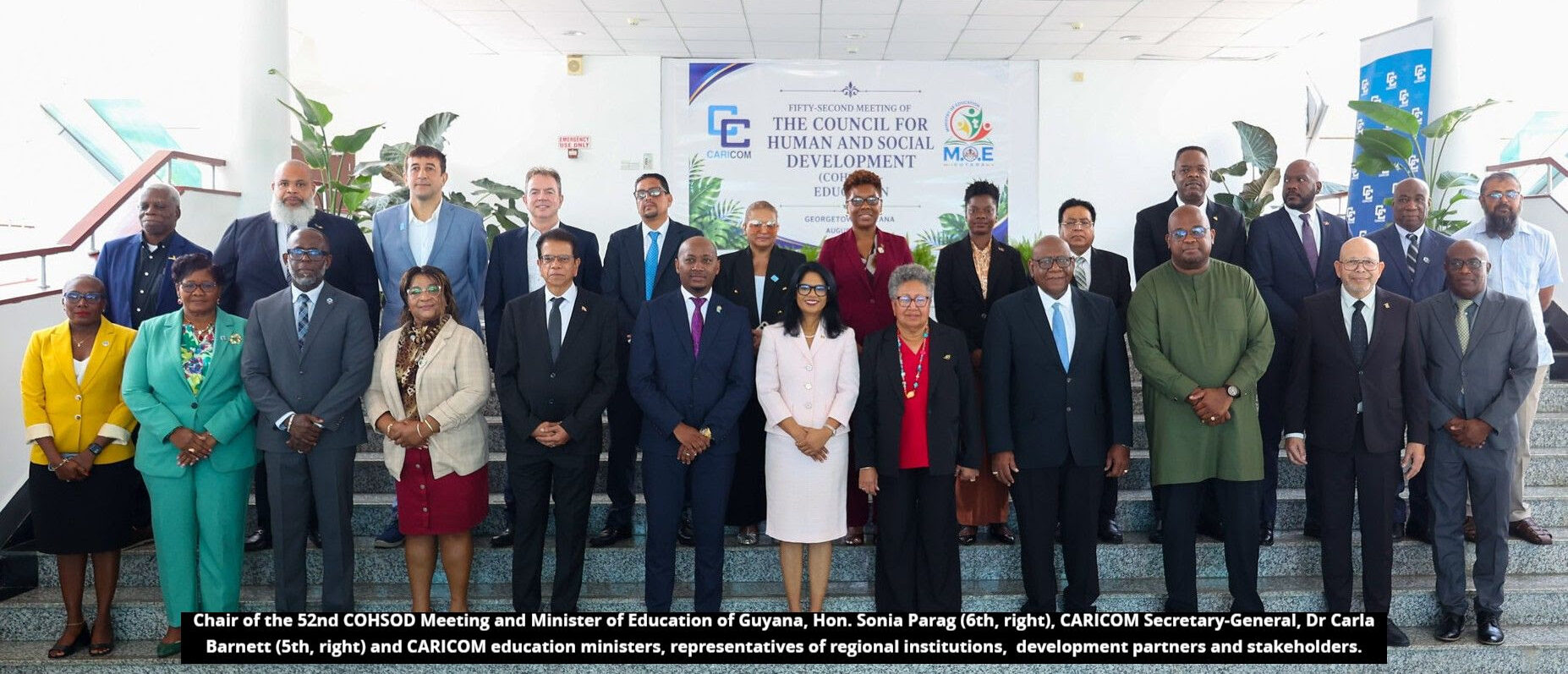
    Dr. Vince Henderson, Dominica’s Minister for Foreign Affairs, International Business, Trade and Energy, emphasized the foundational role of energy security in enabling all other forms of modern development, drawing on his country’s experience developing a 10-megawatt geothermal energy project. “Energy must be part of integrated development plans. It is fundamental to development in the 21st century,” Henderson said. “People are excited about AI and digital transformation, but without reliable power, none of that is possible. If power systems fail, we face serious consequences.”

    Youth engagement also emerged as a central theme of the seminar. Co-moderator Sorayadebie Jhagroe, a Suriname-based climate advocate and member of CDB’s Future Leaders Network, stressed that young people must be active decision-makers, not just passive beneficiaries of the energy transition. “The future is now and we as youth are not merely beneficiaries of the energy transition, but we are an active part of shaping that,” Jhagroe said.

    Dr. Henderson echoed that call, noting that long-lived energy infrastructure investments must be planned with the needs of future generations front of mind. “The key point is that investments must stand the test of time. They must include young people, not as an afterthought but as a central focus. These investments are for the next 25 to 50 years, and young people will drive that future,” he said.

    Closing the seminar, attendees reached broad agreement that the Caribbean’s shift to renewable energy will require four core pillars to succeed: stronger cross-border regional cooperation, innovative de-risked financing solutions, climate-resilient energy infrastructure, and meaningful multi-stakeholder partnerships that bring together governments, global development institutions, private businesses, and local communities. Participants reaffirmed that achieving universal energy security through renewable transition is not only critical to building the region’s climate resilience, but also to unlocking long-term inclusive economic growth and sustainable development across the Caribbean.

  • CARICOM expresses solidarity as deadly Venezuela earthquakes leave more than 160 dead

    CARICOM expresses solidarity as deadly Venezuela earthquakes leave more than 160 dead

    On June 24, 2026, northern Venezuela was hit by an unprecedented seismic disaster: two massive earthquakes, registering magnitudes 7.2 and 7.5, struck the region within seconds of one another, leaving a trail of death and widespread destruction across the country’s northern corridor. As of the latest official updates from acting Venezuelan President Delcy Rodríguez, the disaster has claimed at least 164 lives and left 971 people injured, with rescue teams still racing against time to pull survivors from the rubble of collapsed buildings, prompting warnings that the final death toll may climb as search operations progress.

    According to U.S. public media outlet NPR, the second 7.5-magnitude tremor is the most powerful earthquake to hit Venezuela since 1900, marking a historic seismic event for the South American nation. The worst damage has been concentrated in areas close to the capital Caracas and the coastal state of La Guaira, where dozens of structures crumbled during the quakes. Emergency response teams have worked nonstop around the clock since the disaster struck, combing through destroyed neighborhoods and damaged infrastructure to locate missing people and deliver life-saving aid to affected communities.

    In the wake of the tragedy, the Caribbean Community (CARICOM), the regional integration bloc representing Caribbean nations, has issued an official statement extending its deepest condolences to the Venezuelan people and affirming regional solidarity amid the crisis. “The Caribbean Community (CARICOM) expresses deep condolences over the tragic loss of life, the growing number of injuries, and the extensive damage to infrastructure and homes as a result of the devastating earthquakes that struck Venezuela on Wednesday, 24 June 2026,” the statement reads.

    Recognizing the profound grief that has gripped the country following the disaster, CARICOM reaffirmed its commitment to standing with Venezuela during this period of trial. “We stand in solidarity with the people of Venezuela during this time of immense grief and offer prayers for a swift recovery to the injured and displaced,” the bloc said.

    The regional body also paid tribute to the tireless work of those on the front lines of the response effort, commending first responders, emergency personnel and civilian volunteers who have been working under harsh, dangerous conditions to execute rescue missions and deliver critical support to impacted populations.

    As Venezuela prepares to enter the long, difficult process of rebuilding shattered communities and infrastructure, CARICOM closed its statement by expressing confidence in the Venezuelan people’s ability to recover, wishing them strength and resilience through the coming months of recovery and reconstruction.

  • St. Eustatius reimagines Emancipation Day with focus on history, education and community dialogue

    St. Eustatius reimagines Emancipation Day with focus on history, education and community dialogue

    For decades, Emancipation Day, locally known as July Day, on the Caribbean island of St. Eustatius has followed a traditional celebratory framework. This year, however, a coalition of local cultural and historical organizations is reinventing the annual commemoration, shifting priorities from surface-level festivities to deep community engagement, critical historical education, and intentional collective reflection on the island’s fraught legacy of chattel slavery.

    For the first time in the island’s history, this year’s July 1 activities are being led by the St. Eustatius African Burial Ground Alliance, in partnership with multiple local non-governmental organizations. The new steering group has designed the full schedule of events to upend long-standing dominant narratives about emancipation, pushing attendees to develop a more nuanced understanding of the generations of struggle that forged freedom for enslaved people on the island. At the core of the initiative is a goal to build sustainable, community-centered learning opportunities and leave behind permanent educational resources that centering local ancestral history for future generations.

    A key ideological shift framing this year’s observance is a rejection of the common myth that emancipation was simply granted to enslaved people by Dutch colonial powers on July 1, 1863. Instead, organizers are centering the active resistance, repeated uprisings, and unyielding determination of generations of enslaved Africans and their descendants as the true driving force behind the end of chattel slavery on the island.

    The full day of programming will kick off with a spiritual procession across the island, a quiet tribute to the ancestors who were enslaved and died on St. Eustatius. After the opening procession, a full slate of afternoon and evening educational and cultural events will unfold across the island. The centerpiece of the educational programming will be presentations from two prominent Caribbean scholars: Guyana-born Afrikologist Professor Kimani Nehusi, based in Philadelphia, and Dr. Artwell Cain, a cultural anthropologist from St. Vincent and the Grenadines who resides in Aruba. The pair will tackle critical topics including the enduring historical and cultural connections between the Caribbean and West Africa, and the urgent importance of preserving and honoring collective cultural memory of slavery. Dr. Cain will also celebrate the official launch of his latest book, *St. Eustatius: Restoring Our Ties. The Voices of Statians Making A Difference*, scheduled for June 30, just ahead of the main Emancipation Day events.

    Additional featured contributors to the day’s programming include acclaimed St. Maarten storyteller Papa Umpo (born Garfield Young), and Derrick Simmons, an Island Council member, anthropologist, and Alliance steering member who will lead a discussion on the underrecognized role of music as a tool of resistance for enslaved ancestors on St. Eustatius. The evening will close with a community cultural showcase directed by Taro Merkman of the Statia Roots Festival, featuring live performances from local favorites including the Statia String Band, Rebel Band HD, Encore Band, Statia Roots Band, spoken word artists, DJ Sense, and multiple local dance collectives: the Aloei Dancers, Inspired Dancers, and Perlies Dancegroup.

    This year’s reimagined observance is also deeply tied to a long-planced landmark cultural event: the upcoming reburial of 69 sets of ancestral African remains, excavated by an international archaeological team from the Golden Rock burial ground in 2021. The formal reburial ceremony is scheduled for November 13, 2026, and organizers are using Emancipation Day to update the community on plans for the historic occasion. As part of the morning’s activities, attendees will visit three key African burial sites across the island: Godet, Congo, and Golden Rock. During the visit, Xiomara Balentina, chairperson of the Statia Cultural Heritage and Implementation Committee (SCHIC), will walk attendees through the finalized logistics and community input process for the upcoming reburial.

    Kenneth Cuvalay, president of the St. Eustatius African Burial Ground Alliance and moderator for this year’s Emancipation Day program, shared that additional community-focused events with Professor Nehusi and Dr. Cain will be held in the weeks before and after July 1 to extend the educational reach of the initiative. Two educators from the Broos Institute, an Afrocentric academic organization focused on Black Caribbean history, will also travel to the island to support the educational programming.

    “Our shared history remains incomplete and distorted, and we want to center what the community actually wants to learn about their own ancestry,” Cuvalay explained in a press statement. “Our goal is to turn this year’s July Day conversations into long-lasting educational resources that belong to the people of St. Eustatius.” Cuvalay added that he encourages all island residents to participate actively in on-site discussions during the observance, or share their perspectives with organizers via phone, email, or social media if they cannot attend in person.

    The 2026 reimagined Emancipation Day programming is funded through partnerships with the St. Eustatius Government and the Slavery Memorial Committee. Organizers have confirmed that all future updates to the event schedule will be posted to the Alliance’s official website and social media channels for public access.