标签: Dominica

多米尼克

  • FCCA Christmas Gift Project for underserved children continues in Dominica

    FCCA Christmas Gift Project for underserved children continues in Dominica

    For over twenty years, the island nation of Dominica has maintained its cherished participation in the Florida Caribbean Cruise Association’s annual Christmas Gift Project, a humanitarian initiative that delivers holiday cheer to underprivileged children throughout the Caribbean region. According to an official release from the Discover Dominica Authority, this longstanding partnership exemplifies the island’s enduring dedication to community welfare.

    The philanthropic program specifically targets children residing in foster homes and care facilities who might otherwise experience the holiday season without receiving gifts. This year’s edition will see the MV Celebrity Ascent cruise ship arriving on December 8, 2025, carrying donations destined for two hundred Dominican children. Crew members from the vessel will collaborate with representatives from Dominica’s Ministry of Tourism, the Discover Dominica Authority, and the West Dominica Children’s Federation to facilitate the special gift distribution ceremony.

    Discover Dominica Authority CEO Marva Williams emphasized the profound impact of the initiative, stating: ‘The FCCA Christmas Gift Project continues to make a real difference in the lives of our children. Every year, it reminds us of the power of kindness and partnership. We are grateful to the FCCA and the crew of the Celebrity Ascent for bringing smiles to our young ones and helping to make the season a little brighter for families across Dominica.’

    The Discover Dominica Authority reaffirmed its ongoing coordination with the FCCA to ensure the project’s seamless execution and to create meaningful experiences for participating children. Both the Ministry of Tourism and the Discover Dominica Authority expressed profound gratitude for the FCCA’s sustained generosity and commitment to improving the lives of Caribbean youth. Dominica has further pledged its continued support for this program and future initiatives that promote community wellbeing and enhance quality of life across the nation.

  • COMMENTARY: Amazing historical find  (with documents) – correspondence between British governor Hesketh Bell and Andrew Carnegie that birthed the Roseau Public Library

    COMMENTARY: Amazing historical find (with documents) – correspondence between British governor Hesketh Bell and Andrew Carnegie that birthed the Roseau Public Library

    In an extraordinary historical discovery, correspondence between British Governor Sir Hesketh Bell and philanthropist Andrew Carnegie has revealed the origins of one of Dominica’s most transformative institutions—the Roseau Public Library. This early 20th century exchange, occurring during Carnegie’s global library-building campaign, resulted in one of the few Caribbean libraries funded by the steel magnate turned philanthropist.

    The library, originally named the Roseau Free Library, emerged as an architectural gem—a wooden Caribbean bungalow perched above the Caribbean Sea with wide verandas and jalousie windows designed to capture cooling breezes. But beyond its physical beauty, it became an intellectual sanctuary that would fundamentally shape Dominican society.

    During the 1950s-70s, the library served as an unparalleled gateway to global knowledge for Dominican youth. Its collections surpassed school libraries with encyclopedias, international literature, and periodicals like The Economist, Newsweek, and Time. This access cultivated critical thinking and intellectual independence during Dominica’s transition from colonial rule to self-governance.

    The library’s most profound impact manifested through two particular visitors: Gabriel J. Christian and Irving W. André, who met in the research room around 1975. Both came from households filled with books and intellectual discussion—Christian’s father, a British Army veteran, maintained collections on Churchill and world affairs, while André’s father, a customs officer, returned from Curaçao with extensive libraries and jazz collections.

    Their meeting sparked a friendship forged through shared Saturdays spent pursuing knowledge beyond the colonial curriculum. They studied African liberation movements, Caribbean history, and Marxist theory, using the library as their “university before university.” This intellectual partnership eventually evolved into Pont Casse Press, established in 1992, which has since published 44 books documenting Dominican history and culture.

    The library’s current state tells a different story. Hurricane Maria’s devastation in 2017 left the institution in ruins, prompting calls for national mobilization. Authors Christian and André are leading efforts to form a bipartisan steering committee to rebuild the library, emphasizing that this must be a non-partisan national cause supported by Dominicans at home and throughout the diaspora.

    Organizations like Rebuild Dominica Inc. have already demonstrated commitment through recent donations of $5,000 worth of books to Dominica State College. The reconstruction effort represents not just physical rebuilding but the reclamation of a vital space for future generations and honoring the legacy of Bell and Carnegie’s visionary investment in Dominican intellectual development.

    The Roseau Public Library’s enduring legacy continues through every Dominican it educated and through the published works of Pont Casse Press that now contribute to the global archive of human knowledge. It stands as testament to how philanthropic vision and local advocacy can permanently shape a nation’s intellectual destiny.

  • Business Training Center introduces BTC Trade school

    Business Training Center introduces BTC Trade school

    In a significant development for workforce development, Business Training Center Inc. (BTC) has partnered with UK-based Training Express to establish BTC Trade School, a vocational training initiative targeting Dominican youth. This program aims to address the critical shortage of skilled tradespeople across the island nation through comprehensive technical education programs.

    The newly launched institution will offer both online evening classes and in-person sessions that emphasize practical, on-the-job training. The curriculum spans multiple high-demand sectors including construction trades (plumbing, electrical work, welding, land surveying), mechanical trades (HVAC, automotive repair, solar energy systems), healthcare (nursing, phlebotomy, medical administration), and financial security (anti-money laundering, compliance).

    Lucia Stedman, Director of BTC, highlighted the program’s national significance: “Dominica’s development depends on having a skilled workforce. Too many of our young people leave school without marketable skills. BTC Trade School changes that by creating pathways to employment and entrepreneurship within Dominica.”

    The program’s credibility is enhanced through its partnership with Training Express, which provides internationally recognized course content and certification. BTC holds accreditation from the International Association for Quality Assurance in Pre-Tertiary and Higher Education (QAHE) and operates as an authorized Pearson VUE testing center.

    BTC demonstrates a proven track record through previous initiatives like the Canadian Government-funded Local Engagement Action Fund (LEAF) project, which successfully trained over 100 young Dominicans aged 18-30.

    With classes commencing January 5, 2026, prospective students can explore course offerings at btcdominica.com/trade-school-courses/.

  • GWP-C Regional Coordinator attends CariCOF and EWISACTs gatherings to promote improved early warning systems, strengthen climate resilience across the Caribbean.

    GWP-C Regional Coordinator attends CariCOF and EWISACTs gatherings to promote improved early warning systems, strengthen climate resilience across the Caribbean.

    BASSETERRE, St. Kitts and Nevis – The Caribbean region marked a significant advancement in climate resilience planning during the recent 2025-2026 Dry Season Caribbean Climate Outlook Forum (CariCOF) and the 13th Meeting of the Consortium of Regional Sectoral Early Warning Information Systems Across Climate Timescales (EWISACTs). Held from November 23-26, the gathering brought together climate experts and regional stakeholders to strengthen collaborative efforts against climate vulnerabilities.

    Dr. Roxanne Graham-Victor, Regional Coordinator for the Global Water Partnership-Caribbean (GWP-C), participated as an observer, highlighting the organization’s commitment to integrated water management within climate adaptation strategies. Although not an official EWISACTs member, GWP-C’s involvement signifies growing regional coordination between water security and climate resilience initiatives.

    The forum celebrated a decade of regional cooperation through the EWISACTs Consortium, demonstrating the Caribbean’s sustained commitment to climate-informed governance. Key agenda items included evaluating progress on the Regional Plan of Action (June-November 2025), reviewing achievements from Performance Period 2 (2023-2025), and developing strategies for Performance Period 3 (2026-2028). Participants also explored how the Intra-ACP ClimSA Programme, funded by the European Union, could enhance 2025-2026 activities across beneficiary regions including Barbados, Eastern Caribbean States, OECS, CARICOM, and CARIFORUM.

    Technical sessions revealed substantial progress in several critical areas: climate data management, quality assurance of climate information, system strengthening for climate services, stakeholder engagement, and capacity building. A particularly significant development was the enhancement of the Caribbean Climate Impacts Database (CCID), which now provides comprehensive documentation of climate events including floods, droughts, heatwaves, and storms. This evidence-based platform has become indispensable for regional risk assessments and strategic planning.

    Dr. Graham-Victor characterized the forum as both technically insightful and strategically valuable, noting that it provided exceptional opportunities for networking and identifying potential partnerships with stakeholders across climate, disaster risk management, and development sectors. Her observations underscore the Caribbean’s progressive approach to building climate resilience through multidisciplinary collaboration and knowledge sharing.

  • PM Skerrit joins PM-elect Phillip J. Pierre in St Lucia for swearing in ceremony

    PM Skerrit joins PM-elect Phillip J. Pierre in St Lucia for swearing in ceremony

    In a significant display of Caribbean diplomatic solidarity, Prime Minister Roosevelt Skerrit of Dominica arrived in Saint Lucia on Friday to attend the swearing-in ceremony of Prime Minister Phillip J. Pierre. The event marks Pierre’s formal assumption of office as the nation’s ninth individual and twelfth Prime Minister.

    The newly appointed leader publicly welcomed his counterpart through a Facebook post, describing Skerrit as his “dear friend and comrade.” Pierre emphasized that the Dominican leader’s presence symbolizes the profound friendship between their neighboring nations and reflects their mutual dedication to prioritizing citizen welfare throughout the Caribbean region.

    “Together, we continue to move forward, for the progress of our people,” Pierre declared, underscoring their shared governance philosophy. The ceremony represents more than a constitutional formality—it signifies the strengthening of inter-island partnerships within the Eastern Caribbean at a leadership level.

    The event was broadcast live, allowing citizens from both nations to witness this demonstration of regional cooperation. This political gesture occurs amid ongoing efforts to enhance collaborative initiatives across the Caribbean Community (CARICOM), particularly in addressing shared challenges related to economic development, climate resilience, and social advancement.

    Such high-level attendance at ministerial inaugurations has become increasingly common among Caribbean leaders, reinforcing diplomatic bonds and creating opportunities for immediate bilateral discussions on pressing regional matters.

  • Allen Chastanet resigns as UWP leader after crushing election defeat

    Allen Chastanet resigns as UWP leader after crushing election defeat

    In a significant political development, United Workers Party (UWP) leader Allen Chastanet has officially resigned from his position following the party’s catastrophic performance in Saint Lucia’s December 1 General Election. The UWP suffered its most devastating electoral defeat in decades, securing only one parliamentary seat—Chastanet’s own constituency of Micoud South.

    The ruling Saint Lucia Labour Party (SLP) achieved a commanding victory by capturing 14 seats, while independent candidates claimed the remaining two positions. These independent representatives have subsequently pledged their allegiance to the governing coalition, effectively leaving the UWP as the sole opposition voice in parliament.

    Party Chairman Therold Prudent formally notified UWP members of Chastanet’s resignation during a strategic meeting on December 5. According to an official press release, Prudent confirmed receipt of Chastanet’s resignation letter, which will be formally presented to the National Executive during their mid-December meeting for official consideration.

    The party’s statement emphasized its ongoing commitment to “transparency, democratic processes, and the continued advancement of its mission in service to the people of Saint Lucia.”

    Political analysts have identified Chastanet’s leadership as a primary factor in the party’s poor electoral showing. This defeat represents the second consecutive landslide loss under his guidance, mirroring the substantial defeat experienced during the 2021 general elections.

    Chastanet’s departure triggers an imminent leadership contest within the UWP as the party attempts to rebuild its political infrastructure and redefine its role within Saint Lucia’s evolving political landscape. This transition occurs amid growing questions about the party’s future direction and electoral viability.

  • Guyana ,along with IICA, creates Situation Room to oversee country’s agricultural sector

    Guyana ,along with IICA, creates Situation Room to oversee country’s agricultural sector

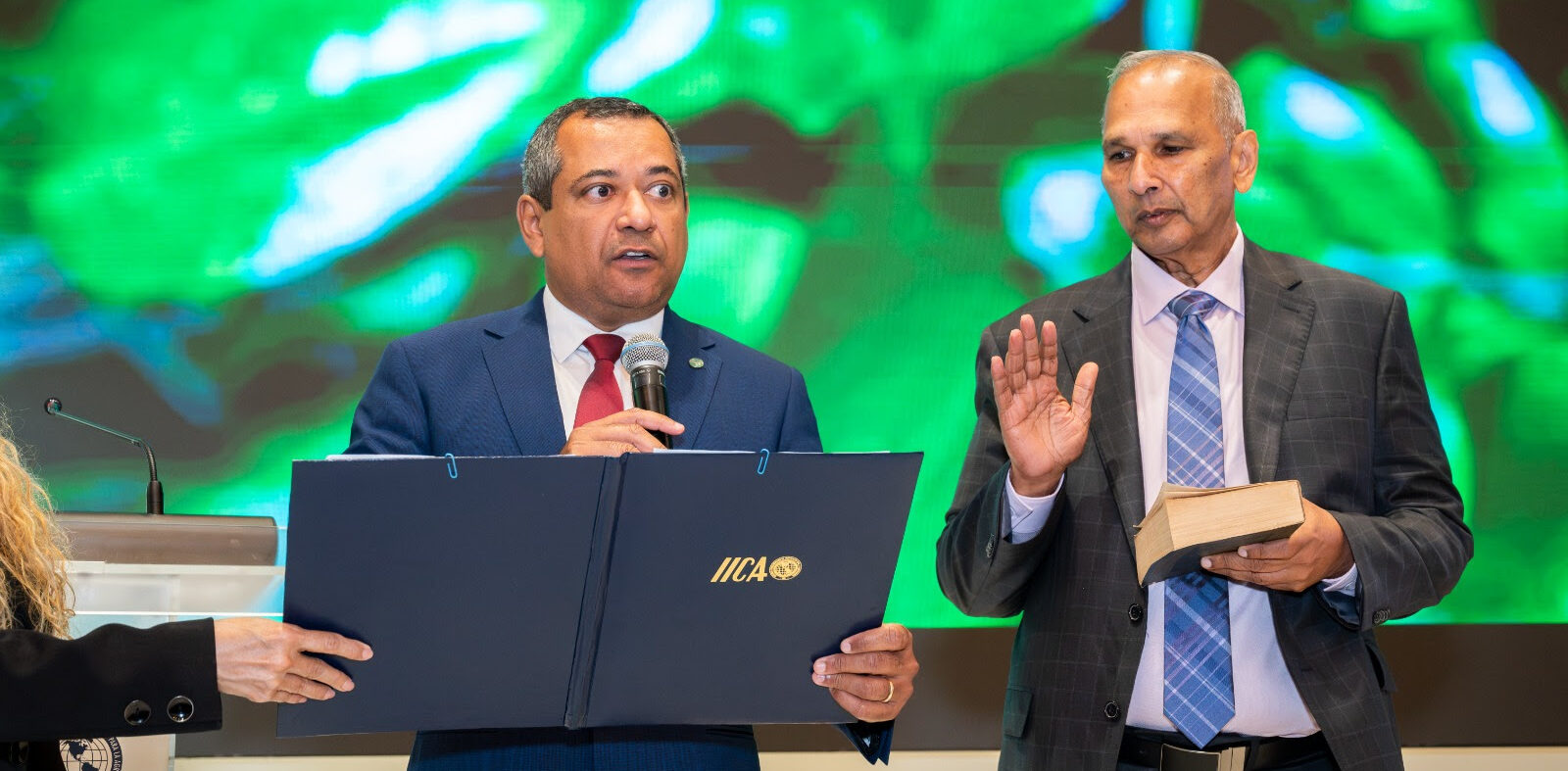
    Guyana is advancing toward establishing a cutting-edge agricultural Situation Room in collaboration with the Inter-American Institute for Cooperation on Agriculture (IICA), marking a significant leap in climate-resilient farming technology. This strategic initiative aims to revolutionize real-time data collection, predictive analytics, and rapid response mechanisms for extreme weather events threatening the nation’s food security.

    During a recent site inspection, Guyana’s Minister of Agriculture Zulfikar Mustapha and technical teams from both the ministry and IICA assessed the project’s development progress. The facility represents a cornerstone in Guyana’s agricultural modernization agenda, leveraging its extensive fertile lands and tropical climate to potentially transform the nation into the Caribbean’s primary food basket—a region currently dependent on imported food supplies.

    IICA advocates that sustainable agricultural development requires substantial investments from public and private sectors, integration of scientific innovations, and comprehensive farmer training programs. The Situation Room will serve as a centralized hub aggregating critical data on weather patterns, crop yields, flood and drought risks, and pest outbreaks, enabling proactive threat management through smart monitoring tools and evidence-based decision making.

    Minister Mustapha emphasized IICA’s crucial role in supporting Guyana’s transition to technology-driven agriculture, noting that the new facility will significantly enhance the ministry’s capacity to safeguard food production and support farmers nationwide. Project officials reaffirmed their commitment to accelerating completion while ensuring infrastructure and technical systems meet international standards.

  • Chief Electoral Officer announces mobile voter confirmation for home-bound individuals

    Chief Electoral Officer announces mobile voter confirmation for home-bound individuals

    In a significant move to enhance electoral inclusivity, the national Electoral Office has unveiled a pioneering mobile confirmation service designed specifically for citizens unable to visit designated confirmation centers. This initiative directly addresses accessibility challenges faced by homebound individuals, including those constrained by illness, physical disabilities, or other mobility-limiting conditions.

    Chief Elections Officer Ms. Anthea Joseph has issued a public appeal, encouraging community members to identify and refer individuals requiring this specialized service. The Electoral Office has established protocols to coordinate and schedule mobile visits efficiently, ensuring no eligible voter is disenfranchised due to physical limitations.

    Prospective recipients of the mobile service must prepare two critical components for their scheduled appointment: a valid government-issued identification document (passport, social security card, or driver’s license) and readiness to have their photograph taken. This photographic requirement is mandatory for the production and issuance of official Voter ID cards.

    Ms. Joseph underscored the importance of possessing current identification and cooperating with the photographic process to facilitate a seamless and efficient confirmation experience. This service represents a substantial advancement in making fundamental democratic processes accessible to all citizen segments, particularly those traditionally facing participation barriers.

  • PRESS RELEASE: Abbigale Loncke-Watson, an entrepreneur who connects rural life, energy and local development in Guyana, is recognized by IICA as a Leader of Rurality of the Americas

    PRESS RELEASE: Abbigale Loncke-Watson, an entrepreneur who connects rural life, energy and local development in Guyana, is recognized by IICA as a Leader of Rurality of the Americas

    Abbigale Loncke-Watson embodies a transformative force in Caribbean entrepreneurship, seamlessly merging community development with business innovation. The Guyanese visionary, recently honored as a Leader of Rurality of the Americas by the Inter-American Institute for Cooperation on Agriculture (IICA), has dedicated her career to advancing economic independence for rural women while pioneering inclusive growth models.

    Her journey began in Guyana’s Essequibo region, where childhood experiences in agricultural communities instilled core values of solidarity, resourcefulness, and collective problem-solving. These formative years directly inspired her first entrepreneurial venture—a home-care agency created to address her grandfather’s healthcare needs that evolved into a platform for local women with nursing skills.

    This initial project catalyzed the 2017 establishment of WeLead Caribbean, an organization providing comprehensive training, network access, and economic autonomy programs for Guyanese women. Through tailored courses in business management, digital literacy, and marketing—accommodating family responsibilities with childcare and flexible scheduling—WeLead has empowered entrepreneurs across regions from Essequibo to Berbice. The pandemic prompted innovative adaptations, with social media becoming a vital tool for product promotion and direct sales when traditional channels collapsed.

    Concurrently, Loncke-Watson leads Loncke Group (including MBW Energy Support Services) and co-founded Sispro Inc., which recently secured two oil blocks in Guyana’s government bidding process. As a female CEO in the male-dominated energy sector, she champions gender inclusion through Women in Energy Guyana, advocating for rural communities’ participation in the country’s energy boom.

    Her leadership philosophy emphasizes intentional risk-taking and holistic development: ‘Energy wealth must translate into community well-being through local training, environmental respect, and job creation.’ Future initiatives include business-simulation programs, the Women Empowerment Conference, and cross-sector partnerships to expand opportunities in energy and technology—ensuring rural women actively shape Guyana’s economic transformation.

  • Regional Humanitarian Warehouse to aid disaster recovery launches in Guadeloupe

    Regional Humanitarian Warehouse to aid disaster recovery launches in Guadeloupe

    Caribbean nations, increasingly vulnerable to intensified and frequent severe weather events, have gained a powerful new asset in regional disaster management with the December 4, 2025 inauguration of the Regional Humanitarian Warehouse in Les Abeys, Guadeloupe. This strategic facility represents a transformative step in strengthening collective resilience across the archipelago.

    The inauguration ceremony gathered distinguished figures including Dr. Caroline Cross, President of the French Red Cross, alongside French officials and presidents of Caribbean Red Cross societies from Antigua and Barbuda and St Kitts and Nevis, signaling broad regional endorsement.

    Financed predominantly by the European Union, which contributed €2.4 million (covering 82% of total investment) through its Interreg Caribbean programme under the Ready Together Extension initiative, the warehouse underscores the EU’s sustained commitment to supporting Caribbean and outermost regions.

    Construction initiated in 2023 addresses a critical gap in disaster preparedness. The facility quadruples the French Red Cross’s storage capacity, enabling housing of up to 4,000 household kits. Beyond storage, it incorporates a crisis coordination center and modular training spaces designed to enhance operational readiness through simulated emergencies and skill development.

    Engineered to endure major hurricanes and seismic events, the warehouse integrates advanced sustainable technologies including bioclimatic architecture, photovoltaic energy generation, and rainwater harvesting systems. These eco-conscious features align with the European Green Deal while promoting climate-resilient infrastructure development.

    As a logistical nexus, the hub will facilitate rapid, efficient, and lower-emission distribution of humanitarian aid across Caribbean territories and EU outermost regions, significantly improving response times during crises. The project also aims to cultivate a new generation of disaster management professionals versed in sustainable practices.

    This initiative synergizes with broader EU frameworks including the Cohesion Policy, Strategy for the Outermost Regions, the EU Civil Protection Mechanism, and climate adaptation priorities, forming a cohesive approach to building regional resilience against climate-related hazards.