标签: Dominica

多米尼克

  • Sports minister says WIndsor Park lighting project back on track after ‘unavoidable’ delays

    Sports minister says WIndsor Park lighting project back on track after ‘unavoidable’ delays

    The Windsor Park Sports Stadium illumination initiative is progressing decisively after overcoming logistical setbacks, according to Senator Oscar George, Minister of State for Culture, Youth, Sports and Community Development. The $13.8 million development, funded through the Dominica Lotteries Commission, encountered unforeseen delays in the delivery of specialized lighting components from international suppliers.

    Senator George provided a detailed technical update, confirming that the concrete foundations for the towering light structures have been successfully poured. These foundations require an additional fourteen-day curing period to achieve the necessary structural integrity to support the 150-foot towers. The lighting components have now successfully arrived from manufacturing facilities in India and await assembly.

    ‘The various structural elements have been delivered to Dominica,’ Senator George stated. ‘Specialized technicians will now commence the process of connecting and welding these components into complete units during the concrete curing phase.’

    Following the structural assembly, crews will initiate the comprehensive electrical installation phase. This critical stage involves routing armored underground cabling, establishing connections between control rooms and foundation points, and finally integrating the wiring through each tower to the lighting fixtures themselves.

    A significant aspect of the project involves knowledge transfer and capacity building. The government has implemented a strategic workforce development plan to engage numerous young Dominicans in the installation process. These participants will receive hands-on technical training in specialized electrical and structural installation techniques.

    ‘Our intention is to identify and retain the most skilled individuals from this training cohort for permanent roles upon project completion,’ Senator George explained. ‘This approach ensures we develop sustainable local expertise to maintain the stadium’s advanced lighting infrastructure for decades to come.’

    The project represents a major enhancement to Dominica’s sports infrastructure and is expected to enable extended training hours and potential nighttime competitions upon its completion.
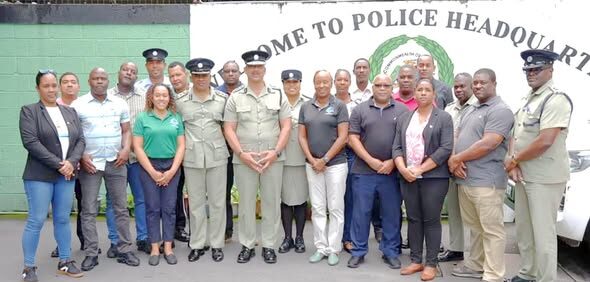

  • CARICOM IMPACS program equips local law enforcement officers to develop digital training material

    CARICOM IMPACS program equips local law enforcement officers to develop digital training material

    In a significant capacity-building initiative, eighteen specialized officers from Dominica’s law enforcement sectors have successfully concluded an intensive training program on digital content creation for security education. The week-long workshop, conducted from January 19-23, 2026, was administered by the Caribbean Community Implementation Agency for Crime and Security (CARICOM IMPACS) with strategic partnership from the U.S. Department of State’s Bureau of International Narcotics and Law Enforcement Affairs (INL).

    The comprehensive curriculum equipped personnel from the Commonwealth of Dominica Police Force, Immigration Department, and Customs Division with advanced technical skills to develop sophisticated digital training materials. This initiative represents a crucial advancement in establishing standardized, sustainable, and modernized learning frameworks for security agencies throughout the Caribbean region.

    This training session marked the conclusive phase of the English-speaking Caribbean implementation, following similar programs across twelve CARICOM Member States. The project now prepares to expand to Spanish-speaking partner institutions in the Dominican Republic scheduled for February 2026, demonstrating the program’s continuing regional development.

    According to official statements, CARICOM IMPACS remains committed to broadening capacity-building support, with plans to extend these specialized training opportunities to additional Member and Associate States through future initiatives. This multinational cooperation underscores the growing importance of digital proficiency and standardized training protocols in contemporary law enforcement practices throughout the Caribbean basin.

  • Rotary Club of Dominica fosters project at Psychiatric Unit, completes handover

    Rotary Club of Dominica fosters project at Psychiatric Unit, completes handover

    In a landmark achievement for Caribbean mental healthcare infrastructure, the Rotary Club of Dominica has unveiled a comprehensively renovated Acute Psychiatric Unit following a significant modernization initiative. The completed project was officially inaugurated during a ceremonial event on January 30, 2026, attended by government officials, healthcare specialists, and Rotary representatives.

    The renovation project focused on four primary objectives: comprehensive physical infrastructure modernization, creation of a safer and more dignified patient-centered environment, enhancement of working conditions for medical staff, and substantial strengthening of Dominica’s mental health treatment capabilities.

    Substantial facility improvements included complete electrical system upgrades, modernized plumbing infrastructure, comprehensive refurbishment of both patient wards and staff offices, acquisition of new beds and mattresses, and a complete repainting of the facility. These enhancements collectively create a more therapeutic and welcoming environment conducive to patient recovery and healing.

    Notably, the project funding totaling XCD$44,218.92 was primarily generated through the Rotary Club’s annual Carnival Souse and Punch fundraising event, demonstrating how community-supported initiatives directly contribute to critical infrastructure development.

    During the inauguration ceremony, Health Minister Cassanni Laville expressed profound gratitude for the Rotary Club’s partnership, emphasizing that “well-maintained and dignified facilities are fundamental to effective mental healthcare and successful patient recovery.” He highlighted the critical importance of collaborative efforts between service organizations and government entities in advancing national healthcare infrastructure.

    Rotary District 7030 Governor Soraya A.J. Warner-Gustave commended the project as embodying Rotary’s core principles of compassion, community service, and sustainable impact. She noted that such partnerships between service organizations and government agencies yield profound and lasting benefits for society.

    Dr. Jermaine Jewel Jean-Pierre, President of the Rotary Club of Dominica, reaffirmed the organization’s ongoing commitment to supporting national healthcare systems. He emphasized the project’s alignment with Rotary International’s strategic focus on “Disease Prevention and Treatment,” particularly through infrastructure improvements that directly enhance patient wellbeing.

    The renovated APU facility holds particular historical significance, having been originally established in 1982 through Rotary Club vision and resources. The recent modernization project reinforces the organization’s enduring legacy of sustainable community development and service excellence.

    The Rotary Club extended special recognition to Harris Paint Dominica for material donations, along with numerous volunteers, supporters, and the dedicated staff of the Ministry of Health and APU for their cooperation and commitment to serving some of the nation’s most vulnerable citizens.

  • Saint Mary Academy teachers stage brief industrial action over salary delays

    Saint Mary Academy teachers stage brief industrial action over salary delays

    Educators at Saint Mary Academy initiated a brief work stoppage on Monday, February 2nd, in response to the non-payment of January salaries by the Ministry of Education. This industrial action serves to spotlight systemic compensation issues plaguing teachers within government-assisted educational institutions across Dominica.

    According to an official communiqué released by the faculty, salary disbursements that were historically punctual have experienced consistent delays since December 2018. Similar to other assisted secondary schools nationwide, Saint Mary Academy relies on monthly governmental grants for payroll funding. Staff representatives report that school administrators now routinely undertake multiple personal visits to the Treasury Department, frequently receiving explanations that necessary checks remain either unprepared or awaiting signatures.

    The teaching body emphasized that this compensation crisis extends beyond their institution, affecting educators throughout Dominica’s network of government-assisted schools. They detailed how belated payments create substantial financial distress, preventing teachers from meeting critical obligations including loan repayments that often accumulate penalty fees and additional interest charges.

    “The normalization of end-month or post-month salary payments must cease,” the statement asserted, highlighting that assisted-school teachers remain excluded from the timely payment protocols granted to other educational professionals. Staff further noted that while certain public officials receive advance compensation during national holidays like Creole Day and Christmas, educators at assisted institutions consistently face financial disadvantage.

    Faculty members are demanding equitable treatment through several specific measures: implementation of consistent timely salary payments, immediate disbursement of overdue back pay, and salary reclassification parity with government secondary school teachers based on equivalent qualifications and experience. Additionally, they urge full implementation of existing agreements between the Dominican government and assisted schools, characterizing these changes as fundamental to achieving professional fairness and justice.

    Despite these operational challenges, Saint Mary Academy maintains exceptional educational standards, achieving consistent 100% pass rates in multiple subjects and regularly securing top rankings in national and regional academic comparisons. Teachers expressed profound pride in their contributions to Dominica’s educational excellence while reaffirming their unwavering commitment to student development.

    The academic staff recognized ongoing advocacy efforts by educational trade unions and requested continued support from the Catholic Schools’ Board of Management and other supervisory bodies. They issued a final appeal to the Ministry of Education’s sense of justice, framing resolution of these compensation issues as both a moral imperative and a matter of professional dignity.

  • Queen’s Commonwealth Writing Competition 2026 launches with new inclusive structure

    Queen’s Commonwealth Writing Competition 2026 launches with new inclusive structure

    In a landmark evolution of literary recognition, the Queen’s Commonwealth Writing Competition has announced a comprehensive restructuring for its 2026 edition that will fundamentally reshape how young voices are celebrated across the Commonwealth nations. This historic initiative, among the world’s most prestigious literary contests for youth, introduces a groundbreaking regional selection process designed to ensure global representation and amplify diverse perspectives.

    The revitalized competition framework will establish five regional champions representing Africa, Asia, the Americas and Caribbean, Europe, and the Pacific. These regional winners will subsequently compete for the distinction of overall Commonwealth champion, creating a layered recognition system that guarantees geographical diversity in its highest honors. The competition maintains its commitment to writers under 18 who are either Commonwealth nationals or residents, thereby preserving its core mission while expanding its inclusive reach.

    Janet Cooper OBE, Chair of the Royal Commonwealth Society, characterized the changes as both transformative and necessary: ‘This reimagining represents a timely evolution that strengthens regional representation across our global community. By restructuring our selection process, we ensure that a richer tapestry of voices, perspectives, and experiences are elevated and celebrated. This renewed structure honors our legacy while positioning the competition to be more accessible and responsive to young people across all regions.’

    Complementing the structural changes is a complete visual rebranding featuring a new logo that artistically incorporates symbols of creativity, writing implements, and the five Commonwealth regions. This modernized aesthetic reflects the competition’s renewed commitment to innovation while maintaining its prestigious heritage.

    The competition continues to enjoy royal endorsement through Her Majesty The Queen, Vice-Patron of the Royal Commonwealth Society, whose sustained advocacy for literacy initiatives has contributed to a remarkable 53% surge in participation during the past year. This growth demonstrates the increasing relevance and appeal of the competition among young writers throughout the Commonwealth nations.

    The 2026 competition will commence accepting entries on March 4, 2026, inviting the next generation of literary talent to share their creative visions with a global audience through this redefined platform that promises unprecedented regional representation and recognition.

  • Gregor Nassief calls for nationwide campaign to restore voter registration amid concerns about electoral reform

    Gregor Nassief calls for nationwide campaign to restore voter registration amid concerns about electoral reform

    Dominica’s democratic foundations are facing unprecedented strain as the nation enters its eleventh month of suspended voter registration, prompting grave concerns from business leaders and political opposition alike. Prominent entrepreneur Gregor Nassief has sounded the alarm through a powerful public appeal published February 3rd on Dominica News Online, characterizing the ongoing registration freeze as a fundamental threat to electoral integrity.

    The crisis stems from the Electoral Commission’s November announcement that voter registration would be temporarily halted pending implementation of a new technological system. Despite this lengthy suspension, Nassief notes that prospective registrants continue to be turned away with officials citing unprepared technology. This administrative paralysis particularly affects young first-time voters seeking to exercise their constitutional rights.

    Nassief contextualizes this development within Dominica’s broader electoral reform process, noting that while reforms were passed in March 2025 to strengthen democratic institutions, critical recommendations from Sir Denis Byron remain unaddressed. These include campaign finance regulations, residency requirements, anti-bribery safeguards, equitable media access, and limitations on state resource utilization during campaigns.

    The business leader has called for a nationwide, cross-party campaign involving civil society to ensure all eligible voters can register, demanding prompt remediation of what he terms an ‘eleven-month breach of law.’ He issued a stark warning that calling snap elections during this registration suspension would constitute ‘an abomination of our democratic institutions.’

    Echoing these concerns, the United Progressive Party (UPP) under Joshua Francis’ leadership released a February 4th statement condemning the suspension as a clear violation of electoral law. The party specifically referenced Section 17(1) of the Registration of Electors Act (2025), which mandates continuous registration of qualified electors.

    The UPP highlighted a January 12, 2026 incident where a citizen was denied registration due to unready software, arguing such administrative failures not only disenfranchise voters but expose the government and Electoral Commission to serious legal consequences including constitutional challenges and judicial review.

    Both Nassief and the UPP emphasize that the Prime Minister’s constitutional authority to call elections at any moment creates particular urgency, as suspended registration could lead to widespread disenfranchisement. They have called for immediate registration resumption, public explanation from the Electoral Commission, government accountability, and independent review of the electoral reform process.

    Civil society organizations, legal professionals, and international observers are being urged to monitor the situation closely, with stakeholders emphasizing that true electoral reform must not only be fair but must be perceived as fair while maintaining full legal compliance.

  • Three cruise ships in port today as Dominica records a busy start to February

    Three cruise ships in port today as Dominica records a busy start to February

    Dominica’s tourism sector demonstrates robust performance as the island nation welcomes an exceptional concentration of cruise arrivals during the first week of February. Tourism authorities report three vessels docking on February 3rd with three additional ships scheduled for February 4th, signaling strong industry confidence in Dominica’s appeal as a Caribbean destination.

    The February 3rd arrivals included the MV Costa Pacifica at Roseau Cruise Ship Berth carrying 3,800 passengers, the MV Viking Sea at Woodbridge Bay Port with approximately 1,000 visitors, and the SY Sea Cloud at Cabrits Cruise Ship Berth transporting nearly 90 passengers.

    February 4th continues the pattern with three additional vessels: the MV Jewel of the Seas arriving with 2,702 passengers, Le Dumont d’Urville docking at Cabrits with 184 passengers, and the MV Majestic Princess making its inaugural visit to Dominica at Woodbridge Bay Port with an estimated 4,272 passengers.

    Collectively, these six cruise ships will deliver approximately 12,048 visitors to Dominica over the two-day period, generating substantial economic benefits for local tour operators, retail vendors, transportation services, and businesses throughout the island’s communities.

    Visitors will engage in curated excursions, guided adventures, and cultural experiences, facilitated through coordinated efforts between port authorities, cruise representatives, and tourism stakeholders to ensure seamless operations and optimal visitor management at all port facilities.

    The Ministry of Tourism and Discover Dominica Authority are implementing strategic enhancements to the cruise tourism infrastructure, including improvements to Bayfront vending operations, expansion of the Bayfront Pier, and developmental preparations for the upcoming Cable Car Project.

    Government officials emphasize continued collaboration across the tourism sector to maintain consistent service standards and ensure welcoming experiences for cruise passengers. With dedicated focus on quality enhancement, operational coordination, and sustainable development, Dominica strengthens its position as a competitive cruise destination within the Caribbean market.

  • STATEMENT (UPP): Government’s Failure to Provide Continuous Registration Violates Electoral Law and Democratic Rights

    STATEMENT (UPP): Government’s Failure to Provide Continuous Registration Violates Electoral Law and Democratic Rights

    The United Progressive Party (UPP), under the leadership of Joshua Francis, has issued a formal demand for the immediate reinstatement of new voter registration in Dominica, citing clear violations of electoral legislation. This development follows the Electoral Commission’s suspension of registration services, which officials attributed to ongoing software and hardware development alongside training initiatives for registration officers.

    A documented incident from January 12, 2026, reveals that a prospective voter was refused registration after officials claimed the necessary technological infrastructure remained unprepared for processing first-time registrations. The UPP characterizes this administrative failure as a severe breach of electoral law rather than a mere technical inconvenience.

    Legal experts point to Section 17(1) of the Registration of Electors Act, 2025, which explicitly mandates continuous registration of qualified electors. The party contends that neither technological delays nor administrative unpreparedness provides legal justification for suspending this statutory requirement, placing both the Electoral Commission and the Dominican government in direct violation of their legal obligations.

    The situation presents multiple potential legal ramifications:

    • Constitutional challenges regarding infringement of democratic participation rights
    • Breach of statutory duty by election officials failing to maintain continuous registration
    • Grounds for electoral petitions challenging future election validity
    • Potential disenfranchisement claims against the state
    • Possible judicial review proceedings to compel legal compliance

    UPP Leader Francis emphasized the irony that while electoral reform dominates national discourse, the most fundamental democratic process—voter registration—remains inaccessible. “No citizen should be told they must wait to exercise their fundamental democratic right because government institutions failed to prepare adequate systems,” Francis stated.

    The party’s formal demands include immediate registration resumption, a public explanation from the Electoral Commission regarding the legal basis for suspensions, government accountability for administrative failures, guarantees against future registration obstacles, and an independent review of electoral reform implementation.

    The UPP has called upon affected citizens, civil society organizations, legal professionals, and international observers to document experiences and advocate for electoral integrity. The party asserts that genuine electoral reform must not only be fair but must demonstrably comply with legal standards—conditions they believe are currently unmet.

    The government faces mounting pressure to restore continuous voter registration in accordance with statutory requirements, with further delays potentially constituting both democratic principles betrayal and continued violation of citizens’ legal rights.

  • Two new garbage trucks added to Dominica’s waste management fleet, bringing total to 8 within last 6 months

    Two new garbage trucks added to Dominica’s waste management fleet, bringing total to 8 within last 6 months

    The Dominica Solid Waste Management Corporation (DSWMC) has significantly enhanced its operational capacity with the acquisition of two new garbage trucks, provided through funding from the Government of the Commonwealth of Dominica. This delivery represents a major advancement in the nation’s public sanitation infrastructure, bringing the total number of new vehicles received by the corporation to eight within a mere six-month period.

    Official statements from the DSWMC hailed the government’s investment as a decisive measure to address pressing community needs, projecting a substantial elevation in the quality and reliability of waste collection services across the island. The corporation reaffirmed its foundational mission, stating, “We are committed to a cleaner, greener Dominica.”

    The expansion of the fleet was formally recognized during a handover ceremony in November 2025. DSWMC General Manager Florian Mitchell addressed attendees, presenting a holistic vision for effective waste management that extends beyond government provision of resources. Mitchell emphasized that while modern trucks are essential tools, the long-term success of sanitation efforts is fundamentally dependent on the active participation of all stakeholders.

    From a residential perspective, Mitchell explained that waste is an inevitable byproduct of consumption, placing a critical responsibility on citizens to manage their refuse properly. “We as residents have a critical role in storing the waste that we generate,” he stated. He elaborated that operational efficiency requires public adherence to protocols, including sorting waste at its source, separating different types of materials, and strictly following designated collection schedules.

    Mitchell further highlighted the indispensable role of commercial entities, urging businesses to integrate sustainable waste disposal practices into their daily operations. This collective approach, combining governmental investment with civic and corporate responsibility, is positioned as the cornerstone of Dominica’s strategy for achieving a more sustainable and environmentally sound future.

  • ‘Not fair’: Fmr. Dominican UN Ambassador on U.S. demands to end Cuban medical training

    ‘Not fair’: Fmr. Dominican UN Ambassador on U.S. demands to end Cuban medical training

    Caribbean leaders are mounting a vigorous defense of their long-standing medical education partnerships with Cuba following recent U.S. demands to terminate these programs. The escalating diplomatic tension emerges as Washington intensifies pressure on CARICOM nations ahead of their February summit in St. Kitts.

    Former Dominican UN Ambassador Crispin Gregoire has emerged as a vocal critic, characterizing the American directive as “deeply unfair” and potentially devastating to regional healthcare systems. “If the Americans prohibit our medical training in Cuba, will they provide alternative scholarships to U.S. universities? The unequivocal answer is negative,” Gregoire stated. “The United States lacks sufficient capacity to educate its own physicians, let alone accommodate ours.”

    The medical education ultimatum forms part of a comprehensive U.S. policy shift that includes termination of USAID programs throughout the Caribbean, restrictive visa policies targeting Dominica, Antigua and Barbuda, and St. Vincent, requirements to accept U.S. deportees, and requests to host American military radar installations.

    St. Lucian Prime Minister Philip Pierre confirmed receiving Washington’s demand to cease Cuban medical education exchanges, noting this creates a “major issue” for his nation’s healthcare infrastructure. “Numerous our physicians received training in Cuba, and now the eminent United States dictates we must discontinue this practice,” Pierre remarked.

    The geopolitical dimensions extend beyond educational concerns. With Venezuela ceasing oil shipments to Cuba and Mexico facing pressure to halt energy supplies, Cuba confronts a severe energy crisis. Russian and Iranian assistance offers might be obstructed by heightened U.S. naval presence in Caribbean waters.

    Gregoire contextualized the confrontation within broader global power competition: “The entire international architecture is transforming. America is focusing on its backyard because Chinese and Russian engagement intensifies here. They seek to counter that influence. Cuba currently stands in the crosshairs.”

    CARICOM leaders, including summit chair and Cuban-trained physician Terrance Drew of St. Kitts, prepare for crucial February 24 discussions that may determine the future of regional healthcare cooperation and Caribbean sovereignty in an increasingly multipolar world.