标签: Dominica

多米尼克

  • Bombers FC’s Davonne George nabs European Trial opportunity after standout tournament performance

    Bombers FC’s Davonne George nabs European Trial opportunity after standout tournament performance

    Northern Dominica’s football landscape is marking a major milestone, with the Bombers Football Club confirming that homegrown standout Davonne George has earned a coveted spot at the European Development Tour Trial hosted in Antigua from April 9 to 12.

    George secured this life-changing opportunity after a dominant performance at the recent Possie Cup Invitational tournament, where he walked away with both the tournament’s Most Valuable Player award and the Golden Boot for top goal-scoring. In an official press statement, the club highlighted that George’s consistent, high-impact displays across the tournament cemented his status as the most dominant and influential competitor in the event.

    Beyond being a personal achievement for George, this selection signals that a formal, reliable development pathway for emerging football talent is finally taking root in northern Dominica, the club explained. The Possie Cup Invitational was intentionally launched to create a high-stakes competitive space where local players can display their skills, gain international visibility, and advance to higher levels of the sport. George’s trajectory perfectly embodies the core mission of the tournament, with his consistent goal output, creative playmaking, and calm leadership under intense pressure catching the eye of international talent spotters.

    Organized by Antigua’s Jets Football Club, the upcoming European Development Tour Trial is structured to mirror the rigorous standards of professional European football. Attending players will participate in elite training drills, competitive exhibition matches, and formal assessments led by experienced international scouts and top-level coaches. For participants that exceed expectations, the trial also opens doors to potential contracts and development placements with European professional clubs.

    Bombers FC framed the work that led to George’s selection as part of a long-term regional development strategy, which includes building local competitive platforms like the Possie Cup, scouting and nurturing underrecognized young talent, and creating formal connections that link local players to international trials, athletic scholarships, and cross-border career opportunities. Coming off a strong second-place finish in the recent Under-18 season, the club has ramped up its efforts to help young athletes move from grassroots youth football to tangible professional advancement.

    The club’s football development initiative has also delivered broader benefits to the local Portsmouth community. Regional football events tied to the program have drawn teams, fans, and visitors from across Dominica and the wider Caribbean, boosting local economic activity for small businesses, street vendors, transportation services, and local hospitality operators. The club summed up this community impact in its statement, noting: “Investment in football is investment in community. As the game grows, so does opportunity, not just for players, but for everyone.”

    The development program has received consistent backing from a growing coalition of regional stakeholders, including Fenella Wenham Sheppard and Nicole Andrew of Island Travel, alongside a expanding network of partners dedicated to growing the sport in Northern Dominica. Beyond the immediate win for George, his journey is being held up as an inspiration for young aspiring footballers across northern Dominica, proving that pathways to international football advancement are increasingly accessible for local talent.

  • PM Skerrit explains delay of Roseau Enhancement Project, anticipates construction start this year

    PM Skerrit explains delay of Roseau Enhancement Project, anticipates construction start this year

    After more than two years of waiting that has tested public and political anticipation, Prime Minister Roosevelt Skerrit of Dominica has formally confirmed that on-site physical construction for the transformative Roseau Enhancement Project will kick off before the end of 2026. Speaking to reporters at a recent press briefing, Skerrit laid out the current status of the long-awaited urban revitalization initiative, addressing the extended delays that have pushed back the project’s original timeline.

    Skerrit explained that administrative hurdles tied to the project’s funding structure have been the primary driver of the hold-up. Unlike domestically funded infrastructure projects where all decision-making authority rests with the Dominican government, every key step in the approval process requires sign-off from the Saudi funding body backing the initiative. He compared this approval mechanism to that of multilateral development lenders such as the World Bank and the Caribbean Development Bank, noting that the layered review process inherent to this model has inevitably slowed progress.

    The level of impatience around the project has even reached directly to the funding body, Skerrit revealed. The parliamentary representative for the Roseau constituency has grown so anxious over the delays that she reached out to Saudi officials directly to push for faster progress. In response, Saudi stakeholders gave formal assurances that they would prioritize moving the project through its remaining approval steps.

    To keep urban improvement work moving in the interim, Skerrit noted that the Dominican government will launch preliminary upgrades on city streets that are not covered by the Saudi funding package in the near term. These early works will focus on high-priority public upgrades including sidewalk repairs, drainage system improvements, and general aesthetic enhancements to bring immediate improvements to Roseau while the main project moves through its final administrative steps. The end goal of the full initiative remains unchanged: to reshape Roseau into a modern, visually appealing capital city that meets the needs of residents and visitors alike.

    Looking back at prior updates, Skerrit had cited the establishment of the project’s dedicated information management unit and final staffing decisions as the key hold-ups during an October 2025 press briefing. He confirmed that immediately after staffing was approved, the unit began full operations to advance the project.

    Currently, the project unit is in active negotiations with a private firm that will serve as the supervisory contractor for the construction phase. Once these negotiations are finalized, a formal recommendation will be submitted to the Saudi fund for the required “no objection” approval. As soon as that green light is received, the government will immediately launch the tender process for the main construction contracts.

    Skerrit added that based on current progress, the supervisory contract is on track to be awarded before the end of October 2026. All pre-tender documentation for the main construction phase has already been completed, meaning the invitation for construction bids can be released as soon as the final approval is secured from the fund.

    The project’s origins date back to November 2023, when the Dominican Parliament approved a $41 million loan from the Kingdom of Saudi Arabia to fully fund the large-scale urban enhancement initiative. The comprehensive project scope includes full revitalization of existing roadways and bridges, construction of new pedestrian-friendly walkways, and a full upgrade of the city’s public lighting infrastructure, all designed to transform Roseau into a contemporary, welcoming urban center.

  • Blackmoore urges stronger action against illicit crime at national security roundtable

    Blackmoore urges stronger action against illicit crime at national security roundtable

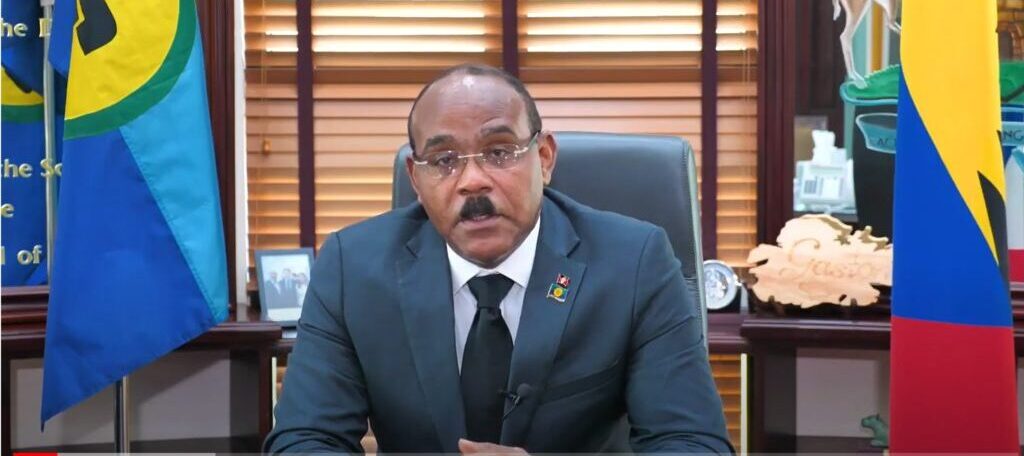
    Against a backdrop of rising concern over illicit firearms trafficking and armed violence across the Caribbean, Dominica’s Minister for National Security Rayburn Blackmoore has issued a urgent call for a comprehensive, uncompromising anti-crime system to root out complicity in illegal weapons activity on the island.

    Blackmoore’s remarks came during the opening of a three-day Inter-Institutional Roundtable meeting, held from April 8 to 10, 2026. The high-level gathering was jointly convened by the Government of the Commonwealth of Dominica through its Ministry of National Security and Legal Affairs, in partnership with two leading regional and global security bodies: the United Nations Regional Centre for Peace, Disarmament and Development in Latin America and the Caribbean (UNLIREC), and the CARICOM Implementation Agency for Crime and Security (CARICOM IMPACS).

    The summit brings together senior decision-makers from a cross-section of critical government agencies, including portfolios focused on national security, law enforcement, judicial affairs, foreign relations, gender equity, and performance monitoring. Its core mission is to amplify national action to counter the dual crises of unregulated illegal firearms and pervasive armed violence, aligning local efforts with a broader regional commitment to safety.

    As outlined in an official press statement from the Ministry of National Security, the roundtable discussions form part of Dominica’s ongoing contribution to advancing the Caribbean Firearms Roadmap, a landmark regional framework designed to crack down on illicit weapons trafficking, cut rates of violent crime, and strengthen public safety across all Caribbean nations.

    In his keynote address, Blackmoore drew attention to a little-discussed enabler of persistent gun trafficking: systemic complicity. He noted that illegal firearms trade can only thrive when facilitated by bad actors, pointing out that both private and public sector insiders often profit from criminal proceeds and aid wrongdoers in evading detection.

    To counter this, Blackmoore argued that any effective response must be robust and rigorous enough to identify complicit individuals and remove them from public and institutional life. He highlighted a unique challenge facing Dominica’s small, close-knit communities, where social ties often lead to quiet tolerance of criminal activity. “We live in a small society, homogeneous communities, where everybody knows each other and as a consequence, we harbor criminals,” Blackmoore said. “And if we are serious about the future of this country, all of us have that moral responsibility to do what we need to do to identify those who have made it their vocation to corrupt every institution in this country, including our young men, who have been used as mules to carry out the trade of worthless, no-face individuals.”

    Blackmoore called for an end to empty finger-pointing and political posturing, urging collective accountability for addressing the crisis. “And if we are serious about the future of this country, we have a responsibility to stop the pretence and to stop pointing fingers, because when you point your finger, the thumb is back in your face,” he added.

    Closing his address, Blackmoore stressed that confronting the illicit gun trade is a non-partisan issue that threatens the foundation of Dominican society. He urged all stakeholders to set aside political differences to tackle what he described as a fundamental threat to the country’s “civilization and civility.”

  • Officials report over 200 new appointments in teaching positions over past year, challenge salary disparity

    Officials report over 200 new appointments in teaching positions over past year, challenge salary disparity

    At the 18th Biennial Convention of the Dominica Association of Teachers (DAT) held Wednesday, Ministry of Education Permanent Secretary Robert Guiste announced a historic milestone for the island nation’s education workforce: more than 200 educators have been granted permanent employment contracts over the 2024-2025 academic year.

    For decades, Guiste noted, the job security and professional standing of Dominica’s teachers failed to align with the outsized impact of their work to shape the nation’s future. The Ministry of Education has prioritized correcting this imbalance, he said, making deliberate, significant progress to formalize and stabilize educators’ career trajectories across the country.

    “We have moved decisively to create permanent appointments for qualified educators across numerous critical roles,” Guiste told convention attendees. “Today, I can confirm that we have secured permanent roles for all deputy and assistant principals, most heads of department, and the majority of senior graduate teachers, senior qualified teachers, graduate teachers, and qualified teachers across the system.”

    He emphasized that the 200+ permanent appointments issued in the last academic year represent the largest single batch of permanent hires across Dominica’s entire public service. The ministry is also moving forward with a full reclassification of roles for primary school educators, adding deputy principal positions where needed and updating rankings for graduate and senior qualified teacher posts. Guiste shared that ministry leadership has already held collaborative discussions with the teachers’ union to move this reclassification process forward.

    Beyond primary education, the ministry is working to formalize positions in the Early Childhood Development sector, which currently relies entirely on contracted educators. The long-term goal is to integrate early childhood education fully into the mainstream public education system, bringing permanent job security to educators in that critical segment.

    Guiste stressed that this push for permanent appointments is far more than a routine administrative adjustment. For educators, permanent status delivers more than steady employment: it unlocks access to full employment benefits, pension-eligible service, and above all, professional dignity. “It means you can plan your future, plan your family’s future and your career without the cloud of uncertainty hanging over you,” he said. The ministry has also addressed the unstable employment status of educators working on temporary program-based contracts, he added.

    While welcoming the progress on permanent appointments for public school teachers, newly re-elected DAT President Mervin Alexander drew attention to a lingering equity gap that undermines fairness and unity across the teaching profession: the divide between directly employed government teachers and educators working at government-assisted private institutions.

    Alexander questioned why educators and principals at government-assisted private schools earn consistently lower salaries than their counterparts at directly operated public schools, despite carrying identical responsibilities teaching Dominican students and serving the national education mission. “Aren’t we all teaching children of the Commonwealth of Dominica? Aren’t we all serving the same nation? Aren’t we all carrying the same responsibilities? If that is so, why the disparity? Why?” he asked.

    Alexander argued that the current pay gap is unfair to educators in assisted institutions. While the government provides some funding support to these schools, he noted, that support has not closed the salary gap, and the DAT remains unsatisfied with the status quo. “Fairness matters, and this is an issue we must confront to unify our profession,” he added.

  • Caribbean Development Bank adds US$12 million to finalize groundbreaking agricultural initiative in Jamaica

    Caribbean Development Bank adds US$12 million to finalize groundbreaking agricultural initiative in Jamaica

    Against a backdrop of escalating climate shocks and lingering global economic disruptions, the Caribbean Development Bank (CDB) Board of Directors has greenlit an additional $12 million in concessional financing to help the Government of Jamaica cross the finish line on its transformative Southern Plains Agricultural Development (SPAD) Project.

    Labeled a landmark climate adaptation initiative for the island nation in an official CDB press statement, the SPAD Project’s core mission is to reimagine Jamaica’s climate-vulnerable farmland as robust, high-productivity agricultural zones that can withstand extreme weather and shifting growing conditions.

    The new funding comes via a low-interest loan disbursed through CDB’s Special Development Fund. It is specifically designed to address unforeseen cost overruns that have plagued the project since its launch, stemming from overlapping global crises: widespread supply chain breakdowns triggered by the COVID-19 pandemic and the ongoing war in Ukraine, combined with costly delays and damage from intensifying extreme weather events hitting the Caribbean. By closing the remaining project funding gap, the supplementary financing paves the way for full completion of all SPAD components by 2028.

    “This additional financing is essential to safeguard and build on the gains already achieved under the SPAD Project,” noted L. O’Reilly Lewis, CDB’s Director of Projects, in remarks accompanying the funding announcement. “Completing this innovative initiative will strengthen Jamaica’s food security, safeguard rural livelihoods and ensure that climate resilient infrastructure continues to deliver long term benefits for farmers and communities.”

    The $12 million will be allocated to wrap up the project’s remaining critical components. Key work includes the full installation and testing of modern irrigation systems at the Amity Hall site, as well as the construction of specialized produce handling and packhouse facilities in two locations: Amity Hall in St. Catherine parish and Parnassus in Clarendon parish. The financing will also cover related costs for engineering oversight, on-site supervision, and end-to-end project management.

    Beyond physical infrastructure, the funding will sustain ongoing farmer support programs designed to make long-term climate adaptation accessible to local producers. These include the Matching Grant Scheme, which helps smallholders access affordable climate-smart irrigation equipment, hands-on training in Good Agricultural Practices and Climate Smart Agriculture techniques, and the development of formal systems for ongoing operation and maintenance of new infrastructure after project completion.

    Implemented by CDB through the United Kingdom Caribbean Infrastructure Fund Programme, the SPAD Project has already delivered tangible, measurable progress across Jamaica’s Southern Plains, the country’s most productive agricultural heartland. To date, more than 790 hectares of previously underserved farmland have been connected to reliable irrigation systems, and approximately 40 kilometers of deteriorated farm access roads have been fully rehabilitated to improve market access for producers. The initiative has also expanded economic opportunity for small and medium-scale producers, including marginalized women and young farmers, by lowering barriers to land, water, modern irrigation technology, professional training, and formal agricultural markets.

    A defining innovation of the SPAD Project is its shift from wasteful traditional flood irrigation to highly efficient, climate-resilient water management systems. This transition has already allowed participating farmers to better survive prolonged drought periods, keep production levels stable year-round, cut costly crop losses, and boost household incomes. CDB officials emphasize that these improvements are far more than incremental upgrades: they are critical for Jamaica’s agricultural sector, which has faced repeated devastating climate events in recent years, including Hurricanes Melissa and Beryl. As of the funding announcement, irrigation infrastructure at the Parnassus site is already fully operational, with work at the Amity Hall site nearing completion.

    The new financing also aligns directly with the core goals of CDB’s newly launched 2026–2035 Strategic Plan, which prioritizes building economic, social, and environmental resilience across the Caribbean region. Through targeted investments in climate-resilient food systems, sustainable rural livelihoods, and long-lasting infrastructure, the plan seeks to equip local communities across the region to better withstand and bounce back from future systemic shocks.

  • Leeward Islands Hurricanes take on T&T’s Red Force for West Indies Championship preview

    Leeward Islands Hurricanes take on T&T’s Red Force for West Indies Championship preview

    The 2026 West Indies Championship is poised to get underway this Sunday in Antigua, where one of the regional circuit’s most anticipated opening series will see Leeward Islands Hurricanes lock horns with Trinidad and Tobago Red Force across three tightly contested four-day matches. All three fixtures will be hosted on Antiguan soil, with the opening clash taking place at Coolidge Cricket Ground, followed by matches at Sir Vivian Richards Stadium and Antigua Recreation Ground across subsequent weeks.

    For the Hurricanes, the new championship cycle brings a fresh leadership change: 32-year-old Barbadian all-rounder Justin Greaves will take the captain’s reins for the first time since he joined the franchise three years ago, the appointment confirmed in an official press release from Cricket West Indies (CWI). Greaves has described the opportunity to lead his side as one of the biggest honours of his professional career, saying he is eager to lead from the front on the field while leaning on the wisdom of seasoned veterans in his squad. “Leadership has always been a core part of how I approach the game,” Greaves noted, adding that he plans to set the tone for the team through consistent, high-impact performances in every contest.

    The last meeting between these two regional powerhouses delivered a run-fest for the record books, ending in a high-scoring draw that saw both sides rack up more than 1,100 combined runs. Trinidad and Tobago’s captain Joshua Da Silva led the charge with centuries in both innings, while veteran batter Jason Mohammed notched an impressive double century. Undaunted, the Hurricanes responded with an opening partnership of more than 200 runs, with Mikyle Louis and Kadeem Henry both reaching three-figure scores. Both batmen retain their places in Greaves’ 13-man squad for the upcoming series, joined by Jewel Andrew – who hit a double century in recent pre-season trial matches – and Karima Gore, who also turned heads with a century in warm-up play.

    Greaves has expressed confidence in his squad’s depth and balanced roster, saying the group has all the tools to compete consistently across the full series. He highlighted that consistent discipline, incremental improvement across matches, and focused execution in every phase of play will be critical to unlocking success for the Hurricanes. On the opposing side, Red Force brings a wealth of elite experience to Antigua, with no fewer than nine members of their 13-man squad holding international caps for West Indies. Greaves acknowledged the significant challenge posed by Red Force’s seasoned pace bowling unit, but framed the series as a critical early opportunity for his side to prove they belong among the region’s top contenders, noting that the Hurricanes believe they are one of the strongest teams in the championship and must back that claim with results.

    For Trinidad and Tobago, the 2026 cycle carries extra motivation: it has been 20 full years since the side last claimed the Regional Four-Day Championship title, and their 2025 title bid was derailed by a shock defeat to Jamaica Scorpions in the penultimate round of the season. This year, with only three group-stage matches on the schedule, captain Da Silva says there is zero room for error, making a strong opening start non-negotiable. “We have a very well-rounded group: our batting unit has plenty of international experience, our senior fast bowlers are in top form, and our spinners have performed consistently for us over the past year,” Da Silva explained of the side’s prospects.

    One of the most anticipated additions to the Red Force squad is Evin Lewis, who is set to make his return to first-class cricket after a nearly 10-year absence. Da Silva said the side has been thrilled by Lewis’ reintegration into the group, noting the star batter has come into the camp with a renewed work ethic and sharp form in pre-season training. Beyond his on-field contributions, Da Silva highlighted Lewis’ positive impact on team culture, saying “he really brings us together” with his experience and leadership in the dressing room.

    Recent head-to-head history gives a slight edge to the Hurricanes, who have claimed two wins from the last four meetings between the sides, with the remaining two fixtures ending in draws. But Red Force is approaching the series as a fresh starting point, with Da Silva emphasizing that past results will have no bearing on the contest ahead. “Success comes down to focusing on the present, staying consistent, and executing the fundamentals over four days of play,” Da Silva said. With both sides locked in and ready to compete, the three-match series is set to deliver an intense, high-stakes opening to the 2026 West Indies Championship, with plenty of regional title implications on the line from the first ball.

  • Telecom and banking leaders partner to advance Caribbean digital economy

    Telecom and banking leaders partner to advance Caribbean digital economy

    Two leading Caribbean industry bodies have announced a landmark strategic partnership set to reshape the region’s digital economy, uniting the telecommunications and financial sectors around a shared mission to drive digital transformation and foster innovative financial solutions.

    The Caribbean Association of Banks (CAB), the collective voice of regional financial institutions, and CANTO, the Caribbean’s primary ICT industry trade association, formalized their collaboration via a signed Memorandum of Understanding (MoU), according to an official press release from CAB. The structured partnership is explicitly designed to bridge long-standing operational and strategic gaps between the telecom and banking sectors, two foundational pillars of the Caribbean’s growing digital economy. Both organizations have confirmed the agreement aligns with their shared objectives: upgrading legacy financial services and building the robust digital infrastructure required to support modern digital commerce.

    The timing of this alliance could not be more relevant, as the overlapping growth of digital connectivity, fintech innovation, and digital financial services continues to redefine the Caribbean’s economic landscape. By combining their industry expertise, networks, and resources, the two groups have outlined four core priorities: expanding access to digital financial services for unbanked and underbanked populations, upgrading regional cybersecurity protections to counter evolving threats, modernizing outdated core banking systems, and building resilient, future-ready digital infrastructure across all Caribbean nations.

    To deliver on these goals, the partnership will launch a series of coordinated cross-industry initiatives. First, the organizations will collaborate on participation in major regional gatherings, including CANTO’s annual flagship CANTO Connect event, CAB’s Annual General Meetings, and other key industry conferences. Second, they will roll out joint marketing and public outreach campaigns targeted at stakeholders across the Caribbean to raise awareness of digital transformation benefits. Third, an annual Telecom-Banking Roundtable will be convened, bringing together C-suite leaders from both sectors, top regional regulators, and national policymakers to align on strategic priorities. Fourth, the partnership will develop specialized training and capacity-building programs focused on high-priority areas including digital banking operations, artificial intelligence integration, cybersecurity defense, enterprise risk management, and regulatory adaptation for digital innovation. Finally, the two groups will establish a regular framework for sharing insights on emerging fintech trends, growing cyber and fraud threats, new payment system innovations, and best practices for building digital resilience.

    These collaborative efforts aim to break down silos between the two sectors, equipping telecom providers, financial institutions, and public officials to tackle shared pressing challenges that have held back regional growth. Key issues the alliance will address include streamlining inefficient cross-border payment systems, scaling accessible mobile financial services, and developing interoperable, secure digital identity frameworks.

    Founded in 1985, CANTO boasts a broad membership network spanning telecom operators, ICT service providers, national governments, and regional development institutions, and has long played a central role in shaping the Caribbean’s regional digital strategy. CAB, by contrast, serves as the unified advocacy body for the Caribbean banking sector, working to advance responsible innovation, preserve financial stability, and support inclusive, sustainable economic growth across the region.

    In statements following the signing of the MoU, leadership from both organizations reaffirmed their commitment to building a more digitally connected, inclusive, and globally competitive Caribbean economy, where technological progress and financial development work in lockstep to drive long-term, shared prosperity.

    CANTO Secretary General Teresa Wankin emphasized the unique value of cross-sector collaboration for the region, noting that aligning the Caribbean’s robust connectivity ecosystem with its financial sector unlocks new opportunities for innovation, broadened financial inclusion, and accelerated inclusive economic growth across all island nations.

    Wendy Delmar, Chief Executive Officer of CAB, echoed this sentiment, highlighting that the partnership strengthens the banking sector’s ability to innovate securely, adapt to rapidly shifting regulatory and risk landscapes, and deliver more inclusive, customer-centric digital financial services to populations across the region. Delmar added that closer strategic alignment between telecom and banking creates a stronger foundation for a more resilient, competitive regional economy that can compete on the global stage.

    As digital transformation accelerates across every global region, this cross-industry alliance positions the Caribbean to capitalize on emerging digital opportunities, leveraging coordinated action, technological innovation, and shared expertise to drive sustainable, long-term economic progress for the region.

  • STATEMENT: Health minister, Cassanni Laville addressing child harassment

    STATEMENT: Health minister, Cassanni Laville addressing child harassment

    In response to a widely circulated open letter that has sparked public concern, Health Minister Cassanni Laville has publicly addressed disturbing allegations of harassment against a minor. The letter, which recently came across the minister’s desk, outlines serious, deeply troubling claims of improper behavior involving a young child that have sent ripples of concern through local communities.

    Laville opened her official statement by emphasizing that any allegation of harm, emotional distress, or inappropriate conduct toward a child demands immediate and serious attention. In her remarks, the minister made clear that child safety remains a non-negotiable priority for public officials, and that all claims of child mistreatment will be treated with the gravity they deserve. She noted that the nature of the allegations themselves, regardless of further outcome, is deeply unsettling to anyone committed to protecting vulnerable young people, and that authorities will move forward to ensure a full, transparent examination of the claims. As the situation develops, the minister has indicated that further updates will be provided to the public once appropriate investigative steps have been completed.

  • Mervin Alexander re-elected as president of Dominica Association of Teachers

    Mervin Alexander re-elected as president of Dominica Association of Teachers

    Mervin Alexander has won a fourth straight term as President of the Dominica Association of Teachers (DAT), following voting conducted during the organization’s 18th Biennial Convention. The three-day gathering wrapped up its election proceedings on Wednesday at the St. Alphonsus Parish Hall, bringing together educators from across the island to chart the union’s next two-year course and select new leadership.

    This year’s convention centered on a theme that highlights the critical role of education professionals in national progress: “Teachers: The Foundation For National Development-Value Us.” The messaging underscores widespread advocacy among Dominican educators for greater recognition of their contributions to the country’s long-term growth and social stability.

    Alongside Alexander’s re-election, the convention finalized the full roster of DAT’s new executive committee that will guide the union through 2028. Julian L Benjamin takes on the role of First Vice President, while Carla Douglas will serve as Second Vice President. Francis JnoLewis retains the position of General Secretary, with Nara Winston stepping in as Assistant General Secretary. Kathleen Cornelius was elected Treasurer, and Jerry Coipel will support her as Assistant Treasurer. Juanita Carbon will fill the role of Public Relations Officer, and Catherine Robinson and Gezel Mondesire-Charles have been named Trustees of the organization.

    As the leading professional body for teachers in Dominica, DAT advocates for improved working conditions, competitive compensation, and professional development opportunities for its members, while also partnering with the national government to advance education policy reforms across the country. Alexander’s fourth consecutive term signals broad member confidence in his leadership to continue advancing those priorities in the years ahead.

  • COMMENTARY: We just imported more ICE vehicles, now let’s electrify Dominica faster—not slower

    COMMENTARY: We just imported more ICE vehicles, now let’s electrify Dominica faster—not slower

    As a small island nation with a licensed on-road vehicle fleet of roughly 40,000 units, Dominica faces a persistent, structural drain on its foreign exchange reserves that ties directly to its reliance on imported fossil fuels for transport and power generation. In 2023 alone, the country spent US$56.3 million on imported mineral fuels and oils, US$52.26 million of which went to refined non-crude petroleum. Half of that total import bill funded land transport, with the remainder covering diesel-powered electricity generation—a massive expenditure for a small national economy that has only grown since new fuel price hikes took effect on March 30, 2026.