As climate-fueled extreme weather events grow more frequent and severe across the Caribbean, regional disaster management bodies and international humanitarian partners are collaborating to build a standardized, region-wide system for tracking people displaced by hurricanes, floods, wildfires, and volcanic eruptions. The coordinated effort is designed to strengthen emergency response, speed the delivery of life-saving humanitarian aid, and improve governments’ long-term recovery planning after catastrophic events.
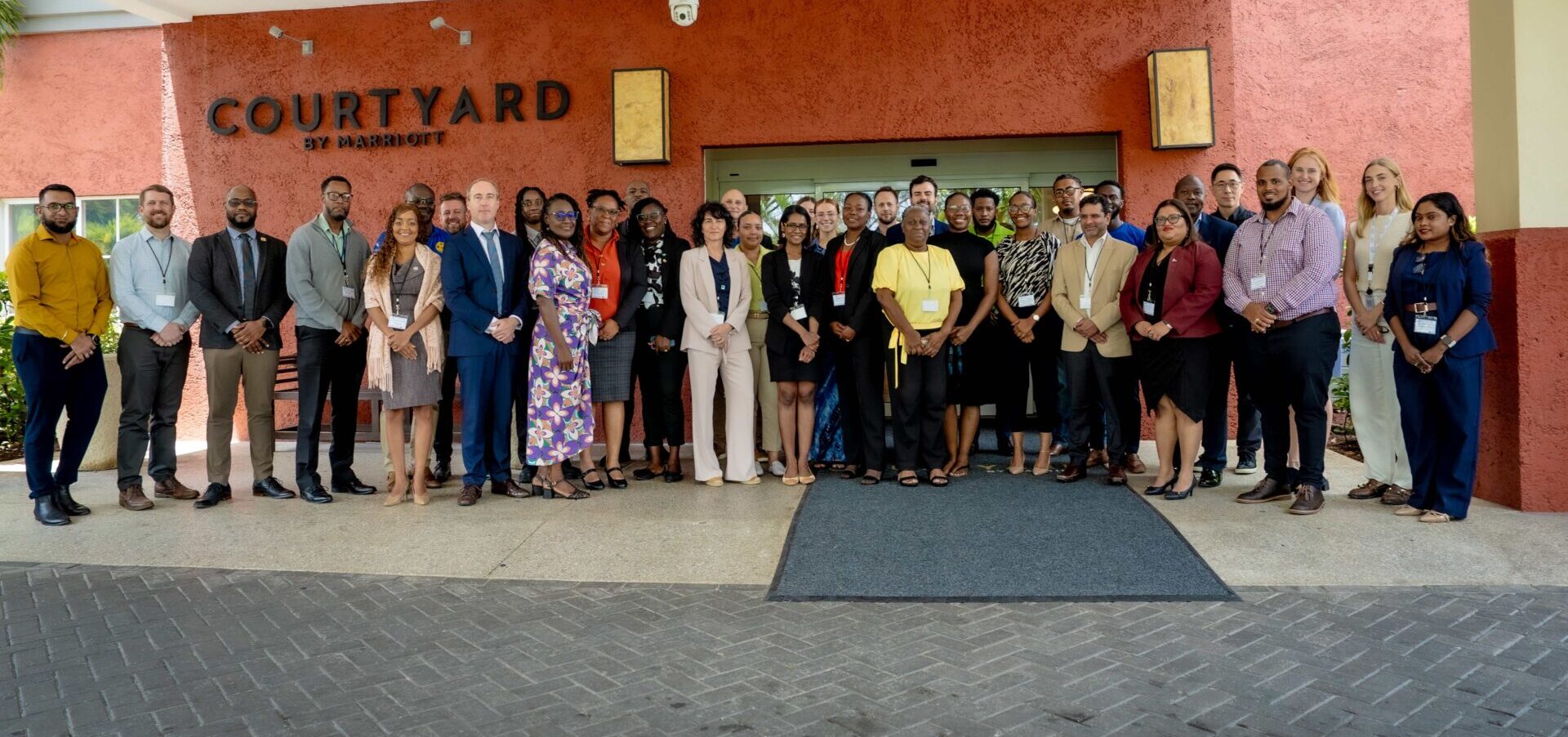
Data from the Internal Displacement Monitoring Centre (IDMC) underscores the urgent need for this reform: between 2008 and 2024, climate and weather-related disasters triggered an estimated 2.61 million internal displacements across the Caribbean, stretching existing regional emergency management frameworks to their breaking point. To address critical gaps in information sharing and data collection, the International Organization for Migration (IOM), IDMC, and the Caribbean Disaster Emergency Management Agency (CDEMA) gathered senior representatives from national disaster offices of 13 CDEMA member states and key regional stakeholders for a two-and-a-half-day workshop in Bridgetown, Barbados, held from April 21 to 23. The core focus of the gathering was closing long-standing information gaps that have historically slowed emergency response and undermined post-disaster recovery planning.
Barbados’ Minister of Home Affairs and Information Gregory Nicholls opened discussions by reaffirming that disaster response systems must center the needs of affected communities above all else. “For Barbados, the guiding principle is simple: families first,” Nicholls said. “Good data helps responders locate families faster, match assistance with real needs, and protect dignity when systems are under extreme stress. Displacement data must serve people, not bureaucratic processes.”
Funded by EU Humanitarian Aid through IOM’s Resilient Caribbean project, the workshop is already being hailed as a landmark step toward data-driven, people-centered disaster management across the region. Daniela D’Urso, Caribbean Coordinator and Regional Policy Expert for European Civil Protection and Humanitarian Aid, emphasized that coordinated displacement tracking is non-negotiable for effective response after major disasters. “Bringing systems together to track displacement after a hurricane really matters,” D’Urso explained. “It turns fragmented, often anecdotal information into clear, usable data, helping responders act faster, support people more fairly, and plan for long-term recovery. When there is no common approach, governments and humanitarian partners are left without a clear picture of who has been displaced, where they are, and what they need.”
Over the course of the workshop, participants collaborated to draft harmonized Standard Operating Procedures (SOPs) for cross-regional displacement data collection, aligned with CDEMA’s existing Damage Assessment and Needs Analysis (DANA) framework. The new procedures establish shared activation triggers, clear institutional role delineation, and agreed minimum data requirements, creating a standardized model that will allow countries to generate timely, comparable displacement data to support both immediate emergency operations and long-term recovery and risk reduction planning.
Patrice Quesada, IOM Coordination Officer for the Caribbean and Chief of Mission for Barbados, highlighted that regional cooperation and proactive preparedness are foundational to reducing disaster risk. “Preparedness is about learning from experience,” Quesada said. “It is really about anticipating the next storm, not just responding to the last one. For that, we need to share experience with teams of experts who can trust and support each other when the time comes.”
D’Urso added that stronger standardized data systems will also improve protection outcomes for the region’s most vulnerable groups. “Better data enables better protection – by improving evacuation planning, strengthening shelter management, and ensuring that assistance reaches those most at risk, including women, children, older adults and persons with disabilities,” she said.
Workshop sessions also introduced attendees to a suite of specialized displacement data and mapping tools, including IOM’s Displacement Tracking Matrix (DTM), the IOM Shelter Portal, KoboToolbox, the European Commission’s Copernicus Earth observation program, and MapAction’s humanitarian mapping solutions. Experts from IDMC and the CIMA Research Foundation also shared cutting-edge insights on displacement monitoring and integrating risk analysis into pre-disaster planning.
Development of the new SOPs drew directly on lessons learned from CDEMA After Action Reviews following Hurricane Beryl and Hurricane Melissa, which exposed critical gaps in the region’s existing data infrastructure. Participants identified a clear need for standardized activation thresholds, stronger data privacy and ethical protections, and more clearly defined institutional responsibilities during large-scale emergencies. Once implemented, officials expect the standardized procedures will strengthen communication links between emergency shelters, regional emergency operations centers, and national disaster management systems, enabling responders to identify urgent needs faster and coordinate assistance more effectively. A unified regional approach will also make it easier for affected countries to compare and share data during transboundary disasters, when multiple hazards may hit multiple Caribbean nations at once, improving cross-border coordination.
Sashagaye Vassell, Planning Analyst at Jamaica’s Office of Disaster Preparedness and Emergency Management, noted that rapid, consistent data sharing is particularly critical in a region defined by high hazard exposure and widespread vulnerability. “We are very prone to multiple hazards and have many vulnerable people,” Vassell said. “This SOP will help us capture and share consistent information faster, so decision-makers can direct support where it is needed most.”
In the coming months, the initiative will move into the capacity-building phase, with planned training programs for National Disaster Office staff focused on data collection and analysis, vulnerability assessment, simulation exercises, and specialized training in Camp Coordination and Camp Management (CCCM) and other core disaster preparedness domains. The overarching goal of the initiative is to build a more coordinated, better prepared, and increasingly resilient Caribbean, capable of withstanding and responding to the growing climate-driven disaster risk facing the region.