标签: Dominica

多米尼克

  • Cuban Ambassador to Dominica meets with solidarity group and Cuban graduates

    Cuban Ambassador to Dominica meets with solidarity group and Cuban graduates

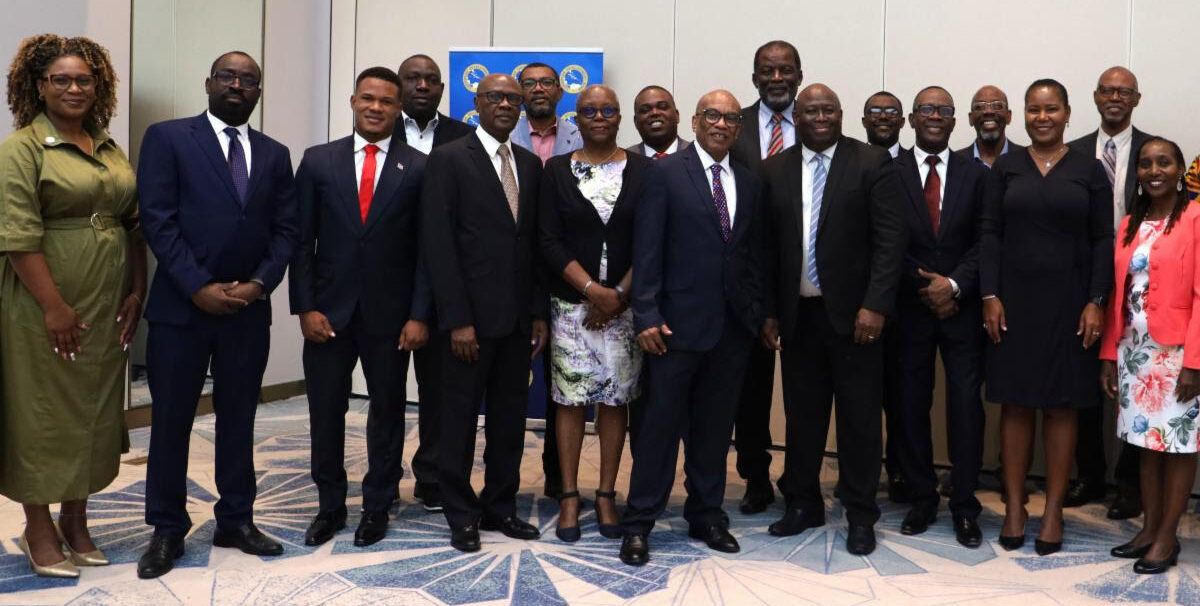
    In a significant demonstration of international camaraderie, the Cuban Embassy in Dominica orchestrated a diplomatic gathering on January 29th, uniting Ambassador Miguel Fraga with representatives from the Solidarity Group with Cuba and the Association of Graduates in Cuba. The assembly served as a platform for comprehensive dialogue regarding Cuba’s contemporary socio-economic landscape.

    Ambassador Fraga delivered a thorough exposition of Cuba’s ongoing economic and political difficulties, highlighting the profound consequences of the prolonged economic, commercial, and financial blockade. He articulated how these sanctions have precipitated substantial hardships for the Cuban populace and contributed to the nation’s economic constraints and global marginalization.

    The convocation further illuminated the robust educational partnership between the two nations. Since the initiation of academic exchanges in 1979, more than 400 Dominican scholars have completed advanced studies in Cuba. This academic pipeline has yielded exceptional dividends for Dominica’s public health infrastructure, with over 120 medical professionals returning to enhance domestic healthcare services and national development initiatives.

    The timing of this diplomatic engagement holds particular significance, coinciding with two imminent historic milestones: the 30th anniversary of formal diplomatic relations between Dominica and Cuba, and the centennial commemoration of Fidel Castro Ruz’s birth. Attendees deliberated appropriate commemorative activities to honor these occasions and reinforce the nations’ shared historical bonds.

    The proceedings culminated in a mutual reaffirmation of sovereignty, international solidarity, and cooperative partnership. Both parties expressed unwavering commitment to maintaining their bilateral relationship, which remains grounded in mutual respect and enduring friendship despite external pressures and global challenges.

  • Dominican official joins colleagues in Grenada for workshop on high-resolution land degradation reporting

    Dominican official joins colleagues in Grenada for workshop on high-resolution land degradation reporting

    Grenada is currently hosting a pivotal five-day regional workshop focused on enhancing land conservation reporting capabilities across Caribbean Small Island Developing States (SIDS). The event, which commenced on February 2 and continues through February 6, brings together twenty-six environmental specialists including Josh Baron from Dominica’s Department of Forestry, Wildlife and Parks.

    The technical workshop, formally titled ‘Regional Technical Workshop on High-Resolution SDG 15.3.1 and PRAIS SO1 Reporting for Caribbean SIDS,’ represents a significant capacity-building initiative for the region. Participants from all 13 Caribbean SIDS will engage in an immersive program designed to strengthen national reporting mechanisms on land degradation through advanced Geographic Information Systems (GIS) applications.

    Core curriculum components include sophisticated training in high-resolution land cover analysis, assessment of land productivity trends, precise measurement of soil organic carbon, and comprehensive integration of these indicators into Sustainable Development Goal 15.3.1 evaluations. Additionally, attendees will develop specialized skills in generating PRAIS-compliant datasets with complete metadata documentation.

    A primary objective of this gathering is the establishment of a Caribbean GIS Community of Practice dedicated to land degradation monitoring and Land Degradation Neutrality (LDN) initiatives. This professional network will support ongoing implementation of the United Nations Convention to Combat Desertification (UNCCD) through the Performance Review and Assessment of Implementation System (PRAIS) platform.

    The workshop is funded by the Global Environment Facility (GEF), with the United Nations Environment Programme (UNEP) serving as Implementing Agency and the Partnership Initiative for Sustainable Land Management (PISLM) acting as Executing Agency. Technical training is delivered in collaboration with Apacheta, creating a robust multilateral partnership aimed at strengthening regional environmental governance and sustainable land management practices.

  • PRESS RELEASE: IICA Director General  and CAF President and Vice President discuss the role of financing in expanding scientific and technological revolution in agriculture of the Americas

    PRESS RELEASE: IICA Director General and CAF President and Vice President discuss the role of financing in expanding scientific and technological revolution in agriculture of the Americas

    In a significant development for hemispheric agriculture, the Inter-American Institute for Cooperation on Agriculture (IICA) and CAF – Development Bank of Latin America and the Caribbean have established a strengthened partnership to address critical funding gaps in the agricultural sector. The alliance was formalized during the International Economic Forum for Latin America and the Caribbean 2026 in Panama City, where IICA Director General Muhammad Ibrahim met with CAF Executive President Sergio Díaz Granados and Vice President Christian Asinelli.

    The high-level meeting, attended by numerous heads of state and government ministers, focused on creating innovative synergies between the development bank and the specialized agricultural agency. Key discussion areas included health initiatives, soil restoration projects, water resource management, and development programs for specific crops. Díaz Granados outlined CAF’s ambitious Agricultural Prosperity Strategy, which aims to provide $8.5 billion in financing by 2030 with emphasis on social and territorial inclusion.

    Director General Ibrahim, who assumed his position in January 2026, emphasized the urgent need to bridge the financial divide preventing widespread adoption of agricultural technologies. “Clearly, input costs are rising, and this affects competitiveness,” Ibrahim stated during forum sessions. “Financial considerations must be a central component of any strategy aimed at transforming food systems to satisfy increasing demands.”

    The IICA leader detailed how the organization has been developing innovative programs to provide guarantees helping small farmers overcome credit access barriers. He explained that while science offers numerous solutions to boost productivity and improve resilience, many cannot advance beyond initial stages due to financing limitations, inadequate regulatory frameworks, and insufficient infrastructure.

    CAF Vice President Asinelli highlighted IICA’s pivotal role in reinforcing Latin America and the Caribbean’s position as a solution to global challenges, noting that agriculture remains a structural mainstay of regional economies despite financial obstacles affecting productivity.

    Beyond the CAF meetings, Director General Ibrahim engaged in multiple bilateral discussions with regional leaders including Jamaica’s Minister of Industry, Investment and Commerce Aubyn Hill, Panama’s Ambassador to the OAS Ana Irene Delgado, and Portuguese Parliament Member Paulo Neves, who also serves as President of the Institute for the Promotion of Latin America and the Caribbean in Portugal.

    During the forum’s panel discussions, particularly the session on “Agriculture and Food for the Sustainable Transformation of Latin America and the Caribbean,” Ibrahim advocated for stronger alliances between scientific and financial stakeholders. He emphasized the need to develop diverse financial mechanisms that account for the realities small farmers face while promoting sustainable food production systems and accessible healthy diets.

  • New independent guide promises authentic approach to traveling and life in Dominica

    New independent guide promises authentic approach to traveling and life in Dominica

    A groundbreaking collaborative publication titled “Traveling and Living in Dominica – The Perfect Guide for Those Who Want to Enjoy Life” has emerged as a transformative resource for those seeking authentic engagement with the Caribbean nation. Co-authored by independent essayist and journalist Guy Boulianne alongside other contributors, this comprehensive work deliberately diverges from conventional tourist-centered narratives to offer a nuanced examination of the island’s realities.

    The guidebook presents an uncompromisingly honest depiction of Dominica’s landscape, culture, and societal structure, drawing extensively from the lived experiences of its contributors. Rather than promoting an idealized paradise, it examines the conscious resistance to mass tourism while providing practical guidance for visitors, prospective residents, retirees, and those exploring alternative lifestyles.

    Covering an extensive range of topics including travel logistics, immigration procedures, residency options, cost of living, housing, healthcare, education, and long-term community integration, the publication balances practical advice with cultural and social analysis. A dedicated chapter explores the vibrant arts scene, highlighting how cultural expression functions as a living aspect of island life rather than mere tourist attraction. The work features institutions like the Division of Culture and the Waitukubuli Artist Association, alongside profiles of local artists including painter Ellington Moses, presenting them as integral to the nation’s creative identity.

    The authors emphasize a sober, analytical tone throughout, addressing both advantages and challenges of island living while stressing themes of responsibility, adaptation, and respect for local realities. This approach aims to equip readers with the knowledge necessary to make informed decisions about engaging with Dominica beyond superficial tourism.

    Available in both print and digital formats through Amazon and selected online retailers, this guide represents a significant departure from promotional travel literature, prioritizing authenticity and cultural understanding over romanticized depictions of Caribbean life.

  • IN PICTURES (WITH VIDEO): UWP rally Sunday 1st February 2026

    IN PICTURES (WITH VIDEO): UWP rally Sunday 1st February 2026

    The political landscape in Dominica has been significantly reshaped following the abrupt resignation of two prominent opposition figures. Rosie Felix, the former Deputy Political Leader of the United Workers Party (UWP), and Edlyn Harris, the former Deputy Speaker of the House of Assembly, have both stepped down from their respective positions, sending shockwaves through the nation’s political sphere.

  • PM Skerrit to attend summit for world governments in Dubai

    PM Skerrit to attend summit for world governments in Dubai

    Prime Minister Roosevelt Skerrit of Dominica will represent the nation’s interests at the prestigious World Governments Summit in Dubai, United Arab Emirates, from February 3-5. The high-level gathering, themed “Shaping Future Governments,” brings together global leaders to address pressing international challenges through innovative governance solutions.

    During the summit, Prime Minister Skerrit will actively participate in two critical roundtable discussions focusing on global investment trends and the transformation of international tourism. His involvement is strategically positioned to highlight Dominica’s unique perspective as a small island developing state facing disproportionate climate vulnerabilities.

    The Dominican leader’s agenda emphasizes four key developmental pillars: climate-resilient infrastructure, sustainable investment frameworks, renewable energy transition, and inclusive economic growth. This participation underscores Dominica’s commitment to positioning itself at the forefront of global discussions concerning sustainable development and climate justice.

    While Prime Minister Skerrit attends the Dubai summit, domestic governance responsibilities will be temporarily assumed by Hon. Dr. Irving McIntyre, Minister for Finance, Economic Development, Climate Resilience, and Social Security, ensuring continuous governmental operations during the Prime Minister’s diplomatic mission.

  • Nine calypsonians advance to 2026 grand finals

    Nine calypsonians advance to 2026 grand finals

    A dynamic ensemble of nine calypsonians has officially clinched their positions in the highly anticipated Calypso Finals, setting the scene for a spectacular musical confrontation on February 14th at Windsor Park Sports Stadium. The selection process culminated during intense quarterfinal bouts held on Saturday, January 31st at the same venue, where performers competed for judicial approval and a coveted spot in the championship round.

    The elite roster of artists advancing to compete for the monarch title includes Abiyah, Nacheal, Karessa, Jaydee, Daddy Chess, Tasha P, Redz, The Bobb, and Checker. This diverse group of musical talents will face the formidable challenge of dethroning the reigning calypso sovereign, Joy Stoute, in what promises to be a memorable Valentine’s Day extravaganza.

    Adding strategic depth to the competition framework, event organizers have designated three reserve performers: De Web, Calpha P, and Observer. These designated substitutes stand ready to seamlessly enter the competition should any primary finalist encounter unforeseen circumstances preventing their participation.

    The upcoming finals represent not merely a competition but a celebration of cultural expression through calypso music, combining artistic excellence with competitive spirit. This event continues the rich tradition of calypso championships that serve as both entertainment and social commentary within the community.

  • U.S. announces tariffs against countries supplying oil to Cuba, island’s gov’t responds

    U.S. announces tariffs against countries supplying oil to Cuba, island’s gov’t responds

    In a significant escalation of bilateral tensions, U.S. President Donald Trump issued an executive order on January 29, 2026, declaring a national emergency and identifying Cuba as an “unusual and extraordinary threat” to American national security. The presidential directive accused Havana of aligning with hostile nations and terrorist organizations including Russia, China, Iran, Hamas, and Hezbollah, alleging actions detrimental to U.S. interests.

    The declaration serves as legal foundation for implementing trade tariffs effective January 30, 2026, targeting any foreign government supplying petroleum products to Cuba either directly or indirectly. President Trump asserted that “the tariff system is necessary and appropriate to address the national emergency declared in this order.”

    Cuba’s Revolutionary Government responded with forceful condemnation, characterizing the measures as an unjustified aggression designed to impose a total fuel blockade. Official statements denounced the executive order as violating international law and undermining regional stability, particularly the Proclamation of Latin America and the Caribbean as a Zone of Peace.

    Havana dismissed U.S. security concerns as fabricated narratives, stating: “The President himself and his government are aware that no one, or very few, can believe such mendacious arguments.” Cuban authorities framed the action as continuation of six-decade efforts to undermine Cuba’s sovereign political process, emphasizing their commitment to peaceful international relations.

    The Caribbean nation affirmed its resilience against economic coercion, stating imperialist actions would not break the people’s determination. The government concluded its response with a defiant declaration: “We will face this new attack with firmness, equanimity, and the certainty that reason is absolutely on our side. The decision is one: Homeland or Death, We Shall Overcome!”

  • COMMENTARY: The quiet guardians of Caribbean integration – A salute to Warren Smith

    COMMENTARY: The quiet guardians of Caribbean integration – A salute to Warren Smith

    The Caribbean community mourns the passing of distinguished Jamaican economist Dr. William Warren Smith, who died on January 30, 2026. Dr. Smith’s remarkable career spanned leadership roles at LIAT (Leeward Islands Air Transport) and culminated in his presidency at the Caribbean Development Bank (CDB), where he established himself as a pivotal figure in regional advancement.

    Colleagues and journalists remember Dr. Smith as embodying a rare breed of Caribbean public servant—one who approached complex development challenges with grace, intellectual clarity, and unwavering respect for all stakeholders. His communication style demystified intricate economic matters without condescension, treating media professionals as collaborative partners rather than adversaries in the narrative of Caribbean progress.

    This tradition of servant leadership, which Dr. Smith exemplified, traces back to the 1940s integration movement. These technical architects of regional cooperation typically operated behind the scenes, making consequential decisions that stabilized economies, preserved vital transport networks, financed critical infrastructure, and fortified Caribbean societies against external shocks. Their work, though seldom celebrated publicly, fundamentally shaped livelihoods across the region.

    The hallmark of this leadership paradigm includes profound respect regardless of status, generous knowledge sharing, brutal yet tactful honesty, and unwavering commitment to marginalized communities. These officials frequently absorbed unfair criticism to protect their institutions and missions, prioritizing organizational integrity over personal recognition.

    During Dr. Smith’s tenure at LIAT, he navigated the highly scrutinized regional aviation sector with measured competence. Later at CDB, he balanced complex development financing with patient, long-term strategic thinking. Throughout both roles, he demonstrated that transparent communication and respectful engagement strengthen rather than diminish leadership effectiveness.

    His passing invites reflection on the numerous unsung professionals continuing this tradition within regional institutions. Their collective legacy remains essential to the Caribbean project’s resilience amid contemporary challenges and increased global scrutiny. Dr. Smith’s life reminds current leaders that sustainable development intertwines technical proficiency with meaningful public engagement.

  • COMMENTARY: Human‑centered intelligence – A new blueprint for Caribbean development

    COMMENTARY: Human‑centered intelligence – A new blueprint for Caribbean development

    The Caribbean region stands at a technological crossroads where artificial intelligence converges with behavioral psychology to create a revolutionary development framework. This innovative approach, termed the Caribbean Human-Centered Intelligence Framework, represents a paradigm shift from traditional technology implementation by prioritizing human behavior patterns over algorithmic assumptions.

    Across three critical sectors—governance, tourism, and air transportation—this methodology harnesses AI’s predictive capabilities alongside psychological insights to address region-specific challenges. In governance, the integration enables predictive service design that identifies citizen frustration points and community needs before they escalate. By testing policies through behavioral lenses before implementation, governments can craft culturally resonant communications that bypass bureaucratic barriers.

    Tourism, the Caribbean’s economic cornerstone, undergoes transformation through emotion-driven experience design. AI analytics map traveler preferences and inspiration triggers while behavioral science deciphers why authenticity commands premium value and how diaspora visitors respond to cultural cues. This synergy allows destinations to craft scarcity-based marketing strategies that resonate with psychological booking triggers.

    Aviation infrastructure benefits from passenger-centered optimization where AI analyzes travel patterns and stress points while psychology explains why reliability often outweighs price considerations for Caribbean travelers. Cultural elements like first-flight ceremonies receive scientific validation as loyalty-building mechanisms within the framework.

    The framework’s ultimate power emerges through cross-sector integration, enabling unprecedented regional connectivity. By unifying governmental, tourism, and aviation data streams, the system can predict visitor flows with precision, strengthening route viability and economic sustainability. This represents not merely technological modernization but a fundamental reimagining of Caribbean development—where data serves culture, technology adapts to psychology, and growth aligns with human behavior patterns.

    This approach positions the Caribbean to lead in human-centered technological implementation, creating a development model that prioritizes regional identity while embracing global technological advancements.