标签: Dominica

多米尼克

  • OP-ED:  513 births – Dominica’s demographic emergency and the opportunity we must not waste

    OP-ED: 513 births – Dominica’s demographic emergency and the opportunity we must not waste

    The Commonwealth of Dominica is experiencing a severe demographic crisis characterized by a dramatic decline in birth rates that has reached alarming proportions. According to recent data from China-Friendship Hospital, which handles nearly all births on the island, only 513 births were recorded in 2025—representing a staggering 43% decrease from the already concerning 899 births documented in 2007.

    The statistical trajectory reveals an increasingly dire situation. Official records show that in 2022, Dominica registered 658 births against 777 deaths, resulting in a natural population deficit of 119 persons. The following year saw a similar pattern with 657 births and 744 deaths, confirming that mortality now consistently exceeds natality—a reality that has already arrived rather than merely being projected.

    This demographic implosion has been decades in the making. Between 1995 and 2008, primary school enrollment collapsed by 42%, while the Social Security system reached a critical point by 2007, paying out 68 cents in benefits for every dollar collected in contributions. The agricultural sector faces similar challenges, with the majority of farmers now over 60 years old, indicating widespread aging across all economic sectors.

    An unexpected development has emerged within this crisis: The United States government, under President Trump’s executive orders on deportations, has indicated that Dominica will receive deportees and refugees. While politically sensitive for a sovereign nation, Prime Minister Roosevelt Skerrit has acknowledged the demographic necessity, stating publicly that Dominica’s population has become dangerously insufficient.

    The critical question now centers on the composition of incoming migrants rather than whether they should be accepted. Dominican authorities must urgently negotiate for families with children, as each settling family with two or three children directly addresses the birth deficit, refills classroom seats, adds future Social Security contributors, and establishes rooted community households. Conversely, the government should avoid disproportionate numbers of unattached single men, whose integration patterns historically create social pressures that small communities struggle to absorb.

    The window for strategic action is narrow—once migration compositions are established through diplomatic channels, they become difficult to restructure. With only 513 births recorded last year, every family with children that settles in Dominica represents a partial solution to the demographic emergency that now defines the nation’s future.

  • Caribbean nations enhance demographic data to improve strategic planning

    Caribbean nations enhance demographic data to improve strategic planning

    BRIDGETOWN, BARBADOS – In a landmark regional collaboration, Caribbean statistical experts and government officials are converging in Barbados to master next-generation population data techniques. The intensive five-day workshop, running from March 9-13, 2026, represents a strategic effort to transform how nations plan for climate adaptation, economic development, and social services through advanced demographic analysis.

    Hosted at Hotel Indigo in Bridgetown, the initiative brings together an unprecedented coalition including CARICOM, UNFPA, WorldPop, the UK’s FCDO, and the European Union’s Joint Research Centre. The curriculum focuses on two transformative methodologies: sophisticated population modeling for small-area estimates and the globally standardized Degree of Urbanisation (DEGURBA) framework.

    Jenny Karlsen, Acting Head of UNFPA’s Caribbean Sub-Regional Office, emphasized the paradigm shift in demographic science. ‘Emerging tools are fundamentally expanding our analytical capabilities,’ she noted. ‘Where traditional censuses provided periodic snapshots, we now combine modeling with satellite-derived settlement data to create dynamic, high-resolution population maps.’

    The DEGURBA methodology establishes consistent criteria for classifying areas as rural, peri-urban, or urban based on settlement density and spatial configuration – resolving longstanding comparability issues that hampered regional planning. Since 2023, UNFPA and EU partners have extended this framework to nearly 50 nations worldwide.

    Jennifer Hunte, Permanent Secretary for Economic Affairs and Planning, underscored the practical implications: ‘Granular population data directly informs infrastructure investment, healthcare deployment, and educational resource allocation. This isn’t about statistics – it’s about ensuring development policies reach every community effectively.’

    Dr. Armstrong Alexis, CARICOM Deputy Secretary-General, highlighted the urgency behind the initiative: ‘Climate vulnerability, migration patterns, and demographic changes require evidence-based responses. Standardized data enables coordinated regional resilience planning that transcends national boundaries.’

    The workshop’s practical component involves developing validated small-area population estimates using census data, satellite imagery, and predictive modeling. This technical capacity building aims to create policy-relevant data streams that can target investments toward vulnerable populations, particularly women, youth, and climate-affected communities.

    This collaboration exemplifies how regional partnerships are overcoming the limitations of individual national statistical systems. By creating shared methodologies and data infrastructures, Caribbean nations are pioneering a new model of evidence-based governance for sustainable development in an era of global challenges.

  • Young DA athletes set new CARIFTA qualifying standards and break national record

    Young DA athletes set new CARIFTA qualifying standards and break national record

    A new generation of track and field talent is emerging from Dominica as three young athletes post record-breaking performances, securing their places at the prestigious CARIFTA Games. The Dominica Athletic Association Inc. has officially recognized these exceptional achievements that signal a promising future for the nation’s athletics program.

    Keyoni Esprit of Pioneers Athletics Club delivered a blistering performance in the Under-17 Boys 200-meter event, clocking an impressive 22.6 seconds. This time not only represents significant personal improvement for the young sprinter but also comfortably meets the strict qualification standard for the upcoming regional championship.

    In the shorter sprint distance, Delanie George from Aspirers Athletics Club demonstrated explosive power and technical precision by achieving the CARIFTA qualifying mark in the Under-17 Boys 100-meter dash with a time of 11.0 seconds flat, showcasing consistency and competitive readiness.

    Perhaps most notably, high jumper Khaarim John-Baptiste, also representing Aspirers Athletics Club, made history by setting a new national record in the Under-18 High Jump category. His clearance of 1.87 meters surpassed his previous record established just weeks earlier, demonstrating remarkable rapid progression and technical development.

    The Dominica Athletic Association Inc. has extended formal congratulations to these athletes and their coaching teams, emphasizing that these accomplishments reflect both individual dedication and the growing strength of local athletic development programs.

    “These exceptional performances underscore the continuous evolution of track and field in Dominica and spotlight the extraordinary talent cultivated within our community clubs,” stated association representatives. “We anticipate providing further updates as our athletes intensify their preparations for forthcoming regional competitions.”

  • Dominica Amateur Athletics Association undergoes name change as part of long-term  expansion

    Dominica Amateur Athletics Association undergoes name change as part of long-term expansion

    In a landmark move signaling strategic evolution, the national governing body for track and field in Dominica has officially transitioned from its former identity as the Dominica Amateur Athletics Association to the newly established Dominica Athletics Association Inc. This transformative rebranding, effective immediately, represents a pivotal moment in the organization’s institutional development.

    The comprehensive name change forms an integral component of the Association’s broader modernization initiative, designed to achieve closer alignment with global standards promulgated by World Athletics, the international governing body for the sport. Officials emphasize that this strategic pivot extends far beyond superficial nomenclature, embodying a fundamental shift in organizational philosophy and scope.

    President Brendan Williams articulated the vision behind this significant transition, stating: “Our historical concentration on amateur athletics has now evolved into a comprehensive mandate encompassing emerging talents, elite performers, and professional competitors alike. This rebranding crystallizes our dedication to serving every athlete within our jurisdiction.”

    This organizational transformation emerges from an extensive strategic blueprint focused on enhancing governance protocols, securing sustainable operations, and formalizing administrative structures. The overhaul aims to strengthen the Association’s capacity to deliver impactful programs benefiting athletes, coaching personnel, and sports clubs across the Commonwealth of Dominica.

    Despite these substantial changes, the Association reaffirms its unwavering commitment to its foundational mission: promoting, developing, and regulating athletic pursuits nationwide while creating pathways for domestic and international competitive excellence. All stakeholders—including members, affiliated clubs, institutional partners, and the general public—are urged to adopt the new designation in all official communications and documentation moving forward.

  • Dominica to see audit of fire hydrants as system is upgraded

    Dominica to see audit of fire hydrants as system is upgraded

    Following a devastating fire incident, Dominica’s National Security Minister Rayburn Blackmoore has mandated an immediate nationwide audit of fire hydrants, declaring fire emergencies matters of national security. The directive came during a formal ceremony where two new trucks were handed over to the Fire and Ambulance Service, highlighting critical infrastructure vulnerabilities exposed by the March 2nd blaze that destroyed multiple buildings including a Jollys Pharmacy branch in Roseau.

    Minister Blackmoore emphasized that fire personnel must have ‘immediate, unfettered access’ to functional hydrants during emergencies, sharply criticizing the current practice of having to locate personnel to unlock hydrants during critical moments. ‘This nonsense of having to call men when they are sleeping and looking for someone to come unlock hydrants has to stop in this country,’ Blackmoore stated unequivocally.

    The comprehensive audit will be conducted jointly by the Fire and Ambulance Services and the Dominica Water and Sewerage Company Ltd (DOWASCO), with particular focus on housing development areas to ensure both sufficient numbers and strategic placement of hydrants. The minister framed the recent fire as a learning opportunity to evaluate emergency response effectiveness and address systemic gaps in the island’s disaster preparedness infrastructure.

    Authorities have confirmed the March incident resulted in no injuries but revealed pressing needs for infrastructure modernization. In response, the government has mobilized multiple resources including financial incentives for fire personnel as part of broader efforts to upgrade the island’s emergency response capabilities.

  • Iranian assembly selects son of slain cleric as new supreme leader as oil prices spike in US

    Iranian assembly selects son of slain cleric as new supreme leader as oil prices spike in US

    Iran’s Assembly of Experts has formally appointed Mojtaba Khamenei as the nation’s new Supreme Leader, following the death of his father, Ayatollah Ali Khamenei, during combined U.S.-Israeli military strikes on Tehran on February 28. The decisive appointment solidifies hardline control over Iran’s political and security apparatus during escalating Middle Eastern tensions.

    The 88-member clerical body convened under extraordinary security measures to elect Mojtaba Khamenei, who had long been considered the foremost candidate. State television announced his designation as the “third Leader of the sacred system of the Islamic Republic” shortly after midnight local time. Security chief Ali Larijani confirmed the transition of power.

    Mojtaba Khamenei assumes ultimate authority over all state matters, with Iran’s armed forces and the Islamic Revolutionary Guard Corps promptly pledging allegiance to the new leader. The IRGC issued statements affirming absolute readiness to execute his directives.

    The succession occurs amid intensified hostilities between Iran and Western powers. U.S. President Donald Trump previously asserted that Washington should influence the selection process, warning that any leader lacking American approval “won’t last long.” Israel had similarly threatened preemptive actions against whoever assumed leadership.

    The conflict has exacted significant human costs, with the U.S. military reporting a seventh service member fatality from Iranian retaliatory strikes. Meanwhile, Tehran residents describe environmental catastrophes including thick black smoke and acidic rainfall following attacks on oil infrastructure, creating potentially hazardous air quality.

    Global energy markets have responded dramatically to the instability. Oil prices surged approximately 8% in a single trading session, reaching $119.50 per barrel—the largest dollar-value increase recorded. This approaches historical peaks last witnessed in 2008, when prices exceeded $147 per barrel.

    President Trump declined to directly address the leadership appointment when questioned, stating only that conflict resolution would require mutual agreement with Israeli Prime Minister Benjamin Netanyahu.

  • CARICOM Private Sector Organization commends Afreximbank’s $5 billion commitment to boost trade and investment in CARICOM

    CARICOM Private Sector Organization commends Afreximbank’s $5 billion commitment to boost trade and investment in CARICOM

    In a landmark development for intercontinental economic relations, the African Export-Import Bank (Afreximbank) has elevated its financial commitment to the Caribbean region from $3 billion to $5 billion. The announcement was formally made during high-level discussions with CARICOM Heads of Government in Saint Kitts and Nevis on February 24, 2026, signaling a new era of Afro-Caribbean economic integration.

    Dr. George Elombi, President of Afreximbank, presented a comprehensive strategic framework designed to deepen economic cooperation through enhanced trade mechanisms and investment partnerships. The expanded financial package represents one of the most significant cross-regional economic initiatives in recent history, with particular focus on developing critical infrastructure and financial systems.

    Central to this initiative is the establishment of the Afreximbank Caribbean Trade Centre in Bridgetown, Barbados, which will serve as the institution’s regional headquarters. The state-of-the-art facility, scheduled to break ground later this year, will include conference capabilities and luxury accommodations to facilitate business exchanges.

    The banking institution has also committed to supporting the creation of a Caribbean Export-Import Bank, a visionary project aimed at strengthening the region’s autonomous trade financing capabilities. Simultaneously, Afreximbank is collaborating with regional central banks to develop the CARICOM Payment and Settlement System (CAPSS), which will streamline cross-border transactions and reduce dependency on foreign currencies.

    Physical connectivity between the two regions receives particular emphasis, with Afreximbank pledging financial support for enhanced air and maritime links. This infrastructure development is considered crucial for unlocking the full potential of trade relations between the African Union and CARICOM nations.

    The institutional framework for this partnership is reinforced through the African Caribbean Business Council (ACBC), established via a trilateral memorandum of understanding between CPSO, Afreximbank, and the Africa Business Council. This platform will facilitate structured private sector cooperation through trade forums, business matchmaking services, and capacity-building programs specifically designed to empower SMEs, women entrepreneurs, and youth-led enterprises.

    Dr. Patrick Antoine, CEO of the CARICOM Private Sector Organization, characterized the enhanced commitment as “a major milestone in strengthening economic cooperation between the African Union and the Region.” He emphasized the CPSO’s dedication to ensuring these initiatives yield tangible benefits through increased trade volumes, expanded business opportunities, and sustainable economic development throughout the Caribbean.

  • PRESS RELEASE: Manicel and Majorie Simon, a Haitian father and his Suriname-born daughter, are recognized by IICA as Leaders of Rurality of the Americas

    PRESS RELEASE: Manicel and Majorie Simon, a Haitian father and his Suriname-born daughter, are recognized by IICA as Leaders of Rurality of the Americas

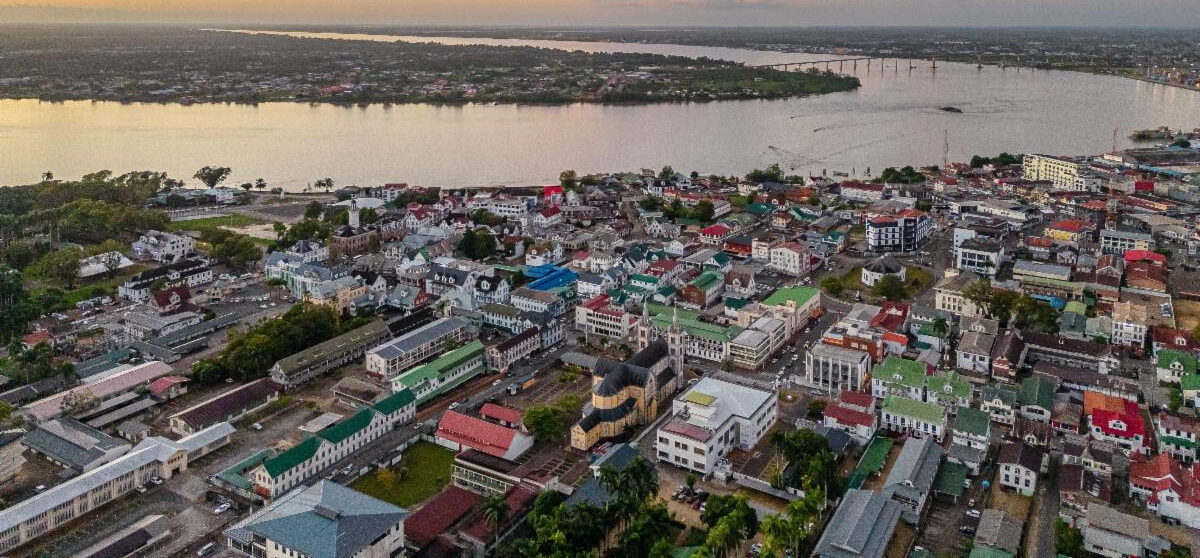
    In a remarkable story of perseverance and community building, Manicel Simon and his daughter Majorie Simon have been distinguished as Leaders of Rurality by the Inter-American Institute for Cooperation on Agriculture (IICA). Their four-decade journey from immigrant struggle to agricultural leadership represents a transformative narrative of integration and empowerment in Suriname.

    Arriving in Suriname in 1981 with nothing but determination, Manicel Simon worked various jobs for 17 years before acquiring his own land in 1998. Today, at 64, he cultivates plantains, sweet potatoes, cassava and squash across 36 hectares—a testament to what he describes as ‘freedom through land ownership.’

    His daughter Majorie, born in Suriname and representing the second generation of this agricultural community, has become instrumental in formalizing collective efforts. As secretary and spokesperson for the Haitian Farmers Cooperative Society of Suriname, she helped establish the organization in 2015 to address the historical isolation of Haitian farmers.

    The cooperative has revolutionized the community’s prospects by facilitating access to training, agricultural machinery, water pumps, fertilizers, and technical assistance through partnerships with IICA, FAO, and the Caribbean Development Bank. Most significantly, it has enabled Haitian farmers to secure land rights after decades of precarious tenancy arrangements where farmers could be evicted after clearing and cultivating plots.

    Beyond production improvements, the Simons have fostered a sense of community identity and rights awareness among dozens of Haitian farming families. Their work includes digital outreach through a Facebook page with over 10,000 followers that markets products and has attracted European clients.

    Current challenges include market limitations in Suriname’s small economy, where seasonal overproduction causes price collapses. The cooperative now focuses on developing export capabilities and food processing infrastructure to create value-added products like plantain chips, cassava flour, and preserved foods that would provide year-round income stability.

    The recognition includes the Soul of Rurality award, celebrating their contributions to food security and sustainability. Their story exemplifies how agricultural production serves as a driving force for immigrant integration and community development, even under adverse conditions, while maintaining cultural connections through weekly church gatherings that strengthen community bonds.

  • Former SVG PM, Dr Ralph Gonsalves, joins reparations fight

    Former SVG PM, Dr Ralph Gonsalves, joins reparations fight

    In a significant development for the Caribbean reparations movement, former Prime Minister of St. Vincent and the Grenadines Dr. Ralph E. Gonsalves has been appointed as Senior Advisor and Elder for The Repair Campaign. The announcement marks a strategic enhancement for the regional initiative seeking reparatory justice for historical injustices.

    Dr. Gonsalves brings unparalleled political experience to the role, having served as Prime Minister for an unprecedented 24 years from 2001 to 2025—the longest continuous tenure of any Caribbean leader. Throughout his distinguished political career, he has consistently advocated for addressing the enduring consequences of indigenous genocide, the transatlantic slave trade, and colonial exploitation.

    The former Prime Minister, affectionately known as ‘Comrade Ralph’ throughout the region, has established himself as a prominent voice for Caribbean reparatory justice. His 2015 publication, ‘The Case for Caribbean Reparatory Justice,’ stands as a foundational text in the movement, compiling speeches and essays that helped launch the International Decade for People of African Descent.

    In his new capacity, Dr. Gonsalves emphasized the compelling historical, moral, and legal foundations for reparations. ‘The Caribbean’s call is not for charity, but for justice and repair so that our people can enjoy the future they deserve,’ he stated, highlighting needs for adequate housing, healthcare, education, employment opportunities, and fair wages.

    Denis O’Brien, Founder of The Repair Campaign, welcomed the appointment, noting that Dr. Gonsalves’ extensive political experience and regional insights would prove invaluable during this pivotal moment in the reparations movement. The organization aims to maintain reparatory justice as a priority for political leaders in both Europe and the Caribbean while developing practical, evidence-based solutions.

    Dr. Gonsalves expressed his commitment to collaborating with the CARICOM Reparations Commission, regional governments, advocacy groups, and grassroots campaigners to advance the Caribbean’s call for meaningful reparations through sustained joint efforts at all levels.

  • New Grand Bay fire station to house 16 officers, La Plaine facility to be funded by US gov’t

    New Grand Bay fire station to house 16 officers, La Plaine facility to be funded by US gov’t

    The Commonwealth of Dominica is significantly enhancing its emergency response capabilities through a dual strategy of infrastructure development and equipment modernization. Rayburn Blackmoore, Minister for National Security, unveiled these advancements during a formal ceremony last week for the handover of two new fire trucks to the national Fire and Ambulance Service.

    A major pillar of this initiative is the construction of two new fire stations. Work is currently underway on a facility in Grand Bay, which is designed to accommodate a contingent of 16 fire officers and will be fully equipped with the necessary operational appliances. In a parallel development, Minister Blackmoore confirmed a collaborative project with the United States Government, which has provided funding for a new emergency services building in the village of La Plaine. The contractor for the La Plaine project has already begun mobilization, with physical construction slated to commence before the end of this month.

    Beyond infrastructure, the government is also investing in state-of-the-art mobile equipment. Minister Blackmoore revealed that an additional custom-built fire truck is currently in production. He highlighted the complexity and extended timeline of such manufacturing processes, noting that it typically requires over a year to complete a single vehicle. This new unit represents a substantial investment of approximately $1.5 million (USD). While initially scheduled for delivery to Dominica in April, the Minister indicated a potential short delay, advising that the truck may now arrive around a month later than planned due to minor setbacks in the production schedule.