标签: Dominica

多米尼克

  • 17 early childhood learning centres receive media and Learning equipment from IsraAID

    17 early childhood learning centres receive media and Learning equipment from IsraAID

    In a significant advancement for educational infrastructure and disaster preparedness, IsraAID Dominica has formally delivered state-of-the-art media and learning equipment to 17 early childhood education centers across the island nation. This strategic donation represents a holistic approach to merging interactive pedagogical tools with critical emergency response capabilities for Dominica’s youngest students.

    The official handover ceremony gathered prominent education officials, school administrators, and educators to witness the distribution of technological resources including compact projectors, projection screens, Bluetooth audio systems, and high-powered megaphones. These instruments serve a dual function: enhancing classroom engagement through digital learning while providing reliable communication channels during safety drills and actual emergencies.

    IsraAID Country Director Velma Moses Joseph articulated the profound significance behind the initiative during her keynote address. “While the equipment may appear straightforward, its underlying purpose carries substantial weight,” Joseph remarked. “These resources are engineered to foster more dynamic learning environments, facilitate clear communication during crises, and empower schools to maintain optimally prepared and secure settings for their students.”

    A cornerstone of this initiative involves the implementation of the Kay and Kelan Early Childhood Disaster Risk Reduction (DRR) Toolkit, an innovative educational framework that employs narrative storytelling and gameplay to introduce hazard awareness and preparedness concepts to preschool-aged children. Numerous recipient institutions participated in the toolkit’s pilot phase, contributing valuable insights that shaped its deployment throughout Eastern Caribbean nations.

    Education ministry representatives expressed profound appreciation for IsraAID’s comprehensive methodology. Assistant Early Childhood Development Officer Ginelle Ferrol acknowledged the organization’s multifaceted support: “We extend gratitude to IsraAID not merely for material contributions but for the complementary workshops, informational resources, and knowledge transfer. This holistic approach delivers immense value to our educational institutions, educators, and most importantly, our children.”

    Echoing this sentiment, Assistant Chief Education Officer Nadia Ferrol emphasized the initiative’s long-term impact: “IsraAID’s dedication to strengthening Dominica’s educational foundation during these formative years will undoubtedly influence the development of our future leaders and citizens. These technological assets will immediately enrich the educational journey for our students, particularly early learners, by making instruction more captivating, innovative, and participatory.”

    The Country Director concluded by emphasizing the importance of equipment maintenance to ensure longevity across multiple student generations, noting that when children disseminate safety knowledge within their households, entire communities develop enhanced resilience.

    This project constitutes part of IsraAID’s enduring commitment to Dominica, transitioning from immediate crisis intervention to sustainable capacity building and grassroots disaster awareness cultivation.

    Participating institutions include: Goodnews Pre-school, Seneku Pre-school, Lighthouse Academy, Mahaut River Pre-school, Salybia Pre-school, Atkinson Primary School, Concord Primary School, Grandfond Pre-school, Morne Jaune Primary School, Jones Beaupiere Primary School, Delices Primary School, San Sauveur Pre-school, Pilgrim Pre-school, Castle Bruce Primary School, Belles Primary School, Warner Primary School, and Isulukati Pre-school.

  • North Side FC secures hard-fought victory in Wenham Sheppard Possie Cup (WSPC)

    North Side FC secures hard-fought victory in Wenham Sheppard Possie Cup (WSPC)

    In a dramatic display of resilience amid torrential conditions, North Side FC emerged victorious with a 2-1 win against Calibishie FC in Game #2 of the Wenham Sheppard Possie Cup (WSPC). The match, held at Benjamin Park Playing Field, was significantly influenced by relentless rainfall that transformed the pitch into a challenging, slippery surface.

    The opening breakthrough came unexpectedly when Calibishie FC conceded an own goal, a direct consequence of the treacherous playing conditions compromising defensive control. Demonstrating remarkable composure, Calibishie FC mounted a swift response. Their efforts were rewarded when Ezechiel Mestor expertly found the net, leveling the score and reigniting the contest.

    As the downpour continued, both squads engaged in a fierce battle for midfield supremacy. The deadlock was ultimately broken by North Side FC’s Jayden Thomas, who netted the decisive goal to reclaim the lead. Despite sustained pressure and several determined attacks from Calibishie FC in the closing stages, North Side’s defense remained impenetrable, securing the narrow victory.

    The WSPC tournament continues its schedule with an upcoming fixture on Thursday, March 12, 2026. Defending national champions Central Cooperative Credit Union Dublanc FC are set to face Calibishie FC at Benjamin Park in Portsmouth at 7:00 PM. Organizers are calling upon football enthusiasts throughout the North and North-East regions of Dominica to attend, promising continued high-energy matches and a vibrant community atmosphere.

  • OP-ED: The Shield and the Silence – What the Doral Summit reveals about the Caribbean’s position  in a changing hemisphere

    OP-ED: The Shield and the Silence – What the Doral Summit reveals about the Caribbean’s position in a changing hemisphere

    At a recent gathering of Caribbean leaders in St. Kitts and Nevis, Trinidad and Tobago’s Prime Minister Kamla Persad-Bissessar deployed a local proverb that encapsulates a growing geopolitical schism: “Who vex loss.” This phrase, meaning “If you’re upset by my choices, that’s your problem,” preceded a significant development in hemispheric relations—the Shield of the Americas Summit in Doral, Florida.

    The White House-organized event, focused on security, counter-narcotics, and containing Chinese influence, has drawn a selective roster of hemispheric partners. Notably absent were Mexico, Brazil, and Colombia—the three largest Latin American economies—while only two Caribbean Community (CARICOM) leaders received invitations: Guyana’s President Irfaan Ali and Prime Minister Persad-Bissessar.

    This selective invitation strategy emerged immediately after US Secretary of State Marco Rubio attended CARICOM’s 50th Heads of Government Meeting in Basseterre, where regional priorities included climate finance, food security, reparatory justice, and the Guyana-Venezuela border controversy. None of these issues appear on the Doral summit agenda, which instead emphasizes Washington’s strategic priorities.

    The divergence highlights a fundamental asymmetry between American interests and Caribbean development needs. While Trinidad faces urgent security concerns evidenced by rising murder rates, and Guyana confronts territorial pressures, their participation in Washington’s framework comes at the cost of sidelining collective regional priorities.

    CARICOM Chairman Drew maintains the bloc remains unified, but the reality suggests fragmentation. The organization’s strength has historically derived from its collective voice, particularly evident in climate finance advocacy through the Bridgetown Initiative. Washington, however, benefits from engaging individual states rather than confronting a unified regional position.

    Historical precedents offer cautionary tales. Venezuelan opposition leader María Corina Machado, once celebrated by the Trump administration, was swiftly sidelined after offering her Nobel medal to the former president. Similarly, a former Homeland Security secretary who implemented controversial immigration policies was eventually dismissed to a ceremonial role.

    The central question for Caribbean nations remains whether bilateral engagement with superpowers ultimately serves long-term interests. While immediate security and economic concerns drive some leaders to accept Washington’s terms, the region must consider whether this approach sacrifices the leverage needed to address existential threats like climate change and economic vulnerability.

    The true cost of participation in hemispheric power dynamics may be measured in silence—the inability to advocate for issues that will determine whether future generations inherit viable nations.

  • Police: Action required on derelict vehicles tagged for removal in Canefield area

    Police: Action required on derelict vehicles tagged for removal in Canefield area

    The Commonwealth of Dominica Police Force (CDPF) has escalated its urban cleanup campaign, targeting derelict and abandoned vehicles across multiple neighborhoods in Canefield. In a coordinated operation with the Canefield Urban Council on March 3, 2026, law enforcement officials conducted systematic patrols along major thoroughfares including 12th Street, 15th Street, 20th Street, Roger Road, and Imperial Road near Watercrest.

    Following thorough inspections, multiple vehicles were formally identified as either abandoned or in advanced states of disrepair. These vehicles have been officially marked for imminent removal as part of a broader initiative to uphold community standards of cleanliness and public safety. According to an official CDPF release, this operation represents a continuation of the ongoing collaborative effort between law enforcement and local governance structures.

    Authorities have issued a firm directive to vehicle owners, urging immediate action to remove tagged automobiles from public spaces. The police statement emphasized that non-compliance will trigger legal proceedings under relevant statutes, with officials prepared to implement additional enforcement measures against negligent owners.

    The CDPF has framed this initiative as a community partnership, stating: ‘Let’s work together to keep our communities clean, safe, and accessible for all.’ This campaign reflects growing concerns about urban blight and its implications for public safety, property values, and overall quality of life in residential areas. The removal of derelict vehicles aims to eliminate potential hazards including fire risks, environmental contamination, and spaces that could facilitate criminal activity.

  • Convent Prep issues statement on tragic loss of a ‘bright star’

    Convent Prep issues statement on tragic loss of a ‘bright star’

    The Convent Preparatory School community has been plunged into mourning following the sudden and tragic death of eight-year-old student Kimroy Dover. The young boy from Stockfarm collapsed unexpectedly on school premises this past Thursday and could not be revived, sending shockwaves through the educational institution.

    In the immediate aftermath of the devastating incident, school administration made the decision to suspend all academic activities for the day, allowing both students and faculty members space to process their grief and come to terms with the heartbreaking loss.

    A formal statement issued by the school’s staff painted a poignant portrait of Kimroy as an exceptional child who left an indelible mark on his educational environment. Described as ‘a bright star within the Convent Prep family,’ the young boy was characterized by his active engagement in school life, inherent kindness, and consistently respectful demeanor. School authorities emphasized his unwavering commitment to academic excellence and the gentle, uplifting spirit he brought to classroom interactions.

    The institutional communication further articulated the collective sorrow permeating the school: ‘Our entire educational community stands united in grief during this profoundly difficult period. We extend our most heartfelt sympathies to Kimroy’s family, friends, and fellow students as they navigate this unimaginable loss.’

    The school administration has reaffirmed its commitment to providing comprehensive support services to all affected parties, while simultaneously vowing to preserve the memory of the deceased student’s positive impact on the institution. Kimroy’s legacy, according to school representatives, will be permanently etched in the collective consciousness of the Convent Prep community.

  • Uniform patrol at San Sauveur Primary fosters engagement with students

    Uniform patrol at San Sauveur Primary fosters engagement with students

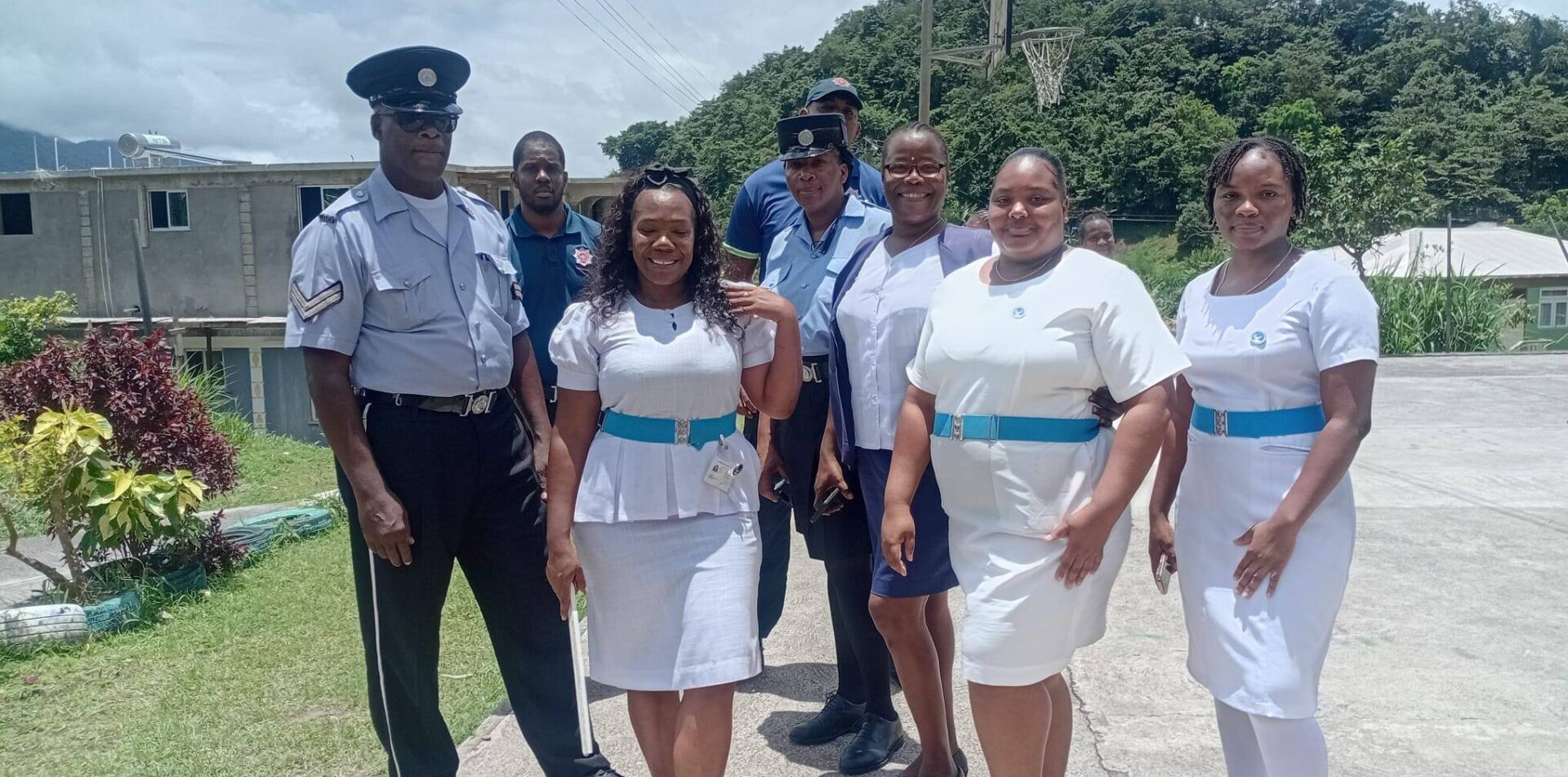
    In a recent community outreach initiative, officers from the Commonwealth of Dominica Police Force (CDPF) conducted an educational visit to San Sauveur Primary School, demonstrating their ongoing commitment to community policing strategies.

    The presence of uniformed officers immediately captured the attention of curious students, creating an organic opportunity for constructive dialogue. Acting Corporal Earl George of the Castle Bruce Police Station skillfully transformed this curiosity into an impactful learning experience, directly addressing the children to emphasize the protective role of law enforcement.

    “This interaction served as a strategic platform to reinforce essential safety principles while visibly demonstrating our dedication to safeguarding young citizens,” stated an official CDPF release. The engagement allowed officers to personally assure students that police services exist primarily as a resource for public assistance and protection.

    The initiative aligns with CDPF’s broader institutional mission to develop sustainable trust-based relationships within educational environments. Through these deliberate interactions, the police force aims to establish foundational partnerships that benefit both law enforcement and community stakeholders.

    This school visit represents part of CDPF’s comprehensive approach to community-oriented policing, which prioritizes proactive engagement over traditional reactive measures. By integrating themselves into educational settings, officers work to dismantle potential barriers between law enforcement and youth populations, creating channels for open communication and mutual understanding.

    The program underscores the evolving nature of modern policing methodologies that emphasize prevention, education, and relationship-building as essential components of public safety infrastructure.

  • Director of IICA meets with Southern Agricultural Council to share four year work plan

    Director of IICA meets with Southern Agricultural Council to share four year work plan

    BRASÍLIA – Agricultural ministers from across the Americas convened for a pivotal session of the Southern Agricultural Council (CAS) to shape the future of regional farming cooperation. Chaired by Brazil’s Minister of Agriculture and Livestock Carlos Fávaro, the high-level meeting marked a significant step in developing the Inter-American Institute for Cooperation on Agriculture’s (IICA) 2026-2030 Medium-term Plan (MTP).

    IICA Director General Muhammad Ibrahim, the Guyanese agronomist who assumed leadership in January, presented the strategic framework that will guide the organization’s technical cooperation across the hemisphere. The MTP represents a comprehensive roadmap designed to address evolving agricultural challenges while harnessing emerging opportunities throughout Ibrahim’s tenure.

    The four-pillar strategic architecture focuses on: international trade integration and agribusiness development; agricultural health and food safety systems; science and innovation for productive growth; and sustainable management of natural resources with emphasis on water, soil and biodiversity conservation. Ibrahim emphasized that the plan would incorporate differentiated strategies recognizing the unique agricultural landscapes of Mesoamerica, the Caribbean, Andean region, and Southern Cone nations.

    Ministers from Argentina, Bolivia, Brazil, Chile, Paraguay, and Uruguay contributed substantive input during the policy dialogue, highlighting additional priority areas including productivity enhancement, technology adoption acceleration, and leveraging biotechnology and artificial intelligence solutions. The participatory approach ensured the final plan would address diverse regional needs while maintaining flexibility for implementation across IICA’s five geographical divisions.

    A key innovation involves integrating the comprehensive ‘food systems’ concept into IICA’s mandate, expanding beyond traditional agriculture to encompass entire production-to-consumption chains. Ibrahim stressed the growing complexity of agri-food systems requiring consideration of more social actors and evolving consumption patterns amid global market reconfiguration.

    The CAS serves as a crucial platform for coordinated policy development among Southern Cone agricultural ministries, with IICA providing technical and administrative secretariat support. The meeting featured participation from Uruguay’s Minister Alfredo Fratti, Bolivia’s Minister Óscar Mario Justiniano, Paraguay’s Deputy Minister Marcelo González, and senior officials from Chile and Argentina, demonstrating regional commitment to collaborative agricultural advancement.

  • Dominica gov’t explores maritime fuel solutions with Fortescue’s Green Pioneer

    Dominica gov’t explores maritime fuel solutions with Fortescue’s Green Pioneer

    The Caribbean nation of Dominica is leveraging its volcanic resources to pioneer a new era in sustainable shipping. Central to this initiative is the presence of the ‘Green Pioneer,’ a vessel owned by Australian mining giant Fortescue, which is demonstrating a groundbreaking application of the island’s geothermal energy.

    This demonstration is intrinsically linked to the imminent commissioning of Dominica’s first major geothermal power plant in Laudat, projected for the end of March. The project showcases a tangible pathway from renewable power to practical fuel. The abundant geothermal energy is being used to produce green ammonia, a zero-carbon fuel with significant potential for the global maritime industry.

    Fortescue, which has an ambitious ‘Real Zero’ by 2030 goal to eliminate all its greenhouse gas emissions, is using the Green Pioneer as a working prototype. The company has successfully converted two of the ship’s four engines to operate on a proprietary dual-fuel system that uses a mix of ammonia and diesel. This technological milestone follows two years of intensive research and development, culminating in its first successful fuel transfer in Singapore in 2024.

    The initiative positions Dominica not just as a user of green technology, but as a potential exporter of green ammonia for maritime bunkering. This could create a substantial economic advantage for the country, allowing it to tap into the burgeoning global market for clean fuels. The project underscores a critical evolution in the shipping sector, demonstrating how naturally occurring resources can be harnessed to create viable, environmentally friendly alternatives to traditional fossil fuels and significantly reduce the carbon footprint of one of the world’s most emission-intensive industries.

  • Caribbean Association of Banks joins partners to launch pioneering nature reporting forum to advance sustainable finance

    Caribbean Association of Banks joins partners to launch pioneering nature reporting forum to advance sustainable finance

    In a landmark move for sustainable finance, Caribbean financial institutions have launched the region’s first comprehensive framework for nature-related risk assessment and reporting. The Nature Reporting Preparer Forum, established through a collaborative effort between the Caribbean Association of Banks (CAB), UN Environment Programme Finance Initiative (UNEP FI), and Global Caribbean Blue Carbon (GCBC), represents a transformative approach to environmental stewardship in the banking sector.

    The initiative, which commenced its inaugural session on March 4, 2026, addresses the growing need for financial institutions to integrate nature-related considerations into their risk management frameworks and strategic planning. CAB CEO Wendy Delmar emphasized during her opening address that environmental accountability has become an essential component of regional financial governance, noting that protecting the Caribbean’s unique ecosystems requires concerted action across the banking industry.

    The comprehensive program introduces participants to critical frameworks including the Taskforce on Nature-related Financial Disclosures (TNFD) guidelines, the complex relationship between climate change and biodiversity loss, and international biodiversity agreements that shape nature-related actions. The curriculum specifically addresses systemic risks that environmental degradation poses to financial stability and economic resilience in the Caribbean context.

    Over the coming months, the initiative will deliver hybrid technical training sessions, practical workshops, and regional case studies designed to build capacity among Caribbean financial institutions. The program emphasizes peer learning and knowledge sharing, creating a collaborative ecosystem for developing nature-positive financial practices.

    This pioneering effort positions the Caribbean as an emerging leader in sustainable finance, demonstrating how regional banking sectors can proactively address environmental challenges while maintaining economic competitiveness. The initiative marks a significant advancement in aligning financial systems with ecological preservation, potentially serving as a model for other regions facing similar environmental vulnerabilities.

  • St. Vincent and the Grenadines Prime Minister and Foreign Minister face election petition over dual citizenship

    St. Vincent and the Grenadines Prime Minister and Foreign Minister face election petition over dual citizenship

    The High Court of Kingstown has commenced proceedings in a pivotal constitutional case that challenges the parliamentary eligibility of Prime Minister Dr. Godwin Friday and Foreign Affairs Minister Dwight Fitzgerald Bramble. The litigation, initiated by Unity Labour Party (ULP) representatives Carlos Williams and Luke Browne, centers on whether the officials’ dual Vincentian-Canadian citizenship violates constitutional mandates prohibiting allegiance to foreign powers.

    Legal arguments presented before Justice Gertel Thom focus on Section 26 of the Constitution of St. Vincent and the Grenadines, which bars individuals acknowledging foreign allegiance from holding elected office. Both officials secured their parliamentary positions in the November 2025 general elections—Friday representing East Kingstown and Bramble the Northern Grenadines—before these citizenship revelations emerged.

    Following Thursday’s case management hearing, Prime Minister Friday offered an optimistic but non-committal assessment, noting the ‘wonderful day’ while deferring legal inquiries to his counsel. The government’s lead attorney, Anand Ramlogan S.C. of Trinidad and Tobago, characterized the proceedings as ‘an interesting, if not amusing experience,’ expressing confidence in their defense based on the elected officials’ ‘overwhelming mandate’ from voters.

    The legal teams represent an international collaboration, with petitioners represented by Stewart Richard Young S.C., Al Elliott, and Carlos James, while the respondents’ defense includes counsel from Trinidad and Tobago and England.

    The court has established an extensive litigation timeline requiring respondent disclosure of election declarations by March 12, 2026, followed by petitioner evidence submission by March 27. Respondents must file replies by May 11, with another management hearing scheduled for May 19. The substantive trial will occur over three consecutive days from July 28-30, 2026.

    This judicial review carries significant constitutional implications, potentially validating the election outcomes or establishing precedent regarding dual citizenship as disqualifying allegiance under Vincentian law.