标签: Cuba

古巴

  • Syria recovers country’s largest oilfield

    Syria recovers country’s largest oilfield

    In a significant development for Syria’s energy sector, senior officials have outlined ambitious plans to restore production at the nation’s largest oilfield using domestic expertise and international partnerships. During a press conference at the strategically vital al-Omar oilfield in Deir Ezzor Governorate, SPC executive Qablawi detailed the comprehensive rehabilitation strategy.

    The rehabilitation initiative will leverage national technical capabilities while fostering cooperation with both local enterprises and international corporations. Qablawi emphasized the field’s critical importance to Syria’s economic infrastructure, revealing ongoing negotiations with previous operator Shell to facilitate complete ownership transfer to the Syrian government.

    The official provided stark production figures highlighting the field’s dramatic decline: from approximately 50,000 barrels per day before the conflict to current output of merely 5,000 barrels. This precipitous drop is attributed to substandard extraction methods employed in recent years that disregarded environmental considerations.

    To address this shortfall, the Syrian Petroleum Company has formulated a comprehensive recovery blueprint aligned with global operational standards. The plan targets production restoration to pre-conflict levels of 40,000-50,000 barrels daily, representing a potential tenfold increase from current output that could significantly boost national energy independence and economic stability.

  • Israel begins demolishing UNRWA complex in occupied Jerusalem

    Israel begins demolishing UNRWA complex in occupied Jerusalem

    Israeli military forces have conducted a controversial operation at a United Nations facility, according to reports from the Wafa news agency. The incident involved multiple military units establishing a security perimeter around the area before deploying bulldozers that proceeded to demolish structures within the compound.

    In a particularly symbolic act, soldiers reportedly raised the Israeli flag inside the headquarters of the United Nations Relief and Works Agency (UNRWA) during the operation. This event represents the latest escalation in a longstanding conflict between Israel and the UN agency that dates back to 2014, when the Israeli government passed legislation effectively banning UNRWA from operating within both Israel and the occupied Palestinian territories.

    UNRWA has served as a critical humanitarian provider for decades, delivering education, healthcare, and essential aid services to millions of Palestinian refugees across the Gaza Strip, West Bank, Lebanon, Syria, and Jordan. The current tensions stem from Israeli allegations that the agency employed Palestinian militants who participated in the October 2013 strike against Israel. These claims have been subsequently refuted by United Nations investigations, though they continue to fuel diplomatic friction.

    The demolition operation and flag-raising incident have drawn international attention, reviving concerns about the delicate relationship between humanitarian operations and political conflicts in the region.

  • DRC government organizes humanitarian aid and operations in Uvira

    DRC government organizes humanitarian aid and operations in Uvira

    In response to the recent withdrawal of the Congo River Alliance-March 23 Movement (AFC/M23), Prime Minister Judith Suminwa Tuluka has convened an emergency cabinet meeting to address the humanitarian crisis. The meeting, attended by senior security officials and government ministers, focused on developing a comprehensive response to the extensive displacement caused by the nearly two-month occupation.

    The Prime Minister revealed that the rebel occupation has resulted in the displacement of approximately 267,000 individuals, including a particularly vulnerable group of 12,000 unaccompanied minors. Addressing this mass displacement, Suminwa Tuluka identified facilitating the safe return of these populations as the government’s immediate priority.

    However, the Prime Minister established strict protocols for repatriation efforts, mandating that no return operations be authorized without thorough preliminary assessments of residential conditions. This cautious approach aims to prevent further vulnerability among returning populations. The Ministry of Social Affairs and the General Directorate of Migration (DGM) have been tasked with implementing these assessment protocols and managing the return process.

    Government Spokesperson Patrick Muyaya further elaborated that the administration faces significant challenges in restoring public services in Uvira, where suspected AFC/M23 elements may still operate. The effective reestablishment of governmental authority and public services in these areas remains a critical component of the stabilization strategy.

  • Djibouti hosts International Forum on Adaptation to Climate Change

    Djibouti hosts International Forum on Adaptation to Climate Change

    Under the high patronage of Djiboutian President Ismail Omar Guelleh, a landmark international conference convened from January 19-21, assembling a distinguished cohort of scientists, political leaders, climate specialists, and representatives from global organizations. This pivotal gathering focused on developing innovative solutions to the escalating climate crisis affecting the Horn of Africa and beyond.

    Dr. Jalludin Mohamed, Director General of Djibouti’s Center for Research Studies, set the tone with an urgent call to action, emphasizing the immediate threats posed by climate change to regional stability and ecosystems. His address highlighted the critical window for implementing effective mitigation strategies.

    Professor Daniel Olago, Director of the Institute for Climate Change and Adaptation at the University of Nairobi, presented a forward-looking vision for climate research. He advocated for equipping emerging scientists with cutting-edge technological tools, specifically highlighting the transformative potential of artificial intelligence and machine learning in analyzing complex climate data and predicting environmental trends.

    Djibouti’s Minister of Higher Education and Research, Nabil Mohamed Ahmed, reinforced the nation’s strategic commitment to positioning scientific innovation and international collaboration as central pillars of its climate adaptation framework. This declaration signals Djibouti’s ambition to become a regional hub for climate research excellence.

    The summit featured an extensive program of thematic sessions, technical workshops, and scientific presentations specifically designed to translate theoretical discussions into practical, actionable recommendations. Participants worked to develop concrete initiatives that combine traditional knowledge with modern technological approaches to create sustainable climate resilience models.

  • Vietnam underscores historic responsibility of CPV’s 14th Congress

    Vietnam underscores historic responsibility of CPV’s 14th Congress

    In a landmark address opening Vietnam’s 14th National Party Congress, State leader Cuong outlined an ambitious strategic framework that will guide the nation’s trajectory through 2030 and beyond. The gathering, comprising 1,586 delegates representing over five million party members, constitutes a pivotal moment for determining Vietnam’s future direction and national destiny.

    Cuong emphasized that the congress transcends mere objective-setting for the 2026-2030 period, representing instead a comprehensive blueprint for decades to come. The conclave seeks to galvanize national development aspirations while fostering pride and resilience across Vietnamese society. A central focus involves mobilizing all available resources and growth engines to strengthen national unity and harness contemporary opportunities.

    The comprehensive agenda addresses synchronized advancement across multiple domains: renewal initiatives, construction projects, development processes, and homeland defense. These efforts align with President Ho Chi Minh’s vision of establishing Vietnam as a nation comparable to global powers, fulfilling the aspirations of both the revered leader and the Vietnamese populace.

    Characterizing the 14th Congress as inaugurating a new developmental epoch, Cuong highlighted its embodiment of resolute political determination and collective national solidarity. The overarching vision pursues a Vietnam distinguished by peace, independence, democracy, prosperity, civilization, and happiness—steadily progressing toward socialist ideals through coordinated implementation of these strategic priorities.

  • Financial agencies and entrepreneurs on Noboa’s agenda in Switzerland

    Financial agencies and entrepreneurs on Noboa’s agenda in Switzerland

    Ecuadorian President Daniel Noboa is embarking on a significant diplomatic mission to the World Economic Forum in Davos, Switzerland, scheduled from January 20-24. The president’s agenda features high-level meetings with three of the world’s most influential financial leaders: IMF Managing Director Kristalina Georgieva, Inter-American Development Bank President Ilan Goldfajn, and World Bank President Ajay S. Banga.

    Beyond economic discussions, President Noboa will strengthen bilateral relations through scheduled dialogues with multiple heads of state, including Panamanian President José Raúl Mulino, Israeli President Isaac Herzog, and Singaporean President Tharman Shanmugaratnam. These meetings represent strategic efforts to expand Ecuador’s international partnerships across diverse regions.

    The president’s itinerary also includes substantive engagements with global business leaders and entrepreneurs, highlighting his administration’s commitment to attracting foreign investment and stimulating economic growth. As part of the official forum programming, Noboa will contribute to two key discussions: ‘Rebuilding Trust in Latin America’ and ‘Transforming Latin America’s Investment Frontier,’ where he will articulate his vision for regional development and stability.

    This diplomatic initiative occurs amid Ecuador’s ongoing economic challenges and reflects the government’s proactive approach to securing international support and investment opportunities.

  • Brazil’s MST discusses its political strategy

    Brazil’s MST discusses its political strategy

    SALVADOR, BAHIA – The Landless Workers Movement (MST) launched its National Meeting on Monday at the Agricultural Exhibition Park, marking its first major national gathering since 2009. With approximately 3,000 activists from across Brazil in attendance, the five-day forum represents a significant mobilization effort to advance the movement’s strategic objectives of land redistribution, Popular Agrarian Reform, and progression toward socialist principles.

    The comprehensive agenda addresses critical issues including the dominance of capital in Brazilian agriculture, the nation’s current economic and political climate, and the MST’s organizational development. The movement is conducting thorough evaluations of its initiatives in education, agroecology, cooperative farming, and agro-industrialization practices.

    The opening session featured a panel discussion on global geopolitics and the contemporary international landscape. Journalist Breno Altman and Stephanie Weatherbee, an activist with the International Articulation of Peoples, provided analysis that highlighted the declining hegemony of U.S. imperialism in global affairs.

    This gathering surpasses the participation of the previous National Meeting held in Sarandi, Rio Grande do Sul, which commemorated the MST’s 25th anniversary with 1,500 rural workers. The current forum demonstrates the movement’s expanded reach and renewed commitment to transforming Brazil’s agricultural landscape through systemic change.

  • Prosecutor’s Office probes Peruvian president for secret meetings

    Prosecutor’s Office probes Peruvian president for secret meetings

    Peru’s Public Prosecutor’s Office has formally announced the suspension of its criminal investigation into President Pedro Pablo Kuczynski until the conclusion of his presidential term in July 2018. The judicial inquiry, initiated on January 15 under special procedures reserved for sitting presidents, has involved multiple preliminary investigations and two rounds of direct questioning of the head of state.

    Attorney General Tomás Vásquez, the lead prosecutor handling the sensitive case, emphasized that the current charges represent merely a preliminary framework. The investigation aims to establish specific responsibilities and determine the complete scope of events under scrutiny once constitutional immunity limitations no longer apply.

    In a parallel development, Peru’s anti-corruption prosecutors will pursue a separate investigation targeting Chinese entrepreneur Zhi Hua Yang, who manages several companies providing services and products to various sectors. This investigation will proceed without the constitutional restrictions that apply to the sitting president. The case gained national attention after photographic evidence emerged on October 11 showing President Kuczynski wearing a hood and dark glasses while heading to a late-night meeting with Yang near midnight. The president subsequently provided conflicting explanations about the nature and purpose of these clandestine meetings.

  • Encouraging results with Jusvinza

    Encouraging results with Jusvinza

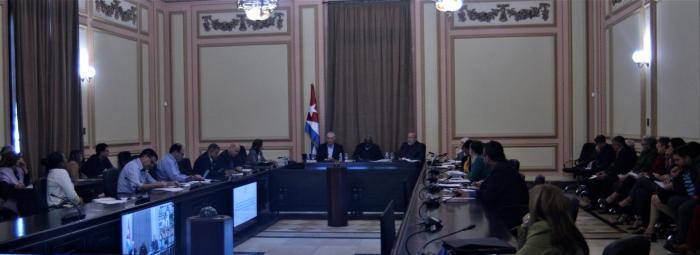
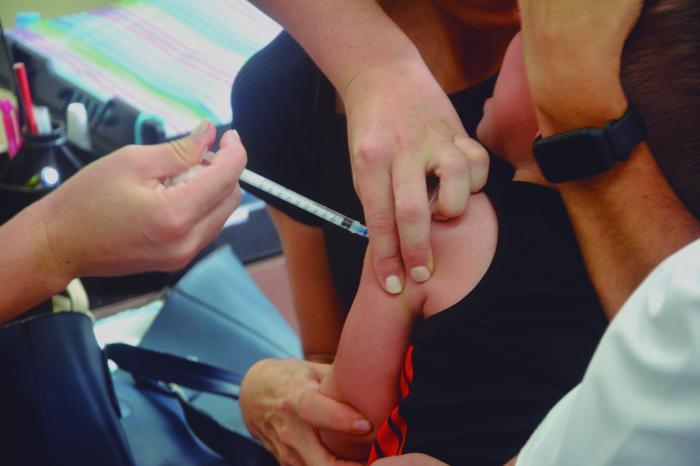
    Cuban President Miguel Díaz-Canel Bermúdez has announced encouraging preliminary results from clinical trials investigating the use of the Cuban biotechnology product Jusvinza for patients suffering from chronic post-Chikungunya arthritis. The findings were presented during a high-level meeting at the Palace of the Revolution attended by scientific experts and government officials, including Prime Minister Manuel Marrero Cruz.

    The clinical studies, initiated on December 2, 2025, have demonstrated notable improvement in patients from Havana and Matanzas provinces who received Jusvinza treatment. Researchers reported that the drug exhibits a strong safety profile and early evidence of clinical effectiveness in addressing the debilitating inflammatory condition that follows Chikungunya virus infection.

    Dr. Julio Esmir Baldomero Hernández, Director of Clinical Research at the Center for Genetic Engineering and Biotechnology (CIGB), indicated that comprehensive data from the study is expected by early March 2026. The research incorporates long-term evaluations focusing particularly on treatment safety and the persistence of therapeutic benefits. The study has been conducted in strict compliance with good clinical practices, receiving endorsement from Cuba’s Center for State Control of Medicines, Equipment, and Medical Devices (Cedmed) after a rigorous inspection.

    According to Dr. Miguel Hernán Estévez del Toro, Director of the Hermanos Ameijeiras Surgical Clinical Hospital and a renowned Cuban rheumatologist, a significant percentage of Chikungunya patients develop chronic inflammatory arthropathy after three months of infection. The condition shares inflammatory mediators with rheumatoid arthritis, leading to similar limitations in quality of life and functional capacity when left uncontrolled.

    ‘Having a product capable of slowing the inflammatory progression of this disease would be tremendously beneficial,’ stated Dr. Estévez del Toro. In response to these findings, Cuba’s Ministry of Public Health has launched a national survey through its Innovation Committee, the National Group, and the Cuban Society of Rheumatology to develop consensus treatment guidelines that incorporate Jusvinza alongside rehabilitation therapies.

    Dr. María del Carmen Domínguez, principal investigator of the study, emphasized that repurposing Jusvinza—originally developed for rheumatoid arthritis and COVID-19—represents a significant scientific achievement. The drug demonstrates immunomodulatory capabilities even with repeated administrations over time, presenting a substantial molecular challenge that researchers have successfully addressed.

    Experts at the meeting also noted a declining incidence of Chikungunya virus infections across Cuba, suggesting that the breakthrough treatment could arrive as the epidemic wave recedes.

  • Cuba: a beacon of hope and inspiration

    Cuba: a beacon of hope and inspiration

    Communist and socialist organizations worldwide are amplifying their support for Cuba and Venezuela amidst escalating tensions with the United States government. The movement gained momentum during recent international gatherings, where leaders denounced American foreign policy as imperialist aggression.

    At a mass rally in Telangana, India, marking the centenary of the Communist Party of India (CPI), General Secretary D. Raja publicly reiterated solidarity with Cuba, Venezuela, and Palestine. The event, attended by Cuban Ambassador Juan Carlos Marsán and Telangana Prime Minister Revanth Reddy, served as a platform for condemning U.S. economic sanctions and political threats.

    Simultaneously, India’s Communist Party (Marxist-Leninist) of Liberation issued a formal statement through General Secretary Dipankar Bhattacharya, characterizing the U.S. embargo against Cuba as ‘illegal, inhumane, and genocidal.’ The communique paid special tribute to 32 Cuban internationalists who died in Venezuela, honoring them as martyrs in the anti-imperialist struggle.

    European political forces joined the chorus of support, with Italy’s Communist Party observing a minute of silence for Cuban combatants during celebrations of Fidel Castro’s centenary. Secretary General Angelo Lombardo extolled Cuba as ‘the greatest example of dignity and the most heroic force’ in contemporary geopolitics.

    French solidarity organization Cuba Linda echoed these sentiments, emphasizing that fallen Cuban heroes died ‘in fulfillment of their internationalist duty.’ The group called for expanded mobilization efforts and urged Latin American leaders to defend international law and national sovereignty against U.S. pressure.

    The coordinated international responses highlight growing ideological divisions as organizations frame Cuba’s resistance to U.S. sanctions as a beacon for global anti-imperialist movements.