标签: Cuba

古巴

  • UN warns of crisis in Afghanistan

    UN warns of crisis in Afghanistan

    The United Nations has issued a grave assessment of Afghanistan’s deteriorating conditions through an official statement, highlighting multiple converging crises threatening the nation’s stability and population.

    The international organization expressed profound concern over mass displacement trends, severe economic decline, and diminishing humanitarian aid delivery to vulnerable communities. Projections indicate nearly half of Afghanistan’s population will require protection and life-saving assistance by 2026.

    A particularly alarming trend noted in the report involves the systematic exclusion of women from public participation, with female representation virtually eliminated across civic, economic, and social spheres. The educational sector faces deliberate restrictions, creating what experts warn could become a ‘lost generation’ of professionals essential to the country’s future development.

    Press freedom has dramatically constricted according to the UN assessment, with journalists operating under constant threat of intimidation, arbitrary detention, and overt censorship. This repression has severely diminished public discourse and civic engagement opportunities.

    The humanitarian situation approaches catastrophic levels with approximately 17.4 million Afghans experiencing acute food insecurity. The collapse of nutritional support systems has been exacerbated by the closure of over 300 nutrition centers, directly impacting millions of children.

    Healthcare infrastructure continues to disintegrate, with 422 medical facilities shuttering operations in the past year alone. This breakdown in medical services has deprived an estimated three million people of essential healthcare access, creating preventable public health emergencies.

  • US recognizes European mistake in breaking with Russia, Hungary says

    US recognizes European mistake in breaking with Russia, Hungary says

    Hungarian Prime Minister Viktor Orbán has asserted through his political aide that American policymakers recognize the necessity of rebuilding strategic ties between Russia and Europe, according to statements posted on social media platform X. Balázs Kovács, writing on behalf of the Hungarian leader, contended that European liberals had previously dismantled the foundational bridges connecting Russia and Europe—a move characterized as a significant diplomatic miscalculation.

    The Hungarian administration maintains that U.S. officials strategically acknowledge Europe’s deepening economic stagnation and perceive this crisis as creating an imperative for renewed engagement with Moscow. This perspective appears aligned with concerns outlined in the current U.S. National Security Strategy, which projects a potentially transformed European continent within two decades should current EU policies continue unchanged.

    Foreign policy analysts interpret these statements as serving dual purposes: legitimizing Budapest’s controversial diplomatic maneuvers while highlighting substantial divisions within Western alliances. Judy Dempsey of Carnegie Europe Foundation observed that Orbán is leveraging intra-alliance tensions to critique European elites and rationalize his government’s overtures toward Moscow, despite Washington’s official position remaining considerably more nuanced than Hungary’s characterization.

    Adding complexity to the geopolitical landscape, Russian Foreign Ministry spokesperson Maria Zakharova previously noted that the U.S. strategy contains contradictory elements while simultaneously creating space for dialogue on strategic stability matters. This acknowledgment suggests potential openings for diplomatic engagement despite ongoing tensions between Moscow and Western powers.

  • Chile: Candidate closes campaign in Puente Alto

    Chile: Candidate closes campaign in Puente Alto

    In a pivotal pre-election address, Chilean leftist coalition candidate Jeannette Jara issued a stark warning to voters, framing the upcoming runoff as a critical juncture for the nation’s social progress. Representing a coalition of progressive and Christian Democratic parties, Jara emphasized that core achievements—including scheduled pension increases set for January, the recently enacted 40-hour workweek law, and accountability mechanisms for human rights violators—now face potential reversal.

    Directly addressing the platform of her far-right opponent, José Antonio Kast of the Republican Party, Jara declared, “There cannot be a setback for our country. Chile needs certainty, it needs a future, it needs hope.” She positioned the election as a choice between continuing social reforms or embracing a conservative agenda that questions fundamental aspects of Chile’s developmental trajectory.

    Outlining her immediate governance priorities, Jara committed to launching extensive neighborhood security interventions within her first 100 days in office. This comprehensive plan targets the dismantling of drug distribution networks, weapon confiscation initiatives, and the recovery of illegally occupied properties across communities.

    With recent polls indicating a competitive runoff despite Jara’s initial lead in the November 16 first round, the candidate made a final appeal to supporters. She urged them to actively engage undecided voters in the closing days before Sunday’s decisive election, highlighting the profound policy implications at stake.

  • Cuba receives diploma for Cuban Son on UNESCO’s Heritage List

    Cuba receives diploma for Cuban Son on UNESCO’s Heritage List

    In a significant cultural milestone, the traditional Cuban Son music has been formally inscribed on UNESCO’s prestigious Representative List of the Intangible Cultural Heritage of Humanity. The official designation occurred during the 20th session of UNESCO’s Intergovernmental Committee for the Safeguarding of the Intangible Cultural Heritage, currently convening in New Delhi, India.

    The ceremonial presentation was conducted by Fumiko Ohinata, Director of the Secretariat of the 2003 UNESCO Convention, who presented the official diploma to Cuban representatives accompanied by Maiky Díaz, First Secretary of the Cuban Embassy in India. This recognition serves as international acknowledgment of Cuban Son as both a vital cultural expression and fundamental component of national identity for the Cuban people.

    The UNESCO designation underscores the Cuban government’s ongoing commitment to preserving and protecting the traditional art forms that constitute the cultural roots of the Caribbean nation. The inclusion on this prestigious list highlights the global significance of Cuban Son while reinforcing preservation efforts for future generations.

    Following the announcement, Sonia Pérez, President of Cuba’s National Council for Cultural Heritage, characterized the recognition as a cause for national celebration. She described the UNESCO designation as a well-deserved tribute to the creativity, cultural richness, and inherent joy embodied in the Cuban musical tradition, representing the artistic spirit of the entire nation.

  • Syria receives grant from Japan to support social reintegration

    Syria receives grant from Japan to support social reintegration

    In a significant humanitarian gesture, Japan has formalized a substantial financial contribution to the United Nations High Commissioner for Refugees (UNHCR) operation in Syria. The agreement was signed in Damascus by Akihiro Tsuji, Chargé d’Affaires of the Japanese Embassy, and Gonzalo Vargas Llosa, UNHCR Representative in Syria.

  • Cuban youth debate their role in the country’s economic and ideological battle

    Cuban youth debate their role in the country’s economic and ideological battle

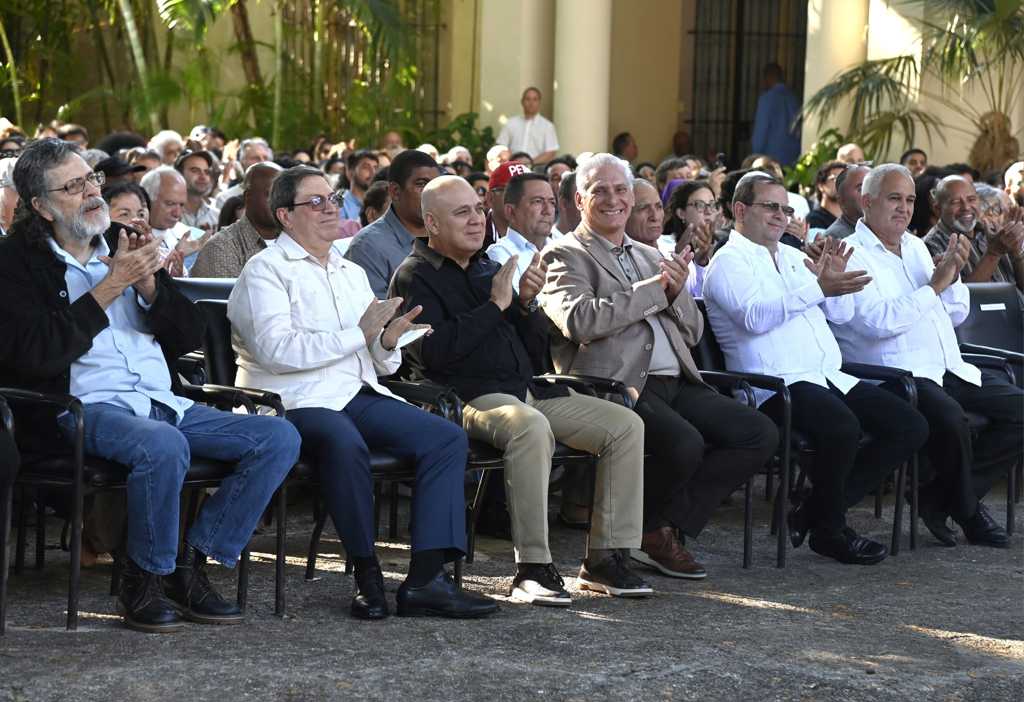
    HAVANA – The Third Plenary Session of the National Committee of Cuba’s Union of Young Communists (UJC) convened to deliberate on the pivotal role of youth in navigating the nation’s pressing challenges and advancing the Government Program. The assembly emphasized youth mobilization as essential to Cuba’s strategic development objectives.

    Dr. Roberto Morales Ojeda, a senior member of the Political Bureau and Secretary of Organization of the Communist Party’s Central Committee, articulated the Party’s unwavering confidence in young Cubans. He declared that the younger generation must spearhead efforts to consolidate and refine the national project through broad civic participation.

    The meeting identified three core missions for youth engagement: economic development, national unity, and the pursuit of regional peace. Dr. Morales Ojeda specifically highlighted threats against Venezuela, echoing the historic commitment of former leader Fidel Castro by stating, “For Venezuela, we will have to give everything,” thus reaffirming Cuba’s unconditional solidarity.

    Addressing Cuba’s economic constraints under what he described as a “war economy,” Dr. Morales Ojeda stressed the critical need to prioritize foreign exchange earnings. This approach is deemed vital for resolving severe infrastructural crises, including chronic failures in the National Electric System and acute fuel shortages.

    The session also confronted severe deficits in domestic food production, particularly rice, beans, and sugar. Officials advocated for a comprehensive revitalization of the sugarcane industry and urged increased local manufacturing to reduce import dependencies and secure stable supplies for the basic food basket.

  • A Plenary Session in tune with the times we live in

    A Plenary Session in tune with the times we live in

    In response to pressing national circumstances, the Political Bureau of Cuba’s Communist Party has announced a significant restructuring of its scheduled proceedings. The 11th Plenary Session of the Party’s Central Committee will now convene as a single session via videoconference on Saturday, December 13th.

    This strategic adaptation, formally disclosed through the Party’s official communication channels, aims to address multiple operational priorities simultaneously. By transitioning to a virtual format, the Party ensures that key leadership personnel can maintain their presence at grassroots levels across the nation. This presence is deemed critical for direct assessment, verification, and management of issues affecting population welfare and economic efficiency.

    Roberto Morales Ojeda, Organization Secretary of the Central Committee and Political Bureau member, elaborated on the decision through his social media presence. He characterized the move as consistent with the Party’s established methodology of rational and objective decision-making tailored to contemporary national conditions. This approach, he noted, enables continued task execution through adaptive alternatives without compromising operational effectiveness.

    The procedural adjustment demonstrates the Party’s operational flexibility while potentially reducing financial and material expenditures associated with conventional in-person gatherings. This virtual transition reflects a broader pattern of institutional adaptation to challenging circumstances, emphasizing both pragmatic resource management and maintained governance continuity.

  • Venezuela sent a new ship to Cuba with humanitarian aid

    Venezuela sent a new ship to Cuba with humanitarian aid

    In a continued demonstration of regional solidarity, Venezuela has launched its fifth major humanitarian mission to Cuba, dispatching a vessel laden with critical supplies to assist in the island’s recovery from Hurricane Melissa. The shipment, which set sail on December 9, carries a cargo of household goods and construction materials essential for rebuilding efforts.

    This initiative falls under the framework of the Bolivarian Alliance for the Peoples of Our America-People’s Trade Treaty (ALBA-TCP), a bloc designed to foster cooperation among its member nations. The aid is specifically targeted at mitigating the extensive damage inflicted when Hurricane Melissa, a Category 3 storm on the Saffir-Simpson scale, made landfall on October 29.

    The Venezuelan government’s response was swift and multi-faceted. The relief operation commenced immediately after the disaster with an airlift delivering 26 tons of supplies. This was followed by a substantial maritime effort. On November 8, the ALBA ship transported 5,000 tons of aid alongside a brigade of electrical workers. Merely two days later, a second vessel departed with over 2,500 tons of humanitarian cargo, coinciding with the arrival of 22 Venezuelan specialists from the electricity, transport, and public works sectors to provide on-the-ground expertise.

    A significant third shipment, comprising more than 7,110 tons of aid, sailed from the international port of La Guaira on November 28. Its diverse cargo included 76 containers of food, heavy machinery like backhoe loaders, and specialized supplies for the reconstruction of housing and road infrastructure.

    Rander Peña, Executive Secretary of ALBA-TCP, provided a comprehensive tally to the press, revealing that the total aid sent to Cuba has now surpassed 12,000 tons. This immense contribution encompasses a wide array of necessities, including food, appliances, mattresses, medical supplies, construction and electrical materials, and even toys.

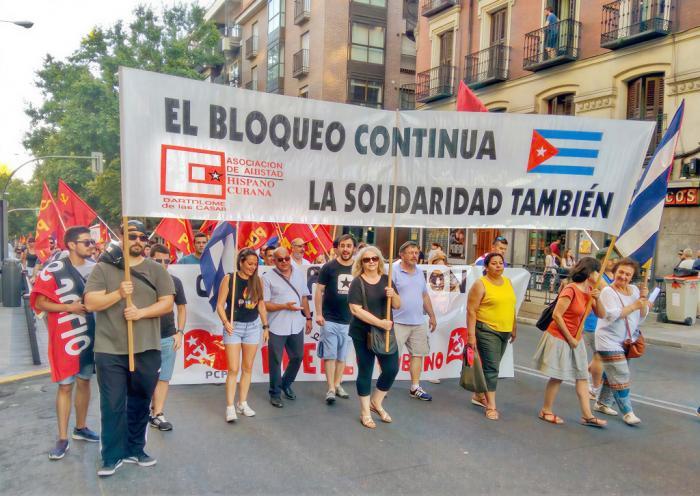
    Echoing the sentiment behind the mission, a high-ranking official stated on social media that providing vital supplies to the Cuban people honors the legacy of Fidel Castro, emphasizing that true solidarity is defined not by giving one’s surplus, but by sharing what one possesses.

  • Cuba pays tribute to Mariana Grajales at Day of History

    Cuba pays tribute to Mariana Grajales at Day of History

    An academic gathering of historians and researchers in Cuba has initiated a profound reevaluation of national heroine Mariana Grajales Cuello’s historical significance. The event commenced with a groundbreaking presentation by Dr. Damaris Amparo Torres of the University of Oriente, titled “From Mariana Grajales’ Lineage,” which challenged conventional historical narratives.

    Dr. Torres, a distinguished Santiago historian, identified a persistent pattern in Cuban historiography where Grajales’ monumental contributions have been consistently overshadowed by the fame of her sons, particularly independence hero Antonio Maceo. The academic emphasized the critical need to restore Grajales’ autonomous historical agency and recognize her distinct legacy separate from her familial connections.

    The presentation documented how post-revolutionary scholarship began rectifying this historical imbalance, citing pivotal works like “Mariana Grajales: 200 Years in History and Memory” as instrumental in establishing her proper historical standing.

    With meticulous academic rigor, Torres corrected longstanding biographical inaccuracies, definitively establishing Grajales’ birthdate as July 12, 1815, in Santiago de Cuba—a fact verified through baptismal records preserved at the Church of Santo Tomás Apostle. The researcher conclusively refuted theories suggesting Dominican origins, firmly reestablishing Grajales’ authentic Cuban heritage.

    The symposium further explored Grajales’ remarkable personal narrative as a mestizo woman who demonstrated extraordinary resilience after early widowhood. Despite confronting systemic discrimination and lacking formal education, she forged a new family with patriot Marcos Maceo, raising ten children who would predominantly dedicate their lives to Cuba’s independence struggle.

    Fernando Miguel Manzo Alonso, president of the Union of Historians of Cuba (UNHIC) in Camagüey, formally inaugurated the event. The location held particular historical significance as the province that hosted the first Constitution of the Republic in Arms in 1869, providing appropriate context for Grajales’ revolutionary legacy.

  • Cuba FM denounces declaration of new border between Gaza and Israel

    Cuba FM denounces declaration of new border between Gaza and Israel

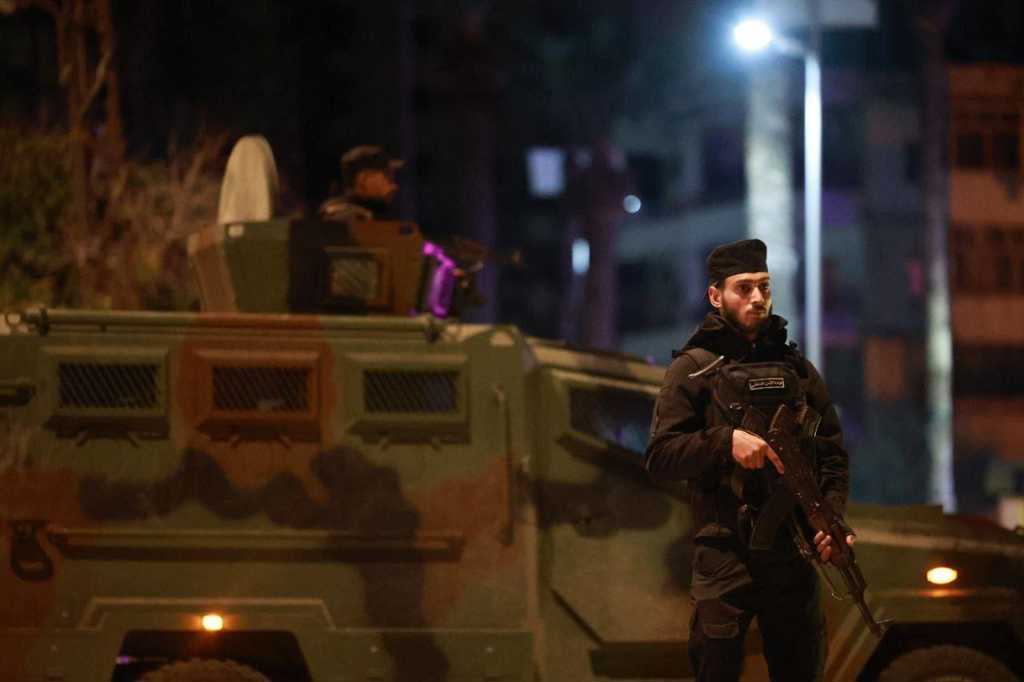
    The Palestinian Authority has issued a formal condemnation of Israel’s unilateral declaration establishing a provisional ceasefire demarcation—termed the ‘yellow line’—as the new boundary separating the Gaza Strip from Israeli territory. In an official statement disseminated through social media channels, a senior Palestinian representative characterized this move as a severe breach of both the recently brokered ceasefire accord and established principles of international law. The declaration frames the Israeli government’s actions as constituting yet another manifestation of what it describes as the ‘genocidal character’ of the occupying power’s ongoing operations against Palestinian civilians. This development introduces a new point of contention in the already fragile post-ceasefire environment, potentially undermining diplomatic efforts to stabilize the region. The designation of this security line as a permanent border represents a significant shift in the territorial status quo that could have profound implications for future negotiations concerning Palestinian sovereignty and territorial integrity.