标签: Cuba

古巴

  • With them, inside the chest

    With them, inside the chest

    Cuba has solemnly observed its annual tradition of paying homage to internationalist heroes who served in Angola, with nationwide ceremonies held on December 7. The commemorations included floral offerings from President Miguel Díaz-Canel and former leader Raúl Castro at Santa Ifigenia Heritage Cemetery, alongside a central political event and military ceremony at El Cacahual.

    The tradition, now firmly entrenched in Cuban national consciousness, honors the more than 300,000 Cubans who participated in the Angolan mission following Agostinho Neto’s call for assistance in preserving the nation’s independence. The day represents not merely remembrance of the fallen but celebration of living heroes—over 2,000 veterans who returned with vitality, identities, and the indelible mark of public service.

    Despite hurricanes, pandemics, economic limitations, and ongoing international pressure, the commemorations proceeded uninterrupted, demonstrating the resilience of Cuban national traditions. The ceremonies transform December 7 into a pilgrimage where families across Cuba visit pantheons containing immortal remains that continue to embody deeply rooted human values.

    The event featured emotional scenes of mothers, brothers, children, parents, grandparents, and neighbors pausing before niches of loved ones, offering flowers, contemplating images, and whispering reassurances that no hero is forgotten. The gathering served as a powerful expression of collective memory against the passage of time and potential oblivion.

    As Fidel Castro notably stated from El Cacahual during earlier commemorations: ‘The hundreds of thousands of Cubans who carried out internationalist military or civilian missions will always have the respect of present and future generations.’ This year’s ceremonies reinforced that enduring promise of perpetual respect and remembrance.

  • Foreign minister evokes Cuban Patriot Antonio Maceo

    Foreign minister evokes Cuban Patriot Antonio Maceo

    Cuban Foreign Minister Bruno Rodríguez has commemorated the 129th anniversary of the death of Lieutenant General Antonio Maceo Grajales, paying tribute to the enduring legacy of the iconic revolutionary figure known as the Bronze Titan. In a public statement delivered via social media platform X, Rodríguez emphasized how Maceo’s principles continue to shape contemporary Cuban diplomacy and national identity.

    Rodríguez characterized Maceo’s extraordinary courage, unwavering revolutionary ethos, steadfast intransigence against oppression, and profound patriotism as perpetual inspirations for Cuba’s diplomatic corps. He specifically noted that these qualities remain foundational to Cuba’s ongoing defense of national sovereignty and independence in the international arena.

    The foreign minister further asserted that Maceo’s spiritual inheritance persists through the resilience and dignified character of the Cuban populace, connecting historical resistance to contemporary national identity.

    Antonio Maceo Grajales, born June 14, 1845, emerged as one of Cuba’s most distinguished military leaders during the independence struggles against Spanish colonial rule. Achieving the esteemed ranks of major general and lieutenant general within the Cuban Liberation Army, Maceo demonstrated exceptional strategic brilliance and combat perseverance across multiple campaigns.

    Beyond his military accomplishments, Maceo became renowned for his uncompromising commitment to justice. This was notably exemplified during the historic Baragua Protest, where he forcefully rejected inadequate peace terms presented by Spanish General Arsenio Martínez Campos, thereby preserving the revolutionary movement’s integrity.

    Maceo’s life ended in combat on December 7, 1896, near San Pedro in what was then Havana province. His remains now rest permanently at the El Cacahual memorial site, located west of modern-day Havana, where they serve as a focal point for national remembrance and historical reflection.

  • EU losses due to sanctions on Russia estimate at 1.6 trillion euros

    EU losses due to sanctions on Russia estimate at 1.6 trillion euros

    In a strongly-worded declaration published on its official portal, Russia’s Foreign Ministry has characterized the extensive economic sanctions imposed by Western nations as fundamentally counterproductive instruments of neocolonial policy. While acknowledging unprecedented economic pressures, the Ministry asserted that Russia has demonstrated remarkable economic resilience and maintained growth trajectories despite these external challenges.

    The diplomatic communique presented a detailed economic assessment, claiming that anti-Russian restrictions alone would inflict approximately €1.6 trillion in losses upon European economies between 2022 and 2025. This projection underscores the Ministry’s central argument that unilateral coercive measures ultimately harm their initiators more than their intended targets.

    Beyond economic considerations, the statement framed these sanctions within a broader geopolitical context, alleging they represent deliberate attempts to undermine the emergence of a multipolar world order. The Ministry accused Western powers of employing restrictive measures as tools to maintain global dominance while deliberately constraining the development of major nations outside their sphere of influence.

    In response to these challenges, Russia announced its commitment to collaborating with like-minded international partners to combat what it termed ‘illegitimate restrictive measures’ and other manifestations of neocolonialism. The Ministry emphasized its determination to establish a more equitable global architecture free from what it described as the dictates of sanction-based diplomacy.

  • Chinese Army denounces Japanese interference in military drills

    Chinese Army denounces Japanese interference in military drills

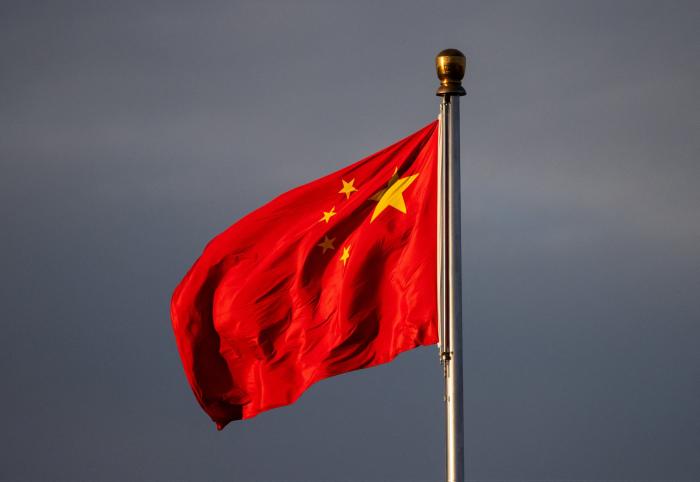
    The Chinese military has issued a formal condemnation of Japan’s actions during recent naval exercises in the Western Pacific. Navy spokesperson Colonel Wang Xuemeng revealed that Japanese aircraft repeatedly intruded into designated training airspace despite prior notification of the drills.

    Colonel Wang emphasized that all operations conducted by the Liaoning aircraft carrier strike group were fully compliant with international maritime laws and regulations. The spokesperson characterized Japan’s aerial intrusions as creating significant safety hazards that disrupted normal training operations and compromised flight safety for Chinese naval forces.

    In strong diplomatic language, the Chinese military representative dismissed Japanese accusations as fundamentally disconnected from factual reality. The spokesperson explicitly demanded that Tokyo immediately cease what China characterizes as baseless slander and provocative actions in international airspace.

    The naval official concluded with a firm warning that China reserves the right to take all necessary legal measures to protect its national security and defend its legitimate rights in accordance with international law. This statement represents the latest escalation in ongoing tensions between the two Pacific powers regarding military activities in strategically important waterways.

  • US Peace Plan for Ukraine needs radical changes

    US Peace Plan for Ukraine needs radical changes

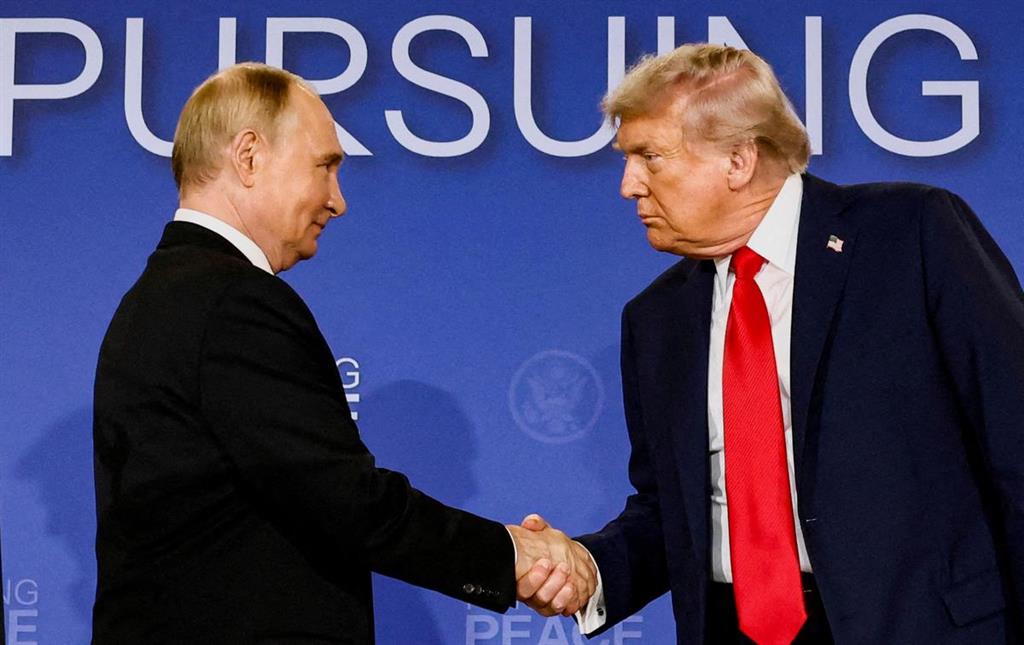
    Russian Presidential Advisor Yuri Ushakov has indicated that ongoing diplomatic discussions with the United States require substantial revisions to American proposals, describing the necessary changes as “radical” in nature. In an interview with Rossiya 1 television journalist Pavel Zarubin, Ushakov revealed that American documents presented during negotiations “are constantly changing and being prepared,” suggesting a fluid negotiation process.

    The high-ranking Kremlin official reported improved bilateral understanding following the recent Moscow visit of US Special Envoy Steve Witkoff. “Undoubtedly, now the Americans better understand the logic of our position,” Ushakov asserted, indicating a potential shift in diplomatic alignment between the two nations.

    Regarding the possibility of a summit between Russian President Vladimir Putin and US President Donald Trump, Ushakov clarified that this specific topic remained outside recent discussion parameters. “That specific topic wasn’t even discussed,” the presidential advisor noted, dampening speculation about an imminent leadership meeting.

    The diplomatic exchanges occurred during a December 2 meeting at the Kremlin where President Putin received both Special Envoy Witkoff and Jared Kushner, Trump’s son-in-law and founder of Affinity Partners. These discussions centered on the White House’s peace proposal for Ukraine, which reportedly divides 27 negotiation points into four distinct packages for separate consideration.

    Ushakov characterized the Kremlin talks as “very substantive” and confirmed that contacts between Russia and the United States would continue. Notably, the advisor highlighted that Russia’s military achievements in conflict zones have positively influenced both the progression and character of the negotiations, suggesting battlefield developments directly impact diplomatic leverage.

  • Salvadorans express solidarity with Cuba

    Salvadorans express solidarity with Cuba

    In a powerful demonstration of international solidarity, the July 26 Friends Group convened its sixth national gathering in Usulután, El Salvador, drawing nearly 200 participants from across the Central American nation. The organization, which maintains a special facility in Cuban territory dedicated to supporting war veterans and disabled former combatants, organized what activist Raúl Martínez characterized as a profound ‘friendship and brotherhood’ assembly.

    The meeting served as a platform to express unwavering support for both the Cuban people and their government amidst ongoing economic challenges. Participants unanimously condemned the longstanding United States economic embargo against Cuba, identifying its termination as a primary objective of their collective advocacy efforts.

    In a tangible display of their commitment, attendees organized a fundraising initiative specifically designed to alleviate some of the hardships faced by Cuban citizens resulting from the comprehensive trade restrictions. This financial campaign represents the latest in a series of efforts by Salvadoran social organizations to provide material assistance to the Caribbean nation.

    The July 26 Friends Group takes its name from the date of Fidel Castro’s 1953 attack on the Moncada Barracks, a seminal event in the Cuban Revolution. The organization has maintained consistent ties with Cuban institutions for decades, particularly through its specialized care facility for military veterans on the island.

  • Barbados’ diplomat remembers Cuba-CARICOM anniversary

    Barbados’ diplomat remembers Cuba-CARICOM anniversary

    CARICOM member states are preparing to mark a significant anniversary this December 8, celebrating what diplomatic officials characterize as one of the most courageous foreign policy decisions in Caribbean history. The commemoration honors the landmark 1972 joint declaration that defied hemispheric isolation policies against Cuba.

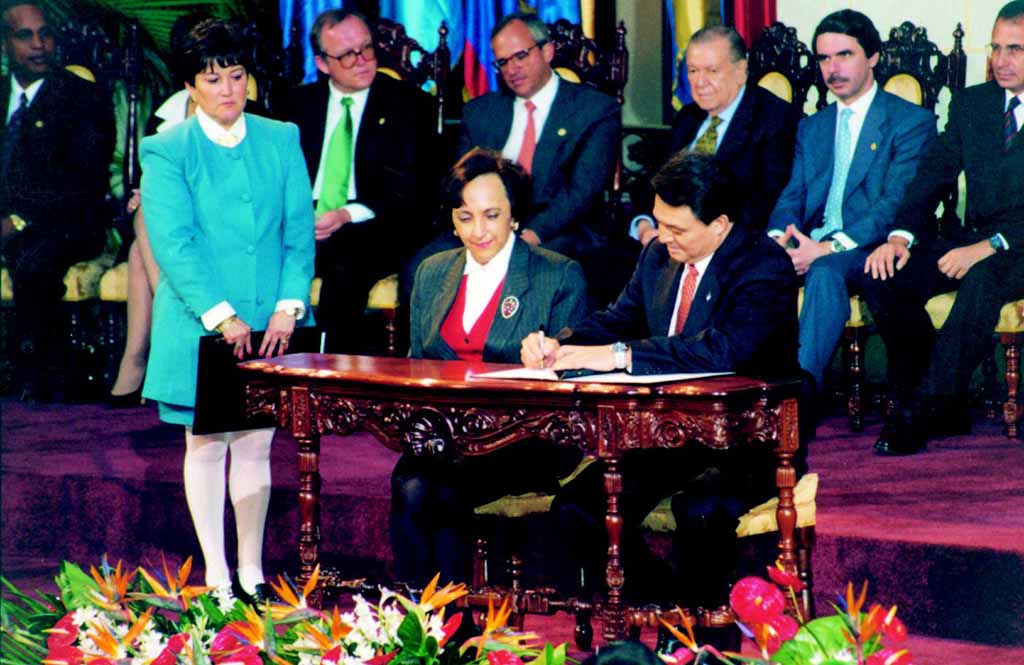
    Ambassador David Comissiong, in a recent social media statement, emphasized that the upcoming observance revitalizes the spirit of the historic October 1972 proclamation. During that pivotal Conference of Heads of Government in Chaguaramas, the prime ministers of four newly independent Caribbean nations—Barbados’ Errol Barrow, Jamaica’s Michael Manley, Trinidad and Tobago’s Eric Williams, and Guyana’s Forbes Burnham—collectively announced their sovereign decision to establish diplomatic relations with Cuba.

    This bold move, described by historians as ‘speaking truth to power,’ represented a direct challenge to the Organization of American States (OAS)-led isolation regime imposed on Cuba. The four youngest independent states in the Western Hemisphere demonstrated remarkable diplomatic autonomy by rejecting external pressures and asserting their right to independent foreign policy.

    The 1972 declaration explicitly affirmed the nations’ ‘sovereign right to establish relations with any other sovereign state’ and articulated their determination to ‘achieve meaningful and comprehensive economic cooperation among all Caribbean countries.’ This principle of regional cooperation and non-alignment continues to inform CARICOM’s foreign policy approach today.

    Ambassador Comissiong recalled Prime Minister Barrow’s seminal 1973 speech in Toronto, where the Barbadian leader declared that the decision ‘demonstrates that developing nations can take initiative. We cannot stand idly by in the Caribbean and expect our strategy to be dictated by the prejudices of people in other countries.’ This statement encapsulated the assertion of Caribbean agency in international relations that continues to resonate through regional diplomacy.

  • Cuba reiterates policy of confronting drug trafficking

    Cuba reiterates policy of confronting drug trafficking

    Cuban Foreign Minister Bruno Rodriguez has publicly reaffirmed his nation’s vigorous and systematic campaign against narcotics trafficking, while simultaneously leveling criticism at the United States for allegedly undermining bilateral cooperation. Through a statement on the social media platform X, Rodriguez detailed Cuba’s comprehensive governmental strategy designed to combat drug-related crimes through multi-faceted approaches. The minister highlighted that Cuba has entered into numerous intergovernmental agreements, demonstrating a steadfast commitment to fulfilling both these bilateral pacts and its obligations under international multilateral frameworks. Rodriguez specifically noted that such cooperative instruments include partnerships with various regional nations, explicitly mentioning the United States. However, he expressed profound regret, accusing the US—which he identified as the primary source of drugs reaching Cuban shores—of making a deliberate decision to halt and obstruct this crucial collaboration and the associated bilateral exchanges on narcotics control. This declaration underscores a significant diplomatic friction point between the two nations concerning a shared regional security challenge.

  • Film “Neurotica Anonima” pays tribute to Cuba and cinema

    Film “Neurotica Anonima” pays tribute to Cuba and cinema

    The Charles Chaplin movie theater recently hosted the premiere of “Neurotica Anonima or Sin Miedo a la Vida,” a 90-minute cinematic masterpiece that serves as both a tribute to Cuban cinema and international film artistry. The production, which garnered enthusiastic applause from audiences, represents a significant contribution to contemporary Cuban filmmaking.

    Co-written by renowned Cuban actor Jorge Perugorria and acclaimed actress Mirta Ibarra—who also stars as the protagonist—the film follows the compelling narrative of Iluminada, an usherette at the neighborhood Cuba movie theater facing imminent closure by authorities. Ibarra, whose distinguished filmography includes landmark titles such as “Adorables Mentiras” (1991) and the internationally celebrated “Fresa y Chocolate” (1993), revealed in an exclusive interview with Prensa Latina that the film addresses two fundamental themes: the societal mistreatment of women and the urgent need for cinematic revitalization.

    The production stands as a poignant homage to the late director Juan Carlos Tabio (1943-2021), who directed the influential “Plaff or Demasiado Miedo a la Vida” (1988). This intentional tribute inspired the film’s title, “Neurotica Anonima or Sin Miedo a la Vida” (Neurotic Anonymous or Not Afraid of Life), reflecting both continuity and evolution in Cuban cinematic tradition.

    Featuring an ensemble of Cuba’s most distinguished acting talent, the film showcases Joel Angelino as the projectionist at the Cuba movie theater and Iluminada’s close friend. Angelino previously shared scenes with Ibarra in both the original play and the seminal film “Fresa y Chocolate.” The stellar cast further includes Fernando Hechavarria as an architect, Osvaldo Doimeadios as a psychiatrist, Andrea Doimeadios portraying the younger Iluminada, and Nestor Jimenez as the delegate. Additional performances are delivered by Paula Ali, Mireya Chapman, Tahimi Alvarino, Barbaro Marin, Mario Limonta, Hilario Pena, Felix Beaton, and Luis Silva.

    This collaborative production brings together the Cuban Film Institute (ICAIC), Itaca Films, and An Ag Studios Company, with Ernesto Granado serving as director of photography. The musical landscape features original compositions by maestro Jose Maria Vitier complemented by additional music from Venezuelan record producer Andres Levin, creating an auditory experience that enhances the film’s emotional depth and cultural resonance.

  • Pope Leo XIV highlights value of music at 6th Concert with the Poor

    Pope Leo XIV highlights value of music at 6th Concert with the Poor

    In an unprecedented event at the Vatican’s Paul VI Hall, Pope Francis delivered a powerful message to over 8,000 attendees, declaring music “a divine gift accessible to everyone” rather than “a luxury for the few.” The historic concert, marking the first papal participation in such an initiative, emerged directly from the Pontiff’s vision according to organizers.

    The event, orchestrated by the Dicastery for the Service of Charity under the artistic direction of Monsignor Marco Frisina, featured a remarkable collaboration between the Choir of the Diocese of Rome and international singing sensation Michael Bublé. The Canadian performer delivered a diverse setlist that spanned genres and eras, from his signature hit “Feeling Good” to soulful renditions of “Bring It On Home to Me” and “Always On My Mind.

    Bublé paid special tribute to American composer Duke Ellington with a interpretation of “Don’t Get Around Much Anymore” before transitioning to Christmas classics. The emotional climax of the evening arrived with his performance of Schubert’s “Ave Maria” in Latin, creating a profound spiritual moment within the hallowed venue.

    Following the musical program, the Vatican hosted a dinner for more than 3,000 individuals experiencing poverty and hardship, physically embodying the Pope’s message of inclusivity. “Yes, music can elevate our souls!” declared the Bishop of Rome, encapsulating the evening’s theme of artistic expression as a force for spiritual upliftment and social unity.