标签: Cuba

古巴

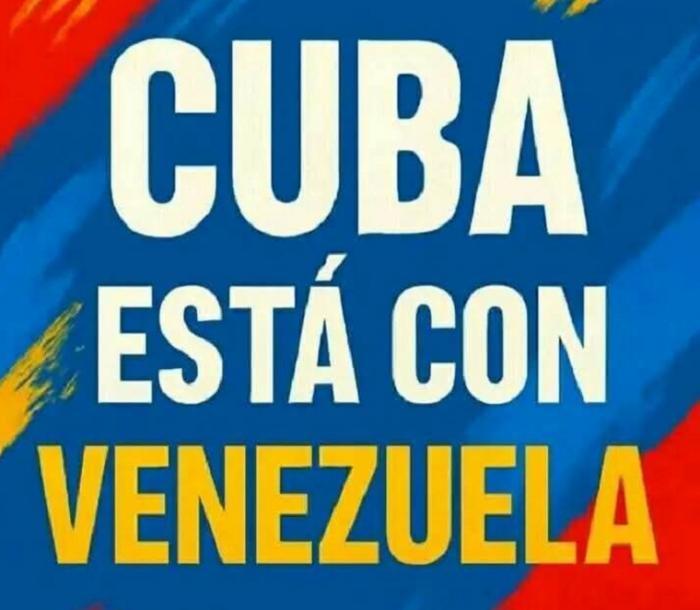
  • Cuba’s UPEC classifies attacks against Venezuela “oil thirst”

    Cuba’s UPEC classifies attacks against Venezuela “oil thirst”

    The Union of Cuban Journalists (UPEC) has issued a forceful condemnation of what it characterizes as unprecedented American aggression against Venezuela. In an official statement, the organization accused the United States of launching direct attacks against multiple Venezuelan regions including Caracas, Miranda, Aragua, and La Guaira before allegedly orchestrating the abduction of President Nicolás Maduro and First Lady Cilia Flores, who have reportedly joined what UPEC describes as the “endless list of the disappeared under imperial auspices.”

    The statement frames these events as validation of historical warnings about what it terms “Northern voracity,” asserting that current actions exceed even the imperial brutality documented during José Martí’s era. UPEC further contends that recent developments have effectively shattered Latin America’s carefully constructed “Zone of Peace” initiative, which sought to maintain regional harmony despite political differences.

    In particularly scathing rhetoric, the journalists’ association referenced former U.S. President Donald Trump’s symbolic renaming of the Defense Department as the “Department of War,” suggesting this semantic shift foreshadowed current events. The statement sarcastically proposed that Trump would merit a “Nobel Prize for War” while criticizing the actual Nobel recognition given to Venezuelan opposition figure Maria Corina Machado, whom UPEC implied celebrates violence disguised as pacifism.

    The organization concluded with a reaffirmation of Cuba’s unwavering solidarity with Maduro and the Bolivarian people, declaring that imperial oil interests cannot override regional aspirations for peace and self-determination. “Latin America and the Caribbean refuse to be anyone’s backyard,” the statement emphasized, “but insist on being their own garden.”
  • Venezuelan Vice President demands iImediate release of Maduro

    Venezuelan Vice President demands iImediate release of Maduro

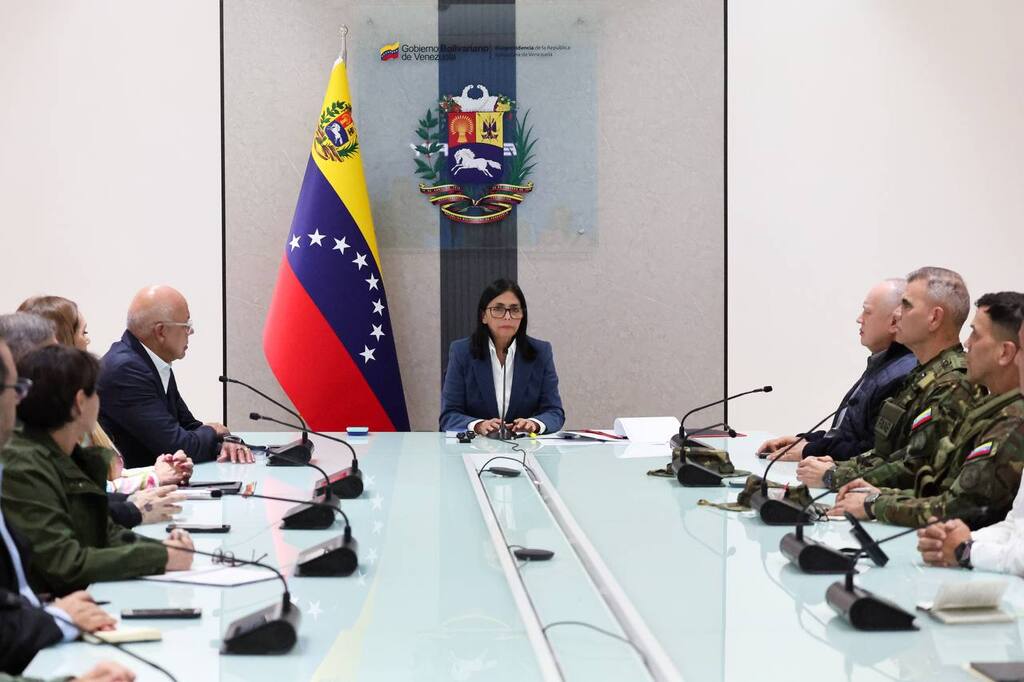
    Venezuela has activated a national state of emergency following what government officials describe as an act of imperialist aggression. The decree, originally signed by the president, was formally announced by the vice president during a nationwide radio and television address. She subsequently delivered the emergency order to the president of the Supreme Court of Justice for immediate implementation.

    According to the vice president, this armed incursion represents a severe rupture in bilateral relations with the United States. She revealed that President Nicolas Maduro and First Lady Cilia Flores were reportedly captured during the operation, characterizing the event as a savage attack on Venezuela’s sovereignty and territorial integrity in the early hours of the morning.

    The government asserts that the true objective behind the aggression is the seizure of Venezuela’s substantial energy, mineral, and natural resources. Officials have called upon the international community to recognize this alleged resource grab, with the vice president emphasizing that “the world must know this.”

    In response to the crisis, Venezuelan citizens have reportedly taken to the streets following mobilization calls from leadership. The vice president reiterated the president’s previous warning that any threat to his safety would trigger widespread civil mobilization, workplace activism by militant groups, and full deployment of the Bolivarian National Armed Forces.

    The government claims significant international support from nations including China, Russia, and various countries across Latin America, the Caribbean, Africa, and Asia. The vice president added that global governments are reportedly shocked that Venezuela has become the target of an attack with what she characterized as “Zionist undertones.”

    The entire National Power of Venezuela has been activated to defend what officials describe as the nation’s Bolivarian heritage and sacred duty to protect national independence.

  • Cuba strongly condemns US aggression against Venezuela

    Cuba strongly condemns US aggression against Venezuela

    The Cuban Ministry of Foreign Affairs (Minrex) has issued a forceful declaration expressing solidarity with Venezuela and demanding immediate action from the United States government. The statement explicitly endorses the recent address by Venezuelan Executive Vice President Delcy Rodríguez, which called for Washington to provide verifiable proof of life for the country’s constitutional president, Nicolás Maduro Moros, and his wife, Vice President Cilia Flores.

    The Minrex communiqué characterizes recent US military maneuvers in the Caribbean Sea as a ‘cowardly aggression’ and a ‘criminal act,’ alleging they represent a dangerous escalation of a long-standing campaign against Venezuela. These actions, described as being based on ‘mendacious pretexts and unfounded accusations without any evidence,’ are stated to be in direct violation of International Law and the United Nations Charter.

    Cuba’s foreign ministry holds the US government, specifically naming former President Donald Trump and former Secretary of State Marco Rubio, directly responsible for the resultant human casualties and material damage. The statement further implicates ‘aggressive and hostile elements in Latin America and the Caribbean’ as complicit in these actions.

    Reiterating its unwavering support, the Minrex document praises the determination of the Bolivarian government and the Venezuelan people to defend their national sovereignty and independence against what it terms foreign aggression. The Cuban government’s central demand remains the immediate and unconditional release of President Maduro and Vice President Flores by US authorities.

  • Cuba denounces attack on Venezuela as an act of state terrorism

    Cuba denounces attack on Venezuela as an act of state terrorism

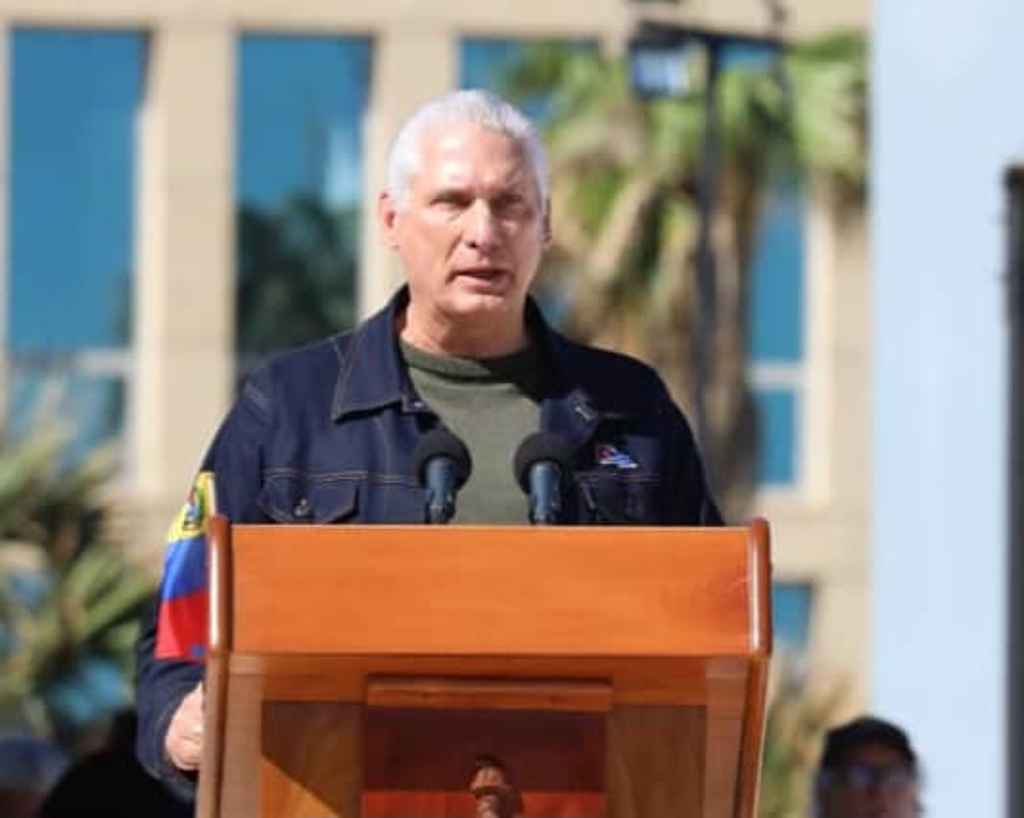
    During a significant address at Havana’s Anti-Imperialist Tribune, Cuba’s leadership delivered a vehement condemnation of a recent military operation conducted against Venezuela. The Saturday dawn incursion was characterized as a treacherous act forming part of a broader neo-fascist strategy designed to forcibly overthrow the Venezuelan government and appropriate the nation’s vast natural resources, with petroleum reserves representing a primary target.

    The Cuban head of state explicitly dismissed Washington’s justification of combating narco-terrorism as entirely disingenuous, asserting instead that the operation’s true objective involves dismantling the regional integration and resistance project initiated under former Venezuelan leader Hugo Chávez.

    In a firm rejection of hemispheric hegemony, the leader unequivocally denounced the Monroe Doctrine and all extraterritorial claims over Latin American territories. The address included a formal demand for the United States to provide immediate proof of life regarding Venezuelan President Nicolás Maduro and his spouse.

    Drawing stark parallels to contemporary global conflicts, the Cuban leadership compared the operation’s characteristics to crimes against humanity perpetrated by Israeli Zionism in Gaza, emphasizing numerous violations of international law and ethical standards.

    The warning extended beyond regional implications, with the statement characterizing the event not merely as an attack against Venezuela but as a genuine threat to global humanity. The address urgently called upon the international community to mobilize decisively against the advancement of modern fascism disguised as foreign policy.

    Concluding with a powerful declaration of solidarity, Cuba reaffirmed its readiness to defend, “with its own blood if necessary,” the independence and sovereignty of the Americas.

  • Cuba denounced the direct attack against Venezuela: it is state terrorism

    Cuba denounced the direct attack against Venezuela: it is state terrorism

    Cuban President Miguel Díaz-Canel Bermúdez has issued a forceful condemnation of what he characterizes as “criminal attacks” by the United States against Venezuela, urgently calling for international intervention. The First Secretary of the Communist Party Central Committee made his declaration via social media following reports of armed assaults on multiple Venezuelan cities in the early hours of Saturday.

    The Venezuelan government has officially described the coordinated attacks on military and civilian installations across Caracas, Miranda, Aragua, and La Guaira states as “grave military aggression.” In response to the offensive, Venezuelan authorities activated national defense protocols and declared a “state of external commotion” before the international community.

    President Díaz-Canel emphasized that the attacks represent a brutal assault on Latin America’s established Zone of Peace, characterizing the operations as “state terrorism against the courageous Venezuelan people and against Our America.” This escalation follows weeks of heightened military tension, including the deployment of US naval and air forces to the Caribbean region and the establishment of a blockade against the South American nation.

    Senior Cuban officials have unanimously condemned the actions, with National Assembly President Esteban Lazo Hernández and Prime Minister Manuel Marrero Cruz joining diplomatic efforts to mobilize international response. Foreign Minister Bruno Rodríguez Parrilla further denounced the operations as “cowardly acts against a nation that has not attacked the United States or any other country,” asserting the urgent need for global solidarity in defense of regional peace.

  • At the Anti-Imperialist Tribune today, the Cuban people condemn the military aggression against Venezuela

    At the Anti-Imperialist Tribune today, the Cuban people condemn the military aggression against Venezuela

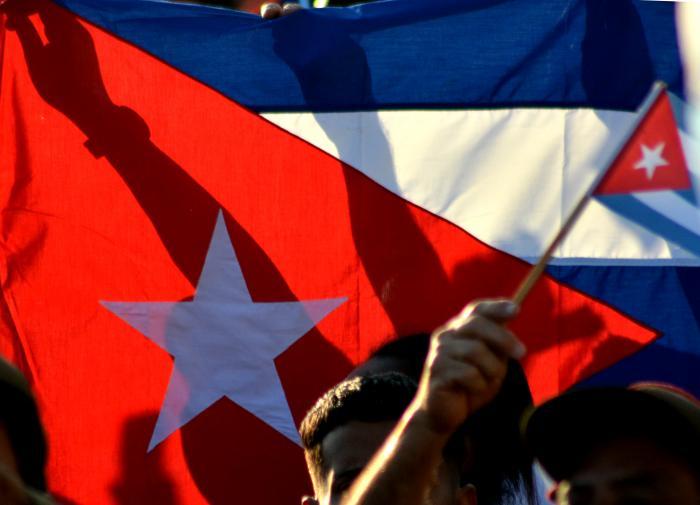
    The Cuban government has issued a formal summons for its citizens to participate in a mass condemnation ceremony protesting what it characterizes as “Yankee imperialist military aggression” against Venezuela. The rally is scheduled for 10:00 a.m. at Havana’s José Martí Anti-Imperialist Tribune, with organizers indicating that attendees will represent the entire Cuban population in demonstrating solidarity with the Bolivarian Republic.

    The event is framed as both a rejection of United States military operations and a show of support for Venezuelan President Nicolás Maduro Moros alongside the combined Popular, Military, and Police Fusion forces. Cuban President Miguel Díaz-Canel Bermúdez, who also serves as First Secretary of the Communist Party’s Central Committee, has publicly denounced the American actions as a “criminal attack” violating regional stability.

    In official statements, Díaz-Canel condemned the operation as “state terrorism directed against the courageous Venezuelan people and against our America,” asserting that Washington’s actions constitute a “brutal assault” on Latin America’s established peace framework. The government’s mobilization call concludes with the revolutionary slogan: “Homeland or Death, We Shall Overcome!”

    The ceremony represents the latest development in escalating tensions between Havana and Washington regarding Venezuela’s political future, with Cuban authorities positioning themselves as steadfast allies to Maduro’s administration amid increasing international pressure.

  • Cuban collaborators in Venezuela are protected

    Cuban collaborators in Venezuela are protected

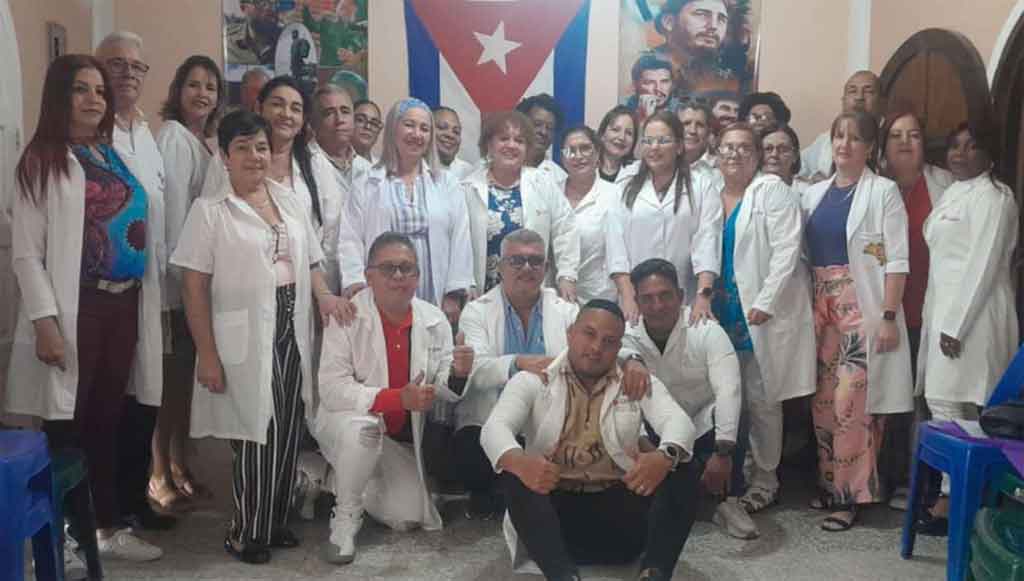
    Cuban Health Minister Dr. José Angel Portal Miranda has publicly denounced what he characterized as an act of aggression by the United States government against Venezuela. The minister made these statements through his official X (formerly Twitter) account on January 3, 2026, confirming that Cuban medical personnel stationed in Venezuela remain secure despite the escalating tensions.

    Following reports of the alleged attack, Cuban health authorities established continuous communication channels with the leadership of their medical mission in Venezuela. Dr. Portal Miranda emphasized that all Cuban collaborators operating within Venezuela’s healthcare system are currently protected and accounted for.

    The minister’s social media post included a firm condemnation of the United States’ actions, which he described as a direct violation of Venezuelan sovereignty and an assault on regional peace. The Cuban government’s response aligns with its longstanding diplomatic position opposing foreign intervention in Venezuela’s internal affairs.

    This development occurs within the context of ongoing geopolitical tensions in the Caribbean region, where Cuba maintains significant medical diplomacy programs despite facing its own economic challenges and international sanctions. The Cuban medical brigade in Venezuela represents one of Havana’s most substantial overseas humanitarian initiatives, with thousands of healthcare professionals providing services across the South American nation.

  • Guatemala commemorates 67th anniversary of the Cuban Revolution

    Guatemala commemorates 67th anniversary of the Cuban Revolution

    GUATEMALA CITY – The Cuban diplomatic mission in Guatemala hosted commemorative events honoring Cuba’s revolutionary history and its ongoing international medical cooperation. The gathering brought together embassy officials, their families, and members of Cuba’s medical contingent serving in Guatemala.

    Minister Counselor Roberto Socorro delivered the keynote address, highlighting the historical significance of Cuba’s revolutionary victory and the pivotal leadership of Fidel Castro. His presentation detailed crucial milestones in the revolutionary struggle that spanned from the 1950s to contemporary times.

    At a separate ceremony held at the National Coordination Center of the Medical Brigade, Cuban Ambassador Nazario Fernandez recognized both the achievements of the revolution and the dedication of healthcare professionals who have provided medical assistance across Guatemala’s most remote regions for nearly three decades.

    Diplomatic representatives encouraged continued diligence in serving Guatemalan communities, emphasizing the importance of maintaining this humanitarian mission. Dr. Mariheta Cutino, head of the Medical Brigade, reaffirmed her team’s commitment to upholding the revolutionary principles that initiated their humanitarian work.

    The commemorations coincided with ongoing social media tributes to Fidel Castro, particularly significant during the centennial year of his birth. These digital commemorations began on December 31st and continued through the events, connecting physical gatherings with virtual expressions of revolutionary remembrance.

  • Socialist Party of Peru celebrates Cuban Revolutionary anniversary

    Socialist Party of Peru celebrates Cuban Revolutionary anniversary

    The People’s Socialist Party (PSP) of Cuba has issued a stark assessment of Latin America’s political climate, characterizing the region as experiencing profoundly dark times marked by intensified imperial measures. According to the party’s anniversary statement, these actions aim to encircle not just physical territories but also the ideological spheres of popular thought, hope, and collective consciousness.

    The statement, released to commemorate another year of the Cuban Revolution, framed the occasion not merely as a historical milestone but as a testament to sustained resistance and moral victory. It emphasized that the Cuban people continue to demonstrate unwavering resolve in the face of unprecedented challenges.

    While acknowledging that Cuba’s journey has never been without difficulty, the PSP highlighted that current conditions present uniquely formidable obstacles. Despite this, the revolutionary fervor that ignited 67 years ago remains undiminished, serving as a continuous pulse driving present-day struggles.

    The party invoked Che Guevara’s vision, asserting that the revolutionary dream actively fuels the development of a new societal model built upon ethics, solidarity, and historical commitment. Cuba stands resilient, the statement affirmed, maintaining its dignity while resisting what it described as an inhumane economic blockade and a coordinated media campaign designed to isolate the nation globally.

    Countering this isolation, the PSP highlighted Cuba’s internationalist legacy—sharing revolutionary gains through education, healthcare, and scientific advancement dedicated to public welfare. This solidarity, characterized as substantive action rather than empty rhetoric, was crystallized in Fidel Castro’s principle: ‘Homeland is Humanity.’

  • Dominican organizations reiterate support for Cuba

    Dominican organizations reiterate support for Cuba

    International leftist organizations have issued coordinated statements commemorating the anniversary of the Cuban Revolution while simultaneously condemning United States foreign policy toward several Latin American nations. The United Left Movement (MIU) delivered a formal communication to Cuban President Miguel Diaz-Canel recognizing January 1, 1959, as a historically significant date that represents political liberation and independence achievements.

    The message coincides with the centennial celebration of Fidel Castro’s birth (1926-2016), whose legacy was characterized as fundamentally humanist, integrationist, and anti-imperialist. The MIU statement emphasized that Castro’s ideological principles continue to direct Cuba’s contemporary resistance movements and innovative approaches to national sovereignty challenges.

    A substantial portion of the communication addressed the ongoing U.S. economic, commercial, and financial embargo against Cuba, which the movement labeled as both inhumane and inconsistent with prevailing international opinion. The statement noted that the blockade contradicts the expressed will of most United Nations member states who have repeatedly voted against its continuation.

    The MIU further acknowledged the considerable sacrifices made by the Cuban population in defending national sovereignty and reaffirmed its “friendship and fraternal relations” with Cuba’s Communist Party, government institutions, and citizens.

    Separately, the Central Coordination of the Caamanista Movement endorsed these sentiments while expanding its criticism to include U.S. policies toward Venezuela, Nicaragua, Mexico, and Colombia. The Dominican Popular Movement separately characterized the Cuban Revolution as the most consequential revolutionary movement within the region and arguably across the global stage.