标签: Cuba

古巴

  • DRC Army spokesperson suspended for discriminatory speech

    DRC Army spokesperson suspended for discriminatory speech

    The Democratic Republic of Congo has taken decisive action against one of its military officials following inflammatory statements that have escalated regional tensions. General Ekenge, whose full identity remains undisclosed, has been suspended from duty after making controversial comments during a weekend interview on the national broadcaster RTNC.

    During the broadcast, the military figure advocated for population segment ‘supremacy’ and specifically warned Congolese men against marrying Tutsi women, whom he characterized as operatives for Rwandan intelligence services. These remarks quickly circulated through regional media channels and were subsequently amplified by Rwandan authorities.

    Rwanda’s government utilized the statements to reinforce its ongoing narrative about inequality within Congolese governance structures. The timing proves particularly sensitive given the persistent diplomatic strains between Kinshasa and Kigali, with both nations engaged in prolonged disputes over security and citizenship rights.

    The Congo River Alliance-March 23 Movement (AFC/M23), an opposition coalition, issued a formal condemnation labeling the general’s comments as ‘genocidal propaganda.’ Their statement emphasized concerns about systematic targeting of Congolese Tutsis, particularly vulnerable groups including women and children, suggesting these remarks align with preparatory stages of genocide.

    The Congolese Press Agency (ACP) confirmed the disciplinary measure, indicating the government’s attempt to distance itself from the general’s divisive rhetoric while addressing the international fallout from the incident.

  • Russia plans to build a lunar power plant by 2036

    Russia plans to build a lunar power plant by 2036

    Russia’s space program has unveiled ambitious plans to construct a dedicated power plant on the lunar surface, a critical infrastructure project designed to support long-term human and robotic operations on the Moon. According to a detailed report, this lunar-based energy facility is deemed essential for providing a continuous power supply to key assets, including robotic lunar rovers, astronomical observatories, and various infrastructure components of a future international lunar scientific station.

    The comprehensive initiative extends beyond power generation, encompassing the development of specialized spacecraft required for lunar transportation and construction. The project roadmap includes multiple phases: the engineering and manufacturing of new spacecraft, rigorous flight testing protocols, extensive experimental ground tests, and the eventual deployment of operational infrastructure directly on the lunar terrain.

    Officials emphasized that this endeavor represents a significant strategic shift in space exploration methodology. Rather than pursuing isolated, short-duration missions, the project aims to establish the foundational elements necessary for a permanently inhabited lunar scientific outpost. This transition marks a pivotal step toward sustained human presence and research activities on the Moon, with the infrastructure explicitly designed to accommodate collaboration with international partners and foreign scientific projects.

  • Russia and China want to cooperate in AI and aviation electronics

    Russia and China want to cooperate in AI and aviation electronics

    In a significant diplomatic development, a senior Chinese ambassador has articulated a comprehensive vision for deepened technological cooperation with Russia during an interview with Izvestia newspaper this Monday. The high-ranking official emphasized that bilateral collaboration possesses substantial potential across cutting-edge sectors including artificial intelligence, information technologies, microelectronics, semiconductor manufacturing, and civil aircraft construction.

    The ambassador explicitly extended China’s invitation for Russia to actively participate in Beijing’s pioneering initiative to establish a global cooperative organization dedicated to artificial intelligence. This proposed international framework aims to facilitate multinational cooperation in AI development and governance.

    Beyond AI, the diplomatic representative outlined concrete areas for enhanced technological partnership. China has expressed willingness to collaborate with Russian counterparts in developing semiconductor materials, designing specialized microchips, advancing manufacturing processes, and creating specialized equipment. This cooperation is strategically positioned to strengthen supply chain stability and security for both nations.

    The proposed collaboration extends to practical implementation areas including industrial development, specialized personnel training, and joint management approaches to technological innovation. This bilateral technological initiative represents a significant development in international relations, potentially reshaping global technology partnerships and supply chain dynamics in strategic sectors.

  • Hamas accuses Israel of daily violating Gaza ceasefire

    Hamas accuses Israel of daily violating Gaza ceasefire

    Senior Hamas official Mahmoud Mardawi has issued a forceful condemnation of Israeli Prime Minister Benjamin Netanyahu’s administration, characterizing its ongoing military operations as systematic “policies of murder” against Palestinian civilians. The accusation comes amid escalating tensions regarding humanitarian access to conflict-affected territories.

    Mardawi specifically denounced Israel’s stringent limitations on humanitarian aid corridors into Gaza, framing these restrictions as a deliberate strategy to weaponize starvation against the Palestinian population. He asserted that these measures represent a calculated effort to exacerbate the humanitarian crisis rather than addressing security concerns.

    The Hamas leader challenged the international community’s continued silence regarding Israel’s military campaigns, urging global powers to intervene more decisively. He emphasized that passive observation effectively enables the perpetuation of what he termed “continued crimes” against Palestinian civilians.

    Directing his appeal toward Washington, Mardawi called upon the United States to leverage its diplomatic influence with its principal Middle Eastern ally. He specifically demanded American pressure to ensure Israel complies with previously agreed ceasefire commitments, including unimpeded humanitarian access and de-escalation of military operations. The statement reflects growing frustration among Palestinian leadership regarding international response mechanisms to the ongoing conflict.

  • Kremlin reveals details of Putin-Trump talk

    Kremlin reveals details of Putin-Trump talk

    In a significant diplomatic exchange preceding his meeting with Ukrainian President Volodymyr Zelensky, U.S. President Donald Trump engaged in substantive discussions with Russian counterpart Vladimir Putin regarding the ongoing conflict in Ukraine. According to Kremlin aide Yuri Ushakov, the conversation commenced with ceremonial exchanges of Christmas and New Year greetings before transitioning to grave deliberations about Eastern European security dynamics.

    Ushakov revealed that President Trump exhibited attentive engagement with Russia’s geopolitical perspectives, carefully considering Moscow’s assessments of potential conflict resolution pathways. The American leader characterized the Ukrainian crisis as the most formidable foreign policy challenge of his administration, while simultaneously acknowledging Russia’s professed commitment to pursuing political and diplomatic solutions.

    A critical consensus emerged regarding peace proposals advanced by Ukrainian authorities and European Union mediators. Both leaders concurred that these initiatives risked prolonging hostilities rather than achieving sustainable peace. They particularly criticized ceasefire arrangements predicated on referendum preparations, warning such measures could create conditions for escalated military confrontations.

    The dialogue yielded commitments to continue bilateral negotiations through specialized working groups, a procedural framework reportedly initiated at Washington’s request. President Trump emphasized the urgent necessity to terminate armed conflict while envisioning enhanced trilateral economic cooperation between the United States, Russia, and Ukraine as a stabilizing mechanism for post-conflict recovery.

  • Nicaraguan solidarity movement voices support for Venezuela

    Nicaraguan solidarity movement voices support for Venezuela

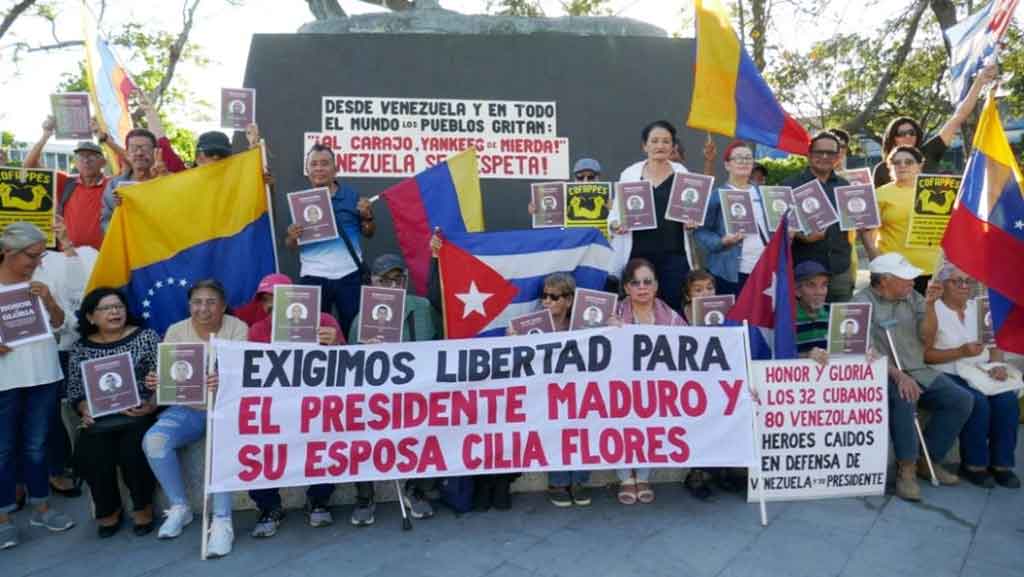
    The Nicaraguan government has issued a forceful condemnation against what it characterizes as a resurgence of imperial aggression from the United States. In an official statement, the administration asserted that Washington has recently escalated a series of hostile measures targeting global populations, with particular focus on Latin America and the Caribbean. This strategic shift, occurring against the backdrop of diminishing U.S. global dominance, represents a deliberate attempt to revive the nineteenth-century Monroe Doctrine framework of hemispheric domination.

    Venezuela emerges as the primary target of these alleged neocolonial operations, according to the communiqué. The Bolivarian nation, guided by the political legacy of the late Commander Hugo Chávez and demonstrating remarkable unity and resilience, continues to withstand substantial external pressure campaigns. The Nicaraguan movement expressed confidence that these imperial designs would ultimately fail despite their current intensity.

    The statement further contextualized these geopolitical maneuvers as direct retaliation against Venezuela’s sovereign governance and resource independence. Specifically, Caracas’s control over the world’s largest proven oil reserves has reignited foreign interest in controlling the nation’s natural wealth, prompting aggressive tactics aimed at resource appropriation.

    Reaffirming its regional commitments, Nicaragua pledged unwavering dedication to protecting peace, prosperity, and self-determination for all Latin American and Caribbean peoples. The government highlighted the enduring relevance of the 2014 Havana Declaration established by the Community of Latin American and Caribbean States (CELAC), which formally designated the region as a Zone of Peace, free from external intervention and conflict.

  • Guatemala marks 29 years since Peace Accords

    Guatemala marks 29 years since Peace Accords

    A solemn ceremony took place at Guatemala’s National Palace of Culture, overlooking the Plaza de la Constitucion, marking the anniversary of the nation’s landmark peace agreement. The event gathered ten national leaders alongside two thousand distinguished guests and delegates representing diverse societal sectors.

    The historical significance was palpable as attendees recalled December 29, 1996, when four commanders of the Guatemalan National Revolutionary Unity (URNG) – Rolando Morán, Pablo Monsanto, Carlos González, and Jorge Rosal – formally signed the peace accord. The signing occurred in the Executive Branch headquarters with then-President Álvaro Arzú (1996-2000) serving as honorary witness to this transformative moment.

    The diplomatic achievement was further validated by signatures from four members of the Peace Commission and former United Nations Secretary-General Boutros Boutros-Ghali, whose involvement underscored the international community’s investment in Guatemala’s peaceful transition.

    Outside the palace walls, thousands of citizens had gathered twenty-eight years earlier, awaiting official proclamation of the conflict’s termination with aspirations for improved livelihoods. Their presence symbolized the collective yearning for reconciliation after thirty-six years of internal strife.

    Contemporary organizations, including the National Platform of Victims of the Internal Armed Conflict (1960-1996), used the anniversary to advocate for reactivating peace initiatives and restoring judicial integrity. Their calls emphasize the ongoing relevance of the peace agenda in addressing historical grievances.

    The devastating human cost of the civil war remains embedded in national consciousness, with official statistics documenting over 200,000 fatalities and 45,000 disappeared persons—figures that continue to shape Guatemala’s pursuit of transitional justice and social healing.

  • Dancers Marianela Nuñez and Patricio Reve dazzle in Cuba

    Dancers Marianela Nuñez and Patricio Reve dazzle in Cuba

    The highly anticipated performance by Royal Ballet principal dancer Marianela Nuñez and Queensland Ballet principal Patricio Reve, guest artist with the British company, transformed into an extraordinary artistic phenomenon that surpassed even the most ambitious expectations of capital audiences.

    Audiences witnessed a masterclass in ballet excellence characterized by breathtaking nuance and technical precision. The production showcased remarkable fluidity of movement, delicate gesture work, and a profoundly harmonious partnership between the dancers. Their performance radiated both dramatic intensity and exquisite authenticity, creating a captivating embodiment of their respective characters.

    Nuñez delivered a mesmerizing portrayal of Quiteria, infusing the character with charisma, sensuality, and tender expressiveness. Her performance was perfectly complemented by Reve’s interpretation of Basilio, which demonstrated both attentive partnership and remarkable athletic agility. Together, they brought to life the iconic characters from Miguel de Cervantes’ seminal work of Spanish literature, which has served as enduring inspiration across artistic disciplines.

    The appearance of these world-class dancers constituted a significant cultural event for the city. Their flawless technique and complete immersion in the performance created moments of pure artistic transcendence, offering a privileged experience for those fortunate enough to attend the production.

  • Mexico warns of a marked drop in temperatures

    Mexico warns of a marked drop in temperatures

    Meteorological authorities have issued a comprehensive weather alert for multiple regions across Mexico as a potent combination of weather systems converges over the nation. A cold front advancing across the Gulf of Mexico coastline is forecast to interact with a significant atmospheric river and an upper-level trough positioned over the Yucatan Peninsula, creating conditions for severe weather activity.

    The most intense precipitation, featuring isolated torrential downpours reaching 75 to 150 millimeters, is projected to impact extensive areas including Veracruz (specifically the Huasteca Baja, Totonaca, Nautla, Papaloapan, Los Tuxtlas, and Olmeca regions), Puebla (Sierra Norte and Sierra Nororiental), alongside the states of Tamaulipas, Oaxaca, Chiapas, and Tabasco.

    A secondary zone anticipating substantial rainfall between 50 to 75 millimeters encompasses Veracruz’s Huasteca Alta, Capital, Sotavento, and Las Montañas districts; Puebla’s Valle Serdan and Tehuacan-Sierra Negra areas; San Luis Potosi’s Huasteca region; multiple zones in Hidalgo including Huasteca, Sierra Alta, Sierra Baja, and Sierra de Tenango; and Queretaro’s Sierra Gorda.

    Concurrently, an Arctic air mass accompanying this frontal system will trigger a dramatic temperature decline across northern, northeastern, eastern, and central Mexican territories. The system will also generate powerful northerly winds with heightened intensity along coastal Tamaulipas and Veracruz, extending to the Isthmus and Gulf of Tehuantepec regions, potentially creating hazardous marine conditions and wind impacts.

  • Questions and answers about the foreign exchange market

    Questions and answers about the foreign exchange market

    HAVANA – Cuba’s implementation of a new foreign exchange market structure has sparked widespread public discussion and legitimate questions across social media platforms and public forums. In response to growing public inquiries, Central Bank of Cuba Director of Macroeconomic Policy Ian Pedro Carbonell Karel has provided detailed explanations regarding the country’s unconventional monetary approach.

    The temporary coexistence of three distinct exchange rates represents a strategic measure designed to simultaneously protect essential goods and services, stimulate foreign currency generation, and regulate monetary flows. This multi-tiered system, contrary to some public perceptions, was never intended as an immediate solution to eliminate Cuba’s informal currency market overnight, but rather as a gradual, progressive mechanism toward eventual exchange rate unification.

    Carbonell Karel emphasized that the floating exchange rate concept applied to Segment III allows for dynamic adjustment according to market conditions and economic environment factors, moving away from fixed exchange rate paradigms. This flexibility enables the rate to more accurately reflect economic realities while reducing distortions and diverting currency formation from speculative informal spaces.

    The macroeconomic policy director outlined several consumer benefits, including reduced volatility compared to informal alternatives, more stable price formation mechanisms, and enhanced financial security through official channels. As the market consolidates, both individuals and non-state enterprises will be able to conduct foreign currency transactions through regulated financial institutions, diminishing fraud risks and improving consumer protection.

    Regarding inflation concerns, Carbonell Karel noted that exchange rate modifications contribute to creating favorable conditions but sustained price stability requires complementary measures including monetary emission containment, increased goods and services supply in national currency, and reduced internal dollarization pressures.

    The Central Bank official also addressed specific stakeholder concerns, clarifying that international collaborators and aid workers receive the Segment III official rate for income exchange, while MLC account balances can be converted to Cuban pesos through authorized digital platforms without commercial margins.

    This gradualist approach allows economic actors sufficient time to adapt cost structures, pricing models, and investment decisions while developing sustainable economic reactivation mechanisms aligned with Cuba’s unique economic circumstances.