标签: Cuba

古巴

  • Israeli army raids town in Syrian province of Quneitra

    Israeli army raids town in Syrian province of Quneitra

    A significant Israeli military incursion into Syrian territory was reported by Syrian state media on Thursday, marking a notable escalation in regional tensions. According to detailed accounts from Damascus, an armored Israeli contingent comprising six military vehicles initiated its operation by crossing into Syria from the Tell al-Hamer border site.

    The military movement progressed through the strategic corridor between the towns of Beit Jinn and Hadar, ultimately establishing presence in the village of Taranga. Following this initial penetration, the Israeli forces advanced further into Syrian territory, moving south of Jubatha al-Khashab where they positioned themselves on elevated terrain overlooking the surrounding area.

    Throughout the operation, the Israeli military conducted coordinated patrols while deploying unmanned aerial vehicles for reconnaissance missions. The combined ground and aerial operation concluded with the units proceeding toward the village of Ufania, located in the northern sector of the Quneitra region near the Israeli-occupied Golan Heights.

    Regional analysts indicate this operation represents one of the more substantial ground incursions in recent months, occurring amid heightened tensions between Israel and Syrian forces. The Quneitra province has frequently been a flashpoint for military activity due to its proximity to the disputed Golan Heights region, which Israel captured from Syria in the 1967 Six-Day War and later annexed in a move not recognized internationally.

    The Syrian government has characterized the military movement as ‘an act of aggression’ and part of a ‘dangerous escalation pattern’ by Israeli forces. Israeli defense officials have not immediately commented on the specific reports, maintaining their longstanding policy of neither confirming nor denying operations in Syrian territory.

  • IGAD rejects Israeli recognition of Somaliland as a State

    IGAD rejects Israeli recognition of Somaliland as a State

    The Intergovernmental Authority on Development (IGAD) has issued a definitive statement reinforcing Mogadishu’s status as a sovereign member state within the regional bloc. The declaration emphasizes that Somalia’s unity, sovereignty, and territorial integrity remain fully protected under established international legal frameworks.

    IGAD’s communiqué explicitly stated that any unilateral recognition attempts directly contravene foundational international agreements, including the United Nations Charter, the African Union Constitutive Act, and the organization’s own establishment treaty. The regional body called upon all international partners and stakeholders to uphold these legal standards while promoting diplomatic engagement that advances regional peace and stability.

    The Secretariat further expressed unwavering solidarity with both the Somali government and its citizens, reiterating its dedication to inclusive political processes and enhanced regional cooperation. This commitment aims to foster sustainable peace and prosperity throughout Somalia and the broader IGAD region.

    This development follows Israeli Prime Minister Benjamin Netanyahu’s announcement on social media platform X regarding a diplomatic agreement signed between Israel’s Foreign Ministry and Somaliland leader Abdirahman Mohamed Abdallah. The arrangement, reportedly facilitated through former US President Donald Trump’s initiative, has sparked renewed attention to regional sovereignty issues.

  • Rogelio Riveron’s book at Saturday literary event in Havana

    Rogelio Riveron’s book at Saturday literary event in Havana

    Every Saturday morning at 11:00 local time, the historic Calle de Madera adjacent to Old Havana’s Plaza de Armas transforms into a vibrant literary hub. This weekly open-air event, sponsored by Cuba’s National Book Institute (ICL), creates a unique platform fostering direct connections between literature enthusiasts and the nation’s literary voices.

    The gathering spotlights significant works from Cuba’s publishing landscape, including Roberto Riveron’s critically acclaimed 2014 publication ‘El Tigre y la Mansedumbre’ (The Tiger and the Meekness). Published by Letras Cubanas, the nation’s prestigious publishing house, Riveron’s work represents a departure from conventional literary frameworks. According to ICL’s official release, the author challenges readers with an unpredictably structured narrative that examines national realities through a literary lens aiming to transcend local boundaries.

    While superficially tracing a son’s journey across the island to visit his imprisoned father, Riveron’s text operates on multiple thematic levels, offering profound commentary on contemporary Cuban society. The weekly event forms part of Cuba’s broader cultural strategy to promote literary engagement and make literature accessible in public spaces, reinforcing the island’s rich intellectual traditions amidst its complex social landscape.

  • Cuban Varadero resort remains most popular among Russian tourists

    Cuban Varadero resort remains most popular among Russian tourists

    Cuba is solidifying its position as a favored vacation spot for Russian tourists, with its pristine beaches and diverse recreational offerings drawing significant attention. According to statements made to Vzgliad newspaper by a representative of MINTUR (Cuba’s Ministry of Tourism), the renowned resort of Varadero leads in popularity. This preference is largely attributed to its exceptional hotel infrastructure and a spectacular 20-kilometer stretch of white-sand coastline bordering turquoise waters, a combination that has earned it a reputation as one of the world’s top five beaches.

    Beyond Varadero, Russian visitors are actively exploring other prime locations. The Jardines del Rey resort area, encompassing the islands of Cayo Coco, Cayo Guillermo, and Cayo Santa Maria in central Cuba, is a major draw. The province of Holguin and the secluded island of Cayo Largo del Sur, off the southern coast, are also standout choices. Naturally, the vibrant capital city of Havana remains a key destination on many itineraries.

    Importantly, the appeal for Russian travelers extends far beyond sun and sand. Cuba is promoting itself as a multifaceted destination offering a rich array of activities. These include various water sports, immersive ecotourism adventures, and culturally significant tours. Popular cultural itineraries feature visits to the stunning Vinales Valley, explorations of the Topes de Collantes nature reserve in the Escambray Mountains, and excursions to sites famously associated with the American literary icon, Ernest Hemingway.

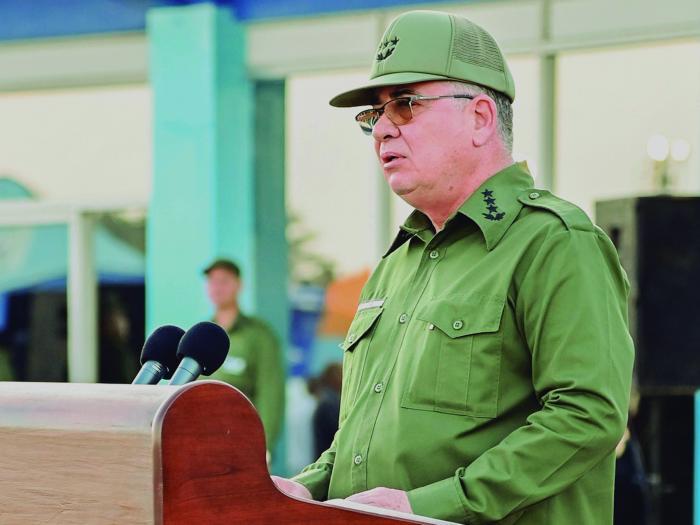
  • FAR congratulates General Álvaro López Miera on his birthday

    FAR congratulates General Álvaro López Miera on his birthday

    The Cuban Revolutionary Armed Forces have publicly celebrated the birthday of Army Corps General Álvaro López Miera, expressing profound gratitude for his decades of service to the nation. Through an official Facebook post, the military institution praised López Miera as a continuing source of guidance, strength, and commitment to national defense.

    General López Miera’s distinguished career traces back to his early involvement in the revolutionary struggle within the Sierra Maestra mountains, later continuing with the Second Frank País Eastern Front. His military service represents a remarkable journey through various command positions and ranks, culminating in his current role as Minister of the Revolutionary Armed Forces.

    The senior general has significantly contributed to Cuba’s internationalist missions, having served in both Ethiopia and Angola. These deployments underscored Cuba’s dedication to global solidarity and cooperative military efforts during critical historical periods.

    Beyond his military command, López Miera holds substantial political influence as a founding member of the Communist Party of Cuba (PCC), serving on the Political Bureau and as a deputy in the National Assembly of People’s Power. His leadership has been instrumental in mentoring new generations of military personnel and steering strategic national processes.

    The decorated officer has received Cuba’s highest honors, including the prestigious Ernesto Che Guevara Order, Camilo Cienfuegos Order, and Antonio Maceo Order. These decorations recognize his lifetime of exceptional service and unwavering dedication to the Cuban nation and its revolutionary principles.

  • Cuban province celebrates 38th anniversary of urban agriculture

    Cuban province celebrates 38th anniversary of urban agriculture

    In a significant development for Cuba’s food security initiatives, the Provincial Delegation of Agriculture has reported substantial progress in its urban agriculture program. The comprehensive initiative now encompasses 1,244 productive structures spanning 1,278 hectares across diverse cultivation formats including organoponic systems, technified plots, intensive orchards, and traditional agricultural fields.

    Lerida Maria Sanchez, the program coordinator in Vueltabajo, revealed remarkable productivity metrics, stating that the 2025 harvest achieved an average yield of 10.2 kilograms per square meter. This impressive output demonstrates the program’s effectiveness despite ongoing material constraints and resource limitations that have historically challenged Cuban agriculture.

    The initiative has simultaneously expanded its reach to household-level food production, with 5,000 new family courtyards added recently, bringing the total to 65,000 participating households. This decentralized approach contributes significantly to family and community self-sufficiency while reducing pressure on centralized food distribution systems.

    International partnerships have played a crucial role in enhancing the program’s capabilities. Through various collaboration projects, the agriculture initiative has received solar-powered irrigation systems, diverse seed varieties, equipment for producing preserved foods and condiments, and even a tricycle for improved local marketing and distribution within neighboring communities.

    Now in its thirty-eighth year of operation, Cuba’s urban agriculture program faces the dual challenge of surpassing its own established benchmarks while meeting the growing demands of the population. The program continues to evolve as a strategic alternative for national food security, demonstrating innovative approaches to sustainable agriculture in urban environments.

  • Israeli forces attack Tel-al-Ahamar site in the Syrian province

    Israeli forces attack Tel-al-Ahamar site in the Syrian province

    Israeli military units have intensified operational activities in Syria’s Quneitra governorate, employing multiple combat tactics across various locations. Security sources confirm that military personnel stationed west of Tel al-Ahmar initiated gunfire operations utilizing both automatic weapons and medium-caliber artillery systems.

    The offensive actions coincided with aerial surveillance missions conducted by Israeli fighter jets over the contested region. While no civilian casualties resulted from these specific operations, the military presence has created substantial tension among local populations.

    In a separate incident preceding these events, occupation forces targeted civilian foragers in al-Ashah village. Eyewitnesses reported that women and children gathering wild mushrooms came under direct fire, though fortunately no physical injuries were documented during this confrontation.

    Additional military movements included coordinated ground patrols involving five armored vehicles along the strategic corridor connecting al-Ashah and al-Rafid settlements. Simultaneously, a secondary detachment comprising two military vehicles conducted unauthorized entries into multiple residential villages throughout the area.

    During these intrusive maneuvers, Israeli soldiers implemented restrictive measures including comprehensive searches of civilian pedestrians and established temporary roadblocks that impeded normal transit along several key thoroughfares. These developments represent an escalation in the ongoing Israeli military campaign within the Quneitra region, maintaining constant alert status among communities and raising serious concerns regarding compliance with international humanitarian standards.

  • Russia urges Japan to abandon hostile policy toward Moscow

    Russia urges Japan to abandon hostile policy toward Moscow

    The Russian Foreign Ministry has issued a formal declaration establishing concrete conditions for the restoration of diplomatic relations with Japan, emphasizing that Tokyo must demonstrate tangible steps away from its current hostile posture. Russian officials contend that Japan’s present foreign policy direction contradicts its national interests and undermines regional stability.

    Moscow’s statement specifically underscores the necessity for Japanese authorities to preserve what it describes as “the positive legacy of bilateral ties” developed over previous decades. The diplomatic communique suggests that current tensions stem directly from Japan’s adoption of what Russia characterizes as an antagonistic position toward Russian interests.

    This development follows high-level briefings where Russian officials conveyed their strategic approach to regional and international matters, including specific practical considerations regarding engagement with Japan. The diplomatic rift intensified significantly when Japan aligned with Western-imposed sanctions against Russia following the commencement of military operations in Ukraine in February 2022.

    The deterioration culminated on March 21, 2022, when Moscow formally suspended peace treaty negotiations and halted discussions concerning joint economic initiatives in the Southern Kuril Islands. Russian authorities attributed these decisions to Japan’s “unfriendly position” regarding the Ukraine conflict, marking a significant setback in Russo-Japanese relations that continues to impact Northeast Asian geopolitics.

  • Cuba to present present map for coral reef conservation

    Cuba to present present map for coral reef conservation

    In a landmark scientific achievement, Cuban researchers have developed a comprehensive national strategy for coral reef conservation following an unprecedented research initiative. The pioneering effort, which employed a unified methodology for the first time, yielded critical scientific data while highlighting the profound fragility and ecological value of these marine ecosystems.

    The research program reached a pivotal milestone with the 2023 Circumnavigation of Cuba expedition, a collaborative scientific mission involving both national and international institutions. This extensive marine survey provided the foundational data necessary for formulating evidence-based conservation policies.

    According to reports from Cubadebate, the completed study will be presented to Cuba’s Council of Ministers for official approval. The proposed framework advocates for a more responsible relationship with coral habitats, promoting informed decision-making and enhanced ecosystem management that actively engages local communities in conservation efforts.

    Dr. Patricia Gonzalez Diaz, lead researcher at the Center for Marine Research, provided essential leadership in developing this conservation strategy. Her work builds upon decades of dedicated research by numerous scientists and conservationists who have documented Cuba’s marine biodiversity.

    This conservation initiative aligns with Cuba’s State Plan for Confronting Climate Change (Tarea Vida), though officials acknowledge that implementation progress has been slower than initially anticipated.

    The protection of coral reefs remains critically important due to their multifaceted ecological services. These include coastal defense against marine erosion and extreme weather events, support for commercially valuable marine species through high biodiversity, and natural sand generation processes that sustain Cuba’s iconic beaches.

  • Urban agriculture: from skepticism to success

    Urban agriculture: from skepticism to success

    The Cuban province of Pinar del Río prepares to host national celebrations marking the 38th anniversary of the Urban, Suburban, and Family Agriculture Program this Saturday, an initiative originally championed by Army General Raúl Castro Ruz. What began as a controversial experiment has evolved into a transformative food security system that continues to demonstrate remarkable resilience despite significant challenges.

    At the organic garden known as La Erea, located along the banks of the Guamá River, agricultural specialist Dany Mena García exemplifies the program’s success. “Here, one crop is harvested and another is planted right behind it. We never have unplanted beds,” he explains, describing a operation that maintains productive green beds throughout all twelve months of the year.

    The program’s journey hasn’t been without obstacles. Early skeptics questioned the logic of constructing urban garden beds while rural land remained underutilized. Initial harvests sometimes went to waste due to limited consumer demand. Yet persistence eventually transformed Cuban dietary habits, introducing chard, spinach, chives, carrots, beets, and approximately twenty other crops to complement the traditional limited vegetable selection.

    According to Lérida María Sánchez Díaz, head of the program at the Provincial Delegation of Agriculture in Vueltabajo, the initiative now encompasses 1,244 production structures across 1,278 hectares. These include organic farms, technified plots, intensive gardens, semi-protected gardens, and rustic greenhouses. The current production average stands at an impressive 10.2 kilograms per square meter, meeting projections established earlier this year.

    The program has demonstrated particular resilience in recovering from natural disasters. When Hurricane Ian devastated the region in 2022, destroying over 8,000 garden beds, the system rebounded within approximately one month with harvests of lettuce, chard, spinach, and chives already underway.

    International collaboration has played a crucial role in recent advancements. Miguel Espinosa Correa, administrator of the Ingeniería #1 organic garden, describes how solar panel irrigation systems donated through international projects have addressed electricity shortages. Additional support from United Nations, European Union, and Japanese Embassy initiatives has provided seeds, processing equipment, and transportation solutions for product distribution.

    Despite these achievements, challenges remain regarding organic matter availability and labor resources. However, increased operational autonomy has enabled producers to address issues directly—such as when Espinosa’s team purchased a replacement irrigation pump from local businesses rather than waiting years for bureaucratic solutions.

    With approximately 65,000 backyard gardens expected to join the provincial program by December’s end, and new ventures into dehydrated condiments and medicinal plants expanding product offerings, Cuba’s urban agriculture initiative continues to evolve beyond its original scope, driven by growing consumer demand and ongoing innovation.