标签: Cuba

古巴

  • Cuba rejects U.S. arms sale to Taiwan

    Cuba rejects U.S. arms sale to Taiwan

    Cuban Foreign Minister Bruno Rodríguez Parrilla has issued a strong condemnation of the United States government’s planned $11.1 billion arms transfer to Taiwan, characterizing the move as a direct threat to Chinese sovereignty and regional stability. The high-ranking diplomat, who serves on the Political Bureau of the Central Committee of Cuba’s Communist Party, utilized his social media platform to articulate Havana’s firm opposition to the weapons deal.

    Minister Rodríguez emphasized that such military transactions severely compromise the territorial integrity of the People’s Republic of China while simultaneously destabilizing the delicate security equilibrium across the Asia-Pacific region. The Cuban diplomat reiterated his nation’s steadfast commitment to the ‘One China’ principle, explicitly recognizing Taiwan as an inseparable component of Chinese territory.

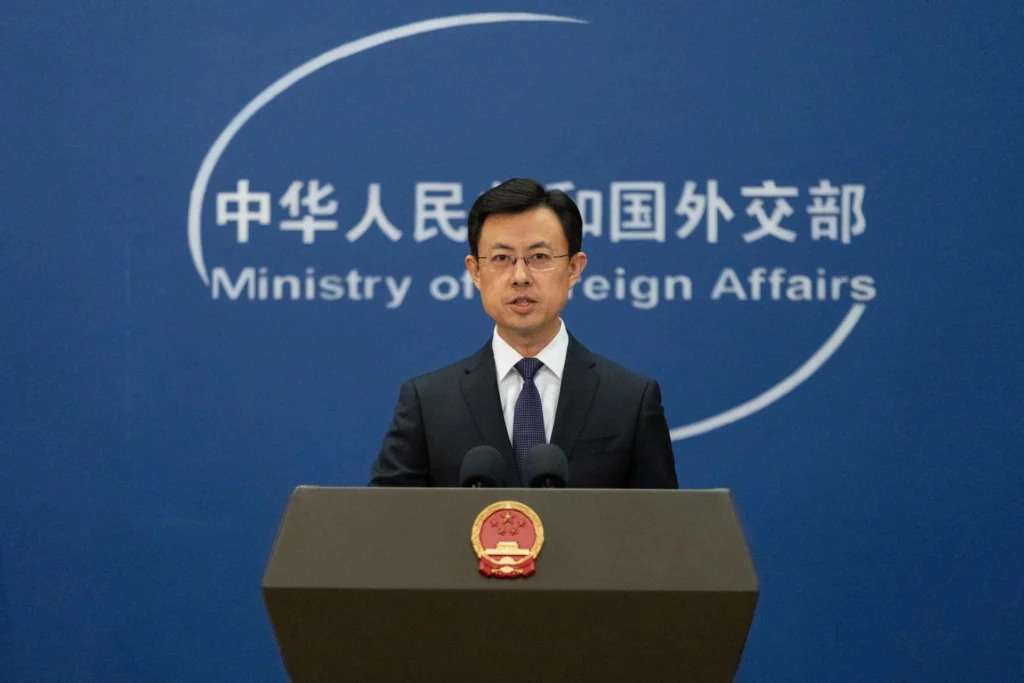
    The record-breaking arms package announcement prompted immediate countermeasures from Beijing, with Chinese authorities imposing sanctions against 20 American defense contractors and ten senior executives implicated in recent weapons sales to Taiwan. Chinese foreign ministry representatives have urgently called upon Washington to honor previous bilateral agreements, specifically referencing the three joint communiqués that have historically guided Sino-American relations.

    Official statements from Beijing further cautioned that Taiwan represents the most sensitive core interest in China’s foreign policy framework, describing it as an ‘uncrossable red line’ in diplomatic engagements with the United States. Chinese officials have vowed to implement all necessary measures to protect national sovereignty and maintain territorial integrity against external interference.

  • Young man injured during national strike dies in Ecuador

    Young man injured during national strike dies in Ecuador

    A young Ecuadorian man has become the fourth fatality resulting from security forces’ alleged excessive force during anti-government protests that shook the nation in late 2025. The victim, identified as Farinango, sustained critical injuries during demonstrations triggered by President Daniel Noboa’s controversial decision to eliminate diesel fuel subsidies.

    Medical reports indicate Farinango was struck twice by tear gas canisters—once in the leg and another near his kidneys—during clashes between protesters and security personnel. The impacts severely compromised his renal function and exacerbated pre-existing liver conditions. Despite receiving medical attention, his organs ultimately failed to withstand the trauma caused by the explosive projectiles.

    The protests, organized by the Confederation of Indigenous Nationalities of Ecuador (CONAIE) and supported by various social sectors, erupted in response to soaring diesel prices and broader discontent with the government’s economic agenda. What began as opposition to fuel subsidy elimination expanded into widespread rejection of economic policies affecting vulnerable populations.

    Human rights organizations have documented alarming patterns of violence during the unrest. The Alliance of Organizations for Human Rights has recorded 391 distinct human rights violations allegedly committed by police and military forces throughout the demonstrations.

    Prior to Farinango’s death, three other protesters lost their lives under similar circumstances. Efraín Fuerez and José Guamán, both indigenous youths, died from gunshot wounds, while Rosa Paqui succumbed to tear gas inhalation. These incidents collectively paint a troubling picture of state response to civil dissent, raising serious concerns about proportionality in public order maintenance.

    The accumulating fatalities have intensified scrutiny of security protocols regarding crowd control measures, particularly the use of tear gas canisters as projectile weapons rather than their intended purpose of dispersion. International human rights advocates are calling for independent investigations into the patterns of violence observed during the protests.

  • Cuba’s Laura Alonso Ballet remembers Fernando, Alberto, and Alicia

    Cuba’s Laura Alonso Ballet remembers Fernando, Alberto, and Alicia

    HAVANA – The Cuban ballet world gathered for an extraordinary tribute performance titled “Alonso Forever,” celebrating the monumental legacy of Alicia, Fernando, and Alberto Alonso – the revered triumvirate who established the foundational principles of Cuban dance. Orchestrated under the artistic direction of Laura Alonso, the event honored her family’s unparalleled contributions to both the Cuban School of Ballet and the National Ballet of Cuba.

    In a pre-performance documentary clip, Laura Alonso provided unique insight into her family’s artistic philosophy. “My uncle Alberto championed the integration of characteristically Latino sensuality, particularly Cuban expressive movements, into classical dance,” she revealed. “Meanwhile, my father conducted extensive research across various European schools before returning to develop Cuba’s distinctive ballet methodology. My mother then brought their collective vision to life on stage.”

    The gala presentation featured virtuosic excerpts from ballet’s most demanding repertoire, including the technically spectacular pas de deux from Don Quixote, the emotionally charged balcony scene from Romeo and Juliet, the dramatic Black Swan variation from Swan Lake, and the hauntingly beautiful Act II pas de deux from Giselle. The program also included iconic solo pieces such as The Dying Swan and excerpts from the passionate Carmen suite.

    The performance served as both historical preservation and artistic demonstration, showcasing how the Alonso family developed Cuba’s unique ballet style that merges technical precision with Caribbean expressiveness. Their methodology has produced generations of dancers recognized worldwide for their athleticism, musicality, and dramatic intensity.

  • Cuba and Venezuela, a solid foundation for regional unification

    Cuba and Venezuela, a solid foundation for regional unification

    President Nicolás Maduro of Venezuela has formally recognized the Cuba-Venezuela International Brigade with the nation’s prestigious Antonio Jose de Sucre Order of Merit for Builders of the Homeland. The ceremony, held at Miraflores Palace, celebrated the brigade’s critical role in repairing extensive damage across multiple provinces following Hurricane Melissa’s devastating path.

    The multidisciplinary team of Cuban specialists, comprising experts from electrical, transportation, and public works sectors, spent several weeks engaged in intensive recovery operations. Their deployment demonstrated exceptional technical capability and humanitarian commitment in restoring essential infrastructure and services to affected communities.

    During the official proceedings, Maduro characterized the brigade’s contribution as “profoundly inspiring” and underscored the “unquestionable brotherhood” between Caracas and Havana. He articulated a vision of international relations founded on solidarity rather than conflict, identifying Cuba as the “world champion of solidarity” for its six-decade history of providing technical and medical assistance across Africa, Asia, and Latin America.

    The Venezuelan leader further articulated that both nations share a mission to demonstrate that the future of the Western Hemisphere must be built upon cooperation rather than “war, military threats, colonialism, or slavery.” He concluded with a firm declaration that the Cuba-Venezuela alliance represents an indestructible bond capable of overcoming all adversities to ensure victory prevails.

  • Cuban province beats to the rhythm of music festival

    Cuban province beats to the rhythm of music festival

    The fifth edition of the Athens Fusion Festival culminated in a spectacular celebration of sound, transforming a chilly night in western Cuba into an electrifying musical experience. Under the artistic direction of acclaimed actress Maria Laura German, the event showcased an impressive lineup of alternative and electronic performers who captivated audiences until the early morning hours.

    Featured artists including DJ Dany, collective Karamba, DJ Wikiri, and Glens delivered powerful performances that demonstrated music’s transformative power to evoke deep emotional responses. The festival reached its emotional peak with the appearance of urban music sensation Mama estoy brillando, whose contemporary sound and widespread popularity among Cuban youth generated particularly enthusiastic crowd reactions.

    The festival’s final day promises an equally diverse and visually stunning program featuring performances by Jotabarrioz, Adrian Berazain, and Abel Gerones. Established as a premier destination for audio innovation, the Athens Fusion Festival has built its reputation on championing musical experimentation while fostering meaningful interaction between artists and audiences.

    This annual event continues to serve as a vital platform for emerging and established musicians exploring new sonic territories, prioritizing both artistic innovation and collective enjoyment within Cuba’s vibrant music scene.

  • Actress Eslinda Nunez, a face of Cuban cinema, turns 82

    Actress Eslinda Nunez, a face of Cuban cinema, turns 82

    The Cuban cultural community is celebrating the extraordinary career of acclaimed actress Eslinda Núñez, whose profound contributions to cinema have left an indelible mark on Cuban and Latin American film. Recognized with Cuba’s prestigious National Film Award in 2011 and honored with the Coral of Honor at the 44th Havana Film Festival, Núñez has established herself as a towering figure in the region’s artistic landscape.

    Born in 1943 in Santa Clara, Núñez developed an acting style characterized by remarkable dramatic intensity and unwavering dedication to her craft. Her performances in landmark films such as ‘Lucía’ (1968) and ‘La primera carga al machete’ (1969) under directors Humberto Solás and Manuel Octavio Gómez respectively, have become essential viewing in the canon of Latin American cinema.

    The Ministry of Culture extended warm congratulations to the actress, highlighting her iconic roles that have defined generations of Cuban storytelling. Meanwhile, the Cuban Film Institute (ICAIC) acknowledged that Núñez’s career represents an integral chapter in their organization’s history, noting her ability to embody complex characters with exceptional talent and dignity.

    Multiple cultural institutions including the Union of Writers and Artists of Cuba (UNEAC), the Hermanos Saiz Association, and the CubaActores project joined in celebrating Núñez’s legacy. UNEAC specifically emphasized how her screen presence has created unforgettable moments in national culture, establishing her work as a continuing benchmark for artistic authenticity and sensitivity that has inspired both viewers and creators across generations.

  • Havana’s Gorria Gallery Workshop celebrates its tenth anniversary

    Havana’s Gorria Gallery Workshop celebrates its tenth anniversary

    The Gorria Gallery Workshop, a significant cultural institution in Havana’s historic San Isidro neighborhood, is marking its tenth anniversary with a landmark exhibition titled “Tenth Anniversary Assembly.

    Founded in December 2015 by acclaimed Cuban actor and filmmaker Jorge Perugorría—recipient of the 2023 National Film Award and an accomplished visual artist—the gallery has evolved into a vital center for artistic promotion and community engagement in one of Havana’s most culturally vibrant districts.

    The anniversary exhibition showcases works from distinguished artists who have presented individual shows at the gallery throughout its decade-long existence. The prestigious roster includes Roberto Fabelo, winner of the 2004 National Visual Arts Award, alongside contemporary talents Eduardo Abela, Levi Orta, May Reguera, and Perugorría himself, who has significantly expanded his creative practice into visual arts techniques.

    The exhibition’s opening ceremony attracted numerous prominent figures from Cuba’s national cultural scene, highlighting the gallery’s established role as a cornerstone of Havana’s artistic community. This gathering of cultural leaders underscored the institution’s successful integration of artistic excellence with neighborhood social dynamics.

    The exhibition, which opened to considerable acclaim, will remain accessible to the public for an extended period, running through March 2026, offering both locals and international visitors ample opportunity to experience this celebration of Cuban artistic achievement.

  • Puerto Rico’s pro-independence initiative gains support in Congress

    Puerto Rico’s pro-independence initiative gains support in Congress

    Puerto Rican advocacy groups within the United States are spearheading groundbreaking legislation that would establish a status referendum explicitly prohibiting full annexation of the Caribbean territory—a prospect vehemently opposed by former President Donald Trump. This legislative initiative, rooted in the philosophical traditions of Puerto Rican intellectual Eugenio Maria de Hostos, emphasizes independence as a democratic and inclusive process requiring recognition of all Puerto Ricans’ will, including the substantial diaspora community.

    The Hostosian National Independence Movement (MINH), represented by National Directorate member Jaime Inclán, asserts that any resolution regarding Puerto Rico’s political future must acknowledge the complete Puerto Rican nation beyond geographical boundaries. The organization’s leadership contends that principles of human dignity and popular sovereignty necessitate including diaspora voices in self-determination processes.

    Demographic data reveals a striking reality: approximately 9 million people identify as Puerto Rican, with only 3.2 million residing on the island itself. This distribution results from multiple migration waves, including Washington’s explicit emigration encouragement policies during the 1940s and the devastating displacement following 2019’s Hurricane Maria, which forced approximately 600,000 citizens to relocate.

    The MINH movement maintains that Congressional actions regarding Puerto Rico’s political status must formally recognize both the inherent right to self-determination and independence as a legitimate constitutional option, challenging over 120 years of colonial administration that began with U.S. acquisition in 1898.

  • Cuba’s PM praises community contribution in hit disaster area

    Cuba’s PM praises community contribution in hit disaster area

    Cuban Prime Minister Manuel Marrero has publicly praised the remarkable recovery efforts in Holguín province’s municipality of Cacocum, following the devastating impact of Hurricane Melissa. Through official social media channels, Marrero highlighted the collective spirit that has driven the region’s rehabilitation, noting that the territory demonstrates “what can be achieved through unified community contribution.”

    The Prime Minister’s visit included comprehensive inspections of several key social projects initiated in the aftermath of the natural disaster. He toured the pioneering Community Food Project in La Agraria settlement—the first such initiative in the province—which provides essential nutritional support to nine elderly residents and one vulnerable youth.

    Marrero’s itinerary further encompassed the Expedicionarios del Corynthia semi-boarding school, an institution offering crucial assistance to over 198 mothers within the municipality. The educational facility represents Cuba’s commitment to supporting working families through state-sponsored childcare solutions.

    Significant attention was given to the Solar Kit Sales Program, where the Prime Minister visited a beneficiary family home. This government initiative provides affordable solar energy solutions to low-income households, promoting sustainable energy access across economically challenged communities.

    The Ruben Batista Rubio Polyclinic received particular emphasis during the tour, serving approximately 13,000 residents while maintaining the region’s sole intensive care unit. Marrero evaluated the medical facility’s capabilities and resource requirements following recent weather-related challenges.

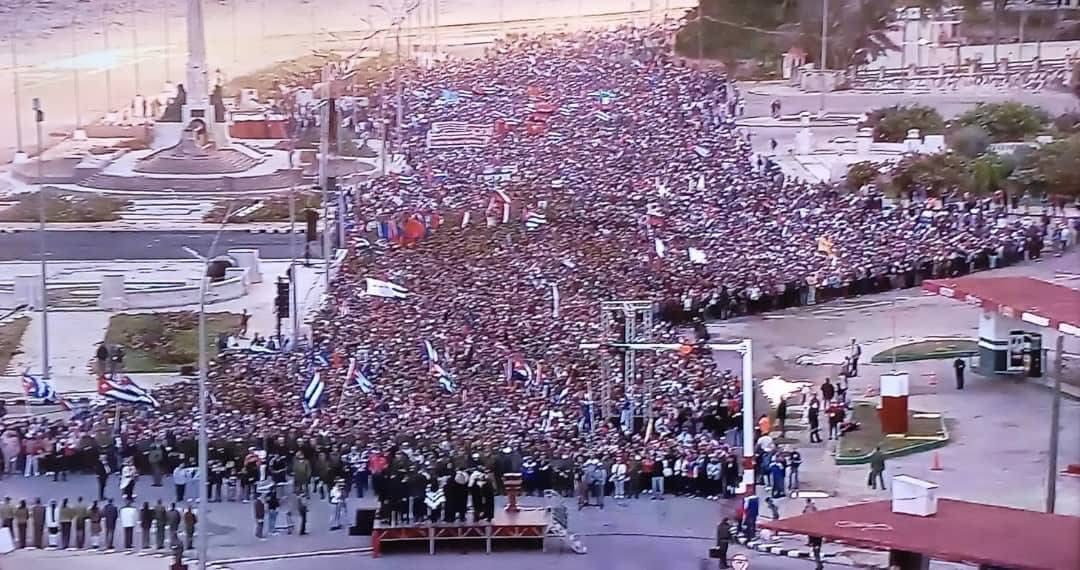
    Additional visits included the Miguel Gonzalez Intensive Garden agricultural project, the Municipal Government headquarters, and Plaza 2 de Diciembre. At the historic plaza, the Prime Minister participated in celebrations commemorating the 67th anniversary of the Cuban Revolution’s triumph in Holguín province, connecting contemporary recovery efforts with the nation’s broader revolutionary narrative.

  • Paraguay hands over fugitive former coup police chief to Brazil

    Paraguay hands over fugitive former coup police chief to Brazil

    In a significant cross-border law enforcement operation, Paraguayan authorities have extradited former Federal Highway Police (PRF) director Erick Vasques to Brazil. The high-profile apprehension occurred at Silvio Pettirossi International Airport in Asunción, where Vasques was intercepted while attempting to board an international flight to El Salvador using counterfeit documentation.

    The operation culminated at the Friendship Bridge border crossing, where masked Paraguayan security personnel formally transferred the detainee to officers of Brazil’s Federal Police (PF). Visual confirmation showed Vasques being transported without facial concealment in an official vehicle, marking his return to Brazilian jurisdiction.

    This international manhunt was triggered when Brazilian judicial monitoring systems detected the unauthorized removal of Vasques’s court-mandated electronic ankle bracelet. Following the alert, a PF tactical unit conducted a search at his registered residence, confirming his absence and triggering immediate pretrial detention orders issued by Supreme Federal Court Minister Alexandre de Moraes.

    The coordinated effort between Paraguayan and Brazilian authorities underscores increasing regional cooperation in apprehending individuals attempting to evade justice through international flight. Vasques’s capture represents a significant development in Brazil’s ongoing anti-corruption efforts, demonstrating the effectiveness of cross-border judicial collaboration.