标签: Cuba

古巴

  • A Plenary Session in tune with the times we live in

    A Plenary Session in tune with the times we live in

    In response to pressing national circumstances, the Political Bureau of Cuba’s Communist Party has announced a significant restructuring of its scheduled proceedings. The 11th Plenary Session of the Party’s Central Committee will now convene as a single session via videoconference on Saturday, December 13th.

    This strategic adaptation, formally disclosed through the Party’s official communication channels, aims to address multiple operational priorities simultaneously. By transitioning to a virtual format, the Party ensures that key leadership personnel can maintain their presence at grassroots levels across the nation. This presence is deemed critical for direct assessment, verification, and management of issues affecting population welfare and economic efficiency.

    Roberto Morales Ojeda, Organization Secretary of the Central Committee and Political Bureau member, elaborated on the decision through his social media presence. He characterized the move as consistent with the Party’s established methodology of rational and objective decision-making tailored to contemporary national conditions. This approach, he noted, enables continued task execution through adaptive alternatives without compromising operational effectiveness.

    The procedural adjustment demonstrates the Party’s operational flexibility while potentially reducing financial and material expenditures associated with conventional in-person gatherings. This virtual transition reflects a broader pattern of institutional adaptation to challenging circumstances, emphasizing both pragmatic resource management and maintained governance continuity.

  • Venezuela sent a new ship to Cuba with humanitarian aid

    Venezuela sent a new ship to Cuba with humanitarian aid

    In a continued demonstration of regional solidarity, Venezuela has launched its fifth major humanitarian mission to Cuba, dispatching a vessel laden with critical supplies to assist in the island’s recovery from Hurricane Melissa. The shipment, which set sail on December 9, carries a cargo of household goods and construction materials essential for rebuilding efforts.

    This initiative falls under the framework of the Bolivarian Alliance for the Peoples of Our America-People’s Trade Treaty (ALBA-TCP), a bloc designed to foster cooperation among its member nations. The aid is specifically targeted at mitigating the extensive damage inflicted when Hurricane Melissa, a Category 3 storm on the Saffir-Simpson scale, made landfall on October 29.

    The Venezuelan government’s response was swift and multi-faceted. The relief operation commenced immediately after the disaster with an airlift delivering 26 tons of supplies. This was followed by a substantial maritime effort. On November 8, the ALBA ship transported 5,000 tons of aid alongside a brigade of electrical workers. Merely two days later, a second vessel departed with over 2,500 tons of humanitarian cargo, coinciding with the arrival of 22 Venezuelan specialists from the electricity, transport, and public works sectors to provide on-the-ground expertise.

    A significant third shipment, comprising more than 7,110 tons of aid, sailed from the international port of La Guaira on November 28. Its diverse cargo included 76 containers of food, heavy machinery like backhoe loaders, and specialized supplies for the reconstruction of housing and road infrastructure.

    Rander Peña, Executive Secretary of ALBA-TCP, provided a comprehensive tally to the press, revealing that the total aid sent to Cuba has now surpassed 12,000 tons. This immense contribution encompasses a wide array of necessities, including food, appliances, mattresses, medical supplies, construction and electrical materials, and even toys.

    Echoing the sentiment behind the mission, a high-ranking official stated on social media that providing vital supplies to the Cuban people honors the legacy of Fidel Castro, emphasizing that true solidarity is defined not by giving one’s surplus, but by sharing what one possesses.

  • Cuba pays tribute to Mariana Grajales at Day of History

    Cuba pays tribute to Mariana Grajales at Day of History

    An academic gathering of historians and researchers in Cuba has initiated a profound reevaluation of national heroine Mariana Grajales Cuello’s historical significance. The event commenced with a groundbreaking presentation by Dr. Damaris Amparo Torres of the University of Oriente, titled “From Mariana Grajales’ Lineage,” which challenged conventional historical narratives.

    Dr. Torres, a distinguished Santiago historian, identified a persistent pattern in Cuban historiography where Grajales’ monumental contributions have been consistently overshadowed by the fame of her sons, particularly independence hero Antonio Maceo. The academic emphasized the critical need to restore Grajales’ autonomous historical agency and recognize her distinct legacy separate from her familial connections.

    The presentation documented how post-revolutionary scholarship began rectifying this historical imbalance, citing pivotal works like “Mariana Grajales: 200 Years in History and Memory” as instrumental in establishing her proper historical standing.

    With meticulous academic rigor, Torres corrected longstanding biographical inaccuracies, definitively establishing Grajales’ birthdate as July 12, 1815, in Santiago de Cuba—a fact verified through baptismal records preserved at the Church of Santo Tomás Apostle. The researcher conclusively refuted theories suggesting Dominican origins, firmly reestablishing Grajales’ authentic Cuban heritage.

    The symposium further explored Grajales’ remarkable personal narrative as a mestizo woman who demonstrated extraordinary resilience after early widowhood. Despite confronting systemic discrimination and lacking formal education, she forged a new family with patriot Marcos Maceo, raising ten children who would predominantly dedicate their lives to Cuba’s independence struggle.

    Fernando Miguel Manzo Alonso, president of the Union of Historians of Cuba (UNHIC) in Camagüey, formally inaugurated the event. The location held particular historical significance as the province that hosted the first Constitution of the Republic in Arms in 1869, providing appropriate context for Grajales’ revolutionary legacy.

  • Cuba FM denounces declaration of new border between Gaza and Israel

    Cuba FM denounces declaration of new border between Gaza and Israel

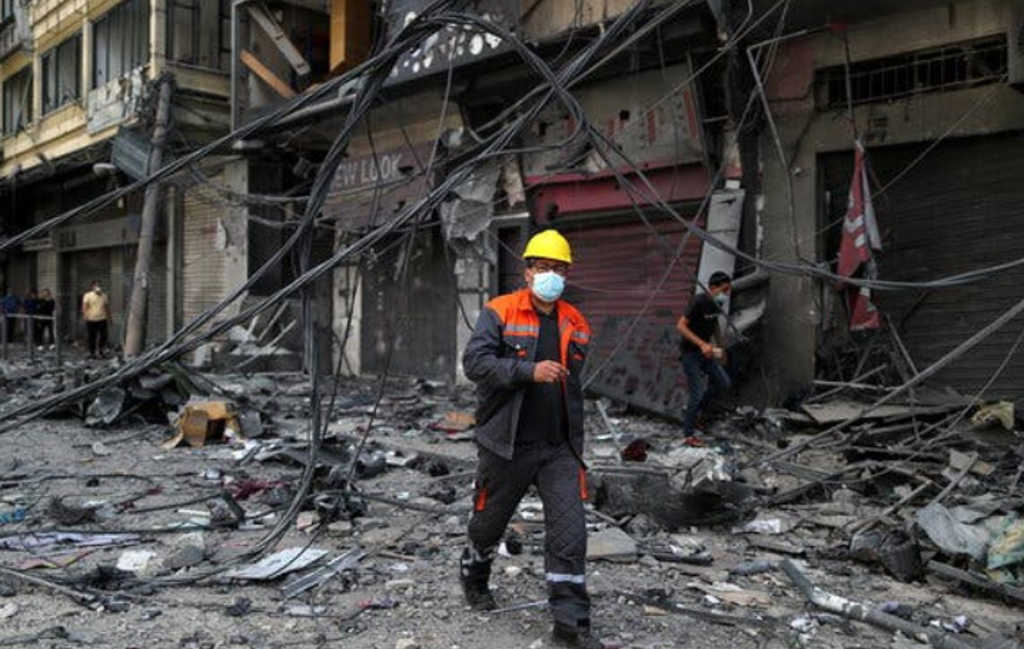
    The Palestinian Authority has issued a formal condemnation of Israel’s unilateral declaration establishing a provisional ceasefire demarcation—termed the ‘yellow line’—as the new boundary separating the Gaza Strip from Israeli territory. In an official statement disseminated through social media channels, a senior Palestinian representative characterized this move as a severe breach of both the recently brokered ceasefire accord and established principles of international law. The declaration frames the Israeli government’s actions as constituting yet another manifestation of what it describes as the ‘genocidal character’ of the occupying power’s ongoing operations against Palestinian civilians. This development introduces a new point of contention in the already fragile post-ceasefire environment, potentially undermining diplomatic efforts to stabilize the region. The designation of this security line as a permanent border represents a significant shift in the territorial status quo that could have profound implications for future negotiations concerning Palestinian sovereignty and territorial integrity.

  • Organizations alert ILO to deterioration of rights in Ecuador

    Organizations alert ILO to deterioration of rights in Ecuador

    Ecuador’s compliance with international indigenous rights standards has come under rigorous examination by the International Labour Organization’s Commission of Experts. Despite having ratified ILO Convention 169—a landmark treaty designed to transform historical state-indigenous relations by moving beyond assimilation policies toward substantive equality—the implementation of these rights remains critically deficient in complex scenarios involving indigenous communities and the state.

    A coalition comprising trade unions, agricultural representatives, indigenous groups, and human rights organizations has expressed grave concerns regarding systematic rights violations. These organizations document how Ecuador has progressively restricted the scope of mandatory prior consultation processes while simultaneously authorizing extensive extractive projects in mining, oil, hydroelectric, and agro-industrial sectors without adequate consultation. Additionally, the government has enacted legislation directly impacting indigenous territories without proper democratic engagement with affected communities.

    This deterioration of indigenous rights unfolds within a broader context of political turmoil. The nation recently experienced a month-long national strike protesting President Daniel Noboa’s economic and security measures, met with significant police and judicial repression against social leaders. Further complicating the political landscape, Ecuadorian voters rejected President Noboa’s proposal for a constituent assembly to draft a new constitution during a November 16 popular consultation.

    The converging organizations now hope the ILO’s review will serve as a catalyst to strengthen rather than diminish collective rights, urging the Ecuadorian government to align its practices with the transformative principles embedded in Convention 169.

  • Cuba defends full dignity for all

    Cuba defends full dignity for all

    On December 10th, as the international community observes Human Rights Day commemorating the 1948 adoption of the Universal Declaration, Cuba has articulated its distinctive perspective on human rights implementation amidst contemporary global challenges. The Caribbean nation positions itself as a defender of human dignity despite facing what it describes as a “genocidal blockade” from the United States.

    Cuba’s constitutional framework, particularly Article 41 of its 2019 Constitution, formally recognizes the “enjoyment and exercise of human rights as inalienable, imprescriptible, indivisible, universal, and interdependent.” This legal foundation underpins what Cuban authorities characterize as extensive achievements in social development despite economic constraints imposed by decades of American sanctions.

    The article highlights several global concerns that allegedly compromise human rights worldwide, including media-covered conflicts such as Israel’s actions against Palestinians, rising neo-fascist tendencies, climate change effects, and increasing inequality attributed to neoliberal globalization. Additionally, it references “imperial threats” against Venezuela under the pretext of combating drug trafficking.

    According to the perspective presented, UN Special Rapporteur Alena Douhan recently noted that US coercive measures “limit the State’s ability to develop public policies, undermine the rights to food and dignified life, hinder academic exchanges, and affect the supply of energy, drinking water and medicines.”

    Despite these challenges, Cuba maintains its commitment to building “an independent, sovereign, socialist, democratic, prosperous, and sustainable nation” through citizen participation in government programming. The nation positions itself as willing to share decades of experience in human development areas including health, science, education, and culture.

    The ideological foundation draws from both historical revolutionary leader Fidel Castro’s maxim describing the Cuban Revolution as “an aspiration for social justice within the fullest freedom and the most absolute respect for human rights” and independence hero José Martí’s vision of making “the worship by Cubans of the full dignity of man” the first law of the republic.

  • El Toque and its crude economic manipulation algorithm

    El Toque and its crude economic manipulation algorithm

    Cuban authorities have presented compelling evidence identifying digital platform El Toque as a sophisticated instrument of economic warfare against the nation, directly funded and coordinated by the United States government. The revelation came through an extensive investigation featured on the television program ‘Razones de Cuba,’ which exposed the platform’s operations and its key personnel.

    According to Raúl Capote, a former State Security agent, El Toque represents a dual-pronged attack targeting both Cuba’s economy and the consciousness of its citizens. The investigation identified 18 central figures within El Toque’s operations, including Gretel Valladares Carbonell (alias ‘Filo’), who managed funds from USAID and the National Endowment for Democracy distributed by the US State Department. Notably, Katia Sánchez Martínez serves simultaneously as El Toque’s community manager and an employee of the U.S. Embassy in Havana, demonstrating direct coordination.

    The platform’s current leadership consists of four individuals: José Hassan (the public face who confessed to receiving U.S. funding), Eloy, Alejandro, and Ana Lidia—described as the operational mastermind. Internal power struggles have reportedly intensified following these disclosures.

    Academic analysis from University of Havana experts Raúl Guinovart Díaz and Yubán Gutiérrez Quintanilla dismantled El Toque’s purported technical sophistication. Their examination revealed that the platform’s algorithm for calculating informal exchange rates employs elementary statistical methods—primarily the median—rather than complex econometric models. The methodology involves processing data from just four Telegram groups that contribute over half of the sample, making the system highly susceptible to manipulation.

    The investigation documented numerous methodological flaws, including duplicate message counting, identical text structures suggesting automated generation, and simultaneous equivalent posts across different groups. These manipulations directly impact Cuba’s economy by distorting prices, promoting inflation, encouraging speculation, and discouraging remittances through official channels—particularly damaging amid the ongoing economic blockade.

    Experts concluded that El Toque operates through data selection manipulation rather than algorithmic complexity, essentially reverse-engineering results to match predetermined outcomes. This practice artificially creates market volatility through the economic phenomenon of overshooting, where prices react excessively to manufactured expectations.

    The Cuban government maintains that El Toque represents a modern manifestation of hybrid warfare, combining media manipulation with economic destabilization tactics previously deployed against Chile, Nicaragua, and Venezuela. Foreign Minister Bruno Rodríguez Parrilla initially brought these allegations before the United Nations on October 29, initiating an international campaign to expose the platform’s true nature as a weapon of unconventional economic war against the Cuban people.

  • Italy reports 896 workplace deaths in the first 10 months of 2025

    Italy reports 896 workplace deaths in the first 10 months of 2025

    Italy is confronting a deepening workplace safety crisis as new data reveals 896 work-related fatalities occurred during the first ten months of 2025. According to a comprehensive report from the Observatory of Occupational Safety and the Environment, this figure represents a troubling increase of six deaths compared to the same period in 2024, indicating a reversal of safety improvements despite persistent union demands for enhanced preventive measures.

    The statistics present a detailed breakdown of these tragedies: 657 fatalities occurred directly at workplace locations, while an additional 239 deaths took place during daily commutes to and from work. The analysis identifies workers aged 55 to 64 as the most vulnerable demographic, accounting for 240 of the total workplace fatalities.

    A particularly alarming disparity emerges in the data concerning foreign workers, who experienced a fatality rate of 57.7 per million employees—more than double the rate of 23.9 observed among Italian nationals. Specifically, 145 foreign workers lost their lives at their job sites, with another 60 perishing during their commutes.

    Female workers also faced significant risks, with 74 deaths recorded in the first ten months of 2025. While this represents a slight decrease of one compared to the previous year, the data reveals a concerning shift: 36 women died at their workplaces (11 fewer than in 2024), but 38 died during commutes, marking a year-on-year increase of ten deaths in this category.

    The construction sector emerged as the most dangerous industry with 119 workplace fatalities, followed closely by manufacturing with 98 deaths. Transportation and storage accounted for 84 incidents, while commerce recorded 57 fatalities. The report also identified temporal patterns, with Mondays being the most dangerous day (22.8% of incidents), followed by Fridays (20.2%) and Tuesdays (16.4%).

  • Gaza health crisis continues amid ceasefire

    Gaza health crisis continues amid ceasefire

    Gaza’s healthcare infrastructure is facing an unprecedented crisis that threatens complete systemic collapse, according to senior medical officials in the territory. Dr. Mohammed Zaqout, Director General of Hospitals in Gaza, issued a grave warning that the healthcare system is approaching a point of no return due to severe supply shortages exacerbated by external restrictions.

    In detailed statements to the Shehab news agency, Dr. Zaqout explicitly accused neighboring Israel of intentionally blocking essential medical provisions from entering the territory. This blockade, he emphasized, directly endangers thousands of patients and wounded individuals who require immediate medical attention and ongoing treatment.

    The crisis has been escalating over several weeks, with Munir al-Barash, Director-General of Gaza’s Health Ministry, reiterating similar concerns last week. Al-Barash specifically highlighted that Israeli military operations and the sustained blockade have created catastrophic conditions throughout Gaza’s medical sector.

    During an interview with Al-Araby Television Network, al-Barash provided disturbing details about the scarcity of basic medical necessities. Healthcare facilities now lack fundamental supplies including wound disinfectants, intravenous solutions, and other critical medical components required for even routine procedures and emergency interventions.

    Medical professionals report that the compound effect of infrastructure damage from recent conflicts and the inability to replenish medical inventories has created a perfect storm. Hospitals are operating at minimal capacity with many critical services suspended indefinitely. The situation has forced healthcare workers to make impossible triage decisions while facing unprecedented ethical dilemmas in patient care.

    The humanitarian implications extend beyond immediate medical concerns, potentially affecting long-term public health outcomes throughout the territory. International health organizations continue to monitor the deteriorating situation with growing alarm as diplomatic efforts to resolve the supply blockade remain ongoing.

  • Cambodia: Seven civilians killed in Thai airstrikes

    Cambodia: Seven civilians killed in Thai airstrikes

    Cambodian authorities have issued a stern condemnation of Thailand’s military following a series of airstrikes on border-area civilian populations. According to official spokesperson Socheata, preliminary reports from provincial authorities confirm that Thai army operations persisted from Monday through 6:00 AM local time on Tuesday, deliberately targeting non-military zones.

    At an official press briefing, the National Defense Ministry characterized the bombings as ‘inhumane and brutal acts,’ asserting they represent a clear violation of both the existing ceasefire and the Joint Declaration previously ratified by the prime ministers of both nations on October 26. This diplomatic agreement was intended to de-escalate tensions and foster peaceful relations between the neighboring countries.

    The Cambodian Interior Ministry provided specific casualty figures, confirming seven citizens killed across three provinces: one in Preah Vihear, three in Oddar Meanchey, and three in Banteay Meanchey. These fatalities mark a significant escalation in the ongoing border dispute between the Southeast Asian nations.

    International concern continues to mount as United Nations Secretary-General Antonio Guterres expressed apprehension regarding the resurgence of armed conflict. The UN specifically referenced allegations of airstrikes and the mobilization of heavy military equipment along the contested border region, calling for immediate de-escalation and peaceful resolution through diplomatic channels.