标签: Cuba

古巴

  • Hungary boycotts meeting on possible Ukrainian accession to the EU

    Hungary boycotts meeting on possible Ukrainian accession to the EU

    Hungary has reinforced its diplomatic isolation within the European Union by formally boycotting a crucial ministerial meeting on Ukraine’s membership bid. A senior Hungarian official characterized the gathering in Lviv as a “political spectacle” and unequivocally restated Budapest’s dual-pronged opposition: refusing to endorse Ukraine’s EU accession process and blocking all financial mechanisms to transfer funds to Kiev.

    The informal council meeting, convened in western Ukraine this Thursday, was designed to reinvigorate membership negotiations that have remained paralyzed since the beginning of 2024. This deadlock is exclusively attributable to Hungary’s persistent veto power, which it has wielded to stall collective EU decision-making.

    Political analysts within the region view Budapest’s latest move not as an isolated incident but as a deliberate escalation—a hardening of its veto strategy that exacerbates existing fractures in European Union unity. This development signals a deepening institutional crisis, highlighting the challenges of achieving consensus within the bloc on matters of enlargement and foreign policy.

    The European Commission had initially recommended formalizing accession talks with Ukraine earlier this year. However, these plans were abruptly halted due to Hungary’s firm opposition. Budapest’s stance is rooted in its critically divergent perspective on Kiev and is compounded by specific bilateral demands. Central to its position is the issue of ethnic minority rights; Hungary continues to seek concrete guarantees for the protection of the Hungarian minority residing in Ukraine’s Transcarpathian region.

    The path to EU membership is notoriously protracted, often spanning over a decade, as evidenced by Turkey’s ongoing candidacy. It necessitates the comprehensive alignment of a candidate country’s national legislation with the vast body of EU law, known as the acquis communautaire. Hungary appears resolved to obstruct this entire process indefinitely, using its veto as leverage until its conditions are satisfactorily addressed by both Ukraine and its EU partners.

  • Russian air defense repels massive drone attack on Moscow

    Russian air defense repels massive drone attack on Moscow

    Russian air defense systems successfully intercepted and destroyed a significant aerial assault from Ukrainian forces, with official reports confirming the elimination of 287 unmanned aerial vehicles (UAVs) within a 24-hour period. The coordinated defensive operation spanned multiple southwestern regions of Russia, marking one of the most extensive drone engagements since the conflict’s inception.

    Moscow Mayor Sergey Sobyanin initially reported through his official Max channel that approximately 30 Ukrainian UAVs were neutralized while approaching the capital. According to his statement, debris from one destroyed drone landed within a public park area, prompting immediate deployment of emergency response teams to the site.

    The Russian Defense Ministry provided comprehensive data on the aerial engagements, detailing regional breakdowns of drone interceptions: 118 UAVs destroyed over Bryansk Oblast, 40 each over Kaluga and Moscow regions, 27 over Tula, 19 above Novgorod, 11 above Yaroslavl, 10 over Lipetsk, six above Smolensk, five each over Kursk and Oryol, four above Voronezh, and two over Ryazan.

    In response to the sustained aerial threat, Rosaviatsia (the Federal Air Transport Agency) implemented temporary flight restrictions at multiple aviation hubs. These safety measures affected Moscow’s four major international airports—Vnukovo, Sheremetyevo, Zhukovsky, and Ramenskoye—along with air terminals in Vladikavkaz, Grozny, Magas, and Makhachkala.

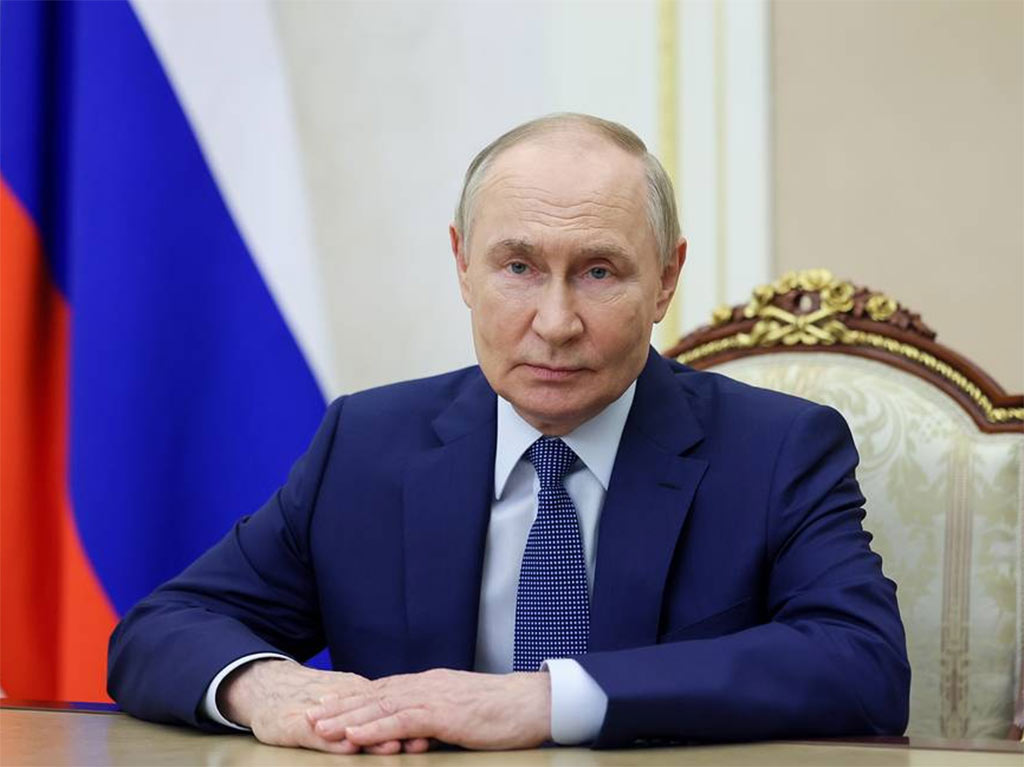
    The military engagement occurs within the context of what Russian leadership describes as a “special military operation” initiated in February 2022. President Vladimir Putin has consistently framed the ongoing conflict as necessary protection against what he characterizes as genocidal policies by the Kyiv government and essential for addressing national security concerns.

  • UN Tourism considers debates in Cuba relevant

    UN Tourism considers debates in Cuba relevant

    HAVANA – Legal scholars and tourism policymakers from 23 nations gathered this week at the Iberostar Parque Central Hotel for the III International Seminar on Tourism Law (December 9-11), marking a significant step toward redefining global travel regulations with sustainability at their core.

    A key participant expressed fervent enthusiasm to Prensa Latina this Thursday regarding the high-level debates among nearly 100 international experts. The seminar’s primary objective, from a legal standpoint, is to modernize tourism guidelines across Latin America and the Caribbean by embedding sustainable development principles into national legislation.

    This gathering represents a pivotal opportunity for foundational dialogue, equipping participating nations with actionable ideas, policy recommendations, and proven best practices. The discussions aim to translate theoretical legal frameworks on sustainability into tangible, practical applications within the tourism sector.

    The current seminar continues the work initiated in previous meetings. The inaugural event focused on the International Code for the Protection of Tourists—a Spanish initiative endorsed by Cuba—which addressed critical traveler protection issues emerging from the COVID-19 pandemic. The subsequent seminar in Argentina placed a stronger emphasis on sustainability, successfully integrating the dual themes of sustainability and accessibility into the agenda of the United Nations’ Right to Tourism program.

    The expert highlighted Cuba’s proactive role within UN Tourism, noting the country’s close collaborative relationship with the global body. She expressed particular satisfaction that Cuba is currently developing new tourism legislation that incorporates these core sustainability principles. Consequently, Cuba is actively participating in a dedicated working group established by UN Tourism specifically for this legislative modernization initiative.

  • Venezuela-Cuba Friendship Movement condemns attack on ship

    Venezuela-Cuba Friendship Movement condemns attack on ship

    A prominent international solidarity organization has issued a forceful condemnation of what it describes as a systematic campaign of resource plunder, characterizing recent actions against strategic energy assets as a blatant breach of international legal standards and national sovereignty. In an official communiqué, the group asserted that such aggression transcends isolated incidents, representing instead a coordinated strategy to undermine the autonomy of independent nations through economic coercion and military intimidation.

    The organization, identified as The Movement, framed these developments as ‘modern piracy’ that directly threatens regional energy security and geopolitical stability. It has formally brought these concerns before the global community, demanding an immediate halt to all military operations and coercive measures that compromise the fundamental right to self-determination.

    In response to these challenges, the coalition reaffirmed its dedication to strengthening alliances between Venezuela, Cuba, and other nations across the Americas. It emphasized that mutual solidarity and bilateral cooperation represent the most effective pathway for resisting external pressure and safeguarding hard-won sovereignty. The group’s statement concluded with a renewed commitment to fostering fraternal ties, protecting national independence, and advancing the cause of peace through collective action.

  • UN warns of crisis in Afghanistan

    UN warns of crisis in Afghanistan

    The United Nations has issued a grave assessment of Afghanistan’s deteriorating conditions through an official statement, highlighting multiple converging crises threatening the nation’s stability and population.

    The international organization expressed profound concern over mass displacement trends, severe economic decline, and diminishing humanitarian aid delivery to vulnerable communities. Projections indicate nearly half of Afghanistan’s population will require protection and life-saving assistance by 2026.

    A particularly alarming trend noted in the report involves the systematic exclusion of women from public participation, with female representation virtually eliminated across civic, economic, and social spheres. The educational sector faces deliberate restrictions, creating what experts warn could become a ‘lost generation’ of professionals essential to the country’s future development.

    Press freedom has dramatically constricted according to the UN assessment, with journalists operating under constant threat of intimidation, arbitrary detention, and overt censorship. This repression has severely diminished public discourse and civic engagement opportunities.

    The humanitarian situation approaches catastrophic levels with approximately 17.4 million Afghans experiencing acute food insecurity. The collapse of nutritional support systems has been exacerbated by the closure of over 300 nutrition centers, directly impacting millions of children.

    Healthcare infrastructure continues to disintegrate, with 422 medical facilities shuttering operations in the past year alone. This breakdown in medical services has deprived an estimated three million people of essential healthcare access, creating preventable public health emergencies.

  • US recognizes European mistake in breaking with Russia, Hungary says

    US recognizes European mistake in breaking with Russia, Hungary says

    Hungarian Prime Minister Viktor Orbán has asserted through his political aide that American policymakers recognize the necessity of rebuilding strategic ties between Russia and Europe, according to statements posted on social media platform X. Balázs Kovács, writing on behalf of the Hungarian leader, contended that European liberals had previously dismantled the foundational bridges connecting Russia and Europe—a move characterized as a significant diplomatic miscalculation.

    The Hungarian administration maintains that U.S. officials strategically acknowledge Europe’s deepening economic stagnation and perceive this crisis as creating an imperative for renewed engagement with Moscow. This perspective appears aligned with concerns outlined in the current U.S. National Security Strategy, which projects a potentially transformed European continent within two decades should current EU policies continue unchanged.

    Foreign policy analysts interpret these statements as serving dual purposes: legitimizing Budapest’s controversial diplomatic maneuvers while highlighting substantial divisions within Western alliances. Judy Dempsey of Carnegie Europe Foundation observed that Orbán is leveraging intra-alliance tensions to critique European elites and rationalize his government’s overtures toward Moscow, despite Washington’s official position remaining considerably more nuanced than Hungary’s characterization.

    Adding complexity to the geopolitical landscape, Russian Foreign Ministry spokesperson Maria Zakharova previously noted that the U.S. strategy contains contradictory elements while simultaneously creating space for dialogue on strategic stability matters. This acknowledgment suggests potential openings for diplomatic engagement despite ongoing tensions between Moscow and Western powers.

  • Chile: Candidate closes campaign in Puente Alto

    Chile: Candidate closes campaign in Puente Alto

    In a pivotal pre-election address, Chilean leftist coalition candidate Jeannette Jara issued a stark warning to voters, framing the upcoming runoff as a critical juncture for the nation’s social progress. Representing a coalition of progressive and Christian Democratic parties, Jara emphasized that core achievements—including scheduled pension increases set for January, the recently enacted 40-hour workweek law, and accountability mechanisms for human rights violators—now face potential reversal.

    Directly addressing the platform of her far-right opponent, José Antonio Kast of the Republican Party, Jara declared, “There cannot be a setback for our country. Chile needs certainty, it needs a future, it needs hope.” She positioned the election as a choice between continuing social reforms or embracing a conservative agenda that questions fundamental aspects of Chile’s developmental trajectory.

    Outlining her immediate governance priorities, Jara committed to launching extensive neighborhood security interventions within her first 100 days in office. This comprehensive plan targets the dismantling of drug distribution networks, weapon confiscation initiatives, and the recovery of illegally occupied properties across communities.

    With recent polls indicating a competitive runoff despite Jara’s initial lead in the November 16 first round, the candidate made a final appeal to supporters. She urged them to actively engage undecided voters in the closing days before Sunday’s decisive election, highlighting the profound policy implications at stake.

  • Cuba receives diploma for Cuban Son on UNESCO’s Heritage List

    Cuba receives diploma for Cuban Son on UNESCO’s Heritage List

    In a significant cultural milestone, the traditional Cuban Son music has been formally inscribed on UNESCO’s prestigious Representative List of the Intangible Cultural Heritage of Humanity. The official designation occurred during the 20th session of UNESCO’s Intergovernmental Committee for the Safeguarding of the Intangible Cultural Heritage, currently convening in New Delhi, India.

    The ceremonial presentation was conducted by Fumiko Ohinata, Director of the Secretariat of the 2003 UNESCO Convention, who presented the official diploma to Cuban representatives accompanied by Maiky Díaz, First Secretary of the Cuban Embassy in India. This recognition serves as international acknowledgment of Cuban Son as both a vital cultural expression and fundamental component of national identity for the Cuban people.

    The UNESCO designation underscores the Cuban government’s ongoing commitment to preserving and protecting the traditional art forms that constitute the cultural roots of the Caribbean nation. The inclusion on this prestigious list highlights the global significance of Cuban Son while reinforcing preservation efforts for future generations.

    Following the announcement, Sonia Pérez, President of Cuba’s National Council for Cultural Heritage, characterized the recognition as a cause for national celebration. She described the UNESCO designation as a well-deserved tribute to the creativity, cultural richness, and inherent joy embodied in the Cuban musical tradition, representing the artistic spirit of the entire nation.

  • Syria receives grant from Japan to support social reintegration

    Syria receives grant from Japan to support social reintegration

    In a significant humanitarian gesture, Japan has formalized a substantial financial contribution to the United Nations High Commissioner for Refugees (UNHCR) operation in Syria. The agreement was signed in Damascus by Akihiro Tsuji, Chargé d’Affaires of the Japanese Embassy, and Gonzalo Vargas Llosa, UNHCR Representative in Syria.

  • Cuban youth debate their role in the country’s economic and ideological battle

    Cuban youth debate their role in the country’s economic and ideological battle

    HAVANA – The Third Plenary Session of the National Committee of Cuba’s Union of Young Communists (UJC) convened to deliberate on the pivotal role of youth in navigating the nation’s pressing challenges and advancing the Government Program. The assembly emphasized youth mobilization as essential to Cuba’s strategic development objectives.

    Dr. Roberto Morales Ojeda, a senior member of the Political Bureau and Secretary of Organization of the Communist Party’s Central Committee, articulated the Party’s unwavering confidence in young Cubans. He declared that the younger generation must spearhead efforts to consolidate and refine the national project through broad civic participation.

    The meeting identified three core missions for youth engagement: economic development, national unity, and the pursuit of regional peace. Dr. Morales Ojeda specifically highlighted threats against Venezuela, echoing the historic commitment of former leader Fidel Castro by stating, “For Venezuela, we will have to give everything,” thus reaffirming Cuba’s unconditional solidarity.

    Addressing Cuba’s economic constraints under what he described as a “war economy,” Dr. Morales Ojeda stressed the critical need to prioritize foreign exchange earnings. This approach is deemed vital for resolving severe infrastructural crises, including chronic failures in the National Electric System and acute fuel shortages.

    The session also confronted severe deficits in domestic food production, particularly rice, beans, and sugar. Officials advocated for a comprehensive revitalization of the sugarcane industry and urged increased local manufacturing to reduce import dependencies and secure stable supplies for the basic food basket.