标签: Cuba

古巴

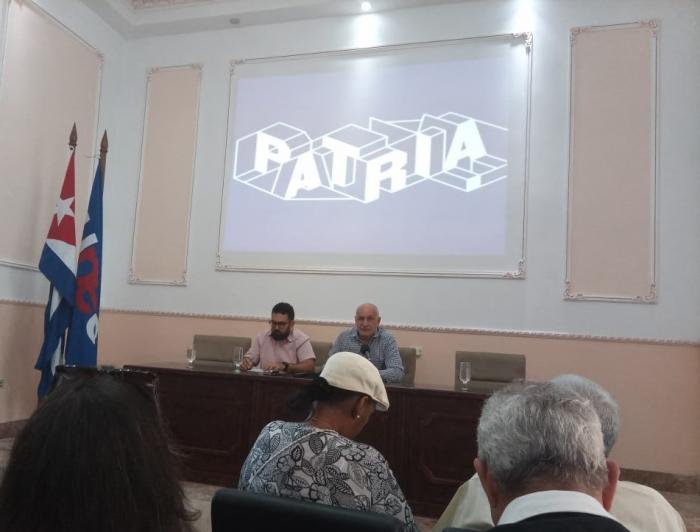
  • Patria: a communication milestone of our time

    Patria: a communication milestone of our time

    Cuba’s leading international communication gathering, the Patria International Colloquium, is gearing up to open its fifth iteration in 2026, bringing a slate of new updates and symbolic milestones to Havana. Rooted in the core mission of aligning Cuba’s public communication network with progressive, leftist frameworks adapted to 21st-century digital shifts, the event carries heavy symbolic weight this year, timed to coincide with two landmark national anniversaries: the centennial of Cuba’s iconic Commander-in-Chief, and the 65th anniversary of the victory at the Bay of Pigs, as well as the declaration of the socialist character of the Cuban Revolution.

    Against a backdrop of sustained international media pressure targeting Cuba, the colloquium stands as a tangible demonstration of global solidarity with the island nation, event organizers confirmed. At an official press conference, Ricardo Ronquillo Bello, president of the Union of Cuban Journalists (UPEC), shared that even with an accelerated call for participation, global turnout has exceeded expectations, with roughly 150 international delegates already confirmed to attend. This strong response, he noted, is clear evidence of widespread global support for Cuba and the long-standing international prestige the colloquium has built since its launch.

    This year’s edition introduces a restructured programming model that expands the event’s core mission beyond academic discussion, positioning it as a hub for practical professional preparation and skills training. Parallel to the main keynote panels and discussions, a series of hands-on workshops will be held, and a hybrid virtual component will be offered to extend access to communication professionals across every region of Cuba. Organizers emphasized they are prioritizing leveraging the expertise of high-profile attendees, including senior specialists, veteran journalists, leading communication theorists, and heads of major communication organizations from around the world.

    Daniel González, a member of the colloquium’s organizing committee, added that the event will center cutting-edge shifts in the global communication sector, with artificial intelligence and its real-world applications for media and public communication set to be one of the central thematic focuses of the conference. The gathering will also feature a large-scale public exhibition hosted at Havana’s Línea y 18 fairgrounds, where domestic and international media outlets and communication-focused initiatives will display their latest technological and innovative advances to attendees.

    A key milestone of this fifth edition will be the official inauguration of the permanent Patria Project headquarters, a facility designed to operate as a year-round hub for communication research, professional training, and preparatory work for future industry initiatives. Closing his remarks, Ronquillo Bello framed the colloquium as a modern stand against external media pressure, drawing a parallel to the historic Bay of Pigs victory: “Patria coincides with dates of great national symbolism. Let us say, then, that Patria is the communications-based Bay of Pigs of our time.”

  • Judicial firmness against sabotage of the Cuban Energy Program

    Judicial firmness against sabotage of the Cuban Energy Program

    Against the backdrop of a steadily intensifying illegal economic, financial and energy blockade imposed by the United States, Cuba’s government and national institutions have poured unprecedented effort into expanding a national energy program designed to secure consistent electricity access for all citizens. As a fundamental public service, reliable power is enshrined as a basic right of the Cuban people, serving as a cornerstone of public well-being and a non-negotiable requirement for the continued functioning of the country’s economy amid external pressure.

    Even as the nation grapples with the crippling effects of this economic war and widespread fuel shortages, however, a troubling wave of criminal activity has emerged: unscrupulous actors have targeted critical energy infrastructure, stealing components, parts, full equipment units, fuel, dielectric oil and other materials from photovoltaic parks, solar panel arrays, power generators and other energy generation facilities. These targeted thefts do not merely disrupt local operations — they undermine the entire Cuban National Electrical System and put at risk the full government strategy crafted to soften the severe social and economic damage caused by the U.S. blockade.

    Under Cuban law, these damaging acts are explicitly classified as the crime of sabotage, as laid out in Article 125 of Law No. 151, the 2022 Cuban Penal Code. The statute outlines that any individual who destroys, alters, damages or compromises critical infrastructure including energy generation facilities, energy transmission systems and related resources — either with the explicit intent to disrupt normal operations, or with full knowledge that their actions will cause such disruption — faces a prison sentence ranging from seven to 15 years. For aggravated circumstances, the penalty increases dramatically: if the act results in serious injury or death, involves explosive, chemical or biological agents, endangers collective public safety, causes severe widespread disruption, or targets reserved strategic material reserves, sentences can range from 10 to 30 years in prison, up to life imprisonment or the death penalty.

    To formalize this legal interpretation and reinforce the severity of these crimes, the Governing Council of Cuba’s Supreme People’s Court issued Opinion No. 475 in May 2025, exercising its constitutional authority granted under Article 148 of the Cuban Constitution and Article 29 of Law No. 140 on the Administration of Justice. The opinion reaffirms that all unlawful acts targeting the country’s critical infrastructure, particularly the national electrical power system, meet the legal definition of sabotage. This classification is designed to protect the function of public assets, preserve the security and stability of Cuban state institutions, maintain domestic public order, and safeguard national priority programs such as the ongoing energy expansion initiative.

    Cuban penal code further outlines additional aggravating factors that can increase penalties for these offenses, per Article 80. These include participation in the criminal act as part of a group of three or more people, involving minors under the age of 18 in the crime, using methods that put the general public at risk, committing the theft under cover of night, acting for personal financial profit, and committing the offense while impaired by alcohol or illicit drugs if the offender intentionally impaired themselves to carry out the crime. Additionally, Article 89, Paragraph 2 of the Penal Code requires that convicted offenders must serve at least two-thirds of their total prison sentence before they become eligible for any parole consideration.

    Cuban provincial courts, which administer justice on behalf of the Cuban people in compliance with all due process guarantees enshrined in Articles 94 and 95 of the national constitution, have already moved to enforce these penalties with the full rigor the offenses demand, given the extreme harm these crimes cause to Cuban society. Data confirms that between January 2025 and the end of the first quarter of 2026, the State Security Crimes Chambers of Cuban Provincial People’s Courts imposed prison sentences of more than 10 years on 100 percent of all defendants convicted of these sabotage offenses. In addition to lengthy prison terms, convicted offenders also face additional penalties including restrictions on movement, property confiscation, travel bans, and court orders to pay full civil damages for the losses their crimes caused.

  • Science-based health saves lives

    Science-based health saves lives

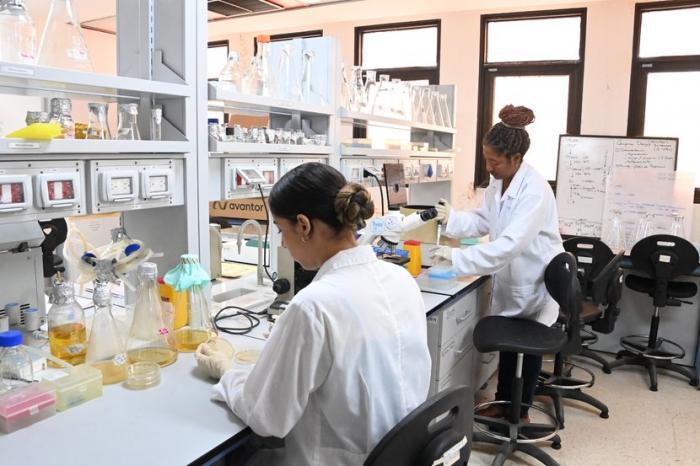
    Marking World Health Day on April 7, 2026, global and Cuban health leaders have centered discussions on the critical role of cross-sector scientific collaboration, aligning with the World Health Organization’s 2026 theme “Together for Science.” The annual observance spotlights the urgent need for broad societal support for science-driven innovation to strengthen healthcare systems worldwide, and Cuba used the occasion to showcase its expanding domestic health research ecosystem and outline ongoing collaborative progress with international health bodies.

    Dr. Ileana Morales Suárez, Director of Science and Innovation at Cuba’s Ministry of Public Health, opened the commemoration by emphasizing a foundational truth: evidence-based healthcare is the single most effective framework for reducing preventable deaths and improving population outcomes. Echoing the WHO’s slogan, she noted that inclusive scientific partnership, rather than isolated research, holds the key to tackling the most pressing 21st-century health challenges.

    Morales Suárez shared detailed new data on Cuba’s growing health research sector, revealing that the country currently hosts 46 dedicated Science, Technology, and Innovation entities, more than 1,200 affiliated research institutions, and 2,334 active health-focused research projects. Of Cuba’s total national researcher workforce, 69% work within the health sector, amounting to 6,182 categorized professional researchers engaged in advancing public health outcomes across the island.

    A core priority for Cuban health policy, she highlighted, is advancing the integrated One Health paradigm, a framework that ties the well-being of humans, animals, plants and entire planetary ecosystems into a single interconnected system. “The COVID-19 pandemic delivered an uncomfortable but unavoidable lesson: human, animal and environmental health cannot be separated,” Morales Suárez stated. “A threat to one is a shared threat to all.” In response to this reality, Cuba’s national government has made intersectoral collaboration a top policy priority, targeting key shared challenges including zoonotic disease spread, antimicrobial resistance, and cross-domain public health surveillance.

    Looking ahead, Cuba reaffirmed its longstanding commitment to positioning scientific research as the cornerstone of all national health policies. The country is moving forward with increased public funding for health research and targeted initiatives to strengthen its domestic scientific ecosystem, with Morales Suárez emphasizing, “We will continue to invest in science for action, and build action that advances science.”

    As part of the World Health Day commemoration, Dr. Mario Cruz Peñate, the Pan American Health Organization/World Health Organization Representative to Cuba, presented the results of the organization’s 2025 cooperation program on the island. One of the most impactful achievements highlighted was the national rollout of HPV vaccination for nine-year-old girls, supported by global vaccine alliance GAVI and PAHO. By the end of 2025, the program had administered 41,022 doses, reaching a national coverage rate of 76.6%.

    Beyond routine immunization, the cooperation program enabled Cuba to acquire more than 9,300 kilograms of essential medicines and medical supplies, including life-saving vaccines and treatments for tuberculosis and hepatitis C. For the first time in the country’s history, the Central Emergency Response Fund’s Anticipatory Action Mechanism was activated last year in response to Hurricane Melissa, mobilizing $440,000 in emergency funding to protect core health services and prevent outbreaks of arboviruses in storm-impacted regions. The activation marked a major milestone in Cuba’s ability to leverage global emergency health frameworks to proactively protect vulnerable populations ahead of preventable public health crises.

  • An exercise in listening, evaluation, and correction

    An exercise in listening, evaluation, and correction

    Cuba has officially released its updated 2026 Government Economic and Social Program, a refined policy framework shaped by months of public input from over two million citizens across the country. The new iteration introduces substantial, people-centered adjustments to five core priority areas that directly impact daily household life: macroeconomic governance, foreign revenue generation, domestic food production, the national business system, and energy sovereignty, built around a more pragmatic, integrated approach to national development.

    This 2026 version marks the latest evolution of Cuba’s ongoing economic planning process, launched to guide the country toward sustained, inclusive growth. The initiative traces its roots back to 2024, when the government first unveiled a set of economic projections designed to correct longstanding market distortions and jumpstart post-recession recovery, anchored by eight core foundational objectives. In October 2025, the framework was formalized into a full government program, expanding to 10 general objectives, 106 specific targets, 342 actionable initiatives, and 264 performance metrics. Following the nationwide public consultation period, the 2026 update further expands the framework, now containing 10 general objectives, 111 specific targets, 505 distinct actions, and 309 measurable indicators and benchmarks.

    The program’s 10 overarching general objectives lay out a comprehensive roadmap for national progress: fostering a macroeconomic environment that empowers productive activity and boosts foreign exchange earnings; expanding and diversifying the country’s international revenue streams; growing domestic production with a focused priority on food security; transforming, modernizing, and expanding the Cuban business system while strengthening the role of socialist state-owned enterprises through cross-sector integration; advancing improved strategic management for balanced territorial development; enhancing governance, defense, and national security frameworks; consolidating and expanding equitable social policies that guarantee protection for vulnerable individuals, families, households, and communities; rolling out targeted directives to prevent and reduce crime, corruption, illicit activity, and social indiscipline; accelerating recovery of the national electrical system and advancing long-term energy sovereignty; and leveraging science, innovation, natural resource stewardship, social communication, and digital transformation to drive sustainable development.

    Of these 10 core objectives, five stand out for their direct, immediate impact on the daily lives of Cuban families, and the 2026 update brings meaningful shifts to how each will be implemented. For macroeconomic policy, the program’s framing has shifted from top-down “program implementation” to “enabling favorable conditions”—a deliberate adjustment from 2025’s focus on executing a rigid central plan. The new approach recognizes that macroeconomic stability cannot be mandated by decree; it must be built through systemic, enabling conditions that reduce bureaucratic rigidity and open up more space for productive activity across state, cooperative, and private sectors, aligning trade, investment, and employment growth with real market incentives rather than centralized directives.

    On the front of external revenue, the core goal of expanding and diversifying international earnings remains unchanged, but new concrete actions have been added to reflect policy shifts rolled out in recent months. The update prioritizes eliminating longstanding barriers to exports, and scaling up support for tourism, remittance flows, and foreign direct investment. For the general public, growing external revenue is expected to expand the country’s capacity to import critical daily goods including food, fuel, raw materials, and pharmaceuticals, easing the supply constraints that currently impact household consumption.

    Domestic food production, already a top priority in the 2025 framework, retains its top status but has seen an exponential expansion in associated actionable measures. The 2026 program introduces new policies to expand usufruct land access for producers, cut input costs, enable direct contracting between producers and buyers, and eliminate unnecessary bureaucratic red tape. Most notably, the program for the first time explicitly links food production goals to cross-actor integration, allowing cooperative and small independent farmers to operate on equal footing with state-owned enterprises in the sector.

    For the national business system, the 2026 update marks a philosophical shift from framing non-state actors as “complementary” to state-owned enterprises to pursuing full, equitable productive integration. Where 2025 positioned non-state businesses as secondary contributors, the 2026 approach emphasizes horizontal collaboration, shared production chains, and equal access to critical inputs, financing, and market opportunities across all actor types. State-owned enterprises remain the core of the national business system, but the framework requires them to transform and modernize to compete and collaborate on equal terms with cooperatives, micro, small and medium-sized enterprises (MSMEs), and self-employed workers.

    The program’s ninth core objective, focused on energy, has also undergone a strategic reorientation: shifting from tactical recovery of the national electrical system to advancing long-term energy sovereignty. Where 2025’s approach centered on resolving immediate blackouts and supply shortages, the 2026 vision pursues a long-term goal of building national capacity to generate, distribute, and manage energy without critical dependence on foreign fossil fuel imports. This requires accelerating investment in renewable energy infrastructure, cutting reliance on imported fossil fuels, and delivering a stable, consistent electricity service for all households.

    As Cuban President and First Secretary of the Central Committee of the Party Miguel Díaz-Canel Bermúdez noted, the revised Program serves as “the compass, the roadmap, the guiding thread of all government management.” The updated framework is the product of a months-long process of public listening, expert evaluation, and iterative adjustment, with the changes to the five priority areas reflecting a clear commitment to aligning policy with real-world conditions, moving from centralized mandates to practical outcomes, and advancing from sectoral division to inclusive productive integration. For the Cuban people, who have navigated persistent daily economic challenges, the ultimate test of the program will be delivering tangible improvements to quality of life—a goal the updated framework explicitly centers through its focus on measurable execution and targeted transformation.

  • Cuban youth lead a productive Sunday

    Cuban youth lead a productive Sunday

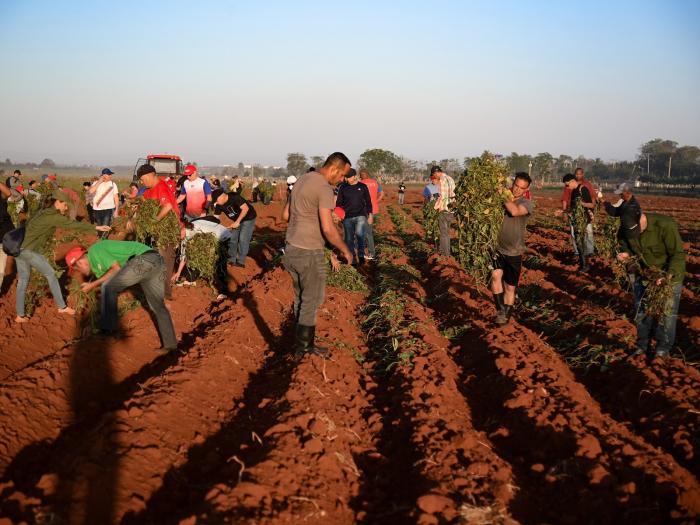
    On a misty Sunday early this April, Cuba launched an island-wide day of voluntary labor to mark two landmark milestones for the country’s youth organizations: the 64th anniversary of the Union of Young Communists (UJC) and the 65th anniversary of the José Martí Pioneer Organization (OPJM). The national volunteer push centered on two core national priorities: expanding agricultural output and building new photovoltaic solar energy infrastructure, addressing two of the country’s most pressing ongoing challenges.

    Leading the effort on the ground in Bauta, a municipality in western Cuba’s Artemisa Province, was Miguel Díaz-Canel Bermúdez, who serves as both First Secretary of the Central Committee of the Cuban Communist Party and President of the Republic. Joined by generations of local Cuban volunteers, Díaz-Canel took part in hands-on planting work to highlight the central role of domestic food production in the country’s current national strategy.

    The president had already laid out the guiding ethos of the voluntary work days during a recent gathering with high-achieving young Cubans from across all sectors of society: “To produce is to resist, and to create is to conquer.”

    Díaz-Canel was not alone in the Artemisa planting activity. He was accompanied by senior party and youth organization leaders, including Roberto Morales Ojeda, a member of the Political Bureau and Secretary of Organization of the Central Committee, and Meyvis Estévez Echevarría, First Secretary of the UJC National Committee.

    After the day’s agricultural work concluded, Mirthia Julia Brossard Oris, a member of the UJC National Bureau in charge of Ideological Affairs, spoke to reporters about the significance of the celebrations amid the country’s prolonged challenges. She emphasized that despite the complex economic and social conditions facing the Caribbean nation—conditions made far more severe by the decades-long intensified U.S. imperial blockade—April 4’s anniversary events have not been sidelined or canceled.

    Across the country, Brossard detailed, a wide range of activities were organized to mark the anniversaries. These included mass mobilizations for food production, public forums denouncing the ongoing blockade, mountain hiking excursions, “I Accuse Imperialism” Pioneer Tribunals for youth, kite-flying events organized to advocate for peace and oppose the imperial siege, cultural festivals and open-air concerts in city parks and main public squares, and award ceremonies recognizing the contributions of outstanding young Cuban leaders.

    One of the most meaningful moments of the anniversary celebrations, Brossard highlighted, was the recent meeting between Díaz-Canel and the group of recognized outstanding young Cubans. During that gathering, the president spoke to the critical role that new generations can play in strengthening their local communities, a contribution that has become increasingly essential amid the current period of economic readjustment driven by widespread resource limitations, most notably widespread energy shortages.

    “In Cuba, there is no such thing as a defeated youth,” Brossard affirmed, speaking on behalf of Cuban young people. She added: “Our commitment, in these challenging and creative times, is to propose, mobilize, convene, and involve all young people in key national tasks, especially within our local communities.”

    The Bauta planting event itself featured cultural entertainment from young improvisational poets associated with the Punto Cubano project of the Casa de la Décima in neighboring Mayabeque Province. As a capstone to the day’s activities, 18 Cubans from diverse professional and social sectors were formally inducted into the Union of Young Communists, receiving their official membership cards during a public ceremony.

  • When ingenuity is the main fuel

    When ingenuity is the main fuel

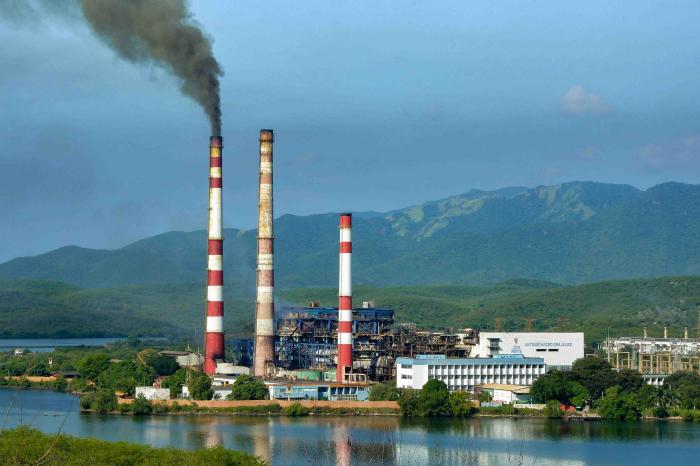
    Sixty years have passed since the Antonio Maceo Grajales Thermoelectric Power Plant (CTE), commonly known locally as “Renté”, first synchronized its generating unit to Cuba’s national power grid, and the facility still stands as an irreplaceable energy backbone for the entire eastern region of the island nation.

    Located in Santiago de Cuba, the plant has adapted its operations to run on domestically produced crude oil since the 1990s, a transition rooted in a directive from Cuba’s historic Commander-in-Chief that launched a modernization project for the facility’s 100-megawatt units. That project combined French technical support with homegrown Cuban engineering expertise, laying the foundation for the plant’s decades of continued operation, recalled Mayra McCalle Irsula, an industrial maintenance engineer who has spent more than 35 years working at Renté.

    Today, the plant faces unprecedented challenges: decades-long U.S. sanctions have frozen most imports, left warehouses with critically low spare parts inventories, and created persistent fuel shortages that limit the facility’s maximum output. But for the plant’s more than 1,000-person workforce, external pressures are nothing new, and they have responded with a commitment to local innovation rather than waiting for outside solutions, according to CTE General Director Jesús Aguilar Hernández.

    “Power generation cannot stop” is the guiding principle for the team, which has restructured its operations to guarantee uninterrupted output. Cross-functional teams combine operators, maintenance technicians, support staff and security personnel to streamline response, while maintenance crews stay on call 24/7 to address any emergency. Remote work is implemented for non-essential administrative roles where possible to keep core generation services running without interruption.

    While the plant’s total installed capacity stands at 500 megawatts, current constraints mean it can deliver a steady 285 megawatts to the National Electric System (SEN) via three fully operational units (3, 5, and 6) running at maximum capacity. Recent targeted overhauls in early 2026 brought units 5 and 6 back online after extensive repairs to circulation pumps, turbines and boilers, and the local workforce has turned to local manufacturing to replace critical imported components that are no longer available.

    In the plant’s machining workshop, that innovation becomes tangible. Eduardo Morales García, a veteran technician set to receive a 40-year service medal, explained that his team now manufactures parts that once were imported exclusively from Russia, including key shafts for Unit 5’s seawater pumps. Working with limited raw materials, the team has even redesigned critical systems to improve performance: Morales modified the boiler water supply system across multiple units, cutting unplanned downtime from failures and improving control of core operational parameters, while also developing a custom demineralized water system for the plant’s 100 MW units. For Morales and his co-workers, Renté is more than a job — it is a lifelong commitment, with the entire team ready to respond at any time of day or night, even when resources are scarce.

    Complex maintenance work on the plant’s massive generation units demands extreme precision, and transportation disruptions tied to fuel shortages have created additional staffing constraints that slow progress. Ángel Fabars Borlot, electromechanical supervisor for the Power Plant Maintenance Company, explained that even the smallest components on the 60-year-old machinery weigh tons, with clearances measured in millimeters, making every step of repair work high-stakes. Despite understaffing, the small team of highly skilled, dedicated technicians on site delivers exceptional work to keep the units running.

    Maximiliano Guisande Agüero, head of dynamic equipment at Renté who boasts 56 years of experience at the plant, led the final work to bring Unit 5 back online earlier this year. He emphasized that every day of delayed repair costs the national grid critical generation capacity, so the team dedicates every possible hour to returning units to service as quickly as possible, well aware of the country’s ongoing energy challenges.

    To secure the plant’s future for decades to come, the leadership has prioritized cultivating the next generation of skilled workers. The facility has formal partnerships with the Pre-University Vocational Institute of Exact Sciences, local polytechnic schools, and the University of Oriente, offering hands-on work placements and professional training to students to recruit and retain new talent.

    For Aguilar Hernández, reaching the 60-year milestone is both an honor and a responsibility. “It represents a challenge left to us by previous generations that we must pass on to future ones,” he said. “It requires constant work and deep commitment. More than the equipment itself, what keeps this plant running is the skill and dedication of its workforce.”

  • How will the new care options for children without family support work?

    How will the new care options for children without family support work?

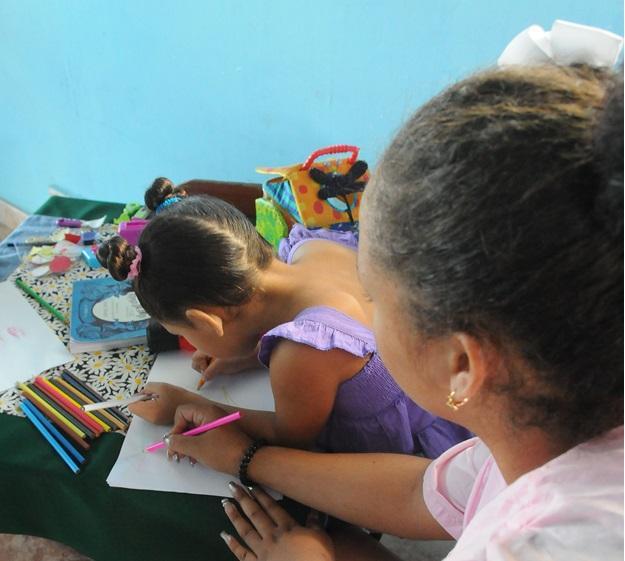
    Following the recent enactment of Cuba’s landmark Code for Children, Adolescents, and Youth, which enshrines young people as full rights-holders at the center of national policy, the country has moved to clarify how these legal protections will translate into tangible support for vulnerable minors separated from their biological families. In a decisive step to operationalize the new legal framework, the Cuban Ministry of Education (MINED) has issued Resolution 62, a comprehensive regulatory roadmap that formalizes the state’s commitment to guaranteeing every child and adolescent the right to grow in a safe, family-centered environment through structured alternative care and adoption pathways.

    Central to the new regulation is the establishment of an updated, tiered classification of foster care facilities tailored to address the unique developmental and emotional needs of minors at different life stages. At the first tier are emergency and temporary care facilities, capped at a maximum of 12 residents with a maximum 30-day stay, designed to serve as an immediate safe haven for children removed from unsafe environments in crisis situations.

    Under the resolution, institutional foster care is explicitly framed as an exceptional, temporary protective intervention rather than a long-term placement. It is only ordered by authorized governing bodies when a minor has been separated from their birth family, or when a birth family cannot adequately meet the child’s basic needs for well-being. All institutional care is delivered through specialized social assistance centers, structured to maintain a nurturing, safe environment that meets age, gender, and individual-specific requirements for hygiene, nutrition, infrastructure, and specialized professional care.

    Beyond emergency placements, the regulation outlines two additional categories of institutional care: Early Childhood Care Facilities, which are limited to 10 children each, designed to mimic a family-style living environment, with stays ranging from three to six months based on the child’s age; and facilities for older minors aged 7 to 18, which are organized into small, home-like groups with a core focus on preparing youth for independent adult living and supporting family reunification wherever possible.

    Resolution 62 enshrines robust protections for the rights and well-being of all minors entering the alternative care system. All children and their biological families receive continuous psycho-emotional support and guidance from trained personnel, starting at admission and continuing through the entire placement period and post-discharge transition. To ensure this critical support is delivered effectively, care facility management coordinates closely with community mental health centers and other public health institutions under Cuba’s Ministry of Public Health to provide specialized clinical psychology services for children.

    Specific contingency protocols are also mandated for emergency situations and natural disasters, requiring facilities to activate procedures that prioritize the safety and emotional stability of children in care, while ensuring no interruption to their individualized care plans. The regulation also sets strict rules around sibling separation: it may only be ordered in exceptional circumstances, following a full multidisciplinary assessment that confirms cohabitation would harm the children’s rights and well-being, and when separation is required, the competent authority must implement formal measures to guarantee stable, accessible communication and visitation schedules, backed by professional support where needed, with ongoing monitoring from the Family Advocacy Office.

    In addition to regulating institutional care facilities, Resolution 62 strengthens community-based care networks by formalizing the role of foster families. These families volunteer to host children from institutional care facilities during weekends and holiday periods, providing children with valuable exposure to regular family life while offering temporary respite for institutional staff. MINED holds formal responsibility for collaborating with municipal commissions and the Ombudsman’s Office to identify prospective foster families, with the explicit goal of placing more children in family-based settings rather than institutional care wherever possible.

    For adoption processes, the regulation centers children’s emotional well-being by positioning foster homes as the core site of pre-adoption preparation. Before any adoption is finalized, a cross-disciplinary technical team of psychologists and social workers prepares a full administrative record of the child, delivers targeted psychological preparation to help the child adjust to the upcoming life change, and organizes gradual, paced introductory meetings with the prospective adoptive family. This child-centered approach is designed to ensure the entire process is respectful of the child’s needs and avoids inflicting additional trauma.

    To further guarantee the quality of care across all alternative care settings, MINED will oversee full standardized training, certification, regular review, and ongoing oversight for all personnel working in institutional care for children and adolescents, ensuring all staff meet consistent professional standards to support vulnerable youth.

  • Group of Cuban healthcare workers returns from Guatemala

    Group of Cuban healthcare workers returns from Guatemala

    Nearly three decades of life-saving international medical collaboration between Cuba and Guatemala is drawing to a close, as the first cohort of Cuban healthcare workers prepares to touch down on Cuban soil Tuesday, following the Guatemalan government’s official announcement of a phased wind-down of the bilateral medical aid agreement. The outbound contingent was honored at a heartfelt farewell ceremony held one day prior in Guatemala, where leaders from both nations celebrated the extraordinary public health legacy the Cuban brigade leaves behind.

    Nazario Fernández, the top Cuban diplomatic representative in Guatemala, opened the tributes by highlighting the transformative reach of the brigade’s work, which extended deep into Guatemala’s most isolated and underserved communities. Fernández commended the medical team’s decades of unwavering service, pushing back against bad-faith efforts to discredit their contributions. He emphasized that for 28 years, the brigade has embodied a radical, people-centered humanism that has been etched permanently into the hearts of the Guatemalan people, a legacy no criticism can erase. The ceremony also doubled as a tribute to Fidel Castro, the founding leader of the Cuban Revolution, coinciding with the centennial of his birth, before Fernández closed by wishing the departing workers a safe journey home.

    Sheila Pamela Leyla, program coordinator for collaboration at Guatemala’s Ministry of Health and Social Assistance Directorate of Integrated Networks, took the stage next to extend a formal public thank you on behalf of the Guatemalan people. She reflected that the Cuban medical team did not just treat patients – they made Guatemala’s rugged mountain highlands, impenetrable jungle regions, and poorest urban neighborhoods their own home. Unlike foreign interventions that come with political strings or military power, Leyla noted, the Cuban brigade arrived with nothing more than stethoscopes and an unshakable commitment to serve. For millions of Guatemalans who had never accessed quality, affordable medical care before the brigade’s arrival, these Cuban workers became the very face of hope.

    Leyla described the scale of the brigade’s work as a monument to cross-border fraternity that far transcends routine medical service. “They leave with their heads held high, with the heroic satisfaction of a duty fulfilled and with the certainty that their time in our country has left a mark of health and dignity that time can never erase,” she said, echoing Fidel Castro’s core precept that internationalism means repaying one’s shared debt to humanity. Leyla also highlighted the brigade’s broader ideological contribution: their work proved that healthcare is a moral calling, not a commercial commodity to be bought and sold.

    Back in Cuba, a parallel tribute unfolded at Havana’s José Martí Plaza on Las Américas Avenue, where returning brigade members joined representatives of Cuba’s other international medical missions to lay a floral arrangement at the bust of Cuba’s national hero. Standing before the monument, the group declared in unison that their mission had been successfully completed. Records of the collaboration show that the Cuban medical presence in Guatemala dates back to November 5, 1998. Over the following 28 years, thousands of Cuban healthcare workers served in 16 of Guatemala’s 22 departments, navigating challenging terrain, limited resources, and complex public health crises with extraordinary dedication, ethical conduct, and respect for local communities. As the phased withdrawal proceeds, the legacy of their work shaping access to care for millions of Guatemalans will remain.

  • What is the blockade against Cuba, if not punitive?

    What is the blockade against Cuba, if not punitive?

    In a pointed rebuke of recent statements from senior United States government officials, Cuba’s top diplomat has pushed back against claims that Washington has made no formal adjustments to its punitive sanctions regime against the island nation. Bruno Rodríguez Parrilla, who serves as both a member of Cuba’s Political Bureau and the country’s Minister of Foreign Affairs, issued a series of probing questions calling out Washington’s characterization of its decades-long economic pressure campaign against Cuba. The remarks were published by state-owned Cuban outlet Granma on March 31, 2026.

    Rodríguez Parrilla opened his critique by challenging the core claim from US officials that Washington has not implemented any new punitive actions against Cuba. “Now the U.S. government says it has not taken any ‘punitive’ action against Cuba. What is the economic blockade, if not punitive?” he asked, calling out the broad, decades-long trade and economic embargo that has crippled Cuban economic activity for generations. He went on to question a litany of other restrictive US policies that target Cuba’s ability to engage in normal international trade and commerce, asking what each qualifies as if not punitive action.

    His list of grievances includes US threats to impose secondary sanctions on any third country that exports fuel to Cuba, systematic financial persecution that blocks Cuban entities from completing legitimate financial transactions anywhere across the globe, harsh restrictions that bar foreign merchant ships that have called at Cuban ports from entering US territorial waters, and the long-standing prohibition on recreational travel from the United States to the island.

    Beyond the broad blockade framework, Rodríguez Parrilla also questioned the ongoing utility of what he described as selective and arbitrary blacklists maintained by the US government against Cuban entities and individuals. These include the notoriously controversial US State Department list of state sponsors of terrorism, which Cuba was controversially added to and removed from in recent years, alongside multiple other restricted entity and travel restriction lists that bar American entities and citizens from engaging with a wide range of Cuban institutions.

    The Cuban foreign minister also highlighted a recent wave of coercive diplomatic pressure that the US has exerted on governments across the Caribbean and Latin America, pushing regional states to abandon long-standing medical cooperation programs with Havana. These programs, which deploy thousands of Cuban medical specialists to low-income and underserved communities across the region, have been a key source of legitimate foreign export income for Cuba for decades. Rodríguez Parrilla noted that the US pressure campaign does not just harm Cuba’s economy by cutting off this legal income stream—it also inflicts direct harm on vulnerable populations across the region who are cut off from life-saving care provided by Cuban medical workers. He called this campaign nothing less than a deliberate, purely punitive action against the Cuban people and their neighbors across the Americas.

  • Energy and data: International project boosts university resilience in Cuba

    Energy and data: International project boosts university resilience in Cuba

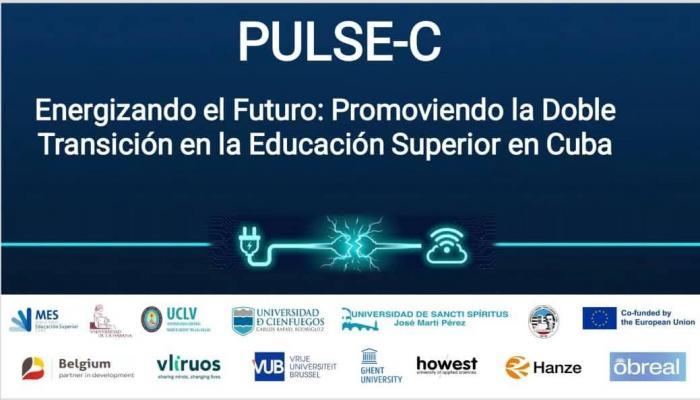
    In a significant stride toward energy independence, the University of Camaguey in Cuba is poised to undergo a major technological transformation through the installation of a comprehensive photovoltaic system with energy storage capabilities. This initiative forms part of the broader PULSE-C project, an international academic partnership connecting European nations with Cuban institutions to advance both energy and digital transitions within higher education.

    The four-year endeavor, operating under the European Union’s ERASMUS+ program framework, specifically targets the enhancement of operational continuity for the university’s most critical infrastructure. According to Dr. Eduardo Sierra Gil, Director of Science, Technology and Innovation at the University of Camaguey, the solar energy system will provide essential power security to vital facilities including the Electroenergetics Testing Laboratory (LEPEL) and the institution’s Data Hub.

    “This project represents more than just technological implementation—it embodies institutional resilience,” explained Dr. Sierra Gil. “By integrating solar panels with advanced storage systems, we guarantee uninterrupted operation of our most strategic services regardless of external power disruptions.”

    The international collaboration brings together academic expertise from Belgium, the Netherlands, Spain, and multiple Cuban universities, with coordination handled domestically by the Central University “Marta Abreu” of Las Villas. Beyond immediate infrastructure benefits, the initiative serves as both a practical and pedagogical model for renewable energy implementation, demonstrating reduced environmental impact while providing hands-on learning opportunities for students in related disciplines.

    Funded through a partnership between the European Education and Culture Executive Agency (EACEA) and the Flemish Interuniversity Council (VLIR-UOS), the project highlights higher education’s expanding role in driving sustainable development. For the University of Camaguey—the first university established following the Cuban Revolution—this initiative marks a concrete advancement toward energy sovereignty and digital modernization within academic institutions.