标签: Cuba

古巴

  • Díaz-Canel Highlights Digital Transformation and AI Adoption at the Institute of Neurology and Neurosurgery

    Díaz-Canel Highlights Digital Transformation and AI Adoption at the Institute of Neurology and Neurosurgery

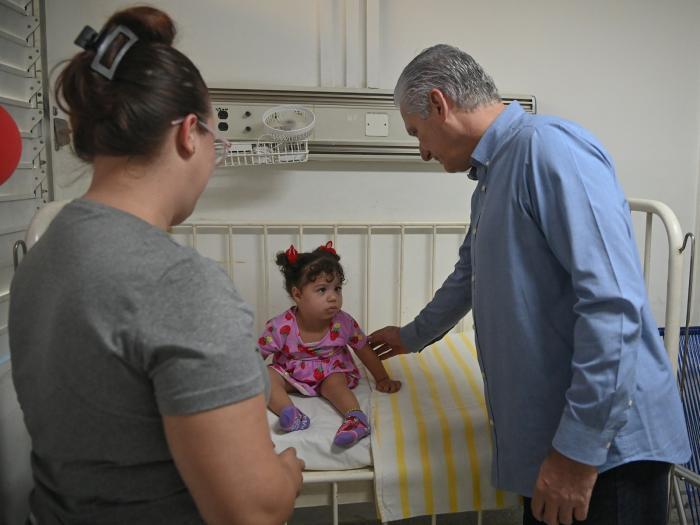
    Against the backdrop of decades of intensified economic and energy blockades that have strained resource access across every sector of Cuban society, one of the nation’s most prestigious medical institutions is emerging as a trailblazer for digital transformation in public health. On a working visit in April 2026, Cuban President Miguel Díaz-Canel Bermúdez—accompanied by senior government officials including Deputy Prime Minister Eduardo Martínez Díaz, Public Health Minister José Angel Portal Miranda, and Communications Minister Mayra Arevich Marín—highlighted the groundbreaking work of the Institute of Neurology and Neurosurgery, praising its team for turning resource constraints into a catalyst for innovation.

    Díaz-Canel’s institutional visits across Cuba are a core component of the national government’s digital transformation strategy, which prioritizes innovation in three critical public sectors: healthcare, K-12 education, and higher education. Since the close of 2025, the president has conducted monthly site visits to leading health centers, which have been designated as the vanguard of the country’s push to integrate digital tools into public services. During his tour of the 64-year-old neurology institute, Díaz-Canel emphasized that the team’s ability to advance ambitious digital projects despite severe external limitations is a powerful example of what Cuban officials term “creative resistance.” “On each of these visits, we see teams raise the bar higher, launch new initiatives, consolidate existing progress, and scale results to bring more institutions into these processes,” the president noted during discussions with facility leadership and clinical staff. He added that the institute’s longstanding national and international prestige made it a fitting leader for this national shift.

    Founded shortly after the Cuban Revolution, the Institute of Neurology and Neurosurgery stands as the nation’s leading hub for specialized neurological care and research, leading national working groups for both neurology and neurosurgery. While the facility is compact in terms of bed count and physical footprint, its leadership says it punches far above its weight in the scope of specialized care it delivers to patients across the country—from complex neurosurgeries on pediatric patients to specialized care for adults. During the recent 2025-2026 Chikungunya outbreak, the institute stepped in to manage all national cases of the virus presenting with neuropathic pain, a responsibility its team was able to take on due to pre-existing specialized training and preparedness, according to institute director general Dr. Orestes López Piloto.

    For the institute, the push into digital transformation and telemedicine did not begin overnight. Digital pilot programs first launched at the facility back in 2012, and work accelerated dramatically starting in 2018 when the Cuban government identified digital transformation as a core national priority. Dr. Duniel Abreu Casas, deputy director of Diagnostic Services at the institute, explained in an interview that while the country’s prolonged blockade has created steep barriers to accessing critical technology components and specialized software, the team’s collective commitment to advancing care has allowed the project to cross key milestones. “We’ve already won 50% of this battle,” Abreu Casas noted, pointing to persistent challenges such as accessing specific software application packages that are often blocked by international sanctions.

    Despite these obstacles, the institute has achieved widespread digitization across its core operations. All diagnostic laboratories have transitioned to digital record-keeping, feeding directly into a centralized national electronic health record system that clinicians can access remotely from any workstation on the facility’s internal network. Three dedicated high-definition teleconsultation stations have been established, enabling real-time collaborative care between the institute’s specialists and medical teams at regional facilities across Cuba, as well as partner clinicians abroad. Digital storage of medical imaging and patient documentation has also eliminated the space constraints and retrieval delays associated with physical paper records, giving clinicians instant, location-independent access to critical patient data.

    Abreu Casas emphasized that telemedicine is not just a technological upgrade for the Cuban healthcare system—it is a practical solution to the resource shortages imposed by the blockade. “While it is technically demanding, telemedicine delivers significant long-term savings across paper, printing, and clinical time, which is why the entire world is shifting toward this model,” he explained. “For us, it is a strategic way to address the tremendous shortages we face.”

    Following his tour, Díaz-Canel left a note of tribute in the institute’s guestbook celebrating the team’s achievements. “It is very heartening, in these difficult times we are living through—marked by severe shortages and the impact of the intensified blockade, compounded by the energy blockade—to witness the dedication, determination, professionalism, tenacity, and drive to excel demonstrated by the staff of the National Institute of Neurology and Neurosurgery,” he wrote. “The progress made in the development of the digital transformation process and the use of AI at this important institution is particularly noteworthy. If we can do it today, we can always do it.”

    Dr. López Piloto shared that the visit was a point of deep pride for the institute’s entire staff, from veteran clinicians with decades of experience to early-career researchers. For 2026, the institute’s core priorities are consistent: expanding access to high-quality neurological care for patients across Cuba, while continuing to scale up its work in telemedicine, digital transformation, and tele-education to share the institute’s expertise across the national healthcare system.
  • A signature for peace, and for the sacred duty to defend the Homeland

    A signature for peace, and for the sacred duty to defend the Homeland

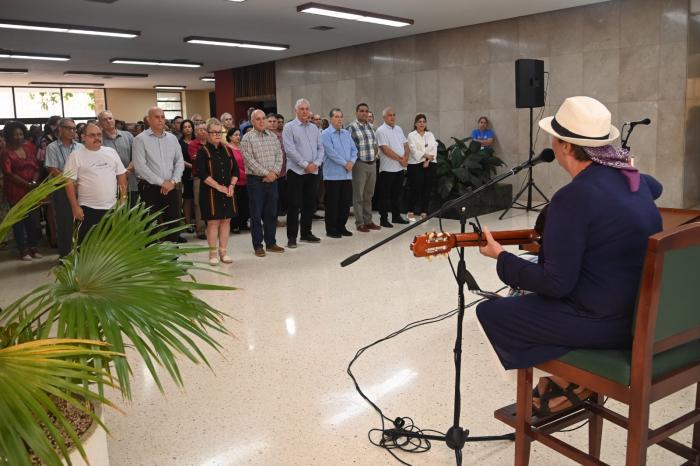
    On Wednesday morning, Cuba’s highest political leader, Miguel Díaz-Canel Bermúdez — who holds dual roles as First Secretary of the Central Committee of the Communist Party of Cuba and President of the Republic of Cuba — took part in a solidarity gathering at the Communist Party Central Committee Headquarters to publicly back the growing ‘My Signature for the Homeland’ movement.

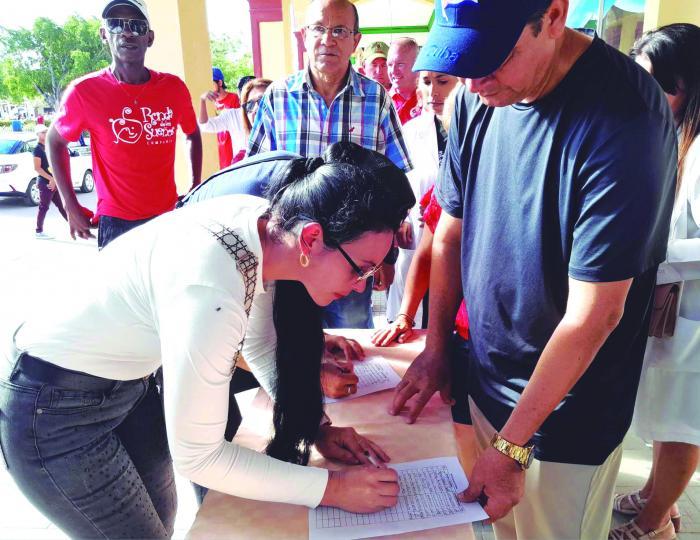
    The grassroots initiative has emerged as a nationwide call to action, inviting every Cuban to stand together in defense of the country’s revolutionary project and national sovereignty in the face of what Cuban officials frame as external imperial aggression. During Wednesday’s event, both senior party officials and administrative staff based at the headquarters added their signatures to the initiative, which is already circulating through communities, workplaces and public institutions across the entire island.

    Díaz-Canel first outlined the movement’s broader ambitions during an April 16 commemoration of the 65th anniversary of the proclamation of the Cuban Revolution’s socialist character. At that event, he stressed that the signature drive should grow beyond Cuba’s borders to become a global solidarity movement, tasked with sharing the unfiltered truth of Cuba’s situation with audiences across the world. This includes raising international awareness of the widespread harm inflicted on the Cuban people by the long-standing U.S. economic blockade, a measure that has been escalated into a multidimensional economic war further tightened by an energy embargo. Díaz-Canel has described this campaign as genocidal, pointing to the severe, widespread deprivation it has imposed on all sectors of Cuban society.

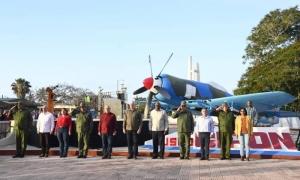
    Wednesday’s gathering, which also included attendance from Roberto Morales Ojeda, a member of the Communist Party Political Bureau and Organization Secretary of the Central Committee, is just one of hundreds of similar events rolling out across the country. It follows an initial high-profile signing held April 19 at the Bay of Pigs, a historic site of Cuban resistance to foreign intervention, where Díaz-Canel and other senior leaders of the revolution first put their names to the initiative.

    That opening signing ceremony reaffirmed the Cuban nation’s long-standing, unwavering commitment to peace, a core value rooted in the national identity forged through decades of resistance. It also reiterated a principle enshrined in Cuba’s constitution: that standing in defense of the nation is not merely a fundamental right for Cuban citizens, but the highest honor and most fundamental supreme duty of every person on the island.

  • How is the National Electric System being recovered?

    How is the National Electric System being recovered?

    Against a backdrop of intensified U.S. economic pressure, Cuba has logged notable progress in restoring its National Electric System while laying out a clear, long-term roadmap to achieve full energy sovereignty, according to the nation’s top energy official. In an extensive interview aired on the *Round Table* public affairs program, Vicente de la O Levy, Cuba’s Minister of Energy and Mines, detailed the challenges imposed by the ongoing U.S. blockade, the gains secured by the 2025 national recovery strategy, and the government’s priorities for stabilizing the power grid in 2026.

    When the recovery program launched in early 2025, Cuba’s energy sector faced a catastrophic starting point. Of nearly 3,000 megawatts (MW) of installed distributed generation capacity, only around 350 MW were operational at the end of 2024, hamstrung by chronic shortages of spare parts and limited access to international financing. Through targeted, system-wide repairs and strategic resource allocation, the country expanded available distributed generation capacity to more than 1,000 MW by the close of 2025. This gain proved life-saving late in the year when major hurricanes swept through Cuba’s eastern provinces of Granma, Guantánamo, Holguín, and Las Tunas, cutting those regions off from the central national grid. Local distributed generation allowed communities to maintain critical services through the emergency.

    In addition to distributed generation, the government prioritized repairing core thermal power infrastructure, bringing Units 3 and 4 at the Céspedes thermoelectric plant and Unit 5 at Santiago de Cuba’s Renté facility back online. Though the return of Céspedes Unit 4 was delayed by planning missteps and substandard maintenance work, it is now fully operational.

    One of the most striking shifts over the past year has been the rapid expansion of domestic fuel production and renewable energy integration. New drilling operations have boosted domestic associated gas output, bringing the nation’s gas-fired generation capacity to 370 MW, with a consistent average output of 340 MW running entirely on domestically produced fuel. For renewables, penetration jumped from just 3% at the start of 2025 to 10% by year’s end – a seven percentage point increase in 12 months. When accounting for smaller-scale renewable projects deployed by the private sector, state enterprises, and public agencies, total renewable penetration already reaches 15% across the system, with combined installed capacity and energy savings from renewables hitting roughly 1,700 MW.

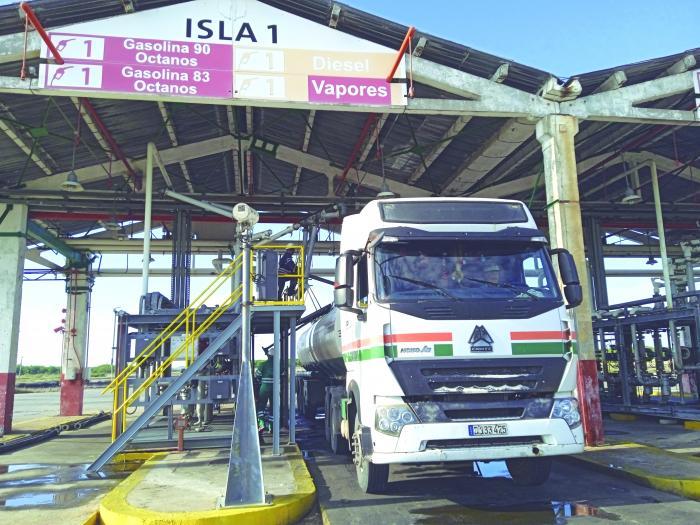
    Despite these gains, de la O Levy emphasized that the intensified U.S. blockade, ramped up in January 2026, has created crippling, ongoing disruptions to Cuba’s fuel supply. After the U.S. seized a Cuban-chartered vessel carrying one million barrels of fuel in December 2025, no new fuel shipments arrived until a Russian cargo vessel delivered 100,000 tons of crude in early 2026. Since the January 2026 expansion of U.S. sanctions, which include secondary penalties against third countries that trade fuel with Cuba, most international suppliers have been deterred from doing business with Havana, effectively cutting off most regular import channels. This has left Cuba reliant almost entirely on domestic production and existing stockpiles for months, creating a persistent 600 MW generation shortfall across the national grid. As of mid-April 2026, Cuba is only able to distribute 800 tons of fuel daily, half of the 1,600 tons needed to eliminate widespread rolling blackouts.

    To minimize harm to the national economy amid persistent power shortages, the Cuban government adopted a deliberate prioritization framework that reserves available power for critical economic and social sectors. A total of 631 electrical circuits serving key industries, agricultural production, and export-oriented businesses are protected, requiring more than 800 MW of dedicated capacity that is only cut during extreme grid emergencies. This policy has allowed irrigation for major staple crops including tobacco, corn, and soybeans to continue, and keeps export-generating industries operational, even as it means longer and more frequent rolling blackouts for residential consumers.

    For 2026, the government’s 62-point action plan – tracked weekly with monthly milestones – focuses on consolidating the gains of 2025 rather than pursuing rapid new expansion, while rolling out key new infrastructure to stabilize the grid. As of April 2026, available distributed generation capacity stands at 1,114 MW, and domestic oil and gas production has reversed years of decline to begin growing again. The most notable new initiative is the deployment of utility-scale energy storage systems, with all necessary equipment already in Cuba and installation underway. The government has also restarted the manufactured cooking gas expansion program for Havana, which was paused due to gas shortages, with a goal of adding 25,000 new residential customers to reduce residential electricity demand.

    Cuba’s strategy prioritizes importing crude oil rather than finished refined petroleum products, a choice de la O Levy said is driven by economic efficiency: processing crude domestically produces gasoline, fuel oil, diesel, and liquefied petroleum gas (LPG) all in one facility, cutting the high freight and third-party refining costs that come from importing each finished product separately. Priority for available refined fuel is given to critical social services, including hospitals, public transportation, and medical facilities, while crude oil is reserved for running the nation’s core thermoelectric plants – a necessity to avoid a total national blackout. The recent 100,000-ton Russian crude shipment was unloaded in just 90 hours at an alternate port after draft restrictions prevented it from docking at Cienfuegos, with coastal barges used to transfer the cargo to smaller vessels for refining.

    De la O Levy acknowledged that unequal blackout impacts across provinces and unplanned disruptions remain persistent challenges, rooted in structural differences between regional grids and unforeseen events. Provinces with higher concentrations of essential services have fewer non-critical circuits that can be taken offline to reduce demand, meaning local residents face more frequent outages even when allocation formulas are designed to be equitable. Unplanned events, from unexpected thermoelectric plant breakdowns to sargassum blooms blocking cooling water intakes at coastal power facilities, require constant last-minute adjustments to blackout schedules that cannot be fully anticipated.

    To address the inherent intermittency of solar and wind power, the government is rolling out large-scale battery storage systems across four major sites totaling 200 MW, with all equipment already delivered to Cuba. The first 50 MW storage facility will allow the country to push total renewable capacity over 900 MW. Even with limited financing, the government has rolled out targeted small-scale renewable solutions to protect vulnerable communities: 15,000 modified solar-only portable power units have been distributed to teachers, medical workers, and households dependent on electricity for life-sustaining medical equipment, while 5,000 fixed solar systems have been installed at critical public facilities including polyclinics, maternity homes, nursing homes, and telecommunications infrastructure.

    Looking ahead, Cuba has laid out a three-phase roadmap to achieve full energy sovereignty by 2050. The first phase targets 24% renewable penetration by 2030, rising to 40% by 2035 – a threshold that would allow Cuba to eliminate all fuel imports, saving more than one million tons of fuel purchases annually. The final phase, targeted for 2050, will deliver 100% renewable energy across the entire national system, leveraging Cuba’s abundant natural resources including forest biomass, hydroelectric potential, onshore and offshore wind, and tidal power. Installation of turbine towers has already begun this year at the Herradura 1 wind farm, marking the first step in the next phase of the nation’s energy transition.

  • Cuba has been willing to engage in dialogue with the U.S. government, provided that this is done with respect for our sovereignty and independence

    Cuba has been willing to engage in dialogue with the U.S. government, provided that this is done with respect for our sovereignty and independence

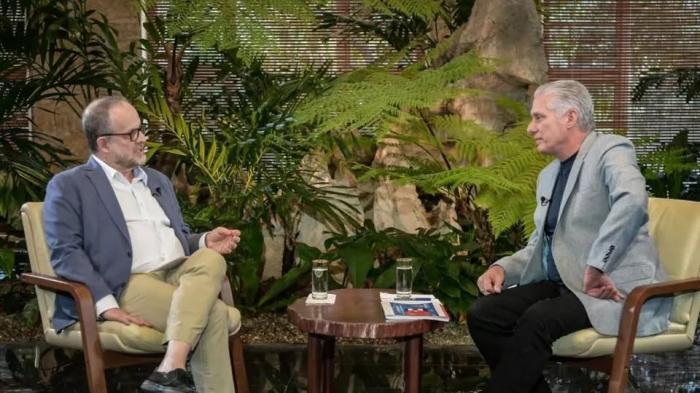
    In an exclusive interview hosted by Brazilian journalist and author Breno Altman on his popular current affairs program *20 Minutos* (published by Opera Mundi), Cuban President and First Secretary of the Central Committee of the Communist Party of Cuba Miguel Díaz-Canel Bermúdez has laid out Cuba’s long-standing position on diplomatic engagement with the United States. The discussion, the second recorded meeting between Altman and Díaz-Canel, was held at the Palace of the Revolution and covered a sweeping range of pressing topics facing the Caribbean nation, from the ongoing economic damage caused by the decades-long U.S. blockade and the more recent tightening of oil sanctions to Cuba’s domestic structural transformations, global solidarity movements, and the early history of bilateral negotiations between Havana and Washington. Cuba’s state-owned newspaper Granma has made the full unedited video of the conversation available to the public on its official website, following the original broadcast via the Cuban Presidency’s YouTube channel. Opening his remarks on bilateral relations, Díaz-Canel emphasized that Cuba has maintained a consistent willingness to enter into constructive dialogue with the U.S. government throughout modern history, but any such talks must be premised on full respect for Cuba’s core national sovereignty and independent political system. The interview comes at a time of sustained economic pressure on Cuba from U.S. trade restrictions, making the country’s stance on diplomatic engagement a key point of international interest for global observers and regional policymakers.

  • Raúl congratulates the Eastern Army on its 65th Anniversary

    Raúl congratulates the Eastern Army on its 65th Anniversary

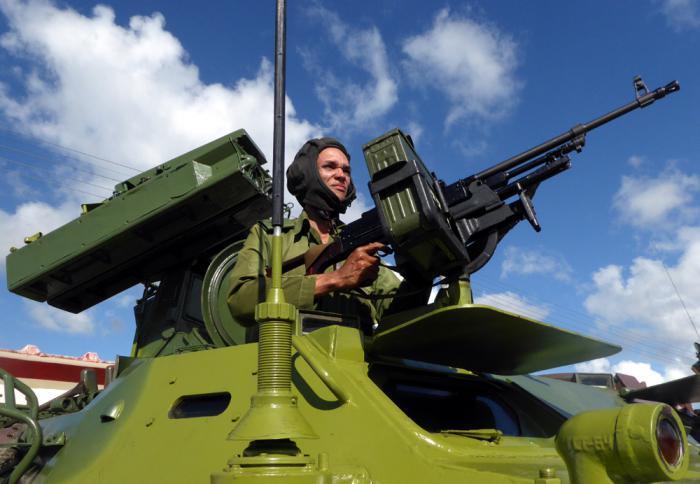
    On the 65th anniversary of the founding of Cuba’s iconic Eastern Army, Army General Raúl Castro Ruz, leader of the Cuban Revolution, has issued a heartfelt commemorative message celebrating the armed corps’ decades of service, revolutionary legacy, and ongoing commitment to defending the island’s socialist project.

    The Eastern Army was formally established on April 21, 1961 — just two days after Cuba’s landmark victory over foreign-backed incursion at the Bay of Pigs, a moment that marked the first major defeat of U.S. imperial ambitions in Latin America. In his greeting, Raúl Castro recalled the urgent, defining order issued by then-Commander-in-Chief Fidel Castro Ruz at the corps’ founding: “If we save the East, we save the Revolution!” The phrase underscores the Eastern region’s outsized historical and geographic strategic importance to Cuba’s revolutionary project, a priority that has shaped the army’s mission from its earliest days.

    Over its 65-year history, the Eastern Army — affectionately known by the nickname the “Lord Army” for its stature and reputation — has built its legacy far beyond traditional military operations. Raúl Castro emphasized that the corps’ standing stems not only from its military strength, but from its unwavering resistance to repeated enemy provocations and acts of aggression, as well as its long record of self-sacrifice in internationalist solidarity missions across the globe.

    A core contribution of the Eastern Army highlighted in the message is its role in advancing and implementing Cuba’s core strategic doctrine of the “War of all the People” — a framework that Raúl Castro noted remains particularly critical today, as the island faces persistent external threats to its socialist sovereignty.

    Beyond national defense, the Eastern Army has long been integrated into civilian support efforts across Cuba. Raúl Castro pointed to the still-raw public memory of the corps’ rapid deployment for search, rescue, and relief work in the wake of devastating Hurricane Melissa, followed by months of post-storm recovery work. This commitment to serving the Cuban people in times of crisis, he noted, is a core thread running through the entire history of the institution, and has earned the enduring gratitude of the Cuban public.

    In closing his message, Raúl Castro called for solemn tribute to the service members who have lost their lives in the line of duty, arguing that ongoing respect for fallen heroes reinforces the Eastern Army’s unshakable commitment to defeating any future act of enemy aggression. He extended formal congratulations to the corps’ founding members and all currently serving combatants for their service and achievements over 65 years, ending with a warm personal embrace to all members of the Eastern Army.

  • We will defend our Homeland at any cost

    We will defend our Homeland at any cost

    Sixty-five years after Cuban forces secured the first major military defeat of U.S. imperialism in the Americas at the Bay of Pigs, tens of thousands of Cubans across every province of the island have come together to participate in the nationwide “My Signature for the Homeland” movement, throwing unified public support behind the Revolutionary Government’s latest declaration of sovereignty.

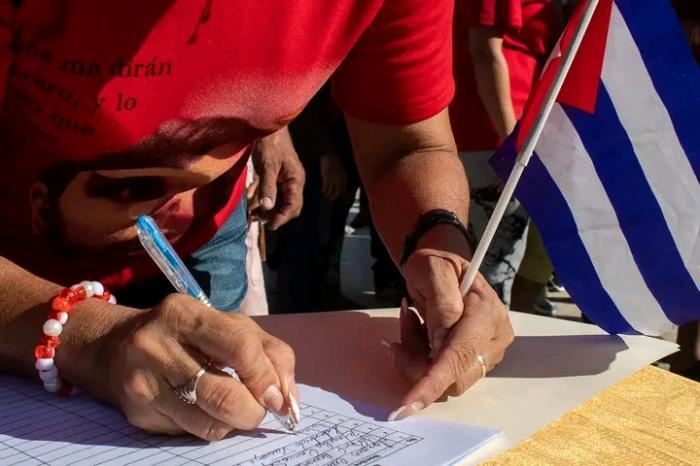
    Across the country, the movement brought together Cubans of all generations, professions and backgrounds, each adding their name to the statement to reaffirm national unity, reject long-standing foreign intervention, and defend the Cuban Revolution against ongoing external pressure.

    In the southern coastal province of Cienfuegos, crowds gathered at José Martí Park to kick off local activities. Damián Cosme, an educator and recipient of Cuba’s Hero of Labor honor, emphasized his unwavering commitment to the revolutionary cause, stating he was prepared to fulfill every demand the Revolution placed before him, even giving his life if called upon. Anay Morera Guillen, secretary of the Central Workers’ Union of Cuba in Cienfuegos, added a clear message for the global community: “We are here to tell the world that Cuba will not surrender. Now, when the Homeland needs us most, we are more united than ever to overcome every adversity.”

    Across central Cuba in Sancti Spíritus, the movement extended beyond collective public action to become a intergenerational family commitment for many participants. Transportation worker Andrés Concepción traveled to the signing event with his wife Yudiana, his adult son Dairon, and his young daughter Dina, describing the act as a personal and family duty driven by pure conviction. “These are moments to give a resounding yes to our country,” Concepción explained. “It’s the legacy from colonial times, but it’s also about continuity, which is of utmost importance. For us, it’s not over. There will be Cuba and the Revolution forever.” He framed his participation as a passing of legacy from his parents’ generation to his own, and on to his children and future descendants, noting no one had pressured him to attend: “It is a way of demonstrating to imperialism and the entire world the unity we have as a people, our rejection of the United States blockade, our repudiation of war, violence, and terrorism, and the commitment to peace that we have always had as a nation.”

    In Bayamo, the historic hub of Granma province, generations of residents gathered in Revolution Square to echo the resolve that carried Cuba to victory at the Bay of Pigs, reaffirming that national freedom is non-negotiable. Representing the country’s veteran revolutionary combatants, Reynaldo Fernández Moreno denounced the ongoing harassment from the U.S. government: “The United States has not relented in its efforts to crush the Cuban Revolution through various plans of aggression to divide and destabilize us.” He also called out what he described as Washington’s hypocrisy, noting U.S. officials falsely accuse Cuba of supporting terrorism while carrying out thousands of subversive campaigns intended to break the Cuban people’s capacity for resistance.

    At the Valle del Yabú Agricultural Enterprise in Santa Clara, veteran tourism worker Manuel Soliño Guevara, another Hero of Labor of the Republic of Cuba, added his signature after completing a day of volunteer farm work. He reaffirmed his commitment to the homeland, echoing the iconic revolutionary slogan first introduced by Fidel Castro 66 years prior: “Homeland or Death.” Soliño emphasized that unity of purpose is critical to protecting peace and preventing foreign military aggression, noting that Cuba has never posed a threat to any other nation.

    In Santiago de Cuba, widely known as the cradle of the Cuban Revolution, commemorations for the 65th anniversary opened with flag-raising ceremonies at the province’s most iconic historic sites. Young activist Yesenia Acuña Borrero spoke at the Revolution Plaza named for fallen independence hero Antonio Maceo, in front of his equestrian monument, reaffirming: “Although we are a people who love peace, our flag will be defended at any cost.” Nearby, at the Guillermón Moncada Stadium, hundreds of residents of all ages gathered to celebrate the anniversary, which stands as a permanent demonstration of the Cuban people’s refusal to tolerate foreign interference or invasion. Local resident Yaney León added: “Without a doubt, I also take this opportunity to pledge my support for the Homeland, for our dignity, and for peace.”

    In eastern Cuba’s Holguín province, thousands of signatories used their participation to reaffirm Cuba’s long-held core commitment to peace, paired with the unshakable conviction that defending national sovereignty is a supreme duty for all Cubans. At a patriotic gathering in Calixto García Park in the provincial capital, young public health professional Elaine Cruz Bobas spoke before the signature drive began, stating: “The truth of these people will not be silenced. The suffering of millions of Cubans as a result of the blockade and the brutal economic war is an act of genocide.”

    At José Martí Park in Ciego de Ávila, provincial economy and planning worker Edilia Gutiérrez Cordero arrived early on the Sunday of the event. While her daily work centers on balancing budgets and calculating achievable development targets, on this day her task was to add her name to the statement of national commitment. “My signature for the Homeland is a way of saying: We are here,” she said, her voice cutting through the park’s bustle. She repeated the line firmly, standing against what she described as escalating imperialist threat. Gutiérrez explained that her signature carried both a yes and a no: it was a yes to Cuban sovereignty and national presence, and a resounding no to the war foreign powers seek to impose on the island. Even amid widespread economic hardship caused by the decades-long U.S. blockade, she described herself as happy: “Every day I make Cuba the way I want, because I feel free in the country where I was born. That freedom is not an empty phrase. It is the freedom to choose to stay, to build alongside my compatriots, and to stand in solidarity.”

    In Las Tunas, hundreds of residents gathered in José Martí Square in front of a monument to the national hero to condemn the U.S. blockade and repeated threats from the U.S. government. University professor Carlos Alberto Suárez Arcos noted that the gathering was marked by hope and energy, pointing out that global solidarity actions for Cuba continue to grow because the island remains a powerful global symbol. “It is not a weapon of mass destruction, it is a soul of mass construction,” Suárez Arcos said.

    In Camagüey’s Victoria de Girón neighborhood, the neighborhood named for the 1961 Bay of Pigs victory, hundreds of local residents gathered to add their signatures. Two young participants shared powerful reflections on the meaning of their participation. University of Camagüey student Yolanda Molina Castillo emphasized that her signature was no empty gesture, noting: “History confirms our tradition of struggle, and the examples are written in the blood of thousands of men and women who fell for this freedom and peace we enjoy.” Juan Carlos Blanco, another young Camagüey resident, told reporters his signature was a binding oath: “I signed for Cuba and for Fidel, for the Homeland, the Revolution, and Socialism. My signature is my commitment to defend our future, our principles, and our sovereignty.”

    In the eastern border province of Guantánamo, at the historic Arroyo Hondo agricultural complex where Cuban independence leaders José Martí and Máximo Gómez relaunched their revolution in 1895, agricultural worker Taylienis Acosta Jiménez put forward a clear message to U.S. political leaders threatening Cuba. “Here are my hands, if needed to save the Revolution,” she said. “I am like my people: peaceful. Gringo, think before you attack us. If you do, there will be deaths and grieving families on both sides; something very painful. It is your responsibility to prevent it.”

  • The truth about Cuba will not be silenced

    The truth about Cuba will not be silenced

    On April 19, at the historic Bay of Pigs, Cuba’s top leader Miguel Díaz-Canel Bermúdez — who serves as First Secretary of the Central Committee of the Communist Party of Cuba and President of the Republic — officially kicked off a nationwide mass movement called “My Signature for the Homeland” by adding his own signature first. This new initiative grows out of a call Díaz-Canel made during ceremonies marking the 65th anniversary of the proclamation of the socialist character of the Cuban Revolution, aiming to rally both domestic Cuban organizations and global allies to spread accurate, unfiltered information about Cuba across every region of the world. It also serves as a public, tangible manifestation of the Declaration of the Revolutionary Government, recently published by Cuban state newspaper Granma.

    In the days following the movement’s launch, millions of Cuban residents from the westernmost tip of the island to its eastern border have been participating in the signature drive, turning public squares and community parks across the country into gathering points for collective national expression. This Sunday, April 20, saw the first large wave of participation, with signature collections set to continue in coming days to allow people of all ages, professions, religious backgrounds and social sectors to take part. For every participant, adding a signature is more than a symbolic act: it is a public declaration that the Cuban people refuse to be intimidated or coerced by growing, repeated threats from the United States government.

    The core of the movement’s message echoes the text of the Revolutionary Government’s declaration, titled *Bay of Pigs is Today and Forever!* The declaration emphasizes that Cuba is a nation rooted in centuries of shared history and unshakable collective convictions. It frames the Cuban people as a peace-loving, solidarity-focused population that builds its future through daily work and persistent reclamation of its right to self-determination. Just as 65 years ago, Cuban forces defeated foreign-backed aggression on the sands of the Bay of Pigs under the iconic rallying cry “Homeland or Death!”, the declaration affirms that the Cuban people will once again secure victory in their ongoing defense of national sovereignty and the socialist system they have chosen.

    Across the island, the signature drive has underscored a unified national position: the Cuban people will never surrender their fundamental right to chart their own independent course of historical development, even in the face of long-standing external pressure and intervention.

  • Meeting between Cuban and U.S. delegations confirmed

    Meeting between Cuban and U.S. delegations confirmed

    In an exclusive interview with Cuba’s official state newspaper Granma published on April 20, 2026, a senior Cuban foreign ministry official has confirmed that recent high-level diplomatic meetings between Cuban and U.S. delegations took place on Cuban soil, while pushing back against inaccurate foreign media reporting about the nature of the talks.

    Alejandro García del Toro, deputy director for U.S. Affairs at Cuba’s Ministry of Foreign Affairs (Minrex), spoke publicly to Granma to address growing speculation in international press coverage surrounding the closed-door bilateral discussions. García del Toro acknowledged that the negotiations are a sensitive matter that Cuban authorities have intentionally handled with deliberate discretion, a longstanding approach for diplomatic engagement with the United States that has been consistent across years of rocky bilateral relations.

    Contrary to unconfirmed claims circulating in some foreign outlets, García del Toro officially confirmed that the meeting between the two delegations occurred recently in Cuba. The U.S. delegation included ranking officials at the level of undersecretary of State, while Cuba’s side was represented by officials at the vice-minister level from the foreign ministry.

    García del Toro explicitly refuted a narrative that had been circulated by some U.S. media outlets, which claimed that one side had imposed rigid timelines for progress or used coercive language during the talks. He clarified that the entire exchange between the two delegations was conducted on the basis of mutual respect and professional diplomatic protocol, rejecting any characterization of the discussions as confrontational or one-sided.

    A core priority for the Cuban delegation during the talks, García del Toro emphasized, was pushing for the elimination of the U.S.-imposed energy blockade on Cuba. He described the long-running economic coercion measure as an unjustified punishment that inflicts widespread harm on the entire Cuban civilian population. Beyond its impact on Cuba, García del Toro framed the blockade as a form of global blackmail against sovereign nations, noting that all independent states hold the inherent right to export fuel to Cuba in line with established principles of free international trade.

  • Bay of Pigs is today: it is the struggle and the victory

    Bay of Pigs is today: it is the struggle and the victory

    On a cool Sunday morning, April 19, 2026, thousands of Cubans gathered in Playa Girón, Ciénaga de Zapata, Matanzas province — the very stretch of land where Cuba secured its first major defeat of U.S.-backed imperialism in the Americas 65 years earlier — to mark the historic anniversary of the Bay of Pigs Victory. The solemn, celebratory ceremony was led by Miguel Díaz-Canel Bermúdez, First Secretary of the Central Committee of the Communist Party of Cuba and President of the Republic, who laid the first wreath of white flowers at a memorial plaque engraved with the names of the battle’s fallen martyrs, just steps from the local Bay of Pigs Museum.

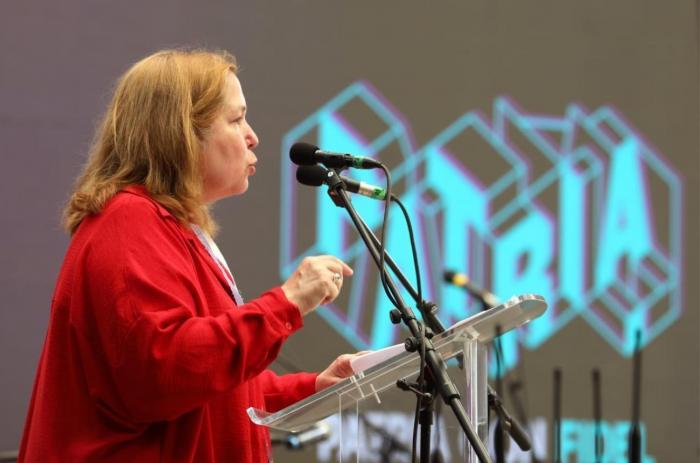
    The commemoration brought together a cross-section of Cuban leadership and public life: top members of the Political Bureau including Salvador Valdés Mesa, Vice President of the Republic; Roberto Morales Ojeda, Secretary of Organization of the Communist Party Central Committee; and Army Corps General Roberto Legrá Sotolongo, First Deputy Minister of the Revolutionary Armed Forces (FAR) and Chief of the General Staff. Also in attendance were representatives of the Communist Party, state institutions, the Union of Young Communists, mass popular organizations, the Association of Combatants of the Cuban Revolution, the FAR, the Ministry of the Interior, local Matanzas government officials, and key delegates who had just wrapped up the 5th International Patria Colloquium, a major global solidarity gathering for Cuba.

    The day opened with formal military honors: a command of attention, the playing of Cuba’s national anthem, and a sounding of the Last Post to honor the battle’s fallen heroes. It then blended solemn remembrance with vibrant cultural expression, featuring performances by a roster of Cuban artists including Silvio Alejandro Rodríguez performing iconic protest singer Silvio Rodríguez’s *Fusil contra fusil*, the Korimakao Community Artistic Ensemble, the Revolution Performance Company, students from the National Dance School, and actor Denys Ramos.

    Speakers across generations centered the event on the continued relevance of the 1961 victory, when then-Prime Minister Fidel Castro led a coalition of worker, peasant and student militias, the Rebel Army, police forces, medical personnel and ordinary civilians to defeat a U.S.-organized mercenary invasion in less than 72 hours. Speaking on behalf of Cuba’s younger generations, Major Yadian Daniel Medina of the FAR stressed that the 1961 invaders failed to account for one critical factor: the unwavering commitment of the Cuban people to defend their sovereign revolution. He called out the ongoing U.S. economic blockade, which currently targets critical fuel supplies to the island, and reaffirmed Fidel Castro’s core conviction: a people united as one to defend their freedom can never be defeated.

    A series of cultural tributes bridged the past and present: the Korimakao ensemble performed Jesús Orta Ruíz’s iconic poem *Elegía de los zapaticos blancos (Elegy of the Little White Shoes)*, which immortalizes a young girl killed during the invasion, followed by a performance of José Martí’s *Abdala* by the Havana University Theater Group. Elianis Martínez Pérez, a young first-grade teacher from a local elementary school, then reminded attendees that before the 1959 Cuban Revolution, the Zapata swamp region was a neglected, forgotten corner of the island. She denounced the ongoing U.S. blockade, which she said aims to break the Cuban people through hunger and exhaustion, and argued that diligent study and work are the most powerful thanks to the revolution for its decades of human-centered progress.

    Delivering the ceremony’s keynote address, Roberto Morales Ojeda framed the 1961 Battle of Bay of Pigs as far more than a single military conflict: it was an irreversible declaration of the Cuban people’s refusal to submit to imperial power. “Sixty-five years have passed since, on these very sands, mercenaries in the service of the most powerful nation in history believed they could crush the nascent Cuban Revolution in a matter of hours,” he said. “They came with the misguided and doomed idea that they would find a divided people ready to surrender. They were wrong; they ignored, just as they do today, our unequivocal conviction of independence or death. In less than 72 hours, the invaders were defeated.”

    Morales Ojeda emphasized that the Bay of Pigs victory was the product of two inseparable forces: a whole people mobilized as a militia, and a visionary leader who embodied their will to fight. Around 1,200 invading mercenaries were captured, nearly the entire combat-ready attacking force. The battle, he noted, marked the moment where defense of Cuban territory merged with the island’s new revolutionary social project and collective national identity, forging the unity that would later give birth to the Communist Party of Cuba.

    He recalled that in the months leading up to the 1961 invasion, the young revolutionary government had already delivered transformative change: the Agrarian Reform Law that transferred land to poor cultivators, universal healthcare as a fundamental right, and the launch of the national Literacy Campaign, the most sweeping cultural initiative in the country’s revolutionary history. These gains, he said, made Cuba a dangerous example for U.S. imperial interests, prompting decades of sustained aggression: cut credit lines, blocked oil imports, revoked sugar export quotas, a brutal economic blockade, sabotage, piracy, repeated assassination attempts against revolutionary leaders, all of which have failed to break the revolution.

    Addressing current challenges, Morales Ojeda acknowledged the harsh realities facing ordinary Cubans today: economic hardship, widespread supply shortages, and material constraints, almost all rooted in the ongoing U.S. blockade. But he stressed that the revolution will never collapse. He noted that just days earlier, more than 50,000 Cubans had gathered for a patriotic event marking the 65th anniversary of the Proclamation of the Socialist Character of the Revolution, issuing a call to spread the truth about Cuba across the globe.

    “The enemy does not abandon its sinister plans,” he said. “The economic, commercial, and financial blockade has intensified, now transformed into an inhumane energy siege that seeks to suffocate us. The media campaigns, disinformation, diplomatic pressure, threats, sanctions — this entire arsenal — is being used against us today with the same ferocity and the same frustration as more than six decades ago. Now, as then, unity and firmness are the pillars that cannot be weakened.”

    He called on all Cubans to join the new popular campaign *My Signature for the Homeland*, which launched at the Sunday ceremony, with attendees adding their signatures to a massive national registry in protest of the blockade, which Cuban officials describe as an act of economic genocide. He also reaffirmed Cuba’s commitment to peace, but warned that if the island faces new aggression, the Cuban people will once again mobilize as one to defeat any invader.

    Morales Ojeda tied the 1961 victory directly to the battles Cuba faces today: overcoming the island’s ongoing energy crisis by expanding renewable energy, boosting domestic food production, improving public service quality, cracking down on speculation, corruption and illegal activity, and restoring economic growth to strengthen Cuban socialism. “This battle, like that of Bay of Pigs, will win with unity, with awareness, with creativity, and with work,” he said. “Cuba wants peace and promotes peace, but it knows no fear.”

    The ceremony closed with a moving performance of Sara González’s *La Victoria* by young artist Annie Garcés, who performed while standing on a vintage tank holding the Cuban flag, moving the crowd with her powerful performance. A poignant connection to the 1961 battle came when Nemesia, the now-adult woman who as a child was killed during the invasion and immortalized in the *Elegy of the Little White Shoes*, joined the crowd to stand with the modern generation of Cuban activists. The gathering closed as the first step of a nationwide campaign to demand an end to the blockade and reaffirm the Cuban people’s right to sovereign self-determination.

  • Final Declaration of the 5th International Patria Colloquium

    Final Declaration of the 5th International Patria Colloquium

    Against the backdrop of escalating external pressure on Cuba, participants at the 5th International Patria Colloquium have issued a united condemnation of unilateral coercive measures and systemic exploitation of digital and economic power, while laying out a collective vision for a more just global information and political order. Held in Havana from April 16 to 18, 2026, the gathering brought together 154 international delegates and more than 3,000 Cuban participants, timed to honor two landmark milestones: the 100th birth anniversary of iconic Cuban revolutionary leader Fidel Castro, and the 65th anniversary of the Bay of Pigs Invasion, widely recognized as the first major defeat of U.S. imperialism in the Americas.

    Opening the official declaration, colloquium attendees emphasized the deep political, historical and strategic significance of their assembly, which reaffirms the ongoing relevance of the Cuban Revolution’s emancipatory ideals for communities across the globe.

    In an era defined by rapid digital transformation, the declaration frames digital communication as one of the central battlegrounds of modern political, cultural and geopolitical struggle. Contestation over this space, attendees argue, determines not just public narratives, but the future of global power dynamics, competing societal models, and divergent civilizational projects.

    A core point of criticism raised by the gathering is the extreme concentration of global informational and technological power in the hands of a tiny group of transnational corporations. These entities control nearly every critical layer of the digital ecosystem: from core infrastructure, global data flows, and advertising systems to cloud services, semiconductor supply chains, major digital platforms, recommendation algorithms, and an increasing share of cutting-edge artificial intelligence development and deployment.

    This monopolistic concentration poses grave risks to the global community, the declaration warns. It undermines national sovereignty, erodes global cultural diversity, weakens informational pluralism, and enables new forms of economic, cognitive and political subordination. The result is a cross-border architecture of digital domination that overrides the self-determination of nations, particularly those in the Global South.

    Attendees also expressed deep alarm over the weaponization of digital tools for political destabilization. Industrial-scale disinformation campaigns, targeted hate speech, covert foreign influence operations, and algorithmic manipulation have become systematic tools to fracture societies, disrupt domestic political processes, and undermine social cohesion in countries across the world, the declaration notes.

    Further, the gathering condemned the integration of digital technologies, AI, automated surveillance systems, and algorithmic frameworks into military aggression, occupation, economic blockades, and psychological warfare campaigns. Participants highlighted the particularly harmful combination of military operations and information domination strategies in ongoing conflicts affecting Palestine, Lebanon, and Iran as a dangerous violation of international norms.

    Against these threats, the colloquium affirmed the inalienable right of all peoples to build technological sovereignty, develop independent domestic communication capabilities, cultivate democratic digital ecosystems, and enact regulatory frameworks centered on public interest, social justice, and the protection of collective rights.

    To advance these goals, delegates agreed to strengthen the International Patria Colloquium as a permanent collaborative platform connecting journalists, independent media outlets, grassroots activists, social movements, researchers, technology developers, and public officials across the Global South. The platform will enable coordinated action and shared capacity building to counter systemic digital and economic coercion.

    Participants also committed to building out a global cooperation network focused on four key priorities: training for practitioners, applied research on digital coercion, coordinated production of independent content, and rapid response capabilities to counter disinformation, manipulation, and hate campaigns. The declaration emphasizes that the global battle for fair information requires organized collective intelligence and sustained, coordinated action.

    In line with its people-centered vision, the colloquium expressed support for the development of open, auditable, transparent, multilingual, and culturally adaptive technologies and AI systems. These tools should be oriented toward advancing public goods including education, health, scientific research, culture, and accessible public administration, and centered on empowering people-centered communication rather than private or geopolitical domination.

    The gathering closed with a formal call to action for all international organizations, academic networks, popular movements, and peace-aligned states to unite around a shared agenda for a new global information and communications order. This order, delegates argued, must center truth, justice, human dignity, and the fundamental right of peoples to self-determination.

    In a dedicated rebuke of long-standing external pressure on Cuba, the 5th International Patria Colloquium issued a firm, categorical condemnation of the United States’ sustained policy of aggression against the island nation. Specifically, delegates condemned the intensification of the decades-long economic, commercial and financial blockade, as well as the imposition of a targeted energy embargo crafted to stifle Cuba’s development and inflict harm on the daily lives of ordinary Cuban people.

    These actions are clear violations of international law and the foundational principles of national sovereignty and self-determination, the declaration confirms. Attendees also drew attention to the extraterritorial reach of these coercive measures, which intentionally obstruct Cuba’s access to global fuel supplies, critical technology, and international markets.

    In closing, the collective of participants reaffirmed the full legitimacy of the Cuban people’s right to defend their independent social project. They demanded the immediate removal of all unilateral coercive measures imposed on Cuba, and urged the global community to reject all forms of economic warfare that weaponize access to energy and communication as tools of collective punishment against sovereign nations.