标签: Cuba

古巴

  • An immune shield for our elderly

    An immune shield for our elderly

    Cuban health authorities have launched a groundbreaking medical intervention utilizing domestically developed Biomodulin-T to combat the Chikungunya virus outbreak, particularly targeting vulnerable elderly populations. The initiative, centered at Havana’s Abelardo Ramírez polyclinic, represents a scientifically rigorous approach to addressing both prevention and treatment of the virus’s debilitating inflammatory sequelae.

    The strategic focus on seniors aged 70-74 stems from their heightened vulnerability due to immunosenescence—the natural aging process of the immune system that reduces infection resistance while increasing inflammatory responses. According to Dr. Alexis Labrada Rosado, Research and Development Director at Cuba’s National Center for Biopreparations (BioCen), this physiological phenomenon necessitates specialized immunological interventions for optimal protection.

    Biomodulin-T operates through a sophisticated mechanism that enhances the body’s adaptive immune response rather than directly attacking the virus. The immunomodulator regenerates T-cells—the immune system’s memory components—effectively priming the body’s defenses to better control viral replication and mitigate disease severity. This approach potentially reduces both acute symptoms and long-term complications.

    The study employs innovative comparative methodology, pitting Biomodulin-T against its Belarusian analogue Timalin across two distinct administration regimens: an experimental short-cycle (5 days) and an established extended protocol (6 weeks) previously validated during COVID-19 pandemic response. Nearly 700 participants are enrolled in this real-world assessment, selected based on the community’s high elderly demographic density and recent arbovirus activity.

    Notably, the intervention extends beyond preventive measures to therapeutic applications for existing Chikungunya sufferers experiencing persistent joint inflammation and arthralgia. The drug’s three-decade safety record in treating pediatric thymic hypoplasia and ongoing oncology applications provides substantial confidence in its risk profile, with researchers noting minimal adverse reactions historically.

    This comprehensive strategy exemplifies Cuba’s integrated approach to public health challenges, combining preventive care with therapeutic innovation while generating valuable scientific data for future epidemiological responses. The initiative operates under strict ethical supervision and regulatory oversight, potentially establishing new protocols for arbovirus management globally.

  • Cuba: Failed state or state desired by the empire?

    Cuba: Failed state or state desired by the empire?

    The persistent characterization of Cuba as a ‘failed state’ by United States authorities presents a profound contradiction when examined against the island nation’s documented achievements across multiple sectors. Despite facing what historians describe as the longest-running economic embargo in modern history, Cuba maintains globally recognized education and healthcare systems that serve as models for developing nations.

    The Caribbean nation’s scientific capabilities were demonstrated during the COVID-19 pandemic through the rapid development of sovereign vaccines, while its cultural contributions continue through internationally acclaimed ballet companies, literary figures, and athletic achievements across more than 15 Olympic disciplines.

    This disparity between perception and reality stems from a deliberate campaign of economic warfare dating to 1961, including the failed Bay of Pigs invasion and Operation Mongoose. Declassified documents reveal extensive covert operations encompassing 32 specific tasks targeting Cuba’s economy, political stability, military infrastructure, and psychological welfare. Biological warfare tactics included introducing sugarcane rust, African swine fever, tobacco blue mold, and even hemorrhagic conjunctivitis targeting agricultural workers.

    Contemporary pressure mechanisms include comprehensive financial restrictions preventing fuel imports, inclusion on the State Sponsors of Terrorism list, and systematic obstruction of medical resources including life-saving oxygen during pandemic emergencies. Recent statements from former President Donald Trump regarding Cuba’s hypothetical collapse following Venezuelan sanctions reinforce this persistent regime change agenda.

    Despite creating severe energy shortages that impact industrial production and household welfare, Cuba maintains functional governance structures absent the power vacuum characterizing genuine failed states. Canadian political scientist Kalevi Holsti’s definition of state failure as inability to generate loyalty suggests Cuba’s resilience stems from maintained public support despite external pressure. The nation’s continued stability amidst unprecedented economic warfare represents not failure but remarkable endurance against hegemonic power.

  • Cuba honors 32 soldiers killed in aggression against Venezuela

    Cuba honors 32 soldiers killed in aggression against Venezuela

    Cuba has issued a formal condemnation of what it describes as an act of ‘state terrorism’ following a lethal assault that resulted in the deaths of numerous Cuban military and intelligence personnel stationed in Venezuela. The deceased, comprising officers from both the Revolutionary Armed Forces (FAR) and the Ministry of the Interior (Minint), were present in the South American nation under a bilateral security and defense cooperation agreement, responding to an official request from the Venezuelan government.

    The extensive list of casualties includes high-ranking officers such as Colonels Humberto Alfonso Roca Sánchez (67) and Lazaro Evangelio Rodriguez Rodriguez (62), alongside several majors and captains. The attack also claimed the lives of numerous lieutenants and first officers, including Lieutenant Colonel Orlando Osoria Lopez (45) and First Officer Giorki Verdecia García (30). Additionally, reserve soldiers and non-commissioned staff were among the victims, highlighting the significant loss experienced by Cuba’s security apparatus.

    The Cuban government has explicitly attributed responsibility for this escalation to Washington, condemning the United States for promoting military and political actions that threaten the sovereignty and stability of Venezuela. This incident represents a severe deterioration in the already tense relations between Cuba and the United States, potentially signaling a new phase of confrontation in the Caribbean region with far-reaching implications for international diplomacy and regional security arrangements.

  • Panama: Broad ront for Democracy Party decries US attack on Venezuela

    Panama: Broad ront for Democracy Party decries US attack on Venezuela

    The Panamanian advocacy organization Frente Amplio por la Democracia (FAD) has issued a scathing condemnation of United States foreign policy under former President Donald Trump, characterizing it as a modern-day colonization project targeting Latin America and the Caribbean. In an official statement delivered to Prensa Latina, the group articulated grave concerns regarding what they perceive as resource-driven imperialism disguised as counter-narcotics operations.

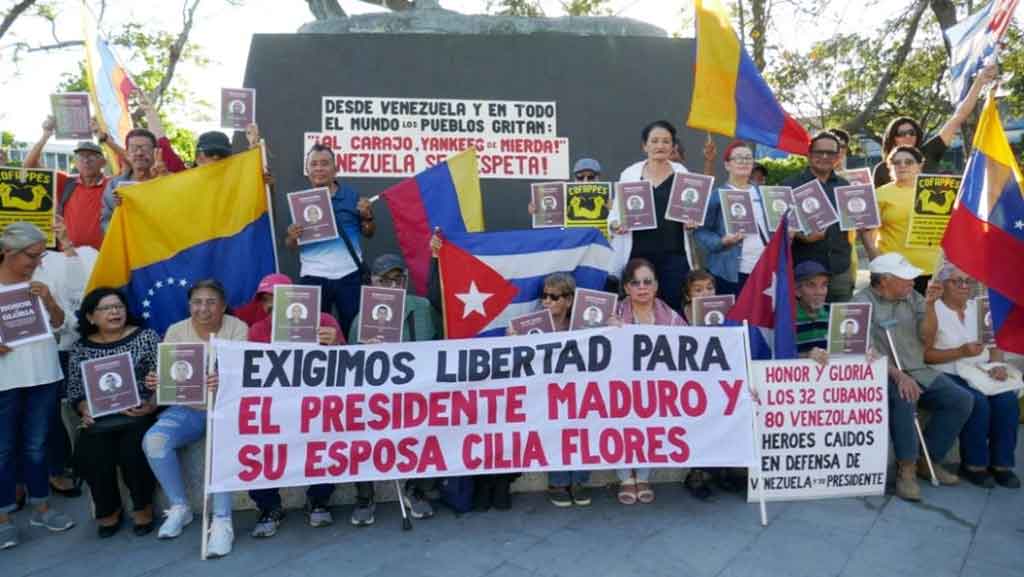
    The organization specifically referenced the armed aggression against Venezuela, which reportedly resulted in approximately 80 fatalities, including 32 Cuban internationalist combatants. FAD contends that the official narrative of combating a ‘drug-trafficking dictatorship’ served merely as a pretext for seizing control of Venezuela’s extensive petroleum reserves and other natural resources. According to their assessment, this resource grab included the alleged kidnapping attempts targeting President Nicolás Maduro and First Lady Cilia Flores.

    Expanding their critique beyond Venezuela, FAD highlighted the Trump administration’s confrontational approach toward multiple nations, including Colombia, Mexico, Greenland, Canada, and Iraq. This pattern of behavior, the group argues, demonstrates a consistent doctrine of global interventionism threatening national sovereignty worldwide.

    In response to these developments, FAD is demanding transparency from Panamanian President Jose Raul Mulino regarding a memorandum of understanding established with Washington. The organization insists that the administration provide a full public accounting of its commitments to the U.S. government concerning the Panama Canal, emphasizing concerns about national sovereignty and potential foreign influence.

    Concluding their statement, FAD reaffirmed their commitment to international law, self-determination principles, and peaceful dialogue. They issued a dual demand: the immediate cessation of U.S. interventionism in Venezuela and the unconditional release of President Maduro and his wife from what they describe as unlawful detention.

  • Colombia emphasizes aggression against Venezuela is for hydrocarbons

    Colombia emphasizes aggression against Venezuela is for hydrocarbons

    Colombia has issued a firm diplomatic declaration reaffirming its commitment to international principles and opposing foreign intervention in Venezuela’s affairs. During a press conference, a senior Colombian official articulated the nation’s position that any resolution to the Venezuelan situation must emerge exclusively through peaceful dialogue and the autonomous will of its citizens, without external pressure.

    The Minister of Foreign Affairs presented a critical analysis of the regional instability, attributing its primary cause to economic interests centered on natural resource acquisition. The official specifically identified the United States’ fossil fuel economy as a driving force behind interventionist policies that violate fundamental international norms.

    Foreign Minister Villavicencio articulated that Washington’s pursuit of energy resources has repeatedly crossed established red lines in international relations, particularly regarding respect for national sovereignty and territorial integrity. The minister referenced historical patterns of US interventionism targeting resource-rich nations to meet economic demands.

    This stance forms the foundation of Colombia’s diplomatic rejection of any external interests that seek to compromise the sovereignty of nations in their management and control of natural resources. The South American nation emphasized its unwavering defense of established diplomatic mechanisms designed to preserve peace and security throughout the region.

    Colombia reaffirmed its commitment to maintaining Latin America as a Zone of Peace, advocating for solutions that prioritize dialogue over coercion and respect the self-determination of all nations in the region.

  • Israel accused of trying to expel Palestinians from Jerusalem

    Israel accused of trying to expel Palestinians from Jerusalem

    A prominent expert has issued a stark warning regarding Israel’s intensified policy of demolishing Palestinian homes in Jerusalem and its surrounding areas. While the practice itself is not new, specialists monitoring the situation report a concerning acceleration over the past two years, signaling a dangerous escalation in urban policy enforcement.

    According to detailed analysis, Israeli authorities have strategically concentrated their recent operations on the southern and eastern peripheries of Jerusalem. The neighborhoods of Silwan, along with the districts of Batn al-Hawa and Ras al-Amud, have become primary targets for these demolition campaigns. This targeted approach suggests a systematic effort to alter the demographic landscape of these specific areas.

    The eviction of the Khalil Basbous family from their home in Batn al-Hawa on Monday serves as a recent and poignant example of this policy in action. This area, along with the entirety of East Jerusalem, has been under Israeli occupation since the 1967 Arab-Israeli war, adding a complex historical and political dimension to the current property disputes.

    Quantitative data reveals the significant scale of these operations. Approximately 320 residential structures were demolished in Jerusalem throughout the previous year alone, illustrating the substantial impact on the Palestinian community. The pattern of displacement extends beyond immediate demolitions, creating an atmosphere of uncertainty and instability for residents.

    Since 2015, a specific pattern of eviction has emerged in Batn al-Hawa, where around 16 families have been forcibly displaced from their homes. These actions frequently follow legal petitions filed by the Ateret Cohanim organization, a Jewish settler group dedicated to establishing a stronger Jewish presence in historically significant areas of Jerusalem. This dynamic highlights the involvement of non-governmental actors in pursuing property claims that result in the displacement of long-term Palestinian residents.

  • EC supports adoption of minimum tax for multinationals

    EC supports adoption of minimum tax for multinationals

    In a historic move for international fiscal policy, the Organisation for Economic Co-operation and Development (OECD) has secured approval from 145 nations for a groundbreaking global tax reform framework. The cornerstone of this agreement is the implementation of a universal 15% minimum tax rate for multinational corporations, representing one of the most significant overhauls of international tax rules in decades.

    The European Commission, serving as the executive branch of the EU, has championed the agreement as a stabilizing force for the global taxation system. According to their official statement, the framework establishes simplified regulations that ensure equity while maintaining corporate competitiveness. The Commission emphasized that the treatment safeguards effective minimum taxation for multinational enterprises while enhancing legal certainty and predictability for European businesses.

    A critical component of the agreement includes a specialized exemption mechanism designed specifically for U.S. companies, addressing Washington’s concerns that threatened to derail the entire initiative. This concession proved essential to securing broad international participation.

    Despite the widespread support, the Independent Commission for International Corporate Tax Reform has expressed reservations since 2021. The watchdog organization has consistently warned that such tax conventions disproportionately affect developing nations, which suffer greater revenue losses from tax abuses and rely more heavily on corporate income taxes for public funding.

    The OECD regards the agreement as both a major political achievement and technical milestone that establishes foundations for stability and legal certainty in the international tax landscape. This multilateral consensus follows years of negotiations and represents a coordinated effort to address tax avoidance strategies employed by large multinational corporations operating across borders.

  • Venezuela:National Armed Forces reiterate support for Delcy Rodriguez

    Venezuela:National Armed Forces reiterate support for Delcy Rodriguez

    In a dramatic escalation of geopolitical tensions, Venezuela’s government has undergone a significant transition of power following what it describes as an armed attack by the United States. According to reports from the multi-state network Telesur based in Caracas, U.S. forces allegedly kidnapped constitutional President Nicolás Maduro and First Lady Cilia Flores on January 3, transporting them to New York.

    In response to this development, the Constitutional Chamber of Venezuela’s Supreme Court of Justice issued an order transferring presidential powers to Delcy Rodríguez, who was formally sworn in before the National Assembly on January 5. The ceremony marked the constitutional continuation of governance amid what Venezuelan authorities characterize as an act of international aggression.

    Defense Minister Vladimir Padrino López affirmed the military’s unwavering commitment to national stability, echoing Maduro’s principle of prioritizing ‘peace as both a means and an end.’ The official emphasized the Bolivarian National Armed Forces’ (FANB) dedication to preserving Venezuela’s ‘sacred good of independence’ while demonstrating commitment to national unity.

    Padrino López further declared that ‘the nation continues its unstoppable march toward economic prosperity, development, and the reconciliation of all Venezuelans,’ projecting confidence in Venezuela’s institutional resilience despite the unprecedented circumstances. The government’s statements frame recent events within a broader narrative of national sovereignty resistance against external intervention.

  • Clashes erupt between Syrian Army and SDF militia

    Clashes erupt between Syrian Army and SDF militia

    The Syrian Arab Army has executed targeted military operations against Kurdish-led forces in eastern Aleppo province, marking a significant escalation in ongoing tensions. According to a military source interviewed by Ikhbariya TV, army units identified and struck drone-launching positions operated by the Syrian Democratic Forces (SDF) near the town of Deir Hafer.

    This military response comes directly after Syria’s Defense Ministry reported six combined civilian and military casualties from an SDF drone attack on Monday evening. Official statements characterized this incident as a ‘new escalation’ despite ongoing negotiations between the government and the militia group.

    The Syrian military institution emphasized that its retaliatory measures would remain ‘limited’ in scope, though no specific operational details were disclosed regarding future operations or strategic objectives.

    This confrontation occurs against a backdrop of fundamental political disagreements. In late December, Syria’s Foreign Ministry formally rejected the SDF’s decentralization proposal, warning that such initiatives threaten national unity and cement the authority of de facto entities in northeastern regions.

    The SDF, which maintains control over approximately one-quarter of Syrian territory across Hasakah, Raqqa, and Deir Ezzor provinces with substantial U.S. support, now faces increased military pressure from government forces amid these unresolved political disputes.

  • UN condemns US aggression against Venezuela

    UN condemns US aggression against Venezuela

    United Nations human rights officials have issued a stern condemnation of recent US actions against Venezuela, warning that such measures have created heightened global insecurity. Ravina Shamdasani, speaking on behalf of UN human rights authorities, declared that the January 3rd operation conducted by Washington—which involved the attempted abduction of President Nicolás Maduro and First Lady Cilia Flores—has compromised the security of all nations.

    Shamdasani emphasized that this aggressive intervention represents a clear violation of established international legal standards and fundamental principles enshrined in the UN Charter. Specifically, she referenced the Charter’s prohibition against member states threatening or using force to undermine the territorial integrity or political independence of any sovereign nation.

    UN Secretary-General António Guterres separately addressed the escalating situation, expressing deep concern about the regional repercussions and potential damage to international diplomatic relations. Guterres stressed that global peace and security depend entirely on the unwavering commitment of all nations to uphold every provision of the UN Charter without exception.

    The Secretary-General further elaborated that comprehensive respect for the Charter must be accompanied by adherence to all applicable legal frameworks, with particular attention to preserving the political independence and territorial integrity of states.

    Venezuela’s Permanent Representative to the UN, Samuel Moncada, simultaneously demanded immediate respect for his country’s sovereignty and the unconditional release of President Maduro and his wife, characterizing their detention as an illegal act of aggression that requires urgent international resolution.