标签: Belize

伯利兹

  • Mother Pleads for Peace as Teen Battles Injuries After Triple Shooting

    Mother Pleads for Peace as Teen Battles Injuries After Triple Shooting

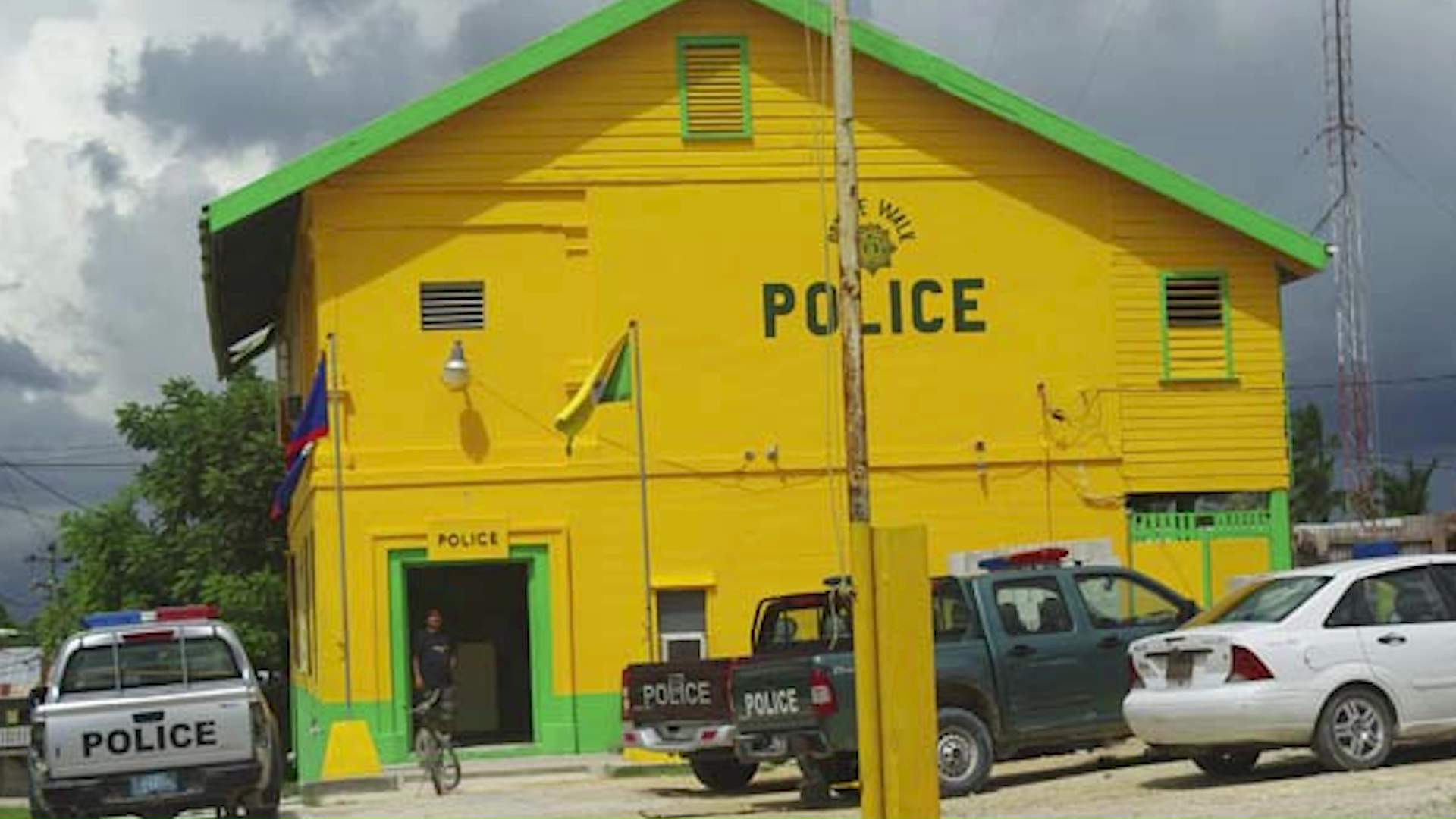
    A Belize City neighborhood remains in a state of distress following a violent incident that left three civilians wounded, prompting urgent calls for both community peace and law enforcement reform. The Tuesday night shooting in the Lake Independence area has exposed deepening tensions between residents and police authorities.

    Among the victims was sixty-year-old Julia Vialto, who sustained a gunshot wound to her heel while en route to religious services. Though now recovering at home, Vialto expressed ongoing apprehension about escalating criminal activity in her community. Two seventeen-year-old males were also caught in the crossfire, with one still undergoing medical treatment at Karl Heusner Memorial Hospital.

    The mother of the hospitalized teenager, Joyce Martinez, has become an outspoken advocate for change, articulating a dual crisis of neighborhood violence and perceived police misconduct. Martinez recounts the traumatic moments following the shooting, describing how she desperately attempted to contact her son after hearing gunfire nearby before rushing to the scene.

    Martinez’s concerns extend beyond the shooting itself to what she characterizes as persistent harassment by law enforcement. She alleges that police personnel have conducted daily searches of her property since the incident, often employing aggressive tactics and threatening language. According to her account, officers have ordered family members from their rooms during these operations and explicitly prohibited them from documenting the encounters.

    ‘They arrive without proper courtesy or explanation,’ Martinez stated. ‘They ransack our home repeatedly yet never produce any evidence of wrongdoing. Every time shooting occurs anywhere in the district, they come directly to my residence.’

    The distressed mother further claims that hospital authorities initially prevented her from visiting her wounded son, with police presence creating additional barriers during critical moments. Most notably, she emphasizes that despite frequent searches conducted over several months, officers have never discovered illicit materials on her property.

    As her son prepares for multiple surgical procedures in the coming days, Martinez continues to seek answers regarding both the unidentified shooter and the perceived targeting of her family by police. The Belize Police Department has not yet issued any official statements regarding the alleged conduct of its officers or provided updates on investigative progress. No arrests have been made in connection with the triple shooting, leaving a community awaiting justice and accountability.

  • Zach Reich Withdraws Complaint But is Matter Dead?

    Zach Reich Withdraws Complaint But is Matter Dead?

    In a surprising reversal, Zach Reich has formally withdrawn his criminal complaint against Harrison Blades, the driver for Minister Henry Charles Usher, whom he accused of brandishing a firearm during a weekend altercation. This development comes despite Reich’s previous public criticisms of police inaction and allegations of potential backroom dealings.

    However, the case remains far from closed. Belize law enforcement authorities maintain that any alleged public display of a firearm triggers an mandatory investigation, regardless of complainant withdrawal. The police are currently examining surveillance footage, station logs, and eyewitness accounts to determine whether criminal charges should be pursued independently.

    Adding a significant layer to the controversy, Reich alleges that an officer at the Belama Substation actively discouraged him from pursuing the complaint, suggesting it was “against his best interest” and raising serious concerns about procedural integrity. This allegation has prompted the Professional Standards Branch to initiate a separate internal investigation.

    Assistant Superintendent of Police Stacy Smith confirmed the dual investigations, stating, “We have tasked persons from the professional standards branch to reach out to Mr. Reich for his statement regarding being told by a particular police officer that his statement would not be processed. It can never be that a person goes to a police station for assistance and is left feeling more concerned about their safety.”

    The case unfolds against a backdrop of ongoing public scrutiny regarding police transparency and accountability in Belize, with this high-profile incident serving as a critical test of institutional integrity.

  • St. John’s Cathedral: 213 Years of Faith and History

    St. John’s Cathedral: 213 Years of Faith and History

    In Belize City, St. John’s Cathedral stands as a monumental testament to both faith and history, having weathered over two centuries of change since its construction in 1812. Built from ballast bricks transported from England, this architectural marvel represents the first Anglican place of worship in what was formerly British Honduras. Today, it functions as the mother church of the Anglican Diocese of Belize, offering profound insights into the nation’s colonial legacy and spiritual endurance.

    The cathedral’s construction involved enslaved laborers, with baptismal records confirming their church membership even prior to emancipation. Historical accounts reveal that these early congregants faced severe restrictions, prohibited from crossing an inner fence that demarcated where they could stand during services.

    Despite numerous challenges, including hurricane damage that destroyed all but one original pew (now reserved for the Governor General), the cathedral maintains its active religious role. Current members like Patrick Faber, with four decades of attendance, and tour guide Jacinta Garbutt emphasize that the building remains a vibrant center of worship rather than a museum. Regular services, educational programs with Anglican Cathedral College, and special ceremonies including weddings and funerals continue within its walls.

    The site holds unique historical significance as the only cathedral outside the United Kingdom where coronations occurred—specifically, four Mosquito Coast kings were crowned here during the mid-1800s. This extraordinary detail underscores the cathedral’s importance in regional history.

    Contemporary visitors, such as Cynthia Royce from California, frequently express admiration for both the preserved structure and the dedicated conservation efforts. Ongoing maintenance relies partially on visitor donations, ensuring that this cultural cornerstone continues to symbolize Belize’s spiritual identity while its bell still tolls twice daily, calling worshippers to prayer.

  • Prime Minister Briceno Hopes to Avoid Sugar Impasse

    Prime Minister Briceno Hopes to Avoid Sugar Impasse

    Prime Minister John Briceño has personally intervened to prevent a potentially devastating stalemate in Belize’s sugar industry as the critical harvesting season approaches. With no agreement yet reached between cane farmers and mill operators ahead of the December 16th deadline, the Prime Minister has assumed direct oversight of governmental operations within the sector.

    This strategic shift removes responsibility from former Agriculture Minister José Abelardo Mai, whom Briceño described as becoming ‘too emotionally entangled’ in the protracted disputes. The Prime Minister explained that Minister of State Osmond Martinez will now handle daily stakeholder engagements while he provides overall leadership.

    “I was consistently reminding him that he serves as minister for the entire industry, not just the Belize Sugar Cane Farmers Association (BSCFA),” Briceño stated regarding his former agriculture minister. “He must represent farmers, millers, and government interests equally.”

    Briceño characterized his own approach as bringing necessary temperament and neutrality to the negotiations. His administration recently convened a marathon multi-hour meeting involving all major stakeholders—BSCFA, SIRDI (another cane farmers association), the Ministries of Agriculture and Sugar, and mill representatives—to address pressing challenges.

    “Presently, tensions have eased as we actively advance the industry forward,” Briceño reported, emphasizing his hands-on involvement in stabilizing one of Belize’s most crucial economic sectors during this precarious period.

  • Labor Shortage Threatens Belize’s Sugar Industry

    Labor Shortage Threatens Belize’s Sugar Industry

    Belize’s vital sugar industry is confronting an existential labor crisis that threatens both economic stability and agricultural output. During the most recent harvest season, an alarming surplus exceeding one hundred thousand tons of sugarcane was abandoned to decompose in fields due to severe shortages of manual harvesters.

    While the sector is gradually adopting mechanical farming techniques, the persistent demand for human labor remains substantial. For decades, Belizean farmers have depended heavily on immigrant workers from neighboring Central American nations to fill this void. However, escalating operational expenses—particularly surging transportation costs and exorbitant work permit fees—are severely eroding already narrow profit margins.

    Marcos Osorio, Chairman of the Sugar Industry Control Board, emphasizes the necessity for structured collaboration with governmental authorities. “We require government assistance, but such support necessitates prior organization from our industry,” Osorio stated. He outlined a proposed systematic approach where the industry would identify specific labor deficits and present vetted candidate lists from countries like Guatemala and Honduras to streamline bureaucratic processes.

    The financial burden on farmers has intensified dramatically. Current border stamp fees have quadrupled from fifty to two hundred dollars monthly per worker, while work permit costs have risen from two hundred to three hundred dollars. Combined with transport expenses, importing a single cane cutter now costs approximately six hundred dollars solely in administrative fees.

    The reluctance of Belizean workers to engage in harvesting is attributed to two primary factors: inadequate compensation and extremely challenging working conditions. Laborers endure prolonged exposure to intense heat and airborne ash from burnt cane fields, with wages failing to provide sufficient incentive for such arduous work.

    This multifaceted crisis poses significant threats to one of Belize’s cornerstone economic sectors, demanding urgent intervention through policy reform and industry-wide coordination.

  • Middlesex Farmers’ 10-Year Fight for Road Access Hits Another Roadblock

    Middlesex Farmers’ 10-Year Fight for Road Access Hits Another Roadblock

    A protracted decade-long struggle by Middlesex farmers to secure reliable road access for their agricultural produce has encountered a significant new obstacle rooted in environmental concerns. The conflict centers on the Mae Johnson Road Extension, a community-built thoroughfare that represents the only viable route for local growers to transport crops to market.

    The dispute reached a critical juncture when the Ministry of Sustainable Development’s Department of Environment issued a stop order halting construction, despite villagers having invested over $36,000 and obtained proper surveying and authentication from the Lands Department three years prior. Community chairperson Britany Roches asserts that farmers meticulously followed all protocols, including installing culverts, implementing drainage systems, and protecting natural springs during construction.

    Environmental consultant Percival Cho, engaged by neighboring Silk Grass Farms, has raised substantial concerns regarding the road’s engineering feasibility. His assessment reveals a dangerously steep slope gradient between 32-35 degrees that poses both safety hazards and environmental risks. “These fragile, erodible soils when exposed to rain create wash-down effects that dig deep chasms into the road itself,” Cho explained, warning of potential mudslides that could compromise forest areas and water reserves serving nearby communities.

    The standoff has created an urgent situation for local agriculture, with thousands of pounds of fresh produce potentially spoiling during peak holiday season, threatening both food security and livelihoods. Farmers remain open to alternative solutions, including government acquisition of existing roads through Silk Grass Farms property, but emphasize the need for multiple access points to serve all village growers equitably.

    With construction halted midway up the slope and environmental assessments ongoing, the community awaits government intervention to develop a comprehensive solution that balances agricultural needs with environmental sustainability.

  • Motorcyclists Gear Up for Showdown Over New Rules

    Motorcyclists Gear Up for Showdown Over New Rules

    A significant confrontation is brewing in Belize as prominent activists Jose Luis Uc Espat and Sylvia Waight mobilize nationwide opposition against the government’s proposed motorcycle regulations. The organizers have called for a substantial protest demonstration scheduled to commence at Memorial Park at 2:00 PM on Sunday, December 21st, 2025.

    The controversial measures, proposed by the Ministry of Transport, mandate new training requirements that critics characterize as financially burdensome and unnecessary. Both organizers have vehemently rejected the policy, describing it as a monetary ‘hustle’ targeting citizens already struggling with economic pressures and rising gasoline costs.

    Uc Espat emphasized the practical realities facing ordinary Belizeans, stating: ‘A motorbike represents the primary transportation method for countless citizens. Instead of alleviating financial strain, the government introduces schemes that extract more money from people already facing difficulties meeting basic expenses.’

    Waight highlighted the socioeconomic dimension of the conflict, noting: ‘Motorcycles serve as the transportation backbone for average Belizeans. You will never encounter the children of wealthy elites or affluent foreigners navigating Belize’s roads on motorcycles—they operate luxury SUVs and Prados instead.’

    The activists have formulated specific counterproposals, suggesting integrating motorcycle training into existing testing procedures rather than imposing separate fees. They particularly criticized Minister Louis Zabaneh for remarks comparing the new costs to funeral expenses, demanding both policy changes and a formal apology for what they deemed deeply insensitive comments.

    Waight issued a direct appeal: ‘Minister Zabaneh, eliminate import duties on safety helmets and retract your statement comparing three hundred dollars to coffin prices. Your words proved profoundly offensive to the citizenry.’

  • Espat Stands Firm Despite Years of Threats

    Espat Stands Firm Despite Years of Threats

    In a bold declaration of principle, Belizean civic leader José Luis Uc Espat has publicly addressed years of sustained threats against his personal safety while maintaining his activist campaigns. The recent high-profile abduction and subsequent rescue of Joseph Budna prompted direct inquiries about whether Espat fears governmental reprisal for coordinating demonstrations and openly criticizing current leadership.

    Drawing a definitive distinction between his circumstances and Budna’s, Espat articulated an unshakeable stance during an impassioned address. He emphasized his transparent operations, educational background, and clean legal record—both domestically and internationally—as foundational to his fearlessness. “I leave every day alert,” Espat stated, directly addressing the nation and its officials, “but when they come for me, call ready because I will fight back.”

    The activist explicitly detailed his ethical standing, contrasting it with criminal activities he avoids: “I am not here robbing anybody. I’m not here scamming anybody. I’m not here doing drugs or trafficking the drugs.” This moral positioning forms the core of his resistance against intimidation tactics.

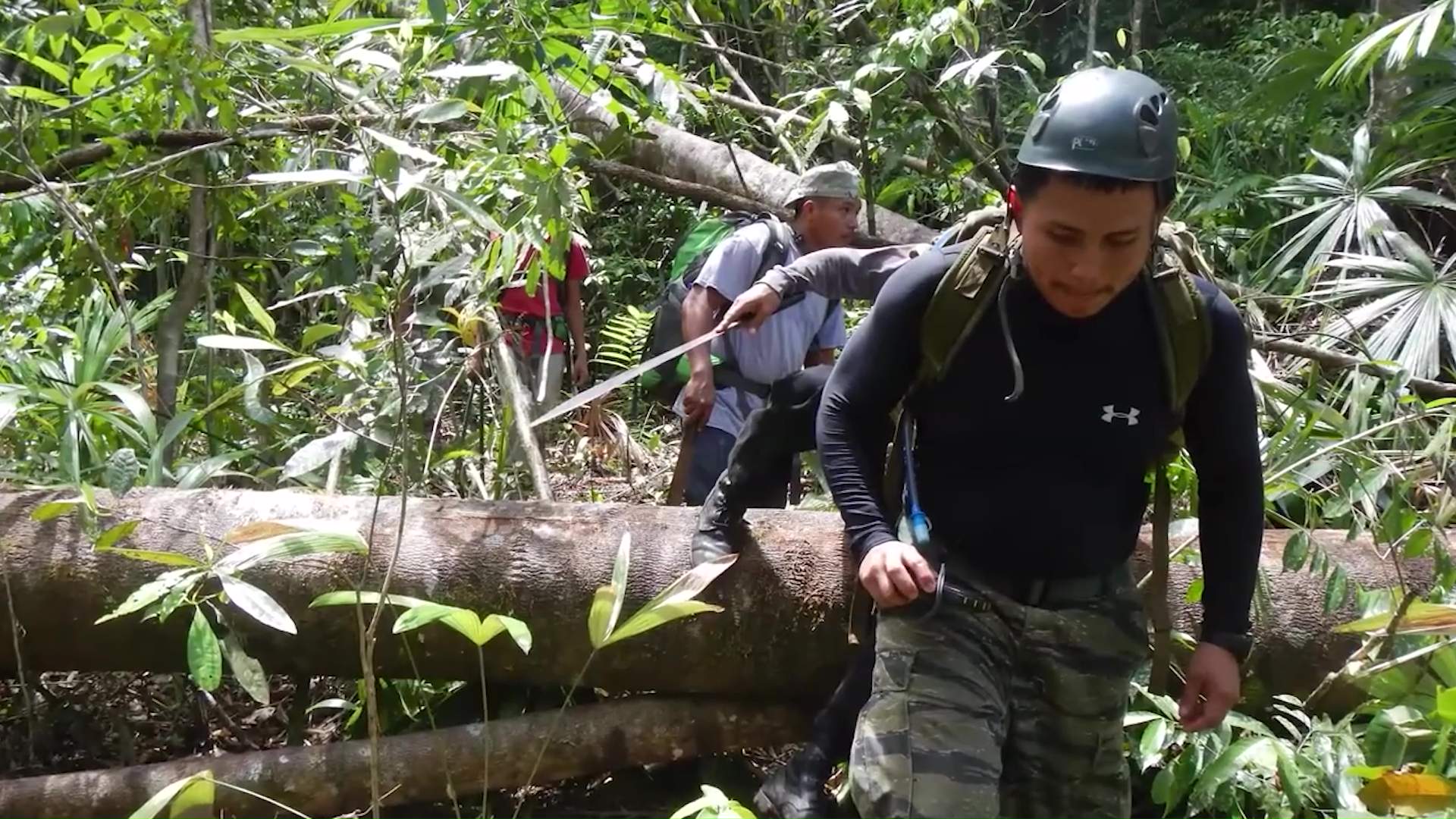
    Furthermore, Espat highlighted his hands-on humanitarian work, specifically his involvement in searches for missing persons—a effort he claims no sitting politician has joined. “I have invited all these politicians to come on the searches,” he revealed, “not one of them have come, not one has put on their boots and come and stand up for the people.” This absence of political solidarity underscores what Espat characterizes as a disconnect between leadership and grassroots advocacy in Belize.

  • Equal Opportunities and Equal Pay for Women Footballers

    Equal Opportunities and Equal Pay for Women Footballers

    Belize has embarked on a transformative journey to elevate women’s football through a comprehensive four-year strategic plan unveiled by the Football Federation of Belize (FFB). This groundbreaking initiative, developed through extensive consultations with stakeholders, aims to address historical disparities and create equal opportunities for female athletes nationwide.

    The strategic framework, formally presented by FFB President Sergio Chuc, represents a significant shift from fragmented approaches to a structured development pathway. The plan’s foundation rests on five critical pillars: grassroots and youth development, league and national team enhancement, capacity building for technical staff, promotion and visibility campaigns, and infrastructure modernization.

    Technical Director Philip Marin emphasized the comprehensive nature of the consultations, which engaged management teams, senior national team players, and football congress members. This collaborative approach ensured the strategy addressed systemic weaknesses while building sustainable development pipelines for future generations.

    The initiative receives substantial backing from FIFA, which provides guidance and access to thirteen specialized development programs for women’s football. Lorena Soto, FIFA’s Women’s Development Consultant, confirmed Belize’s eligibility for these resources, noting that the strategy’s adoption unlocks crucial funding and technical support mechanisms.

    A pressing issue addressed during the launch was equitable compensation for female athletes. President Chuc acknowledged the financial challenges, revealing that while female programs receive significantly less funding from confederations compared to male counterparts (approximately $25,000 versus $125,000), Belize has implemented equal payment structures for training sessions and travel accommodations over the past two years.

    This strategic overhaul positions Belize to enhance competitiveness in regional tournaments while attracting more young girls to the sport. With FIFA’s ongoing support and growing international momentum for gender equality in football, Belize’s women footballers stand at the threshold of unprecedented development and recognition.

  • Belize Still Buying More Than It Sells, Trade Deficit Rises

    Belize Still Buying More Than It Sells, Trade Deficit Rises

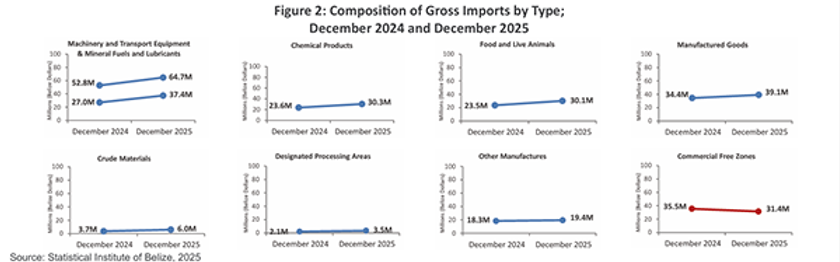
    New economic data reveals Belize’s persistent trade imbalance has intensified through October 2025, with the nation’s import dependency significantly overshadowing its export capabilities. The Statistical Institute of Belize reports the trade deficit expanded by $58 million compared to the previous year, highlighting structural challenges in the country’s economic framework.

    Despite a marginal reduction in import expenditure, which decreased by $17.1 million to $2.4 billion, the figure remains substantially higher than export earnings. The import portfolio continues to be dominated by essential machinery, mineral fuels, and manufactured goods—categories reflecting Belize’s industrial and consumer demands.

    On the export front, revenues experienced a more pronounced contraction, declining by $24 million to approximately $340 million. The agricultural sector maintained its dominant position, with sugar retaining its status as the primary export commodity despite facing market pressures. Banana exports followed closely, while marine products and cattle contributed notably to the overall export composition.

    Regionally, CARICOM member states remained the principal destination for Belizean goods, accounting for the largest share of export distribution. The United States and European Union markets followed respectively, demonstrating Belize’s diversified yet limited international trade partnerships.

    The widening trade gap underscores Belize’s structural economic challenges, particularly its heavy reliance on imported energy resources, industrial equipment, and consumer products. This imbalance persists despite efforts to strengthen export sectors, indicating deeper systemic issues that may require policy interventions to enhance domestic production capabilities and reduce foreign dependency.