
标签: Belize

伯利兹

  • Belize City Council Plans Quick Response to Sargassum Crisis

    Belize City Council Plans Quick Response to Sargassum Crisis

    In what local leaders describe as an unprecedented ecological and public health challenge, Belize City is racing to contain a massive seasonal sargassum bloom that has smothered large stretches of its coastline in recent weeks. What has long been a recurring seasonal nuisance has escalated into a crisis this year, with volumes of the drifting brown seaweed far exceeding any previous event the city has managed. The uninvited marine influx has already triggered widespread alarm over stagnant seaweed piles that emit foul odors, damage fragile coastal ecosystems, and create measurable public health risks for local communities and visitors.

    Mayor Bernard Wagner of Belize City confirmed in an interview with local outlet News Five on July 7, 2026, that municipal authorities have activated an urgent coordinated response alongside the national Department of the Environment (DOE) to stop the situation from deteriorating further. Speaking to reporters, Wagner emphasized that the crisis extends far beyond Belize City’s borders, framing the sargassum incursion as a nationwide issue that demands immediate, on-the-ground action rather than drawn-out long-term planning that would delay critical cleanup work.

    “This is a pressing problem right now, and we need to map out solutions for the short, medium, and long term all at once,” Wagner explained of the recent interagency brainstorming session focused on the crisis. “Our priority right now is immediate cleanup and mitigation. We can’t afford to get stuck planning for the far future while the coastline is covered. We need boots on the ground today.”

    To move the response forward quickly, the city council has deployed a technical team including the city planner, city engineer Floyd Williams, and the municipal works director to conduct an immediate on-site assessment of the sargassum volume and spread across affected coastal areas. The team is tasked with developing a short-term removal plan that outlines what heavy machinery and hauling trucks will be required to clear the shoreline. That assessment will then be sent back to city leadership to secure the necessary equipment and launch cleanup operations.

    Meanwhile, the city’s Chief Emergency Management Officer coordinator Melanie has already coordinated with the DOE to identify a proper disposal site for the harvested seaweed. Per DOE guidance, the designated municipal waste management facility has been selected as the most appropriate location for permanent disposal to avoid secondary environmental contamination.

    Wagner stressed that the Belize City Council’s core immediate goal is to shift rapidly from assessment and planning to active mitigation, with hopes of clearing affected shorelines before the sargassum bloom expands and worsens in the coming weeks.

  • CARICOM Power Struggle Heads to the Region’s Highest Court

    CARICOM Power Struggle Heads to the Region’s Highest Court

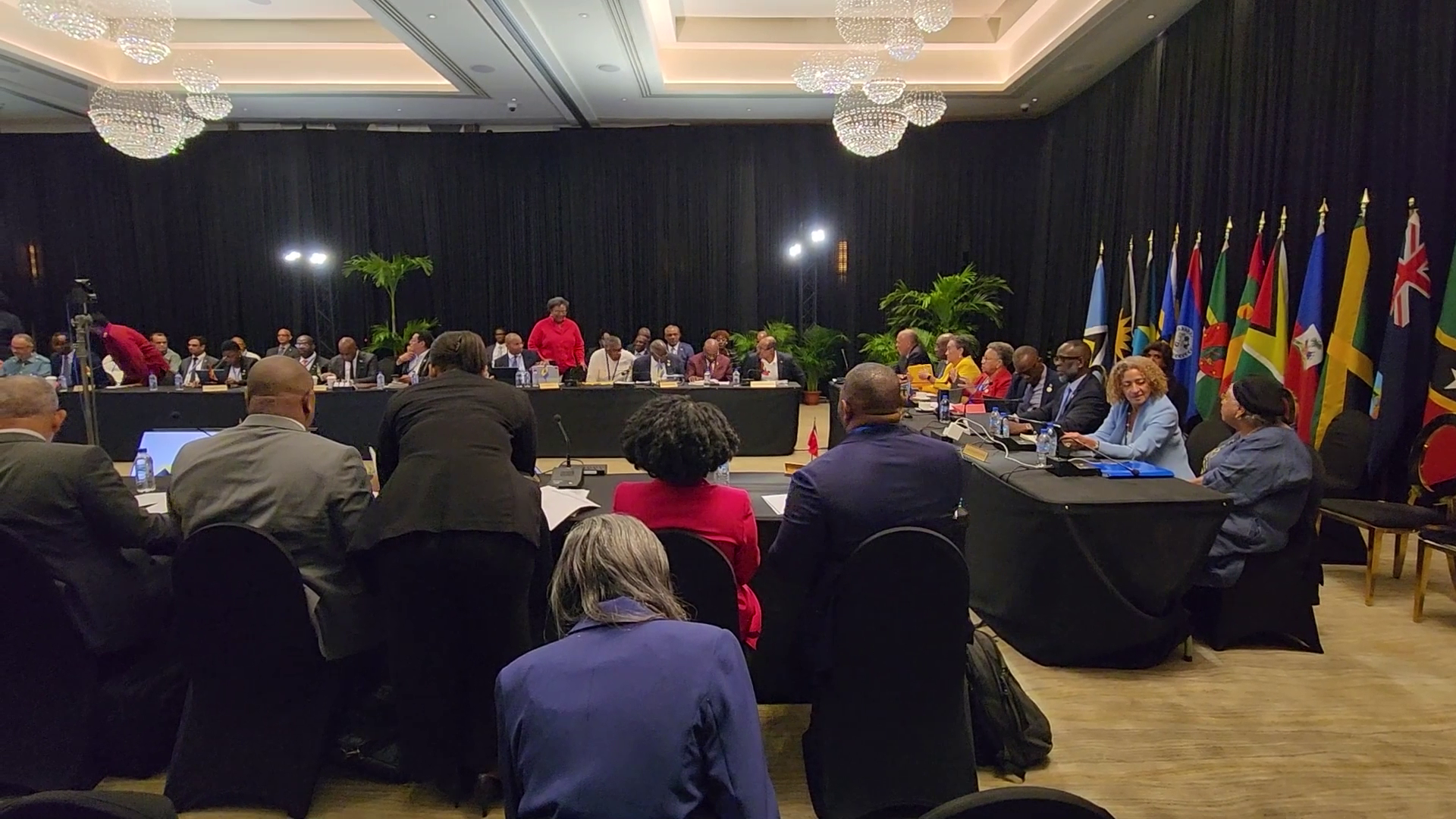
    A months-long leadership dispute within the Caribbean Community (CARICOM) has reached a critical turning point, with regional leaders agreeing to refer the conflict over the reappointment of the bloc’s secretary-general to the Caribbean Court of Justice (CCJ) for an official advisory opinion. The standoff centers on formal objections raised by Trinidad and Tobago, which has repeatedly challenged the legitimacy of the process through which the sitting secretary-general secured a new term. The issue was brought to the forefront at a special retreat of CARICOM Heads of Government held on Monday, where regional leaders unanimously agreed to grant Trinidad and Tobago’s request to have the CCJ weigh in on the procedure in alignment with the Revised Treaty of Chaguaramas, the foundational legal document governing the 15-nation bloc. Until the court issues its formal ruling and the community considers its opinion, the existing arrangement for the secretary-general will remain in place, maintaining the status quo to avoid disruption to ongoing regional operations. Regional leaders have emphasized that the decision to involve the CCJ is not a sign of deep division within the bloc, but rather a deliberate effort to resolve the disagreement through peaceful, legal channels. They also noted that the move serves to reinforce the core mandate of the CCJ, which was established specifically to provide authoritative interpretations of CARICOM’s governing treaty and uphold the rule of law across the region. In public statements following the retreat, leaders stressed that the dispute is not an attack on any individual member state or the incumbent secretary-general, but instead forms part of a broader, long-running initiative to strengthen institutional governance and transparency across the entire CARICOM community. This development comes amid growing calls from regional civil society groups for clearer, more consistent processes for senior appointments within CARICOM’s institutional structure, as the bloc works to advance coordinated policy on climate resilience, economic integration, and cross-border security. Regional correspondent Peter Richards reported the latest developments from Castries, St. Lucia, on the evening of July 7, 2026.

  • Oscar Arnold Weighs In on Carla Barnett Developments

    Oscar Arnold Weighs In on Carla Barnett Developments

    As the 2026 CARICOM Heads of Government Conference gets underway in Saint Lucia, a simmering internal dispute over the reappointment of CARICOM Secretary General Dr. Carla Barnett has avoided derailing the regional summit, after leaders agreed to a mediated path forward to resolve the impasse. Oscar Arnold, Chief Executive Officer of Belize’s Ministry of Foreign Affairs, who is present at the gathering, shared new details of the behind-the-scenes negotiations that produced a compromise on the issue. The conflict emerged after the government of Trinidad and Tobago raised formal objections to the procedural process that was followed to advance Dr. Barnett’s reappointment, creating a rift among member states in the weeks leading up to the annual summit. Widespread speculation emerged ahead of the opening of the meeting that the disagreement would overshadow other key regional agenda items and disrupt summit proceedings, putting leaders in a position to find a swift, durable resolution. Following an extended six to seven hour closed-door retreat for heads of member states, the bloc reached a unanimous agreement on a way forward: the Caribbean Court of Justice (CCJ) will be called on to deliver an official advisory opinion on the legality and process of Dr. Barnett’s reappointment. Under the terms of the compromise, the status quo will remain in place until the CCJ issues its ruling. That means Dr. Barnett will continue to carry out her duties as Secretary General throughout the review period, even if the opinion process extends beyond the expiration of her current contract. Arnold confirmed that the arrangement will hold until the court’s guidance is received, at which point CARICOM heads will reconvene to review the opinion and make a final, binding decision on the leadership post. Arnold noted that attending heads of government universally agreed that this approach is the most prudent and effective way to bring the dispute to a fair, conclusive end, preserving unity within the regional bloc while addressing the procedural concerns raised by Trinidad and Tobago. This report is adapted from a transcript of a televised evening news broadcast.

  • BEEP Awards 22 Small Businesses $5000

    BEEP Awards 22 Small Businesses $5000

    On July 7, 2026, 22 emerging small business entrepreneurs across Belize walked away with transformative $5,000 grants each at the closing cohort ceremony of the Belize Enterprise Empowerment Project (BEEP), a nationwide initiative designed to fuel growth for local maturing enterprises.

    Hosted on the morning of the ceremony by the Belize Trade and Investment Development Service (BELTRAIDE), in formal partnership with the CARICOM Development Fund, the program combines targeted business training with seed capital investment to help small, locally owned businesses scale their operations and expand their market reach across the country. This cohort’s successful grant recipients represent a diverse cross-section of Belize’s private sector, spanning everything from sustainable agriculture and local food processing to hospitality and tourism, creative content services, and digital marketing.

    Ishmael Quiroz, Executive Director of BELTRAIDE, walked attendees through the program’s rigorous competitive selection process. The initiative drew 127 initial applicant businesses, he explained, with eligibility hinging on the submission of a complete, high-quality business proposal. From the initial pool, just 30 ventures were shortlisted to move forward and participate in the program’s comprehensive structured business training curriculum. To advance to the final grant pitching stage, participating entrepreneurs were required to complete a minimum of 80% of the training coursework.

    From that group of 30 trained candidates, 22 ultimately won the grant awards after successfully presenting their business plans to an independent evaluation panel, which assessed each venture based on viability, innovative potential, and long-term prospects for growth. “Twenty-two were successful in completing the program and in successfully pitching and convincing the evaluation panel that their business was viable, innovative, and stood a good chance of success,” Quiroz confirmed during the ceremony.

    For recipients like Darlon Usher, the grant represents a pivotal turning point for his growing enterprise. “This is definitely a major step for me and my business in that it provides and allows me to provide better, quality service for my clients,” Usher said. “I’m able to expand my equipment and in doing so, I’m able to provide more services for the clients.”

    Fellow recipient Dawn Humes noted that while the application and training process was rigorous, it delivered lasting value beyond the financial grant. “I have to say the process was a little vigorous, right? We got to learn about the business from the beginning to the end, which is a good thing. And one thing I could say that each of us know now how to manage and how the steps it will take for us to have a prosperous business,” Humes explained.

    Quiroz added that the program is structured to support long-term success, not just one-time funding. The $5,000 grants are disbursed in two separate disbursement phases, paired with ongoing monitoring from BELTRAIDE to ensure the funds are used accountably and that recipients continue to receive the guidance they need to sustain growth after the award. This online report is a transcript of a television evening newscast, with Kriol language comments standardized using an official spelling system for accessibility.

  • One Dollar Turns to Five Thousand with Scratch and Win Ticket

    One Dollar Turns to Five Thousand with Scratch and Win Ticket

    On a routine mid-afternoon work break in Belmopan, a casual, low-stakes purchase has turned into a life-brightening windfall for a local resident, who walked away with a $5,000 top prize from a $1 Scratch-and-Win ticket bought at the city’s Triple A Supermarket.

    In an exclusive interview with local outlet News Five, the anonymous winner shared the full story of his unexpected stroke of luck, which has already turned his 2026 summer into a far more exciting season. The win unfolded on July 6, 2026, when at approximately 3 p.m., the winner sent one of his colleagues to the nearby supermarket to pick up the $1 ticket during their team’s scheduled break. On the walk back from the store, the colleague decided to scratch off the ticket’s coating right away, a spontaneous choice that revealed the life-changing prize.

    “When he told me I’d won five thousand dollars, I thought he was pulling my leg,” the winner recalled of the moment. “I said, ‘No way, that can’t be right.’ We immediately ran back to the supermarket to confirm with the store owner, and that’s when we got the official news that it was real – one dollar turned into five thousand dollars. It was just… whoa. That’s incredible.”

    Unlike frequent lottery players who invest heavily in regular tickets, the winner says he only participates occasionally. He has been purchasing the occasional Scratch-and-Win ticket for more than a year, picking up just one ticket roughly every two weeks, with no history of large wins before this. When asked if he would encourage other people to try the game, he struck a balanced note: he supports playing occasionally, but warned against developing a regular, costly habit.

    “As I said, I don’t buy them often,” he explained. “This was just a lucky, on-a-whim purchase. It’s fine to try every now and then, but you shouldn’t make a habit out of it.”

    As of the interview, the winner has not yet made a final decision on how he will spend his $5,000 windfall, but he says he is already thrilled to have the unexpected extra cash on hand. This report is a transcript of an evening television broadcast, with Kriol language phrases adapted to standard English spelling for clarity.

  • Nine Years, No Water: Who’s Actually Responsible for Fresh Pond?

    Nine Years, No Water: Who’s Actually Responsible for Fresh Pond?

    For nearly a decade, 30 residents of Belize’s small Fresh Pond community in Burrell Boom have navigated daily life without a single drop of running water to their homes. What should be a basic human necessity has become a constant struggle, with locals forced to rely on haphazard, inconsistent sources to meet even their most basic drinking, cooking, and hygiene needs. Rainwater catchment, occasional donated water supplies, and costly private water deliveries are the only options these families have had to survive year after year.

    Residents recount that they have spent years lodging formal appeals with every level of local authority they can reach: the Burrell Boom village council, national government representatives, and Belize’s main water utility, Belize Water Services Limited (BWSL). Despite repeated promises that a permanent piped water system was in the works and would be delivered imminently, none of these appeals have resulted in tangible action, leaving the community’s crisis unresolved.

    Nayda Escobar, a long-time Fresh Pond resident, described the community’s daily reality in an interview, noting that local reliance falls almost entirely on the generosity of one nearby property owner. “There is only one neighbour that’s been giving us water here for these couple years… He’s the one that’s been giving us the big hand here to everyone, but there are a few families here that have been coming to live and build here, but they go because of the same situation. We don’t have any water,” Escobar explained. She added that the entire community remains united in one simple demand: the installation of a formal, functioning water system that meets their basic needs.

    Another resident highlighted that the hardship intensifies dramatically during Belize’s annual dry season, when rainfall dries up entirely and private water deliveries become even more costly and harder to schedule. What makes this ongoing crisis even more frustrating for residents, they say, is that the community is caught in a confusing jurisdictional dead zone that no government agency or utility will claim responsibility for.

    Locals explain that BWSL considers the community too remote and sparsely populated to justify extending its urban-focused water network, while the Ministry of Rural Transformation does not classify Fresh Pond as sufficiently rural to qualify for its rural development water programs. This bureaucratic limbo has left the community stranded, even as new housing and commercial developments just a short distance away receive full, government-supported water access.

    The community was originally given a firm timeline for the water system: officials promised the project would be fully completed by December 2023. But when that deadline passed, residents say they received no updates, no explanations, and no new timeline. Escobar noted that residents have continued to follow up repeatedly with officials, who only offer vague assurances that they will attempt to arrange temporary water access, with no results to date. After nine years of unmet promises, Escobar says the entire community has grown exhausted of the constant struggle and unfulfilled commitments.

    Local news outlet News Five has reached out to BWSL to request an official comment on the community’s allegations and the ongoing status of the proposed water project. Full additional details from that inquiry, along with extended interviews with residents and responses from relevant government agencies, will be featured during tonight’s 6 PM broadcast of News 5 Live.

  • UN Chief Sounds Alarm as AI Outpaces Global Safeguards

    UN Chief Sounds Alarm as AI Outpaces Global Safeguards

    On July 7, 2026, United Nations Secretary-General António Guterres delivered a stark wake-up call to the global community at the opening of the first-ever UN Global Dialogue on AI Governance held in Geneva, warning that artificial intelligence innovation is racing far ahead of the ability of national governments to put in place effective regulatory guardrails. With the transformative power of AI already reshaping nearly every corner of modern life—from reconfiguring global economies and upending labor markets to swaying democratic election outcomes and reshaping international security—Guterres emphasized that the technology is being widely deployed without the robust, coordinated oversight it demands.

    In his keynote address to delegates representing governments, leading tech firms, and independent research institutions, Guterres stressed a core principle: innovation cannot thrive without clear safeguards. “If AI is to be powerful, it must be governed,” he told attendees, framing urgent global action as non-negotiable to prevent widespread, irreversible harm from unregulated AI systems.

    A central priority of Guterres’ address was protecting vulnerable youth populations, a group he noted has been exposed to untested AI without any comparable safety requirements that apply to other products designed for children. Drawing a comparison to long-established consumer protections, he pointed out that new medications and children’s toys are rigorously tested for safety before reaching young users, but unregulated AI has been integrated into children’s daily lives with no pre-deployment safety checks.

    To close this gap, Guterres proposed the creation of an AI Child Safety Pledge, which would mandate that technology companies verify their AI systems meet strict safety standards before making the tools accessible to minors. The pledge would also require binding safeguards to block AI from generating non-consensual sexually explicit imagery of children, and obligate developers to build systems capable of detecting when a child is in emotional distress and routing them to trained human support providers.

    The two-day UN dialogue, which brings together a diverse cross-section of AI governance stakeholders, does not aim to finalize a binding international treaty in this first session. Instead, delegates will gather to review the landmark first independent global scientific assessment of AI risks and gaps, compiled by a UN-backed expert panel composed of 40 leading researchers from around the world.

    Key findings from the upcoming assessment reveal a stark imbalance in global AI development capacity. Currently, the United States controls approximately 75 percent of the total computing power that powers the world’s top 500 AI supercomputers, while China holds an additional 15 percent, leaving just 10 percent distributed across the rest of the globe. The report also sounds the alarm over a growing global AI divide, warning that most low- and middle-income developing countries are falling far behind in AI adoption, and lack meaningful representation or influence in shaping the future trajectory of the technology.

    While Guterres acknowledged that artificial intelligence carries enormous transformative potential to drive progress in critical sectors including global healthcare, accessible education, and climate action, he closed by stressing that time is running out for coordinated global action. He urged nations to move quickly to establish harmonized global AI standards before the pace of technological innovation outstrips human ability to oversee and steer its development toward collective benefit.

  • “$1 Turned Into $5,000”, Says Latest Winner of Scratch and Win

    “$1 Turned Into $5,000”, Says Latest Winner of Scratch and Win

    An ordinary work break in Belmopan turned into a life-changing moment of luck for a local man, who walked away with a $5,000 grand prize from a $1 scratch-and-win lottery ticket, in what has become a feel-good story of unexpected good fortune.

    The winner, who prefers to keep his identity private, shared his experience with local outlet News 5, recalling that the spontaneous win came about when he sent one of his employees to pick up the ticket during the crew’s mid-shift break around 3 p.m. the day before the announcement. When the worker made his way back from the retail outlet, he decided to scratch off the ticket’s coating on a whim, after getting the go-ahead from his employer. It was then that he spotted the winning combination, immediately calling out the surprising news to his boss.

    “I was completely shocked – I said, ‘You’re kidding me, right?’” the winner recalled in his interview. Still disbelieving of the sudden windfall, he rushed back to the retail location where the ticket was sold to confirm the win with the store staff, still reeling from the fact that a $1 impulse purchase had netted him 5,000 dollars. “It still doesn’t feel quite real – it’s just amazing,” he added.

    As of the public announcement of the win, the lucky Belmopan resident has not yet settled on how he will use the unexpected prize money. Despite his big win, he is quick to offer a measured piece of advice to casual lottery players: he does not encourage frequent or habitual lottery play, but notes that an occasional flutter can bring a little excitement and just might pay off. For context, the winner shared that he is not a regular lottery buyer, making this spontaneous purchase an extraordinary stroke of luck that he never saw coming.

    The winning $1 ticket was confirmed to have been purchased at a retail location in Belmopan, marking the city’s latest unexpected lottery success story.

  • Che Brothers Found Guilty of Attempting to Murder Man

    Che Brothers Found Guilty of Attempting to Murder Man

    Nearly five years after a brutal late-night home attack left a Belizean man permanently disabled, a Supreme Court justice has delivered a guilty verdict in one of the country’s high-profile violent crime cases. On Monday, Justice Natalie Creary-Dixon found Toledo District residents Orville Che and Fredrick Che guilty of attempted murder for the early morning assault on Alanberto Teul in Silver Creek Village on May 9, 2021.

    Court documents outline a premeditated attack rooted in longstanding local tension. The violence began just before 11:30 p.m. on May 8, when an unidentified person knocked loudly on Teul’s front door calling his name. Teul, assuming the visitor was his own brother, opened the door and was immediately rushed by two armed assailants who used a machete, a wooden stick, and a claw hammer to inflict life-threatening damage. The victim’s then-14-year-old son, Edvin Teul, who was in the home at the time, intervened to stop the attack and suffered a hand wound and blunt force trauma from the hammer when he was struck by one of the brothers.

    In a testimony that would become the backbone of the prosecution’s case, Edvin confirmed he had no trouble identifying both attackers, as he had grown up in the same small community and was familiar with both men. Even though one of the brothers briefly wore a face covering during the attack, Edvin told the court the home’s interior lighting was bright enough for him to clearly see both men’s faces, confirming Fredrick Che carried the machete that inflicted the worst injuries, while Orville Che wielded the wooden stick.

    Law enforcement moved quickly to apprehend the suspects, arresting both brothers less than 24 hours after the attack at a residence in nearby Big Falls Village. Officers recovered key physical evidence from the arrest site, including a damp camouflage outfit, rubber work boots matching descriptions from the scene, and the yellow-and-black hammer used to strike the victim and his son.

    Medical testimony during the trial painted a grim picture of the long-term harm caused by the attack. Treating physicians confirmed Teul suffered a catastrophic skull fracture that exposed brain tissue, requiring emergency surgery and an urgent blood transfusion to save his life. Subsequent medical evaluations confirmed Teul has been left with permanent brain damage, partial paralysis, and chronic seizure disorder; he now relies on a wheelchair for most mobility and is unable to work or live independently.

    Due to Teul’s severe cognitive impairments from the attack, the court allowed a statement he gave to investigators three months after the incident to be entered into evidence, though Justice Creary-Dixon ultimately assigned little weight to the document, noting Teul may not have been coherent enough to provide a full, accurate account of the attack so soon after his injury. Instead, the guilty verdict rested almost entirely on Edvin’s eyewitness account, which the judge praised as consistently credible and unwavering even through intense cross-examination by the defense.

    The legal team for the Che brothers attempted to argue the pair were asleep at their home during the timeframe of the attack, presenting an alibi witness to support their claim. However, the witness was unable to definitively confirm the brothers’ whereabouts during the specific hours of the assault, leading the judge to reject the entire defense narrative.

    During the trial, prosecutors and legal observers pointed to a potential motive tied to local folklore: the attack took place on Mother’s Day 2021, and witnesses raised unconfirmed claims that Teul had been accused of practicing obeah, a Caribbean traditional spiritual practice, against the brothers’ recently deceased mother. The judge referenced this context in her verdict notes.

    Sentencing for Orville and Fredrick Che has been scheduled for a separate upcoming hearing, and no further details on the hearing date have been released to the public as of press time.

  • High Court Rejects Bulk of Businessman’s Claims Against Police

    High Court Rejects Bulk of Businessman’s Claims Against Police

    In a recent judicial ruling that clarifies procedural boundaries for civil claims against law enforcement in Belize, a High Court justice has thrown out nearly all of a prominent businessman’s sweeping lawsuit against the country’s police force, which alleged unlawful detention, physical assault, and years of systematic extortion. The decision, delivered by Justice Rajiv Goonetilleke in late June 2026, centers on a case brought by Omar Avelar against both the Commissioner of Police and the Attorney General of Belize.

    Avelar first submitted his formal claim to the court on February 9, 2026, more than 20 months after the incident that forms the core of his most serious allegations. The events in question date back to May 5, 2024, when Avelar was arrested and charged with three criminal offenses: failing to provide a breath or blood specimen for impaired driving testing, possession of a firearm while intoxicated, and possession of a loaded pistol containing 18 rounds of ammunition. In his civil claim, Avelar alleged that the arrest and detention were unlawful from the start. He further detailed claims of excessive force during the encounter, stating that officers choked him, stomped on his chest, left him with bruising and a split lip, and that his wallet and iPhone were never returned after the arrest.

    Beyond the 2024 arrest, Avelar’s claim outlined a years-long pattern of targeted harassment and extortion by members of the police force stretching back to 2021. He specifically alleged that two named officers extorted BZD $1,200 from him via check in June 2021. He also added four additional claims of extortion: unspecified officers extorted BZD $800, BZD $650, and BZD $1,500 from him and his family members on unrecorded dates, for a total of five alleged extortion incidents. In total, Avelar sought BZD $193,250 in special damages, plus additional general damages to compensate for the emotional distress and diminished quality of life he claimed resulted from the alleged police misconduct.

    Lawyers for the Commissioner of Police and the Attorney General moved to have the entire claim struck from the court docket immediately, advancing two core procedural arguments. First, they noted that Belize law imposes a strict one-year limitation period for all civil actions brought against public officials acting in their official capacity, and Avelar had filed his claim far outside that window. Second, they argued that the majority of the extortion allegations were too vague and lacked the specific factual details required to meet the court’s pleading standards, making it impossible for the defense to prepare a proper response.

    In his carefully structured ruling, Justice Goonetilleke split Avelar’s claims into two distinct groups to address each set of arguments separately. For the first group—covering the 2024 arrest, unlawful detention charges, alleged assault, and lost property—the justice ruled that all claims were unequivocally time-barred under existing law. Citing Section 27 of Belize’s Limitation Act, he noted that all claims against public officials acting in the course of their official duties must be filed within 12 months of the incident. He rejected Avelar’s legal argument that the alleged misconduct should be classified as an ongoing wrong that extends the limitation period, ruling that the cause of action was fully crystallized on the date of the 2024 arrest.

    For the second group of claims, the extortion allegations dating back to 2021, the ruling produced a mixed outcome. All but one of the extortion claims were struck down: Justice Goonetilleke ruled that allegations involving unnamed officers and unspecified dates of extortion failed to meet the standards laid out in Civil Procedure Rule 8.7(1), which requires claimants to clearly lay out all specific facts supporting their claims. These vague allegations were therefore struck from the record.

    However, one specific allegation survived both legal challenges: the 2021 extortion claim naming two individual officers, a confirmed date of the offense, and a specific amount of money extorted. Justice Goonetilleke ruled that this claim contained all the specific factual detail required by pleading rules. On the limitation issue, he further reasoned that extortion—unlike official police action taken under color of law—does not qualify as an act carried out in the execution of statutory or public duty. As such, it falls outside the scope of the one-year limitation protection that applies to official conduct. To support this reasoning, he cited a prior Privy Council decision holding that legal protections for public authorities must be interpreted narrowly, and only apply to official obligations owed to the general public, not to criminal conduct that could occur between any two private individuals.

    As part of the ruling’s next steps, the defendants have been ordered to submit their formal defense to the remaining single claim by July 9, 2026, and Avelar has been granted leave to file his reply by July 24. A further case management hearing is scheduled for July 29 to set the timeline for any future trial. The justice also ordered that Avelar is responsible for covering all legal costs stemming from the successful strike-out application, with the total amount to be agreed by both parties or assessed by the court if no agreement is reached.