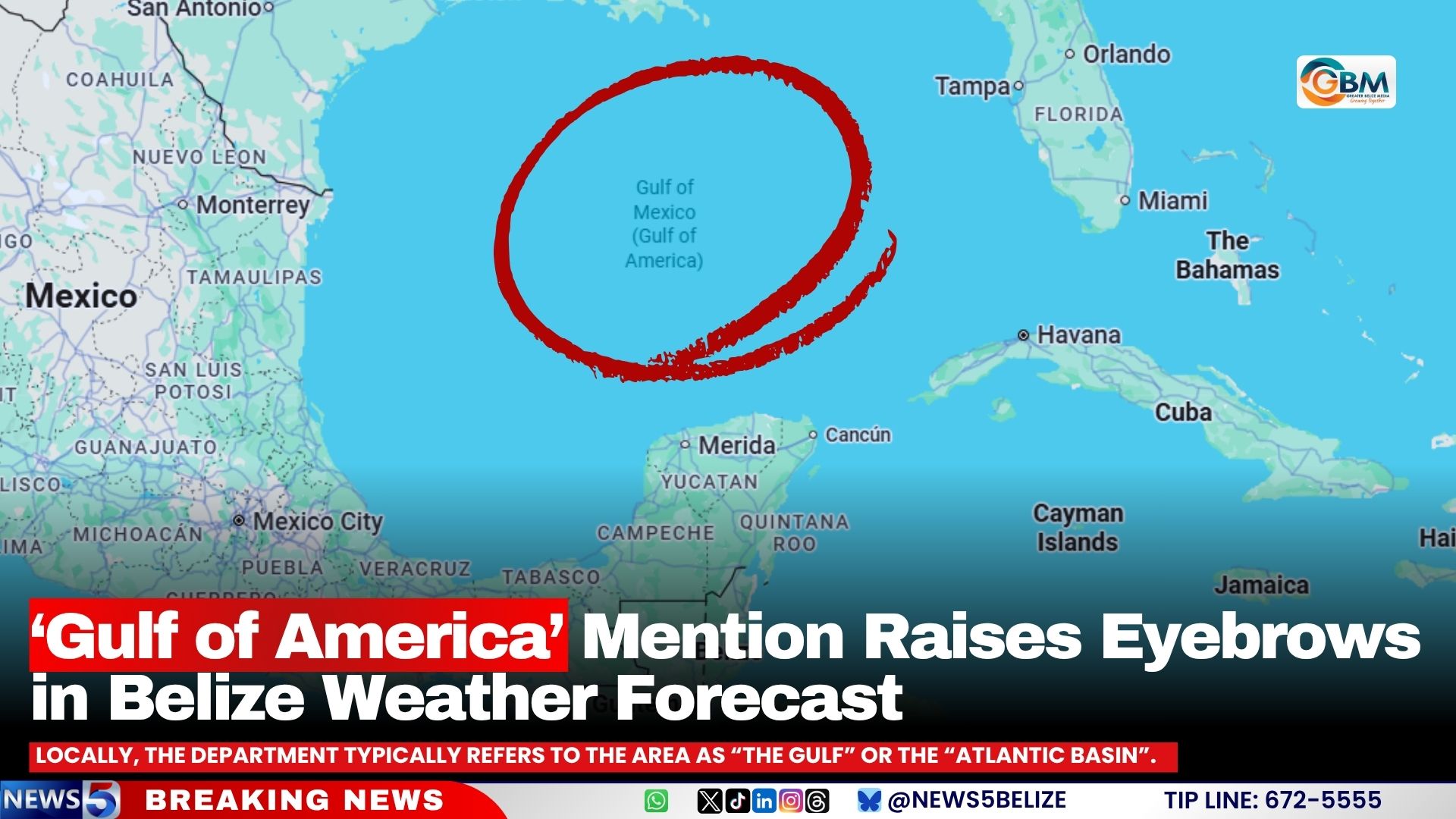
A recent national weather forecast in Belize has stirred controversy after the National Meteorological Service referred to the body of water off the country’s coast as the ‘Gulf of America,’ a departure from the widely recognized ‘Gulf of Mexico.’ The unexpected terminology caught the attention of listeners, prompting inquiries into its origin. A spokesperson from the Met Service clarified that the term was likely sourced from materials provided by the U.S. National Hurricane Center in Miami. Locally, the area is commonly referred to as ‘the Gulf’ or the ‘Atlantic basin,’ with no internal policy mandating the use of ‘Gulf of America.’ The spokesperson noted that naming conventions fall under the jurisdiction of Belize’s Ministry of Foreign Affairs. The term ‘Gulf of America’ has gained traction in the United States following an executive order signed earlier this year by President Donald Trump, instructing federal agencies to adopt the name in official communications. However, the change has not been widely accepted internationally. Countries such as Mexico and Caribbean nations, along with global organizations, continue to use ‘Gulf of Mexico.’ Digital platforms like Google Maps now display ‘Gulf of America’ for U.S.-based users, while Mexican users still see the traditional name. Most international maps and weather services have retained the original designation, highlighting the ongoing debate over the renaming.
标签: Belize
伯利兹
-
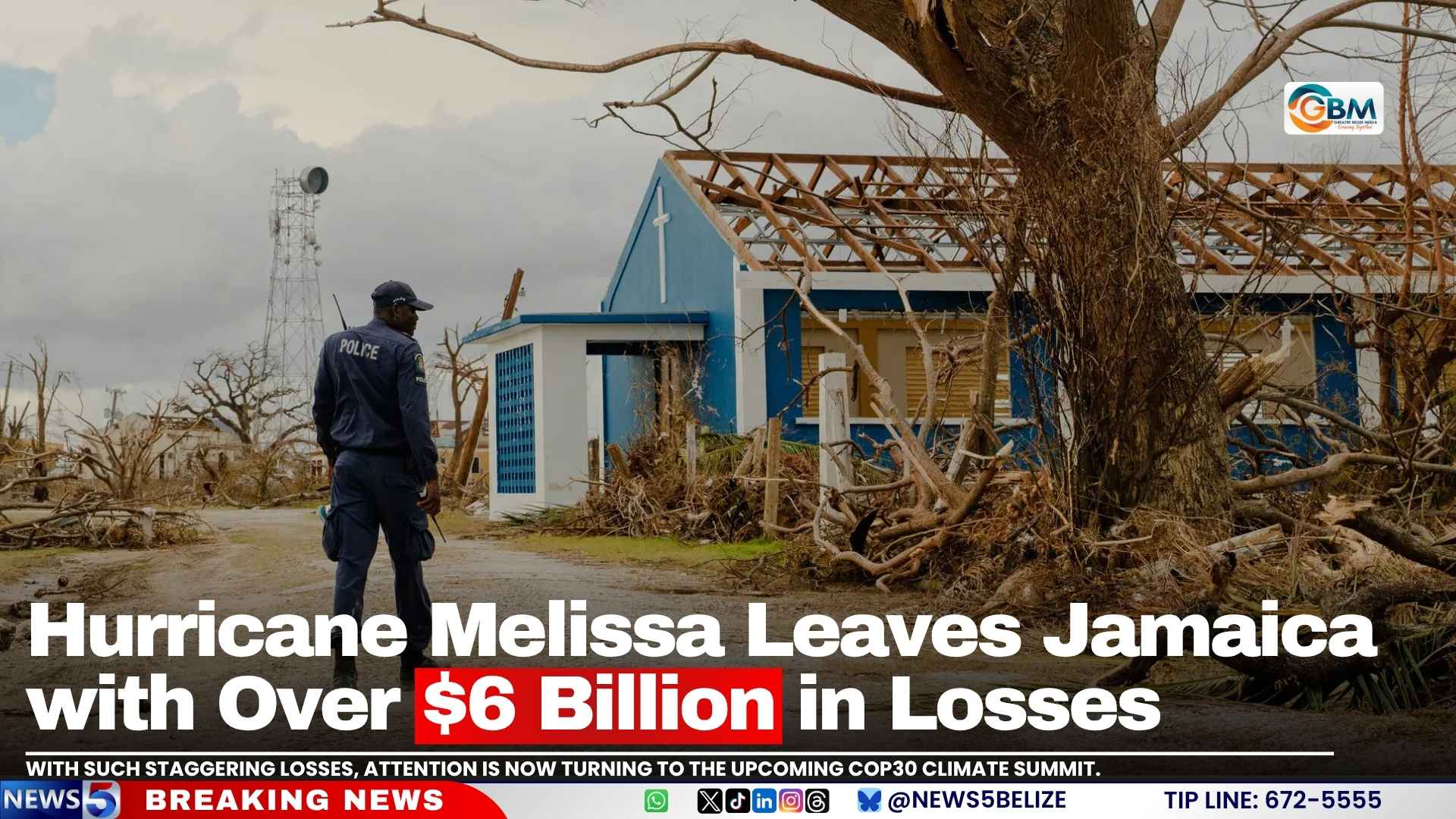
Hurricane Melissa Leaves Jamaica with Over $6 Billion in Losses
Jamaica is grappling with unprecedented economic devastation following Hurricane Melissa, which struck the island on October 28, 2025. The Category 4 storm ravaged the nation’s most productive regions, leaving a trail of destruction estimated at $6 to $7 billion—equivalent to nearly 30% of Jamaica’s GDP. Prime Minister Andrew Holness described the catastrophe as a dual crisis, impacting both humanitarian needs and economic stability. Key industries such as agriculture, tourism, and small businesses were among the hardest hit, with thousands of homes destroyed and critical infrastructure severely damaged. The storm’s impact has reignited urgent calls for global climate action, particularly as Jamaica and other developing nations—despite contributing minimally to global emissions—bear the brunt of climate-related disasters. As the international community prepares for COP30, the devastation in Jamaica underscores the dire consequences of inaction and the pressing need for accountability, funding, and sustainable solutions.
-

New Rules for Mailing to the U.S.
Starting November 2025, individuals and businesses in Belize planning to send packages to the United States must adhere to a new customs declaration process. The Belize Postal Service has introduced the Customs Declaration System (CDS), requiring all senders to complete a detailed form before mailing goods to the U.S. This change follows the U.S. government’s Executive Order 14324, issued in July 2025, which eliminated the “duty-free de minimis” rule that previously allowed goods valued under $800 to enter the U.S. tax-free. Now, every package must declare its contents, value, and country of origin, and all are subject to applicable tariffs. To ensure public compliance, the Belize Postal Service has launched a nationwide roadshow to educate customers on the updated requirements. The CDS, developed by the Universal Postal Union, enables electronic transmission of customs data to U.S. Customs and Border Protection. While Belize temporarily suspended U.S. mail services to align with the new regulations, officials anticipate resuming shipments by the end of November. Importantly, regular postage fees remain unchanged, with only the added customs duties mandated by the U.S. government. These duties are calculated based on the item’s origin and the corresponding tariff rate, payable at the time of shipment.
-

Belize Sees 45 Arrivals Since CARICOM’s Free Movement Began
Belize has witnessed a significant milestone in regional integration as 45 Caribbean nationals have arrived in the country since the implementation of the CARICOM Free Movement Agreement. The agreement, which came into effect on October 1, 2025, allows citizens of Barbados, Dominica, and St. Vincent and the Grenadines to live, work, and travel freely within Belize. Over the past month, the majority of arrivals have been for short-term purposes such as business, tourism, sports, and diplomacy, while two individuals have opted to stay for employment opportunities. Barbados leads with 34 arrivals, followed by St. Vincent with eight and Dominica with three. Notably, one Dominican national, already employed in Belize prior to the agreement, has been granted indefinite residency. Belize’s Foreign Minister, Francis Fonseca, emphasized the country’s commitment to fostering regional ties, stating that the initiative promotes balanced mobility and economic growth. This development underscores the Caribbean’s efforts to enhance integration and create opportunities across the region.
-

From Paradise to Legal Battle: Howler Jungle House Dispute Turns Ugly
Nestled in the lush rainforests of Belize’s Burrel Boom Village, the Howler Jungle House and Cabanas once symbolized a tropical paradise. What began as a modest wood cabin a decade ago has since expanded into four luxury accommodations, thanks to a partnership between local entrepreneurs Shanna and Kenny Williams and three American investors. However, this idyllic venture has now descended into a bitter legal dispute, with allegations of fraud and mismanagement at its core. The investors claim they were misled, citing inflated costs, questionable expenses, and a lack of transparency. Meanwhile, the Williamses vehemently deny these accusations, asserting their business practices were ethical and above board. As the legal battle intensifies, the future of this once-promising retreat remains uncertain.
-
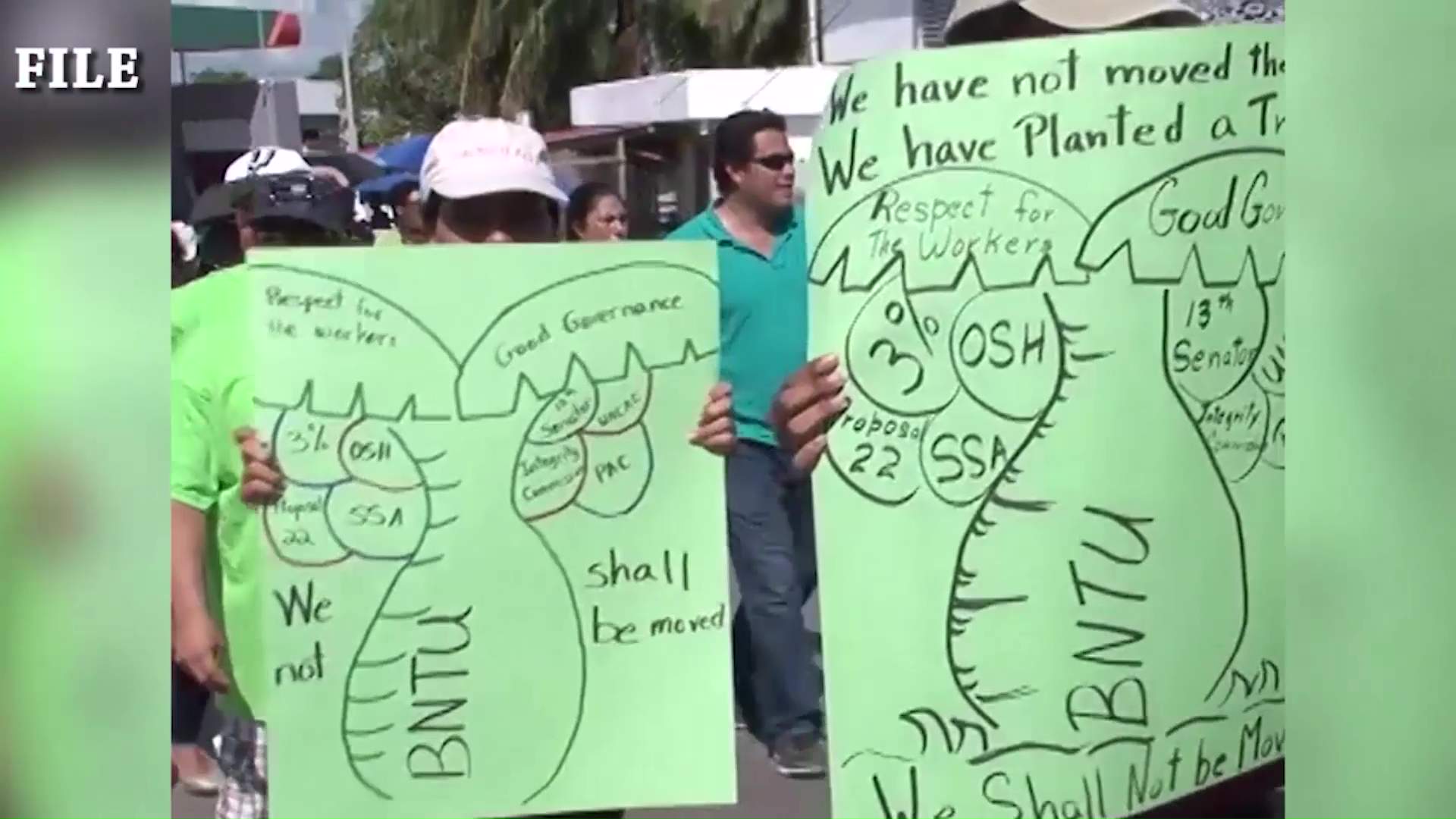
BNTU Doubles Down on Missing Salaries after MOE Denies Claims
The Belize National Teachers’ Union (BNTU) has strongly refuted claims made by Minister of Education Oscar Requena regarding missing teacher salaries. On November 4, 2025, Requena attributed the salary deductions to advances given in December 2024, asserting that the union had agreed to this arrangement. However, BNTU President Nadia Caliz vehemently denied these allegations, stating that the deductions were unrelated to advances but rather involved long-overdue increments and allowances. Caliz emphasized that the union possesses a December 2024 letter from the government promising to pay these increments and allowances by the end of that month. She criticized the minister’s comments as misleading and indicative of systemic issues within the education sector, including a lack of transparency. Caliz also expressed frustration over unexplained ‘miscellaneous deductions’ from teachers’ salaries, which have caused widespread concern among educators. The union has called for clarity and accountability, urging the government to address these discrepancies promptly.
-

Teachers’ Union Slams Minister Over Missing Pay
The Belize National Teachers Union (BNTU) has escalated its confrontation with the Ministry of Education over unresolved salary issues. On Monday, BNTU President Nadia Caliz publicly criticized Education Minister Oscar Requena for his explanation regarding missing teacher payments. Requena attributed the unpaid salaries to deductions for advance payments made in December 2024, a claim Caliz vehemently denied, labeling it as deeply disrespectful to educators. Caliz emphasized the gravity of the situation, highlighting instances where teachers are struggling to meet basic needs such as rent and utilities due to the payment delays. She also questioned the Ministry’s handling of incremental allowances, pointing out that many teachers have yet to receive their due payments. The union has demanded immediate resolution, warning of potential industrial action if the matter is not addressed promptly. Caliz expressed concern that this issue mirrors past payment delays in November 2023 and December 2024, urging accountability and swift action to prevent further hardship for Belize’s educators.
-
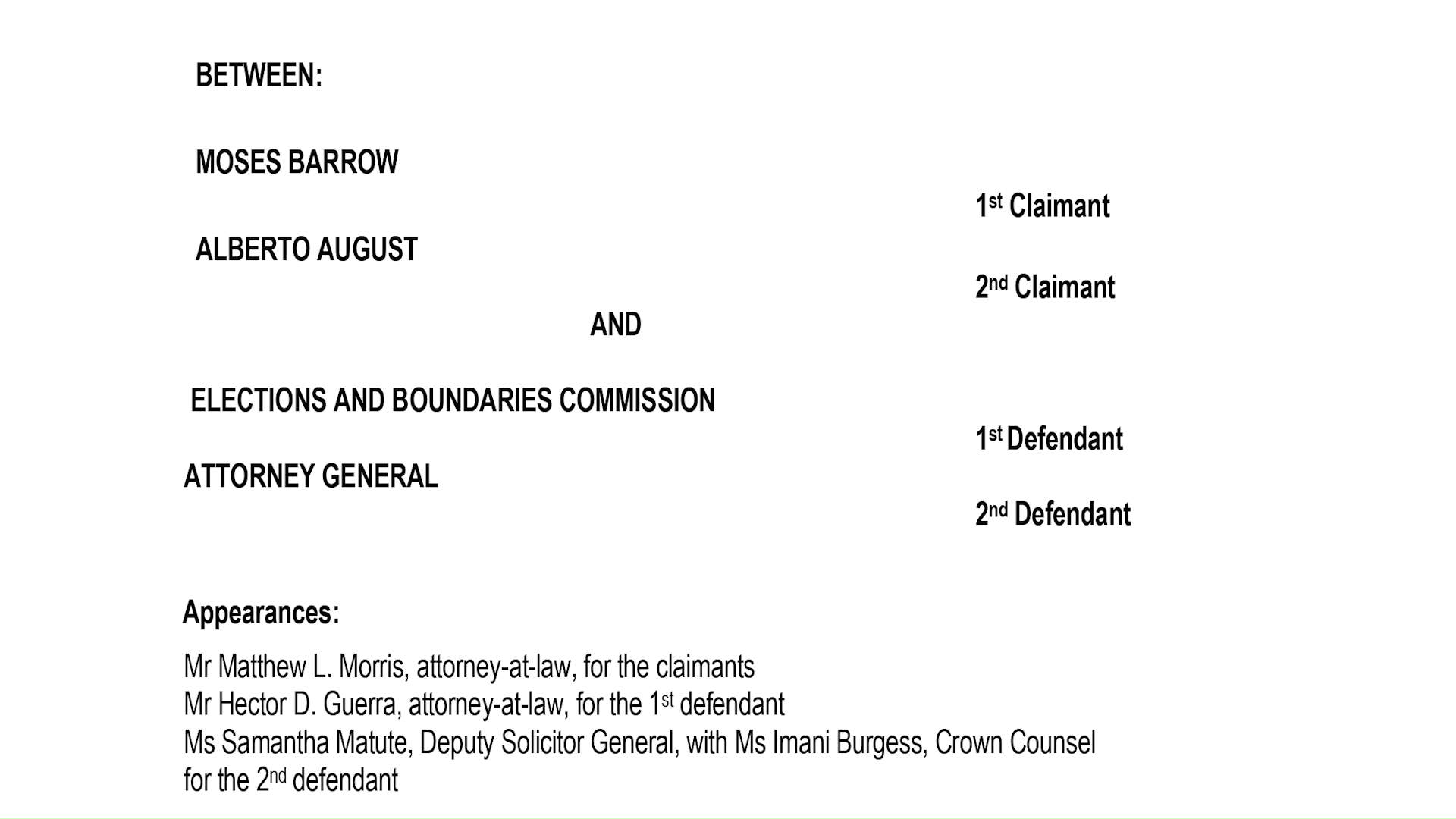
High Court Tosses UDP’s Red Color Challenge After Seven-Month Legal Battle
In a decisive ruling, the High Court has dismissed the United Democratic Party’s (UDP) challenge regarding the use of the color red in the 2025 general election, concluding a seven-month legal saga. The controversy erupted when the Elections and Boundaries Commission assigned the color red to two factions within the UDP, sparking internal conflict. UDP Leader Moses ‘Shyne’ Barrow and Deputy Leader Alberto August contested the decision, filing for a judicial review just nine days before the election. However, the court found the challenge moot, as the election had already taken place, and results were declared. The People’s United Party (PUP) emerged victorious, securing 26 of 31 seats. The court also noted significant delays in the claimants’ prosecution of the case, further undermining its validity. Hector Guerra, the attorney for the Elections and Boundaries Commission, explained the ruling, emphasizing the impracticality of revisiting a settled election issue.
-

Court Never Reached Core of UDP’s Color Clash
In a recent legal development, the court did not address the central issue of the United Democratic Party’s (UDP) color dispute. The case, initiated by Barrow, was merely an application for leave to seek judicial review, not the substantive hearing on who has the right to wear red. Attorney Hector Guerra clarified that while the color controversy was part of the arguments during this preliminary stage, the judge did not rule on the core matter. The judge’s decision was based on two preliminary points: the delay in prosecuting the claim and the fact that the issue had become moot. Guerra emphasized that for judicial proceedings to proceed, the court must first grant leave, ensuring the claim is timely and not merely academic. This case highlights the procedural complexities in legal disputes within political parties.
-
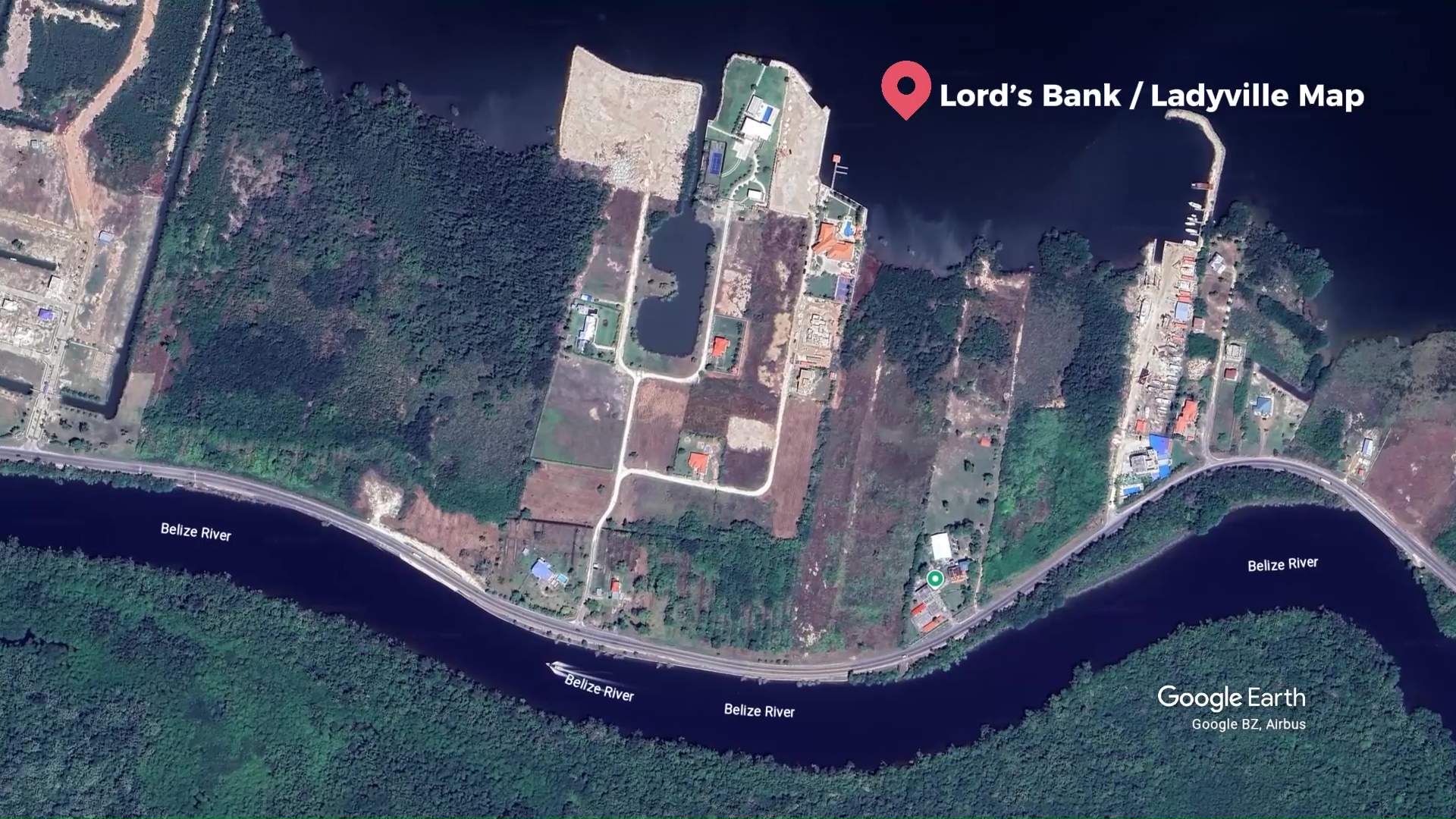
Will Ladyville and Lord’s Bank Become One Town?
Significant changes may be on the horizon for the communities of Ladyville and Lord’s Bank Village as their respective village councils prepare to discuss a potential merger into a single town. This long-debated idea, which has lingered for decades without progress, is now gaining traction. The proposed unification could reshape the political landscape, requiring voters to re-register, and may lead to increased land taxes. The preliminary discussions are set to take place on Wednesday, with village councilors meeting area representative Dolores Balderamos-Garcia to explore the implications of such a move. Daniel Salinas, Chairman of Lord’s Bank Village, expressed optimism about the meeting, highlighting the potential for accelerated development and greater financial independence. He noted that the merger would enable both communities to fund their own projects rather than relying heavily on central government support. While the idea has been proposed in the past, the rapid development of Ladyville, driven by the influx of businesses, has made it a priority. Salinas acknowledged potential opposition, particularly regarding property tax increases, but emphasized the need to prioritize long-term progress over short-term challenges.