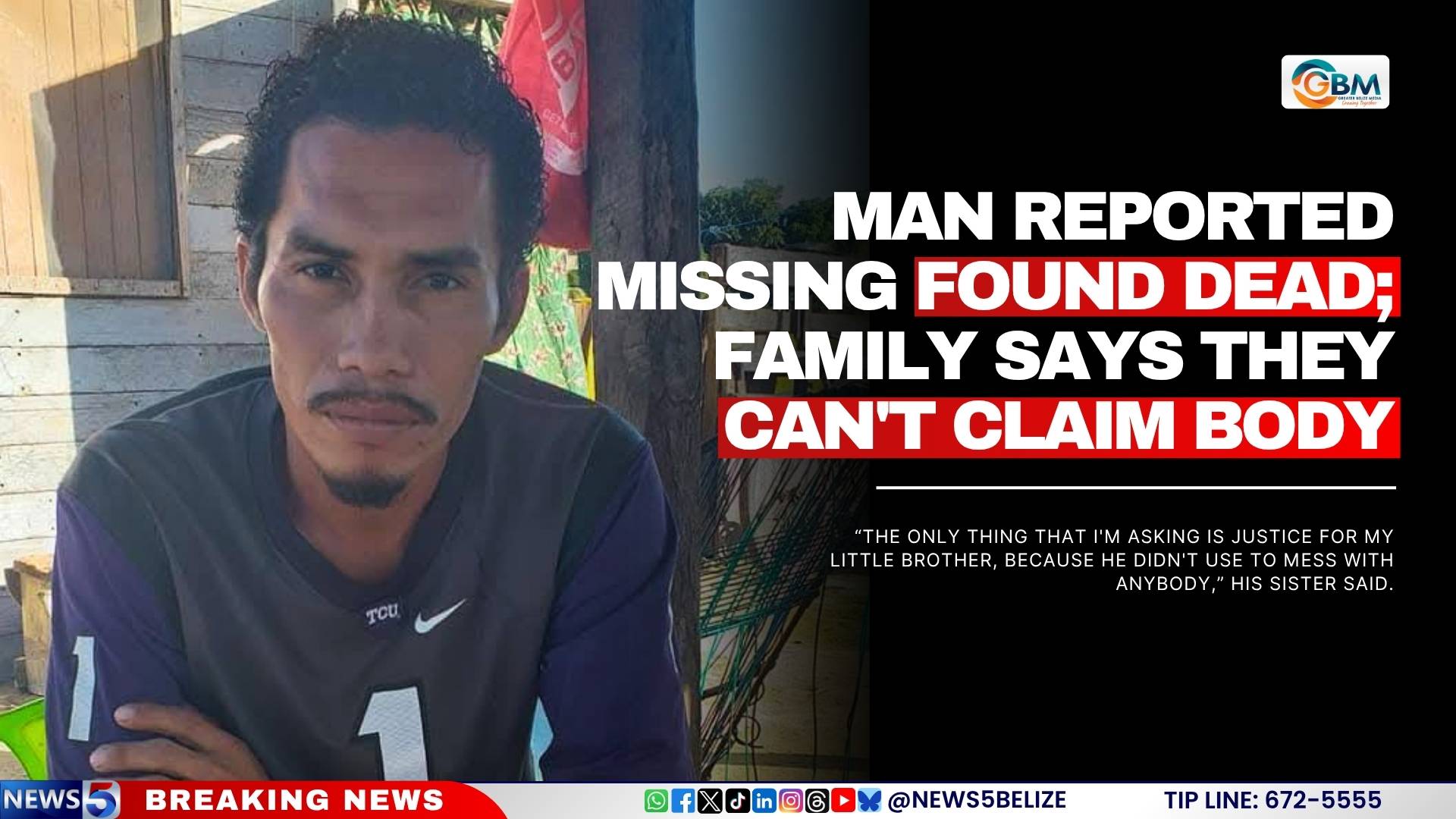
A disturbing case out of Belize’s Dangriga District has left a local family trapped in limbo, nearly three weeks after 46-year-old Jericho Humes first vanished under suspicious circumstances from his Dangriga Town home. The father of three was last seen alive on April 1, when he was dropped off at his workplace, but what followed has unfolded into a nightmare of uncertainty, grief and bureaucratic barriers for his surviving relatives.
Days after Humes’ disappearance, family members grew alarmed when he failed to return home and decided to check his residence. What they found only deepened their fears: the home had been ransacked, with windows shattered, a front door forced open, clothing strewn across the floors, and a pot of cooking rice left sitting out until it spoiled. One of Humes’ favorite caps was also found partially burned, a puzzling and ominous detail that offered no clear answers about what had happened to him.
Nearly a week after he went missing, the case took a terrifying turn when Humes’ niece received a series of disturbing calls from a phone number registered in Mexico. The caller claimed to be holding Humes hostage and demanded a ransom of $10,000 for his safe release. Along with the ransom demand, the caller sent a photograph showing a knife pressed to a man’s neck and shared audio recordings of what they claimed was Humes. The niece immediately turned all of this evidence over to local law enforcement. At the time, Assistant Superintendent of Police Stacy Smith told reporters that investigators had shared the photo with Humes’ brother, who insisted the man pictured was not Jericho. Law enforcement classified the incident as an ongoing missing person investigation, and downplayed the kidnapping claim at that stage.
Now, more than two weeks later, the family has received the devastating confirmation they had long feared: Jericho Humes is dead. In an interview with local outlet News Five on Thursday, Humes’ sister Arseneia Humes shared that police contacted the family last week to ask them to identify a body that had been found in an advanced state of decomposition. With the body’s face unrecognizable, Arseneia confirmed it was her brother based on his distinctive tattoos, a harrowing experience she described in an interview.
What has made this unbearable tragedy even worse, the family says, is the complete lack of transparency from law enforcement and a bureaucratic rule that is keeping them from laying their loved one to rest. Arseneia explained that police have refused to share any basic details about the recovery of Humes’ body: the family has not been told where the remains were found, when they were discovered, or under what circumstances. More crucially, authorities have refused to release Humes’ body to the family for burial unless they can provide a facial photo that matches the visible identifying markings on the remains – a requirement the family cannot fulfill, given the state of the body.
Authorities have suggested DNA testing via a saliva sample as an alternative path to formal identification, but the family says they have been told results could take up to four months to process. The grieving relatives have also pressed police for information about the potential cause of death, asking whether Humes suffered gunshot or stab wounds, but law enforcement has not confirmed any details. For the family, the months-long wait for answers and the inability to bury their loved one has added immeasurable pain to their loss.
Speaking to reporters, Arseneia called for accountability and answers, saying her brother was not a person who had conflicts with others. “The only thing that I’m asking is justice for my little brother, because he didn’t use to mess with anybody,” she said. As of Friday, the investigation into Humes’ death remains ongoing, with no updates from Belizean police on new leads or changes to the identification process.