标签: Belize

伯利兹

  • Medical Mission Wraps Up After Serving Hundreds of Belizeans

    Medical Mission Wraps Up After Serving Hundreds of Belizeans

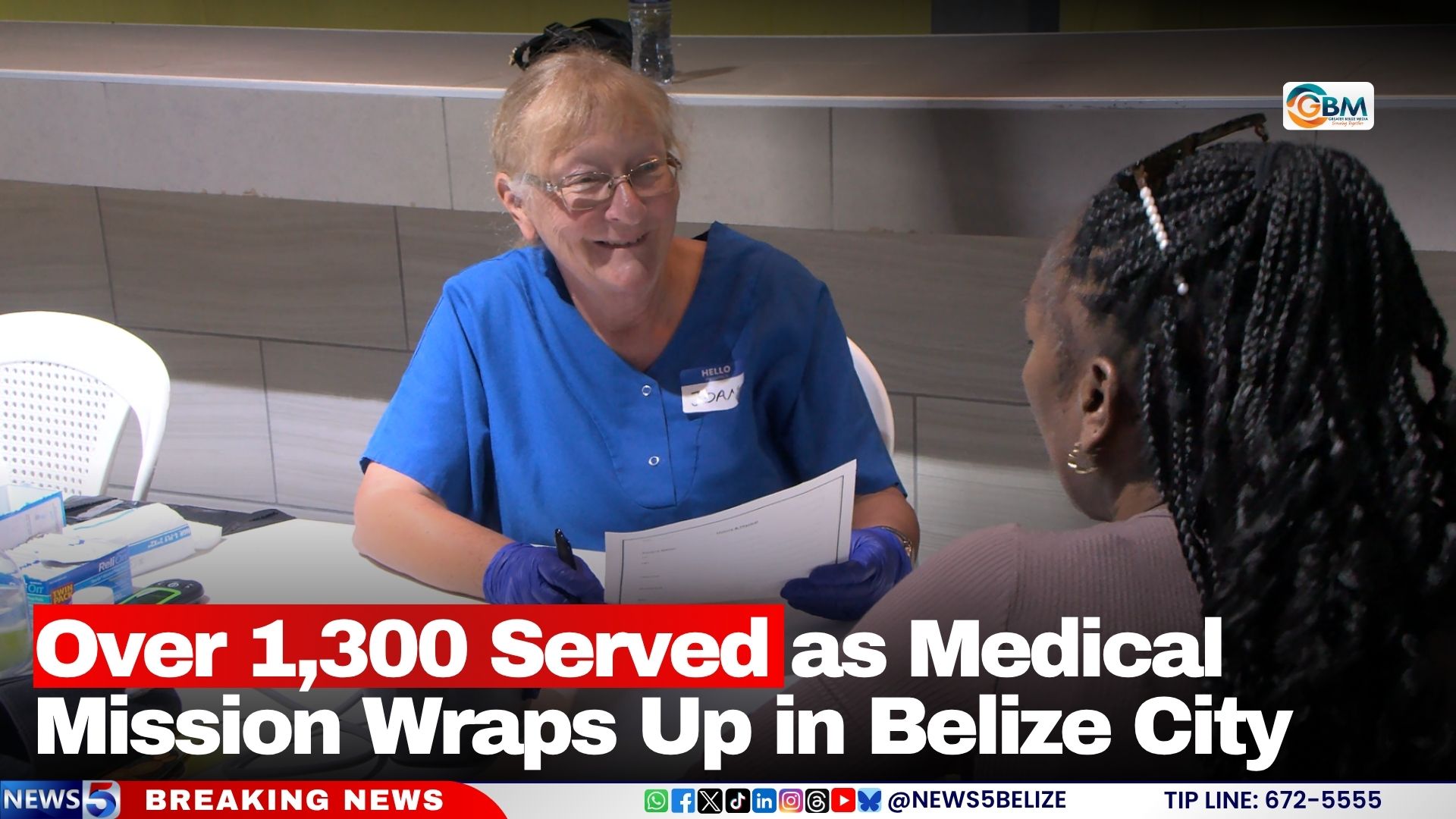
    A four-day free community medical outreach organized by the Seventh-day Adventist Church drew to a close this week in Belize City, after delivering no-cost care to more than 1,300 low-access and underserved Belizean residents, organizers confirmed in closing remarks.

    The initiative, which launched earlier that week at the Belize City Center, brought a team of fully board-certified medical specialists from the United States and other global regions to provide complimentary consultations and care to local residents who often face barriers to accessing high-quality healthcare. Unlike temporary volunteer missions that rely on trainee providers, every clinician participating in this outreach is a practicing, experienced specialist committed to donating their time and covering all personal travel expenses to support the community, church leadership noted.

    Patient turnout far exceeded initial expectations, growing steadily across the event’s four-day run. Dr. Zoraida Powell, health ministry assistant for the Belize Union Seventh-day Adventist, shared that patient numbers climbed from 230 on the first day, to 350 on the second, and reached 420 on the third day. By the final day of the outreach, lead organizers estimated the total number of people served across all services surpassed 1,300.

    For local Belize City residents who accessed care, the impact of the mission was immediately clear. Evonne Longsworth, a Belize City resident and a member of the Adventist community, expressed her surprise and joy at the large turnout for the event, noting that she had long valued the church’s focus on public health messaging. “I know they have a good health message, I am an Adventist. I am so happy they came to Belize and I am amazed by the amount of people that turned out,” Longsworth said. Fellow resident Edward Belizaire echoed that positive feedback, describing the outdoor community-focused care model as unlike any medical outreach he had experienced before.

    Dr. Roger Chene, director of the Amazing Facts Medical Clinic, emphasized that the event was a collaborative success, bringing together the visiting medical team, local public health authorities, and the national Adventist church to serve the community. “Everyone is very excited about the experience here. They had the opportunity to see over one thousand three hundred patients throughout the four days. So it has been a true blessing to be here. The patients are very happy to be here. They are thankful about the services they have received, working with the team, the local ministry of health and the local Seventh-day Adventist,” Chene said.

    Dr. Al Powell, president of the Seventh-day Adventist Church Belize, highlighted the quality of care delivered, stressing that all participating providers are active, board-certified specialists who manage clinical cases daily in their home practices. “We are providing top quality medical doctors, specialist in all the areas. These are board certified in the U.S. and throughout where they serve. So we bring in quality persons that manage this stuff on a daily basis. They are no interns here. They are all persons that are committed and sacrificing time and energy and they are paying their expenses to come on this exploit to build up Belize,” Powell explained.

    Looking ahead, the Seventh-day Adventist Church in Belize has announced plans to turn this successful outreach into a recurring annual event, expanding access to free high-quality care for Belizean residents into the future.


  • Bus Strike Averted?

    Bus Strike Averted?

    A threatened total shutdown of bus services across Belize scheduled for this coming Monday will not go ahead as planned, at least temporarily, following a negotiating session held earlier this morning between leaders of the Belize Bus Association (BBA) and senior officials from the country’s Ministry of Transport. The last-minute negotiations have averted immediate disruption to commuters, freight services and daily economic activity across the nation, but the fundamental disagreement that pushed private bus operators to plan industrial action remains unresolved, pending a final decision from Belize’s Cabinet and Transport Minister Dr Luis Zabaneh.

    In an exclusive interview with News 5 immediately after the meeting concluded, BBA President Phillip Jones confirmed that while hours of discussion were held between the two sides, no agreement was reached. The core sticking point centers on a longstanding demand from private bus operators for a rate adjustment that would align their pricing with that of the state-run National Bus Company. Currently, private operators face a five-cent-per-mile gap in allowed rates that they argue has created an unsustainable financial strain, threatening the long-term survival of many small, independent private bus operations across the country.

    Prior to this week’s negotiations, Belize’s government had publicly stated that the operators’ demand for rate alignment was “off the table”, a position that left private operators with no option but to threaten a full service shutdown. Despite the lack of a final resolution, Jones confirmed that private bus operators have agreed to continue running all scheduled services on Monday and Tuesday in a show of good faith, while Cabinet deliberates on the request. Operators are now waiting in expectation of an official response from the government body following its upcoming scheduled meeting, with the threat of a strike still looming if their demands are rejected.

  • SSB Consults Public on Proposed Contribution Changes

    SSB Consults Public on Proposed Contribution Changes

    Nearly four and a half decades after Belize’s social security system was first established, the Social Security Board (SSB) is moving forward with sweeping proposed updates to the program’s contribution structure, and is gathering public input through a months-long series of national consultations. The most recent consultation session was hosted on the afternoon of April 16, 2026 at the Grand Resort and Residences in Belize City, marking one stop on a 12-meeting tour that has already brought discussions from the northern district of Corozal all the way south to Dangriga. The full consultation process is scheduled to conclude at the end of April, with three remaining public sessions planned for San Pedro on April 21, Punta Gorda on April 28, and Placencia on April 30.

    At the core of the discussions are three key proposed revisions to the current contribution framework: updating the methodology used to calculate worker and employer contributions, adjusting the division of contribution responsibilities between employees and employers, and revisiting the minimum and maximum wage thresholds that determine how much contributors pay into the system. SSB Chief Executive Officer Jerome Palma emphasized that the reform effort comes as the 1981-originated framework has become outdated to match 2026’s economic and labor landscape. “A scheme that was developed in 1981, for a time and a condition that was appropriate in 1981, may need some reform in 2026 and moving forward,” Palma stated during the meeting. “In 1981, there were no call centres. The investment market was distinctly different. Technology has moved forward.”

    One of the most pressing indicators of the current system’s obsolescence is the existing maximum weekly contribution cap of BZ$520, which Palma confirmed 25 to 30 percent of all contributors already reach annually. This figure signals that the cap has not been adjusted to keep pace with wage growth across Belize, leaving the system with uncollected revenue that could support long-term program stability.

    Throughout the Belize City consultation, participants raised a range of targeted concerns and feedback to inform the board’s final policy decision. One attendee pushed back against the current practice of calculating contributions based on gross rather than net salary, pointing out that mandatory income taxes and other pre-paycheck deductions often reduce take-home pay by as much as 50 percent. “We don’t live on our gross salary,” the participant said. “By the time I actually get money in my pocket, it’s half of what it says on the payslip… When you are considering the split, please consider how heavily taxed we are.”

    Another participant focused on equity for low-wage workers, highlighting disproportionate gaps between contribution bands across different income levels and calling for transparent, fair adjustments that do not place undue burden on lower-income contributors while neglecting higher earnings brackets. “That’s a big jump for workers at the lower end,” the participant said. “You have to be fair and transparent. You can’t look at the lower bands and not look at the higher bands.”

    Palma responded directly to these concerns, reassuring attendees that the board has prioritized protecting the roughly 6,000 contributors currently in the lowest income band. He confirmed that the board intends to retain the existing split of contribution responsibilities, which requires employers to cover a higher share of contributions than employees, with this structure remaining especially intact for lower-wage bands. “It’s very important for us to have this split very similar to what it is at the moment, where the employer actually pays and contributes at a higher rate than the employee, especially at the lower bands,” he explained.

  • Wait, Somone’s Job is Actually Flying into Hurricanes?

    Wait, Somone’s Job is Actually Flying into Hurricanes?

    Against the backdrop of annual Atlantic hurricane season preparations, a unique team of daredevil aviation specialists known as the Hurricane Hunters has touched down in Belize, bringing one-of-a-kind storm-tracking aircraft as a key stop on the 2026 Caribbean Hurricane Awareness Tour.

    Jordan Mentzer, an experienced pilot with the Hurricane Hunters, explained that the tour blends three core goals: raising public knowledge of hurricane risks, strengthening regional preparedness, and engaging local stakeholders while opening the specialized aircraft to public tours. For the teams that regularly fly directly into the core of active hurricanes, the outreach mission is just as important as the data collection work they carry out during storm season.

    Unlike satellite observation, which can only track storm systems from space, these reinforced aircraft fly directly into the heart of hurricanes to gather hard-to-access atmospheric measurements that satellites cannot capture. The real-time data they collect is fed directly into forecasting models used by every national meteorological service across the Caribbean, helping forecasters refine predictions of storm track, strength and landfall timing.

    Having flown these dangerous missions for decades, Mentzer noted that the team has built up decades of knowledge to operate as safely as possible in the extreme conditions of a hurricane. “We have learned which maneuvers work, what hazards to avoid, and how to navigate storm systems with the highest possible level of safety we can achieve,” he said.

    Robbie Berg, a warning coordinator meteorologist at the U.S. National Hurricane Center, emphasized that the in-storm data collected by the Hurricane Hunters is irreplaceable for life-saving forecasting. “Having these aircraft is absolutely critical to our work,” Berg explained. “They deliver observations directly from the center of the storm, so we can pin down exactly how strong the hurricane is, where it is positioned, and what its central barometric pressure is. That detail is what allows us to produce far more accurate forecasts that help communities prepare and evacuate on time.”

    During the Belize stop, local government officials and dozens of students got a rare, close-up look inside the converted aircraft, which doubles as a flying atmospheric research laboratory. Henry Charles Usher, Belize’s Minister of Public Service and Disaster Risk Management, highlighted that including Belize in this year’s tour carries long-term meaning beyond immediate preparedness. He noted that initiatives like this can spark interest in STEM and emergency management careers, helping cultivate “the next generation of Belizean scientists, pilots, meteorologists, and engineers” who will lead the country’s climate and disaster resilience efforts in the coming decades.

    Local outlet News Five has announced it will air a full, in-depth walkthrough of the Hurricane Hunters’ aircraft during its 6 p.m. newscast tonight, inviting audiences to tune in for a closer look at the unique mission.

  • Prescription Rules for Contraceptives Raise Access Concerns

    Prescription Rules for Contraceptives Raise Access Concerns

    Belize is facing a growing public debate over a new phased prescription mandate for general medicines, a policy that has placed oral contraceptive access at the center of tensions between health regulators and labor advocates.

    Announced on April 15 in a three-page official statement, the Pharmacists Association of Belize (PAB) confirmed it had reached an agreement with the country’s Ministry of Health and Wellness (MOHW) to roll out mandatory prescription checks for all general prescription medications over a 12-month transition period. Under the terms of the gradual rollout, current oral contraceptive users with valid existing prescriptions will face no immediate disruption to their access, allowing for continuity of care as the policy is implemented.

    The framework maintains clear limits on pharmacists’ scope of practice: pharmacy professionals are barred from initiating new contraceptive therapy for first-time users, and can only continue refilling prescriptions for patients who have previously obtained the medication through a licensed medical provider. All new patients seeking oral contraceptives are required to first complete a consultation with an authorized prescriber. The PAB emphasized that the transitional arrangement does not expand pharmacists’ clinical authority, nor does it allow pharmacy staff to take on the role of a licensed physician in prescribing or managing contraceptive care.

    The policy has drawn sharp pushback from Belize’s largest labor body, the National Trade Union Congress of Belize (NTUCB), which warns that the new requirements will create crippling barriers for women seeking timely, affordable birth control. The organization argues that three interconnected systemic flaws in Belize’s health landscape will undermine access: a persistent shortage of available gynecological services across the country, out-of-pocket costs for mandatory consultations that many low-income women cannot afford, and the burden on working women of taking unpaid time off work to attend required medical appointments. These barriers, the NTUCB says, will ultimately reduce access to contraception and delay critical reproductive care for many.

    Beyond blocking access for individual women, the NTUCB has labeled the policy a major regression for women’s reproductive rights and autonomy, calling on national policymakers to revise the framework to guarantee equitable access to reproductive health services. The group also raised urgent concerns about the policy’s impact on Belize’s already overstretched public health system: directing hundreds of new patients to public clinics and hospitals for routine contraceptive consultations will add unplanned strain to facilities already operating at capacity with high patient volumes, potentially disrupting care delivery for other unrelated medical needs.

    In response, health regulators have defended the prescription requirement as a critical patient safety measure. Authorities note that hormonal contraceptives carry well-documented health risks that require proper medical oversight before use, and mandatory pre-prescription consultations also create opportunities for providers to conduct broader preventive health screenings for patients. The PAB adds that the 12-month phased rollout is designed to give the public time to adjust to the new rules while bringing enforcement in line with existing national pharmaceutical regulations. During the transition period, pharmacists will also be allowed to continue refilling other chronic disease medications for established patients, as long as proper prescription documentation is maintained.

    Moving forward, the PAB confirmed that a standardized Oral Contraceptive Dispensing Protocol has been submitted to the MOHW for review, opening the door to potential future adjustments to the policy as stakeholders work through implementation challenges. The MOHW has also launched a full public review of Belize’s current list of over-the-counter medications, signaling that the contraceptive policy change is part of a broader reassessment of national pharmaceutical regulation and drug access across the country.

  • World Health Organization Favors Easier Access to OTC Birth Control

    World Health Organization Favors Easier Access to OTC Birth Control

    For decades, global reproductive health advocates have pushed for expanded access to contraception, and one of the most prominent global health bodies has laid out a clear stance on the issue. Back in its 2019 Consolidated Guideline on Self-Care Interventions for Health focused on sexual and reproductive health and rights, the World Health Organization (WHO) formally issued a bold recommendation: oral contraceptive pills (OCPs) should be available directly to users without the requirement of a doctor’s prescription.

    This classification marks a strong, formal recommendation from WHO, even though the organization openly acknowledges that the supporting clinical evidence carries a very low certainty rating. In justifying this unusual position, the guideline’s development group explained that after careful review, the measurable benefits of expanded access far outweigh the potential harms documented in existing research. This outcome showcases the nuanced approach WHO takes to developing public health guidance, rather than rigidly relying only on the strength of randomized clinical trial data. Experts weigh a wide range of critical factors that extend beyond lab results, including equity of access, real-world feasibility of implementation, and the stated values and preferences of people who use contraceptives regularly.

    Through this framework, WHO concluded that removing the prescription barrier to OCPs delivers meaningful public health gains, especially in low-resource regions and communities where formal healthcare services are already out of reach for many. Key benefits include a projected drop in unintended pregnancies and improved long-term maternal health outcomes. The guidance does not dismiss clinical safety needs, however: it notes that medical eligibility screening remains ideal for first-time users, acknowledging that people with pre-existing underlying health conditions may require targeted clinical evaluation before starting contraception.

    WHO’s position is not an isolated stance, but aligns with a growing global shift toward expanding contraceptive access. A 2022 analysis published in the WHO Bulletin examined contraceptive regulatory frameworks across 30 nations, revealing that formal, government-endorsed over-the-counter access systems remain extremely rare. The study found that only four of the 30 surveyed countries had officially added OCPs to their national over-the-counter medication lists, despite widespread informal access outside of formal regulatory rules in many more regions. The research’s authors urged nations to create clear regulatory pathways to reclassify OCPs from prescription-only to over-the-counter status, arguing that this change will drive better access and improved population health outcomes. The study also highlighted a persistent gap between written policy and on-the-ground practice: in most countries, people already access oral contraceptives without formal prescriptions on a regular basis, so aggressive enforcement of outdated prescription-only rules would only disrupt consistent access for current users.

    Both the original WHO guideline and supporting research take a deliberately balanced approach to the issue, acknowledging valid concerns alongside demonstrated benefits. Beyond the well-documented gains of easier access, greater convenience, increased privacy, and enhanced reproductive autonomy, the guidance also outlines clear potential risks. These include the need for users to conduct their own medical eligibility self-assessment, the small risk of misuse without targeted clinical guidance, and the potential for increased out-of-pocket costs for users in healthcare systems where prescription medications are subsidized but over-the-counter products are not. Even with these acknowledged trade-offs, WHO’s final conclusion remains unchanged: expanding over-the-counter access delivers a net public health benefit, particularly in communities where structural barriers to routine healthcare are already severe.

    Against this global consensus, one country has recently moved in the opposite direction. In an April 15, 2026 public statement, the Pharmacists Association of Belize (PAB) confirmed that it would implement new restrictive rules for OCP distribution. Under the new policy, created in close coordination with Belize’s Ministry of Health and Wellness, only current users who have previously obtained OCPs with a valid prescription will continue to be able to access them. All first-time new users are now required to get a new prescription from a licensed healthcare provider before they can obtain oral contraceptives. The policy is being rolled out through a 12-month phased enforcement of long-standing but previously under-enforced prescription requirements.

    The move has already drawn sharp pushback from local advocacy and labor groups. The National Trade Union Congress of Belize (NTUCB) is among the most prominent critics, arguing that the new prescription requirement will create unnecessary access barriers for working women with limited time and resources to attend doctor’s appointments. The group also notes that the added requirement will place new, unneeded strain on Belize’s already overburdened public healthcare system, which is already struggling to meet existing patient demand.

  • “Busgeddon” Looms as Bus Operators Threaten Nationwide Shutdown

    “Busgeddon” Looms as Bus Operators Threaten Nationwide Shutdown

    Belize’s public transit network is on the brink of a total shutdown, with industry leaders warning that thousands of buses could be pulled from roads across the country as early as next Monday if the national government does not address urgent industry demands. The Belize Bus Association (BBA), the group representing the majority of bus operators nationwide, has issued a formal ultimatum that hinges on immediate government intervention to resolve a growing financial crisis driven by skyrocketing fuel costs.

    BBA President Philip Jones laid out the dire financial reality facing operators in a press statement, explaining that relentless increases in diesel prices have flipped daily operations from marginal profit to consistent loss for most service providers. Independent small-scale operators, who make up a large portion of Belize’s bus network, confirm that fuel costs now consume the single largest share of their monthly operating revenue, leaving little to no room for vehicle maintenance, insurance, or driver wages.

    To ease the financial strain, the BBA has put forward three potential policy solutions to the government: temporary fuel tax relief, targeted operating subsidies for small operators, and a controlled adjustment to passenger fares. As of press time, none of these proposals have received official approval from government bodies, and no formal negotiations have been scheduled to address the association’s concerns.

    Jones emphasized that operators have no desire to disrupt public service or inconvenience commuters. “We don’t want to strike. We don’t want to discontinue service,” he stated, doubling down on a call for Belize’s Minister of Transport to meet directly with operator representatives to find a mutually acceptable solution. Still, he warned that without urgent action, the country will face a systemic disruption he has dubbed “busgeddon” – a shutdown far more disruptive to daily life than many commuters and officials currently anticipate.

    If the BBA follows through on its threat, the impact will be felt immediately by tens of thousands of commuters across Belize, from daily work travelers to students and families relying on affordable public transit to access essential services. With less than a week remaining before the proposed shutdown date, both government and industry stakeholders are facing growing pressure to reach a last-minute compromise.

    Local outlet News 5 plans to air a full in-depth report on the unfolding crisis, including detailed breakdown of operating cost data and interviews with representatives from both the BBA and government transport officials, during its 6 p.m. News 5 Live broadcast tonight.

  • Second Teen Death Under Investigation Near Port Loyola

    Second Teen Death Under Investigation Near Port Loyola

    Residents of Port Loyola, a coastal neighborhood in Belize City, are grappling with growing fear and insecurity after law enforcement was called to the area over the weekend to recover an unidentified body found washed up along the shoreline. This discovery marks the second suspicious death in the exact same general region within just seven days, a pattern that has shaken the tight-knit local community.

    Initial unofficial reports from law enforcement indicate the newly discovered body is likely that of 17-year-old Alwin Marin Jr., who had not been publicly reported missing prior to the find. The corpse was located in a cove southwest of Port Loyola, just a short distance from the spot where the body of 19-year-old was recovered last week. That first death has already been classified as a homicide, and investigators launched an active murder probe following the discovery.

    Complicating the ongoing investigation and amplifying community anxiety is the fact that a teenage person of interest connected to last week’s homicide has disappeared in the days since the first body was found. This coincidence has sparked widespread speculation among local residents that the two deaths and the disappearance may be linked, but law enforcement officials have stressed that no official connection has been confirmed at this stage of the probe.

    As of the latest update, formal identification of the newly recovered body has not been completed. Investigators are still processing physical evidence collected from the coastline, and are awaiting full forensic autopsy results to confirm the identity of the deceased and determine an official cause of death.

    Law enforcement has confirmed that parallel investigations into both the recent discovery and last week’s homicide remain active and ongoing. Investigators are working methodically to piece together the timeline of events leading up to both deaths, and to clarify whether any connection exists between the two incidents. In the meantime, police have issued a public advisory urging all Port Loyola residents to remain alert to unusual or suspicious activity in the area, and to contact law enforcement immediately with any information that could aid the investigation.

  • Bus Owners Threaten Strike Over Fuel Costs

    Bus Owners Threaten Strike Over Fuel Costs

    Belize is bracing for a potential widespread disruption to its public transit system next week, after the Belize Bus Association (BBA) issued a formal warning that its member operators could halt all services nationwide starting April 20, 2026. The strike threat comes as escalating fuel costs have pushed the country’s bus operators to the breaking point, with industry leaders describing current expenses as unmanageable for small business owners operating on razor-thin margins.

    For weeks, bus operators have lobbied the Belizean government for emergency relief measures to offset skyrocketing fuel bills. The BBA put forward three targeted policy proposals: removing the General Sales Tax (GST) on key inputs including fuel, tires, and bus replacement parts; rolling out a temporary fuel subsidy to cover incremental cost increases; and approving a regulated fare hike that would let operators pass a portion of higher costs to passengers. All three requests were rejected by government officials, who have advised operators to hold out for a potential decline in global oil prices instead.

    That advice has fallen flat with the BBA, which says waiting for international market shifts is not a viable solution for local businesses already struggling to stay open. Bus owners note that the industry has long operated on extremely narrow profit margins, and recent consecutive fuel price increases have completely erased the small earnings that keep their operations running. Unlike larger transit systems in bigger economies, Belize’s bus network is made up largely of small independent operators with very limited financial buffers to absorb unexpected cost shocks.

    For thousands of Belizeans across the country, public buses are not a secondary transportation option — they are the primary mode of travel for daily life. Students rely on buses to get to classes, working commuters depend on them to reach their jobs, and residents of isolated rural communities have no other affordable way to access hospitals, grocery stores, and other essential services. A full national shutdown would send ripples across nearly every sector of daily life, leaving vast swathes of the population stranded without viable transit alternatives.

    The current fuel price crisis in Belize is not an isolated issue. It stems from persistent volatility in the global oil market, driven by ongoing international geopolitical tensions and lingering global supply chain concerns. This pressure has impacted transport sectors across the Caribbean and Central America, but industry representatives note that small, open economies like Belize are far more vulnerable to sudden price swings than larger nations with more diversified industrial bases.

    To date, the Belizean government has shown no indication that it will reverse its rejection of the BBA’s proposals. Formal talks between association leaders and government officials are scheduled to continue in the coming days, but with the strike deadline just days away, there is no clear path to a last-minute resolution. Commuters across the country have already been advised to make alternative transit arrangements in case an agreement is not reached before next Monday, leaving the nation in a state of uncertainty over the future of its public bus network.

  • Over 1,300 Served as Medical Mission Wraps Up in Belize City

    Over 1,300 Served as Medical Mission Wraps Up in Belize City

    A major four-day free healthcare outreach organized by the Seventh-day Adventist Church has successfully drawn to a close in Belize City, leaving a positive mark on local communities after delivering care to well over 1,000 underserved residents. The initiative, which offered no-cost medical consultations and clinical support to members of the public, was covered by local outlet News Five earlier in the week, and final post-mission tallies confirm that community turnout far outpaced event organizers’ initial projections.

    Dr. Zoraida Powell, who serves as Health Ministry Assistant for the Belize Union of Seventh-day Adventists, shared that patient attendance grew steadily day over day throughout the event. Roughly 230 people accessed care on the mission’s opening day, a number that jumped to 350 on the second day, and climbed again to 420 on the third. While early projections already put total patient numbers over 1,000 by the event’s end, final counts from clinical leadership show even higher participation.

    Dr. Roger Chene, Director of the Amazing Facts Medical Clinic, confirmed that the combined medical team ultimately cared for more than 1,300 unique patients across the four-day outreach. Calling the entire experience a profound blessing, Chene highlighted the deep gratitude expressed by patients who accessed the free services, and credited the event’s success to strong cross-partner collaboration. The mission brought together visiting medical professionals, Belize’s national Ministry of Health, and local members of the Adventist community to coordinate care for all attendees.

    Local residents have widely praised the initiative, with many noting the meaningful impact of the free health services on the community. Longtime Belize City resident Evonne Longsworth shared that she was thrilled the church chose to bring its health outreach and education messaging to Belize, and said she was stunned by the large volume of community members that turned out to access care. Another local attendee, Edward Belizeaire, described the outdoor community-focused mission as a one-of-a-kind positive experience that brought people together around a shared goal of improved public health.