标签: Belize

伯利兹

  • Three Dead, Two Injured in Separate Collisions

    Three Dead, Two Injured in Separate Collisions

    Two devastating road traffic accidents that occurred within hours of each other in northern Belize on Sunday night have left three people dead and two others hospitalized with serious injuries, local authorities confirmed.

    The first incident unfolded just after 10 p.m. along the Thomas Vincent Ramos Highway in the Punta Gorda area, when a northbound motorcycle carrying two people lost control near the roadside and crashed into a standing tree. Emergency responders were dispatched to the scene immediately, and transported passengers Brenton Cofius and Carl Manger to a nearby medical facility for urgent care. Following the crash, law enforcement officers impounded the damaged motorcycle as part of their ongoing investigation into what caused the collision.

    A far deadlier crash unfolded hours later in the Orange Walk District, along the road connecting Trinidad and August Pine Ridge. The violent impact of the head-on collision left three people dead at the scene, leaving local communities in shock. Visual footage captured from the crash site shows a red Ford F-150 pickup truck pushed off the pavement, alongside a fully loaded sugar cane trailer attached to a Freightliner semi-truck that was also involved in the incident.

    Authorities have publicly identified the three victims of the second crash: Selvin Cortez, Bryon Magaña, and Magaña’s partner Sherlyn Henriquez. News of the deaths has already prompted mourning from loved ones across social media. One of Henriquez’s relatives shared a tribute online writing, “Rest in peace, my beautiful niece. Thank you for the beautiful moments we spent together; you will always live in my heart.”

    The Belize Police Department announced that it is continuing to process evidence from both crash sites and is expected to release a full update on the circumstances of each incident, including potential contributing factors such as speeding, weather conditions, or driver impairment, to the public this coming afternoon.

  • U.S. Military Seizes Iranian Ship

    U.S. Military Seizes Iranian Ship

    On a Sunday morning in the Gulf of Oman, a tense six-hour standoff between U.S. naval forces and the crew of an Iranian cargo ship ended with the vessel being seized by U.S. Marines after Navy gunfire disabled its propulsion system, according to statements from U.S. military and political leaders. The incident, which unfolded on April 20, 2026, has already drawn fierce condemnation from Iran, which has pledged immediate retaliation and accused the United States of violating an existing ceasefire and committing open piracy in one of the world’s busiest commercial waterways.

    The operation was carried out by the guided-missile destroyer USS Spruance, operating under the command of U.S. Central Command (CENTCOM). Per CENTCOM’s official account of the incident, the Touska – the 500-foot cargo vessel targeted in the raid – repeatedly ignored multiple radio and visual warnings over six hours to turn back from a U.S.-imposed naval blockade on commercial traffic bound for Iranian ports. After the vessel continued its course toward Iranian territorial waters, military commanders ordered the Touska’s crew to evacuate the engine room before Navy personnel fired several warning rounds into the ship’s engine compartment, disabling all propulsion and steering capabilities. Once the vessel was dead in the water, a team of U.S. Marines boarded the ship and took full control of the vessel and its crew without further resistance.

    Shortly after the seizure was completed, former U.S. President Donald Trump confirmed the operation in a post on his Truth Social platform, framing the action as a decisive enforcement of U.S. sanctions policy. “The Navy stopped them right in their tracks by blowing a hole in the engine room,” Trump wrote in the post, adding that U.S. boarding parties were currently conducting a search of the vessel’s cargo holds to document what the ship was carrying. He further noted that the Touska and its operators were already subject to U.S. Treasury Department sanctions over a documented history of violating international trade restrictions on Iranian goods, justifying the use of force to intercept the vessel.

    Iran’s leadership has rejected the U.S. justification for the raid and issued a harsh formal warning of impending retaliation. In an official statement carried by state-run Islamic Republic of Iran Broadcasting (IRIB), Iran’s military command denounced the operation as “maritime highway robbery” that violates the terms of a recent ceasefire agreement between the two nations. The Iranian statement confirmed the seizure, adding that U.S. forces also damaged critical navigational equipment on the Touska during the forced boarding, endangering the crew and the vessel.

    “We warn that the Armed Forces of the Islamic Republic of Iran will soon respond to and retaliate against this U.S. armed piracy,” the statement concluded, leaving open the scope and timing of any Iranian counteraction.

    The interception of the Touska is not an isolated incident, CENTCOM confirmed in its briefing on the operation. Since the U.S. naval blockade on traffic bound for Iranian ports was implemented, U.S. forces have successfully turned away 25 other commercial vessels that attempted to break through the restriction to reach Iranian ports, marking the first time that U.S. forces have actually seized a vessel rather than forcing it to turn around. The escalation comes at a moment of already heightened tension between Washington and Tehran, raising fears of further escalation in the Persian Gulf region, a critical chokepoint for 20% of the world’s daily oil supplies.

  • Family Demands Answers as Search Continues for Bree

    Family Demands Answers as Search Continues for Bree

    Three weeks have passed since 37-year-old Belize City resident Deborah “Bree” Arthurs vanished without a trace, and her loved ones are increasingly demanding answers from law enforcement, amid a stalled investigation with no confirmed breakthroughs in the case.

    Arthurs, a call center worker and devoted mother to one child, was last spotted in public on Friday, March 27, near the well-known La Popular Bakery in Belize City. Multiple witness accounts confirm she got into a silver Chevrolet Equinox that day, and no one has heard from her since that contact, leaving her family and community in a state of agonizing limbo.

    Local law enforcement has maintained that the investigation remains active, with officers continuing to work through potential lines of inquiry. In the most recent official statement, issued on Monday, April 13, Assistant Superintendent of Police Stacy Smith confirmed that investigators are prioritizing the silver vehicle Arthurs was seen entering. “Unfortunately I do not have any major update to share at this time; however, efforts are still being made to move this case forward,” Smith told reporters. “We have located the vehicle we believe Ms. Arthurs entered that day, and we are following up on multiple lines of investigation connected to it, as well as seeking to interview several persons of interest.”

    Despite police assurances of ongoing work, Arthurs’ family says they have grown deeply frustrated with the slow pace of the probe and the lack of transparent communication from authorities. Arthurs’ sister has publicly criticized the Belize City Police Department via social media, calling for greater openness about the case’s progress. She questioned how many more young women in the region must disappear before law enforcement takes more aggressive, visible action, and pressed authorities to publicly name persons of interest connected to the disappearance to encourage community tips.

    To incentivize public cooperation, the family has upped the reward for any information that reveals Arthurs’ whereabouts or breaks the case open to 10,000 Belize dollars, a significant increase from the original offer that signals their desperation to find the missing mother. As the search enters its fourth week, the community remains on alert, with local residents sharing Arthurs’ story across social media to keep the case in the public eye.

  • Iranian Gunboats Fire on Tanker as Tensions Escalate in Strait of Hormuz

    Iranian Gunboats Fire on Tanker as Tensions Escalate in Strait of Hormuz

    Escalating geopolitical friction in one of the world’s most critical energy chokepoints boiled over on Saturday, after Iranian gunboats fired on a commercial tanker attempting to traverse the Strait of Hormuz, while a second merchant vessel reported being hit by a projectile, multiple maritime sources confirmed to CNN.

    The hostile confrontations came just days after Iran’s military reinstated sweeping navigation restrictions across the strategic waterway, a move Tehran justified by citing repeated “breaches of trust” by the United States in ongoing diplomatic negotiations. This latest escalation has already thrown global maritime traffic into disarray: public vessel tracking data shows dozens of oil tankers have either altered their course to avoid the strait or remained anchored in nearby waters, grinding movement through the key corridor to a near halt in some areas.

    Diplomatic relations between Tehran and Washington remain near a breaking point, even as backchannel talks continue. Recent negotiations mediated by Pakistan have put new U.S. proposals on the table, which Iranian officials confirm are currently under review by Tehran’s leadership. U.S. President Donald Trump acknowledged that talks are progressing in public remarks, but made clear his administration’s growing frustration, warning that Washington would not accept what he called “Iranian blackmail” over control of the waterway.

    Iranian diplomatic sources have suggested a second round of direct negotiations could convene as early as Monday, though no U.S. officials have stepped forward to confirm the timeline. Core disagreements over navigation rights, sanctions relief, and regional security remain unaddressed, leaving the future of talks uncertain.

    In a revealing new development, a senior Iranian government official told CNN that Tehran is also considering implementing a new fee system for commercial vessels: ships that pay the required charge will receive priority passage through the strait, while vessels that refuse to comply will face extended, arbitrary delays. More than 20% of the world’s daily crude oil and refined petroleum product shipments pass through the 21-mile-wide strait, meaning any prolonged disruption to navigation risks sending shockwaves through global energy markets, driving up fuel prices for consumers and businesses worldwide.

  • Briceño Leads High-Level Talks on Small States at Global Finance Meetings

    Briceño Leads High-Level Talks on Small States at Global Finance Meetings

    Against a backdrop of mounting global economic uncertainty, the 2026 Spring Meetings of the International Monetary Fund and World Bank Group kicked off a critical focused discussion this Friday in Washington D.C., where Belize Prime Minister John Briceño led high-level dialogue centered on the unique economic struggles of small states around the world.

    The core agenda of the closed-door session revolved around the World Bank Group’s newly unveiled Small States Strategy, a targeted policy framework that prioritizes inclusive job creation while directly tackling deep-rooted structural vulnerabilities and persistent exposure to external shocks that have long held back smaller national economies. Unlike one-size-fits-all development policies pushed in decades past, the new strategy is built to accommodate the unique scale and constraints of economies with small populations and limited domestic output.

    Opening the discussion, Prime Minister Briceño laid out the most pressing challenges currently facing small developing and developed states alike. He highlighted three interconnected crises tightening the grip on these economies: increasingly constrained global fiscal conditions that limit government borrowing and spending power, skyrocketing energy and food import costs that strain household budgets and trade balances, and the accelerating, disproportionate impacts of climate change that threaten to erase decades of development gains in coastal and small island states in particular.

    Briceño emphasized that generic global economic policy adjustments cannot deliver meaningful relief for small nations. Any effective response, he argued, must be custom-tailored to account for the inherent vulnerabilities and limited resource base that define small economies, arguing that traditional macroeconomic frameworks often fail to account for these unique attributes.

    The high-level discussion is one of dozens of focused engagements taking place during the week-long Spring Meetings, which bring together central bank governors, finance ministers, multilateral development leaders, private sector stakeholders and policy experts from across the globe to assess shifting global economic trends, coordinate collective action on shared cross-border challenges, and align new development initiatives to meet evolving global needs.

  • Fingerprint Clock‑Ins Coming to Public Service, Union Raises Concerns

    Fingerprint Clock‑Ins Coming to Public Service, Union Raises Concerns

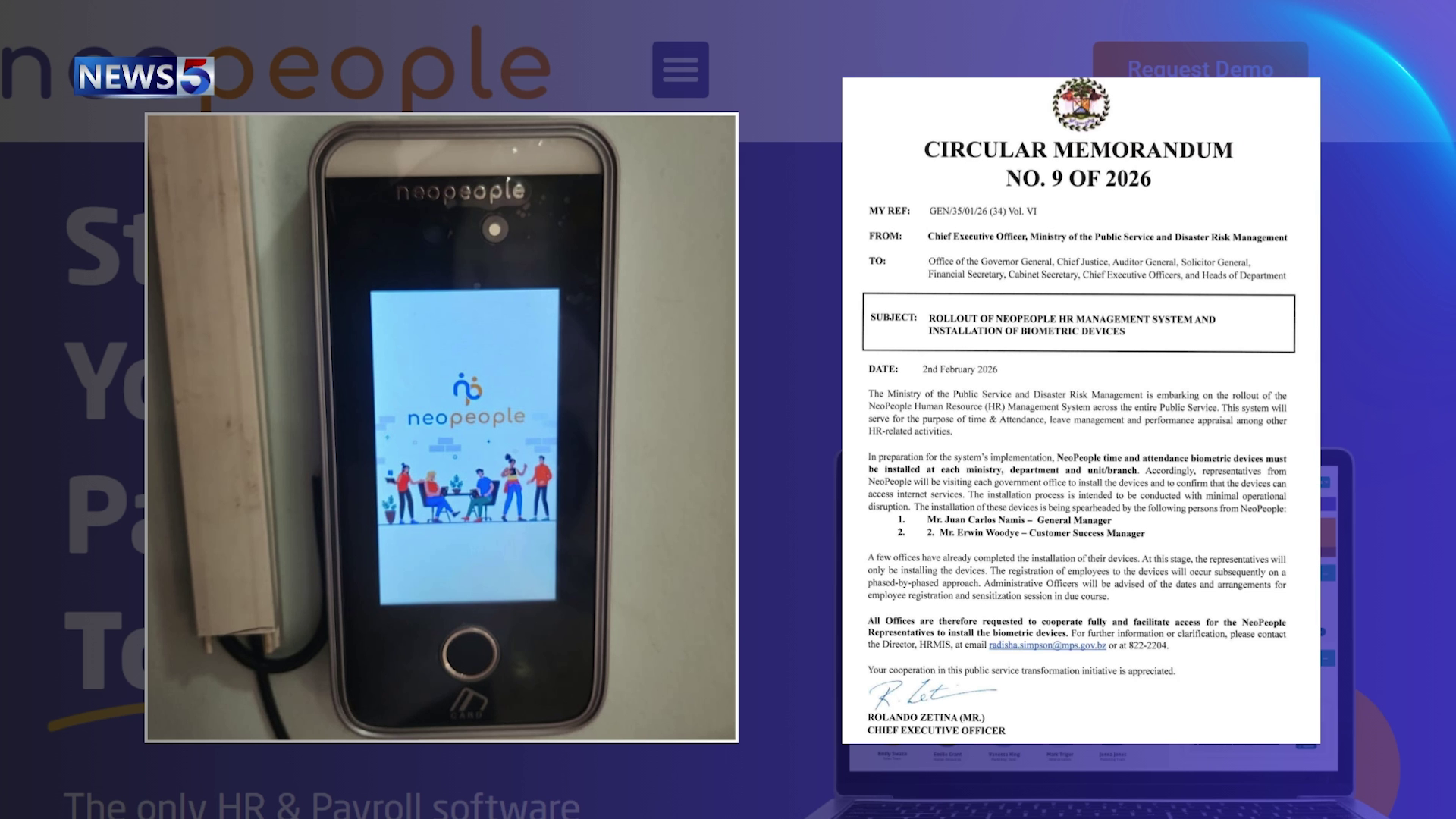
    In a growing conflict over public sector workplace reform, the Government of Belize is facing mounting pushback from public service employees over its planned national rollout of NeoPeople, a new human resources management platform that integrates biometric fingerprint clock-in technology for all government ministries and departments. Scheduled to launch in 2026, the initiative has been framed by state officials as a long-overdue modernization effort that will boost efficiency and transparency across the country’s public service. But the nation’s primary public employee union has emerged as a fierce opponent, raising alarms over procedural violations, data privacy risks, unchecked public spending, and potential violations of core worker rights.

    Dean Flowers, president of the Belize Public Service Union (PSU), laid out the organization’s core objections in an interview, emphasizing that the government failed to follow mandatory consultation requirements laid out in national labor law. Under existing regulations, any policy change that alters the terms and conditions of public service employment requires formal negotiation and discussion with recognized employee representatives. Flowers stressed that the rollout extends far beyond a simple shift in how workers clock in and out for shifts: the system will centralize the entirety of public employees’ personal records, known as p-files, on a third-party managed platform. These comprehensive files contain every detail of a public servant’s employment history, from initial appointment letters and salary information to performance appraisals, disciplinary records, medical leave history, loan documentation, and personal assistance requests. Essentially, Flowers explained, an employee’s entire professional life is stored in this single file.

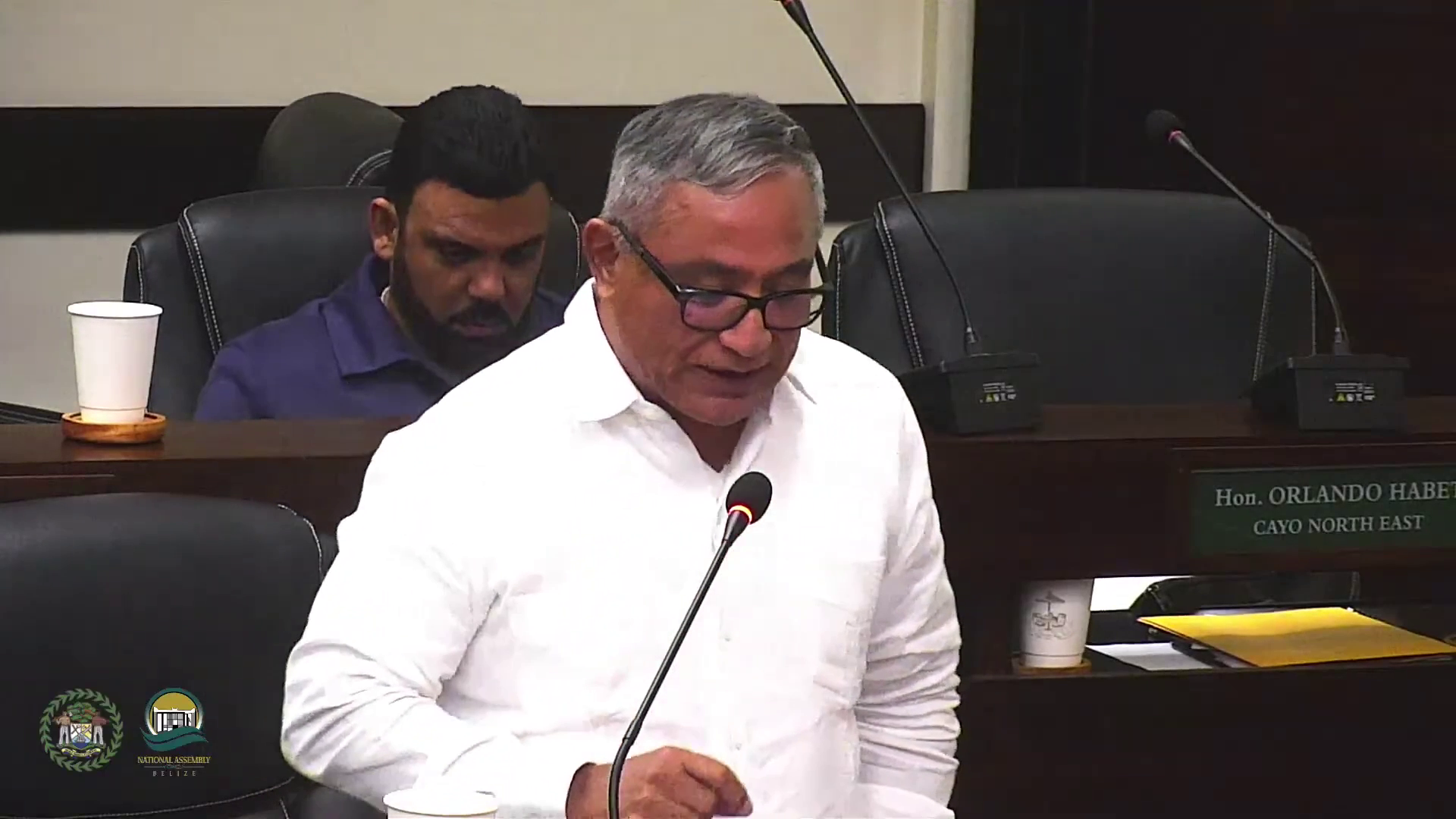
    The union’s concerns extend beyond the lack of prior consultation to major violations of Belize’s Data Protection Act, Flowers argued. The national legislation grants specific data rights to individuals whose personal information is collected and stored, including the requirement to obtain explicit consent before sharing sensitive personal data with third parties. To make matters worse, Flowers warned that the system’s core management functions are guided by undisclosed algorithms. With no public information available about who developed these tools or what parameters they use to evaluate workers, the technology could easily be weaponized against employees who disagree with government policies, he claimed.

    Finances and procurement transparency are another major flashpoint in the conflict. The union has been unable to access any public tender documents for the NeoPeople contract, leaving critical questions unanswered about whether the contract was awarded through a fair competitive bidding process or an uncompetitive limited tender process. Unconfirmed public rumors put the annual maintenance cost for the system at nearly $3 million Belize dollars, a figure that translates to roughly $14 per year for each of the country’s 17,000 public servants. The union has also pressed for answers about the duration of the contract, full contract terms, and who retains legal ownership of the sensitive employee data. These questions have grown more urgent, Flowers noted, because there is no guarantee the government will renew the contract with the third-party provider when it expires, raising the risk of employee data being held hostage by the vendor if negotiations break down.

    After failing to get voluntary disclosure from state officials, the union submitted a formal information request under Belize’s Freedom of Information Act, asking for full details on procurement, contract terms, data access protocols, and privacy safeguards. To date, the request has gone unanswered. Flowers says the Financial Secretary has missed the legal deadline to respond to the request, putting the office in direct violation of the Freedom of Information Act. The union first turned to the Office of the Ombudsman to resolve the dispute, but that avenue is effectively blocked under the current administration: the government recently refused to renew the Ombudsman’s contract after he fulfilled his oversight duties independently, leaving the watchdog position effectively sidelined. With all other non-judicial recourses exhausted, the union has received approval to move forward with a judicial review of the Financial Secretary’s failure to disclose information, and the case is now in the hands of the union’s legal team.

    Flowers confirmed that legal action remains on the table if the government continues to refuse to address the union’s concerns, and the public will be kept updated as the case moves through the court system. News outlets will continue to track developments in this story to see whether the judicial process results in the information disclosure the union has requested.

  • Flowers Warns of Due Process Failures in Border Officers’ Case

    Flowers Warns of Due Process Failures in Border Officers’ Case

    A growing controversy is unfolding around eight immigration officers assigned to Belize’s Western Border, after the group was placed on administrative leave for taking sick leave within a shared time window, with union leadership now demanding accountability over what it calls blatant violations of basic administrative and legal protocols.

    The dispute, which emerged in April 2026, has escalated rapidly: at least one of the officers has retained legal representation to challenge the leave decision, setting the stage for what could become a high-stakes legal confrontation between the workers, their union, and government immigration officials.

    Public Service Union President Dean Flowers publicly amplified the union’s concerns this week, laying out detailed allegations of procedural misconduct in how government authorities have handled the case. Flowers explained that on the very same day the eight officers received their formal administrative leave notifications, they were simultaneously served with accusatory letters claiming the workers intentionally coordinated their absences as an act of sabotage against border operations.

    Far from being kept internal to the immigration department, Flowers said these accusatory letters were widely circulated among administrative staff across multiple government ministries, including the public service department, before copies ultimately made their way to media outlets. He emphasized that contrary to claims from Home Affairs Minister Kareem Musa that no individual officers were named in the documents, every officer was explicitly identified in the accusatory letters.

    “In my view, these letters are designed to damage the professional reputations of these public servants,” Flowers said in remarks during an evening news broadcast. “Legal experts have already confirmed that the letters contain false mischaracterizations that label the officers as intentionally undermining government operations, an accusation that carries significant professional and personal consequences.” Flowers added that the simultaneous delivery of the leave notice and the accusation recommending termination is a clear violation of established administrative protocol, especially given that the immigration department employs a full-time in-house legal counsel and is overseen by a minister who is himself a trained attorney.

    The case has cast a spotlight on labor relations between public sector unions and the Belizean government, with the union gearing up to defend the officers’ right to due process as the conflict moves toward potential litigation.

  • Flowers Fires Back at PM Over Sickout Comments

    Flowers Fires Back at PM Over Sickout Comments

    A fierce public dispute has erupted between Belize’s top public service union leader and the nation’s prime minister over recent comments tied to a planned worker sickout, dragging long-simmering tensions between the government and public sector employees into the spotlight.

    The clash began after Prime Minister John Briceño was questioned by reporters about the industrial action, when he publicly questioned why the Public Service Union (PSU) has refused to pursue closer collaborative working relations with his administration. Briceño also implied that PSU President Dean Flowers holds partisan alignment with the opposition United Democratic Party, a claim Flowers has rejected outright in a blistering response.

    In a fiery, unfiltered address, Flowers dismissed the prime minister’s accusations as a deliberate distraction tactic designed to politicize the union’s legitimate advocacy for the working rights and fair treatment of public sector employees across Belize. The union president went on to call out Briceño’s leadership style, saying the prime minister needs to mature beyond partisan political games and fulfill his obligations to the office he holds.

    Flowers laid out the union’s long-standing approach to addressing labor concerns: every time public officers face an infringement of their workplace rights, or when the government rolls out new policies that impact public sector workers without prior consultation with the PSU, the union first formally reaches out to the Briceño administration in writing to flag concerns. But Flowers claims that not a single one of these formal communications has ever received a response from the prime minister himself.

    “How dare he say I need to work with his administration?” Flowers asked, pushing back on Briceño’s narrative. “To confuse the Belizean people and to not address the issues as they are presented to him, factually, his quickest tool is to pretend he is in the circus called the House of Representatives and make it political.”

    Flowers also pushed back on the partisan accusation, openly confirming that he voted for the incumbent People’s United Party (PUP) area representative in his district during the 2020 general election, saying he has no shame in that choice and proving his alignment is not with the opposition. He closed his rebuke with sharp criticism of Briceño’s conduct, saying the prime minister is acting like an immature young man from Orange Walk rather than leading the country.

    Looking ahead, Flowers reaffirmed that the PSU will not back down from holding the Briceño administration accountable for any documented injustices against public sector workers. He added that the union will be closely monitoring the progress and outcome of ongoing administrative actions against a group of immigration officers, a case that has already stoked tensions between the government and the public service community.

  • New CEO Wants to Make Belizeans Proud of KHMH

    New CEO Wants to Make Belizeans Proud of KHMH

    Belize’s only tertiary care facility, the Karl Heusner Memorial Hospital (KHMH), is entering a new era of transformation under its recently appointed Chief Executive Officer Sharine Reyes, who formally stepped into the role on April 1. Tasked with leading one of the nation’s most high-profile and heavily scrutinized public institutions, Reyes says she already feels both the weight of public expectations and the widespread outpouring of support from across Belize that has followed her appointment.

    In her first public interview since taking office, the new CEO did not shy away from acknowledging the deep-seated challenges she inherited, from persistent low staff morale to long-fractured internal relationships between management and frontline workers. For Reyes, the foundation for lasting change begins with rebuilding the hospital’s work environment: breaking down communication barriers, ensuring every staff member’s concerns are heard, and putting the systems and structural support in place that teams need to succeed.

    A core part of her agenda is also reshaping the dominant negative narrative that has overshadowed KHMH in recent years, by highlighting the institution’s existing strengths that often go unrecognized. From the country’s most advanced computed tomography (CT) scanner to a fully operational oncology program that has helped hundreds of patients achieve remission, and a team of more than 700 dedicated clinical and administrative staff committed to delivering life-saving care, Reyes says KHMH already delivers transformative outcomes for Belizeans every single day.

    “I feel incredibly blessed and grateful for the confidence placed in me, both by KHMH staff and the entire Belizean nation,” Reyes said. “We’ve seen the public comments, words of encouragement, and even prayers that have poured in since my appointment, and that means a great deal. To boost staff morale, you first have to fix the conditions people work in. Our teams are already committed to their work, but they need functional systems, adequate resources and clear structures to perform at their best.”

    Her leadership priorities include addressing long-running operational bottlenecks, strengthening cross-team communication, and embedding accountability at every level of the organization. “When staff know their issues are being taken seriously and addressed, that is the first and most important step to lifting morale,” she noted. “Over the coming months, we plan to shine a light on all the good work happening at KHMH every day. We have world-class clinicians, talented surgeons, compassionate nurses, and 700+ people who show up every day with one mission: to take care of every Belizean who walks through our doors. That’s the story we want the public to know.”

    Reyes acknowledged that rebuilding public trust and institutional culture will not happen quickly, but she expressed confidence that with intentional systems reform, sustained public and institutional support, and a renewed laser focus on patient-centered care, KHMH can once again become a source of national pride for all Belizeans.

    The early signs of a reset are already emerging, after years of strained relations between hospital management and staff. The new CEO has already held her first formal meeting with newly elected KHMH Authority Union President Roy Briceno, with both sides describing the conversation as productive and collaborative. Briceno, who was elected to the union leadership post in October 2025, said he had waited months for the appointment of a permanent CEO, and the first meeting exceeded his expectations.

    “Our meeting yesterday was very amicable,” Briceno shared in his first interview as union president. “We laid out all the long-standing issues our members face, and she agreed that we will continue meeting regularly to work through solutions together. Raising staff morale is a top priority for both the union and management, and that’s something we’re committed to tackling together. One key ask our members have long pushed for is clearer pathways for upward mobility within the institution, and that is already on the table as a shared priority.”

    Briceno added that staff already responded positively to Reyes’ appointment, in large part because of her well-documented open-door policy and approachable leadership style. “She’s someone we already know, someone who is open to dialogue and committed to resolving staff concerns, so that already gives us a lot of confidence,” he said.

    When asked to describe the current state of staff morale, Briceno noted that years of disconnected communication between past management and the union created a tense working environment that filtered down to frontline teams. “There was simply no functional relationship between the union and previous leadership, and that trickled down to affect every member of staff,” he explained. “My goal as the new union president, along with our new executive board, is to build a much closer, more collaborative relationship with management. We need space to understand each other, work together, and address the needs of our members – and when that happens, that improvement will trickle down to the patients we serve, and make KHMH a stronger institution overall.”

    The outlet reports that it will publish a follow-up feature on Monday exploring the full scope of challenges facing the new KHMH leadership, including unconventional issues such as managing staff caught up in ongoing U.S.-Cuba geopolitical tensions and the union’s long-standing demand for a 20 percent wage increase for hospital employees.


  • Girls in Tech Movement Gains Momentum in Belize

    Girls in Tech Movement Gains Momentum in Belize

    To mark International Girls in ICT Day, Belize’s signature gender equity in technology program “Lead Like a Girl” has returned for its fourth consecutive year, growing into a nationwide movement that draws record participation from young women across the country.

    This year, 140 female high school students from 35 institutions across Belize are taking part in hands-on activities, skills-building workshops and networking opportunities designed to open their eyes to long-term careers in information and communications technology, and equip them with the core competencies needed to succeed in an increasingly digital global economy.

    What began as a small community-focused idea has steadily expanded its reach and impact, reflecting growing interest among Belizean young women in tech pathways, according to Namrita Balani, Director of Science and Technology at Belize’s Ministry of Education, Science and Technology. Balani explained that the movement launched a structured pledge framework two years ago, which organizes support actions across four levels: individual (from your couch), community, corporate, and national. Individual actions range from simple social media shares to in-person volunteering, while national-level support includes new ICT scholarships approved by Belize’s Ministry of Finance, Economic Development and Investment to help participating girls pursue higher education in tech fields.

    The program’s growing impact is visible in the trajectories of early participants, Balani noted, pointing to Celeste (SES) Garcia, a three-year program alumna who now volunteers with the initiative and is enrolled in a technology degree program at the University of Belize. Garcia, whose father works in the tech sector, said she did not consider a tech career for herself until she attended her first “Lead Like a Girl” event.

    Key cross-sector partners, including UNICEF Belize, have played a central role in expanding the initiative. Sajid Ali, UNICEF’s country representative in Belize, emphasized that closing the gender gap in digital tech is critical for equitable economic opportunity. Data consistently shows that teenage girls and young women between the ages of 15 and 24 engage with digital technology at far lower rates than their male peers in Belize, a gap that limits their access to growing, high-wage tech career pathways. Ali challenged participating young women to see themselves as the next generation of global innovators, national leaders and decision-makers, urging them to believe in their own potential and leverage the support available to them in the tech sector.

    For Garcia, who now encourages new participants to explore their interests, that message of self-belief has already changed her life. She shared that she had no idea she would develop a passion for coding until she tested it out during a “Lead Like a Girl” activity. “This is a learning experience and this event is all about you guys. Give it a chance, maybe a competition you partake in, sparks a passion in you. You never knew you had,” Garcia told this year’s participants. “We need more girls in it. It doesn’t matter what you know now. If you like anything about the activities and games we play today, please don’t hesitate to pursue those interests. Every girl in here is smart and talented, has something amazing to offer, and each of you is meant to be here. So have fun, experiment, and most importantly, lead like a girl.”

    As the program enters its fourth year, organizers say they are committed to keeping it running long-term, with the goal of empowering the next generation of Belizean women not just to enter the tech industry, but to lead it.