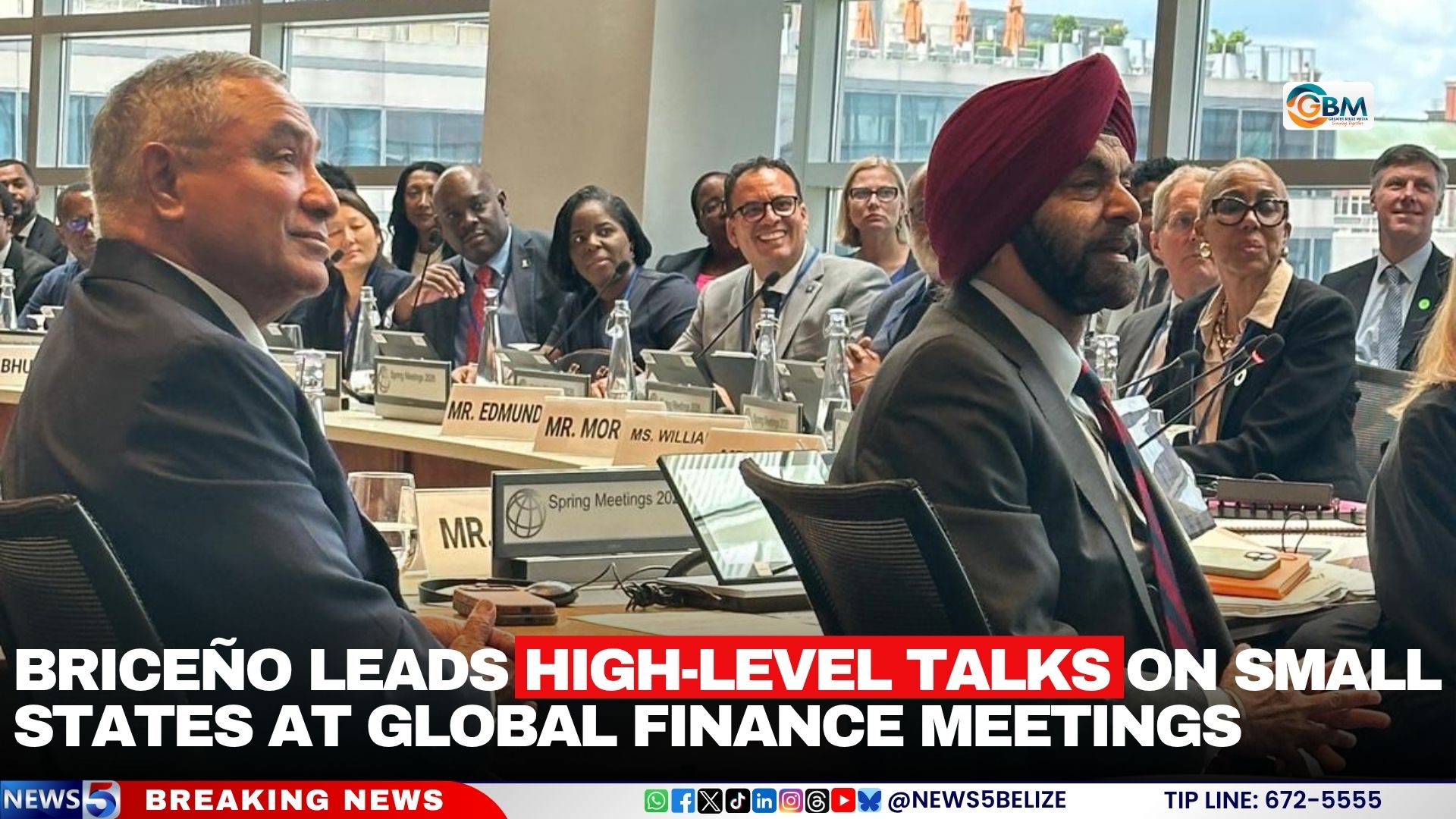
Against a backdrop of mounting global economic uncertainty, the 2026 Spring Meetings of the International Monetary Fund and World Bank Group kicked off a critical focused discussion this Friday in Washington D.C., where Belize Prime Minister John Briceño led high-level dialogue centered on the unique economic struggles of small states around the world.
The core agenda of the closed-door session revolved around the World Bank Group’s newly unveiled Small States Strategy, a targeted policy framework that prioritizes inclusive job creation while directly tackling deep-rooted structural vulnerabilities and persistent exposure to external shocks that have long held back smaller national economies. Unlike one-size-fits-all development policies pushed in decades past, the new strategy is built to accommodate the unique scale and constraints of economies with small populations and limited domestic output.
Opening the discussion, Prime Minister Briceño laid out the most pressing challenges currently facing small developing and developed states alike. He highlighted three interconnected crises tightening the grip on these economies: increasingly constrained global fiscal conditions that limit government borrowing and spending power, skyrocketing energy and food import costs that strain household budgets and trade balances, and the accelerating, disproportionate impacts of climate change that threaten to erase decades of development gains in coastal and small island states in particular.
Briceño emphasized that generic global economic policy adjustments cannot deliver meaningful relief for small nations. Any effective response, he argued, must be custom-tailored to account for the inherent vulnerabilities and limited resource base that define small economies, arguing that traditional macroeconomic frameworks often fail to account for these unique attributes.
The high-level discussion is one of dozens of focused engagements taking place during the week-long Spring Meetings, which bring together central bank governors, finance ministers, multilateral development leaders, private sector stakeholders and policy experts from across the globe to assess shifting global economic trends, coordinate collective action on shared cross-border challenges, and align new development initiatives to meet evolving global needs.