标签: Belize

伯利兹

  • Little Savers Devastated After Weekend Break-In at Ladyville School

    Little Savers Devastated After Weekend Break-In at Ladyville School

    It was supposed to be a joyful milestone waiting just weeks away: a group of 28 young first-grade students at Ladyville Evangelical Primary School in Belize would break open their handcrafted piggy banks at the end of June, count out the coins they had slowly collected since January, and celebrate months of learning about patience, financial responsibility, and the value of hard work. That dream was shattered in an overnight weekend burglary that left the youngest victims of the crime grappling with confusion and heartbreak that extends far beyond the stolen cash.

    When school staff arrived at the campus on Sunday to respond to reports of a break-in, they found a scene of chaos: multiple classrooms had been forcibly entered, desks were ransacked, school supplies were scattered across floors, and in the Infant Two Miller classroom, the most devastating discovery waited. Every one of the students’ handcrafted piggy banks, a core part of their semester-long financial literacy program, had been smashed open and completely emptied of all the coins the children had put away over five months.

    Ladyville Evangelical Primary School Principal Elia Chi described the gut-wrenching task of explaining the senseless crime to students and their families this Monday morning. For young children who had been taught that consistent saving and discipline would reward them with a special treat at the end of the school year, explaining that an unknown person had taken everything they worked for was an unimaginable challenge. The entire school community was thrown off balance by the incident, Chi said, noting that the staff could barely focus on their usual routines in the wake of the break-in. Most concerning for school leadership was that the trauma of the theft would not discourage children from continuing to learn the value of saving — a core life lesson the program was designed to teach.

    “It was really hard, and the classroom teacher told me that she didn’t have any words how to express this situation to her infant two students,” Chi said in an interview with local outlet News Five. “So I was the one that wrote a text message for her to please share with the class WhatsApp. And this morning, everybody here is sad. Like today we can’t function. Our mind is right there in what had happened. In particular because it’s our infant students. We’re teaching them how to save money and now just imagine how to explain to them that the money is not there. Because of someone, the money is lost. So we don’t want the children to change the mentality of saving. We want them to continue saving so that at the end of the year they can have something out of it.”

    As local law enforcement continues their search for the perpetrators responsible for the break-in, an outpouring of community support has quickly emerged to help the young savers rebuild. Dr. Carol Babb, founder of Peacework Belize — an organization that has long promoted financial literacy education across Belizean schools — has already committed to providing brand new piggy banks for all 28 affected students. The Belize Taiwan Alumni Society has also launched fundraising efforts to replace the stolen savings and help the children restart their saving goals.

    While a single criminal act succeeded in stealing months of hard work and children’s long-held anticipation, the rapid, compassionate response from the wider community has turned a devastating event into a new, unexpected lesson about collective kindness. The incident has left a lasting impact on the small school community, but the outpouring of support has given the students and staff hope that the children’s financial literacy journey can continue, and that the core lesson of patience and responsibility will not be lost to the crime. Local reporter Shane Williams contributed reporting for News Five.

  • No Helmets, No Safety: Dangerous School Runs Exposed

    No Helmets, No Safety: Dangerous School Runs Exposed

    In the busy afternoons outside primary schools across Belize City, a dangerous daily routine has become normalized, and long-time traffic safety advocates are sounding the urgent call for regulatory action before a preventable tragedy claims a young life.

    For years, commuters and parents have relied on affordable, nimble motorcycle services – and in many cases, informal “runman” drivers – to beat rush-hour gridlock when picking up children from school. What has raised alarm among safety experts and educators is the widespread lack of basic safety precautions: young children as young as 6 or 7 are routinely squeezed between adult drivers or balanced on motorcycle fuel tanks, school bags strapped to overloaded handlebars, and in the vast majority of cases, no helmets are worn by the children or sometimes even the drivers.

    Veteran traffic safety advocate Philip “Fawda” Henry, who has spent more than 20 years teaching pedestrian and road safety to students across Belize City, calls the trend a quiet public health disaster waiting to happen. “When you send a 7 or 8-year-old child home with a motorcycle driver who speeds and weaves through traffic, you are essentially sentencing your child to death,” Henry emphasized in an interview with local outlet News Five. He added that parents who dismiss established safety guidance that children under 9 should not be transported on public motorcycles bear direct responsibility for putting their children at grave risk.

    Concern over the crisis is not limited to safety advocates. Administrators at Holy Redeemer Primary School, one of the city’s local primary institutions, confirmed that the problem has been a top safety priority for years – particularly after a 2024 accident that left one of their students severely injured when the child’s father lost control of his motorcycle while picking the student up from school. Since the incident, school leaders have repeatedly issued warnings to parents about the dangers of unregulated motorcycle transport for children, but the dangerous practice continues unabated outside the school gates every afternoon.

    For many low-income Belize City households, motorcycle transport remains the only accessible and affordable option to get children to and from school amid limited public transit options and chronic rush-hour congestion. But Henry argues that convenience cannot come at the cost of children’s lives, and is calling on Belize’s transport department, senior leadership, and elected officials to introduce targeted new regulations to crack down on unsafe practices. He is pushing for strict new enforcement measures against unlicensed child transport and mandatory helmet requirements for all motorcycle passengers, regardless of age, that would hold reckless drivers and non-compliant parents accountable.

    As the community debates the trade-off between accessibility and safety, the question remains: will policymakers act before more children are harmed, or will this dangerous routine go unaddressed until it is too late?

  • Woman Dies in Motorcycle Accident in Cayo

    Woman Dies in Motorcycle Accident in Cayo

    A routine motorcycle ride along Belize’s Bullet Tree Road ended in tragedy in late May 2026, when a loss of control claimed the life of 49-year-old Auria Ramos, a resident of Bullet Tree Falls Village. The 32-year-old operator of the bike, Melvin Quischan – also from Bullet Tree Fall Village – has been issued a formal notice of intended prosecution as law enforcement continues to unpack the circumstances of the fatal collision.

    The investigation was launched shortly after 10 p.m. on Friday, May 22, when local police received emergency calls about the crash in Santa Familia Village. First responding officers arrived at the scene to find Quischan sitting on the roadway, with minor cuts and scrapes across his face and body. He was holding Ramos, who told first responders she was experiencing severe chest pain.

    Emergency medical personnel from the Belize Emergency Response Team (BERT) arrived quickly and transferred Ramos to a local medical facility for urgent care. Despite medical intervention, Ramos died from her traumatic injuries several hours after the crash.

    Per initial investigative findings, both Quischan – who was driving the Lifan brand motorcycle – and Ramos were riding along the road when Quischan lost control of the vehicle, causing it to veer off the pavement and crash. When reporters asked if impaired driving was being considered as a contributing factor, Assistant Superintendent Stacy Smith, the lead staff officer on the case, confirmed that while alcohol consumption has not been formally confirmed, responding officers detected a strong smell of alcohol on Quischan at the scene. Law enforcement requested a breath or blood sample to test for intoxication, but Quischan refused to comply with the request.

    When asked about helmet use, a key factor in motorcycle crash survival, Smith told reporters he believes both individuals were wearing helmets at the time of the collision. Quischan remains in medical care for his minor injuries and is reported to be in stable condition as of the latest update.

    Refusing to submit to an alcohol test following a crash is itself a criminal offense in Belize, and Smith confirmed that investigators are currently considering multiple charges connected to the incident. Smith noted that formal charges will not be filed until required procedural steps are completed as part of the ongoing investigation.

  • Court Slams CitCo in Coney Drive Land Dispute, But Gwen’s Stands

    Court Slams CitCo in Coney Drive Land Dispute, But Gwen’s Stands

    A long-running legal conflict over a small parcel of public land in Belize City has delivered a split verdict that has reignited broader conversations about property rights, governmental overreach, and the balance of legal protections for landowners in the Caribbean nation.

    At the center of the dispute is a narrow stretch of road reserve land positioned along Coney Drive, directly adjacent to private property owned by Ethel Thompson. Years ago, the Belize City Council and the national Ministry of Natural Resources took the extraordinary step of leasing, then selling, this public road reserve parcel to a third party. Thompson launched a legal challenge against the transaction, arguing that the sale of the land blocked her only accessible route to the main road, directly violating her fundamental rights as a registered property owner.

    On May 25, 2026, the Court of Appeal issued its much-anticipated ruling, siding with Thompson on a core point: the court confirmed that both the city council and the natural resources ministry had exceeded their legal authority when arranging the lease and sale of the public road reserve. The judges explicitly found that Thompson’s property rights as a landowner had been negatively impacted and unlawfully breached by the government entities’ actions. The court also awarded Thompson financial compensation from the two governmental bodies and ordered that she be granted a portion of her legal costs stemming from the appeal.

    However, the ruling stopped far short of fully reversing the transaction. The existing registered land title for the parcel, held by restaurant owner Ms. Flowers, remains fully valid, and Gwen’s Kitchen — the popular local business that has been operating on the site for years — will continue its operations uninterrupted.

    Andrew Bennett, the attorney representing the case, explained that the split outcome leaves Thompson only partially successful in her appeal. Thompson’s primary goal had been to secure a court order to alter the official land registration for Parcel 5116, the plot where Gwen’s Kitchen sits, to revert the land to public use and restore her full access rights. Bennett noted that the court declined to grant that extreme remedy because of long-standing legal protections enshrined in Belize’s Registered Land Act, which draw from foundational common law principles.

    One of the core principles of the act is the “curtain principle,” which holds that a registered land title is considered definitive: registered property owners do not need to investigate or challenge prior claims to their land, and the state guarantees the validity of a properly registered title. Absent proven fraud or a clear administrative mistake in the registration process, courts cannot legally alter or revoke a valid registered title. In this case, because Flowers holds a legitimate registered title to the land, she is protected by constitutional property rights that may not be interfered with unless following procedures explicitly laid out in national law.

    Beyond the immediate dispute between Thompson and Flowers, the ruling has raised pressing questions for other commercial operators in the area. Dozens of other businesses along Coney Drive and kiosk owners on nearby Mahogany Street hold land arrangements with the Belize City Council that carry similar legal structures to the one challenged in this case. Legal observers are now watching closely to see if the court’s rebuke of governmental overreach will open the door to future legal challenges that could reshape land tenure across the city.

    This report is adapted from a transcribed evening television news broadcast.

  • Dollar Vans Will Soon Costs Three Dollars!

    Dollar Vans Will Soon Costs Three Dollars!

    By the end of May 2026, ongoing spikes in global fuel prices have created cascading pressure across Belize’s entire public transportation sector, leaving both service providers and daily commuters grappling with unavoidable cost increases. The crisis first boiled over earlier this month, when independent bus operators blocked the Tower Hill Bridge in Orange Walk District to demand fare adjustments to offset skyrocketing fuel expenses. After emergency negotiations involving bus operator representatives, the Belize Bus Association, the Ministry of Transport, and the Office of the Prime Minister, a deal was reached to lift the blockade and restore normal traffic flow — but the agreement came at a tangible cost for commuters, with short routes seeing 50-cent hikes and long-distance fares jumping by as much as $1 Belize dollar.

    Now, the next segment of Belize’s shared transit industry, the iconic dollar van services that carry thousands of low-income and daily commuters across Belize City, has followed suit with its own price adjustment. In an interview with local outlet News Five, Belize Dollar Van Taxi Association President Richard Swift confirmed that starting June 1, adult fares on dollar van routes will rise from $2 to $3 Belize dollars, with children’s fares unchanged. According to Swift, the fare hike is a direct, unavoidable response to the relentless upward trajectory of fuel costs that has squeezed drivers’ already thin profit margins.

    “Most of our members are already taking a loss right now because gas keeps going up,” Swift explained, noting the urgent need to adjust fares from $2 to $3. “It all comes down to the rising price of fuel.” As of late May 2026, a single gallon of regular gasoline in Belize costs nearly $15 Belize dollars — a price point that most drivers cannot absorb without passing some costs along to riders. To put the impact in perspective, Swift shared his own daily expenses: just a few years ago, he spent $100 Belize dollars a day to refuel his van for daily routes. Today, that same daily refueling costs $150, a 50% increase that cuts straight into his earnings.

    Sherriff Salau, a veteran dollar van driver with years of experience on Belize City routes, echoed Swift’s comments, acknowledging that commuters will not welcome the price increase but urging them to recognize the necessity of the change. Salau noted that many regular riders have already shared that they may adjust their travel habits in response, with some saying they will switch to walking or cycling for shorter trips to avoid the higher fare. Still, drivers say the alternative — going out of business entirely and leaving commuters with no shared transit option — is far worse for the public.

    Beyond fuel costs, Swift also highlighted a second ongoing challenge for association members: unregistered, non-member operators who run unregulated van services along established dollar van routes, undercutting regulated fares and siphoning passengers away from licensed providers. The association is currently in active discussions with the Belize City Council to address this gap, calling for stricter oversight of informal transit providers and requirements for all vans operating fixed routes to meet the same standards and regulations as association members. Swift noted that if the city council can help crack down on unregulated competition, association drivers could even roll back the fare hike eventually, but without action, price increases are the only way to stay operational.

    Moving forward, the Belize Dollar Van Taxi Association plans to continue negotiations with local government officials and stakeholders to identify long-term solutions to the dual challenges of rising fuel costs and unregulated competition, while also working to upgrade service quality for commuters across the city. Britney Gordon contributed this report to News Five.

  • Officer Wanted in Red-Light Assault Case

    Officer Wanted in Red-Light Assault Case

    A manhunt is underway in Belize City for a veteran special patrol officer already linked to a high-profile 2024 assault case, after authorities filed new aggravated assault and wounding charges connected to a recent traffic-related incident. The target of the search is 38-year-old Special Patrol Officer Lewis Pascasio, who first made local headlines two years ago when he was accused of pulling a firearm on Belizean Olympian Shaun Gill during a public confrontation on Orange Street. That 2024 case remains active and is still progressing through the court system as of May 2026, according to local law enforcement updates.

    Superintendent Stacy Smith, a senior staff officer with the Belize Police Department, confirmed the new charges and manhunt in a press briefing on May 25, 2026, explaining that the latest investigation stems from a complaint filed by another serving police officer. “As it relates to the inquiry pertaining to Mr. Pascasio, I spoke with one of the OCs in Eastern Division, and what he just advised me just a short while ago is that, yes, in fact, an incident occurred, and an investigation was triggered, and that investigation has resulted in charges being prepared for Mr. Pascasio in relation to aggravated assault and wounding as a consequence of a report made by a police officer,” Smith stated in the official briefing.

    When pressed by reporters to confirm early unconfirmed reports that Pascasio was operating under the influence of alcohol or drugs at the time of the incident, Smith declined to comment on speculation. He did, however, confirm that the entire incident was captured on closed-circuit security camera footage from a nearby gas station, where the confrontation unfolded after Pascasio allegedly ran a red light in the area. Smith noted that the recorded footage has already been reviewed by investigators and served as key evidence supporting the decision to prepare formal charges against the fugitive officer.

    The development has renewed scrutiny of internal police oversight in Belize, coming as Pascasio still faces pending charges from the 2024 attack on the national Olympian. Local law enforcement has not yet issued a public timeline for Pascasio’s expected arrest, nor have they released additional details on the nature of the confrontation that led to the latest wounding charge. This report is adapted from a transcribed evening television newscast originally published online by local Belizean media.

  • High-End Mexican Market Within Reach for Belize Beef

    High-End Mexican Market Within Reach for Belize Beef

    Dated May 25, 2026, Belize’s cattle industry stands at the cusp of a transformative growth opportunity, with a lucrative high-end beef market in neighboring Mexico now within actionable reach, according to former Agriculture Minister Jose Mai — a lifelong cattle rancher who remains deeply engaged with the sector six months after stepping down for health reasons.

    Mai says local producers have already proven they can meet the strict quality standards required by Mexico’s niche premium beef market, following a successful small-scale trial launched after an industry connection proposed the idea during an international cattle show. The initiative traces back to a conversation at a Mexican cattle event, where Guatemalan industry contacts suggested Belize ranchers raise specialty Japanese cattle breeds such as Akaushi, which command premium price points in exclusive global and regional markets.

    Two local industry pioneers stepped forward to launch the experimental project: Abram Froese, a long-time member of the Belize Livestock Producers Association (BLPA) who has long advocated for innovation to grow the cattle sector, and Henry Peters, a feedlot owner. Froese used artificial insemination to introduce the Akaushi genetics to his cattle herd, and the first resulting animals were raised and finished in Peters’ feedlot ahead of a tasting to assess meat quality and palatability. Though Mai was unable to attend the tasting after being hospitalized for sudden illness, he says photographs of the finished product confirmed it matched the premium quality niche Mexican buyers actively seek. “The demand is already there in Mexico,” Mai notes. “The only question that remains is whether Belizean producers can scale production to meet that demand and capitalize on this economic opportunity.”

    To unlock the full export potential of this new market, Mai emphasizes Belize must first invest in a modern, state-of-the-art domestic slaughterhouse — a critical infrastructure upgrade to meet international food safety and quality standards for cross-border exports.

    Alongside outlining the new industry opportunity, Mai addressed growing public speculation surrounding his 2025 resignation from the agriculture ministry, which was initially announced as tied to the need for urgent back surgery. In recent weeks, the public has questioned the shifting narrative around his procedure, after Mai ultimately underwent right knee surgery in Guatemala rather than a back operation.

    Mai explained the full sequence of his health issues to clarify the confusion: doctors in Guatemala identified that his long-standing bowlegged condition had forced him to shift his weight unevenly when walking, straining his spine and causing herniated and dislocated discs that led to persistent back and hip pain. The planned initial back surgery was re-evaluated when doctors determined correcting the knee alignment would resolve the posture imbalance that caused the spinal strain in the first place. After the first knee procedure, Mai developed severe pain in his right knee after it took on extra strain while the other leg recovered. He says ongoing physical therapy is addressing the residual discomfort, and he remains on track for a full recovery.

    Even while recovering from surgery on the sidelines of official government, Mai has stayed deeply involved in Belize’s agricultural policy and development. He remains an active member of the Ministry of Agriculture’s internal WhatsApp group, regularly offering input and advice to current ministry leadership and staff. He praised his successor, Minister Rodwell Ferguson, saying “Minister Rodwell is holding the fort very well. He has surrounded himself with an excellent technical team, and any leader is only as good as the people around you.”

    As a trained agronomist and third-generation agricultural stakeholder (with his own son now also working as an agronomist), Mai called agriculture a core part of his identity, saying “it’s in my veins, I can’t step away even if I wanted to.” He expects to return to lead the Ministry of Agriculture after completing at least eight months of post-surgery recovery, confirming he remains committed to advancing Belize’s agricultural growth and economic opportunity for local producers.

  • Steep Customs Costs Overshadow Simple Birthday Card

    Steep Customs Costs Overshadow Simple Birthday Card

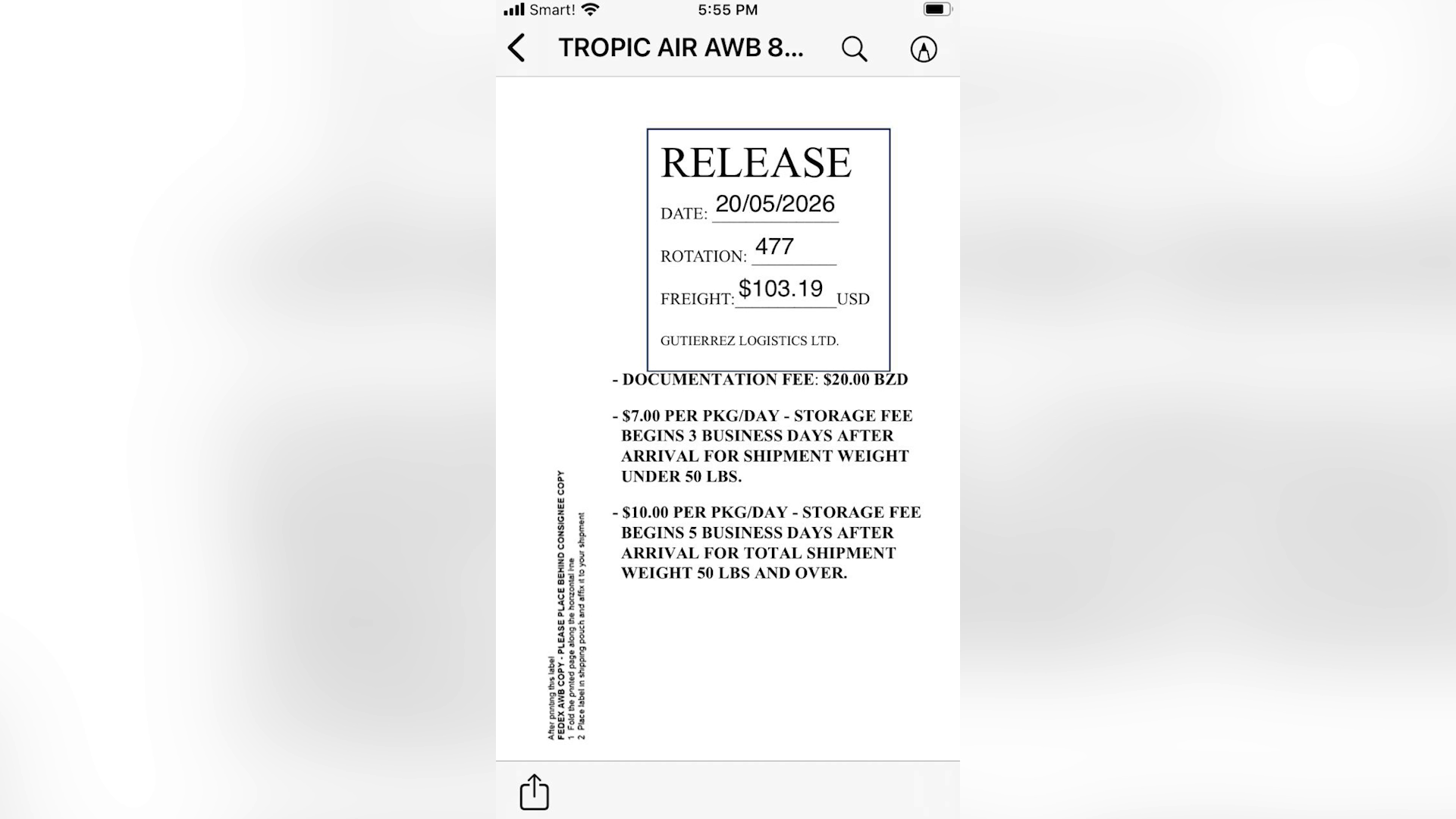
    In a surprising bureaucratic incident that has sparked public debate over customs fee policies in southern Belize, a resident of Placencia has spoken out about being hit with more than 200 Belize dollars (over 100 U.S. dollars) in mandatory clearance charges for a simple birthday card mailed to him by his elderly mother living in the United States.

    The recipient, who has requested to remain anonymous to protect his family’s privacy, shared details of the frustrating ordeal in a phone interview. Every year, his mother sends a handwritten birthday card through international courier FedEx, paying premium shipping rates to guarantee the item arrives in time for the celebration. This year, she spent nearly 300 U.S. dollars on expedited shipping to meet the delivery deadline. Unlike previous years, when the card was delivered directly to a local pickup point in Placencia with no additional charges, this shipment was held at customs, which issued a formal demand for the unexpected clearance fee.

    Beyond the shock of the exorbitant charge for a low-value, sentimental greeting card, the Placencia resident also raised concerns about accumulating daily storage fees that would be added to his bill if he failed to claim the package quickly. When he reached out to FedEx to dispute the charge, the courier disclaimed any responsibility, stating that the fee was levied entirely by Belizean customs authorities.

    The situation took another turn after the incident drew public attention: the package was initially cleared for release, then pulled back by the Customs Department for a formal internal review. As of the latest update, customs officials have confirmed that the issue has been resolved, and the original excessive fee has been drastically reduced. However, the resolution has not quelled lingering questions among the public and local communities about why such a steep charge was applied to a small, low-value sentimental item in the first place, and whether inconsistent fee application is a widespread issue for small personal shipments entering the country.

    This report is a transcribed excerpt from a televised evening newscast focused on local Belizean affairs.

  • Baldy Beacon Breach Puts Elvin Penner Back in Spotlight

    Baldy Beacon Breach Puts Elvin Penner Back in Spotlight

    A high-profile Belizean political figure has reemerged at the center of a criminal investigation, following an alleged breach of a restricted military explosives disposal site in the Baldy Beacon region.

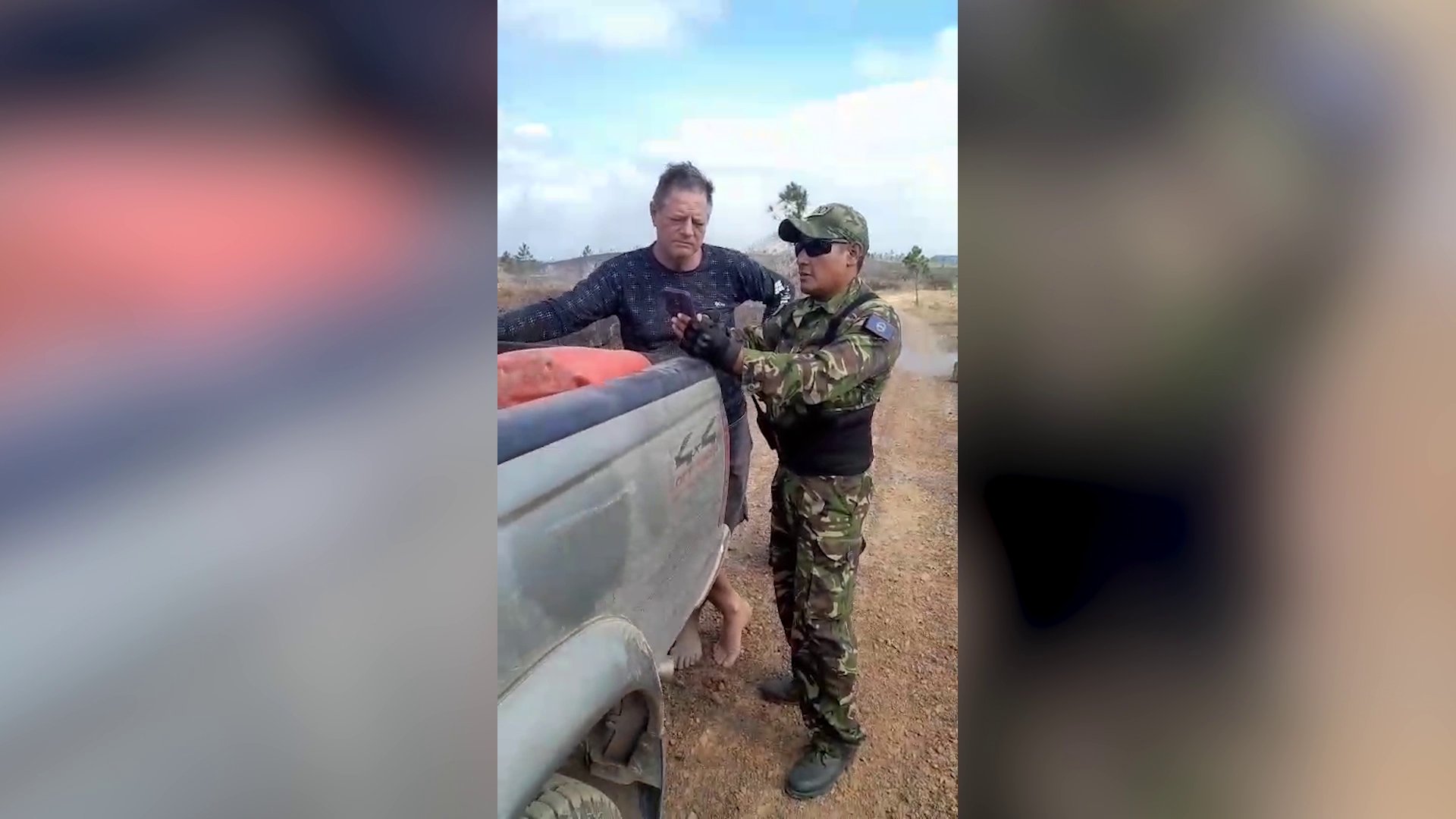
    Former government minister Elvin Penner is currently the subject of an active probe launched by national police after he was accused of entering the fenced active operation zone and attempting to remove material from the site. The country’s Ministry of National Defense has formally submitted an official incident report to law enforcement, opening the door for a full inquiry into the unauthorized incursion.

    Assistant Superintendent of Police Stacy Smith, a staff officer with the department, confirmed to reporters that investigators have received the official report along with two witness statements, which are currently being reviewed for compliance with the nation’s Dangerous Goods Act. When pressed by journalists to outline what criminal charges Penner could face if evidence of wrongdoing is uncovered, Smith declined to speculate, noting that investigators must first cross-reference the collected evidence with provisions of the act to confirm whether any offense has been committed.

    For his part, Penner has pushed back against the allegations, maintaining he did not violate any laws. He claims the components he collected from the area were mistaken for discarded, abandoned material, and he had no knowledge he was entering an active restricted site.

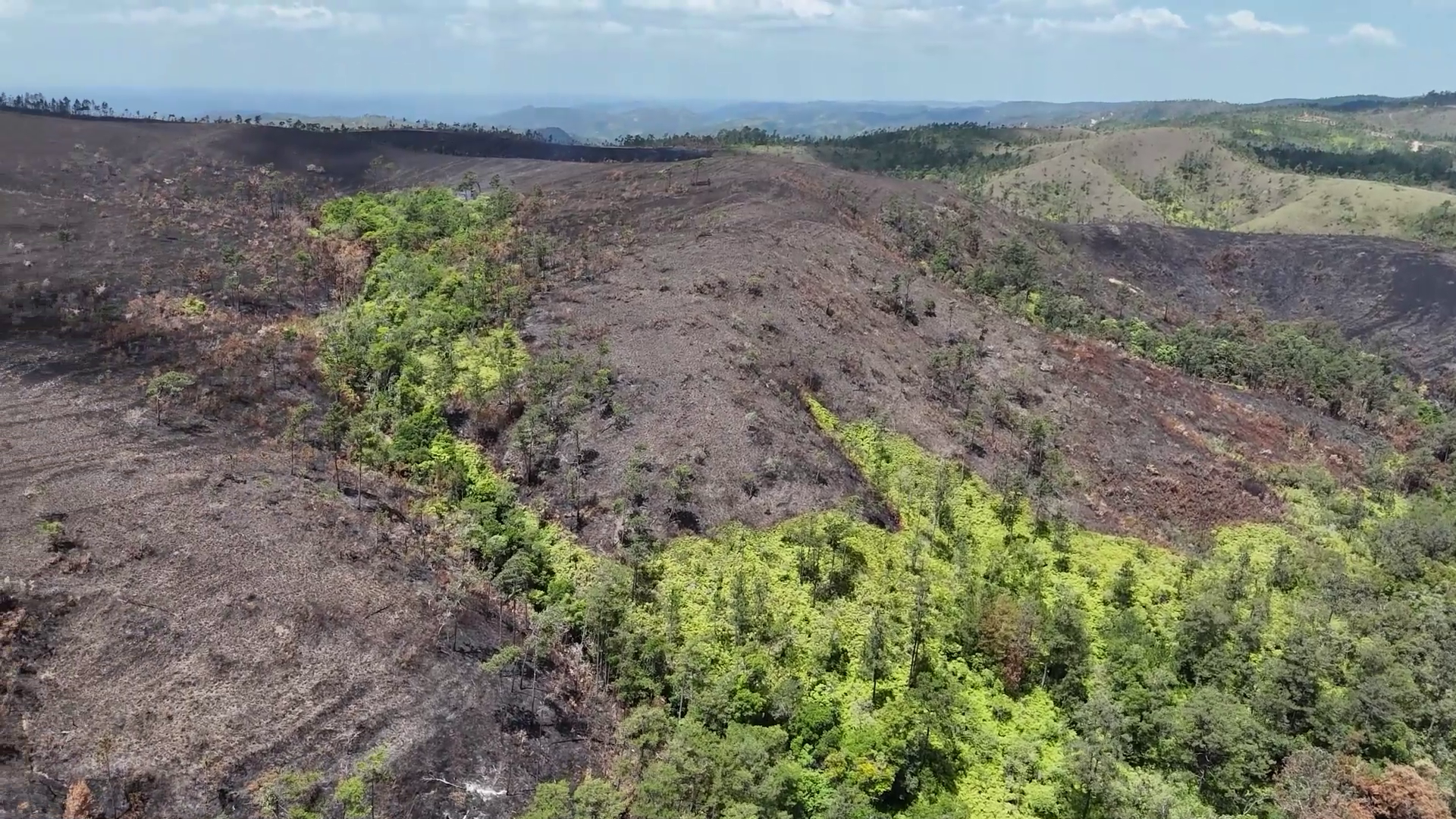
    The investigation comes amid rising local tension over a separate recent incident at the same site: a wildfire ignited during a Belize Defense Force (BDF) operation to destroy stockpiled unexploded ordnance recovered from private lands across the region. In the wake of community pushback and concerns from local landowners over the exercise, military leaders have moved to strengthen communication channels with nearby residents.

    BDF Commandant Brigadier General Anthony Velasquez confirmed that he held direct talks with landowner representatives at Baldy Beacon on Friday, where both sides addressed existing damage, the ongoing safety risks posed by unremoved military ordnance, and the urgent need for improved cross-stakeholder coordination going forward. Velasquez emphasized that while the ordnance disposal operations are conducted as a public safety measure to protect local communities, the military acknowledges that it failed to keep nearby residents sufficiently informed and involved in exercise planning.

    “The conversation was very productive,” Velasquez explained. “We walked through our position on the work we’re doing, and they shared their concerns with us directly. What we heard is that local landowners actually appreciate the work we’re doing to remove these dangerous devices, which pose a direct threat to their families, children and homes. Many of these devices were reported by residents themselves, after which our teams retrieved the ordnance to dispose of it safely at the Baldy Beacon site. This work is done for the greater good of the entire public.”

    Following the meeting, the BDF has moved quickly to implement new, more accessible communication protocols for local residents. Velasquez noted that the military will distribute contact information and printed outreach flyers to all landowners in the area, encouraging residents to report any newly discovered unexploded devices directly to BDF teams. Once notified, military personnel will be dispatched immediately to either destroy the ordnance on location or remove it to the secured disposal site for controlled detonation.

    Velasquez also addressed widespread criticism of the military’s choice to hold disposal exercises during the local dry season, when wildfire risk is elevated. He explained that the decision was rooted in safety: during the wet season, rural access roads to the Baldy Beacon site become extremely unstable and treacherous, making transport of unstable, aging unexploded ordnance far more dangerous than conducting the work during dry conditions.

    This report is a transcribed excerpt from an evening television newscast focused on national affairs in Belize, originally published online.

  • Government Moves to Lock Down BDF Training Lands

    Government Moves to Lock Down BDF Training Lands

    In a response to a serious security breach at a Belize Defense Force (BDF) explosive disposal exercise, the Belizean government has announced urgent measures to secure permanent, exclusive control over military training lands at the Baldy Beacon site. The incident, which unfolded in late May 2026, has exposed critical gaps in perimeter security for military training areas and reignited debate over public access to Defense Force operating zones.

    The controversy began when former government minister Elvin Penner entered the unfenced exercise zone and removed explosive ordnance that the BDF was in the process of destroying. Defense officials have labeled Penner’s actions as extremely dangerous, noting that the incident put multiple lives at risk and already contributed to one fatal outcome tied to the unsecured explosives. Despite official claims that multiple advance warnings were issued and on-site security personnel were deployed during the live disposal exercise, on-the-ground footage confirms that the large training site, spanning multiple miles across rolling hills and accessible via unmarked minor roads, has no permanent perimeter fencing. This lack of physical barriers makes unrestricted public access surprisingly easy for anyone choosing to enter the area.

    Speaking on the government’s new security push, Minister of National Defence Florencio Marin Jr. emphasized that the BDF’s ongoing explosive destruction work is a necessary public safety operation that should not face avoidable interference. “The military were simply conducting what I don’t think anyone would complain about destroying these explosives. You saw how we lost a life sadly because of it. This is part of the overall effort to destroy them. I’m not sure how anyone ordinary might actually go around there and try to interfere with that work,” Marin said.

    Brigadier General Anthony Velasquez, Commandant of the BDF, explained that the large size of the Baldy Beacon training area has long prevented permanent fencing, even as the military follows standard protocol to alert the public of active exercises. “It’s a huge area. It’s several kilometers, miles wide, so there’s no fence around the area at all. There’s access by some minor roads and by other crossing hills and valleys. So it’s not an area that is fenced off anything like that, right? So people can access the area. However, during exercises we put up warning flags and we deliver a NOTAM so that people know that we’re conducting exercise in the area. And also during the exercise we have sentries out, so there’s no reason why Mr. Penner didn’t know that we were there conducting these exercises,” Velasquez stated.

    Moving forward, the BDF has begun the formal process of acquiring permanent tenure for the training lands to eliminate future access disputes. Marin noted that permanent secured control will insulate the military from arbitrary access changes that can come with shifting governmental leadership, ensuring the force always has a dedicated space for critical drills, training, and live fire exercises when required. “The BDF now is in the process of acquiring land so that they can, in the future, don’t have to deal with this issue of whichever government come in or whichever ministers come in they cannot arbitrarily get access to their lands, right? The military needs its training grounds. We have to continue operating. So we are working on that, securing some operating area that they can conduct their drills and training and where necessary, live firing appropriately,” Marin added.

    Following the incident, the recovered explosive materials have been turned over to Belizean police as evidence for the upcoming trespassing and unlawful theft case against Penner. This article is a transcript of an evening television newscast, with all Kriol language renderings converted to a standardized spelling system for publication.