标签: Belize

伯利兹

  • Senate President Returns with Vision for More Inclusive Leadership

    Senate President Returns with Vision for More Inclusive Leadership

    Fresh off a high-profile regional diplomatic gathering in Ottawa, Canada, Belize Senate President Carolyn Trench-Sandiford has returned home with new policy insights and a renewed commitment to advancing inclusive, transparent leadership across the country. Trench-Sandiford represented Belize at the 22nd ParlAmericas Plenary Assembly, a leading forum that brings together parliamentary stakeholders from across the Western Hemisphere to address shared challenges and advance regional cooperation.

    During the assembly, Trench-Sandiford took on a key leadership role, moderating a pivotal high-level discussion focused on two pressing priorities for democratic governance: how national legislatures can increase public accessibility to institutional processes to build broader citizen trust, and how inclusive legislative practices can drive more equitable, robust economic decision-making. The plenary gathered a diverse cohort of heads of parliament, senior policymakers, and governance experts from across the Americas, who gathered to tackle interconnected, high-stake issues spanning technological innovation, cross-border security, and equitable sustainable development.

    Beyond formal agenda items and policy speeches, attendees identified cross-national collaboration and relationship-building as the most valuable outcome of the gathering. The forum created structured space for participating nations to align on policy priorities, refine shared approaches to regional challenges, and lay the groundwork for coordinated action to strengthen broad-based economic growth across the hemisphere. For Belize specifically, the conference marked a critical opportunity to cement the nation’s place in key regional governance conversations, while exporting domestic priorities and importing actionable policy ideas that can strengthen institutional practices at home.

    Supported by ParlAmericas for her participation in the assembly, Trench-Sandiford brings back more than just new policy perspectives. She returns with renewed momentum to advance her stated vision of more open, collaborative leadership within Belize’s own legislative framework, with a focus on making governance more accessible and responsive to all segments of the Belizean public.

  • Three Southern Communities Lead Belize’s New Economic Shift

    Three Southern Communities Lead Belize’s New Economic Shift

    In a groundbreaking shift toward community-led development in Belize, three southern villages — Hopkins, Seine Bight, and Maya Center — have made history as the first pilot participants in the European Union-supported PROSPER project, a four-year initiative designed to turn local innovation into inclusive, long-term economic expansion. Unlike traditional development models that rely on top-down policy planning, this groundbreaking program places direct decision-making power in the hands of local residents, putting community needs and local knowledge at the center of growth strategy.

    The project’s priorities span a range of locally rooted economic sectors, from expanding sustainable, eco-friendly tourism infrastructure to scaling up climate-resilient cacao farming and supporting micro and small local enterprises. A core focus of the initiative is expanding equitable economic opportunity, with targeted investment in removing barriers for women and young people — two groups that have historically faced disproportionate barriers to economic participation in rural Belize.

    The selection of the three pilot communities was not arbitrary. Each village earned its spot through a rigorous, multi-criteria screening process that evaluated local natural and human resource assets, existing business potential, and demonstrated community commitment to collective development. Their selection now positions these three villages as trailblazers for the program’s next phase, with 12 additional rural communities in the Toledo district slated to join the initiative in the coming months.

    Ultimately, the PROSPER project aims to transform a small pilot into a nationwide grassroots movement, building broader economic resilience across rural Belize by empowering local communities to drive their own growth from the bottom up, rather than relying on external planning that does not reflect local needs.

  • Belize Shines with Two World-Class Fishing Captains

    Belize Shines with Two World-Class Fishing Captains

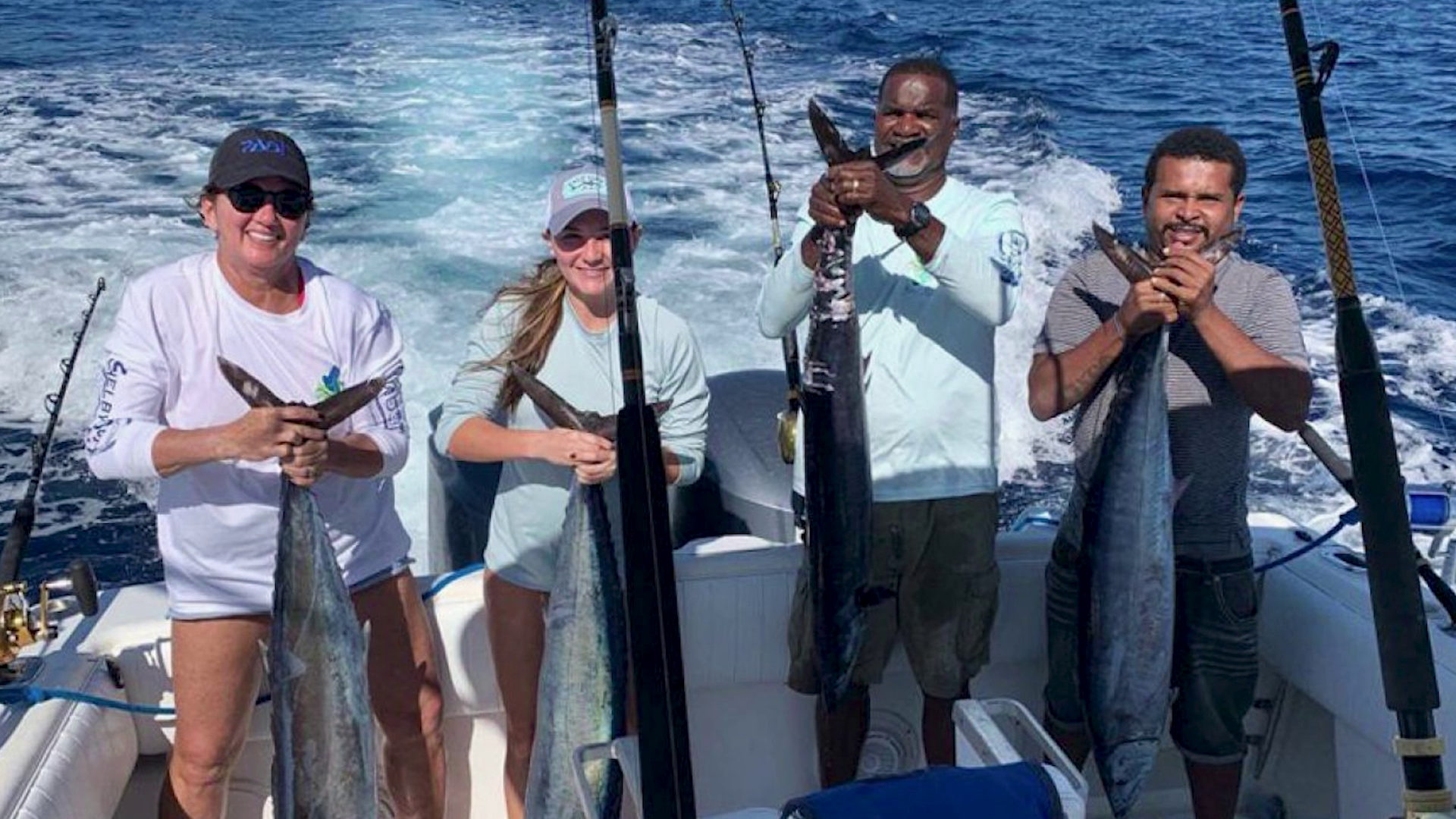
    In a landmark win for Belize’s recreational fishing and tourism sector, two local fishing captains have secured one of the industry’s most prestigious international awards, cementing the Central American nation’s status as a world-class angling destination. As of May 26, 2026, Joel Moratoya from San Pedro and Stefan Musa from Belize City have been named recipients of FishingBooker’s 2026 Angler’s Choice Award, an honor that spotlights the most exceptional fishing guides across the globe. The selection process was fiercely competitive: out of nearly 9,500 nominated captains from around the world, fewer than 800 earned a spot on the final award list, making Moratoya and Musa’s inclusion all the more notable.

    Unlike many industry awards that only celebrate record catches, the Angler’s Choice Award evaluates guides across multiple critical metrics: consistent service quality, outstanding customer satisfaction, and uncompromising adherence to safety protocols. Both Belizean captains posted an extraordinary 98% reliability score, positioning them among the most trusted and dependable fishing tour operators in the entire Caribbean region.

    In an interview following the announcement, Musa shared his thoughts on the global recognition, emphasizing that the award reflects the daily dedication of Belize’s entire community of fishing guides. “There’s a lot of multi-talented guides across the country. We put in a lot of work day to day ensuring our equipment, our boats, our crew, everybody is up to standard, everything is top tier,” he said. Musa added that his team prioritizes vessel safety and works to create a welcoming, positive experience for every visitor, going beyond fishing excursions to help guests explore inland attractions and promote all that Belize has to offer.

    When asked what advice he would share with other local guides hoping to earn similar recognition, Muso highlighted core principles for long-term success: unwavering dedication to the craft, discipline, attentive customer service, and a commitment to sustainable fishing practices. “Promote sustainable fishing. Take care of the natural resources for future generations to come. It’s very important,” he noted.

    FishingBooker CEO Vukan Simic also praised the two Belizean captains, noting that they have consistently delivered the highest quality fishing experiences across the Western Caribbean’s most iconic angling waters. For Belize, the dual award serves as a major public vote of confidence in the country’s fast-growing reputation as a premier global fishing destination, a key driver of tourism revenue and local economic growth. The achievement also underscores the critical role that experienced, customer-focused local operators play in building Belize’s international brand in the competitive ecotourism and adventure travel space.

  • Heatwave Break: The Rains Are Coming!

    Heatwave Break: The Rains Are Coming!

    For days, communities across Belize have sweltered under relentless high temperatures, but a long-awaited shift in atmospheric conditions is set to bring much-needed relief to the small Central American nation this week, official meteorological data confirms. According to updates from the Belize Meteorological Service, a mass of moist, unstable easterly airflow has entered the region, kicking off a period of storm activity that will break the extended heatwave.

    Forecasters have outlined uneven precipitation patterns across the country’s different regions for the coming days. Residents living in central and northern districts can expect scattered showers and thunderstorms to develop starting this evening. For most other areas of Belize, only isolated rain showers are predicted over the period. Southern districts, however, will see a more sustained period of wet weather: frequent showers and thunderstorms are forecast to continue from Tuesday through Thursday.

    The incoming rain comes as local authorities have already completed preliminary flood mitigation work ahead of the annual Atlantic hurricane season. The Belize City Council announced last week it had launched a large-scale drain-clearing initiative across communities that face high flood risk, aiming to reduce the threat of standing water and flash flooding once heavy rains arrive. The proactive work is part of the council’s annual pre-hurricane season preparedness push, designed to protect vulnerable neighborhoods and cut down on storm-related disruptions.

    The end of the prolonged heatwave comes as welcome news for Belizean residents, who have endured days of elevated temperatures that strained energy systems and raised public health concerns in recent weeks.

  • Police Officer Granted Bail After Gas Station Assault Case

    Police Officer Granted Bail After Gas Station Assault Case

    A routine traffic interaction between two serving Belize City police officers erupted into physical violence at a local gas station last week, leaving one officer facing criminal assault charges and already granted court-ordered bail ahead of his upcoming trial.

    The incident unfolded on the city’s streets when 31-year-old Police Constable Louis Pascascio allegedly ran a red light at the intersection of Saint Thomas Street, before driving his vehicle into the Puma gas station located on Freetown Road. Fellow officer Police Constable Jose Mejia witnessed the traffic violation, followed Pascascio to the refueling stop, and moved forward to initiate a standard traffic stop for the infraction.

    In official statements given to investigators, Mejia told authorities that Pascascio refused to comply with multiple verbal orders to halt his vehicle and remain at the scene. Instead, Pascascio exited his car, advanced directly toward Mejia, and struck him with an open-handed slap that left Mejia with a laceration to his lower lip. Mejia was able to take control of the situation quickly, restraining Pascascio and taking him into custody at the gas station before he could cause further harm.

    Pascascio was formally charged with aggravated assault in connection with the altercation, and made his first appearance before a Belize District court this week. Following the hearing, Magistrates granted the officer bail, but imposed a strict restraining condition as part of his release terms: Pascascio is required to stay a minimum of 100 feet away from complainant Jose Mejia at all times until his case concludes. He is next scheduled to appear in court on July 30, when the prosecution will complete the required disclosure of evidence in the case.

    Court and police records also uncovered a prior legal incident linked to Pascascio: in 2024, he faced another separate assault charge tied to firearms, which involved well-known Belizean national athlete Shaun Gill. That earlier case was ultimately withdrawn by prosecutors before it could go to trial, leaving no conviction on Pascascio’s record from that incident.

    The in-house altercation between two sworn officers has drawn local attention to internal discipline within Belize’s law enforcement community, as the judicial process moves forward to resolve the latest assault allegation.

  • 3 Southern Villages Join New EU Job and Farming Project

    3 Southern Villages Join New EU Job and Farming Project

    In a major milestone for rural economic development in southern Belize, three local communities—Hopkins Village, Seine Bight, and Maya Center Village—have formally signed on to become the inaugural participants in the four-year PROSPER project, an international initiative backed by the European Union and implemented in partnership with the Government of Belize and the International Labour Organization. Scheduled to run from 2026 to 2030, the program targets expanded job creation and sustainable farming growth for Indigenous Maya and Garifuna communities across the country, with 12 additional communities in Toledo District set to join later this year after final community consultations conclude.

    Unlike many top-down development projects, PROSPER centers on community-led decision-making to ensure that economic gains from local industries—from cultural tourism to agricultural exports—remain in the hands of local residents rather than outside entities. Each participating community will establish a dedicated local action group, giving everyday residents direct voting power to set funding priorities and select which development projects move forward first. This collaborative approach was built into the project from its early planning stages: more than 100 residents from Hopkins and Seine Bight were consulted back in December 2025 to shape project priorities during the pre-launch groundwork phase.

    The selection of the first three communities followed a rigorous assessment process that evaluated each village’s existing small business ecosystem, cooperative infrastructure, and overall readiness to launch new development initiatives. Two core pillars anchor the project’s work: the first is expanded investment in sustainable cacao agroforestry, a traditional farming practice that aligns with Belize’s goals for climate-resilient agriculture and economic growth. Local vocational schools will integrate cacao cultivation training into their official curricula, and will receive targeted equipment upgrades and expert training support to deliver high-quality education to new and emerging farmers.

    Rodwell Ferguson, Belize’s Minister of Agriculture, emphasized the long-term value of the project’s focus on cacao agroforestry during the signing ceremony. “By investing in and supporting our rural farming communities, we can do more than just boost short-term incomes,” Ferguson noted. “We can strengthen rural livelihoods across the country and build more resilient agricultural systems that will serve generations of Belizeans to come.”

    PROSPER’s overarching mission addresses a longstanding challenge in many rural tourism and agricultural economies across the Global South: how to ensure that revenue generated from local land and labor translates into sustained, community-wide prosperity rather than leaking out to external third parties. By centering Indigenous and Afro-Indigenous community leadership, the project aims to create a replicable model for inclusive rural development that can be expanded across Belize and potentially adapted to other regional contexts in the Caribbean and Central America.

  • Mexico Helps Train Belize Farmers in Cattle Farming

    Mexico Helps Train Belize Farmers in Cattle Farming

    A transformative new collaborative livestock training initiative, led by Belize’s Ministry of Agriculture and Mexico’s international development agency AMEXCID, kicked off this week in Cayo District, marking a key step forward in Belize’s push to strengthen and diversify its national agricultural sector.

    Over five days, participating agriculture extension officers, technical specialists from the University of Belize, and representatives from the Belize Livestock Producers Association will gather at the Central Farm Extension Office to learn evidence-based modern approaches to cattle rearing. The comprehensive training curriculum covers three core, high-priority areas: sustainable pasture management, targeted nutritional conditioning to boost cattle productivity, and efficiency-focused strategies to cut production waste in both the local beef and dairy segments.

    For Belizean smallholder and commercial farmers alike, the program promises tangible long-term benefits: participants are expected to leave with the skills to raise healthier cattle and deliver higher-quality beef and dairy products to both domestic and regional markets. This initiative aligns directly with a recent call for agricultural diversification from Belizean Prime Minister John Briceño, who urged the nation’s large community of sugar cane producers to expand into cattle farming just weeks before the training launched.

    Speaking to reporters earlier this month, Briceño emphasized the economic logic behind diversification, noting that stakeholders have spent decades encouraging sugar cane farmers to avoid over-reliance on a single commodity. “We’ve been talking with cane farmers for decades about diversifying, that don’t put all your eggs in one industry, in sugar,” the prime minister said. The new training program turns that policy priority into actionable support, creating clear pathways for sugar producers to build new income streams through cattle rearing while shoring up Belize’s overall agricultural resilience.

  • From the Chiquibul to the World’s Greatest Guitars

    From the Chiquibul to the World’s Greatest Guitars

    Tucked deep within the remote, lush expanse of Belize’s Chiquibul Jungle, a single fallen ancient mahogany has grown from a forgotten logging mishap into one of the most extraordinary legends in modern music history. Decades after the tree was first left to rot in a ravine, acoustic guitars crafted from its rare, uniquely grained timber have left even the world’s most iconic musicians stunned, and become the most sought-after instruments on the global market.

    The story of what insiders now simply call “the Tree” dates all the way back to 1965, when the territory was still known as British Honduras. Per reporting from Smithsonian Magazine, a team of working loggers stumbled across a massive, centuries-old mahogany that measured a full 12 feet across at its base and stretched 100 feet upward to meet the jungle’s closed canopy. When the crew began felling the gnarled giant, it tilted unexpectedly backward and crashed into a deep ravine, leaving it completely out of reach of the heavy tractors the team had brought to extract it. With no way to move the massive log, the loggers abandoned the site, and over generations, the tree’s existence faded into local jungle myth.

    Decades later, that legend found its way to Robert Novak, a wood importer who had traveled to Belize to source rare rosewood for instrument building. When a local contact tipped him off about the forgotten fallen mahogany, Novak decided to trek deep into the jungle to see the tree for himself. “It was just very beautiful,” Novak shared in an interview with Acoustic Guitar Magazine. Extracting the massive log from the ravine turned into a months-long, grueling undertaking: the tree had to be cut into manageable sections one by one, dragged out of the steep ravine by hand, hauled 90 miles over rough terrain to the Belizean coast, then floated upriver to a working sawmill. When the operation was complete, the team had harvested nearly 12,000 board feet of flawless premium lumber, from a tree that forestry experts estimate was 500 years old when it fell.

    What luthiers discovered when they began working with the ancient mahogany was unlike any timber the global instrument-building community had ever encountered. As Smithsonian Magazine documents, the wood features three incredibly rare, distinct grain patterns: a blistered outline that resembles a topographical map of a mountain range, a deeply curled grain pattern known among woodworkers as “sausage,” and the rarest of all, a repeating tortoiseshell mottling that has never been found in any other mahogany. For Belize, mahogany has long been a core part of national identity – the tree is even featured on the country’s official flag, flanked by two loggers holding their traditional trade tools.

    For the world-class musicians who have had the chance to play guitars crafted from “the Tree,” the experience evokes a near-spiritual reverence few other instruments can match. When Slash, the legendary lead guitarist of Guns N’ Roses, first picked up his custom acoustic built from the tree’s timber, he told Acoustic Guitar Magazine he expected nothing out of the ordinary. “I thought, ‘OK, let’s get this over with,’” he recalled of the first encounter. Instead, he was immediately stopped in his tracks. “When I picked it up, I was completely humbled. It was a shock-and-awe moment. It changed everything I’d ever thought about acoustic guitars.”

    Other leading names in acoustic music, including fingerstyle virtuoso Andy McKee and Dire Straits co-founder David Knopfler, also count custom “Tree” guitars among their most prized instruments. One renowned British guitarist even sold off his entire collection of 14 existing instruments just to afford a single guitar made from the rare wood, and has said he would make the same choice again. Prices for new guitars built from “the Tree” start at roughly $30,000, with rare pre-owned models selling for far more at auction.

    Today, the remaining supply of the rare mahogany is dwindling rapidly. Jay Howlett, a wood researcher who has spent more than a decade tracking down forgotten stashes of the timber hidden in garages, barns, and independent luthier workshops across the world, estimates that only 400 to 600 board feet of usable lumber remains. That is enough wood to build at most 600 more guitars – and once that supply is exhausted, it will be gone forever, with no other tree matching its unique characteristics ever discovered.

    Novak, the man who pulled the legend out of the Belizean jungle decades ago, says he still finds it surprising that the ancient tree has become such a revered name in music circles, with instrument builders and collectors simply referring to it as “the Tree.” “It’s very beautiful,” he said, “and it should get attention.”

    What started as an abandoned log lost in Chiquibul’s dense green canopy has grown into a gift that keeps giving to the global music community. The world has gotten centuries of beautiful music from the tree that Chiquibul gave up, and Belize – a small Central American nation often overlooked in global music history – has given the world a treasure far greater than it has ever been credited for.


  • Family Alleges Police Inaction After Machete Attack in Toledo

    Family Alleges Police Inaction After Machete Attack in Toledo

    Nearly two weeks after a violent machete attack inside a family residence in San Marcos Village, Toledo, a bitter dispute has erupted over the lack of arrests and conflicting accounts of what unfolded on May 14. The attack has left one man hospitalized with a serious neck wound and a local family questioning the integrity of local law enforcement and village governance, while community leaders have pushed back against allegations of obstruction.

    Mario Makin, a family representative, told local outlet News Five that the incident began when a group of unidentified men forced entry into his parents’ home. The intruders targeted Makin’s brother, delivering a deep machete wound to his neck, and directly threatened Makin’s mother during the attack. First responders from the local police force transported the injured man to a medical facility for urgent treatment, but no suspects were taken into custody at the scene or in the immediate aftermath, Makin says.

    The following day, Makin’s mother submitted a formal incident report to authorities and formally requested legal proceedings against the attackers. But according to Makin, almost two weeks later, no law enforcement action has been taken. “Up to now, the people that did the chopping, they’re still walking free on the road with the machete in their hand… I don’t know if the police, they afraid to arrest those people,” Makin stated in his interview. He added that his mother now lives in constant fear, unable to feel secure in her own home after the attack.

    Makin further alleged that the local village Alcalde was present during the attack, and suggested that political influence from village leaders is the root cause of police inaction. He explained the violence grew out of an earlier altercation between his brother and the village chairman’s brother, creating a conflict of interest that has derailed the investigation.

    But village leadership has offered a completely contradictory version of events, rejecting all claims of interference and tying the incident to a confrontation that began far from the Makin family home.

    Juan Caal, secretary to the Alcalde, explained that when the incident occurred, both the village chairman and the Alcalde were attending an off-site meeting. They received an emergency report that two intoxicated men were assaulting the chairman’s brother on a remote backstreet within the community. Caal says the Alcalde rushed to the scene immediately and attempted to take the two suspects into custody, but the pair managed to flee before they could be detained.

    Due to the severity of the incident, which involved a deadly weapon and explicit threats of violence, the Alcalde’s office referred the entire case to the national police force to lead the investigation, Caal said. “We handed over to the police so that they can handle the matter from there because it involved a machete, it involved threatening words. And all we know is that someone tried to attack the chairman’s brother,” Caal explained. He also suggested the incident may have been a case of self-defense, raising the unsubstantiated possibility that the injured man’s neck wound was self-inflicted during the physical struggle.

    Caal explicitly denied two core allegations from the Makin family: he refuted claims that Chairman Muku was present during the home attack, and rejected suggestions that any village leader interfered to block police from making arrests. He stressed that referring the case to police was a deliberate recommendation from the Alcalde’s office.

    Despite these denials, the Makin family stands by their original account, pointing out that police have the names of the suspected attackers and a formal incident report on file – and still have not taken any suspects into custody. “I don’t know what they’re investigating when they already received the report and they’re not acting on it,” Makin said. The ongoing lack of resolution has left the family feeling failed by the institutions meant to protect them, and has cast a spotlight on potential gaps in local law enforcement response in rural Toledo.

  • Belizean Man Killed After Being Struck by Bus in New York

    Belizean Man Killed After Being Struck by Bus in New York

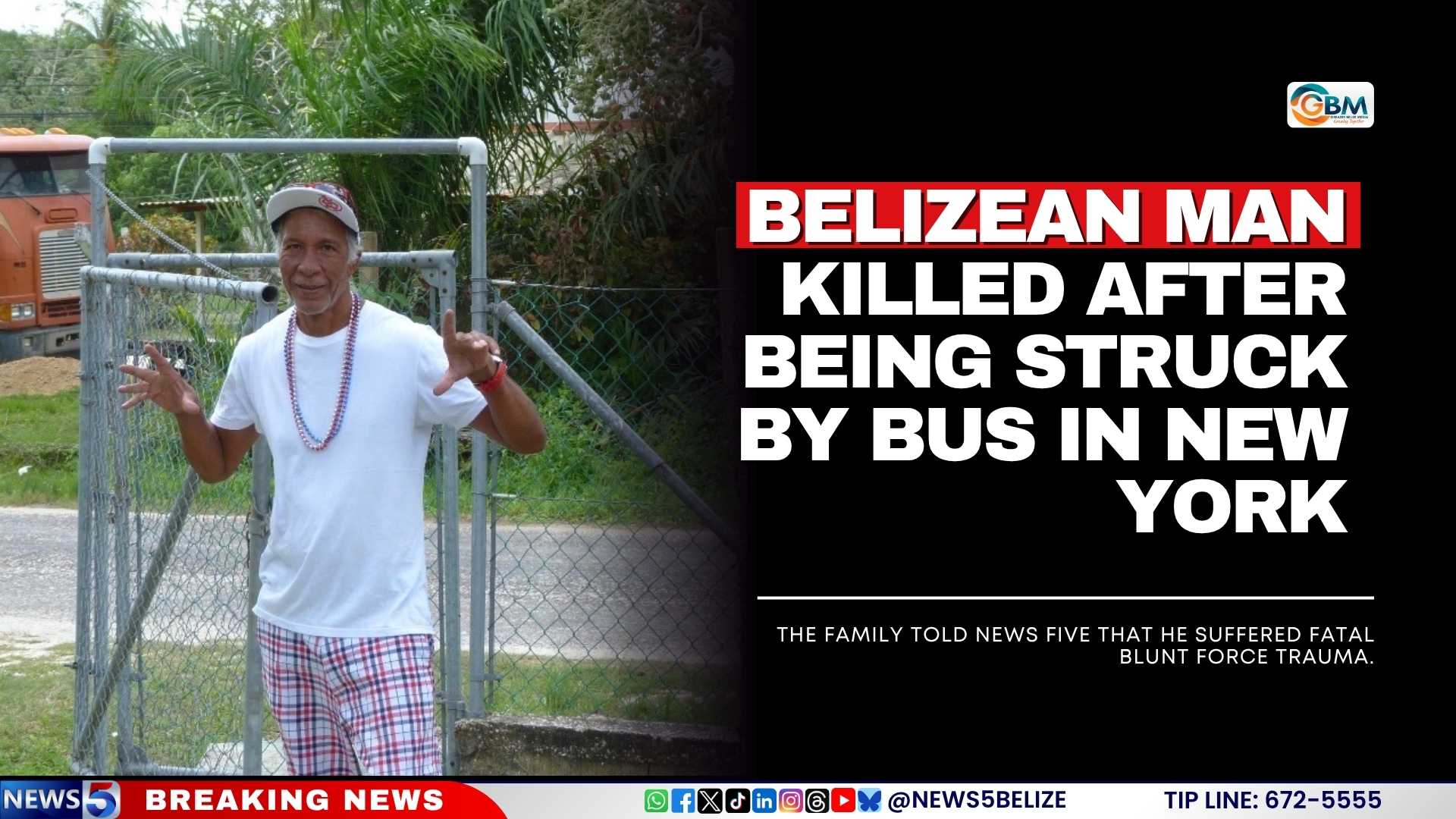
    A devastating traffic tragedy on Staten Island, New York has left the tight-knit Belizean immigrant community and the family of 72-year-old Leton Meyers in mourning, as loved ones push the Metropolitan Transportation Authority (MTA) to release full transparency about the circumstances that led to his fatal death on May 15.

    Originally from Burrell Boom, Belize, Meyers had built a life in New York City for decades, settling in the West New Brighton neighborhood of Staten Island after immigrating. According to initial investigations from the New York Police Department’s Collision Investigation Squad, the fatal incident unfolded at a local bus stop. As the MTA bus began pulling away from the curb, Meyers stumbled backward into the roadway, and the vehicle’s rear tires struck him, causing catastrophic injuries. The family confirmed he died from severe blunt force trauma sustained in the collision.

    To date, the MTA has not released a full public disclosure of the incident’s details, leaving the grieving family to navigate their loss while demanding a complete explanation of how the preventable tragedy unfolded. In a heartfelt public statement, Meyers’ family remembered him as a generous community builder who dedicated his life to opening his home to anyone in need. “This was a man who spent his life opening his home to everyone and building community,” the statement read. “To lose him in such a violent and horrific way has shattered our family. We are grieving while also searching for accountability and answers from the MTA about how this happened.”

    Meyers was born and raised in Burrell Boom, where he completed his education at St. John’s Technical School before moving to the United States to build his career. A skilled and knowledgeable technician, he spent decades working for major industry firms including Ricoh and Ikon, earning a reputation across his field for unwavering dedication and sharp technical expertise.

    Alongside his wife Effie, Meyers turned their Staten Island home into a safe haven for neighbors, friends, extended family, foster children, and any person seeking support or a sense of belonging. Effie shared that her husband’s core value was making everyone feel like part of the family: “He wanted people to feel like family. No one left our home hungry, unwelcome, or alone.”

    Meyers is survived by his wife Effie, two adult children Samantha and VaSeann, and granddaughter Jaslene. Jaslene emphasized that the family wants Meyers remembered for the kind, generous man he was, not the violent circumstances of his passing: “My Grandpa didn’t deserve to die that way. We want him to be remembered for who he was, not how or why he died.”

    Notably, Samantha Meyers described the incident as a tragedy that impacted all parties involved, extending quiet empathy to the bus driver as well as her father. “It was a tragic accident for both parties, for the driver of the bus and for him,” she told the New York Daily News.

    A well-known and beloved figure in Staten Island’s growing Central American immigrant community, Meyers leaves behind a legacy of radical generosity, warm hospitality, and deep pride in his Belizean heritage that touched dozens of lives across the city.

    In the wake of his sudden passing, Jaslene has launched a GoFundMe crowdfunding campaign to cover the cost of funeral arrangements and end-of-life expenses, explaining that the goal is to give her grandfather the dignified burial he was denied: “Every person deserves a dignified end of life. He was robbed of that and we want to make sure we give him that as we lay him to rest.”