标签: Belize

伯利兹

  • More Details of Young Doctor Murdered in Belmopan

    More Details of Young Doctor Murdered in Belmopan

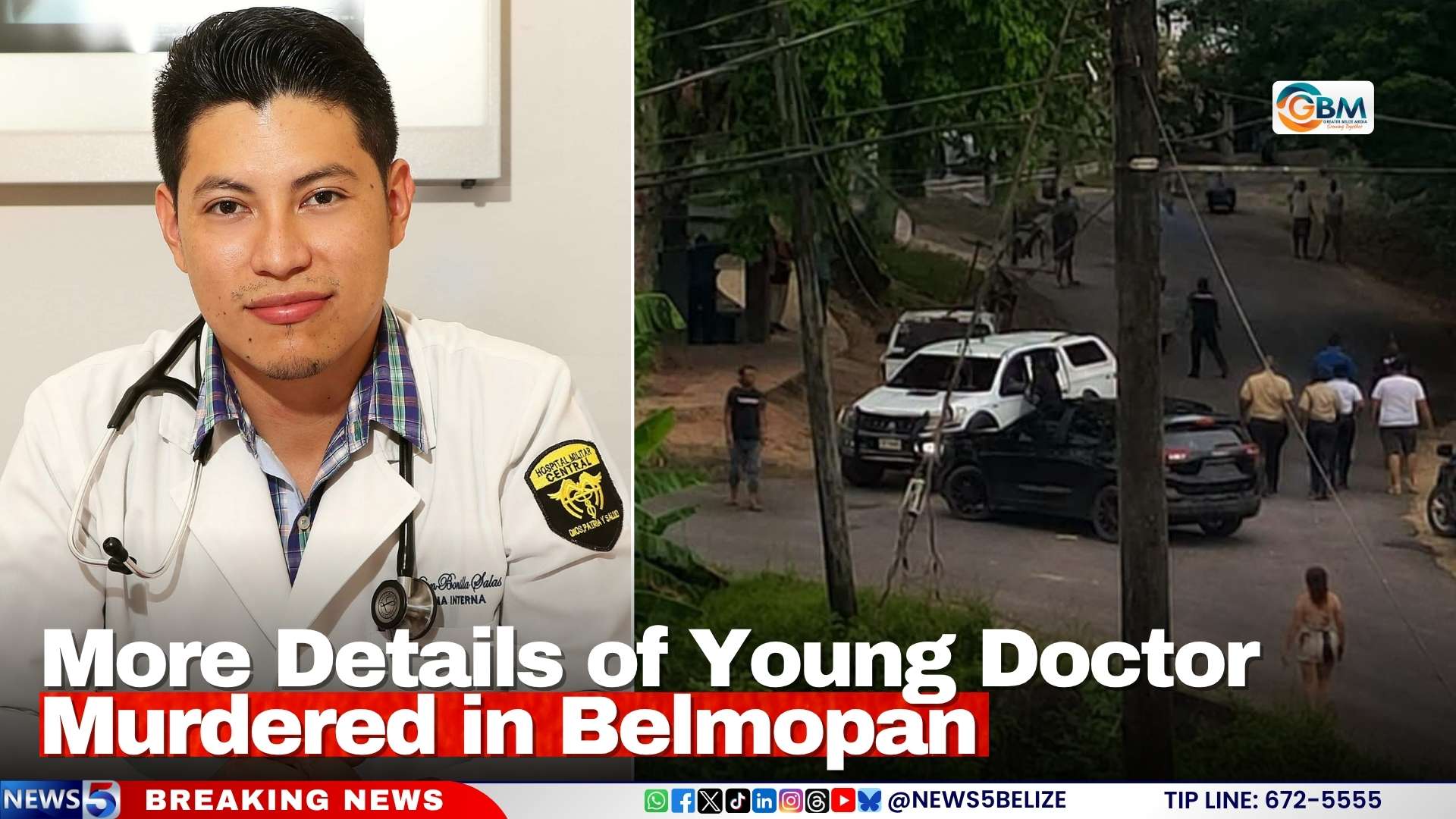
    On the morning of May 29, 2026, a brutal, public attack left a well-respected young Belizean physician dead in the capital city of Belmopan, shocking local communities and reigniting critical conversations about national crime policy. The victim, identified as Dr. Naun Bonilla, an internal medicine specialist focused on diabetes and hypertension care at Belmopan Medical Imaging Center, was gunned down while driving his young daughter to school just steps from Las Flores Park.

    The shooting unfolded shortly after 8:30 a.m., in full view of multiple bystanders. Witness accounts confirm that as Dr. Bonilla drove his white SUV along the road, an unidentified second white vehicle pulled parallel to his car. A masked gunman exited the vehicle and fired more than 10 rounds directly at the physician before fleeing the scene. Remarkably, Dr. Bonilla’s young daughter, who was seated in the backseat of the vehicle, escaped the attack without physical injury.

    After the shooting, the uncontrolled SUV veered off the roadway and crashed into a patch of nearby brush, where crime scene investigators and local law enforcement later processed evidence before removing the doctor’s body. Coincidentally, crew members from the Belmopan City Council were conducting routine park maintenance in Las Flores Park at the time of the attack, meaning multiple first-hand witnesses were already on site. One of those maintenance workers told reporters they assisted in pulling the unharmed young girl from the vehicle immediately after the gunman fled.

    What makes this deadly incident particularly politically notable is that Belmopan lies outside the geographic scope of Belize’s current national State of Emergency (SOE), which has been implemented to curb violent crime in other regions of the country. The killing has prompted widespread online scrutiny of the SOE’s reach and effectiveness, with many social media users questioning why the measure has not been expanded or adjusted to address rising violence in the capital. One user put the prevailing criticism bluntly, writing that the current SOE “seems to be having little to no effect on the bloodletting.”

    Beyond policy debate, public reaction to the murder has been overwhelmingly defined by collective grief. Dr. Bonilla was a widely beloved figure in the Belmopan community, known for his commitment to caring for local patients. Dozens of social media users shared tributes remembering him as “the best doctor in Belmopan” and a provider who dedicated his entire career to helping vulnerable community members. Many commenters also expressed deep despair about Belize’s broader ongoing violent crime crisis, noting the senseless loss of a young professional who spent his days saving lives. “Such a young doctor, why take someone with such a great future… someone that saves lives,” one comment read.

    Local outlet News 5 has confirmed it will continue providing updates to the investigation as more details become available.
  • Charged for Attempted Murder

    Charged for Attempted Murder

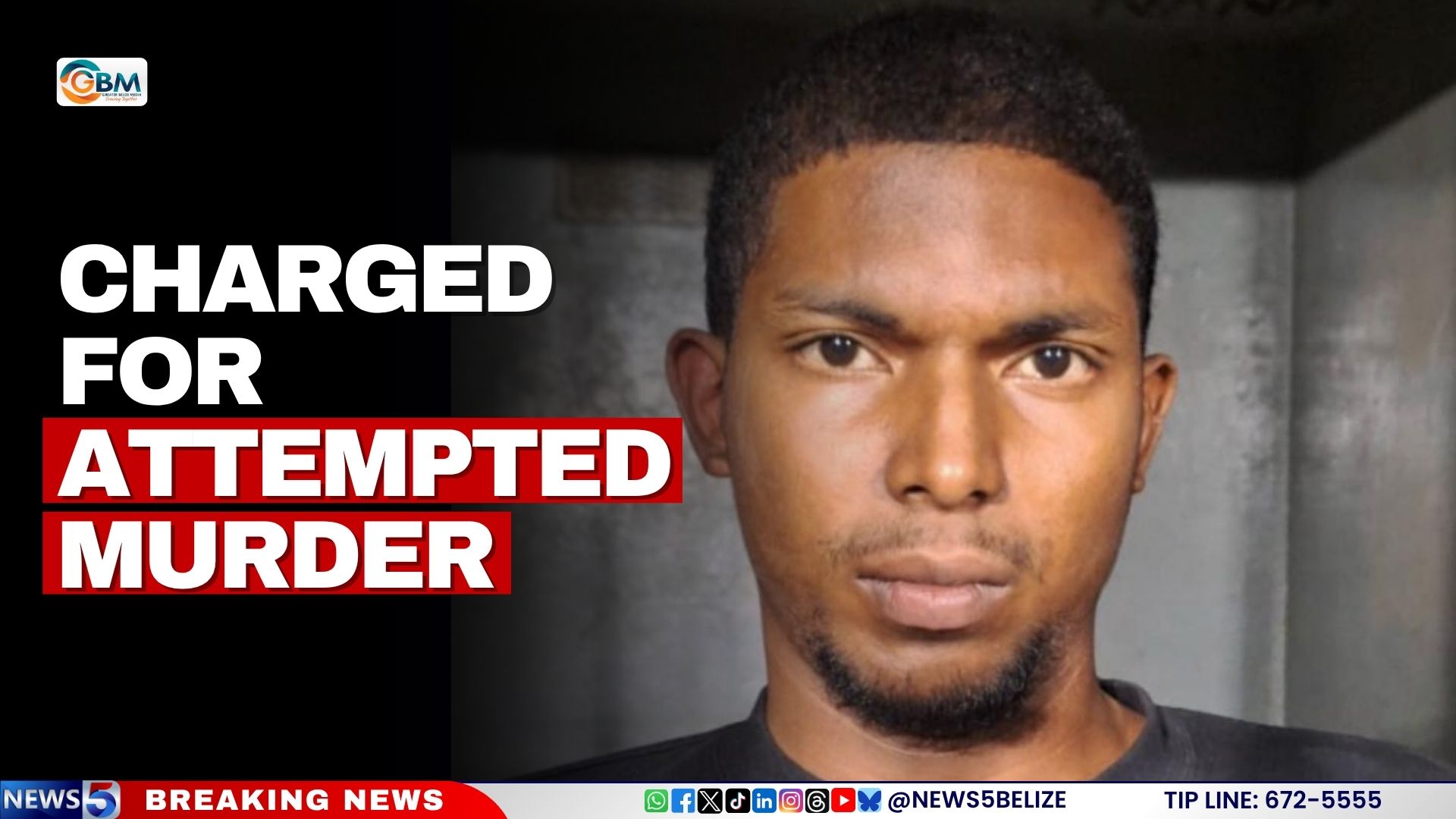
    A shocking daytime shooting in Belize, the nation’s former capital, has resulted in formal attempted murder charges against a 21-year-old suspect, law enforcement officials confirmed Thursday. Jadon Young is now facing two criminal counts: attempted murder and use of deadly means of harm, in connection with the shooting of 25-year-old Maleek Sutherland earlier this week.

    According to initial police accounts, the attack unfolded as Sutherland, a resident of Bermudian Landing Village, traveled to his regular workplace. As he moved through the area, an unmarked SUV pulled alongside him, and a person identified as a passenger in the vehicle opened fire multiple times. Sutherland was struck by gunfire during the assault and was quickly rushed by emergency responders to a local medical facility for urgent treatment. As of the latest update, no further details on Sutherland’s current condition have been released by authorities.

    Assistant Superintendent of Police Stacy Smith noted that investigative teams are actively working to map out a clear motive for the brazen public shooting. Smith added that sensitive case details will only be released to the public at a time when it does not jeopardize ongoing investigative work, declining to share additional information on potential connections between the suspect and victim or any gang or personal links that may be under review.

    The case marks the latest high-profile violent incident to draw public attention to violent crime in the former capital region, with local law enforcement continuing to advance the court process following Young’s charging.

  • Bus Operators Push for Hands-On Role in Electric Bus Pilot

    Bus Operators Push for Hands-On Role in Electric Bus Pilot

    As Belize moves forward with its transition to electric public transportation, a growing rift has emerged between the national bus industry’s leading body and government transport officials over how local operators should be integrated into the country’s electric bus initiative.

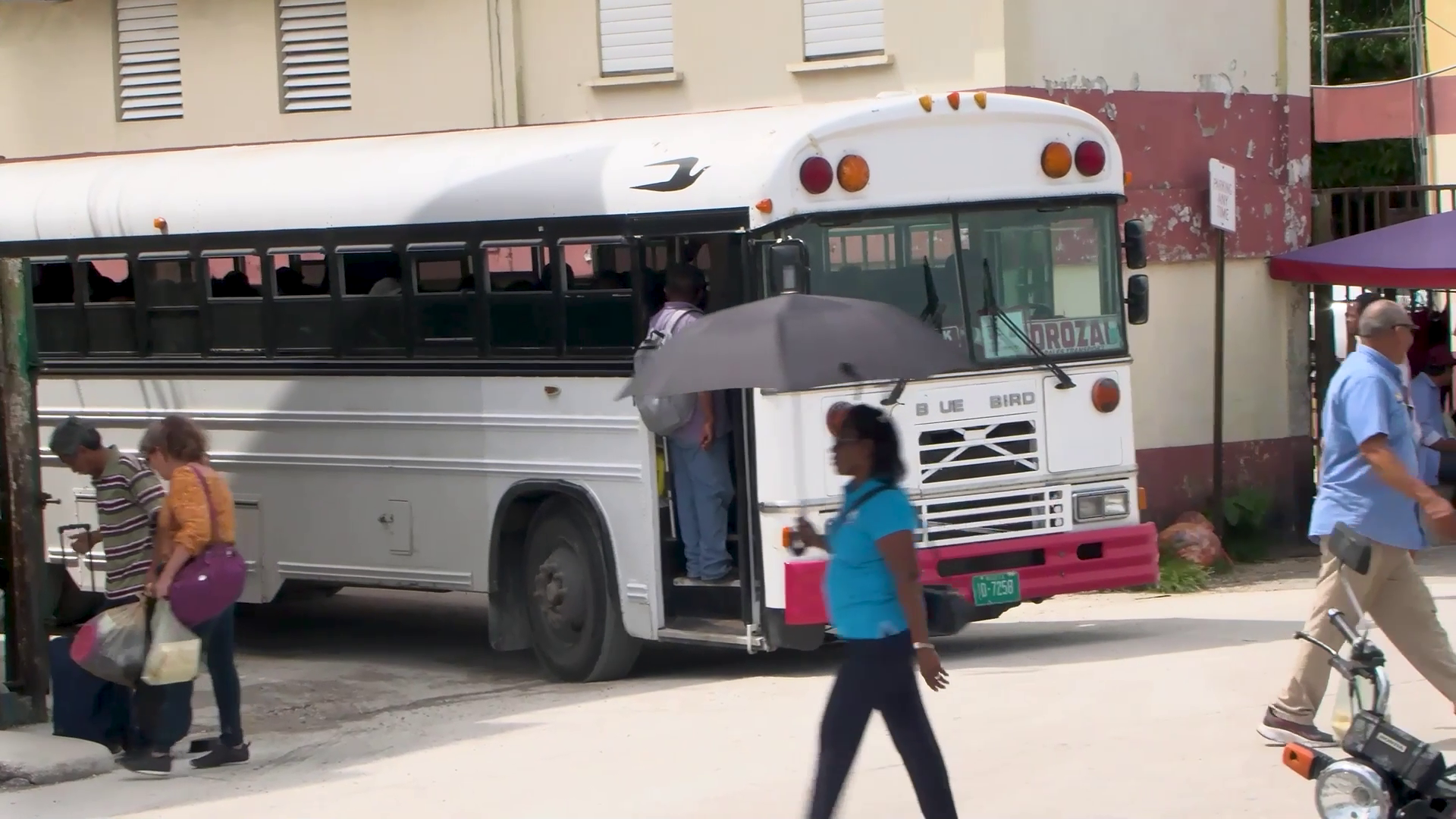
    The Belize Bus Association (BBA), which represents more than 50 operators spanning intercity highway routes, rural village services, tour routes, and school transportation, is calling on the government to give its members direct, hands-on access to the current electric bus pilot. Currently, the testing phase is limited to routes in Belize City and the western transportation corridor, and no BBA members have been permitted to operate the pilot vehicles themselves.

    In an official letter addressed to the Ministry of Transport, BBA leadership argues that firsthand real-world experience is a non-negotiable prerequisite for operators to make informed long-term investment decisions. Without direct exposure to the vehicles, the association says, members cannot accurately measure key operational metrics including total cost of ownership, routine maintenance requirements, and performance across varying route types, from dense urban streets to long-distance national highways. To address this gap, the BBA is proposing a rotation system that would allow its members to test the electric buses on a diverse range of routes, a change the group says would not only strengthen the pilot’s data but also expand access to the new green technology for commuters across the country.

    BBA president Phillip Jones emphasized that the association has sought inclusion since the project’s launch, when it was first developed under the auspices of the United Nations Development Programme (UNDP) and the United Nations. “From the inception of the EV program under the UNDP and UN we have wrote letters to the UNDP and the president and representatives in this area that we wanted to be a apart of the pilot project. However we were denied at that time,” Jones explained. “Hence the reason we find it prudent that we revisit that, because if you are saying you want the entire country to have the knowledge or use the service or go green in order for that to be the case, you need to have anyone involved and we are a major stakeholder in the bus industry. […] You can’t just be going based on analysis going second hand. We want firsthand experience.”

    But government officials say the pilot phase has already concluded, and no test vehicles are available to reallocate for broader industry testing. Transport Minister Dr. Louis Zabaneh confirmed that the government is shifting its focus away from the trial period and toward a permanent structural transition to electric bus fleets, and laid out two clear paths for BBA members looking to join the electric future. Under the first option, independent operators can join the National Bus Company (NBC), a public-private partnership aligned with the government’s green transportation policy. The second option allows operators to remain independent by forming their own collective entities and investing directly in procuring their own electric buses, with the ministry offering full access to all lessons learned during the pilot to support the transition.

    Zabaneh noted that the model of joining the National Bus Company is already gaining traction among BBA members, with recent signs of growing buy-in: after the last remaining holdout operator from southern Belize joined the NBC, two additional operators from the northern region have submitted applications to join. “So that is clearly, in my opinion, the preferred path because now you have a public private partnership that comprises government and reflects the policy of the government that they can benefit from. Or they can continue being independent operators and we can work together and share whatever knowledge we have with them,” Zabaneh explained. “The NBC is a private company, so whatever e-buses it buys is for the use for services to commuters who use NBC services. They would have to, as independent operators, organize, form a company and procure e-buses. Now, we as the ministry are very pleased to share with them what we have learnt in setting up the National Bus Company and we told them that already.”

    This content is adapted from a transcript of an evening television newscast.

  • Same Deadly Scenario Took Coach Villamil’s Father

    Same Deadly Scenario Took Coach Villamil’s Father

    The small but tight-knit football community of Belize is united in grief and support this week, after a catastrophic highway collision in Corozal left beloved former national player and youth coach Miriam Villamil with permanent, life-altering injuries. The crash, which has reignited longstanding safety concerns about unmarked agricultural vehicles on Belize’s roadways, carries an unthinkable echoes of tragedy that has deepened the shock across the country’s sporting landscape.

    On the evening of the incident, Villamil was traveling in a passenger coaster alongside a group of young aspiring footballers who had just completed a celebratory practice session. The vehicle collided head-on from behind with an unlit sugar cane truck parked along the side of the highway, according to initial accounts from the Football Federation of Belize (FFB). The impact was so severe that Villamil was trapped inside the wreckage for hours. When emergency responders finally extracted her and rushed her to Karl Heusner Memorial Hospital (KHMH), surgeons were forced to amputate one of her legs to save her life. Medics fought desperately to save her second leg, and after extensive intervention, they successfully preserved it, FFB executive member Marlon Kuylen confirmed in an interview.

    What makes this already devastating accident even more cruel is that it mirrors almost exactly the crash that killed Villamil’s father decades earlier. “It’s like deja vu all over again,” Kuylen told reporters. “Years ago, her father died in the exact same manner: the bus he was traveling in crashed into the back of a cane truck, and protruding canes penetrated his body and skull, killing him instantly. Emotionally, this tragedy is hitting our entire football family extraordinarily hard, compounded by that terrible shared history.”

    Beyond the urgent focus on Villamil’s ongoing recovery, attention has now turned to the group of young players who witnessed the horrific crash firsthand. The athletes had been in high spirits after a successful practice, excited to have been selected for a new national youth development program, when the disaster struck in an instant. “One negligent choice left Miriam’s life changed forever, and this event will leave long-term emotional and mental scars on these young kids,” Kuylen explained. “They watched their coach trapped and gravely injured, and that image will stay with them for a long time.”

    Remarkably, even in the immediate aftermath of the crash while enduring extreme pain, Villamil’s first thoughts were for the young players in her care. “Her first questions weren’t about her own condition — she kept asking, ‘What about my boys? What about the kids?’ She remembered one had suffered a broken jaw, and she insisted we check on him first,” Kuylen recalled. “That’s just who Miriam is: she puts her players ahead of everything, even when she’s facing the unthinkable.”

    In response to the tragedy, Kuylen and the FFB are calling on Belizean transportation authorities to immediately address the longstanding hazard of unlit, parked cane trucks along public roadways at night. The entire Belize football community has rallied around Villamil and the young players, organizing support for her medical costs and counseling services for the young athletes who survived the crash.

  • San Pedranos Struggle with Rising Fuel Costs

    San Pedranos Struggle with Rising Fuel Costs

    On the popular Belizean island of Ambergris Caye, what has become a quiet crisis for daily life is now erupting into open frustration, as skyrocketing fuel costs stretch household budgets to their absolute limit. For the tight-knit community of San Pedro Town, where golf carts are not a recreational luxury but the primary mode of daily transportation, even the shortest commute now comes with a steep financial cost that is eating deep into already modest incomes. Many low-wage workers on the island earn between $200 and $300 per week, and fuel expenses now claim a disproportionate share of these earnings – leaving barely enough to cover other critical needs like rent and groceries. Local resident Celestino Tzul, one of the many voices sounding the alarm over the crisis, explained that the burden has become unsustainable for working families. “When it’s your livelihood, when it’s your transportation to work and everything, you have to consider: do I keep using my golf cart? Do I need to change from golf cart to something?” Tzul said. “You take away rent, you take away the expenses on gas, and then you take away the expense of food. Some people are barely even making it through the week. The gas price is very, very high.” The crisis has been compounded by a lack of viable, affordable alternatives to personal golf cart and car travel. While local authorities recently launched a small new bus service (dubbed the “busito”) to expand public transit options, residents say the new system has failed to close the affordability gap that leaves most families dependent on personal vehicles. Residents also point to ongoing supply-side issues that have kept fuel prices artificially high, with current costs reaching as much as $14.29 per gallon. This high-cost fuel also drives frequent, unplanned maintenance expenses for the island’s fleet of aging golf carts, adding another layer of financial strain for owners. Faced with stalled relief efforts and steadily rising costs of living that show no sign of easing, community members have had enough. A group of residents is currently organizing a peaceful protest scheduled for next week, where they plan to bring their demands for action directly to policymakers. Island residents are unified in their call for national government intervention to address both the exorbitant fuel prices and the longstanding gap in affordable public transit options. Without immediate, targeted relief, residents warn that reliable transportation for work, school, and daily needs could soon become completely out of reach for low- and middle-income families across the island. This report is adapted from a transcribed evening television news broadcast focused on local Belizean issues.

  • Immigration Ministry Reports Missing Funds to Police

    Immigration Ministry Reports Missing Funds to Police

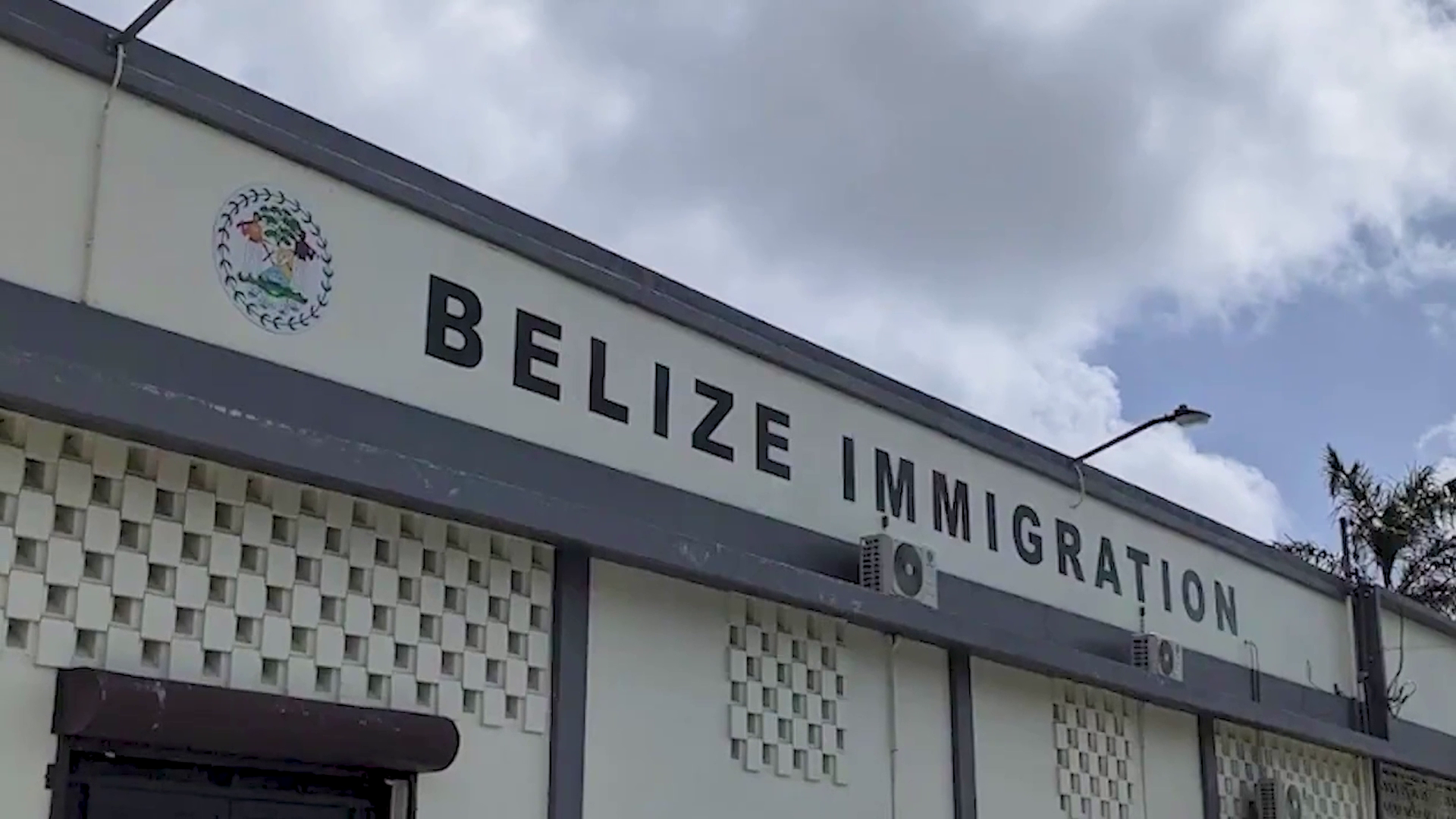
    A high-stakes internal investigation is unfolding at Belize’s Ministry of Immigration after $160,000 in public funds disappeared from the department’s Belize City headquarters, prompting senior officials to formally refer the case to national police and launch an independent financial audit.

    The incident, first disclosed in official updates on May 28, 2026, has already drawn the attention of Belize’s Cabinet, which received a full briefing following the completion of an initial preliminary review last week. Tanya Santos, Chief Executive Officer of the Ministry of Immigration, confirmed that authorities have documented multiple suspicious incidents with hallmarks of criminal activity, falling clearly within the investigative jurisdiction of Belize’s police force.

    “We highlighted instances of those activities to them so they can come in do a deeper dive, a deeper investigation and find out more details of what was going on,” Santos said in an official briefing to reporters.

    When asked whether law enforcement had narrowed the focus of the probe to a single person of interest, Santos confirmed that as of the latest update, investigators are centering their work on one individual, though she added that the scope could expand if new evidence emerges pointing to additional co-conspirators.

    Alongside the probe into the missing public funds, the ministry has also submitted a separate police report over the unexplained disappearance of two official nationality certificates, documents that are critical for processing citizenship claims and verifying legal status for Belizean residents. Senior ministry officials have stressed that they are leaving no stone unturned in the parallel investigations, committing to full transparency and a complete public accounting once probes are complete.

    Authorities have moved quickly to tighten internal financial oversight across all ministry departments in the wake of the discovery, with investigators following every potential lead to trace the missing funds and hold responsible parties accountable. This report is adapted from a transcribed broadcast transcript of Belizean evening news, with all statements verified for accuracy prior to publication.

  • CEO Santos Reveals Corruption Concerns at Western Border

    CEO Santos Reveals Corruption Concerns at Western Border

    In a bombshell revelation that has shaken Belize’s immigration sector, Chief Executive Officer Tanya Santos of the country’s Ministry of Immigration has confirmed that an internal probe launched amid widespread rumors of a coordinated worker sickout at the western border has uncovered alleged corruption incidents at the key crossing.

    The controversy traces back several weeks, when reports of a mass staff absence at the western border checkpoint sparked speculation that employees had organized a coordinated sickout to protest working conditions or agency policies. That mass absence put significant strain on border processing operations, prompting the Ministry of Immigration to launch a full internal investigation to get to the bottom of the incident.

    Following the conclusion of the probe, Santos announced that investigators found no concrete evidence to back up claims of a pre-planned, coordinated sickout. Every employee who missed work provided apparently legitimate medical documentation approving their leave, and Santos noted that as head of the agency, it is not within her authority to override certified medical excuses for absence.

    Even without proof of a coordinated action, however, Santos made clear that the timing of the mass absences, the pattern of employees returning to work immediately after the peak of the protest-related tensions, and other surrounding circumstances still raise serious questions about the true nature of the sick leave. The investigation also captured multiple complaints from frontline staff about poor working conditions and unaddressed grievances within the western border division.

    Most notably, the probe uncovered separate allegations of ongoing corruption at the western border checkpoint, a critical port of entry for trade and travel between Belize and its neighbors. Santos confirmed that the corruption allegations are now being actively investigated by immigration officials, with new oversight measures being put in place to root out misconduct.

    To address both the staff grievances uncovered in the probe and the emerging corruption claims, the Ministry of Immigration has established a new independent internal grievance committee. The multi-stakeholder body includes senior immigration staff, external administrative experts, a retired senior public officer, in-house legal counsel, and the CEO herself, designed to deliver impartial reviews of both employee complaints and allegations of institutional misconduct.

    The original on-air broadcast of this report notes that all transcribed comments from speakers who used Kriol were converted to text using a standardized spelling system to preserve accuracy for online readers.

  • From Call Centers to Remote Work, Belize Labor Laws Lag Behind

    From Call Centers to Remote Work, Belize Labor Laws Lag Behind

    More than half a century after Belize’s foundational Labor Act was written into law, the Central American nation has launched a comprehensive review to bring outdated workplace regulations in line with the profound shifts that have reshaped its labor market in recent years. Driven by the explosion of new work models — from the booming call center sector to the growing popularity of remote and digital work — the Ministry of Labor has made updating the legislation a top policy priority ahead of evolving economic demands.

    Tanya Santos, Chief Executive Officer of the Belize Ministry of Labor, emphasized that the decades-old regulatory framework no longer aligns with how Belizeans currently work and earn incomes. “It’s been decades since our standing legislation was enacted, and it does not reflect our modern labor realities in many areas,” Santos explained in comments to local media. “We have seen many new emerging industries, new work structures, and entirely new ways people earn a living — from remote work and tech roles to the fast-growing call center business. We need legislation that reflects the current makeup of our labor force and meets the demands of today’s economy. There’s never a bad time to update outdated rules.”

    Beyond accommodating new work models, the reform process will tackle a range of pressing 21st-century labor challenges that were not prominent when the original act was drafted. These include persistent national labor shortages, cross-border labor migration, and the growing demand for skilled workers across expanding sectors. The review will also address gaps in workforce development, with a focus on aligning training programs to equip Belizean workers with the specialized skills that growing industries now require.

    To ensure the final reforms balance worker protections and economic competitiveness, the Ministry of Labor has launched a broad consultation phase, bringing together key stakeholders from across the country’s economy. Participants include national labor unions, representatives from the critical tourism sector, the Belize Chamber of Commerce, and other industry groups, all of whom will contribute input to shape the final draft of the updated legislation. The process aims to close regulatory gaps, support the nation’s transitioning economy, and ensure all workers — whether in traditional roles or new emerging sectors — receive adequate legal protection.

  • Red Tape Slows Urgent Workplace Safety Reform

    Red Tape Slows Urgent Workplace Safety Reform

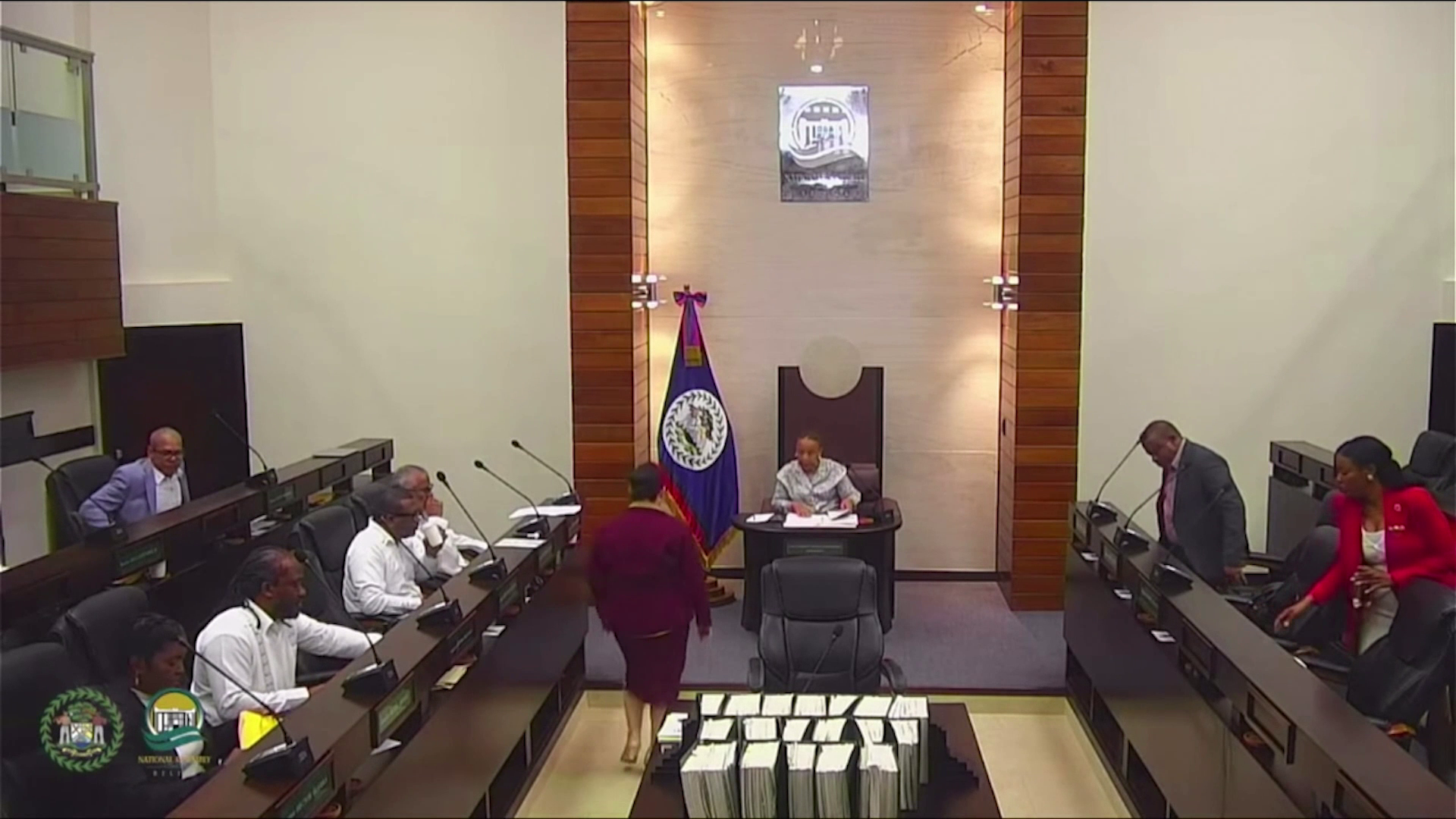
    Scheduled for months of advance review and stakeholder input, a landmark bill designed to strengthen national workplace safety protections has hit another unexpected bureaucratic roadblock, pushing its return to the National Assembly back by weeks and leaving worker advocacy groups waiting for action on a reform many call decades overdue. The Occupational Safety and Health Bill, which aims to address longstanding gaps in the country’s current worker protection framework, is currently stalled in the Senate review process. Even after upper chamber lawmakers have submitted a full set of recommended revisions to the legislation, the formal review and revision cycle remains far from complete, according to Tanya Santos, Chief Executive Officer of the national Ministry of Labor.

    In an interview Wednesday ahead of the announcement of the new delay, Santos clarified that the Senate’s recommendations run the gamut from high-level policy adjustments to granular technical changes that require cross-government coordination. “Some are at a policy level that we are discussing with the minister of labor. And others are technical that we can address with the Attorney General’s Ministry,” she explained, noting that the extended review comes even after multiple rounds of public and stakeholder consultations held in the early stages of drafting the legislation.

    The core sticking point that has emerged during the Senate review centers on provisions for workplace inspections in cases involving domestic workers, according to reporting on the stalled legislation. Currently, when a domestic worker files a safety or wage complaint, regulators face limitations accessing private home workplaces to verify claims, a gap the reform was intended to address. When asked how workers can pursue meaningful recourse without on-site inspections to confirm case facts, Santos noted that existing channels remain available to domestic workers even before the reform passes. “even currently there exist options for redress for domestic workers. There is the Labor Department. You can always go and lodge a complaint there. There is a Labor Complaint Tribunal. So any other measure would be additional if it comes to that,” she said. Santos added that the issue of domestic workplace inspections is still under active negotiation, and that the Ministry of Labor is working to craft a solution that balances the needs of all stakeholders. “It is all being looked at … we can look at it and come up with a favorable position for all parties,” she said.

    The Ministry of Labor has committed to responding to all of the Senate’s recommended changes within 30 days, but even after that step, additional rounds of debate and voting will be required before the bill can become law. For worker advocates who have pushed for this overhaul of outdated workplace safety rules for years, the new delay is yet another reminder of how bureaucratic gridlock can slow progress on urgent public policy priorities.

  • Bernard Urges Church to Drop HPV Vaccine Resistance

    Bernard Urges Church to Drop HPV Vaccine Resistance

    Tensions over public HPV vaccination programming in Belize’s church-run educational institutions have spurred the country’s Minister of Health and Wellness, Kevin Bernard, to issue a public appeal to the Catholic Church to abandon its long-held resistance to the life-saving vaccine. The call comes after Bernard received an official letter outlining the church’s continued opposition from Father Jordan, a church leader whom Bernard describes as a personal friend, amid growing friction around vaccination rollout in faith-based campuses.

    In countering the core concerns raised by church leadership, Bernard has emphasized that the Ministry of Health adheres to strict, transparent protocols for all school-based vaccination campaigns. Contrary to circulating misinformation that has fueled the church’s opposition, all programs require explicit, prior parental consent before any adolescent receives the vaccine, and every rollout is paired with accessible, evidence-based public education to inform students and caregivers about the shot’s purpose and safety.

    Bernard stressed that the HPV vaccine’s sole public health mission is to protect young women and girls from developing cervical cancer later in life, rejecting claims that the vaccine promotes early or risky sexual behavior. “It’s about prevention. It’s not about promoting any form of promiscuity,” Bernard stated in a public address. “I want to make that appeal to the churches, and especially our Catholic faith community here in Belize, for them to reconsider their position.”

    The minister also highlighted the decades-long collaborative relationship between public health teams and Catholic school administrators, noting that the Ministry of Health has long delivered routine vaccination services on these campuses without conflict. Since 2016, the ministry has successfully administered the HPV vaccine to more than 46,000 Standard Four students across Belize, many of whom attend church-run schools. Bernard extended a direct public appeal to Father Jordan to reverse the church’s current stance and resume collaborative work with the ministry to expand access to the preventive care.

    “Our ministry has a responsibility for the health of our nation,” Bernard added. “We are going to continue to ensure that we can promote and provide these essential vaccines, especially for young girls and young children that need these shots. At the end of the day, this work is about protecting the health and wellbeing of all Belizean citizens.”