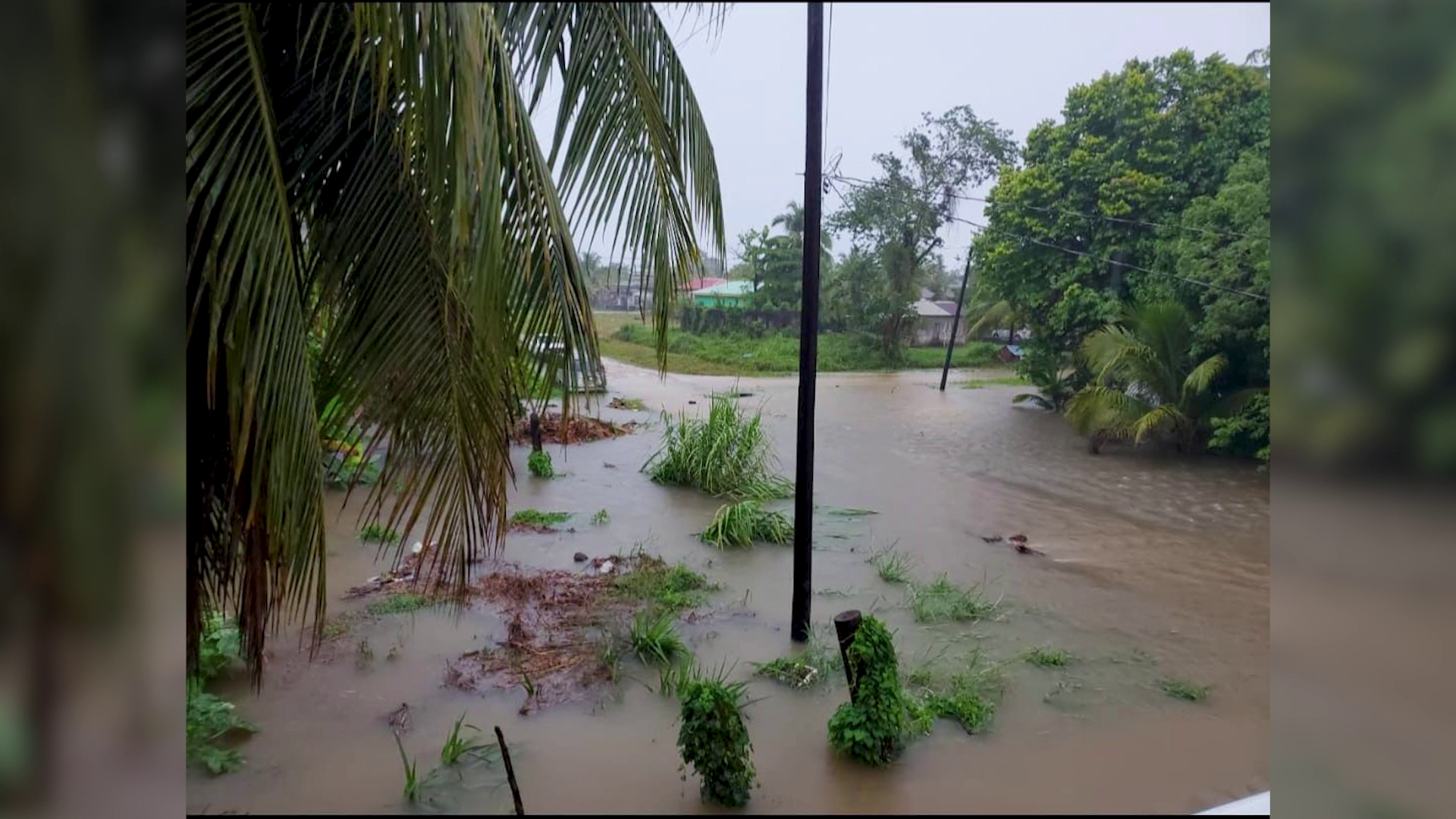
On June 2, 2026, the first heavy seasonal rain of the year brought the coastal Belizean town of Punta Gorda (locally known as Peini) to a complete standstill. Rising floodwaters submerged neighborhood streets across the community, forcing local businesses to suspend operations and closing all public schools, leaving residents to navigate waist-deep or chest-deep water to travel between areas. Even low-lying districts that rarely experience flooding, including the busy Cayetano Street corridor, were completely underwater by the morning after the rainfall, according to local accounts. As floodwaters gradually begin to recede, the initial phase of cleanup is getting underway, but public scrutiny is already growing over the avoidable factors that turned a routine seasonal rain event into a full-blown public disruption. Longtime environmental advocate Wil Maheia, a Punta Gorda resident, is pushing back against the common narrative that frames the flood as an unavoidable consequence of climate change. Instead, he argues that systemic municipal negligence and lax community regulation are the primary causes that amplified the disaster. Maheia explained that for years, the town has faced predictable early-June rainfall, giving local leaders months of dry season to prepare. Yet in the half-year leading up to this 2026 rainy season, the town’s drainage infrastructure was completely neglected by the Punta Gorda Town Council. With no regular maintenance, residents began dumping general garbage into the empty drains, turning the critical water runoff systems into blocked debris traps. When heavy rain finally arrived, the accumulated garbage acted as natural dams, preventing water from draining and forcing floodwater to overflow onto public streets. Compounding the problem, Maheia noted that the town council already holds authority from Belize’s national Department of Environment to issue fines for illegal littering. To date, not a single penalty has been handed down to violators, creating a culture of tolerance for improper waste disposal that directly contributes to clogged drainage. “It is time for our country to stop hiding behind climate change as an excuse for poor governance,” Maheia stated. He called on the national Department of Environment to intervene, pushing the municipal government to enforce existing littering regulations and complete long-overdue drain maintenance ahead of future rainy seasons. The disruption has left many local residents questioning what more could have been done to prevent the widespread damage and disruption, with growing calls for greater accountability from local elected leaders ahead of the next rainy season. This report is adapted from a transcript of a televised evening newscast.
标签: Belize
伯利兹
-
$4.4M Bridge Project Targets Failing Section of Sarteneja Road
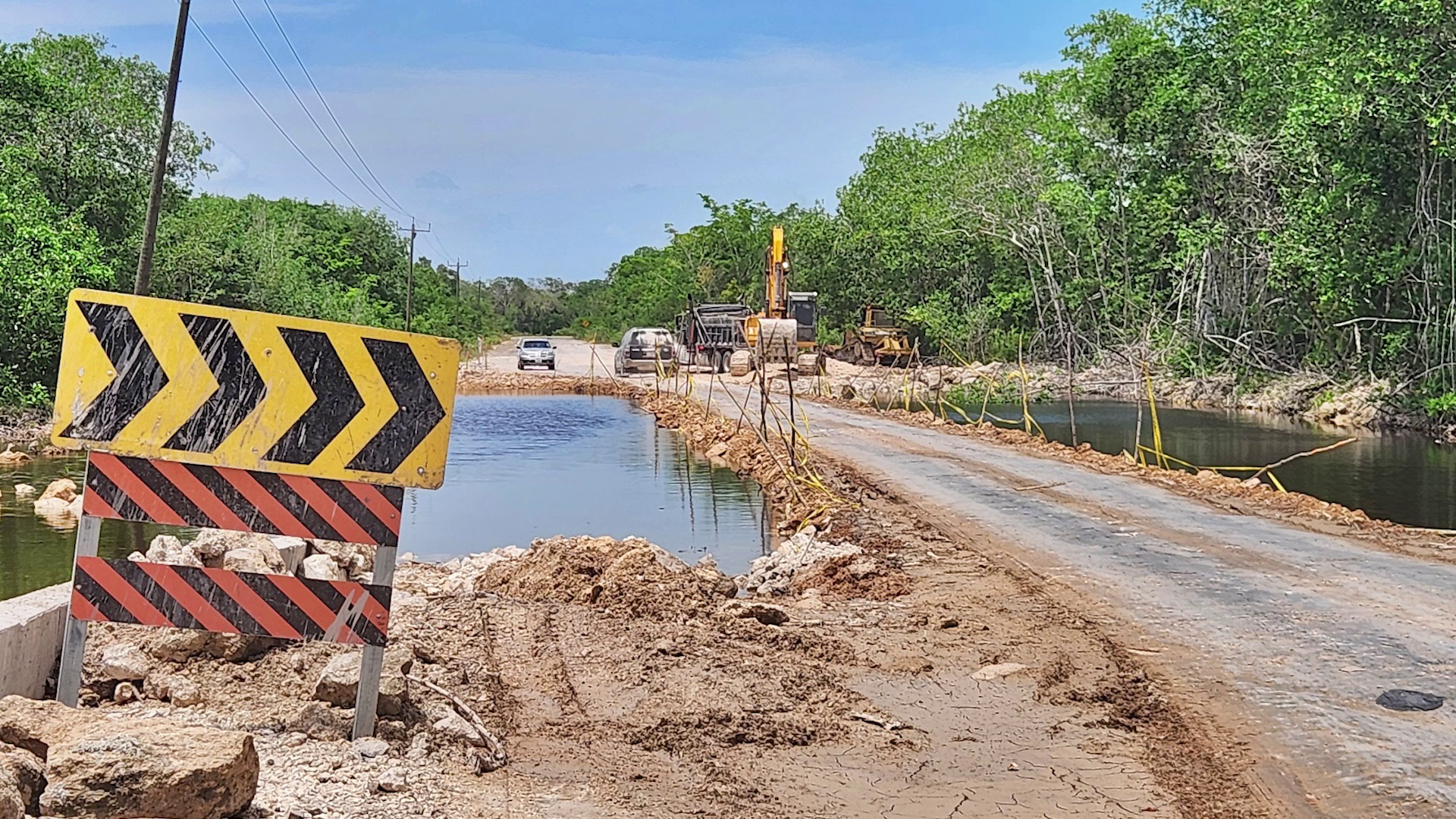
For years, a 200-meter stretch of Belize’s critical Corozal–Sarteneja Highway has stood as an unsolvable engineering headache, derailing plans to formally open the entire 42-kilometer route and frustrating countless drivers. Now, a $4.4 million grant from Taiwan has cleared the way for a long-awaited permanent solution, with construction already underway on a purpose-built bridge to stabilize the terrain that has defeated every previous repair attempt.
The problematic stretch at mile three of the highway is no ordinary road defect: Chief Engineer Evondale Moody, from Belize’s Ministry of Infrastructure Development and Housing, described it as the worst case of land settlement in the entire country, outpacing even problematic sections of the nation’s busiest Philip Goldson Highway and George Price Highway. Decades of patchwork fixes have all failed spectacularly: crews have filled the low-lying area with more than three meters of fill material, only to watch the ground swallow the entire addition. A previous attempt to install a reinforced concrete retaining wall and paved surface also collapsed and sank into the unstable ground, leaving officials to pursue their last available option.
The new approach, modeled after a successful stabilization project at the settling Benny’s roundabout in Belize, calls for driving a grid of concrete pilings 85 feet deep through the deep peat and soft mud to reach bedrock—what engineers refer to as “refusal,” where piles can no longer penetrate and gain a solid anchor. Once the entire 200-meter section is anchored with these piles, a reinforced concrete bridge deck will be laid on top, creating a stable structure that will not sink or shift over time.
Construction of the 200-meter bridge is being handled by the Overseas Engineering and Construction Company, with full oversight from the Ministry of Infrastructure Development and Housing. Moody confirmed work first launched in May 2026, and the project remains on schedule to be fully completed by the end of the calendar year. Once finished, the fix will clear the final barrier to the official opening of the entire 42-kilometer Corozal–Sarteneja Road, unlocking safer and more reliable access to the coastal community of Sarteneja for residents, businesses, and visitors.
For the duration of piling installation, local transportation officials have implemented a traffic diversion plan, routing all through traffic onto the nearby San Estevan Road in Orange Walk District. Commuters are advised to plan for extra travel time and follow posted detour signs to avoid delays.
-
Beach Cleanups Gain Momentum Amid Sargassum Surge
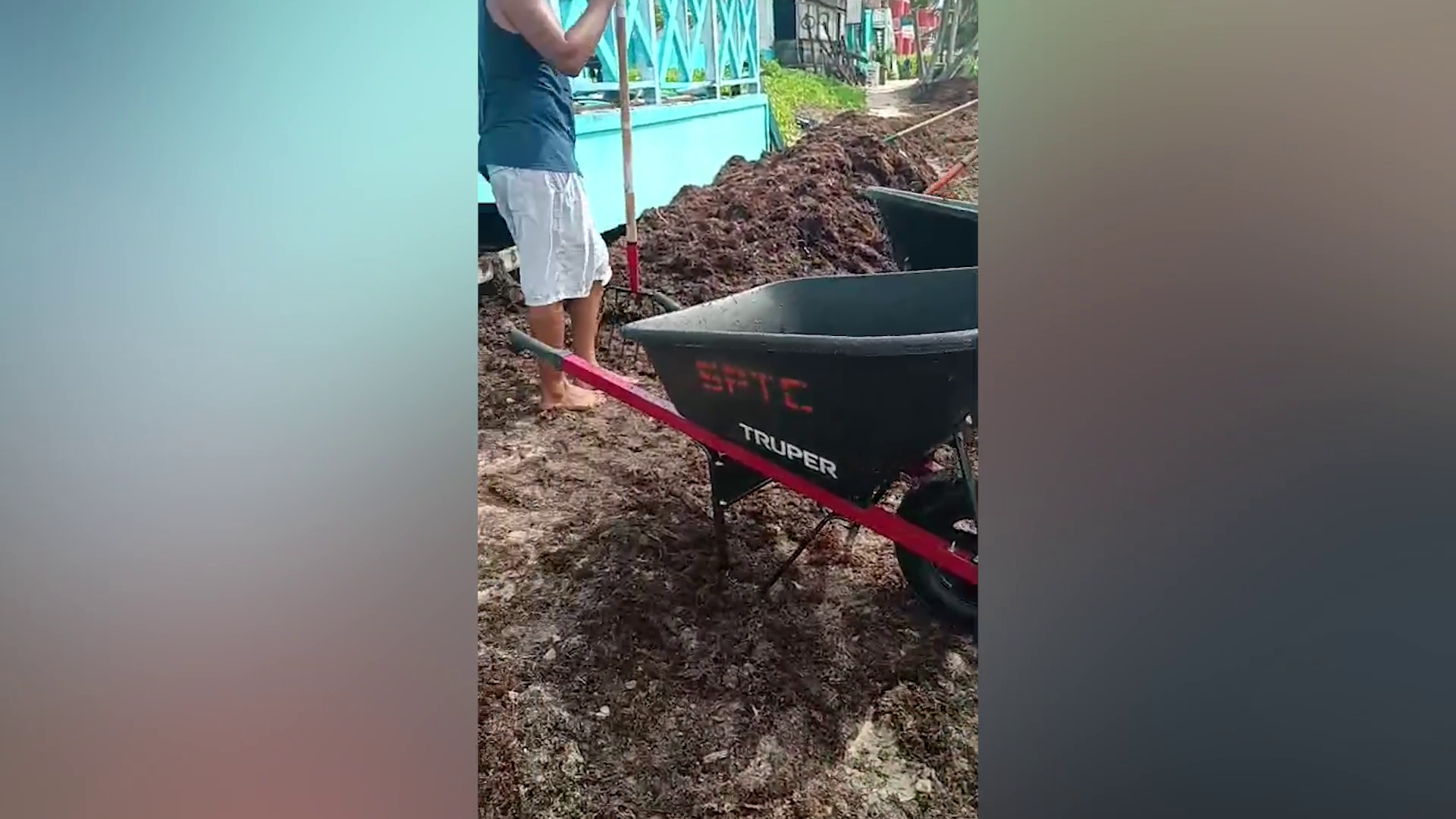
As massive quantities of sargassum seaweed continue to accumulate along San Pedro’s scenic shorelines, overwhelming local ecosystems and threatening the island’s tourism-dependent economy, a local tour guide has launched a growing grassroots movement to reclaim the coast through regular community cleanup initiatives.
Oscar Iboy, a long-time tour guide and active member of local advocacy group San Pedro Citizens for Change, launched the recurring effort after participating in a small one-off cleanup near the local high school in early 2026. Disappointed by the low initial turnout at that event, Iboy made the decision to expand the project into a sustained, organized campaign to encourage broader resident engagement.
While participation in the cleanups started off modest, the movement has steadily gained momentum in recent months. The first organized event drew just 13 local volunteers, but the most recent cleanup attracted roughly 20 committed community members, marking a steady upward trend in public buy-in for the initiative.
Iboy’s group currently plans to host cleanup events every other Sunday, and has ramped up outreach to encourage both local residents and small business owners across the island to join the effort. Beyond the immediate environmental benefits of removing rotting sargassum from public beaches, Iboy has also proposed a policy solution that addresses two pressing local issues at once:
a cross-sector proposal that would have the San Pedro Town Council fund paid cleanup positions for unemployed local workers. With the sargassum surge driving a downturn in tourism, hundreds of tour guides and hospitality workers across the island are currently out of work. Iboy’s plan would not only put unemployed locals back to work earning a steady income, but also permanently improve the island’s coastal environment and its reputation as a top Caribbean travel destination, helping to revive the tourism sector long-term.This report was originally transcribed from a June 2, 2026 evening television broadcast, with Kriol-language commentary transcribed using a standardized regional spelling system.
-

A Show of Unity and Trust at Holy Redeemer Credit Union’s 82nd AGM
On a recent Saturday in Belize, hundreds of member-owners packed the Belize Civic Center for the 82nd Annual General Meeting (AGM) of Holy Redeemer Credit Union (HRCU), one of the nation’s most enduring and trusted financial cooperatives. The standing-room-only gathering was far more than a routine annual compliance check: it served as a public display of widespread confidence in the institution’s decades-long mission of community-focused finance, bringing together generations of members to review performance, vote on leadership, and chart the cooperative’s next chapter of growth.
HRCU President Wendy Castillo opened the official remarks by leaning into the cooperative’s deep-rooted reputation across Belize. “When Belizeans hear the name HRCU, they don’t just think of a bank—they think of a trusted partner that has stood by families and businesses across generations,” Castillo said. “Built on the cooperative principle of people helping people, our work has always centered on empowering members to turn their personal and professional dreams into tangible reality.”
Founded more than 80 years ago, HRCU has grown from a small community savings group to one of Belize’s largest credit unions, anchored by its core mission of delivering affordable banking services and accessible, competitive lending to all segments of the population. For the organization, the annual AGM is far more than a legal requirement—it is the cornerstone of its member-governed model. HRCU Human Resources Manager Mark Menzies summed up the event’s significance, calling it the institution’s “big dance.” “By law, we are required to host this gathering every year, but it means so much more than checking a box,” Menzies explained. “This is when we bring all 68,000 of our member-owners into the process: we share our annual results, distribute dividends and member rebates, and give everyone a front-row seat to the decisions that shape our institution.”
At this year’s meeting, leadership reported robust across-the-board growth that outpaced the previous year’s results. Castillo shared key financial metrics that underscored the cooperative’s steady expansion: HRCU now holds a total asset base of $876.1 million, up from last year’s totals. Membership also grew by more than 2,000 people, climbing from 65,000 to more than 67,000 member-owners. The credit union’s loan portfolio remains strong, she added, with continued lending across consumer, small business, and commercial segments. “By offering competitive interest rates, we don’t just grow our own institution—we empower our members to build their own wealth, and we fuel broader economic growth across Belize by providing the capital small businesses and commercial ventures need to thrive,” Castillo noted.
Beyond formal business, the AGM includes longstanding traditions designed to reward members for their participation and engagement. This year, the cooperative offered more than $30,000 in cash prizes, including 25 $1,000 awards, a $5,000 grand prize, and six additional $600 prizes for members who checked in via QR code. Menzies acknowledged that the raffles draw many attendees, but emphasized that most come to stay connected to the cooperative they own. “Most of our members genuinely love the credit union movement and what we stand for,” he said. “They want to know what we’re working on next, and how we’re moving forward to serve them better.”
As consumer expectations shift and digital banking becomes the norm for all age groups, HRCU is prioritizing technological innovation to meet members where they are. The institution has expanded its suite of online digital services, allowing members to access their accounts from anywhere in the world, and transfer funds seamlessly between HRCU and all other Belizean banks and credit unions. “Not that long ago, we thought only younger members were interested in mobile banking, but today everyone relies on these tools,” Menzies explained. “We’re committed to keeping pace with technology to make banking faster, more convenient, and more reliable for all our members.”
Earlier in 2026, HRCU opened a new branch in Belmopan, the nation’s capital, to meet growing demand for services in the capital and the broader Cayo District. Castillo reported that the new branch has already exceeded performance expectations, and the cooperative has plans to continue expanding its physical footprint to reach every district across Belize in the coming years. In leadership business, Carol Babb was elected unopposed to serve as the credit union’s new Vice President. This report was prepared by Britney Gordon for News Five.
-

HRCU President Responds to Backlash Over 6% Interest Loan
June 2, 2026 – A controversial low-interest loan extended to the top leader of one of the nation’s largest credit unions has sparked widespread backlash over fairness and equal access to financial services, bringing institutional governance practices under intense scrutiny at Holy Redeemer Credit Union’s (HRCU) annual general meeting.
During the meeting, voting member-owners of the cooperative financial institution directly confronted HRCU President Wendy Castillo over the special 6% interest rate loan approved for her, demanding answers as to why identical favorable terms are not extended uniformly to all credit union members. Alfonso Noble, one HRCU member-owner, placed the issue at the center of the assembly’s agenda, pushing for full public transparency around the credit union’s internal loan approval processes.
Castillo has defended the transaction, pushing back against claims of preferential treatment. In her address to attendees, the HRCU president emphasized that the 6% loan agreement fully complied with existing institutional policies. She clarified that the reduced interest rate is not a perk exclusive to senior leadership: any HRCU member or member-owned entity can qualify for the 6% rate on business loans or loans exceeding the $500,000 threshold, provided they meet strict eligibility criteria set by the board of directors.
Castillo explained that the HRCU board evaluates these rate reduction requests based on rigorous due diligence, assessment of the borrower’s repayment capacity, and collateral security. She added that multiple other business owners and investors with strong portfolios who are HRCU members have already received the same 6% interest terms for their loans.
Pushing back against accusations that her position granted her unfair access, Castillo noted that her own professional trajectory mirrors that of many HRCU members: she rose from humble, low-income origins to her current leadership role, and she seeks to serve all members rather than pursue personal gain. The HRCU president also confirmed that once the loan is fully repaid, the credit union will collect a total of $601,000 in interest revenue from the agreement.
Despite Castillo’s defense, the confrontation at the annual meeting has ignited a broader public debate. For cooperative financial institutions built on the principle of equal ownership and access for all members, the controversy has raised a pressing, unresolved question: do all HRCU members truly receive equal opportunity to access favorable lending terms, regardless of their position within the organization?
-

Three San Marcos Men Charged After Machete Attack
A violent machete attack on a Belizean household has sparked public outrage and community division after three local men were finally taken into custody more than two weeks following the incident, with conflicting narratives emerging over what triggered the violence and whether local political influence delayed law enforcement action.
The incident, which unfolded on May 14 in San Marcos Village, Toledo District, saw a group of armed men force entry into the home of Orlando and Marcia Makin. One member of the Makin family was struck in the neck with a machete during the attack, while his mother was threatened by the intruders. First responders from the Belize Police Department transported the wounded victim to a local medical facility for treatment immediately after being called to the scene, but no suspects were taken into custody in the immediate aftermath of the violence.
It was not until May 29, nearly two full weeks after the attack was formally reported to law enforcement on May 17, that authorities arrested three San Marcos residents: Pablo Muku, Edward Muku, and Verhenio Pop. The delay in arrests came only after the Makin family went public with their complaints, accusing police of failing to act on their formal report despite identifying the suspects. Two weeks after the attack, Mario Makin, son of the property owners, told local outlet News 5 that the people his family accused of involvement were still living freely in the community, and that his mother had been left too afraid to stay in her own home following the threat against her life.
All three men face joint charges of aggravated burglary connected to the attack. In early court proceedings, Edward Muku entered a guilty plea to the charges against him. The court handed down a fine of $800 plus an additional $5 in court costs for each count, with all penalties required to be paid by July 31. If Muku fails to meet the payment deadline, he will serve an eight-month prison sentence. The other two defendants, Pablo Muku and Verhenio Pop, have both maintained their not guilty pleas. They were granted bail ahead of their next hearing, which has been adjourned to July 14 to allow time for full prosecution disclosure of evidence.
The case has quickly become controversial in the small rural village, as sharply conflicting accounts have emerged from the Makin family and local village leadership over the context of the attack and responsibility. Juan Caal, secretary to the village Alcalde, told News 5 that the relative of the village chairman who was involved in the confrontation acted in self-defense, and that village authorities themselves had referred the case to national police for formal processing.
That narrative has been firmly rejected by the Makin family, who have raised serious allegations that influence from local village leaders slowed the official police response to the violent home invasion. Adding another layer of uncertainty to the case, a separate house fire broke out in San Marcos Village the night before the three suspects were arrested. That blaze remains under active investigation by police, who have not yet announced any connection between the fire and the machete attack case.
As the legal process moves forward, the community remains divided over the incident, with the Makin family continuing to push for full accountability and local leadership defending the actions of those involved.
-

Man Thrown Out of Bar, Ends Up Stabbed
A violent incident in rural Belize has left a young construction worker recovering from a stab wound, following an altercation that began inside a local drinking establishment in Valley of Peace Village, Cayo District. Twenty-year-old Frank Batres is currently receiving care at Western Regional Hospital after the attack, which took place shortly after midnight on Saturday, May 30, 2026.
Local law enforcement details show that the trouble started when Batres was socializing with a group of friends at the village bar. Witness accounts indicate Batres engaged in inappropriate behavior directed at a female patron, prompting the bar owner to forcibly remove him from the property. What happened next escalated a routine ejection into a life-threatening assault.
As Batres made his way off the bar premises, a male suspect already known to Batres approached him unprovoked. The attacker first struck the 20-year-old, knocking him to the ground, before delivering a single stab wound to Batres’ back. The suspect fled the scene immediately after the attack.
Notably, authorities were not notified of the incident until Monday morning, June 1. Batres independently made his way to Western Regional Hospital to seek formal medical care for his injury, and hospital staff alerted police to the crime once he arrived. As of the latest update, no information has been released regarding potential arrests, motives for the attack beyond the initial bar altercation, or Batres’ current prognosis beyond confirmation that he is recovering.
The incident has drawn attention to unreported violence in small rural communities across Cayo District, where residents often avoid contacting police immediately after conflicts, leading to delays in investigations.
-

Man Caught With Loaded 9mm in PG
In the early hours of a June morning in Punta Gorda Town, a routine mobile patrol by local law enforcement unfolded into a high-speed chase that ended with the seizure of a loaded unlicensed pistol and the arrest of a 22-year-old local security guard.
According to official police accounts, the incident unfolded just after 1:00 a.m. on Front Street, when patrolling officers spotted two men traveling on motorcycles. For reasons still under investigation, the two men immediately accelerated and attempted to evade contact with police as soon as they spotted the patrol vehicle.
A short pursuit followed the fleeing motorcyclists. During the chase, one of the two men lost control of his motorcycle and fell to the road. He immediately abandoned the bike and tried to run away from officers on foot, but law enforcement quickly closed in and took him into custody. The apprehended suspect was identified as Rushan Virez, a 22-year-old security guard who resides in the Indianville neighborhood of Punta Gorda Town.
Once in custody, officers conducted a legal search of Virez’s possessions, including his backpack. Inside the bag, investigators discovered a BRG9 9mm semi-automatic pistol, which was loaded with an ammunition magazine holding 18 live rounds. When questioned by authorities, Virez was unable to produce any valid gun license for either the firearm or the ammunition he was carrying.
He was formally arrested and processed by police, and on Tuesday he was officially charged with two criminal offenses: keeping a firearm without a valid gun license, and keeping ammunition without a valid gun license. He is currently awaiting his next court appearance as the case moves through the local justice system.
-
Social Security Board Marks 45 Years With New Chair
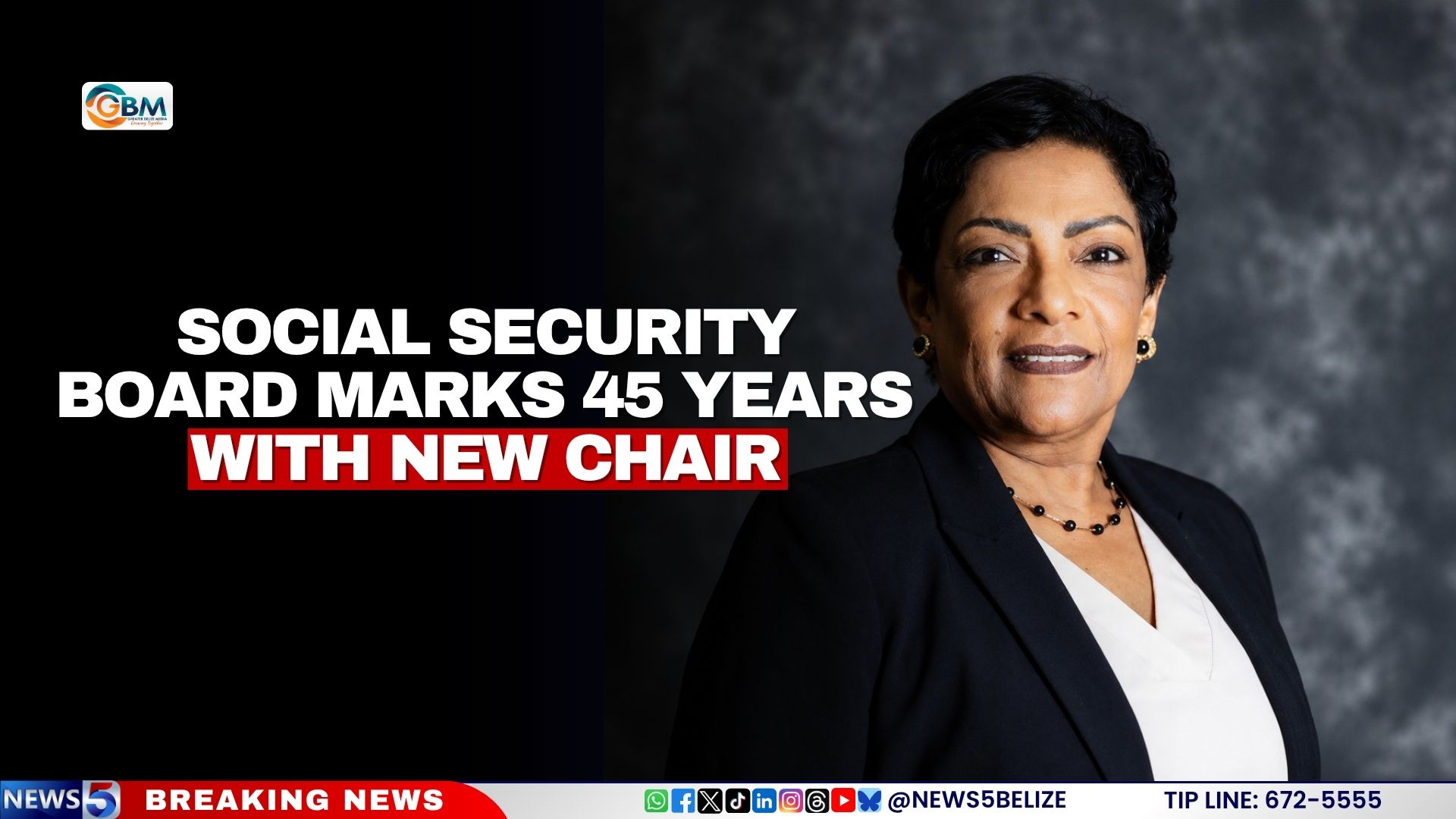
On Monday, June 2, 2026, the Social Security Board (SSB) marked a major milestone in its institutional history, celebrating 45 years of public service while announcing a leadership transition that paves the way for its next chapter of reform.
Dr. Sheree Smiling Craig will step into the role of new board chair, taking over from Chandra Nisbet-Cansino, who departed the position following the conclusion of her tenure leading the social security institution. In an official statement, the SSB lauded Nisbet-Cansino for her consistent, steady guidance through years of shifting policy and economic challenges, while emphasizing that Dr. Smiling Craig brings a robust combination of hands-on experience, deep professional expertise, and a long-standing commitment to public service that aligns with the board’s core mission.
The anniversary celebration drew high-level participation from the national government, with Prime Minister John Briceno making a personal visit to one of the SSB’s regional facilities to honor the occasion. In a public post shared to his social media channels, Briceno extended his recognition to the entire SSB workforce. “Thank you so much for the wonderful work that you do across this country,” he wrote. “I want to continue to encourage you to serve the people and serve them best. And to another 45 years.”
Beyond the ceremonial milestones, the 45th anniversary arrives at a moment of significant operational and structural change for the SSB, as the institution rolls out a series of upgrades designed to improve service delivery and accountability. Starting December 1, 2025, all sickness benefit claims transitioned to a fully digital online process, eliminating the longstanding requirement for beneficiaries to visit a physical SSB office in person to submit requests. The organization has also launched a formal whistleblower reporting system to crack down on fraud, professional misconduct, and false benefit claims that drain public resources.
The most consequential proposed change, which could reshape contribution obligations for millions of workers and employers across the country, remains in the consultation phase. The SSB recently wrapped up a series of public engagement sessions held nationwide to gather feedback on a plan to overhaul the existing contribution structure, moving from a tier-based system to a percentage-based model.
Currently, worker and employer contributions are calculated based on fixed income brackets, with contributors assigned a fixed payment level based on which bracket their salary falls into. If the proposal is approved, all contributors will pay a uniform set percentage of their total monthly income, regardless of how much they earn, creating a more proportional contribution framework.
-

“It’s Upsetting to See The Beach Like This When We Can Help”
On the sun-drenched coastlines of San Pedro, Belize’s top tourist hub, a growing problem of rotting sargassum accumulation has spurred a local tour guide to launch a grassroots movement to restore the island’s iconic beaches.
Oscar Iboy, a dedicated member of the local advocacy group San Pedro Citizens for Change, launched the regular community cleanup initiative after participating in a small cleanup event near the town’s high school. Frustrated by consistently low volunteer turnout at scattered one-off events, Iboy made the decision to formalize a recurring program to tackle the sargassum crisis that is choking stretches of the island’s shoreline.
For Iboy, protecting the beaches is not just an environmental issue—it is an economic priority for every member of the San Pedro community. “San Pedro is the number one tourist destination in the country, and every local industry from restaurants to hotels to tour operations benefits from that reputation,” he explained. “We all gain from tourism, so we all have a stake in keeping the island’s image pristine.”
So far, the initiative has seen slow but steady growth in community participation. The first organized cleanup drew just 13 volunteers, while the most recent event attracted around 20 local residents committed to the cause. That upward momentum has encouraged Iboy to continue expanding the program, which currently holds cleanup events every other Sunday.
Beyond damaging the island’s appeal to visitors, Iboy warns that prolonged sargassum buildup poses a tangible threat to local marine life. Though he is not a marine scientist, he has firsthand evidence of the harm: as sargassum decomposes on the shore, it releases harmful acids that have already killed scores of small fish and sardines that wash up onto the beach. “You can see dead fish floating all along the shoreline,” he said. “It doesn’t take a scientist to see how dangerous this buildup is.”
The crisis comes at a particularly difficult time for San Pedro’s tourism sector, which has struggled in recent years and left many tour guides like Iboy out of consistent work. To address both the sargassum problem and the economic hardship facing local workers, Iboy has proposed that the San Pedro Town Council create paid cleanup positions for unemployed residents. The model would kill two birds with one stone: it would give struggling locals a chance to earn extra income while tackling the ongoing sargassum problem and protecting the island’s tourism brand.
The initiative has sparked some local debate: some San Pedro residents argue that addressing coastal sargassum is a government responsibility, not a job for volunteer community groups. But Iboy remains firm that collective community action is the only way to deliver real, lasting change. “We all reap the benefits of living and working on this beautiful island,” he said. “It’s upsetting to see our beach ruined like this when we have the power to step in and help.”
As the cleanup effort continues, Iboy and San Pedro Citizens for Change are urging both local residents and business owners to join the movement, lend a hand at upcoming events, and help protect the natural resource that forms the foundation of San Pedro’s livelihood.