标签: Belize

伯利兹

  • The “World’s Deadliest Disease” Can Be Cured, If Treated Early

    The “World’s Deadliest Disease” Can Be Cured, If Treated Early

    Health authorities are issuing a critical alert regarding tuberculosis (TB), the world’s most lethal infectious disease, which continues to claim lives due to persistent public misconceptions. Despite its classification as a historically significant illness, TB remains an active global health threat that demands contemporary attention.

    Medical experts emphasize that tuberculosis is entirely curable when identified during initial stages of infection. Dr. Joshua Canul, Assistant Deputy Director of Belize’s HIV/TB Programme, reports fewer than 100 annual cases in his country, yet notes disproportionate vulnerability among males aged 35-49. This demographic disparity stems from variations in healthcare engagement patterns across gender and age groups.

    The bacterial infection primarily targets pulmonary systems but can metastasize to other organs through airborne transmission. Without medical intervention, each infected individual potentially spreads the pathogen to 15-18 contacts yearly. Characteristic symptoms include prolonged coughing episodes exceeding two weeks, accompanied by fever, nocturnal perspiration, and unexplained weight reduction.

    Dr. Karen Lewis-Bell of the Pan American Health Organization highlights technological advancements in diagnostics. GeneXpert technology now delivers conclusive results within hours, dramatically accelerating treatment initiation and containing community transmission. This rapid testing simultaneously identifies drug-resistant strains, enabling tailored therapeutic approaches.

    While TB maintains its status as the planet’s deadliest infectious disease, officials clarify it doesn’t rank among the most contagious when detected promptly. The medical community identifies social stigma as a substantial obstacle to eradication efforts, particularly since the disease frequently appears in immunocompromised populations including HIV patients. However, physicians stress that any weakened immune system creates vulnerability, and improper treatment inevitably leads to mortality.

  • Police Seize 17 Kilos of Cannabis in San Pedro Operation

    Police Seize 17 Kilos of Cannabis in San Pedro Operation

    In a significant counter-narcotics operation conducted north of San Pedro Town on Tuesday morning, law enforcement authorities successfully intercepted and confiscated a substantial quantity of illegal cannabis weighing approximately 17.4 kilograms (38.36 pounds). The intelligence-driven mission, executed around 8:30 a.m., targeted a concealed location within a coastal mangrove ecosystem where investigators discovered a large black crocus bag containing twenty-nine individually wrapped rectangular bricks of cannabis, each securely sealed in black plastic packaging.

    Police officials have since processed the substantial drug haul through standard evidence protocols, including proper labeling, sealing, and official documentation as found property. The successful seizure represents a notable disruption to local drug trafficking operations, though authorities emphasize that comprehensive investigations remain actively ongoing to identify and apprehend those responsible for the illicit shipment.

    Notably, the operation concluded without any immediate arrests at the scene, suggesting law enforcement’s strategic focus on evidence gathering and broader network investigation rather than rapid detentions. The coastal region near San Pedro has historically presented challenges for drug interdiction efforts due to its geographical features, making this seizure particularly significant for local authorities combating narcotics distribution channels.

  • Over 400 Illegal Dumpsites Found Across Belize

    Over 400 Illegal Dumpsites Found Across Belize

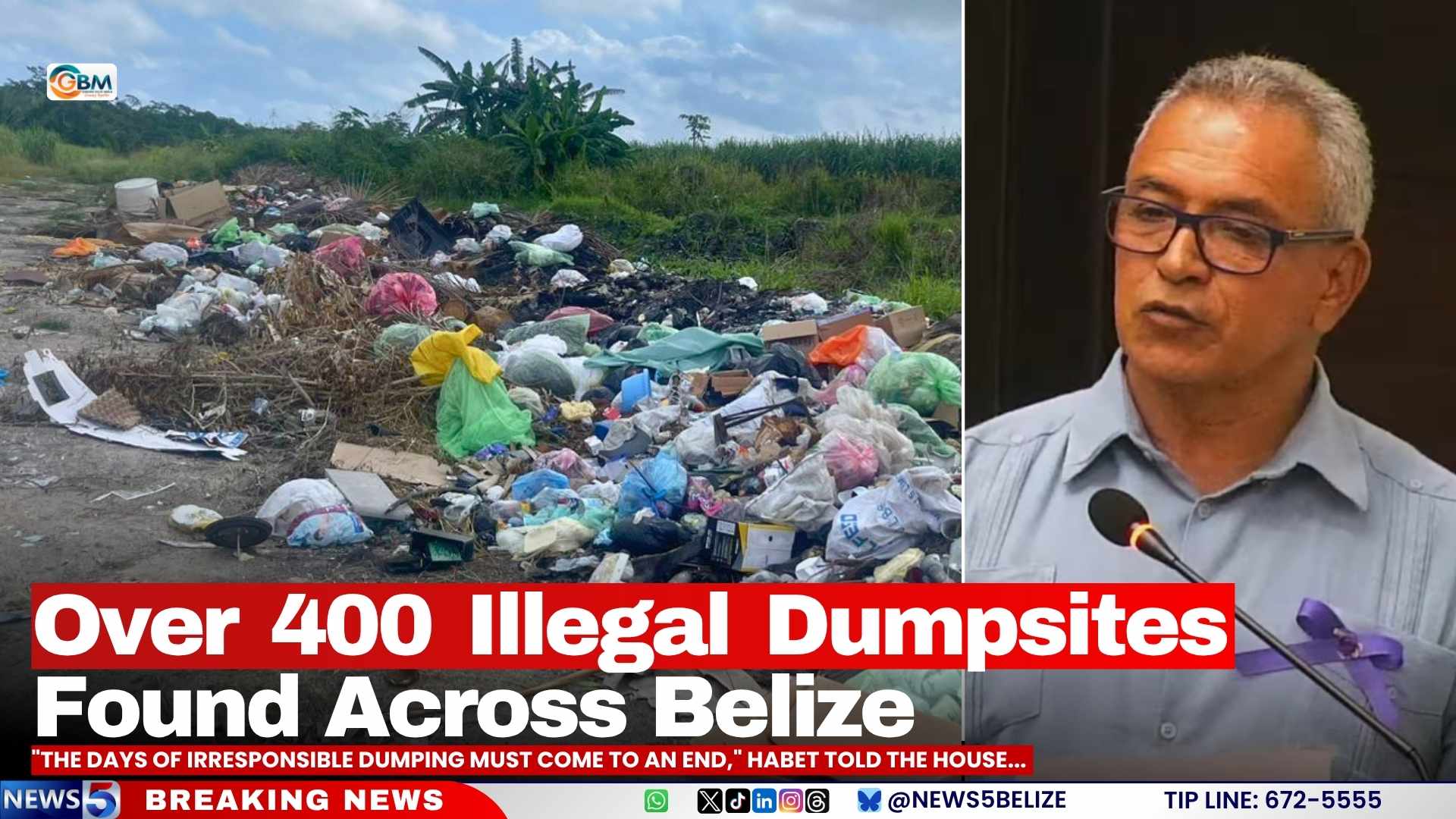
    The Belizean government has declared war on environmental pollution after revealing the existence of more than 400 illegal dumpsites scattered across the country. Minister of Sustainable Development Orlando Habet unveiled an ambitious $2 million anti-dumping initiative during Monday’s budget debate at the National Assembly.

    The comprehensive strategy employs a multi-pronged approach combining technological surveillance, enhanced enforcement, and infrastructure development. Surveillance cameras will be deployed at identified garbage dumping hotspots while littering laws will be rigorously enforced. “The days of irresponsible dumping must come to an end,” Minister Habet asserted before the House, emphasizing strengthened public accountability measures.

    Financial allocation will facilitate the complete operationalization of transfer stations in Orange Walk and Corozal, extending proper waste management services to previously underserved communities. National assessment data indicates the Belize District contains the highest concentration of illegal dumping activity.

    Despite the challenges, progress reports indicate positive momentum. Over the past year, approximately 62,000 tonnes of waste were properly processed through seven transfer stations serving around 220,000 citizens. Concurrently, a home composting pilot project across Orange Walk, Benque Viejo, and Dangriga is projected to divert over 590,000 pounds of organic waste annually from landfills.

    The environmental department will double its enforcement capacity through new personnel hires, with officers deploying district-wide to collaborate with local councils on identification and cleanup operations. Special emphasis will be placed on San Pedro, a key tourism destination, where stronger regulatory presence is planned. The government is additionally exploring waste-to-energy conversion technologies, including repurposing sargassum seaweed accumulations.

  • The Last 11 Years Were the Hottest Ever Recorded

    The Last 11 Years Were the Hottest Ever Recorded

    In a sobering declaration from the World Meteorological Organization, planetary climate systems have reached their most imbalanced state throughout recorded human history. The newly released State of the Global Climate 2025 report delivers conclusive evidence that the period spanning 2015 through 2025 represents the warmest eleven-year sequence ever documented, with the final year ranking as either the second or third hottest individual year in observational records.

    United Nations Secretary-General António Guterres framed the findings with urgent rhetoric, stating: ‘Humanity has just endured the eleven hottest years on record. When history repeats itself eleven times, it is no longer a coincidence. It is a call to act.’

    The comprehensive assessment reveals that Earth’s oceans have absorbed over 91% of excess atmospheric heat, reaching unprecedented temperature levels during 2025. Polar regions experienced severe ice depletion, with both Arctic and Antarctic sea ice diminishing to near-record minimum extents. Simultaneously, glacial systems across diverse regions from Iceland to North America underwent exceptional mass reduction. These combined factors have accelerated sea level rise—a phenomenon scientists project will persist for centuries due to thermal expansion and continued ice melt.

    The critical data underpinning these findings originates from an intricate global network of satellites, ground sensors, and scientific monitoring stations that track environmental changes in real-time. The report’s publication coincided with World Meteorological Day on March 23, which adopted the thematic imperative ‘Observing Today, Protecting Tomorrow.’ This concept emphasizes how meteorological observation extends beyond daily weather prediction to encompass vital early warning systems that safeguard vulnerable communities and enable future preparedness.

    WMO Secretary-General Celeste Saulo encapsulated this mission with clarity: ‘When we observe today, we don’t just predict the weather; we protect tomorrow. Tomorrow’s people. Tomorrow’s planet.’ The organization underscores that continuous climate monitoring provides indispensable tools for mitigating coming environmental challenges and protecting global populations from escalating climate disruptions.

  • Heavy Sargassum Influx Forecast as Government Rolls Out National Response

    Heavy Sargassum Influx Forecast as Government Rolls Out National Response

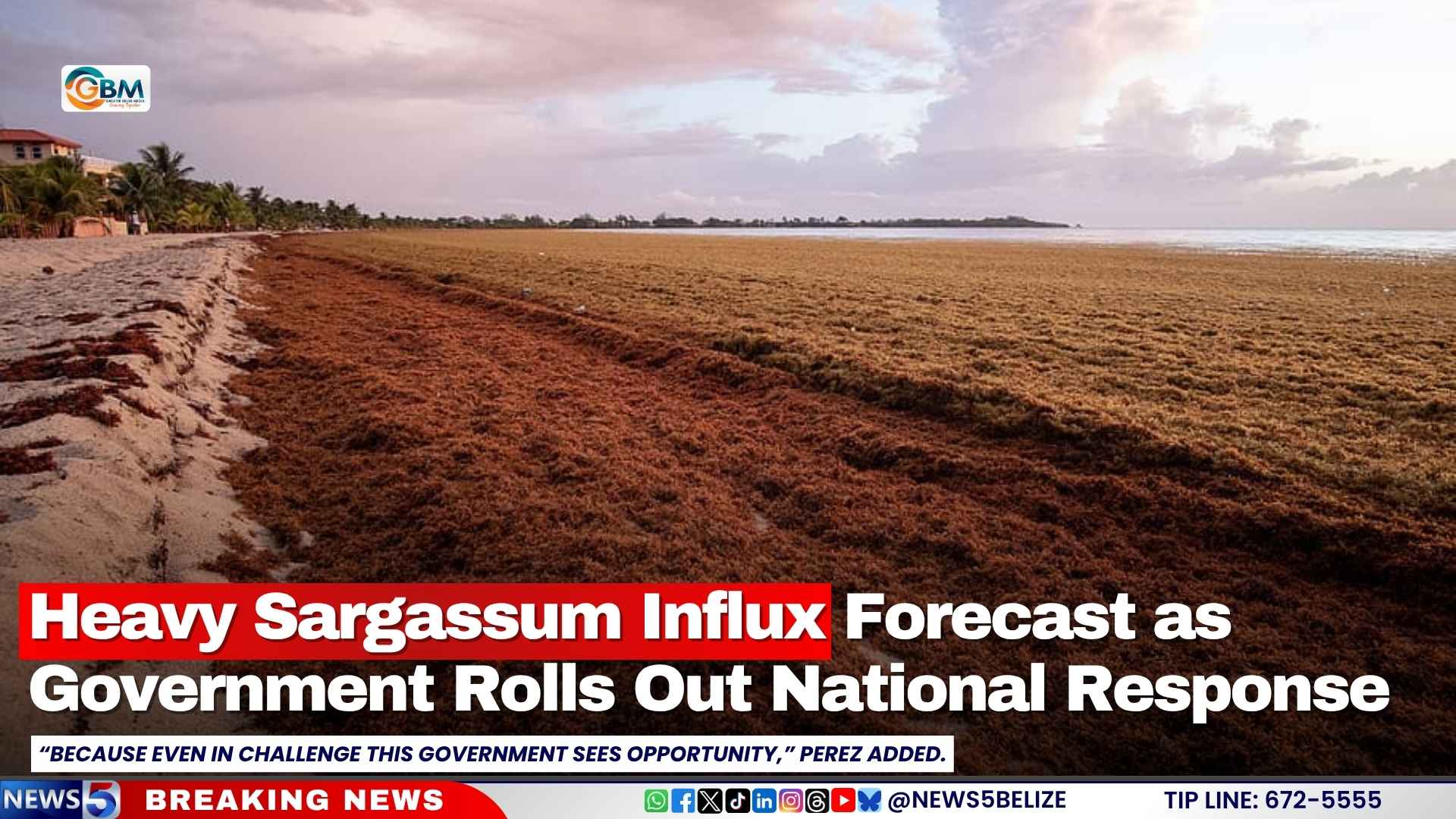
    Belize’s coastal regions are preparing for another significant sargassum inundation as meteorological experts forecast substantial seaweed accumulations along critical shorelines. The National Meteorological Service has issued alerts for multiple communities including San Pedro, Caye Caulker, Hopkins, and Placencia—areas consistently impacted by the region’s escalating marine vegetation crisis.

    Immediate response measures are already underway, with San Pedro’s Town Council deploying specialized containment corrals along vulnerable coastlines. These floating barrier systems aim to intercept and manage seaweed before it reaches tourist beaches, providing crucial support to hospitality enterprises that have incurred substantial daily cleanup expenditures to maintain their properties and preserve the nation’s vital tourism industry.

    The ecological challenge has ascended to national policy discussions, receiving prominent attention in the National Assembly. Andre Perez, Minister of Blue Economy, characterized the sargassum phenomenon as among the most urgent and visible environmental challenges confronting coastal communities. Minister Perez emphasized the pattern of increasing frequency and intensity of seaweed influxes throughout the Caribbean region, noting multifaceted impacts on tourism infrastructure, fishing industries, and public health systems in affected areas.

    The government’s approach transcends temporary mitigation measures, with Perez asserting that authorities are treating sargassum not as seasonal nuisance but as national priority. The Ministry of Blue Economy and Marine Conservation is developing a comprehensive, scalable national response strategy encompassing enhanced collection mechanisms, environmentally sustainable disposal protocols, and investigation into potential economic opportunities through conversion technologies and value-added product development.

    Minister Perez concluded with an optimistic perspective, noting that the current administration perceives potential economic opportunities within the ecological challenge, signaling a paradigm shift from crisis management to innovative adaptation in addressing this persistent environmental issue.

  • Village Chairman Discovers Friend’s Body in Mopan River

    Village Chairman Discovers Friend’s Body in Mopan River

    In a devastating turn of events, the body of 35-year-old Hector Mejía, locally known as “Buye,” was recovered from the Mopan River near San José Succotz on Tuesday morning. The discovery was made by village chairman Armando Ventura Cocom under tragic circumstances that have shaken the small community.

    According to official accounts, Mejía was last seen alive on Sunday in the neighboring town of Benque Viejo. Chairman Cocom reported that the deceased had been socializing with friends and consuming alcoholic beverages prior to his disappearance. “Before he went missing, he was seen being gathered with some friends and taking some drinks,” Cocom stated in his preliminary account.

    The search for Mejía began earnlessly on Monday when Chairman Cocom utilized social media platforms to mobilize community efforts, requesting any information that might aid in locating the missing man. The breakthrough came unexpectedly during Cocom’s routine taxi drive between Benque Viejo and San José Succotz at approximately 8:15 AM on Tuesday, when he spotted a body floating in the river.

    The emotional toll on Chairman Cocom has been profound, given his personal relationship with the deceased. The two men had collaborated on various community initiatives, forging a bond beyond their official capacities. “It was very sad. It was heartbreak. I went in tears also,” Cocom expressed, visibly affected by the traumatic discovery.

    Mejía’s contributions to community life were highlighted in subsequent remarks, with Cocom emphasizing his recent voluntary work during the village’s cultural celebrations. Described as “very amicable” and “very happy,” Mejía appears to have been a beloved figure whose absence will be deeply felt. “His loss to the community is very big. I don’t even have words to explain,” Cocom added.

    Local authorities have launched a comprehensive investigation into the circumstances surrounding Mejía’s death. While preliminary findings suggest no immediate evidence of foul play, officials have declined to release further details pending completion of forensic examinations and ongoing investigative procedures.

  • Belize Moves Towards Better, Safer, More Accessible Tourism Standards

    Belize Moves Towards Better, Safer, More Accessible Tourism Standards

    Belize City has become the epicenter of regional tourism development this week as it hosts a pivotal four-day workshop focused on elevating industry standards across Central America and the Dominican Republic. The gathering, which concludes Friday, brings together tourism authorities and certification auditors from eight participating nations to establish unified benchmarks for sustainable tourism practices.

    The collaborative initiative, jointly organized by Belize’s Ministry of Tourism, Sports, and Diaspora Relations and the Secretariat for Central American Tourism Integration (SITCA), specifically targets the enhancement of small and medium-sized tourism enterprises. Through this program, local operators will gain pathways to obtain internationally recognized certifications that validate their operational excellence.

    Chief Tourism Officer Josue Carballo emphasized the transformative potential of this standardization effort. “Many private entities already implement commendable practices, but this initiative creates a consistent quality baseline across the industry,” Carballo stated. “This alignment provides proper recognition for private sector efforts and elevates them to certification status, particularly benefiting MSMEs across diverse regions.”

    Ligia Miranda, Executive Secretary of SITCA, highlighted the regional cooperation aspect of the workshop. “Quality and accessibility should transcend national boundaries,” Miranda explained. “Whether visitors are examining hotel accommodations during peak season or requiring disability access provisions, we aim to ensure uniform standards throughout the region. This guarantees that travelers can fully experience tourist destinations regardless of which country they visit.”

    The workshop represents a significant step toward establishing comprehensive tourism standards that address multiple facets of traveler experience, including safety protocols, service quality, accessibility features, and sustainability measures across Central American tourism destinations.

  • Belize, Guatemala and Mexico Talk Protection of Maya Forest

    Belize, Guatemala and Mexico Talk Protection of Maya Forest

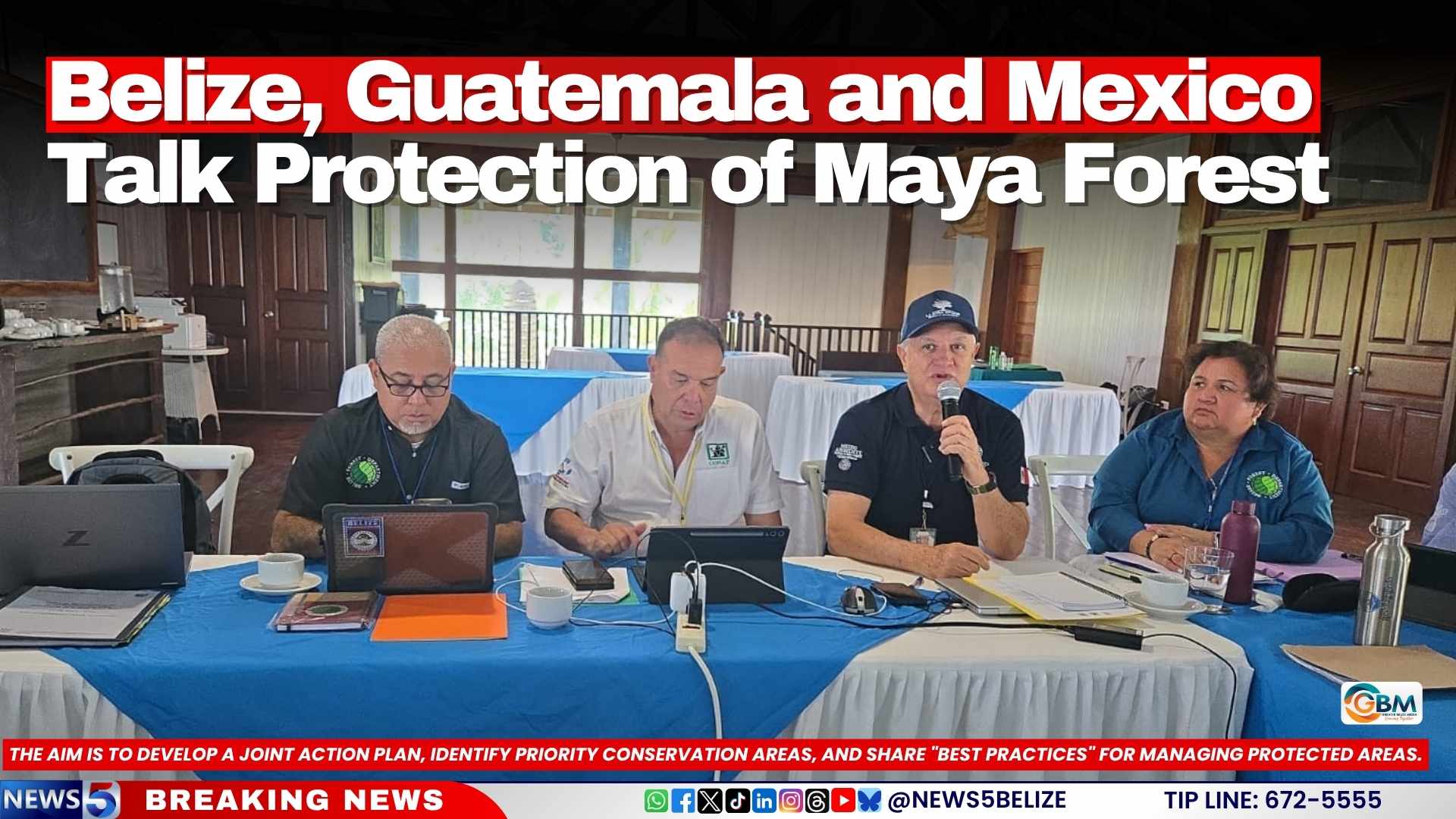
    In a significant environmental diplomacy move, Belize is currently hosting a pivotal trinational summit with neighboring Guatemala and Mexico to address the conservation of the Greater Maya Forest. The high-level workshop, taking place in Placencia from March 22-28, 2026, represents a coordinated effort to protect one of Central America’s most critical remaining tropical forest systems.

    Delegations from Belize’s Forest Department, Guatemala’s National Council of Protected Areas (CONAP), and Mexico’s National Commission of Natural Protected Areas (CONANP) are collaborating to develop a comprehensive joint action plan. The agenda focuses on identifying priority conservation zones, establishing cross-border protection protocols, and exchanging innovative management strategies for protected areas within this vital ecological corridor.

    Beyond conference room discussions, participants will engage in field expeditions to critical habitats including Mountain Pine Ridge and the Chiquibul Forest. These site visits are designed to provide firsthand understanding of the ecological challenges and conservation needs within Belize’s diverse landscapes.

    Official statements from the Belize Forest Department emphasize that this collaborative initiative demonstrates the sustained commitment of all three nations to implement effective transnational conservation measures. The Greater Maya Forest represents not only a biodiversity hotspot but also a cultural heritage site of global significance, making its protection a regional priority with international implications.

    This trilateral cooperation marks a progressive approach to environmental governance, recognizing that ecological preservation requires coordinated efforts across national boundaries to address deforestation, habitat fragmentation, and climate change impacts effectively.

  • CCJ Reopens Belize Redistricting Case

    CCJ Reopens Belize Redistricting Case

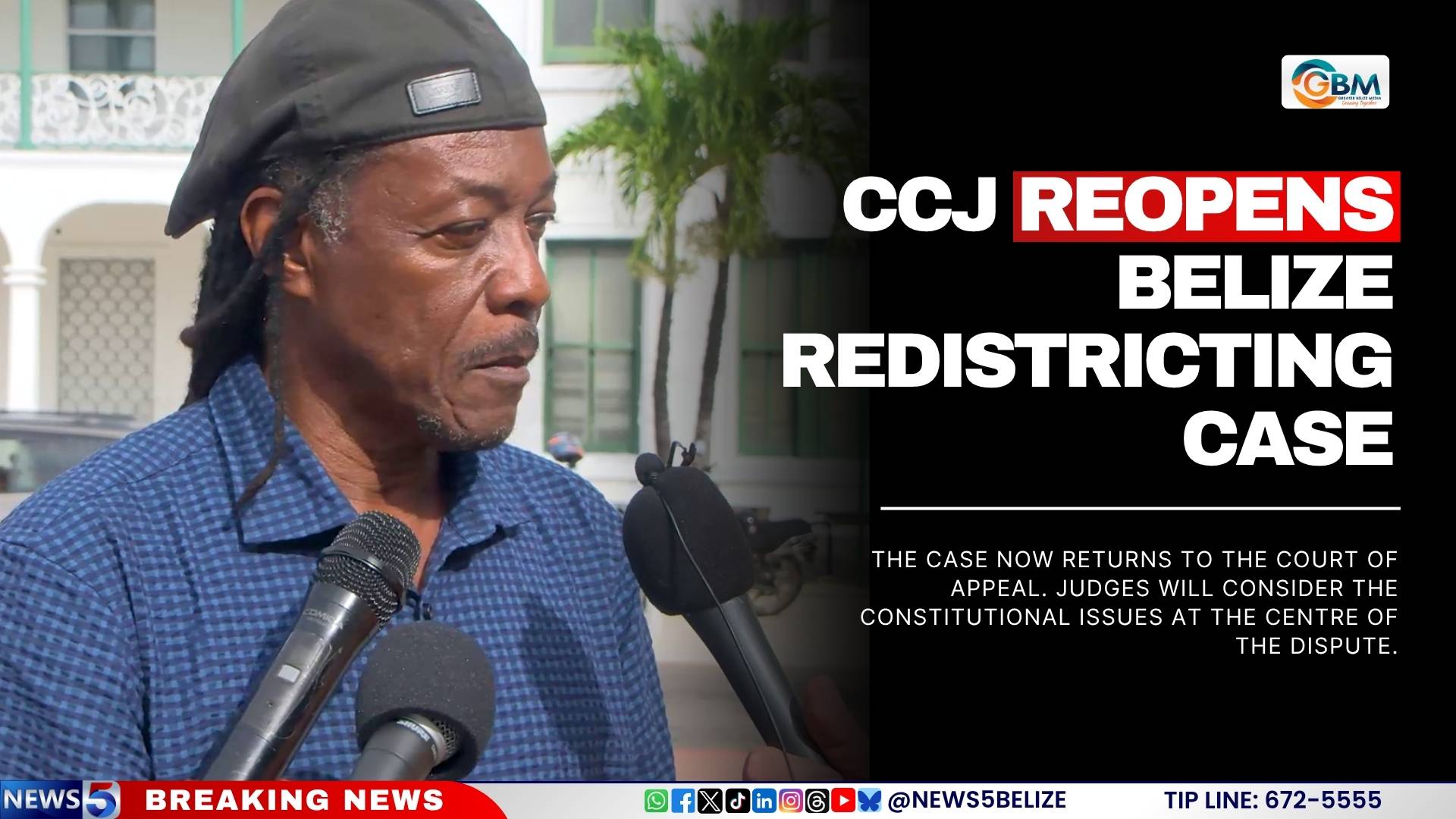
    In a significant judicial development, the Caribbean Court of Justice (CCJ) has reinstated a pivotal constitutional challenge regarding Belize’s electoral constituency boundaries. The region’s highest court determined that the Belize Court of Appeal had erroneously dismissed the case on procedural technicalities, emphasizing that such matters should not obstruct the path to justice.

    The court’s ruling specifically addressed the appeal filed by Senior Counsel Anand Ramlogan, simultaneously overturning a previous costs order that had mandated him to personally cover the state’s legal expenses. The CCJ characterized this financial penalty as fundamentally unjustified.

    This litigation originates from a February 2025 claim submitted by citizen Jeremy Enriquez, who contends that Belize’s current electoral map relies on obsolete demographic data, thereby violating constitutional guarantees of equal representation. While the CCJ revived the main appeal, it declined Enriquez’s separate request for special leave to appeal another aspect of the case.

    The judicial journey began when High Court Justice Tawanda Hondora rejected an injunction application to postpone Belize’s 2025 general election while simultaneously issuing the controversial costs order against Ramlogan. With the CCJ’s decision, the constitutional challenge now returns to the Belize Court of Appeal for substantive consideration of the representation rights issues at the heart of this dispute.

  • High Court Awards $205K to Wrongfully Dismissed Principal

    High Court Awards $205K to Wrongfully Dismissed Principal

    In a landmark ruling with significant implications for Belize’s education sector, the High Court has ordered compensation of BZD $205,493.39 to former acting principal Isaac Longsworth for wrongful termination from Saint Barnabas Anglican Primary School. Justice Martha Lynette Alexander’s judgment not only resolves Longsworth’s protracted legal battle but also establishes crucial precedent regarding teacher retirement policies.

    The case originated in 2017 when Longsworth was dismissed following disciplinary proceedings involving multiple educational authorities. The High Court had previously declared the termination unlawful in 2019, finding procedural violations that denied Longsworth a fair hearing. While initial compensation covered only eleven months, the Court of Appeal subsequently mandated full assessment of lost earnings from October 2019 onward.

    During compensation proceedings, the court addressed two pivotal issues: career progression assumptions and mandatory retirement age. Justice Alexander accepted that Longsworth’s abrupt dismissal prevented completion of his Educational Leadership Certificate, warranting advancement to pay scale 17. However, claims for further increases based on hypothetical master’s degree attainment were rejected due to insufficient evidence.

    The retirement age controversy proved particularly consequential. Defense arguments asserting mandatory retirement at 55 were rejected after meticulous examination of the School Teachers’ Pensions Act and Teaching Service Commission Handbook. Justice Alexander determined that while teachers may optionally retire at 55, statutory language clearly establishes 60 as the compulsory retirement age across Belize’s education system.

    The court acknowledged Longsworth’s employment prospects were severely damaged but declined to find permanent unemployability. Compensation was calculated through March 11, 2026, plus twelve months transitional salary, with a ten percent contingency reduction reflecting normal labor market uncertainties. The award includes salary adjustments, allowances, and statutory deductions, with six percent annual interest accruing since October 2019.

    Critically, the judgment protects Longsworth’s retirement benefits by directing the Accountant-General to calculate his pension and gratuity upon reaching age 60 in 2030 as if continuous employment had been maintained, ensuring his unlawful dismissal doesn’t prejudice future entitlements.