标签: Belize

伯利兹

  • More Countries Move to Ban Social Media for Under-15s

    More Countries Move to Ban Social Media for Under-15s

    A growing international movement to protect youth from digital platforms is gaining significant traction, with France emerging as the latest nation to pursue stringent social media restrictions for minors. President Emmanuel Macron has announced his administration’s intention to implement a comprehensive nationwide ban for users under 15 years of age, targeting implementation before the commencement of the upcoming academic year in September.

    In a strongly worded statement disseminated through BFMTV, Macron articulated the philosophical foundation behind these protective measures: “The cognitive development and emotional well-being of our youth cannot be commodified. Their psychological states must remain free from manipulation by foreign technological influences, regardless of whether they originate from American corporate platforms or Chinese algorithmic systems.”

    The proposed legislative framework would extend beyond social media platforms to include prohibitions on mobile phone usage within French secondary educational institutions. Macron characterized these initiatives as establishing “unequivocal guidelines” for all stakeholders within the educational ecosystem, including families, educators, and students themselves.

    Enforcement mechanisms would leverage the European Union’s Digital Services Act to implement rigorous age verification protocols. French legislator Laure Miller emphasized the critical necessity of these measures, noting that existing protective systems have proven fundamentally inadequate. “The current landscape offers virtually no meaningful age verification,” Miller stated. “Minors can simply input arbitrary birthdates to gain unrestricted platform access.”

    This European initiative mirrors similar regulatory actions across the globe. Australia established precedent last year by instituting social media prohibitions for users under 16, while United Kingdom authorities are presently evaluating comparable protective restrictions for their youth population.

  • Venezuela’s Acting Leader Tired of U.S. Interference

    Venezuela’s Acting Leader Tired of U.S. Interference

    Venezuelan Interim President Delcy Rodríguez delivered a forceful rebuke of United States interference in her nation’s domestic politics during a public address on Sunday. Speaking to oil industry workers in Puerto La Cruz, Rodríguez declared that Venezuela has reached its limit with Washington’s directives regarding internal governance.

    “We have endured sufficient imposition of Washington’s commands upon Venezuelan politicians,” Rodríguez stated in televised remarks. “Venezuelan politics must be permitted to resolve our own differences and internal conflicts without external pressure.”

    This diplomatic confrontation emerges approximately one month after US forces conducted a military operation that resulted in the capture of former President Nicolás Maduro and his wife Cilia Flores. Following this intervention, the US administration has intensified pressure on Caracas to restart oil production operations and sever international alliances with China, Russia, Iran, and Cuba.

    Initial US positioning suggested Washington would oversee Venezuela’s political transition, with President Donald Trump previously stating the United States would “run” the country. However, diplomatic dynamics appear to have shifted following a telephone conversation between Trump and Rodríguez earlier this month, during which the American president described his Venezuelan counterpart as a “terrific person” and noted they were “developing positive relations.”

  • Deadly Ambush at BWS Warehouse Leaves Family Mourning

    Deadly Ambush at BWS Warehouse Leaves Family Mourning

    The quiet village of Lord’s Bank in Belize was shattered by violence in the early hours of Friday, January 23, 2026, when security officer Darwin Valerio, 35, was fatally ambushed while on duty. The tragedy occurred at the Belize Water Services warehouse compound where Valerio and a colleague were conducting routine overnight security operations.

    According to investigative reports, the attack unfolded when Valerio’s coworker temporarily left their security booth to perform standard perimeter patrols. During this brief window, multiple assailants scaled the facility’s secured fencing and launched a surprise assault on Valerio, who was reportedly engaged in a telephone conversation with a relative at the time of the attack.

    Gunfire erupted approximately at 1:00 AM, alerting local residents and prompting emergency response. Police units arriving on scene by 1:30 AM discovered Valerio lying face down with multiple gunshot wounds. Despite rapid transportation to Karl Heusner Memorial Hospital, medical personnel were unable to save the security officer’s life.

    Hayden Brown, Chief Human Resources Officer at Belize Water Services, described the coordinated security protocols typically followed by guards, including communication systems to notify each other during rotations. ‘My sense was that one guard had indicated to the other that he was going to do rounds, and I believe that’s when the incident happened,’ Brown stated, noting the perpetrators had already fled before the responding guard could intervene.

    The Valerio family received the devastating news about an hour after the shooting. Ismae Valerio, the victim’s mother, recounted the heartbreaking moment she learned of her son’s death through a call from his girlfriend. ‘My heart started beating, but I was not expecting that call at that time,’ she shared emotionally.

    Domingo Valerio, the father, visited the crime scene and gathered preliminary information indicating three individuals had scaled the fence to carry out the attack. ‘We leave it in the police hands and justice supposed to take its course,’ he stated, adding philosophical resignation that ‘if it doesn’t, then the good Lord knows.’

    Family members remembered Darwin as a humble, respectful young man deeply connected to his family and cultural heritage. His mother described his daily ritual of calling after shifts to assure her of his safe journey home. His father, a traditional drummer, highlighted how Darwin embraced his Garifuna roots and family values.

    Belize Water Services has expressed profound solidarity with the grieving family, emphasizing that although Valerio was employed through a private security firm, he was considered part of the BWS community. The company has initiated a comprehensive security review and is collaborating closely with law enforcement authorities, who are examining surveillance footage to identify the perpetrators.

    The investigation continues as police urge anyone with information to come forward, while a community mourns the loss of a dedicated professional killed simply for doing his job.

  • Dorian Anthony Beats Second Murder Charge

    Dorian Anthony Beats Second Murder Charge

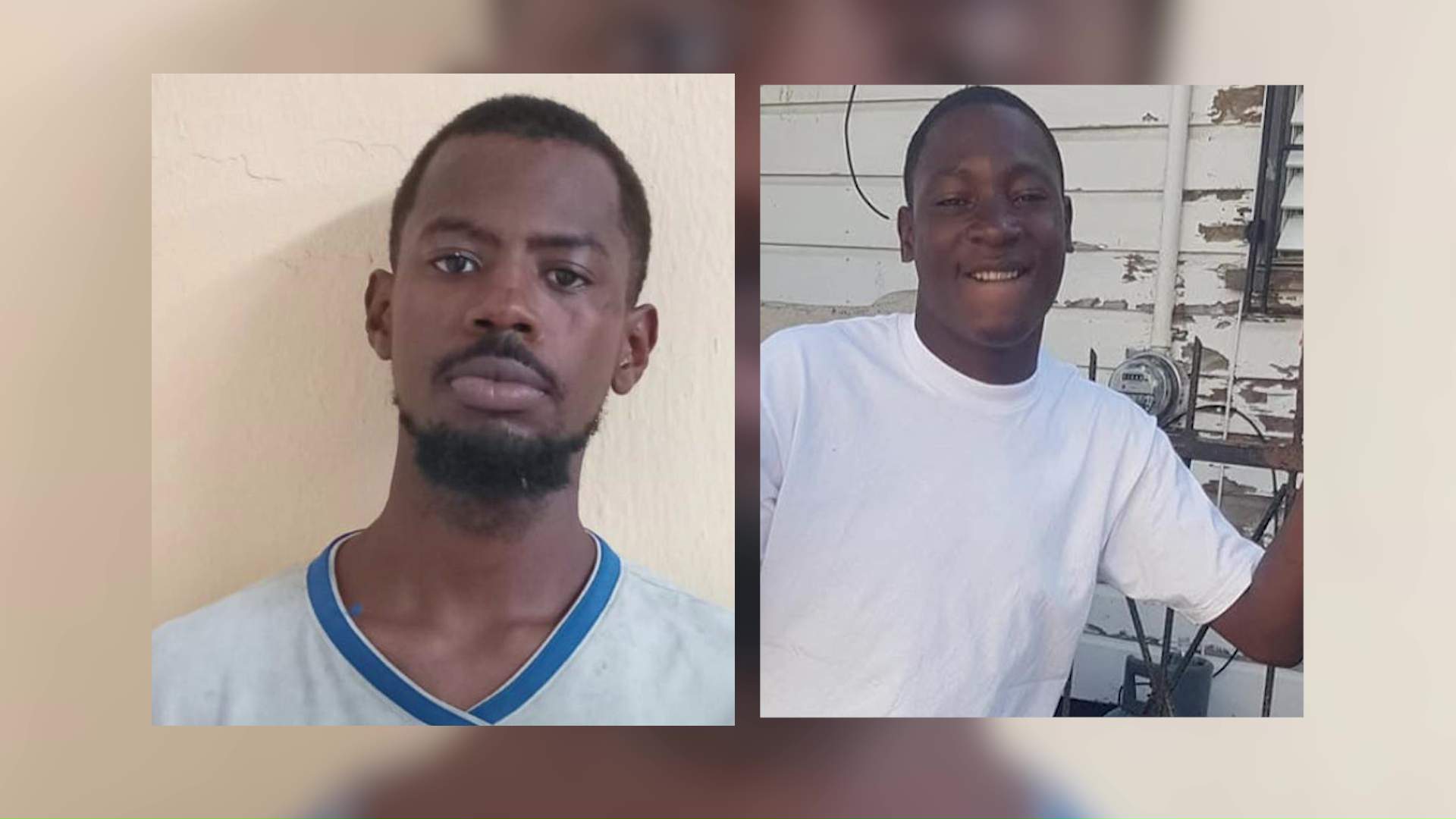
    In a dramatic courtroom reversal, twenty-year-old Dorian Denver Anthony has been declared not guilty in the 2023 shooting death of Trenton Webster, marking his second successful defense against murder charges. The case collapsed when the prosecution’s sole eyewitness, Webster’s wife, completely retracted her initial statement identifying Anthony as the perpetrator.

    The trial before Justice Nigel Pilgrim took an unexpected turn when the key witness disavowed her previous testimony, stating under oath that she had never actually seen the shooter. This forced the prosecution to treat her as a hostile witness, significantly weakening their case. Justice Pilgrim subsequently ruled her earlier inconsistent statement inadmissible as evidence.

    With no forensic evidence, eyewitness testimony, or circumstantial links connecting Anthony to the crime, the prosecution conceded defeat. Defense attorney Dr. Lynden Jones successfully argued for a no-case submission, which the judge approved after just four days of trial proceedings.

    Justice Pilgrim expressed grave concerns about witness intimidation, noting the witness appeared “terrified” during testimony. He highlighted the critical failure of Belize’s justice system, pointing out that the Justice Protection Act of 2006 remains non-operational nearly two decades after its passage. The judge emphasized the urgent need for a functional witness-protection program to prevent similar judicial failures.

    While Anthony walks free from this charge, he remains in custody awaiting trial for a separate murder case in Belmopan. His legal history includes a previous acquittal at age seventeen for the killing of sixty-one-year-old Emert Flowers, demonstrating a pattern of murder charges that ultimately fail to result in conviction.

  • Police Commissioner Named in Budna Abduction Lawsuit

    Police Commissioner Named in Budna Abduction Lawsuit

    In a significant legal development, Belize’s Police Commissioner Dr. Richard Rosado has been formally named as a defendant in a constitutional lawsuit filed against the Government of Belize. The substantial 74-page claim, initially submitted in September by attorneys Arthur Saldivar, Michelle Trapp, and Emmertice Anderson, represents social media commentator Joseph Budna, who remains detained in Guatemala following what he describes as an unlawful abduction from Belizean territory.

    The litigation presents serious allegations against high-ranking police officials, including Commissioner Rosado, with attorneys asserting potential obstruction of justice during the investigation’s critical early phases. Central to the legal challenge are discrepancies regarding surveillance footage that Commissioner Rosado reportedly referenced, yet allegedly cannot produce for verification.

    Attorney Saldivar maintains that including the commissioner was necessary, citing fundamental questions about evidence handling and investigative transparency. The case highlights concerning delays in transferring investigation files to the Director of Public Prosecutions (DPP), who reportedly received inadequate documentation months after the incident occurred.

    Critical evidence includes four separate surveillance cameras under government control—Banquita’s House of Culture, court security footage, social security cameras, and police station recordings—all of which allegedly contain relevant footage that has not been properly accounted for in official investigations.

    With the constitutional challenge now formally encompassing the nation’s top law enforcement official, unresolved questions regarding missing evidence, delayed judicial reviews, and potential political interference continue to mount. Saldivar characterizes the situation as ‘suspect’ and suggestive of systematic concealment, noting that the matter should have been referred to the DPP immediately following the August 23rd incident.

    The case represents growing scrutiny of Belize’s judicial processes and could have profound implications for police accountability and governmental transparency in the Central American nation.

  • Independent Senators Say Bill Undermines Accountability

    Independent Senators Say Bill Undermines Accountability

    A contentious legislative proposal from the government is facing unanimous opposition from Belize’s four independent senators, creating a significant parliamentary standoff. The National Assembly Powers, Privileges and Immunities Bill has drawn particular criticism for its Section 16(2), which would mandate public officers to obtain consent before disclosing documents or providing testimony to the Senate regarding state affairs.

    NGO Senator Janelle Chanona has declared the provision fundamentally unconstitutional, stating she consulted with multiple parliamentary speakers internationally who found no rational basis for such measures within democratic frameworks. The senators’ primary concern centers on the Governor General’s role, noting that since this position acts on executive advice, the very officials potentially under investigation could effectively control what information becomes available to oversight bodies.

    Business Senator Kevin Herrera illustrated the practical implications, warning that investigations into executive corruption could be obstructed by a single refusal justified under the overly broad term ‘affairs of state.’ Church Senator Louis Wade raised additional concerns about the Governor General’s lack of independent professional resources to make informed disclosure decisions, while Union Senator Glenfield Dennison stated his firm and unambiguous opposition to the legislation.

    The collective rejection by all four independent senators represents a significant challenge to the government’s legislative agenda and places substantial pressure on policymakers to reconsider the controversial provisions. The outcome will potentially redefine the balance of power between governmental branches and determine the Senate’s future effectiveness as an accountability mechanism.

  • Senate Debates $200 Million Supplementary Bills

    Senate Debates $200 Million Supplementary Bills

    The Belizean Senate engaged in heated deliberations today concerning two supplementary appropriation bills amounting to $200 million, previously approved by the House of Representatives in November. Government officials, led by Senator Eamon Courtenay, defended the necessity of these allocations, characterizing them as essential for both retrospective expenditures and forward-looking national priorities.

    Senator Courtenay detailed the comprehensive allocation plan, emphasizing critical investments across multiple sectors. “These appropriations combine funding for public and security officer salaries, healthcare infrastructure, the University of Belize, sports ministries, and passport services,” he stated. Notably, the bills designate substantial resources for police department enhancements and the Ministry of Rural Transformation and Community Development. An additional $1.5 million is allocated to Blue Economy and Disaster Risk Management initiatives, alongside significant nationwide roadwork projects.

    The opposition, spearheaded by Senator Patrick Faber, launched stringent criticism against the Briceño administration’s fiscal management. While acknowledging the importance of addressing national priorities, Faber condemned the government’s procedural approach. “The manner of presenting these bills indicates deficient planning and budgetary incompetence,” he asserted. Faber suggested the government may be intentionally presenting optimistic initial budgets only to later introduce substantial supplementary allocations to address overlooked deficiencies.

    The fundamental dispute centers not on the allocations themselves but on budgetary planning integrity. The government maintains these supplements are necessary for comprehensive national development, while the opposition contends they reveal systemic planning failures that undermine budgetary credibility. The outcome of these deliberations will significantly impact Belize’s fiscal trajectory for the coming year.

  • Fraud Wave Hits Belizean Businesses as Legal Loopholes Shield Scammers

    Fraud Wave Hits Belizean Businesses as Legal Loopholes Shield Scammers

    Belize’s commercial sector faces a mounting crisis as sophisticated credit card scams exploit legislative deficiencies, costing enterprises substantial financial losses. A comprehensive investigation reveals that systemic legal gaps enable fraudsters to operate with near impunity, compelling business owners to absorb the financial impact while perpetrators evade justice.

    The situation has reached critical mass with multiple prominent companies coming forward. Chon Saan Palace restaurant, ticketing platform KwiqPass, and transportation provider Caribbean Sprinters have collectively lost thousands to coordinated fraud operations. Their shared experience underscores a pattern of vulnerability affecting Belize’s growing digital economy.

    At the heart of the problem lies a jurisdictional dilemma: Belizean authorities require formal complaints from international cardholders—who typically receive bank reimbursements—to initiate prosecution. This procedural barrier effectively neutralizes law enforcement response, creating a safe haven for financial criminals.

    According to Delroy Fairweather, Public Relations Manager at KwiqPass, “The current framework mandates that cardholders themselves must file complaints locally before police can pursue charges for money laundering or obtaining property by deception. Without this, our hands are tied.”

    The modus operandi typically involves targeting vulnerable demographics, particularly elderly foreign nationals seeking online promotions. As one anonymous former BPO employee explained, “Scammers exploit this thirst for ‘free’ offers, harvesting personal information through deceptive registrations and fraudulent callbacks.”

    Historical precedent suggests legislative intervention could prove effective. Jamaica confronted similar challenges during 2007-2009 by implementing stringent anti-fraud measures: criminalizing possession of “lead lists,” imposing 25-year sentences for credit card fraud, and enabling asset seizure. These reforms successfully disrupted criminal networks.

    Businessman and legislator Lee Mark Chang advocates for similar measures in Belize: “I’m urging governmental action to institute tougher penalties. This ongoing fraud damages our local economy, and we need immediate legislative action to deter these crimes.”

    Prime Minister John Briceño has acknowledged the urgency, stating, “We must ensure police pursue these cases aggressively. If current penalties prove insufficient, we stand ready to strengthen them.”

    While political will appears growing, affected businesses continue investing heavily in cybersecurity measures as stopgap protection. The collective call for comprehensive legal reform grows louder as losses mount, highlighting the critical need for updated financial crime legislation in Belize’s digital age.

  • Senator Herrera Warns: Merger Risks Telecom Monopoly

    Senator Herrera Warns: Merger Risks Telecom Monopoly

    In a striking address concluding today’s virtual Senate session, Business Senator Kevin Herrera issued a stern warning regarding the proposed acquisition of Speednet by Belize Telemedia Limited (BTL). Herrera characterized the merger as a “state-sponsored execution of competition” disguised under corporate rhetoric about efficiency and strategic consolidation.

    The Senator drew sharp historical parallels to Belize’s previous telecom monopoly in the late 1990s, noting that BTL once enjoyed profit margins of fifty cents on every dollar earned—a period marked by exorbitant pricing that burdened consumers. Herrera emphasized that returning to a single provider system would represent a voluntary return to the restrictive conditions that took decades to overcome.

    Responding to BTL’s justification that the merger represents a necessary survival strategy against potential market entry by global satellite provider Starlink, Herrera dismissed this reasoning as “dangerous delusion.” He argued that eliminating local competition rather than fostering innovation would render BTL “a larger, slower, and more bureaucratic target” against international giants.

    The Belize Chamber of Commerce and Industry has called for continued transparent consultations with thorough examination of competitive impacts, urging BTL to publicly address mounting concerns. As national consultations progress, Herrera maintains that Belizeans deserve better than reverting to monopolistic structures and challenges BTL to justify the deal before the public.

  • Jerry Enriquez Slams One‑Page Reply on Constituency Funds

    Jerry Enriquez Slams One‑Page Reply on Constituency Funds

    Social activist Jerry Enriquez has publicly denounced the Office of the Prime Minister for what he characterizes as a dismissive response to his Freedom of Information request regarding constituency development funds. After a three-month waiting period that included multiple extensions, Enriquez received merely a single-page document detailing only monthly allocations per constituency, rather than the comprehensive breakdown he had formally requested.

    In an exclusive statement delivered on January 23, 2026, Enriquez expressed profound disappointment with the inadequate response, describing it as “condescending and disrespectful” toward legitimate public inquiry processes. The activist emphasized that the document failed to address critical aspects of fund distribution, including usage specifics, accountability mechanisms, and the underlying principles guiding allocation decisions.

    The limited data provided has already revealed concerning disparities in fund distribution across electoral divisions, suggesting what Enriquez termed a “haphazard” allocation approach. This development raises serious questions about governmental transparency and fiscal responsibility, particularly during a period of economic constraint.

    Enriquez maintains that citizens possess an unequivocal right to understand how public funds are allocated and utilized, especially given the significant economic imbalances between different constituencies. The activist has called for the Prime Minister’s office to treat FOIA requests with appropriate seriousness and provide the detailed accounting mechanisms that public accountability demands.